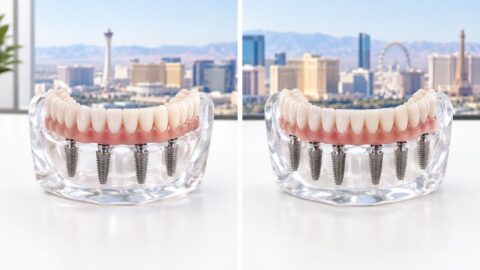
All on 4 vs All on 6 Implants in Las Vegas Guide
A failing smile can affect far more than appearance. If your teeth are loose, your denture shifts when you speak, or chewing has become painful, you may be searching for a dentist near me, dental implants near me, or a full-arch solution in Las Vegas that feels secure and natural.
Choosing between All-on-4 and All-on-6 dental implants isn't a matter of counting posts. The better question is whether two additional implants meaningfully change the way forces move through your jaw, how much bone is available, and what maintenance you can comfortably manage. This Las Vegas guide explains the differences in plain language so you can have a more productive conversation with your implant dentist.
Find Your Confident Smile Again with Dental Implants Near Me in Las Vegas
A patient living near Desert Shores may arrive at a consultation carrying a denture case in one hand and years of frustration in the other. Eating in public has become uncomfortable. Smiling for family photos feels forced. Even simple conversations can create anxiety when a denture moves or failing teeth cause pain.
Those concerns are common reasons adults begin searching for dental implants near me or a dentist in Las Vegas, NV. Full-arch implant treatment can replace a complete row of teeth with a fixed prosthesis supported by implants. Instead of relying on denture adhesive or removable plastic alone, the replacement teeth attach to stable anchors placed in the jaw.
Aspiring Smiles Dental and Braces on N Tenaya serves patients throughout Las Vegas, including families near Desert Shores, Sunhampton, Sun City Summerlin, Monterrey, Lone Mountain, Mar-A-Lago, and Painted Desert Estates. The practice provides general, restorative, cosmetic, implant, and emergency dental services, so your implant evaluation can include attention to your broader oral health.
The concerns full-arch care can address
Full-arch treatment may be considered when you have:
- Failing or missing teeth: Extensive tooth loss can make chewing and speaking more difficult.
- Loose dentures: Movement may affect comfort, confidence, and your willingness to eat certain foods.
- Recurring tooth pain: Teeth that can't be predictably restored may require extraction before implant planning.
- A changing smile: Dental implants can support replacement teeth designed around your facial features and bite.
A new patient exam, dental x-rays, and a detailed health review help the team understand your starting point. If you also need a tooth extraction, restorative dentistry, or cosmetic dentistry such as whitening, crowns, or veneers, those needs can be coordinated with your larger plan.
A clearer way to approach the choice
All-on-4 may use fewer implant sites and angled posterior placement, while All-on-6 adds two more anchors for broader support. Neither approach is automatically right for every person.
Your jaw anatomy, bone quality, bite forces, hygiene habits, medical history, and willingness to attend follow-up visits all influence the recommendation. A consultation gives you the opportunity to review those factors, compare designs, and understand what treatment would involve before making a decision.
Understanding All-on-4 and All-on-6 Full Arch Solutions
Both treatments use dental implants to support a fixed full-arch prosthesis. The replacement teeth aren't supported only by the gums. They attach to titanium implants placed in the jaw, giving the arch a stable foundation.
How All-on-4 works
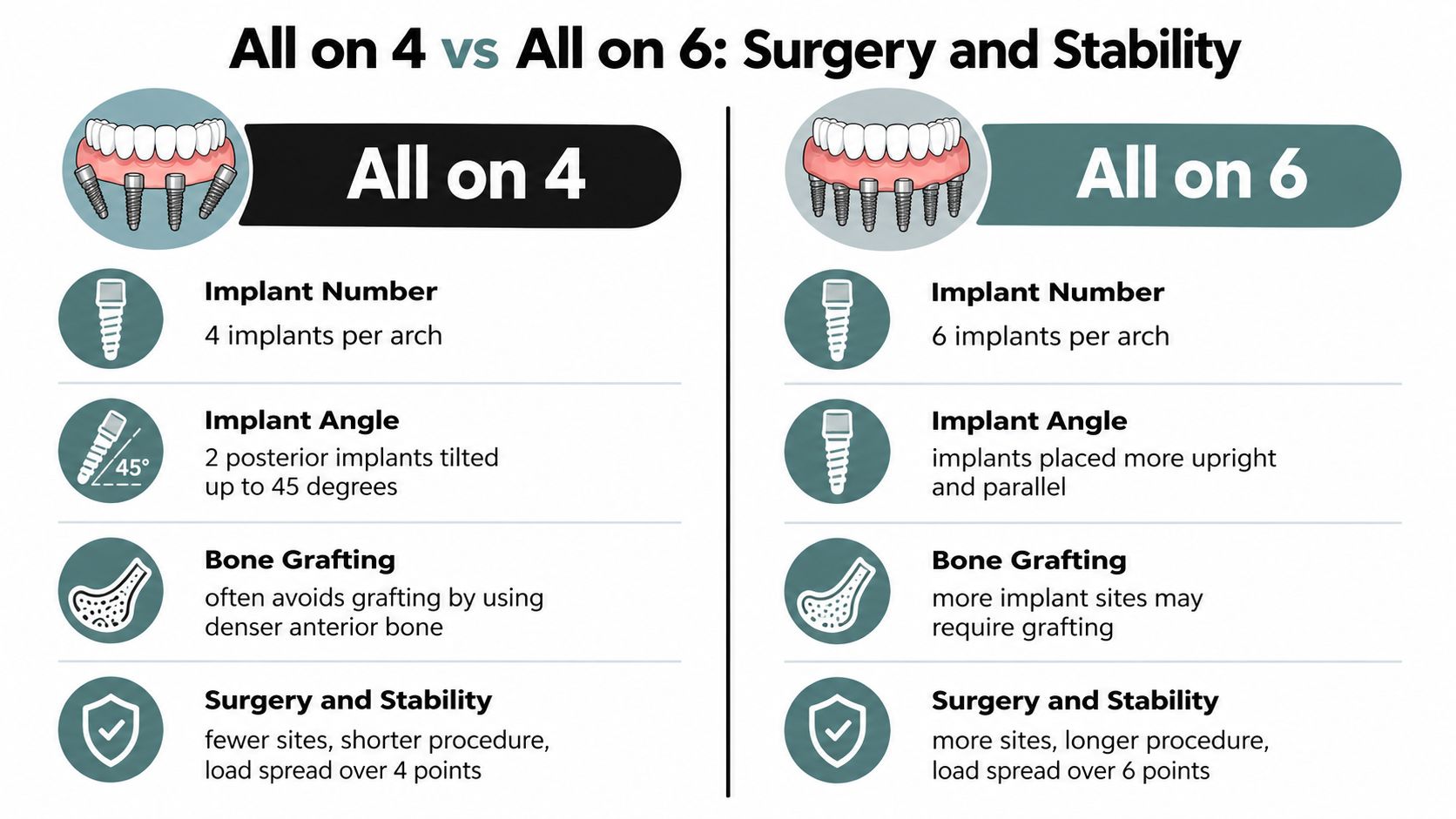
All-on-4 uses exactly four implants per arch. Two implants are placed in the front portion of the jaw in an axial or vertical position. The two posterior implants are positioned farther back and angled to help reduce the cantilever, or unsupported extension, behind the last implant. The design can support a fixed prosthesis with up to 12 teeth. These details are described in the clinical overview of the All-on-4 implant concept.
The angled back implants can help the dentist work around structures that limit implant placement. In the upper jaw, that may include the maxillary sinus. In the lower jaw, planning must account for the mandibular nerve canal. The goal isn't to tilt an implant for convenience. The angle helps the dentist use available bone while positioning support where the final teeth need it.
How All-on-6 changes the foundation
All-on-6 adds two implants, creating six anchor points across the arch. The additional support can spread chewing forces over a wider area, with some treatment designs placing the added implants around the premolar or mid-arch region. That distribution may be useful when the jaw has enough bone and the bite places substantial demand on the restoration. The implant count and support pattern are outlined in this All-on-4 versus All-on-6 comparison.
The history of these concepts helps explain why both remain relevant. Brånemark's work in the 1980s had suggested that at least six implants in the mandible represented a gold standard for complete edentulism. Later protocols explored using four implants with immediate loading. Maló first used a fixed restoration on a reduced number of implants in 1998, and the concept was formally consolidated in 2003. This history is summarized in the comparative clinical literature on All-on-4 and All-on-6.
A simple way to visualize the difference is this. All-on-4 creates a carefully planned four-point foundation, including angled posterior support. All-on-6 creates six points that can distribute force more broadly. The right design depends on whether your jaw can support those positions and whether the extra anchors solve a meaningful problem in your case.
This video can also help you visualize the treatment concept before your consultation.
How All-on-4 vs All-on-6 Compare on Surgery and Stability
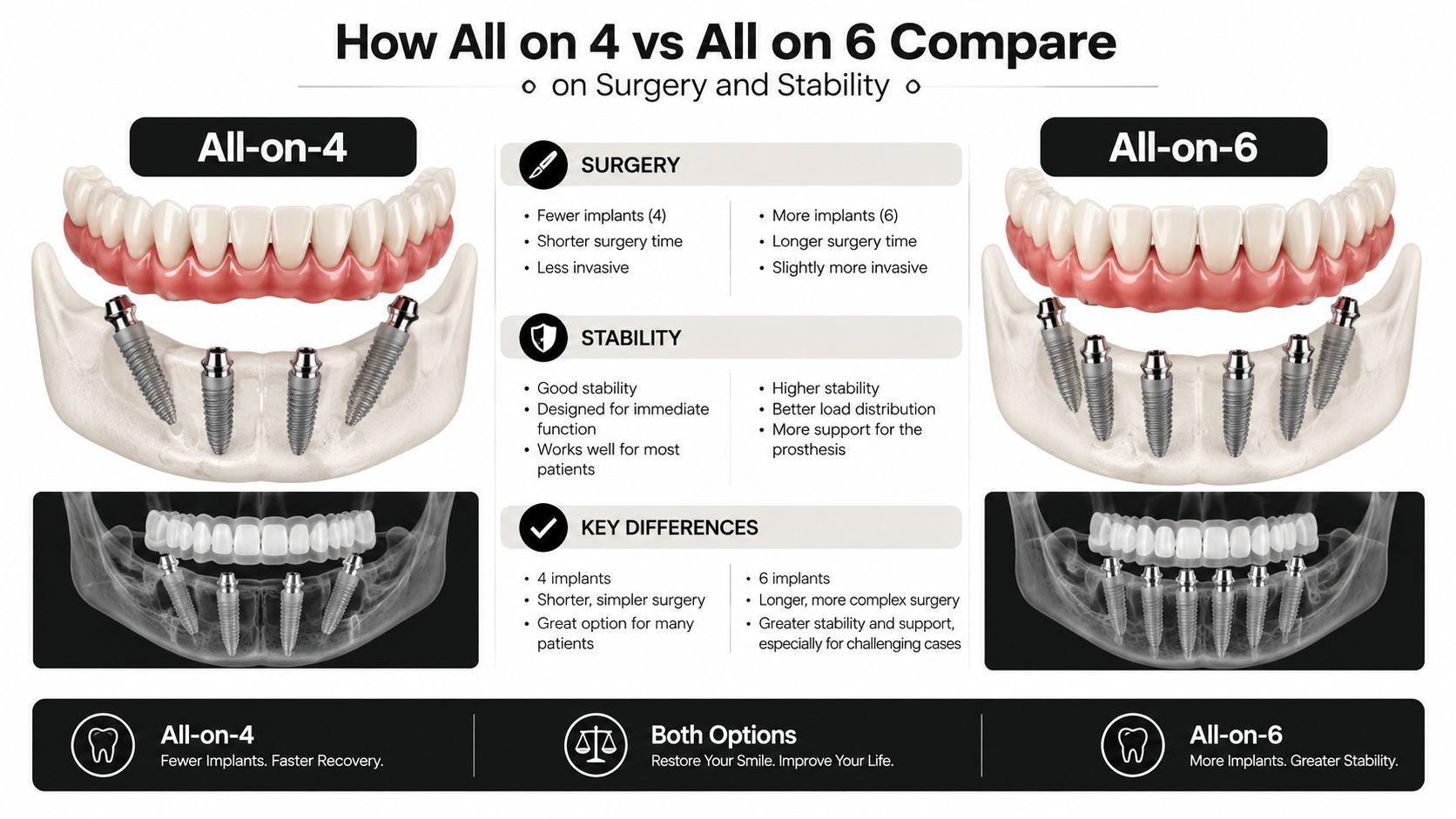
The surgical difference is straightforward, but its clinical meaning varies from patient to patient. All-on-4 places four implants, with the posterior pair angled about 30 to 45 degrees to bypass anatomical obstacles such as the sinus or nerve canal, as described in this overview of angled posterior implant placement. All-on-6 uses two additional support points, often allowing force to be shared across a wider section of the arch.
Surgical and Stability Comparison at a Glance
| Criteria | All-on-4 | All-on-6 |
|---|---|---|
| Implant count | Four implants per arch | Six implants per arch |
| Support distribution | Two anterior implants and two angled posterior implants | Six anchor points distributed across the arch |
| Anatomical planning | Angled posterior placement may help bypass sinus or nerve structures | More implant sites may require suitable bone in additional areas |
| Force distribution | Chewing forces are managed across four points | Chewing forces are spread across six points |
| Main planning question | Can four strategically positioned implants provide stable support? | Do two additional implants meaningfully improve support in this jaw? |
Finite-element research adds an important layer to the discussion. In a 2023 analysis, All-on-6 produced smaller maximum principal stress values in cortical bone and implants under both vertical and horizontal loading. All-on-4 showed lower stress in trabecular bone, but the authors concluded that All-on-6 had the more favorable overall biomechanical behavior in that analysis. You can review the finite-element comparison of All-on-4 and All-on-6.
That finding doesn't mean every patient needs six implants. A computer model examines stress behavior under defined conditions. Your dentist must also evaluate the shape of your jaw, the available bone, the planned teeth, your bite, and your ability to keep the area clean.
The practical differentiator: Six implants may distribute force more broadly, but four well-planned implants can still provide a fixed full-arch foundation when the anatomy and treatment plan support that approach.
For patients researching the surgical details, the All-on-4 dental procedure page offers additional treatment information. During a consultation, ask how the proposed implant positions respond to your specific anatomy rather than assuming that a higher implant count automatically creates a better result.
Who Is a Good Candidate for Each Option in Las Vegas
Candidacy begins with the jaw, but it doesn't end there. A person with adequate bone may still need a different approach if they clench heavily, struggle with daily hygiene, or have medical concerns that affect healing. Another patient with limited bone may be a strong All-on-4 candidate because angled posterior placement can make strategic use of the bone that remains.
Situations that may favor All-on-4
All-on-4 may be considered when:
- Bone is limited in the back of the jaw: Angled implants can help avoid certain anatomical boundaries.
- You want fewer surgical sites: Four implants mean fewer positions to place and monitor.
- Grafting is a concern: The design may reduce the need to pursue more extensive grafting, depending on the scan.
- The arch can be supported strategically: The number of implants matters less than whether their positions create a stable prosthetic design.
This can be relevant for a patient near Sun City Summerlin who has worn dentures for years and has experienced changes in jawbone volume. It can also matter for someone in Painted Desert Estates who wants to understand whether a fixed arch is possible without beginning with a larger grafting plan.
Situations that may favor All-on-6
All-on-6 may be considered when the jaw offers enough bone for six positions and the treatment plan benefits from broader support. Additional anchors can be useful when chewing forces are high or when the dentist wants more distributed support across the arch.
A health history review is essential. Conditions, medications, tobacco use, oral inflammation, and inconsistent home care can influence healing and maintenance. Your dentist may recommend treating active gum disease, restoring selected teeth, or completing a tooth extraction before implant placement.

What the evaluation looks for
At Aspiring Smiles, an implant consultation can include a new patient exam, dental x-rays, a review of your bite, and discussion of your goals. The team can also address cleaning and exams, restorative dentistry, cosmetic dentistry, and emergency needs so the implant plan fits your complete dental picture.
The scan doesn't decide between four and six implants by itself. It gives the dentist a map. The final recommendation should connect that map to your health, lifestyle, bite, expectations, and ability to maintain the restoration.
Cost Recovery and Daily Life After Treatment
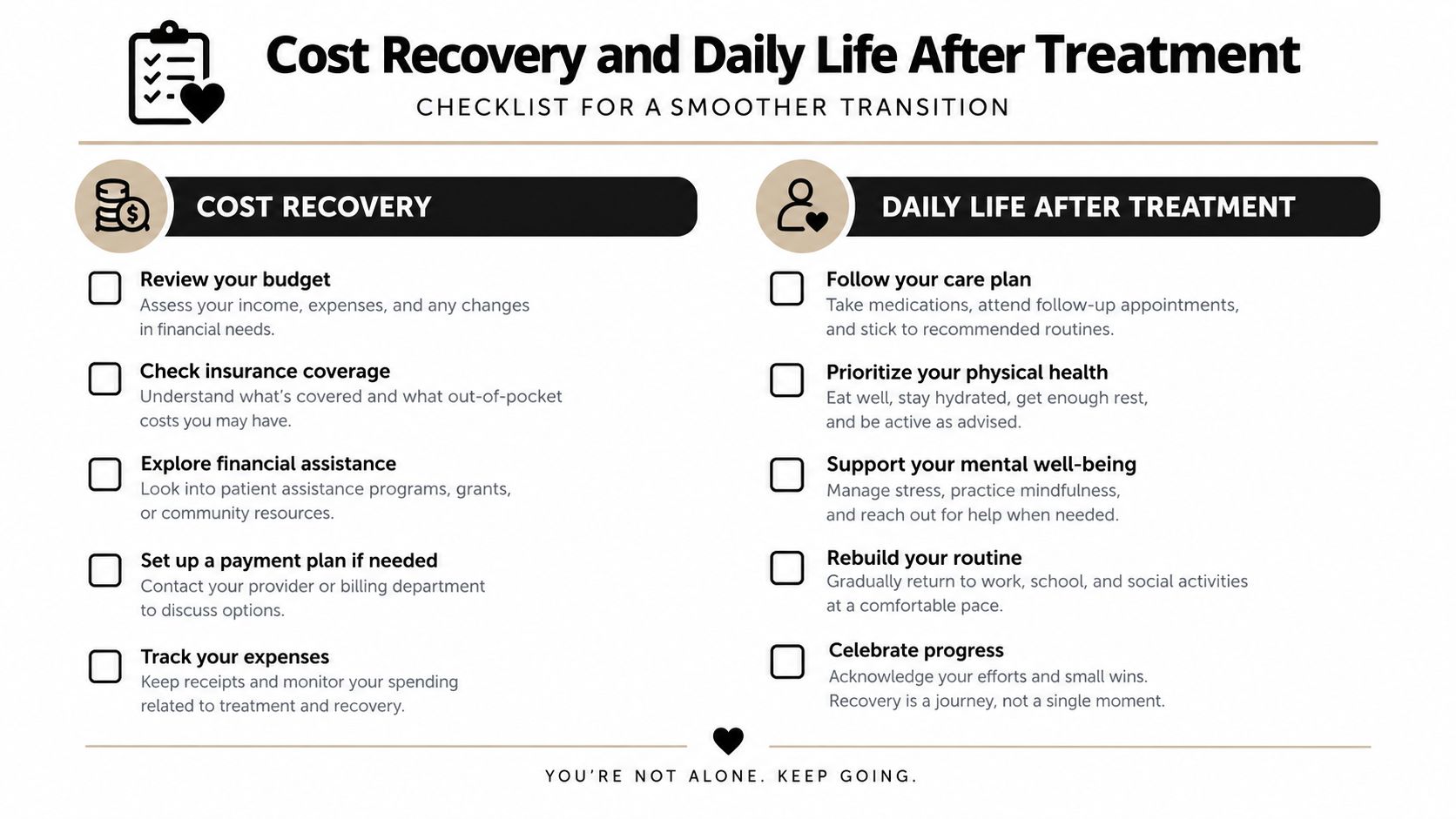
The initial investment usually differs because All-on-6 includes two more implants and related components. The final fee can also depend on extractions, the prosthesis design, materials, sedation, and other treatment needs. A written consultation estimate is more useful than relying on a generic online price.
Patients can review the practice's full-mouth dental implants cost information and ask about flexible payment options and insurance acceptance at Aspiring Smiles. Cost matters, but so does the value of replacing unstable teeth with a fixed restoration that supports eating, speaking, and smiling.
What daily life may feel like
Both approaches require a healing period while the implants integrate with the jaw. Many full-arch plans include a temporary fixed prosthesis while healing continues, followed by a final restoration after the dentist confirms that the implants are ready.
Your care team will guide your diet as your mouth heals. Early foods are generally softer, and chewing demands increase only as your provider approves. Speech may feel different at first because your tongue and lips are adapting to new tooth contours, but careful adjustment and practice can improve comfort.
A recovery checklist
- Follow the food plan: Choose the texture and chewing pattern recommended for your stage of healing.
- Protect the temporary teeth: Avoid testing the restoration with hard or sticky foods before approval.
- Clean around the prosthesis: Use the brushes, flossing aids, or water flosser your dental team recommends.
- Keep follow-up visits: Appointments allow the team to check healing, fit, bite, and hygiene access.
- Report changes promptly: Pain, swelling, movement, or a damaged temporary tooth deserves a call rather than guesswork.
The long-term benefit is practical. A stable arch can make meals less stressful, support clearer speech, and give you more freedom to smile. Cosmetic dentistry can refine tooth shade and shape, while restorative dentistry focuses on function and durability. Your final plan should address both.
Long Term Outcomes and What the Evidence Shows
The survival question deserves a balanced answer. Both All-on-4 and All-on-6 can perform well, and the available evidence doesn't establish a universal long-term winner based only on implant count.
A five-year randomized trial found no statistically significant difference in prosthetic failure or marginal bone loss between the groups. In that trial, implant failures were 1.25% for All-on-4 and 5% for All-on-6, while marginal bone loss measured 1.71 ± 0.42 mm for All-on-4 and 1.77 ± 0.47 mm for All-on-6. Overall complication rates also didn't differ significantly, as reported in this five-year All-on-4 versus All-on-6 clinical comparison.
What may require maintenance
Technical interventions may be somewhat more frequent with All-on-4, according to comparative reviews, although that doesn't mean every patient will experience a problem. A loose component, worn tooth, hygiene challenge, or bite change can affect either type of restoration.
The factors that often deserve more attention than the number four or six include:
- Bone quality: Implant support depends on the bone available at each planned site.
- Loading: Clenching, grinding, and bite design can increase mechanical demands.
- Hygiene: A fixed prosthesis still needs consistent home cleaning and professional care.
- Follow-up: Regular visits help identify small issues before they become larger repairs.
The central takeaway: Implant number alone doesn't reliably predict the outcome. The quality of the plan, the patient's anatomy, daily care, bite forces, and follow-up all shape long-term performance.
A long-term study also reported no significant overall difference in clinical results between All-on-4 and All-on-6, while noting that technical interventions may occur somewhat more often with All-on-4. The review is available through this comparative analysis of full-arch implant protocols.
Choosing Your Best Option and What to Expect at Aspiring Smiles
The most useful question isn't, “Which one lasts longer?” It is, “When do two additional implants meaningfully change my risk or support?” A recent 2026 systematic review found broadly comparable survival across short-, mid-, and long-term follow-up. Implant survival was 99.20% versus 100% at one year, 99.66% versus 98.55% at one to five years, and 98.14% versus 97.50% at five or more years for All-on-4 versus All-on-6, respectively. Mechanical complications were 5.91% versus 6.64%, and biological complications were 6.54% versus 7.41%, respectively, in the review available at PubMed's All-on-4 and All-on-6 systematic review.
Those findings support a personalized decision. All-on-4 may be sensible when available bone is limited, angled posterior support can bypass an anatomical obstacle, and avoiding additional surgical sites matters. All-on-6 may be worth considering when bone is suitable for six implants and broader force distribution fits your bite and restoration design.
What your Las Vegas visit can include
At Aspiring Smiles Dental and Braces, a visit can begin with a new patient exam, cleaning and exams, dental x-rays, and a discussion of your symptoms. If you need urgent attention, the office also provides emergency dental services, so searching for an Emergency dentist doesn't have to mean postponing a broader treatment plan.
An implant consultation should cover:
- Your current condition: Missing teeth, failing teeth, denture movement, gum health, and pain.
- Your imaging: Bone volume, anatomical boundaries, and possible implant positions.
- Your options: All-on-4, All-on-6, implant-supported dentures, or other restorative paths.
- Your daily needs: Food preferences, speech goals, hygiene routine, schedule, and budget.
- Your smile goals: Tooth shape, shade, facial support, and cosmetic concerns.
The practice serves Las Vegas patients from nearby communities and offers extended weekday and Saturday hours, online appointment requests, flexible payment options, insurance acceptance, and a membership program. Patients researching broader practice visibility may also find this resource on local SEO for dentists useful, but your treatment decision should remain grounded in a clinical evaluation, not an online ranking.
Schedule a consultation at Aspiring Smiles Dental and Braces to compare All-on-4 and All-on-6 with imaging, clear explanations, and a plan built around your mouth.
Aspiring Smiles Dental and Braces offers full-arch dental implant consultations, All-on-4 solutions, restorative care, cosmetic dentistry, and emergency dental services for patients in Las Vegas, NV. Visit Aspiring Smiles Dental and Braces to request an appointment and discuss the right path for your smile, whether you're searching for dental implants near me or an Emergency dentist.