How to Whiten Teeth Safely in Las Vegas, NV
You're in the Las Vegas mirror aisle, comparing whitening strips, trays, charcoal powders, and bright blue gels, while one question keeps coming back: how to whiten teeth safely without creating sensitivity or damaging healthy enamel. That concern is reasonable. A brighter smile should not come at the cost of painful teeth, irritated gums, or restorations that no longer match.
For patients searching for a dentist in Las Vegas, NV, a cosmetic dentist near me, or a practical answer from a trusted local dental office, the safest plan begins with diagnosis rather than the strongest product. Aspiring Smiles Dental and Braces serves patients near Desert Shores, Sunhampton, Sun City Summerlin, Monterrey, Lone Mountain, Mar-A-Lago, and Painted Desert Estates with preventive, cosmetic, restorative, and emergency dental care.
Assessing Your Smile Before You Whiten
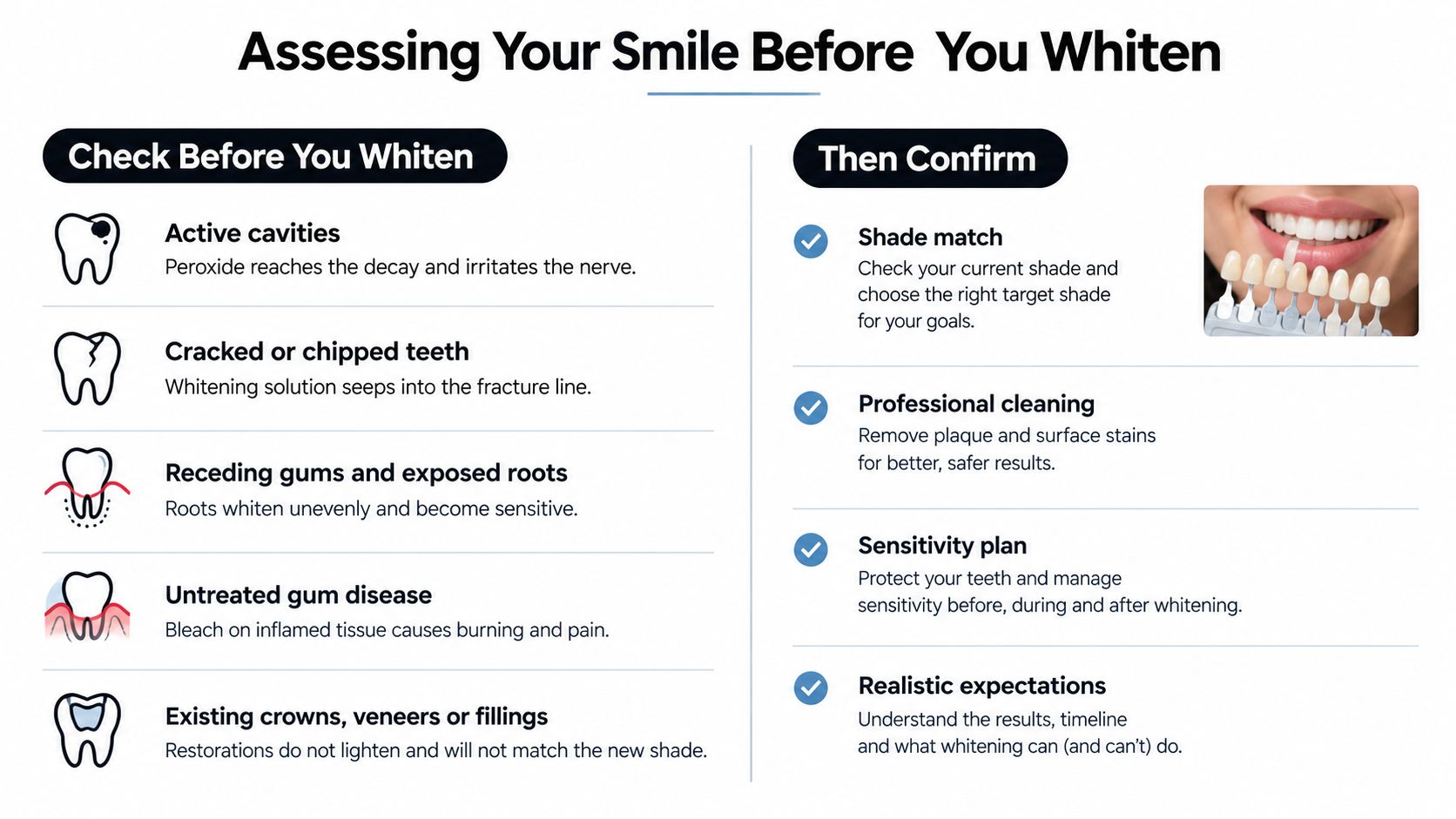
Before you chase a lighter shade, perform an honest mouth audit. Look for tooth pain, sensitivity to cold or sweets, bleeding gums, visible holes, rough edges, cracks, gum recession, or exposed root surfaces. Active cavities, cracked teeth, untreated gum disease, and inflamed tissue can make peroxide uncomfortable because the whitening gel may reach areas that natural enamel normally protects.
A recent cleaning and exam can also reveal plaque, calculus, or decay that makes teeth look darker. Dental x-rays may be appropriate when symptoms or hidden problems raise concern. Whitening is designed for healthy natural tooth structure, not as a substitute for a new patient exam or restorative dental care.
Identify the kind of discoloration
Stains on the outside of enamel often come from coffee, red wine, tobacco, or accumulated plaque. Those stains may respond to a professional cleaning, polishing, or peroxide whitening. Color changes inside the tooth need a different conversation. Brown bands associated with tetracycline, gray tones after trauma, and yellow buildup from drinks or tobacco don't respond in exactly the same way.
Check your habits, too. Smoking, nighttime grinding, acidic drinks, and inconsistent brushing can increase staining or leave enamel and gums more vulnerable. Whitening compounds work best when they contact clean, intact tooth surfaces rather than heavy biofilm or already-irritated tissue.
Check restorations and recent treatment
Crowns, veneers, and composite fillings won't lighten when natural enamel is bleached. If they sit in the smile line, whitening first can make the mismatch more obvious. Tell your dentist about recent fillings, crowns, veneers, gum treatment, or other dental work, especially if it was completed within the last two weeks.
Practical rule: The safer starting point is the lowest-intensity method your teeth and gums can tolerate while still addressing the type of stain you have.
That assessment helps determine whether an over-the-counter strip, dentist-supplied tray, or in-office appointment makes sense. It also prevents spending money on a treatment your mouth isn't ready to tolerate.
Comparing Safe At-Home Whitening Options
居家美白不是單一療程。過氧化物美白貼片、牙醫提供的牙托、預填式牙托、塗抹型凝膠和美白牙膏,在牙齒上的接觸均勻度、停留時間,以及處理表面染色或較深色澤的能力都不同。對拉斯維加斯患者而言,選擇還要配合敏感牙齒、既有補綴物,以及能否每天按時使用。
一項比較市售貼片與含 10% carbamide peroxide 牙托美白的研究,發現兩者整體美白效果相近,牙齒或牙齦敏感風險也沒有顯著差異,詳見發表於 Clinical Oral Investigations 的統合分析。這不表示所有貼片和牙托都能互換。貼合度、使用說明、產品品質,以及開始療程時的牙齒與牙齦狀況,都會影響安全性和結果。
美國牙醫協會指出,居家系統常使用 10% 至 38% carbamide peroxide,每日配戴時間則依產品與濃度而定,可能是 2 至 10 小時,持續 6 至 28 天(American Dental Association whitening guidance)。診所內美白採用不同濃度與較短的接觸安排,不宜直接用居家產品的時間表套用。
At-Home Whitening Methods at a Glance
| Method | Active Concentration | Typical Wear Time | Expected Shade Change |
|---|---|---|---|
| Peroxide whitening strips | Product-dependent peroxide formulation | Follow the package instructions | Gradual improvement, especially for surface staining |
| Dentist-supplied custom trays | Commonly carbamide peroxide | Concentration-dependent daily wear | More even, controlled whitening across natural teeth |
| Pre-filled trays or brush-on gel | Product-dependent peroxide formulation | Follow the package instructions | Variable, usually modest to gradual |
| Whitening toothpaste | Abrasives or low-dose peroxide | Used during normal brushing | Surface stain removal, not deep bleaching |
美白牙膏可改善外源性染色,但系統性回顧顯示,其不良反應多於一般牙膏。它較適合作為維持,而不是取代漂白療程。產品若沒有清楚列出有效成分與使用方式,應先暫停使用並詢問牙醫。
需要方便、可在家完成的方案時,可先參考 Aspiring Smiles' instant at-home teeth whitening,再確認是否適合自己的牙齒狀況。若你容易敏感、希望牙托更貼合,或日程繁忙,牙醫監督下的客製化居家方案通常更容易調整。也可查看 Grand Parkway Smiles on safe whitening 的居家美白比較,了解不同方法的實際取捨。
What Professional In-Office Whitening Really Involves
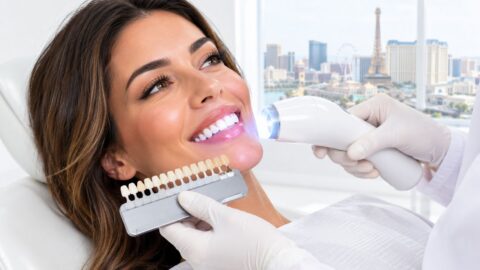
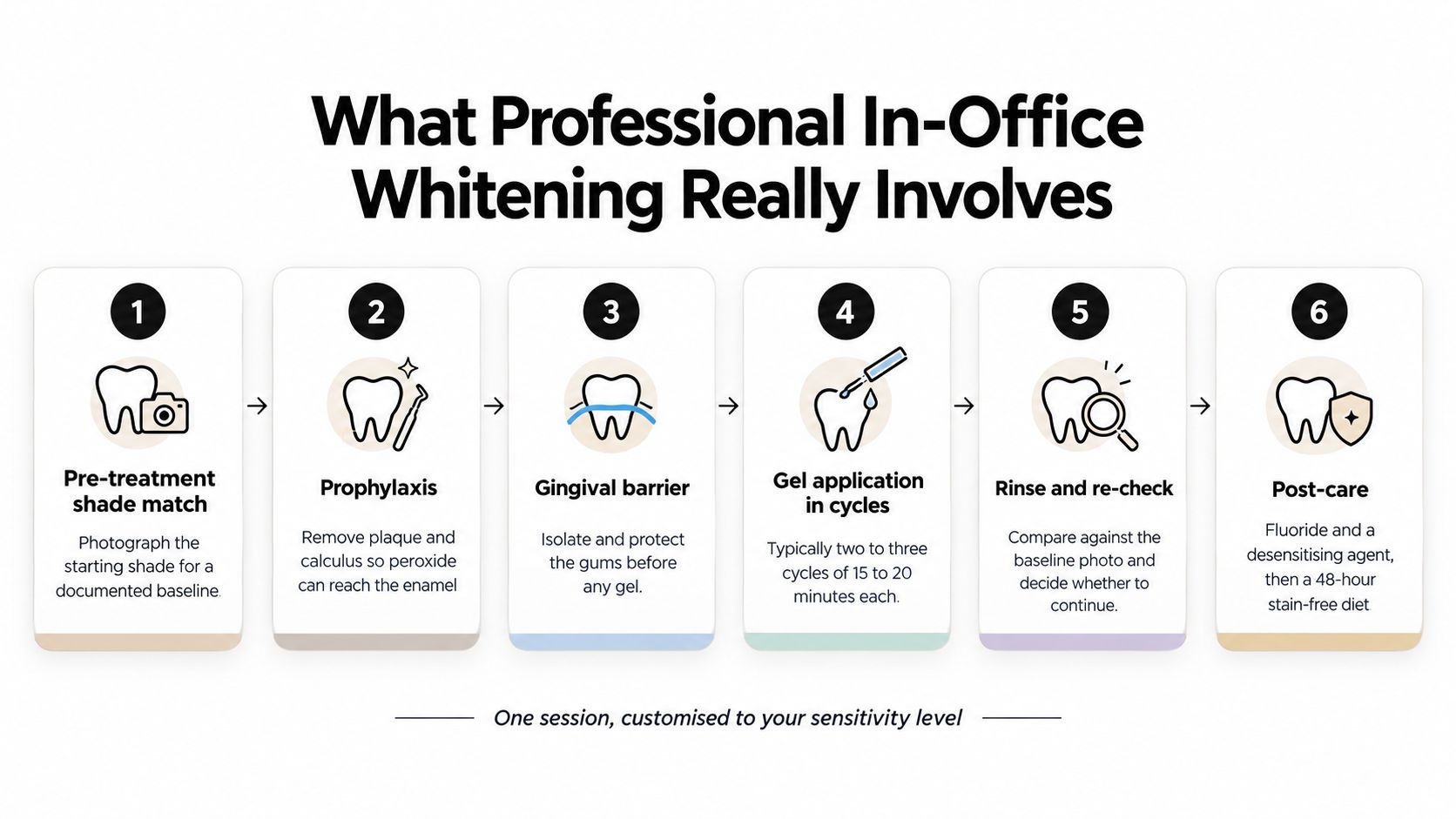
Professional whitening is a sequence of controlled steps, not a light pointed at your teeth. At a Las Vegas dental practice, the appointment should begin with a shade assessment and photographs so the starting color is documented. That baseline helps the dentist evaluate the result without relying only on memory or bathroom lighting.
A cleaning may be recommended first if plaque or calculus blocks even gel contact. The dentist then protects the soft tissues with cheek retractors, cotton rolls, and a liquid dam or resin barrier. This isolation matters because peroxide can irritate the gums when it sits against them.
How the appointment is controlled
Professional in-office whitening commonly uses hydrogen peroxide concentrations ranging from 15% to 43%, and higher concentrations can create visible results after a single appointment because exposure is carefully managed (American Dental Association News). The gel is applied in timed cycles, then removed or rinsed between applications. Some systems use an LED or laser, but the peroxide gel remains the bleaching component. The light may help accelerate the process rather than whitening teeth by itself.
Your dentist checks the gums and comfort level throughout the visit. Suction and rinsing reduce the chance that gel remains on soft tissue. A final fluoride or desensitizing application can help calm the teeth before you leave.
What you should understand before consenting
Professional whitening can be a good fit for a busy schedule, an upcoming event, or staining that hasn't responded to surface cleaning. It can also be adjusted more easily when you already have sensitivity. The trade-off is that in-office whitening may cause more intense short-term sensitivity than at-home whitening, while at-home treatment tends to be milder but can recur during repeated use. A 2025 narrative review reported sensitivity ranges of 37% to 90% for at-home cases and 17% to 100% for in-office cases, emphasizing why exposure control and communication matter (PubMed review).
The goal isn't to tolerate the most powerful treatment. It's to choose a controlled plan that suits your enamel, gums, restorations, timeline, and comfort.
Whitening Myths That Can Damage Your Enamel
A bright smile does not justify scraping, acid exposure, or uncontrolled peroxide use. Many DIY ideas seem harmless because they use familiar household products, but removing enamel or irritating gum tissue isn't the same as bleaching the tooth. Safer whitening starts with a known active ingredient, controlled exposure, and a plan for sensitivity. That matters in Las Vegas, where dry conditions, frequent iced drinks, and busy schedules can make already sensitive teeth harder to manage.
Charcoal doesn't equal bleaching
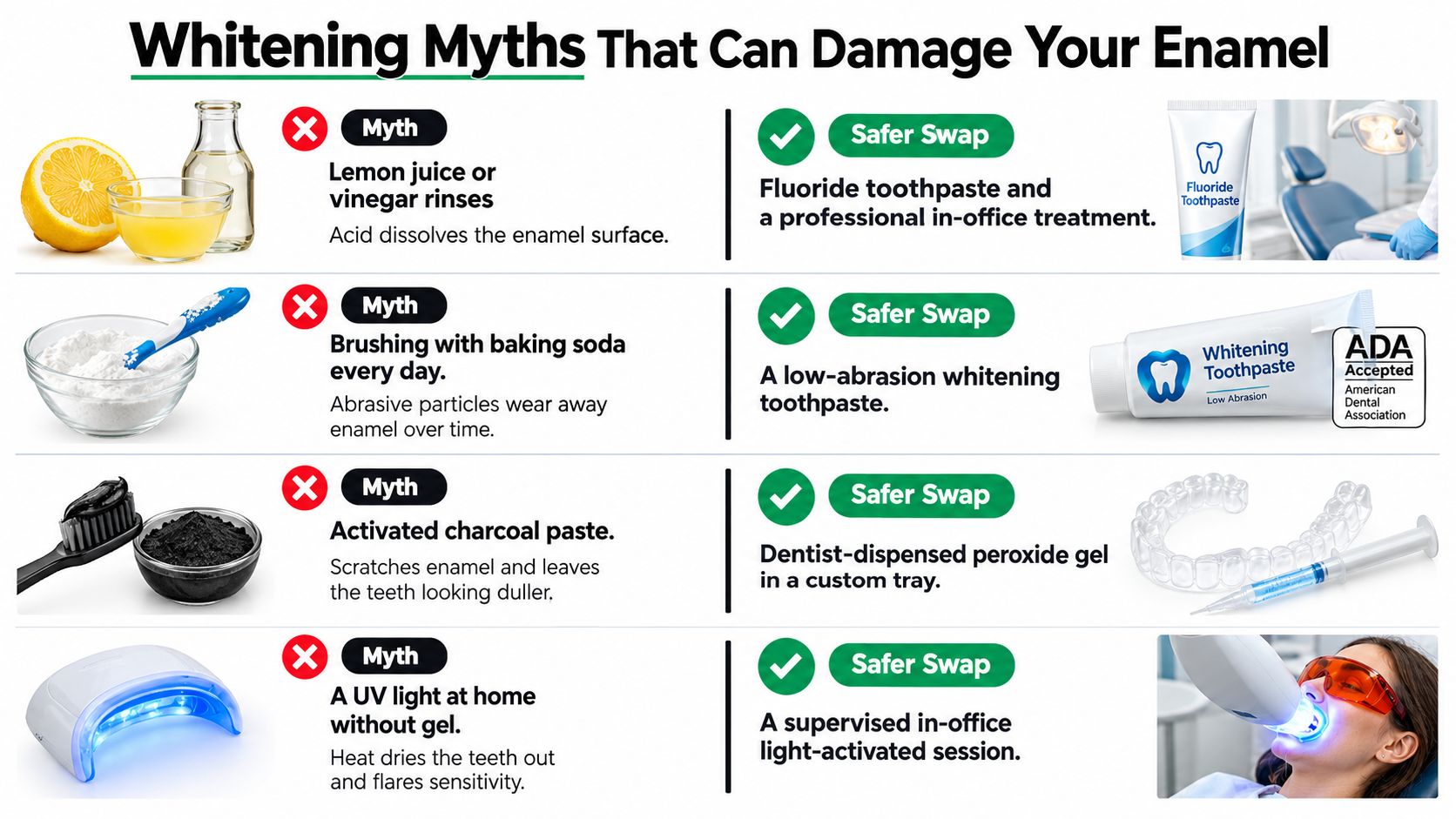
Activated charcoal paste may remove some surface debris, but repeated abrasive brushing can roughen enamel. An irregular surface can collect stain more easily and look dull instead of bright. Charcoal also makes it difficult to know whether a product contains peroxide or how much whitening activity it provides.
Use an evidence-supported peroxide strip or dentist-dispensed gel in a custom tray instead. If discoloration is mainly tartar or plaque, schedule a professional cleaning rather than brushing harder. That option usually fits patients with busy Las Vegas schedules better because it addresses the source of the stain without adding repeated abrasion at home.
Baking soda needs restraint
Baking soda appears in some oral-care products, but daily scrubbing with loose powder creates a different level of exposure. Heavy pressure or a hard-bristled brush can wear the enamel surface. Baking soda also does not reliably bleach the dentin beneath enamel.
A low-abrasion whitening toothpaste with the American Dental Association Seal of Acceptance offers more controlled surface-stain maintenance. Fluoride toothpaste supports routine enamel care, while the whitening component can remove some external discoloration. The shade change will still be more limited than with a peroxide treatment.
Lemon and citrus create an acid problem
Rubbing lemon on teeth or rinsing with lemon juice exposes enamel to acid. Brushing immediately afterward adds friction while the surface is softened. As enamel wears thinner, the naturally darker dentin underneath may show through, making teeth look more yellow rather than whiter.
Use fluoride toothpaste and address staining with professional cleaning or supervised whitening. Limit acidic drinks around a whitening routine as well. Repeated acid exposure can make sensitivity harder to control, especially when enamel is already worn or gum recession has exposed root surfaces.
Oil pulling isn't a bleaching treatment
Oil pulling may be part of a personal oral-care routine, but it should not replace peroxide whitening or professional stain removal. Depending on it for a brighter smile can delay evaluation of decay, gum disease, or a tooth that darkened after trauma. Those problems need diagnosis, not a cosmetic rinse.
A product without a clearly identified active ingredient, concentration, and directions does not belong in a controlled whitening plan.
A sensitivity plan for people who already get zingers
Sensitivity is the most common whitening side effect. Evidence reviews describe it as generally mild to moderate and temporary when peroxide products are used as directed, although some patients remain uncomfortable longer (review of peroxide whitening safety). A patient who already gets “zingers” should adjust the plan before starting, not tolerate more discomfort.
- Before whitening: Use a desensitizing toothpaste containing potassium nitrate or stannous fluoride for two weeks. Patients at higher risk may benefit from dentist-applied fluoride varnish or a casein phosphopeptide-amorphous calcium phosphate, CPP-ACP, paste.
- During treatment: Ask about a lower-concentration approach, such as 10% to 16% carbamide peroxide, shorter wear times, and sessions spaced 48 hours apart. Patients with known sensitivity generally should not sleep in whitening trays unless their dentist specifically directs it.
- After treatment: Rinse with lukewarm water, use potassium nitrate gel if recommended, and avoid acidic or very hot and cold foods for 24 hours. A soft-bristled brush and fluoride toothpaste can reduce additional irritation.
- For pain relief: Ibuprofen may suit some adults, but medication safety depends on medical history, allergies, pregnancy status, and other medicines. Ask a dentist or physician before taking it automatically.
Sensitivity that continues beyond 72 hours calls for professional evaluation rather than another whitening cycle. Decay, a crack, recession, or another condition may be causing the pain. In a Las Vegas dental office, that examination helps separate a manageable whitening reaction from a problem that whitening cannot solve.
Whitening Safely With Crowns, Veneers, and Fillings
A patient with porcelain crowns or veneers on the front teeth may want to brighten the natural teeth around them. Peroxide can lighten natural enamel, but it won't change the shade of those restorations. The practical sequence is to whiten the natural teeth first, allow the color to settle, and then discuss whether replacement is needed for a closer match.
A patient with visible composite fillings in the smile line needs a different expectation. Whitening may improve the surrounding natural teeth while the composite stays the same color. Selective re-bonding after bleaching stabilizes can produce a better match than replacing fillings before whitening.
Gum recession creates another planning issue. Strips can overlap vulnerable tissue and cause burning, while custom trays can be designed with better gel control and space around sensitive areas. A dentist may recommend treating gum inflammation first and keeping peroxide away from exposed roots.
Staging principle: Stabilize gum health, whiten natural tooth structure, allow the shade to settle, then restore or re-bond to match.
This approach is especially important after recent dental work. A consultation can identify whether a crown, veneer, filling, or natural tooth is creating the apparent discoloration. If a tooth has darkened after trauma, whitening may require a separate evaluation rather than a standard cosmetic treatment.
Patients considering veneers, crowns, restorative dentistry, or dental implants should coordinate shade decisions with the dentist before final restorations are made. Dental implants themselves don't bleach, and the visible crown attached to an implant must be planned around the surrounding smile.
Maintaining Results Without Overdoing It
Whitening maintenance should protect your teeth, not keep them in a permanent bleaching cycle. For patients using at-home peroxide, a 90-day touch-up cadence can be a practical starting framework when a dentist confirms that the teeth and gums remain healthy. Patients who choose in-office whitening may discuss a six-to-twelve-month interval between visits, depending on staining and sensitivity. Your dentist should also set a limit on cumulative peroxide exposure rather than encouraging repeated treatment whenever the shade looks slightly less bright.
Las Vegas routines can include coffee during a work commute, red wine at dinner, turmeric-heavy meals, or cold brew enjoyed around the Strip. You don't have to eliminate every favorite drink. Rinse with water afterward, use a straw for iced beverages when practical, and avoid letting staining liquids sit against the teeth for long periods.
Keep the daily routine simple
Brush with fluoride toothpaste and a soft or appropriately controlled electric brush head. Clean between the teeth with floss or another interdental tool that fits comfortably. A whitening toothpaste can help maintain surface brightness, but aggressive pressure or constant use of a highly abrasive formula can increase irritation.
A professional cleaning and exam can remove new buildup before it becomes a stubborn stain. Patients who want specific guidance after treatment can review teeth whitening aftercare from Aspiring Smiles and follow the instructions provided for their own product.
Pause before repeating treatment if you notice:
- Uneven fading: A new dark area may indicate decay, trauma, or a restoration mismatch.
- Gum changes: White, peeling, or burning tissue needs time and sometimes treatment before whitening resumes.
- Rapid rebound: Shade returning within four weeks suggests a staining or dental-health issue that deserves assessment.
- Persistent sensitivity: Ongoing pain is a reason to contact a dentist, not to add more gel.
When to See a Las Vegas Dentist About Whitening
Stop whitening and contact a dentist if sensitivity continues, gum tissue turns white or peels, crowns or fillings look different from nearby teeth, or you suspect decay. Sensitivity and gum irritation can occur with whitening, but an examination helps separate a temporary reaction from a cavity, crack, gum recession, or another dental problem.
A Las Vegas dentist can adjust the plan with desensitizing treatment, a custom tray, shorter exposure, or better gum protection. Cracked enamel and unusual sensitivity after radiation treatment require evaluation before routine cosmetic whitening, with medical coordination when appropriate. Patients with packed workdays may benefit from a supervised in-office visit, while those who need tighter control over sensitivity may prefer a custom take-home plan.
Local conditions can affect comfort. Las Vegas heat and dehydration may worsen dry-mouth discomfort, and a busy schedule can make aftercare easy to miss. Be cautious with unregulated kits sold through convenient retail channels. European guidance considers products containing up to 0.1% hydrogen peroxide suitable for consumers, products above 0.1% up to 6.0% appropriate only after consultation, and concentrations above 6% unsafe in that opinion (European Commission Scientific Committee opinion). Australian policy states that products above 6% hydrogen peroxide or above 18% carbamide peroxide should be used or supplied only by registered dental practitioners (Australian Dental Association policy).
For background on oral bacteria and toothbrush hygiene, read this explanation of Streptococcus pyogenes. It does not replace an examination if your gums hurt, bleed, or react to whitening.
At Aspiring Smiles, a consultation may include baseline shade photographs, a restoration check, a gum-health screen, and a comparison of at-home and in-office options. The visit is informational, so you can understand the trade-offs before choosing treatment.
Aspiring Smiles Dental and Braces offers supervised Zoom teeth whitening and custom take-home options for Las Vegas patients. Visit Aspiring Smiles Dental and Braces to request a consultation about whitening, cleaning and exams, cosmetic dentistry, or related dental care.