What Is a Wax Try in for Dentures? a Patient Guide
A wax try-in is a preliminary version of your denture with the teeth set in gum-colored wax, used to confirm the bite, tooth position, color, and appearance before the final denture is processed in hard acrylic. It's the rough draft of your smile, giving you and your dentist a chance to make changes while the setup is still editable.
You may hear “wax try-in” at a denture consultation in Las Vegas and wonder whether you're expected to eat with it, wear it home, or just look in a mirror. Most patients feel curious and a little nervous, especially when they're replacing teeth after years of dental problems, tooth extraction, or an uncomfortable older denture. The good news is that this appointment is built around your feedback.
At Aspiring Smiles Dental and Braces, Dr. Patel and the team help Las Vegas families understand each step, whether they're considering complete dentures, implant-supported dentures, dental implants, or All-on-4 treatment. If you're comparing options after searching for a dentist near me or a dentist in Las Vegas, NV, learning how the try-in works can make your consultation feel much more comfortable. For a broader look at the patient experience behind a dental office, you can also read Labs USA story.
Your First Look at a Wax Try-in for Dentures
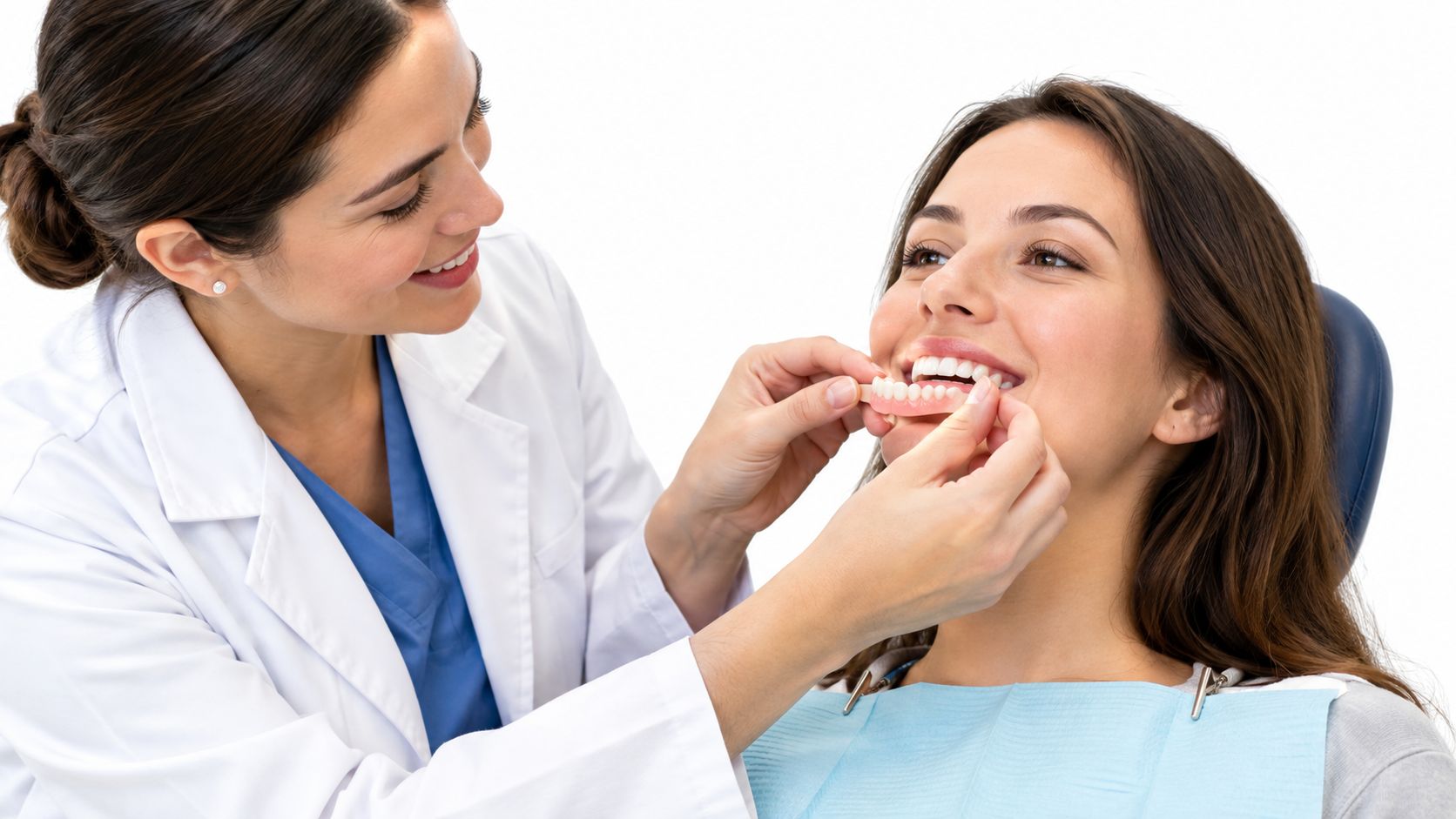
Suppose you're sitting in a Las Vegas dental chair and your dentist says, “Today, we'll check your wax try-in.” You may picture a finished denture dipped in candle wax. Instead, you'll see denture teeth arranged in gum-colored wax on a temporary base, creating a close preview of your future smile.
The dentist places this trial denture in your mouth and asks you to smile, speak, and close your teeth together. You'll look at the tooth color, size, position, and overall appearance. Your dentist also checks whether the arrangement supports your lips and whether the upper and lower teeth meet properly.
This visit matters because the teeth aren't permanently locked into hard acrylic yet. You can say, “That tooth looks too long,” “I'd like a softer shade,” or “My smile doesn't feel like me,” and the dental team can evaluate the request before final processing.
Your feedback matters: A wax try-in isn't a test you can fail. It's a planned opportunity to speak honestly before the denture becomes durable acrylic.
Patients sometimes confuse this appointment with a routine cleaning and exam, dental x-rays, or a final delivery visit. It's different. The focus is the planned denture design, not general preventive care, emergency dental services, or cosmetic dentistry alone. You can learn more about the choices involved in understanding the three types of dentures, then bring your questions to a personalized consultation.
Why Dentists Use a Wax Try-in Before the Final Denture
A wax try-in works like the rough draft of a smile. A writer edits a draft before publishing a book. In the same way, your dentist and laboratory review the tooth arrangement before the denture is converted into a finished acrylic appliance.
The laboratory arranges the denture teeth in wax on a baseplate. This setup lets the dentist examine the way the base sits, the amount of lip support, the tooth arrangement, and the relationship between the upper and lower jaws. Because the material is still wax, the team can move teeth or reshape parts of the setup with relative ease.
The clinical sequence places the try-in after the wax rim stage and before final processing. The wax rim helps establish jaw relationships and other reference points. The try-in then gives the dentist and patient a working preview before the laboratory replaces the wax with hard acrylic. The Indian Health Service describes this checkpoint as part of the complete denture sequence and notes that changes may require more than one appointment. The Indian Health Service denture appointment guide also explains why this stage comes before final processing.
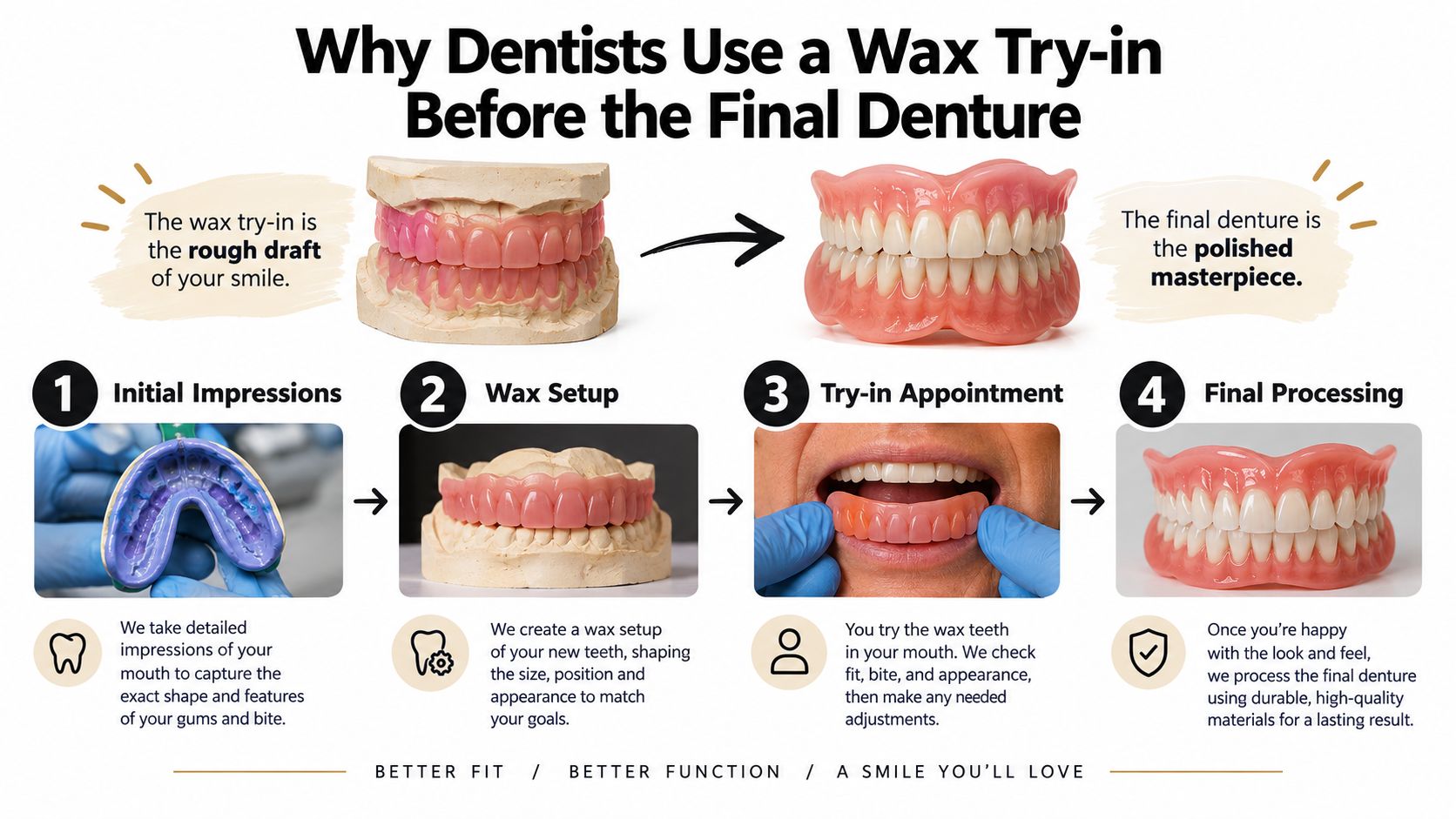
Once the wax is replaced by processed acrylic, changes become more difficult. That doesn't mean every later adjustment is impossible, but moving teeth, changing the bite, or altering appearance can require more laboratory work. The wax stage protects you from approving a design you haven't truly seen or tested.
Wax has also played a role in dental reconstruction for centuries. Historical prosthodontic teaching traces an early use of wax for replacement teeth to 1711, when German surgeon Mattheus Gottfried Purmann recommended modeling replacement teeth in wax before carving them in ivory, as described in the step-by-step denture process guide. The material and technology have changed, but the practical idea remains familiar: shape the prototype before making the final version.
What Your Dentist Checks at the Wax Try-in Appointment
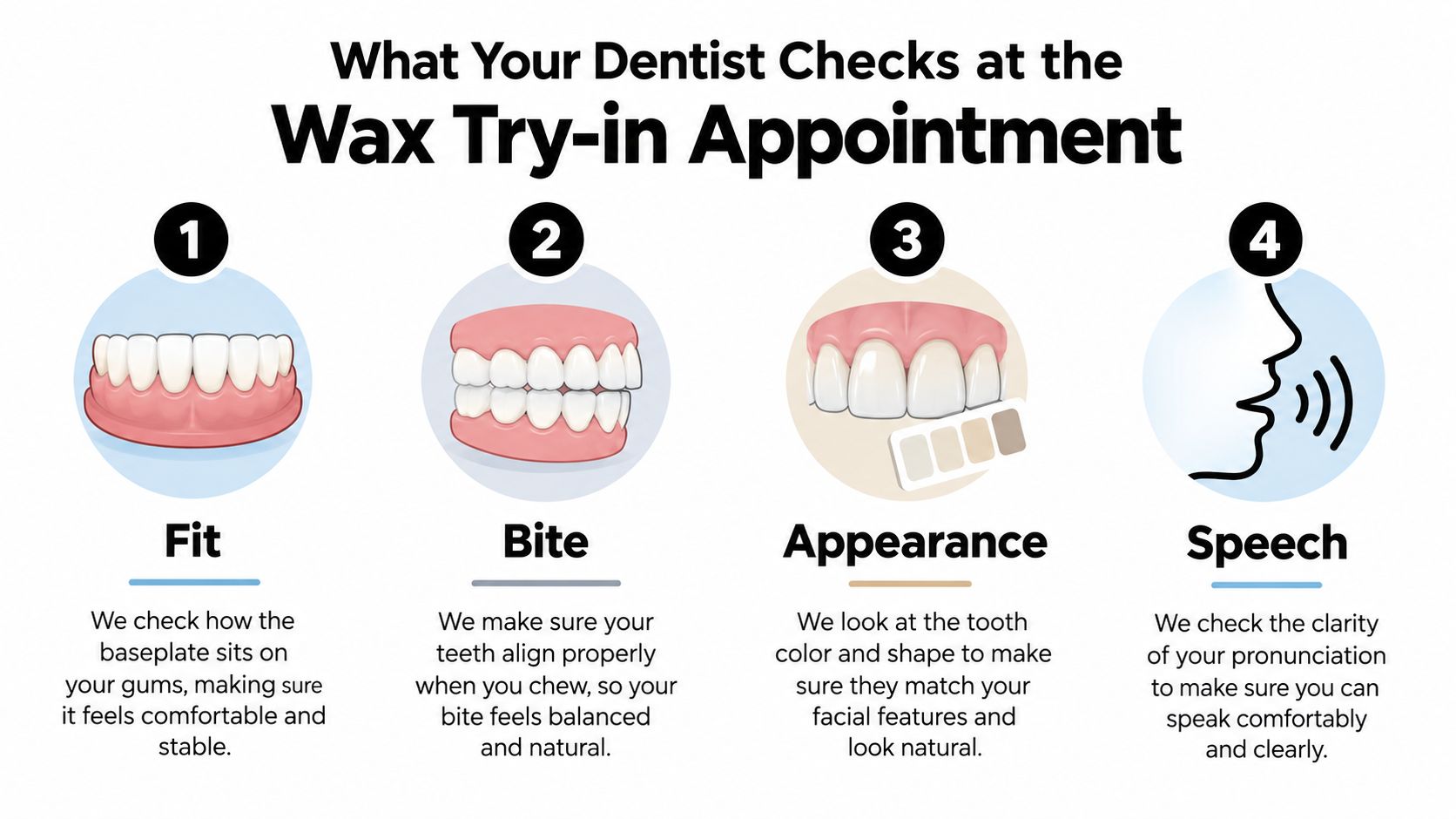
Your dentist isn't looking only at whether the smile appears attractive. The appointment checks several clinical details that affect comfort, speech, chewing, and facial balance.
Fit and the base
The dentist looks at how the temporary baseplate rests on your gums. For an upper denture, this includes evaluating the posterior palatal seal, an area that contributes to the seal at the back of the appliance. The wax base may not feel like the finished denture, so the dentist focuses on whether the setup is positioned correctly and whether the records support the planned fit.
Bite and jaw position
You'll be asked to close your teeth together while the dentist evaluates the vertical dimension of occlusion, or the planned height of the bite. The team also checks centric relation, which describes the repeatable relationship between the upper and lower jaws used for the denture setup.
A balanced bite helps the denture teeth meet in a controlled way. Your dentist may ask you to relax your jaw, close gently, and repeat the movement so the relationship can be assessed rather than guessed.
Appearance and lip support
You'll smile, relax your lips, and look at the arrangement from different angles. The dentist checks the tooth mold, shade, size, midline, position, and the amount of support the teeth provide to your lips. Small changes can affect whether the smile looks natural or whether the face appears too full or too sunken.
Speech and sound testing
Speech gives the dentist another way to evaluate tooth position and bite height. F and V sounds can help assess the position of the upper front teeth, while sibilant sounds such as S can help evaluate the vertical dimension and speaking space. You may read a few words, count, or repeat phrases.
A useful approach: Speak naturally, then tell the dentist exactly what feels different. Your voice can reveal a position issue that isn't obvious from a mirror view.
These checks explain why a wax try-in is more than a cosmetic preview. It verifies functional and measurable relationships before the final denture is completed.
How a Wax Try-in Differs From Your Final Dentures
The wax try-in and final denture may look similar, but they serve different purposes. The trial version helps the dental team evaluate the design. The finished appliance is made for regular use after the laboratory processes and polishes it.
| Feature | Wax Try-in | Final Denture |
|---|---|---|
| Material | Soft, gum-colored wax on a temporary base | Hard processed acrylic with permanently positioned teeth |
| Main purpose | Evaluation and approval | Daily chewing, speaking, and smiling |
| Appearance | Close preview with a visible wax base | Polished, finished gum-colored acrylic |
| Eating | Not intended for regular eating | Designed for normal denture function as directed |
| Changes | Tooth position, appearance, lip support, and bite can be reviewed and adjusted more easily | Changes are more limited and may require additional laboratory work |
| Comfort | May feel unusual, temporary, or slightly loose | Designed for the final fit, followed by adjustment if needed |
A wax base is a carrier for the teeth, not the final foundation you'll use every day. It may feel awkward when you speak or close your mouth. That doesn't automatically mean the final denture will feel the same.
Judge the try-in by the tooth position, bite, speech, lip support, and appearance. Minor differences after processing are normal because wax is replaced with acrylic and the appliance is finished and polished. If something looks or feels wrong during the trial, mention it before approval.
Common Adjustments and Red Flags to Speak Up About
You're an active participant in this appointment. The dental team can inspect the setup carefully, but they can't know that a tooth feels too prominent or that the smile looks unfamiliar unless you say so.
Common changes may include:
- Tooth position: A front tooth can be moved slightly to improve symmetry, speech, or the appearance of the smile.
- Tooth length and shape: The dentist and laboratory can refine the visible proportions if the teeth seem too long, short, large, or small.
- Shade and mold: You can discuss whether the selected color and tooth shape look natural for your face.
- Lip support: The arrangement can be evaluated if your lips appear over-supported, under-supported, or different from what you expected.
- Bite: The team can review uneven contacts or a closing pattern that doesn't feel balanced.
Speak up if your smile feels “not like me,” your speech feels awkward, the teeth look oversized or undersized, or the bite meets unevenly. You can also ask a trusted family member to look at the smile, provided their opinion helps you feel confident rather than pressured.
If a change requires another try-in, that's usually a sign that the team is taking the design seriously. The Indian Health Service notes that the wax try-in can require more than one appointment when revisions are needed. This is still easier than discovering the same issue after the denture has been processed.
The appointment is your last convenient point for major edits before acrylic processing. Honest feedback now can prevent disappointment later.
A short demonstration can help patients recognize why the try-in deserves careful attention:
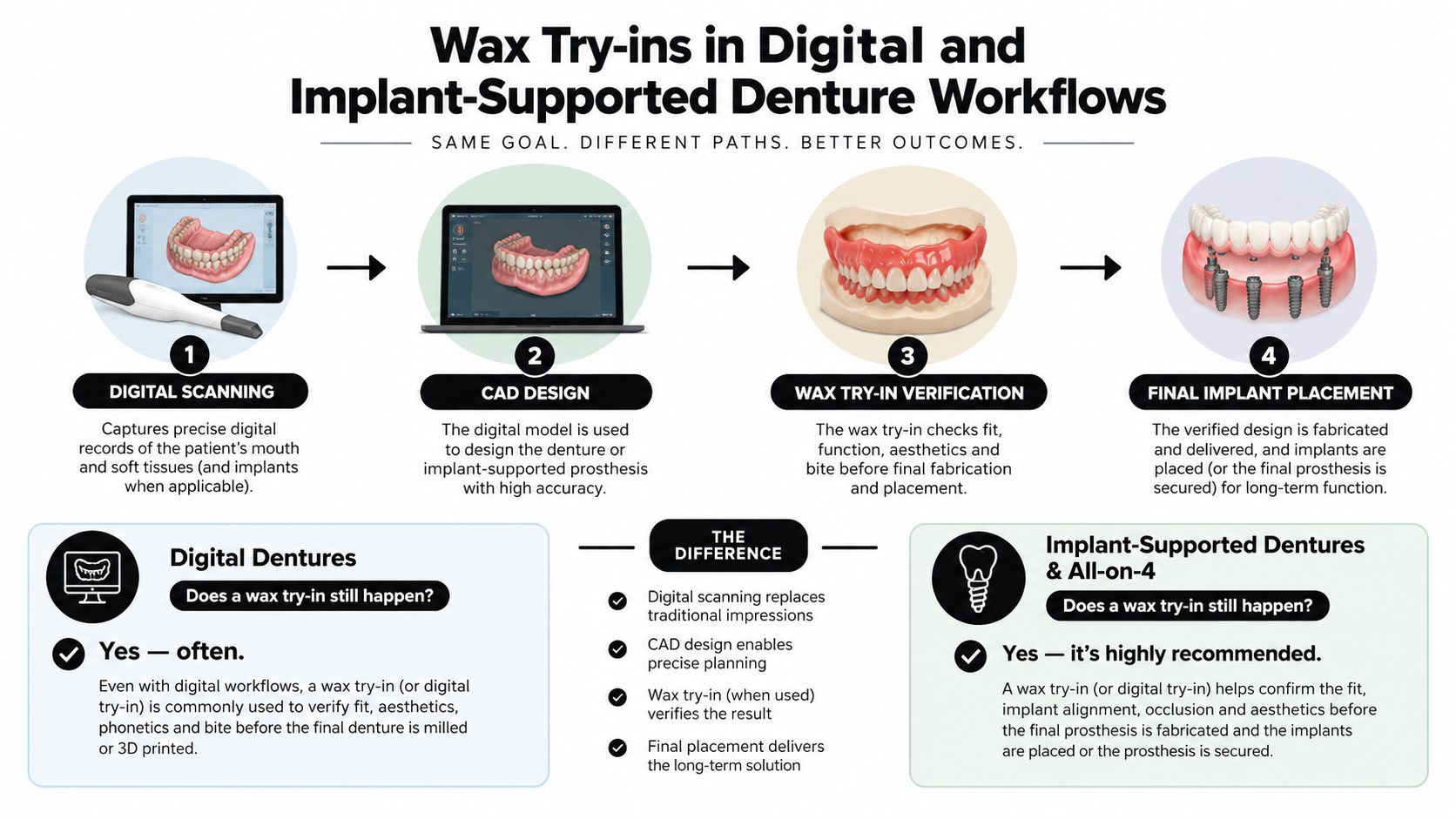
Wax Try-ins in Digital and Implant-Supported Denture Workflows
Digital dentistry changes the tools, but it doesn't remove the need to verify the result. Depending on the case and the laboratory workflow, the try-in may be physical, digital, or hybrid.
A digital case may begin with scans and computer-aided design. The laboratory can then produce a printed try-in so the dentist and patient can assess the planned tooth arrangement in the mouth. In some fully digital protocols, the dentist uses a printed try-in followed by a rescanned wash impression. That scan-back information can help the laboratory redesign or refine the final denture.
The important question is not just, “Do I still get wax?” It's, “What will my dentist verify before the final appliance is made?” The answer still includes the bite, tooth position, lip support, speech, and appearance, even if the preview is printed rather than made from traditional wax.
Implant-supported and All-on-4 cases
Implant-supported dentures and All-on-4 restorations add another layer of planning because the final restoration must relate accurately to the implants. The trial stage can help the dentist review the tooth arrangement, bite, facial support, and intended relationship before the final prosthesis is completed.
This doesn't mean every patient follows the same appointment sequence. Your dentist may recommend a conventional wax setup, a printed try-in, a digital review, or a combination. Patients considering dental implants near me, implant-supported dentures, or All-on-4 can ask which verification method their case requires and what changes remain possible at each stage.
For conventional and implant-supported cases alike, the principle is straightforward: verify the planned result before committing to the final material. You can review the available treatment approach through the practice's latest dentures options and discuss whether a digital, traditional, or hybrid workflow fits your needs.
Your Next Steps Toward Comfortable Dentures in Las Vegas
After you approve the try-in, the laboratory processes the denture in acrylic, permanently secures the teeth, and finishes the appliance. At delivery, your dentist checks the fit and bite again, explains cleaning and handling, and identifies any areas that may need fine-tuning as you begin using the denture.
Bring questions to the try-in. You might ask:
- Bite: Does the bite look balanced when I close gently?
- Appearance: How will the shade and tooth shape look in natural light?
- Speech: Do any sounds suggest that a tooth needs repositioning?
- Follow-up: What adjustments might I need after delivery?
- Alternatives: Would a conventional, implant-supported, or All-on-4 option better match my goals?
A patient-centered dentist should explain the choices without rushing you. The same office may also help with related needs, from tooth extraction and restorative dentistry to dental implants, cosmetic dentistry, teeth whitening, dental x-rays, new patient exams, and emergency dental care. That can make treatment easier when your denture plan connects with broader oral health concerns.
Aspiring Smiles Dental and Braces serves patients throughout Las Vegas, NV, including Desert Shores, Sunhampton, Sun City Summerlin, Monterrey, Lone Mountain, Mar-A-Lago, and Painted Desert Estates. The practice offers flexible payment options, Saturday hours, and online appointment requests for patients who want to discuss dentures or other care with Dr. Patel.
If you're ready to review a new denture, implant-supported denture, or All-on-4 option, schedule a consultation with Aspiring Smiles Dental and Braces. Dr. Patel and the team can explain what your try-in will involve, answer your questions, and help you take the next step toward a comfortable, natural-looking smile in Las Vegas.