Emergency Dentist Near Me: Immediate Care in Las Vegas
A dental emergency usually starts the same way. You’re eating, talking, playing with your kids, or trying to get through the evening, and then something changes fast. A tooth starts throbbing. A crown comes off. A child takes an elbow to the mouth. Your next search is often emergency dentist near me, because you need help now, not next week.
If you’re in Las Vegas, NV, including Desert Shores, Sunhampton, Sun City Summerlin, Monterrey, Lone Mountain, Mar-A-Lago, or Painted Desert Estates, the right first steps can make a real difference. Good emergency care isn’t only about getting seen quickly. It’s also about knowing what to do in the first minutes, what not to do, and what kind of office is best equipped to treat the problem.
Navigating a Dental Emergency in Las Vegas
A common call sounds like this. It’s late in the day, someone has a severe toothache, and the pain has gone from annoying to hard to ignore. They’ve tried to wait it out. They’ve taken a look in the mirror. Now the jaw feels sore, the tooth hurts when they bite, and they’re wondering if this can wait until morning.
Sometimes it can’t.
Dental pain tends to escalate when the cause is pressure, infection, a cracked tooth, or an exposed nerve. The same is true when a filling breaks, a tooth chips severely, or swelling starts to build. In those moments, patients don’t need vague advice. They need calm direction and a clear path to treatment.
What people usually need first
Most patients are asking three questions at once:
- Is this serious: Does this need same-day care, or can it wait?
- What should I do right now: Ice, rinse, save the tooth, avoid chewing?
- Where should I go: A dental office, urgent care, or the ER?
That uncertainty adds stress. It’s one reason practical guidance matters so much, especially for families trying to make a quick decision after school, after work, or on a weekend in Las Vegas.
Practical rule: If the problem involves a tooth, gum, crown, filling, or dental injury, start by calling a dental office that handles urgent treatment. The sooner you get clear instructions, the less likely you are to make the problem worse.
If you want a second set of general instructions while you’re waiting to be seen, this patient-friendly guide on how to handle dental emergencies from Clayton Dental Studio is useful because it focuses on immediate decisions people face at home.
Why local access matters
In Las Vegas, traffic, work schedules, and after-hours timing all affect how quickly someone gets help. That matters even more for traumatic injuries. A knocked-out tooth, active bleeding, or fast swelling doesn’t leave much room for delay. Residents in Sun City Summerlin or Painted Desert Estates often aren’t looking for a long explanation in that moment. They want to know there’s a nearby option that understands emergencies and can move quickly.
That’s the mindset to keep. Stay calm, protect the area, avoid improvised fixes, and get the right type of care without losing time.
First Response at Home to Manage Pain and Triage Your Situation
When a patient calls with sudden dental pain, the first goal is simple. Reduce harm before you leave home. You can’t finish treatment in your bathroom or kitchen, but you can lower swelling, protect the tooth, and avoid mistakes that make the appointment harder.

Start with a quick triage check
Ask yourself these questions:
- Is there swelling: Swelling can signal infection or trauma. If it’s spreading into the face or making it hard to swallow or breathe, skip home management and seek immediate medical care.
- Is there bleeding: Gentle pressure with clean gauze can help control minor oral bleeding. Heavy or uncontrolled bleeding needs urgent in-person evaluation.
- Was there trauma: A hit to the mouth can injure the tooth, bone, gums, or lip even when the damage isn’t obvious right away.
- Can you identify the source: Tooth, gum, broken restoration, jaw, or soft tissue?
That quick check helps you describe the problem clearly when you call.
What to do before you leave
Use simple steps that protect the area.
- Rinse gently: Use a mild salt-water rinse to clear debris and soothe irritated tissue. Don’t swish aggressively.
- Apply cold on the outside of the cheek: A cold compress can help with swelling and pain after trauma or with an inflamed tooth.
- Keep the area clean: If food is trapped around a painful tooth, rinse gently and brush nearby teeth carefully.
- Avoid chewing on that side: Pressure can turn a crack, loose filling, or inflamed tooth into a more painful problem.
- Save anything that came out: Keep a lost crown, filling, or broken tooth fragment and bring it to the office.
What not to do
Patients often make the same few mistakes when they panic.
- Don’t place aspirin on the gum: It can irritate soft tissue.
- Don’t keep testing the tooth by biting on it: That usually increases pain and can worsen a crack.
- Don’t scrub or rub a knocked-out tooth: The outer surface matters for reimplantation.
- Don’t try household glue or temporary hacks: They can contaminate the area and complicate treatment.
Call first, then act. A short phone conversation with a dental office often changes what you should do over the next thirty minutes.
If a tooth is knocked out
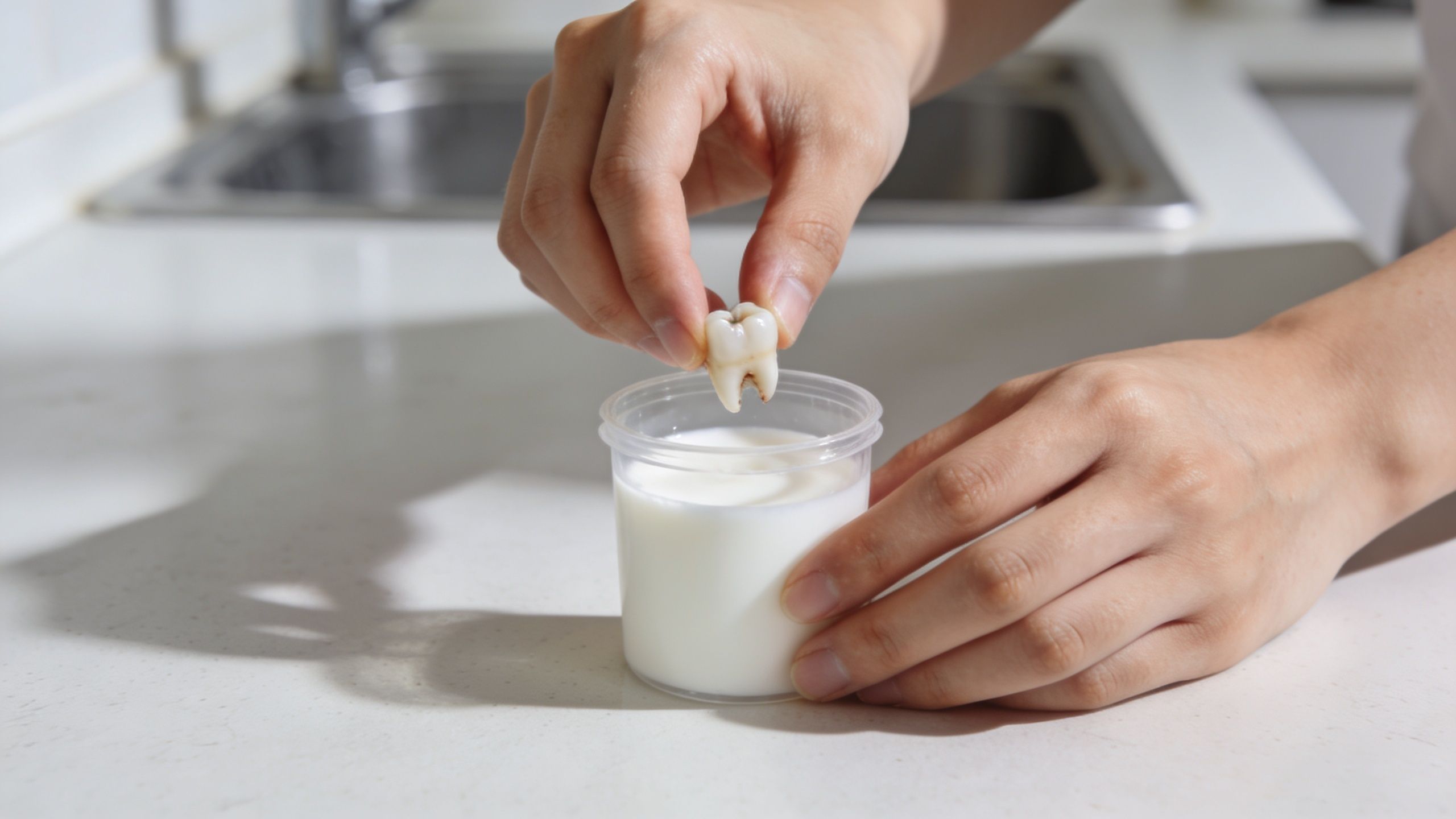
This is one situation where the details matter. For avulsed teeth, rinsing gently with saline, not water, and storing the tooth in milk can boost the success rate of reimplantation by up to 90% according to ADA guidance referenced here.
Handle the tooth by the crown, not the root. If it’s dirty, rinse it gently. Don’t scrub it. Don’t wrap it in a dry tissue. Don’t leave it on the counter while you get ready.
If you want another plain-language overview of immediate actions, Grand Parkway Smiles emergency advice is a solid example of practical first-aid guidance patients can follow under stress.
How to Handle Common Dental Emergencies Before Your Appointment
Some emergencies are dramatic. Others are quieter but still urgent. The key is knowing which actions protect the tooth and which ones cost you time.
Severe toothache
A severe toothache often means more than “sensitivity.” If the pain is constant, throbbing, wakes you up, or hurts when you bite, there may be inflammation inside the tooth, a crack, or infection around the root.
Start by rinsing gently and checking whether food is packed between the teeth. Floss carefully once if you suspect something is trapped. Don’t snap the floss down into swollen gums, and don’t keep poking the area with sharp objects.
What helps:
- Cold compress outside the face: Better for swelling and inflammation.
- Soft foods or no chewing on that side: This keeps pressure off the tooth.
- A prompt dental evaluation: The treatment might be a filling, root canal, crown, or tooth extraction depending on the cause.
What usually doesn’t help:
- Heat on the cheek: This can aggravate swelling in some cases.
- Ignoring pain that is worsening: Pain that escalates usually means the problem is progressing.
Knocked-out tooth
This is the most time-sensitive dental injury. The success rate for re-implanting a knocked-out tooth can be as high as 90%, but it depends on getting professional dental care within 60 minutes, according to this guide on knocked-out tooth care](https://www.adchutto.com/knocked-out-tooth-guide/). The same source notes that an average ER wait time of 5 hours can reduce viability, which is why a dental office is often the better first stop for this type of injury.
Handle the tooth carefully:
- Pick it up by the crown only.
- If it’s dirty, rinse it gently.
- Store it in milk if you can’t place it safely for transport.
- Go straight for care.
Why this matters: the root surface is delicate. Scrubbing, drying, or handling it roughly can reduce the chance of saving the natural tooth.
Time matters more than perfection. If the tooth is out, focus on safe handling and immediate transport.
For a few more practical details before leaving home, this page on preparing for an emergency dentist visit is a helpful reference.
Broken tooth or cracked tooth
A broken tooth can range from a small chip to a deep fracture that exposes sensitive inner tooth structure. If the break is sharp, cover the area only by avoiding contact. Don’t file it, trim it, or keep biting to “test” it.
Rinse gently and save any broken pieces. If the tooth hurts with air, pressure, or temperature, it may need urgent protective treatment. Depending on the depth and location, treatment might involve bonding, a crown, root canal therapy, or extraction if the tooth can’t be restored. If the tooth is lost and can’t be saved, dental implants near me is often the next search patients make because implants can serve as a long-term replacement option after healing.
This short video gives a useful visual explanation of emergency tooth injuries and what urgent care can involve.
Lost crown or filling
A lost filling or crown isn’t always dramatic, but it can quickly become painful because exposed tooth structure reacts to air, cold, and chewing. Keep the crown if you have it. Don’t throw it away. In some cases, the office may be able to reuse it if it’s intact and the tooth underneath allows it.
Until you’re seen:
- Avoid sticky foods
- Chew on the opposite side
- Keep the tooth clean
- Avoid forcing the crown back into place without instructions
A filling or crown that comes out repeatedly usually points to a bigger issue underneath, such as decay, fracture, or changes in the bite.
Bleeding from the mouth after injury
Mild soft tissue bleeding often improves with direct pressure using clean gauze. Sit upright. Replace gauze as instructed by the office, not constantly every few seconds. If the bleeding is heavy, doesn’t slow, or follows major facial trauma, that moves out of routine dental territory and into emergency medical evaluation.
Swelling and possible abscess
Swelling near the gum, jaw, or cheek often means infection, especially when paired with pain, a bad taste, or pressure. Don’t press on the area trying to “drain” it. Don’t apply heat inside the mouth. Infection needs diagnosis and targeted treatment, which may include drainage, root canal therapy, or extraction depending on the tooth.
For people also searching dentist in Las Vegas, NV, tooth extraction, or restorative dentistry, a full-service office is particularly important. Emergency treatment relieves pain first, but the long-term fix still has to restore function and protect the rest of the mouth.
Emergency Dentist vs Urgent Care vs ER in Las Vegas
People lose time when they go to the wrong place first. The best choice depends on the type of emergency, not just how bad it feels.
The simple rule
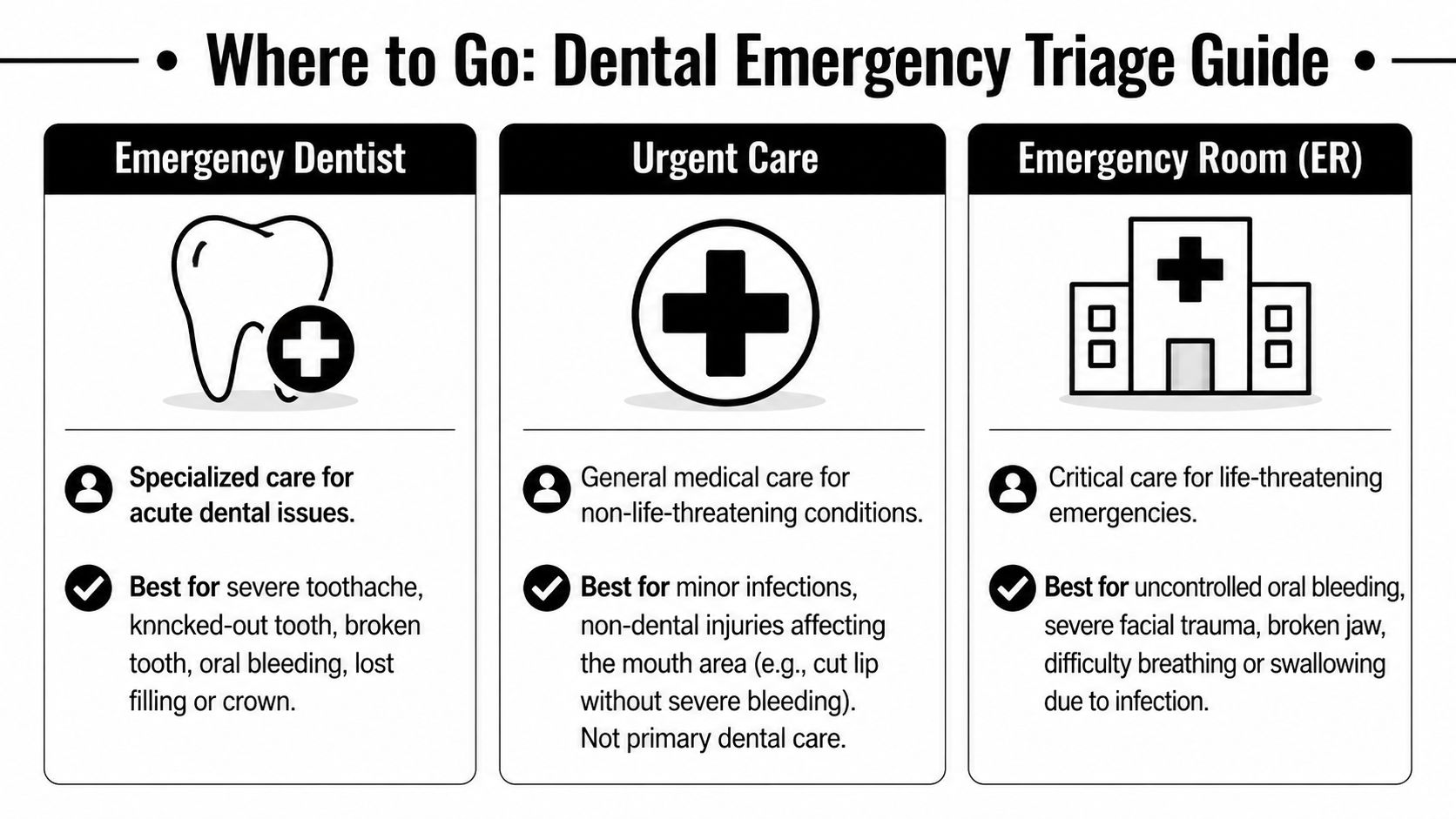
If the problem is primarily tooth-related, an emergency dentist is usually the right first call. If the issue is clearly medical, such as breathing trouble, major facial trauma, or severe uncontrolled bleeding, the ER is the safer choice.
A general primer on When to choose urgent care or ER from Maryland Primary and Urgent Care can help patients think through that medical side of the decision, especially when symptoms extend beyond the tooth itself.
Where to go for your emergency in Las Vegas
| Symptom | Go to Emergency Dentist (Aspiring Smiles) | Go to Urgent Care | Go to ER |
|---|---|---|---|
| Severe toothache | Yes | Usually no | No, unless paired with major swelling or medical symptoms |
| Knocked-out tooth | Yes | No | Only if serious facial trauma is also present |
| Broken crown or lost filling | Yes | No | No |
| Chipped or broken tooth | Yes | No | Only if injury includes major trauma |
| Gum swelling near a tooth | Yes | Sometimes for general assessment, but not primary dental care | If swelling affects breathing or swallowing |
| Cut lip with minor bleeding | Sometimes, if tooth trauma is involved | Yes | If bleeding is severe or won’t stop |
| Broken jaw concern | No | No | Yes |
| Uncontrolled oral bleeding | No | No | Yes |
| Difficulty breathing or swallowing from infection | No | No | Yes |
How the trade-offs work
An emergency dentist can evaluate the tooth directly, take dental X-rays, numb the area, stabilize the tooth, treat infection sources, and plan next steps. That makes dental offices the best fit for most urgent oral problems.
Urgent care may help when the issue is nearby but not strictly dental, such as a minor facial cut or a general medical concern that happens to involve the mouth area. But urgent care usually isn’t set up to repair a broken tooth or treat a failing crown.
If the main problem lives in the tooth, start with a dentist. If the danger involves your airway, jaw, or uncontrolled bleeding, go to the ER.
The ER is the right call for broken jaws, serious trauma, and dangerous swelling. It isn’t usually the best place for a lost filling or cracked molar, because hospitals often don’t provide definitive dental treatment for those problems.
Your Emergency Visit at Aspiring Smiles in Las Vegas
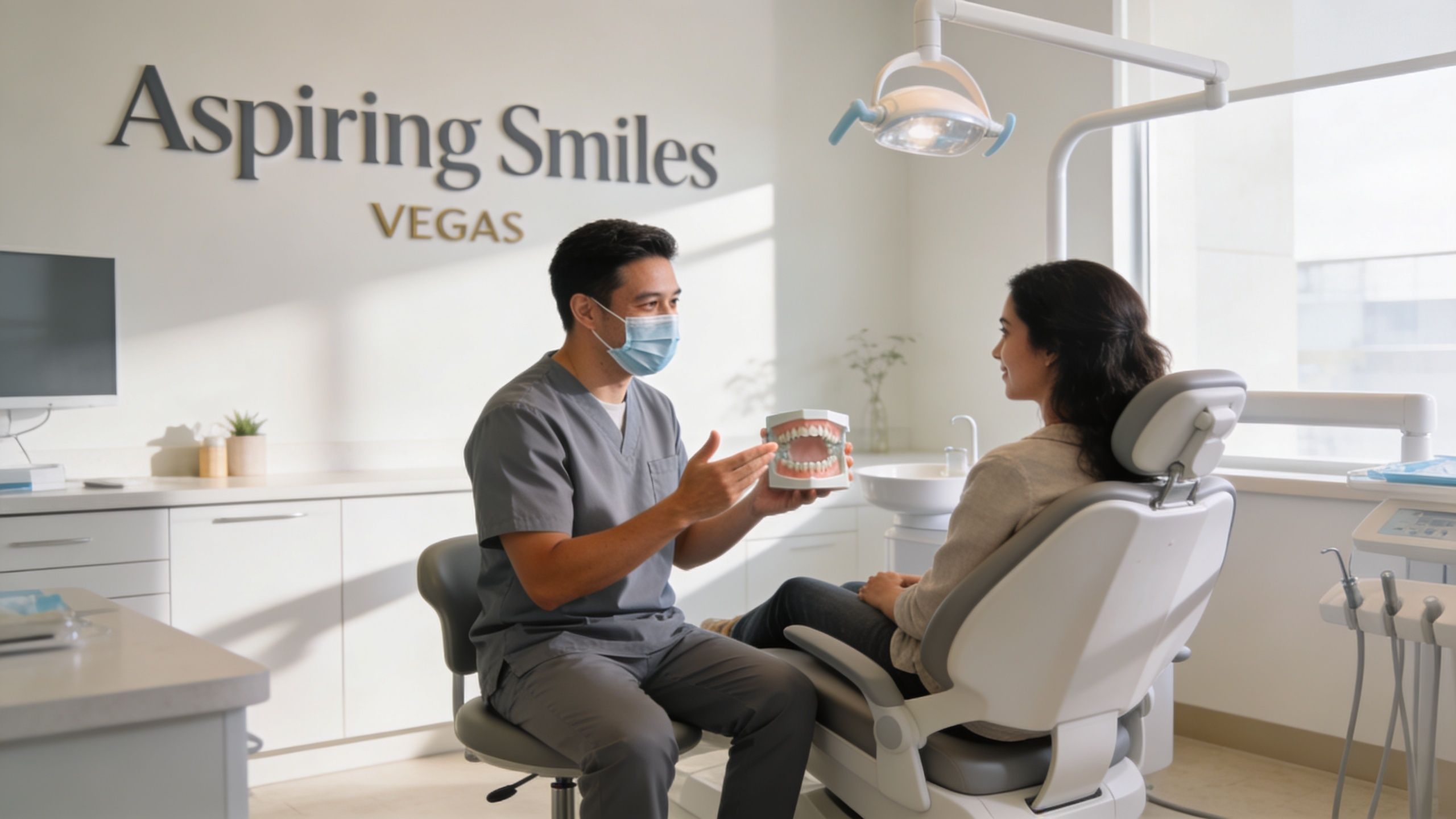
Once you’ve made the call and are on the way, most of the stress comes from not knowing what will happen next. A good emergency visit should feel organized, not chaotic. Patients want to know where to go, what to bring, how long things may take, and whether they’ll get clear answers.
For Las Vegas families in Lone Mountain, Mar-A-Lago, Desert Shores, and nearby neighborhoods, convenience matters. Aspiring Smiles Dental and Braces is located at 3211 N Tenaya Wy Suite 122, Las Vegas, NV 89129, which makes it accessible for patients who need prompt care without crossing the city while in pain.
What happens first
Emergency visits usually begin with the basics:
- Registration and health history
- A focused exam of the painful or injured area
- Dental X-rays when needed
For trauma and many painful conditions, X-rays are almost always part of accurate diagnosis. A tooth can look minor on the surface and still have a root fracture, deep decay, or infection around the bone.
What the first visit is really for
The first emergency appointment is usually about pain relief and stabilization. Sometimes definitive treatment happens the same day. Sometimes the right move is to control pain, reduce infection risk, protect the tooth, and schedule the next step once the diagnosis is clear.
That’s normal. Emergency care is not rushed care. Good treatment starts by solving the immediate problem safely.
You can get a sense of that process in this patient guide on what to expect at an emergency dentist visit, which walks through the typical flow from evaluation to treatment planning.
Scheduling and cost concerns patients usually have
Many people find themselves hesitating. They worry that the office won’t have an opening, won’t accept their insurance, or won’t offer a realistic payment path if they’re uninsured.
Access matters because up to 40% of dental emergencies occur outside standard 9 to 5 business hours, according to this emergency care overview. That same source notes that membership programs can reduce no-shows by 35%, which supports more consistent access to care for patients who need affordable follow-through.
For a patient, the practical takeaway is simple:
- Extended weekday and Saturday hours help when emergencies don’t happen on a neat schedule
- Insurance acceptance lowers friction at check-in
- A membership plan can make ongoing care easier to manage if you don’t have traditional coverage
What to bring with you
Bring what helps the team move faster:
- Your ID and insurance card if you have one
- A list of medications
- Any broken crown, tooth fragment, or appliance
- A clear timeline of what happened
- Any recent dental records if they’re easy to access
Patients searching dentist near me, cosmetic dentist near me, or cleaning and exams often discover a practice through an emergency. That first visit matters because it shows whether the office communicates clearly, explains options, and can also handle the follow-up care you may need, whether that is a crown, root canal, tooth extraction, restorative dentistry, or later replacement with dental implants.
After Your Emergency Appointment Next Steps for Recovery
Once the urgent problem is under control, recovery depends on what you do next. The instructions matter because emergency treatment often protects a tooth temporarily before final treatment is completed.
The immediate home checklist
Follow the guidance you were given for your specific procedure, then stick to the basics:
- Eat softer foods if chewing is tender
- Avoid the treated side until numbness and soreness are manageable
- Keep the area clean with gentle brushing
- Take medications exactly as directed
- Watch for increasing pain, swelling, or changes that don’t match the instructions
If a temporary filling, temporary crown, or dressing was placed, treat it carefully. Temporary materials are there to protect the area while the tooth heals or until the final restoration is ready.
Why follow-up matters
This is the step people underestimate. Patients who attend all scheduled follow-up visits have better outcomes after a dental emergency, according to this review of follow-up care](https://www.dentistryonsinclair.com/emergency-dentist-follow-up-care-georgetown/). The same source notes that simple procedures may need follow-up in 3 to 7 days, while more complex treatment such as root canal therapy may need checks within 24 to 48 hours and again at one week.
That timeline isn’t paperwork. It allows the dentist to confirm healing, catch complications early, and move from emergency relief to durable treatment.
The emergency visit stops the immediate problem. The follow-up visit protects the result.
What recovery often leads to
An emergency can uncover a problem that has been developing subtly. That doesn’t mean the news is bad. It means the next step can be planned properly.
Depending on what caused the emergency, follow-up care may involve:
- A permanent filling or crown
- Root canal treatment
- Tooth extraction if the tooth can’t be saved
- Replacement planning, including bridges or dental implants
- Routine exams, dental X-rays, and preventive care to avoid another urgent visit
For many patients in Las Vegas, the best outcome is not only getting out of pain. It’s leaving with a clear plan to restore comfort, chewing function, and confidence.
If you need fast, compassionate dental care in Las Vegas, contact Aspiring Smiles Dental and Braces. The team serves patients across Desert Shores, Sunhampton, Sun City Summerlin, Monterrey, Lone Mountain, Mar-A-Lago, and Painted Desert Estates with emergency treatment, restorative care, tooth extraction, dental implants, cosmetic dentistry, and family dental services. If you’re dealing with pain, swelling, a broken tooth, or a knocked-out tooth, request an appointment right away so you can get answers, relief, and a clear treatment plan.