How Long Do Veneers Last? Porcelain vs. Composite
Porcelain veneers usually last 15 to 25 years, while composite veneers typically last 5 to 10 years. That difference matters if you're trying to decide whether veneers are a short-term cosmetic fix or a long-term investment in your smile.
A lot of people in Las Vegas start in the same place. They look in the mirror, notice chips, uneven edges, stains that whitening won't touch, or small gaps that keep drawing the eye. Then the practical questions show up fast. How long do veneers last? Are they worth it? And if you're searching for a cosmetic dentist near me or a dentist in Las Vegas, NV, how do you know you're making a smart decision instead of an expensive one?
The answer depends on more than the veneer itself. Material choice matters. Bite habits matter. The quality of the preparation and bonding matters. So does the long view, because veneers aren't just about how your smile looks next month. They're about how it holds up over years of meals, photos, work meetings, travel, and day-to-day life in neighborhoods like Desert Shores, Sunhampton, Sun City Summerlin, Monterrey, Lone Mountain, Mar-A-Lago, and Painted Desert Estates.
Patients often assume veneers are a one-time purchase. They aren't. They're a durable cosmetic treatment with real longevity, but they also require maintenance, thoughtful care, and future planning. That's especially true if you're comparing them with alternatives such as teeth whitening, bonding, crowns, or other cosmetic dentistry and restorative dentistry options.
Your Guide to Lasting Veneers in Las Vegas NV
If you're considering veneers, start with the question that drives the decision. Not "Will they look good?" Done well, they usually do. The better question is whether they'll still look and function well years from now.
For most patients, porcelain veneers last 15 to 25 years with proper care, while composite veneers last 5 to 10 years according to a review summarized by clinical veneer lifespan findings. That same review noted that porcelain lasts 10 years or longer in the vast majority of cases, and one study of 84 patients reported durability up to 20 years.
Why the lifespan gap is so noticeable
Porcelain and composite may both improve the appearance of front teeth, but they don't behave the same way over time. Porcelain is a ceramic material with strong stain resistance and better wear performance. Composite is a resin material that can look attractive, but it tends to show age sooner.
That doesn't mean composite is a bad choice. It means the right choice depends on your goal.
- Choose porcelain when you want a longer-lasting cosmetic result and you're planning around long-term value.
- Choose composite when you want a more budget-friendly option or need a conservative cosmetic improvement for the near term.
- Pause and consider alternatives when the issue is simple discoloration, small damage, or structural weakness that may be better treated with whitening, bonding, or crowns.
Practical rule: If you're asking how long do veneers last because you want the fewest replacement cycles possible, porcelain is usually the stronger long-term answer.
What this means for Las Vegas patients
In a place where people care about appearance but also value convenience, veneers can make sense. They can correct concerns that routine cleaning and exams, teeth whitening, or aligners alone won't fix. But they should be chosen with the same care you'd use for any treatment that affects your natural teeth.
If you're also looking for a dentist near me, an emergency dentist, or a practice that handles everything from new patient exams and dental x-rays to cosmetic and restorative care, it helps to choose a team that can look beyond the veneer itself. The best treatment plans are built around your bite, oral health, habits, and budget, not just your before-and-after photos.
What Are Dental Veneers and Are They Right for You
Veneers are thin, custom-made covers placed on the front surface of teeth to improve how they look. They're used when a tooth is healthy enough to keep, but the appearance doesn't match the smile you want.
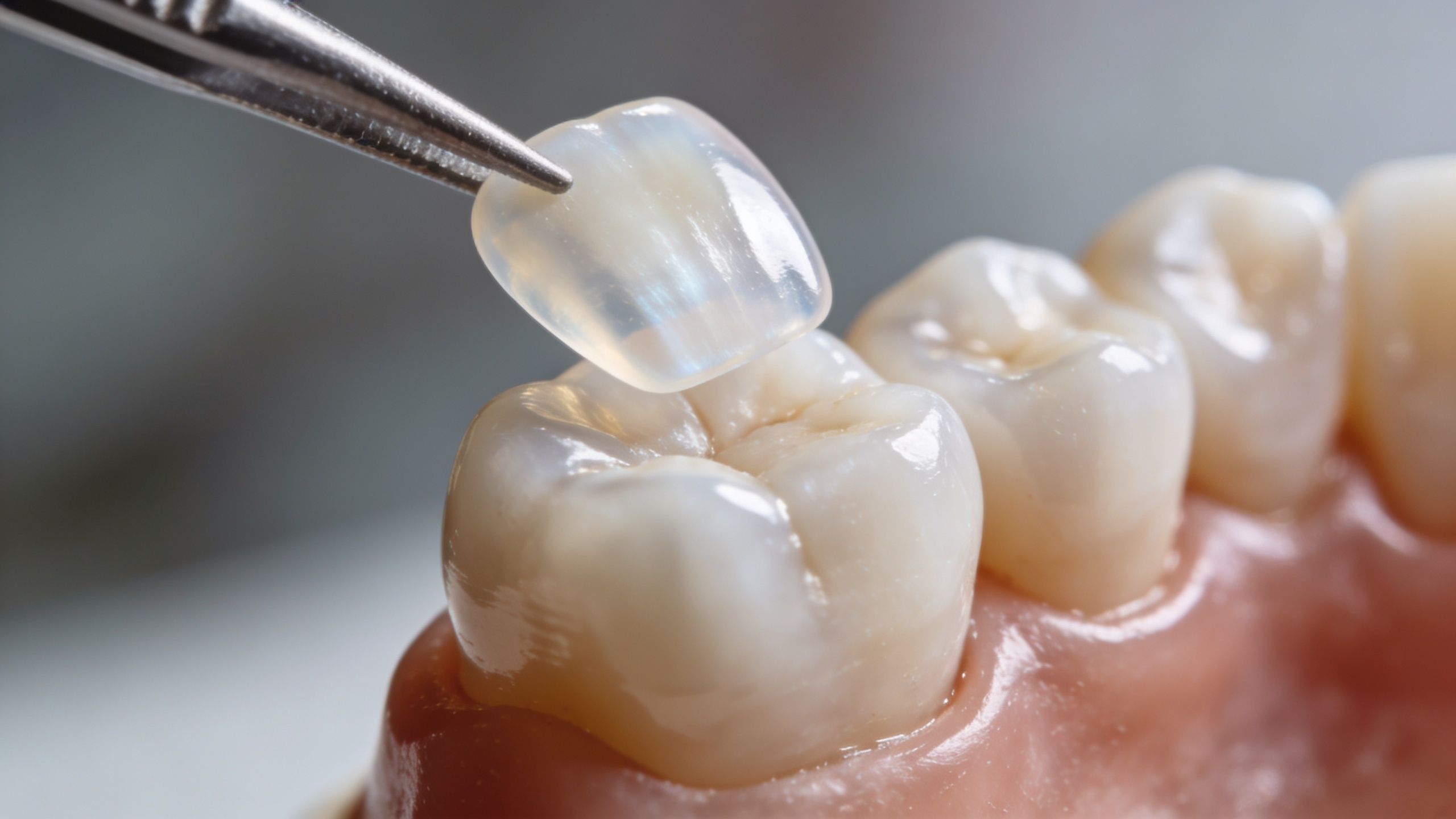
They can be a strong option for adults who are bothered by cosmetic issues such as:
- Chips or worn edges that make teeth look uneven
- Discoloration that doesn't respond well to teeth whitening
- Small gaps between front teeth
- Minor shape problems like teeth that look short or irregular
- Slight misalignment when the issue is visual rather than functional
What veneers can fix well
Veneers work best when the goal is cosmetic refinement. They can make a smile look brighter, more symmetrical, and more balanced without changing every tooth in the mouth. For many patients, that's the appeal. They want a visible improvement without a full restorative rebuild.
In practice, veneers are often best for teeth that are structurally sound but visually disappointing. A front tooth with an old stain, a small chip, or a shape mismatch may be an excellent candidate. A badly broken tooth, on the other hand, may need a crown instead.
Veneers are appearance-driven treatment. They can be life-changing cosmetically, but they aren't the answer to every dental problem.
When another treatment may make more sense
Not every smile concern should lead to veneers. That's one of the most important conversations to have before treatment.
If your issue is mainly color, teeth whitening may be enough. If the defect is small, dental bonding can sometimes correct it with less commitment. If the tooth has extensive damage, a crown may offer better protection. If spacing or alignment is the main issue, Invisalign clear aligners may be the more biologically conservative path.
Patients from Sun City Summerlin, Desert Shores, and nearby Las Vegas neighborhoods often come in asking for veneers when what they really want is a cleaner, brighter, or straighter smile. Those goals can be reached in different ways. Veneers are ideal when the combination of color, shape, and contour all need improvement at once.
Good candidates usually share a few traits
The right veneer candidate doesn't need perfect teeth. They do need a healthy foundation.
A dentist will usually look for:
- Healthy gums
- Manageable bite forces
- Enough enamel for bonding
- No uncontrolled grinding
- Clear cosmetic goals
If those pieces are in place, veneers can be one of the most effective cosmetic dentistry treatments available. If they aren't, the smarter move is to solve the underlying issue first so the cosmetic result lasts.
Porcelain vs Composite Veneers Which Lasts Longer
A patient may sit in my Las Vegas office deciding between a lower upfront bill today and fewer replacements over the next decade. That is often the central porcelain versus composite question.
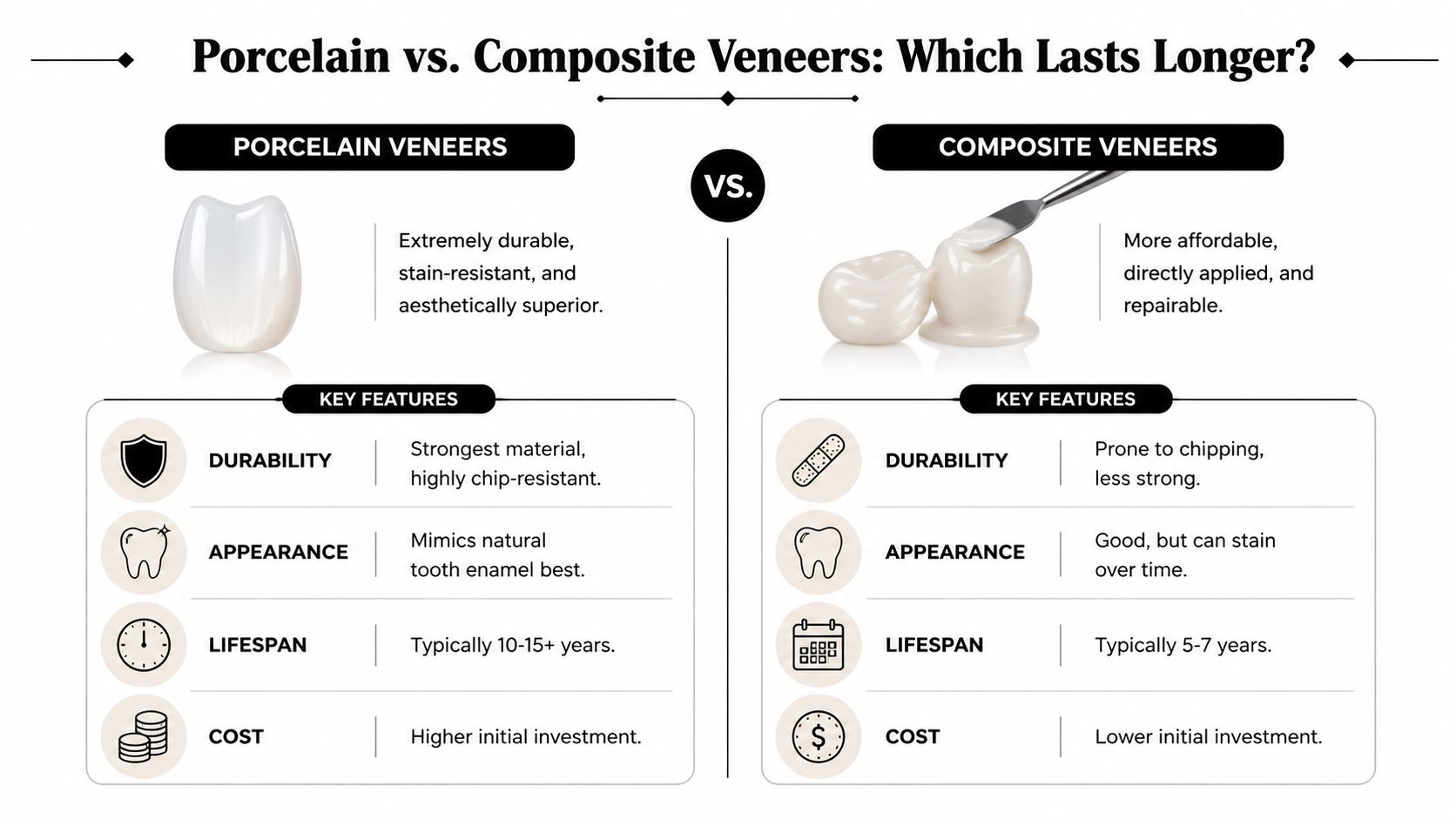
Porcelain vs Composite Veneers at a Glance
| Feature | Porcelain Veneers | Composite Veneers |
|---|---|---|
| Lifespan | Often lasts longer with good care | Usually needs replacement sooner |
| Appearance | Highly natural and enamel-like | Good appearance, often less stable over time |
| Stain resistance | Stronger stain resistance | More likely to absorb stains |
| Durability | More resistant to wear and chips | More prone to wear and chipping |
| Cost | Higher upfront investment | Lower upfront cost |
| Best fit | Long-term smile makeover | Lower upfront cost or interim cosmetic treatment |
Why porcelain usually lasts longer
Porcelain holds its surface finish well, reflects light in a way that looks close to natural enamel, and resists everyday staining better than composite resin. In practice, that means the smile tends to stay brighter and more polished for longer with less maintenance.
It is also the material I discuss most often with patients who want to make one well-planned cosmetic investment instead of a series of smaller repairs and replacements. Porcelain is not cheap. It is often the better value for patients who want stability over many years.
Why composite wears out sooner
Composite resin has real advantages. It can often be placed in a more conservative way, it usually costs less at the start, and small chips can sometimes be repaired without remaking the whole veneer.
The trade-off is long-term durability. As explained in composite veneer material details, composite resin is more vulnerable to wear, staining, and breakdown over time. That source also notes that grinding, acidic conditions, and higher cavity risk can shorten how long composite restorations perform well.
That matters financially. A veneer that needs more polishing, patching, or earlier replacement may cost less on day one and more across the life of your smile.
Which material makes more sense for your budget and goals
Porcelain usually gives the longer service life. Composite usually gives the lower entry cost.
Neither option is automatically right for every patient. A younger patient making a small cosmetic improvement, someone wanting a short-term solution before a larger smile redesign, or someone working within a tighter current budget may still be a good fit for composite. A patient who wants the most color stability, the most enamel-like appearance, and fewer remake appointments often does better with porcelain.
I encourage patients to plan beyond the initial fee. Ask how often the material may need maintenance. Ask what replacement could look like in 5, 10, or 15 years. Ask how your bite, habits, and diet affect the odds of getting full value from the treatment. Those questions lead to better decisions.
Daily care also affects how much value you get from either option. Our guide on how to care for dental veneers walks through the habits that protect your investment. For patients comparing cosmetic options more broadly, My Transformation's smile tips also offer helpful perspective on maintaining a brighter smile over time.
For many Las Vegas patients, the best choice comes down to timeline. If you want the lower starting cost and understand that maintenance is part of the plan, composite can be reasonable. If you want a smile designed with long-term replacement costs in mind, porcelain usually comes out ahead.
Key Factors That Determine Veneer Longevity
A veneer can look beautiful on delivery day and still fail early if the case was planned around appearance alone. Longevity depends on what the veneer is bonded to, how your bite functions, and whether your daily habits support the investment you are making.
The bonding surface sets the foundation
Patients often focus on the porcelain itself. I pay just as much attention to the tooth underneath.
Veneers generally hold up best when they are bonded to healthy enamel and designed conservatively. If a tooth has large old fillings, existing wear, or less enamel available, the plan may still work, but the long-term risk profile changes. That matters financially. A case that needs more maintenance over time can cost more than the initial fee suggests.
Technique matters too. Good isolation, careful preparation, and precise bonding all affect how well a veneer stays sealed at the edges and how predictably it performs year after year.
Bite pressure often decides how long veneers really last
Two patients can receive equally well-made veneers and have very different outcomes because their teeth do different jobs every day.
Front teeth are not meant to tear open packaging, crush ice, or absorb constant grinding. If you clench during stress, grind at night, or have an edge-to-edge bite, veneers face more force than they were designed to manage. In my office, this is one of the clearest differences between a veneer that lasts well and one that chips, loosens, or needs replacement sooner than expected.
Sometimes the answer is simple. A custom night guard, a small bite adjustment, or changing a few chewing habits can protect your veneers and reduce future repair costs.
Daily care protects your long-term investment
Veneers do not get cavities. The teeth holding them still can.
That is why home care matters so much. Plaque at the margin of a veneer can lead to decay, gum inflammation, or recession around an otherwise attractive restoration. Once that happens, treatment becomes more involved and more expensive.
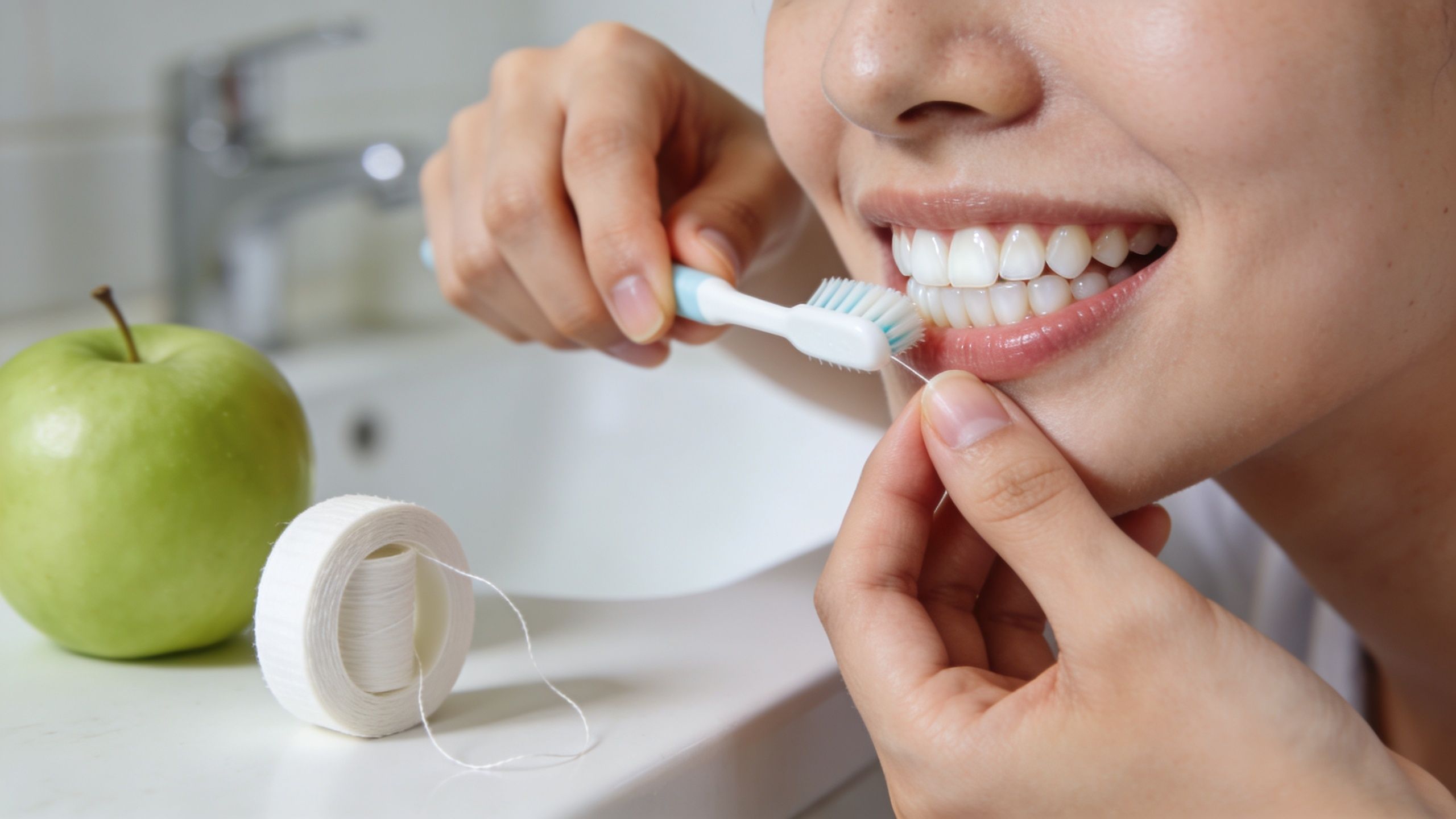
The habits that protect veneers are straightforward:
- Brush thoroughly with a non-abrasive toothpaste
- Floss every day to keep the edges clean
- Keep regular exams and cleanings on schedule
- Avoid using front teeth as tools
- Limit habits that stain surrounding teeth or composite work
Patients who want a practical routine can review these care instructions for dental veneers. Patients also sometimes browse My Transformation's smile tips if they are trying to keep natural teeth bright alongside veneer treatment.
Gum health and small problems affect replacement timing
Many veneer problems start subtly. A margin can pick up stain. Gum tissue can become puffy. A patient may notice mild sensitivity or a rough edge and put it off because the veneer still looks fine in photos.
That delay can shorten the life of the restoration. A small bonding issue is usually easier and less costly to address than decay at the edge of the veneer or trauma from a poorly managed bite. Patients who get the best long-term value usually treat maintenance visits as part of the total cost of veneers, not as optional add-ons after the cosmetic work is done.
For many Las Vegas patients, that is the primary planning question. Veneers are not only a cosmetic purchase. They are a long-term commitment to protecting the teeth, gums, and bite that support them.
This short video gives a useful overview of veneer care habits that support long-term success.
What to Expect During Your Veneer Treatment in Las Vegas
Most patients feel better about veneers once they know what the process looks like. The treatment is planned, deliberate, and usually spread across appointments so every step can be checked carefully.
The consultation and smile design visit
The first appointment is a planning visit, not a sales pitch. A dentist evaluates your teeth, gums, bite, and cosmetic goals. Photos, an exam, and often dental x-rays help determine whether veneers are the right fit or whether another treatment would serve you better.
Honest trade-offs are important considerations. A tooth with a minor flaw may be a better candidate for bonding. A tooth with extensive damage may need a crown. If alignment is the true issue, Invisalign may be worth discussing before cosmetic covering begins.
Patients looking for a dentist near me often appreciate this part most. Good veneer treatment starts with deciding whether veneers should be done at all.
Preparing the teeth
If veneers are the right choice, the next step is preparing the teeth so the final restorations fit naturally and bond properly. That may involve removing a thin amount of enamel. The exact amount varies by case, but the purpose is consistent: create room for a veneer that looks smooth and proportional rather than bulky.
Impressions or digital records are then used to guide fabrication. Shade, shape, and smile design details are chosen carefully so the final look matches the face, not just the teeth.
The best veneer result doesn't look obvious. It looks like your natural smile on its best day.
Temporary phase and final placement
Some patients wear temporary veneers while the final restorations are being completed. This stage gives you a preview of shape and function and can reveal small adjustments that should be made before final bonding.
At the final visit, each veneer is checked for fit, color, contour, and bite before being bonded in place. Precision is essential at this point. If the bite feels off or an edge isn't right, it should be corrected before the case is considered complete.
The office location at 3211 N Tenaya Wy Suite 122, Las Vegas, NV 89129 makes these visits convenient for patients coming from Lone Mountain, Sunhampton, and nearby neighborhoods.
How the experience usually feels
Most veneer appointments are comfortable and straightforward. Patients often expect something more dramatic than what transpires. The process is usually calm, measured, and highly personalized.
A well-run veneer case should leave you with:
- A clear plan before any tooth is altered
- A realistic preview of the expected result
- Guidance on alternatives if veneers aren't your best option
- Instructions for aftercare so you know how to protect the investment
If you're also considering restorative dentistry, dental implants, tooth extraction, or an emergency dentist in Las Vegas, it's helpful to choose a practice that can coordinate cosmetic and functional care together. Veneers look best when the rest of the mouth is healthy and stable.
The Financial Investment in a Lifetime of Confident Smiles
Veneers are cosmetic, but the decision shouldn't be cosmetic only. The financial side deserves the same attention as the appearance.

Veneers are not fully reversible
This is the part many patients aren't told clearly enough. Veneer treatment often requires enamel removal, and that enamel doesn't grow back. The procedure itself becomes a lifetime commitment to some form of ongoing restoration.
According to this discussion of veneer lifespan and long-term planning, if a patient gets porcelain veneers at age 35 and those veneers last 15 to 25 years, replacement may be needed at 50, 75, and potentially 90+. That same source notes replacement costs of $800-$2,500 per tooth, and estimates that the cumulative lifetime cost for a full set could reach $30,000-$100,000+.
Upfront cost versus lifetime cost
Patients can make a smart decision or a rushed one. It isn't enough to ask what veneers cost today. Ask what they may cost over decades.
A lower initial bill can still lead to more maintenance, more replacement appointments, and more total expense. A higher upfront investment may reduce how often you revisit the work. The right answer depends on your age, goals, and whether you're choosing veneers for a few years of improvement or for a long-term smile plan.
Questions worth asking before you commit:
- How many teeth are being treated
- Whether you're choosing porcelain or composite
- How likely you are to need future repairs
- Whether individual veneers can be replaced separately
- How this fits with other future needs, such as crowns, implants, or restorative treatment
Veneers make the most financial sense when the smile design, your habits, and your long-term budget all match the treatment plan.
Why transparency builds trust
Patients usually don't mind that veneers cost money. What they mind is surprise. Unexpected repairs, unplanned replacements, and vague answers are what create regret.
A good consultation should include a realistic discussion of maintenance, not just beauty. It should also cover whether all veneers need replacement at once, what happens if one chips, and how future care may be handled. In many cases, not every veneer in a set needs attention at the same time, which can make planning more manageable but less predictable.
If you're comparing options, it helps to review a local pricing breakdown such as this guide to veneer costs so you can think about treatment beyond the first appointment.
Planning like an adult, not shopping like a tourist
Las Vegas patients are savvy. They know the difference between a flashy offer and real value. Veneers are worth considering when you want a meaningful cosmetic change and you're willing to care for it properly over time.
Flexible payment options and membership programs can make ongoing dental care easier to manage, but the core decision is still personal. If the long-term commitment feels right, veneers can be a strong investment in confidence. If it doesn't, that's useful information too. A conservative alternative may be the better treatment.
Your Veneer Questions Answered by Our Las Vegas Dentist
Do veneers ruin your natural teeth
Veneers don't ruin healthy teeth when they're appropriately planned, but they are usually a permanent decision. The reason is simple. Tooth preparation often involves removing enamel, and that enamel doesn't come back. Once that step is taken, the tooth will continue to need restoration moving forward.
Can I still get cavities with veneers
Yes. The veneer itself doesn't decay, but the natural tooth around and underneath it still can. That's why brushing, flossing, and regular dental care remain essential even after cosmetic treatment. Veneers improve appearance. They don't replace basic oral hygiene.
What should I do if a veneer chips or falls off
Call your dentist promptly. Don't try to glue it back yourself. Save the veneer if you can, keep the area clean, and get it evaluated. If the issue is causing pain, sharp edges, or sudden cosmetic damage before an event, this can also feel like an emergency dentist situation, especially for a front tooth.
Do all my veneers need to be replaced at the same time
Not always. Some patients need one veneer repaired or replaced while the others remain in good shape. That can be helpful financially, but it also means maintenance may happen at different times over the years. A dentist should check fit, bite, color match, and the condition of nearby veneers before deciding whether one or several should be replaced.
A veneer plan works best when you think beyond placement day and plan for upkeep from the beginning.
Schedule Your Cosmetic Dentistry Consultation in Las Vegas Today
Veneers can be an excellent way to improve color, shape, symmetry, and confidence. The key is choosing them with clear expectations. If you're asking how long do veneers last, the honest answer is that porcelain usually lasts 15 to 25 years, while composite usually lasts 5 to 10 years, and the right choice depends on your goals, your habits, and your long-term budget.
For patients in Las Vegas, NV, including Monterrey and Lone Mountain, cosmetic dentistry should feel personal, not rushed. You deserve a plan that considers appearance, durability, oral health, and future maintenance. Whether you're exploring veneers, crowns, teeth whitening, restorative dentistry, dental implants near me, or are looking for a trusted dentist in Las Vegas, a thorough consultation is the right next step.
If you want a smile improvement that looks natural and makes sense for real life, get expert guidance before making the commitment.
Ready to find out whether veneers are the right long-term choice for your smile? Contact Aspiring Smiles Dental and Braces to schedule a personalized consultation in Las Vegas. Dr. Patel and the team provide thoughtful cosmetic, restorative, family, and emergency dental care with a focus on clear answers, comfortable treatment, and practical planning for your future smile.