Teeth Aligners Near Me: Your Las Vegas Guide
If you're searching teeth aligners near me, there's a good chance you're already tired of hiding your smile in photos, covering your mouth when you laugh, or wondering whether straightening your teeth will be more trouble than it's worth. Most patients don't want a treatment that feels obvious, hard to manage, or disconnected from real dental care. They want a solution that fits real life.
That's why clear aligners have become such a practical option for adults and teens in Las Vegas. They're discreet, removable, and designed to move teeth in a controlled sequence instead of relying on wires and brackets. For people balancing work, school, sports, social events, and everyday confidence, that matters.
At a local dental office, aligner treatment should never feel like ordering a product online and hoping for the best. It should start with a real exam, a clear diagnosis, and a plan built around your bite, gum health, long-term retention, and cosmetic goals. That's especially important if you're also considering related care like teeth whitening, veneers, crowns, or other cosmetic dentistry options.
A Straighter, More Confident Smile in Las Vegas
Clear aligners changed orthodontic treatment because they gave patients a way to straighten teeth without the look and feel of metal braces. Clear aligners have revolutionized orthodontics since their introduction in 1997, and by 2023, more than 18 million patients worldwide had been treated. Many cases can also be completed in 12 to 18 months, compared with longer treatment times for metal braces, according to Invisalign treatment information.
That matters for people across Las Vegas who want visible improvement without putting life on hold. Whether you live in Desert Shores, Sunhampton, Sun City Summerlin, Monterrey, Lone Mountain, Mar-A-Lago, or Painted Desert Estates, the appeal is usually the same. You want straighter teeth, but you also want to keep eating normally, brushing normally, and showing up to work or school without drawing attention to your treatment.
Why people search for teeth aligners near me
Most local searches aren't casual research. They come from people who already know something feels off about their smile. Some are bothered by crowding. Some notice small gaps. Others had braces years ago and have seen their teeth shift.
A nearby provider matters because aligners work best when someone is tracking your progress, checking your bite, and adjusting the plan when needed. That local relationship is one reason practices continue to attract patients through Google Maps, especially when patients want convenience and accountability, not just a box shipped to their door.
Clear aligners aren't only about appearance. When teeth are easier to clean and your bite fits better, daily oral care usually becomes easier too.
What patients usually want from treatment
In practical terms, individuals looking for a dentist in Las Vegas, NV want a few things at once:
- A discreet option that doesn't dominate their appearance
- A clear process with predictable appointments and no guesswork
- Honest guidance about whether aligners will work for their situation
- Support from a real dental team if something feels off during treatment
That last point is where local care makes a real difference. A smile plan should fit your teeth, your schedule, and your long-term oral health, not just a marketing promise.
Are You a Good Candidate for Clear Aligners
A good aligner case starts with more than crooked teeth. It starts with healthy gums, enough bone support, a bite that can be corrected safely, and a patient who will wear the trays as directed.
How aligners move teeth
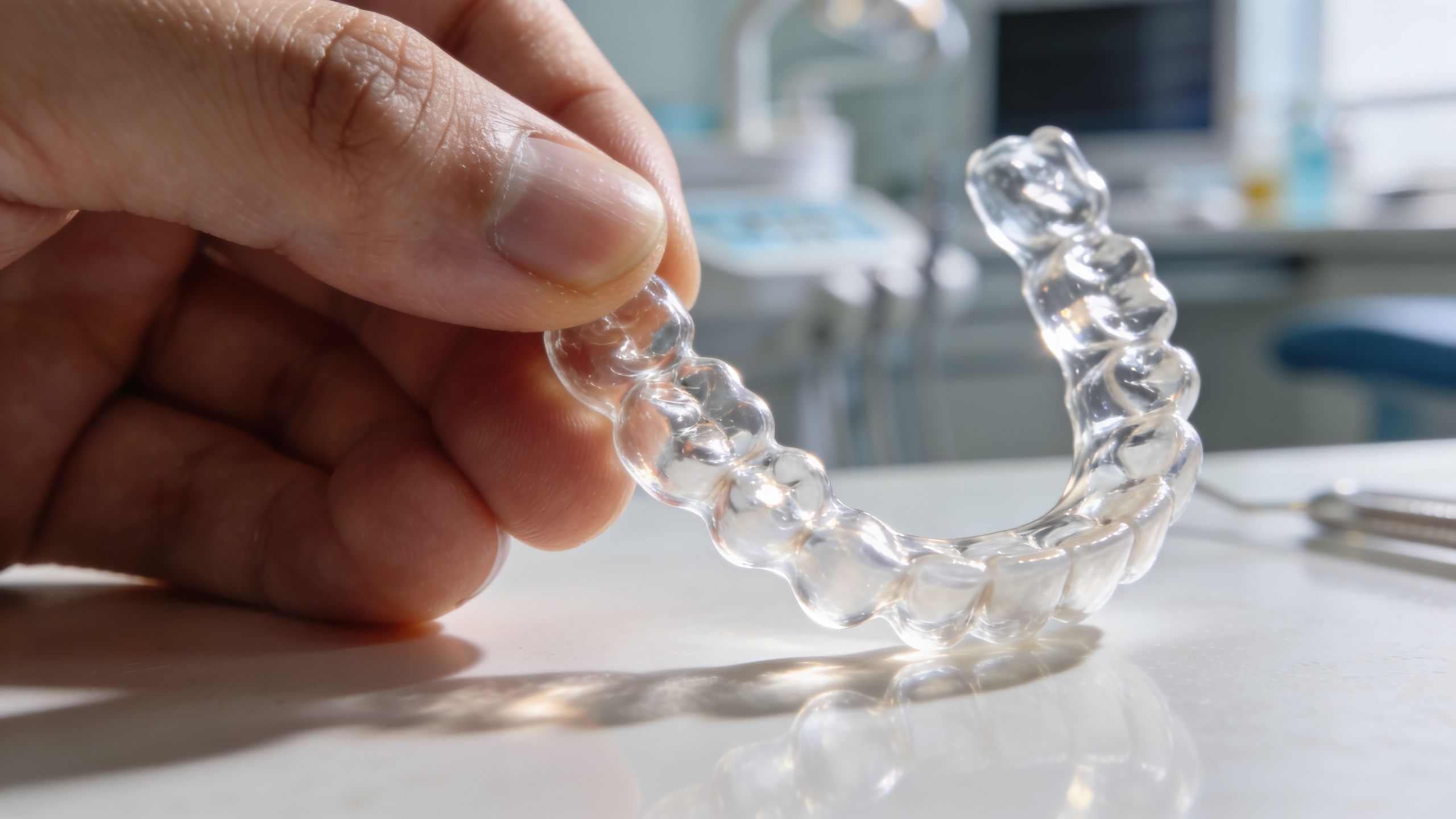
Clear aligners use a series of custom trays to shift teeth in small, planned stages. Each new tray fits a little differently from the last, which creates controlled pressure over time. Invisalign aligners are made from a patented thermoplastic material called SmartTrack, designed for a precise fit and consistent force.
The movement is gradual by design. That is part of why many adults prefer aligners. The process is usually more comfortable than people expect, but it still requires discipline. If trays stay in a case instead of in your mouth, teeth do not move on schedule.
Signs you may be a strong candidate
Clear aligners often work well for patients with:
- Mild to moderate crowding
- Small spaces or gaps between teeth
- Teeth that shifted after braces years ago
- Certain bite issues, depending on severity
- Cosmetic alignment concerns before whitening, bonding, or veneers
Adults are often strong candidates because they tend to follow the wear schedule closely. Teens can also do very well, especially with family support and regular check-ins.
Mail-order companies often make candidacy sound simple. It is not. A case that looks minor in a selfie can involve bite interference, uneven tooth wear, or gum recession that changes the plan completely.
When aligners may not be the right tool
Some cases need more than removable trays. Severe crowding, large bite discrepancies, teeth that need significant rotation, and movements that require stronger root control may respond better to braces or a combined approach.
That does not mean aligners are a poor option. It means the right tool depends on the biology of your case, not the marketing around it. In my experience, the biggest problems happen when patients try to force an aligner-only solution onto a case that needs closer supervision or a different appliance.
This is one of the clearest differences between in-office care and mail-order treatment. A local dentist can catch tracking problems, attachment issues, bite changes, and signs that the plan needs to be adjusted before those problems turn into lost time or disappointing results.
What a proper evaluation should include
Before starting treatment, the exam should cover more than the front teeth you see in photos. At Aspiring Smiles, aligner candidacy depends on several factors:
- Tooth position, including crowding, spacing, and rotation
- Bite relationship, so tooth movement does not create new functional problems
- Gum and bone health, because teeth need stable support to move safely
- Existing dental work, such as crowns, bridges, implants, or veneers
- Daily habits and goals, including whether you can wear aligners 20 to 22 hours a day
Patients searching for teeth aligners near me usually want a fast yes or no. A good consultation should give you something better. It should tell you whether clear aligners are likely to work, what limits to expect, and whether a locally supervised plan will protect your bite better than a one-size-fits-all kit.
If you want a better sense of what treatment planning involves, this overview of how Invisalign works step by step explains what we evaluate before trays are made.
Your Aligner Treatment Journey at Aspiring Smiles
A lot of Las Vegas patients come in expecting aligner treatment to be complicated. In practice, the process is straightforward when it is planned and monitored by a dentist who can see how your teeth and bite are responding at each stage.
The first visit and digital planning
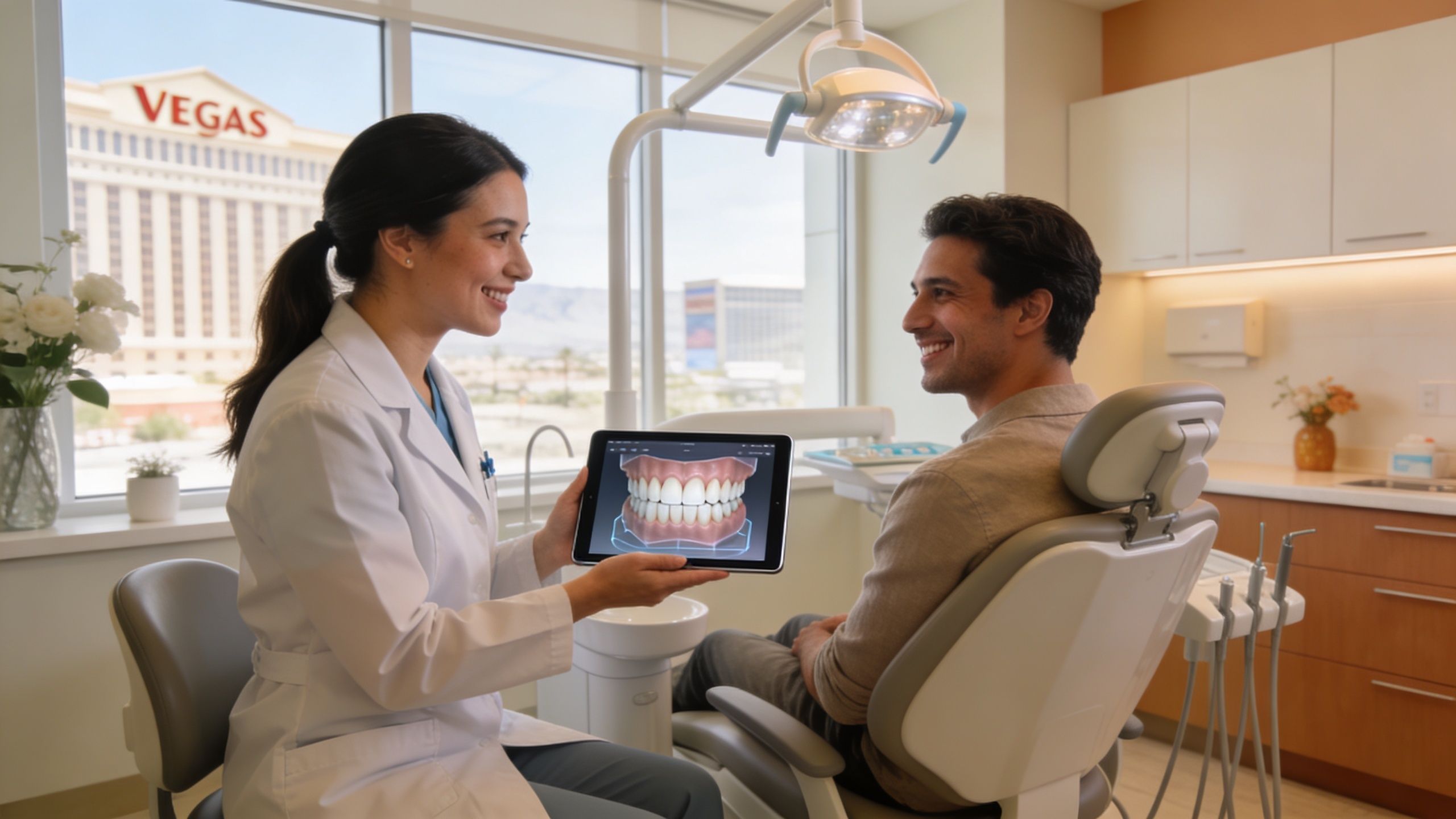
Treatment begins with a consultation, an exam, and a digital scan of your teeth. The scan creates a precise 3D model, which lets us study spacing, crowding, and bite contact before any trays are made. That matters because a good aligner plan is not only about making the front teeth look straighter. It also has to protect the way your teeth fit together.
Patients usually ask practical questions right away. Can aligners fix the area that bothers me most? How long will treatment take? Will I need dental work before I start? Those questions should be answered before you commit to anything.
If you want to see the sequence in more detail, this page on how Invisalign works step by step in Las Vegas explains how planning, trays, and tooth movement fit together.
Wearing the aligners day to day
Once your aligners arrive, you will get clear instructions on how long to wear them each day, when to change to the next set, and how to keep them clean. Most patients describe the feeling as pressure, especially for the first few days with a new tray. Mild soreness is common. Sharp pain, a tray that will not seat, or irritation in the same spot over and over should be checked in the office.
Daily habits make a real difference in the final result. Patients do best when they:
- Wear aligners as directed and remove them only for meals, drinks other than water, and brushing
- Brush before putting trays back in so plaque and food are not held against the teeth
- Store trays in the case instead of a napkin or pocket
- Pay attention to fit and call if a tray starts lifting or stops tracking properly
Small mistakes are easier to fix early.
If an aligner feels loose, won't seat fully, or starts irritating one spot repeatedly, that's a reason to call the office, not guess your way through it.
Here's a short visual that helps many patients understand the process before they begin:
Check-ins and finishing well
Follow-up visits are not just tray pickups. They give your dentist a chance to confirm that teeth are moving on schedule, make small adjustments when needed, and catch problems before they turn into delays. That level of supervision is one of the biggest differences between local care and an impersonal mail-order approach.
Finishing treatment also takes planning. Some patients need a refinement stage to polish the result after the first series of trays. Once active movement is complete, retainers hold the teeth in their new position. Skip that step, and teeth can shift back.
That last part is one reason local dentist-led care has better long-term value. At Aspiring Smiles, the goal is not just to hand you aligners. It is to guide the case from the first scan to a stable result you can keep.
In-Office Aligners vs Mail-Order Kits A Critical Choice
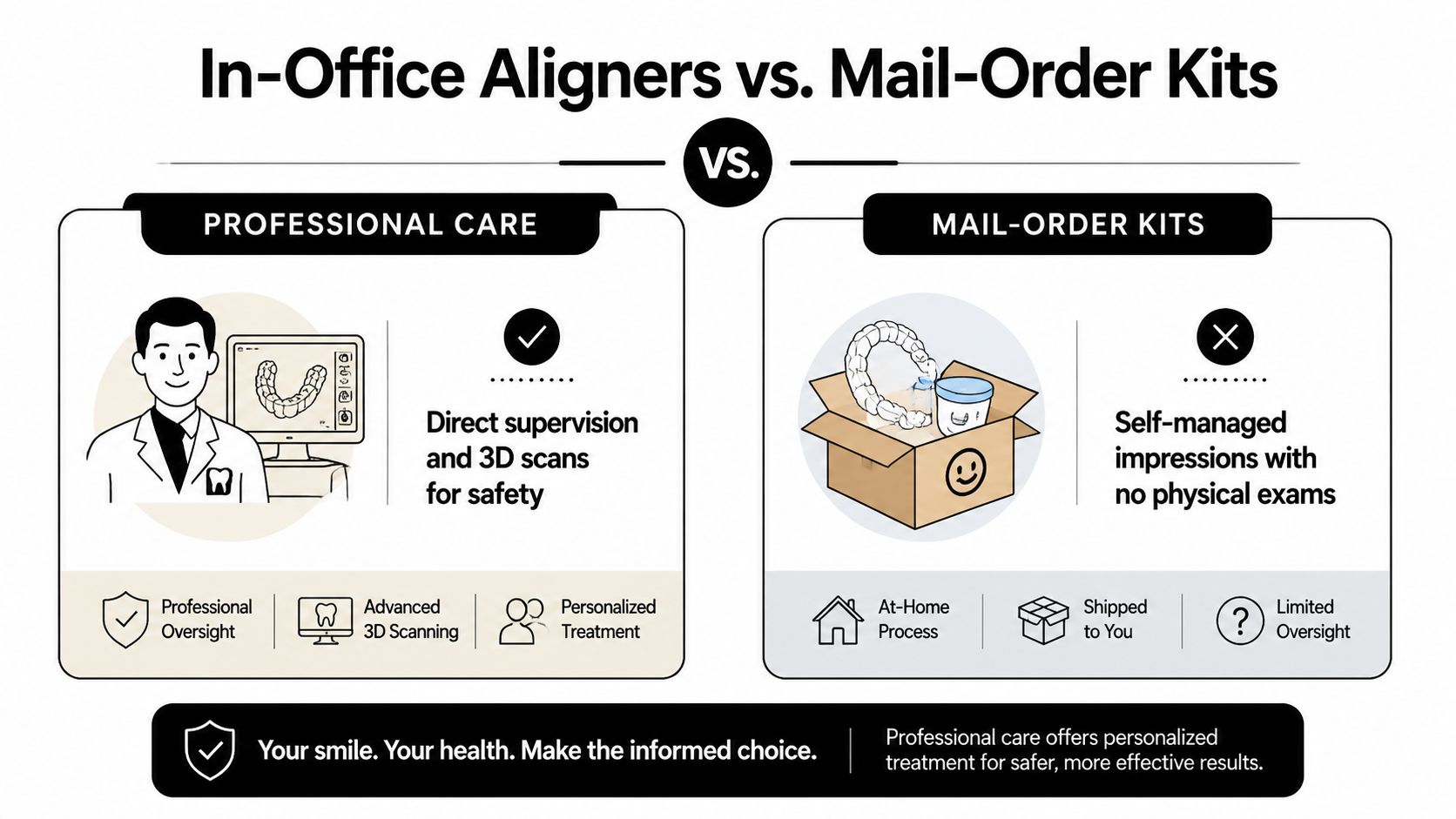
Mail-order aligners sound simple because they reduce treatment to a product. Take impressions, send photos, wait for trays, and hope your teeth move the way the ad suggests. Real tooth movement is more complicated than that.
A dentist-led aligner plan starts with diagnosis, not shipping. It checks whether your teeth, gums, bite, and existing dental work can safely support movement. It also creates accountability when something doesn't go according to plan.
Why supervision changes the outcome
A mail-order model is built around convenience. A clinical model is built around diagnosis and follow-through. Those are not the same thing.
In-office care allows a dentist to identify issues that can interfere with treatment, such as gum inflammation, decay, bite imbalance, or teeth that won't move predictably with trays alone. It also allows for changes during treatment if tracking isn't ideal.
Mail-order kits remove most of that oversight. That can be tempting at first, especially for patients focused only on cost. But if treatment starts without a proper exam, the risk isn't just cosmetic disappointment. It can affect your bite, comfort, and long-term stability.
Dentist-Supervised vs. Mail-Order Aligners
| Feature | In-Office Care (Aspiring Smiles) | Mail-Order Kits |
|---|---|---|
| Initial evaluation | Full dental assessment with in-person review of teeth and bite | Remote review based mainly on impressions or photos |
| Treatment planning | Customized by a local dentist using digital records | Standardized remote planning |
| Monitoring | Progress checked during real appointments | Limited or remote-only follow-up |
| Mid-course changes | Adjustments possible if teeth don't track as expected | Fewer options if treatment goes off track |
| Complex movements | Better suited for cases needing attachments or closer control | More limited for difficult movements |
| Emergency support | You can contact a local office if something feels wrong | Support is usually remote |
| Long-term retention | Retainer plan tied to your final result and bite | Often handled as a separate product decision |
What works and what doesn't
There's a place for convenience in dentistry. Online scheduling is convenient. Digital scans are convenient. A nearby office with efficient check-ins is convenient.
Skipping diagnosis is not convenience. It's a blind spot.
Patients often assume slightly crooked teeth automatically equal an easy aligner case. Sometimes they do. Sometimes the visible problem is only part of the issue, and the bite behind it is what really needs attention. That's why a local exam matters just as much as the trays themselves.
A straighter smile that leaves your bite uncomfortable isn't a successful result.
The local care advantage in Las Vegas
If you're searching for a dentist near me or cosmetic dentist near me in Las Vegas, it helps to think beyond the tray. Ask who is responsible for your care from start to finish. Ask who checks your progress. Ask what happens if a tooth stops tracking or your bite changes in a way that needs correction.
That standard of care also fits with broader dentistry. A patient might start with aligners and later want teeth whitening, a veneer consultation, restorative dentistry, or even emergency dentist support if an unrelated issue appears during treatment. Local care keeps those decisions connected instead of fragmented.
Investing in Your Smile Cost and Financing in Las Vegas
Cost is one of the first questions people ask, and it should be. Orthodontic treatment is a meaningful investment, so patients deserve a clear explanation of what they're paying for and what can change the final bill.

What aligners can cost
According to this Invisalign cost overview, average Invisalign costs range from $3,000 to $8,000. The same source notes that many patients face unexpected fees for refinements or retainers with some providers. At Aspiring Smiles, bundled packages and insurance coordination with plans such as Delta Dental and Aetna can reduce out-of-pocket costs, often to between $2,000 and $4,000, with flexible financing.
That distinction matters. A lower advertised number doesn't always mean lower total cost. If the quote leaves out refinement trays, retainer planning, or key visits, the final price can feel very different from the first conversation.
What patients should ask before starting
Before choosing aligners, ask practical questions such as:
- What does the fee include from start to finish
- Whether retainers are included or priced separately
- How refinements are handled if teeth need additional movement
- How insurance applies and what your orthodontic benefits may cover
- Whether financing is available in monthly payments
Those questions are more useful than chasing the cheapest headline number. They help you compare actual value, not just marketing.
Key takeaway: The right cost conversation isn't only about price. It's about whether the treatment plan is complete, supervised, and transparent.
Making treatment more manageable
For many families in Lone Mountain, Desert Shores, and nearby Las Vegas neighborhoods, financing makes treatment realistic. Monthly plans can spread the cost out so patients don't have to choose between smile goals and other responsibilities.
If you want a closer breakdown of pricing, insurance, and what may be included, this page on Invisalign cost in Las Vegas is a helpful starting point.
It also helps to remember that aligners don't exist in isolation. Better alignment can support easier home care, better function, and future cosmetic treatment planning. For some patients, that makes aligners part of a larger dental care strategy rather than a one-time cosmetic purchase.
Frequently Asked Questions About Teeth Aligners
Do aligners hurt
Most patients describe aligners as pressure, not sharp pain. You may feel tightness for a short period when switching to a new tray. That sensation usually settles as your teeth adapt.
Can I eat with aligners in
No. Remove them before meals and snacks. Eating with aligners in place can crack or stain the trays and trap food against the teeth.
What can I drink while wearing them
Plain water is the safest choice while aligners are in. For other drinks, remove the trays first. That helps avoid staining and keeps sugar or acid from sitting against the teeth.
How do I clean the trays
Rinse them when you remove them and clean them gently as instructed by your dental team. Keep them away from hot water, which can distort the plastic. Clean trays and clean teeth go together, so brushing before reinserting them matters.
How many hours a day do I need to wear them
Aligners only work if you wear them consistently. If they spend too much time out of your mouth, teeth may not track as planned and treatment can stall. Patients who do well with aligners usually build a reliable routine early.
Will people notice I'm wearing them
Many individuals notice them far less than they expect. That's one reason adults often prefer aligners over braces. They fit close to the teeth and don't draw the same attention as brackets and wires.
What happens after treatment is finished
You'll need retainers. This is not optional. Teeth can shift after treatment, even when the active aligner phase went well. Retainers help preserve the result your treatment created.
Can I get aligners if I also need other dental work
Sometimes yes, sometimes no. It depends on what kind of treatment you need and when it should happen. Fillings, crowns, cosmetic dentistry, tooth extraction, or restorative dentistry may need to be coordinated before, during, or after aligner care.
Should I see a dentist if one tooth suddenly feels wrong during treatment
Yes. Don't try to force a tray or ignore bite changes that feel unusual. A local dental visit can determine whether the issue is a simple fit problem or something that needs clinical attention.
If you're ready to stop guessing and get a real answer about whether clear aligners fit your smile, schedule a consultation with Aspiring Smiles Dental and Braces. A local evaluation can show what's possible, what isn't, and how to move forward with a plan that makes sense for your teeth, your budget, and your life in Las Vegas.