Best Dental Care in Las Vegas: A Patient’s Guide
If you're searching for a dentist near me in Las Vegas, you're probably doing it the same way many others do. A late-night search, too many tabs open, a long list of offices, and no clear way to tell which one will take good care of you. Maybe you need a routine cleaning. Maybe you have a toothache and need an emergency dentist. Maybe you're comparing dental implants near me, a cosmetic dentist near me, or trying to find one office that can handle care for your whole family.
That uncertainty is understandable. Dental care is personal. You're trusting someone with pain, appearance, health, money, and time. In a city as busy as Las Vegas, NV, the main question isn't just who is nearby. It's who will give you the best dental care with clear communication, sound treatment planning, and a process that fits real life.
Finding Your Dentist in Las Vegas
A patient moving to Las Vegas often starts with convenience. They search for a dentist in Las Vegas, NV, look at maps, read reviews, and compare office websites. Then the doubts start. Which office is focused on prevention instead of upselling? Which one explains treatment clearly? Which one can see a child for a cleaning, help a parent with a missing tooth, and still make room for a same-week tooth pain visit?
Those are the right questions to ask.
Oral health problems aren't rare or minor. Over 3.5 billion people worldwide suffer from oral diseases, and untreated dental issues cost the U.S. over $45 billion annually in lost productivity, which is one reason preventive care matters so much when choosing a long-term dental home (global oral disease burden and productivity impact). The office you choose affects whether small issues stay small or become expensive, painful interruptions later.
What local patients usually want
In neighborhoods like Desert Shores, Sunhampton, Sun City Summerlin, Monterrey, Lone Mountain, Mar-A-Lago, and Painted Desert Estates, most families aren't looking for something complicated. They want a dentist who is close enough to keep regular appointments, responsive when something hurts, and organized enough to make care feel manageable.
That often means looking beyond star ratings alone. Reviews can be helpful, but they don't replace a direct conversation with the office.
A good first call should leave you with answers, not sales pressure.
The best dental relationship usually starts with a simple feeling: the office listens before recommending.
How to narrow the list
A practical short list should include offices that show clear information about services, new patient visits, emergency availability, and payment options. If you're sorting through local choices, it also helps to understand how real-world recommendations spread in communities. These strategies for local business referrals offer a useful look at why personal trust still matters when people choose healthcare providers.
For a deeper local checklist, you can also review this guide on finding the best dentist near me in local dental care.
Before you book, focus on three practical filters:
- Access that fits life: Can you get an appointment without a long wait, and do the hours work for your schedule?
- Services that match your needs: If you may need cleanings, a tooth extraction, Invisalign, or restorative work, can the office handle those needs without sending you in circles?
- Communication you can trust: Do they answer insurance and treatment questions clearly, or do they stay vague until you're in the chair?
That framework keeps the search grounded. It also helps you avoid choosing an office based only on proximity.
What a Higher Standard of Dental Care Looks Like
The phrase best dental care gets used loosely. In practice, it has a more concrete meaning. A higher standard of care is preventive, thorough, technically current, and easy for patients to follow.
Prevention comes first
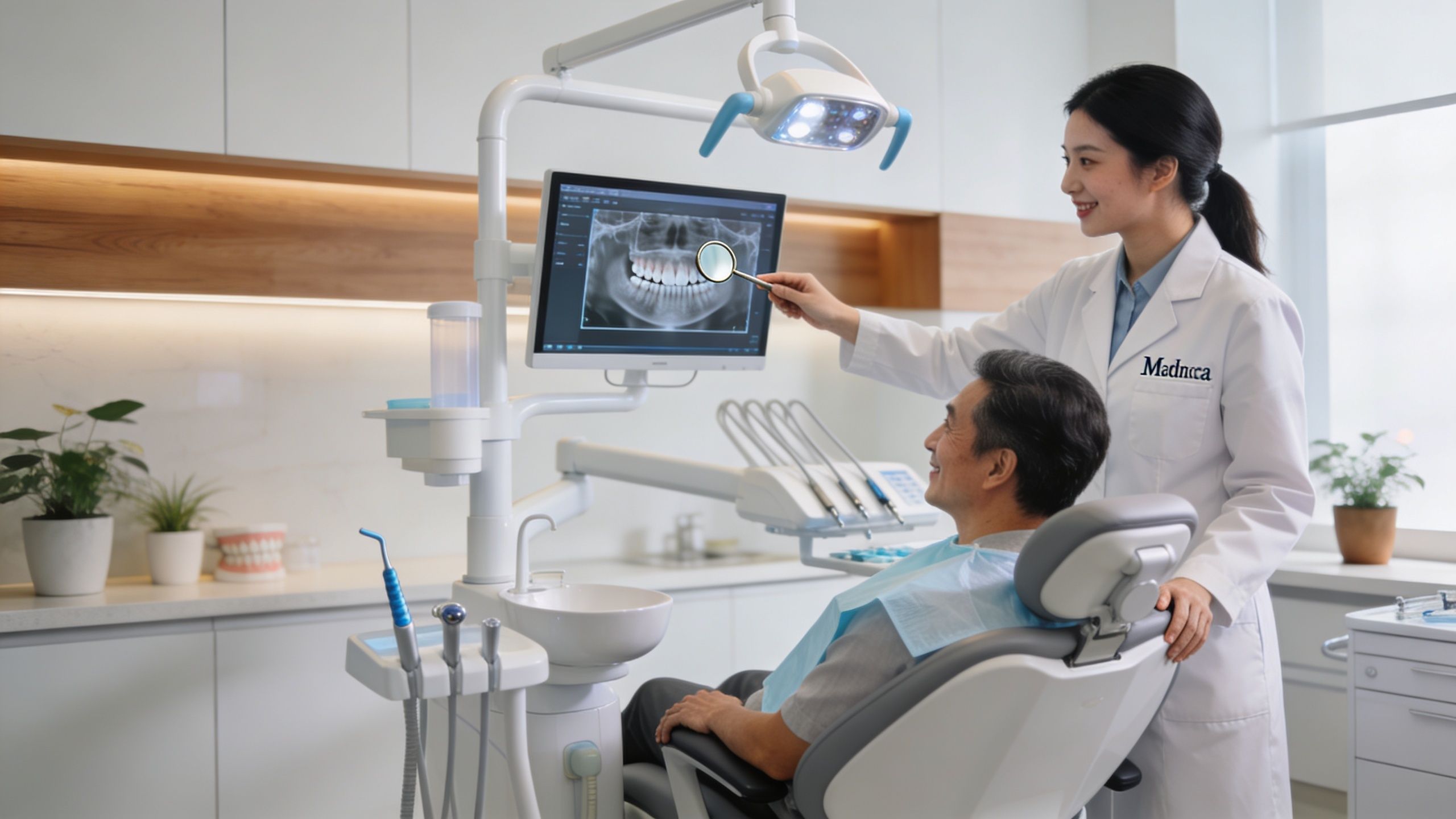
A strong office doesn't wait for pain before acting. It builds care around cleaning and exams, dental x-rays, gum evaluations, home-care coaching, and early treatment when a problem is still manageable.
That matters because quality care changes outcomes over time. Globally, top-performing countries on the DMFT Index have scores under 1.0, while the U.S. is at 1.2, showing that patients with consistent, quality care can achieve results that rival world leaders (DMFT benchmark context and U.S. comparison). For a patient in Las Vegas, that means regular visits are not routine paperwork. They are how decay, gum disease, bite problems, and failing dental work get caught before they become bigger procedures.
Technology should support judgment
Modern equipment matters, but only when it improves diagnosis and patient understanding. Good technology helps the dentist show you what they see and explain why a recommendation makes sense.
Look for offices that use tools such as:
- Digital imaging: Easier viewing and clearer patient conversations during exams.
- Low-radiation x-rays: A more current approach to routine imaging.
- Digital scanners: Useful for planning restorations, aligners, and a better-fitting patient experience.
Technology alone doesn't make an office excellent. A scanner in the room won't help if nobody explains the findings or connects them to your options.
Education and comfort are not extras
Many people judge a dental office by whether the staff is pleasant. That's important, but it isn't enough. Higher-standard care also means the team explains what can wait, what shouldn't, and why.
A good exam should answer questions like these:
| Area | What you should hear |
|---|---|
| Current concerns | Which issues need treatment now, and which can be monitored |
| Prevention | What daily habits and office visits will reduce future problems |
| Comfort | What can be done if you feel anxious, sensitive, or embarrassed |
| Long-term plan | How today's care fits into your future oral health |
Practical rule: If a dentist can explain a diagnosis in plain language, you're more likely to make confident decisions and follow through with care.
For families in Las Vegas, this is what separates a transactional visit from real dental care. You should leave understanding your mouth better than when you arrived.
Comprehensive Services for Your Family's Smile
Families rarely need just one thing. One person may be due for a preventive visit. Another may want teeth whitening or veneers. A teen may ask about Invisalign. A parent may need a crown, a tooth extraction, or a long-term replacement plan for a missing tooth.
That is why complete care matters.
Why coordinated care works better
Many families struggle to coordinate separate appointments, separate treatment plans, and separate financial conversations. A practice that offers integrated planning for a parent needing implants, a teen considering Invisalign, and a child needing preventive care helps close that gap and improves convenience and clinical outcomes (integrated family dental planning).
In real life, that means fewer handoffs and less confusion. It also means the dentist can see the bigger picture. If one family member needs urgent treatment and another is planning cosmetic care, a coordinated office can help sequence appointments and costs in a more sensible order.
Common services that matter most
A well-rounded dental home in Las Vegas should be able to discuss options across preventive, cosmetic, restorative, and urgent care.
- Preventive care for all ages: Cleanings, exams, x-rays, fluoride guidance, and monitoring for wear, decay, and gum problems.
- Emergency dental services: Fast evaluation for tooth pain, swelling, broken teeth, or a lost restoration.
- Restorative dentistry: Fillings, crowns, and treatment planning for damaged or missing teeth.
- Cosmetic dentistry: Whitening, veneers, and smile improvements that still respect bite and function.
- Invisalign clear aligners: A discreet orthodontic option for teens and adults with busy schedules.
- Dental implants and All-on-4: Structured solutions for replacing one tooth or rebuilding a full arch.
For example, dental implants near me is often searched by patients who want a stable replacement that feels closer to a natural tooth. Others may be comparing bridges, dentures, or implant-supported dentures. The right recommendation depends on bone support, overall oral health, timeline, and budget. Good care doesn't push everyone into the same answer.
A short video can help if you're starting to compare larger restorative solutions:
What doesn't work well
Fragmented care often creates avoidable problems. One office handles the emergency. Another discusses cosmetics. A third evaluates tooth replacement. The patient ends up repeating their history, comparing separate treatment plans, and trying to figure out the order on their own.
That approach can delay treatment or make people give up halfway through.
By contrast, Aspiring Smiles Dental and Braces provides preventive, cosmetic, restorative, implant, aligner, and emergency services in one setting, which helps families in areas like Lone Mountain and Desert Shores keep care more coordinated.
If a practice can manage both today's problem and your next step, care becomes easier to start and easier to maintain.
That matters whether you're searching for a cosmetic dentist near me, dealing with a damaged tooth, or planning a full-smile restoration over time.
Your Actionable Checklist for Choosing a Dentist
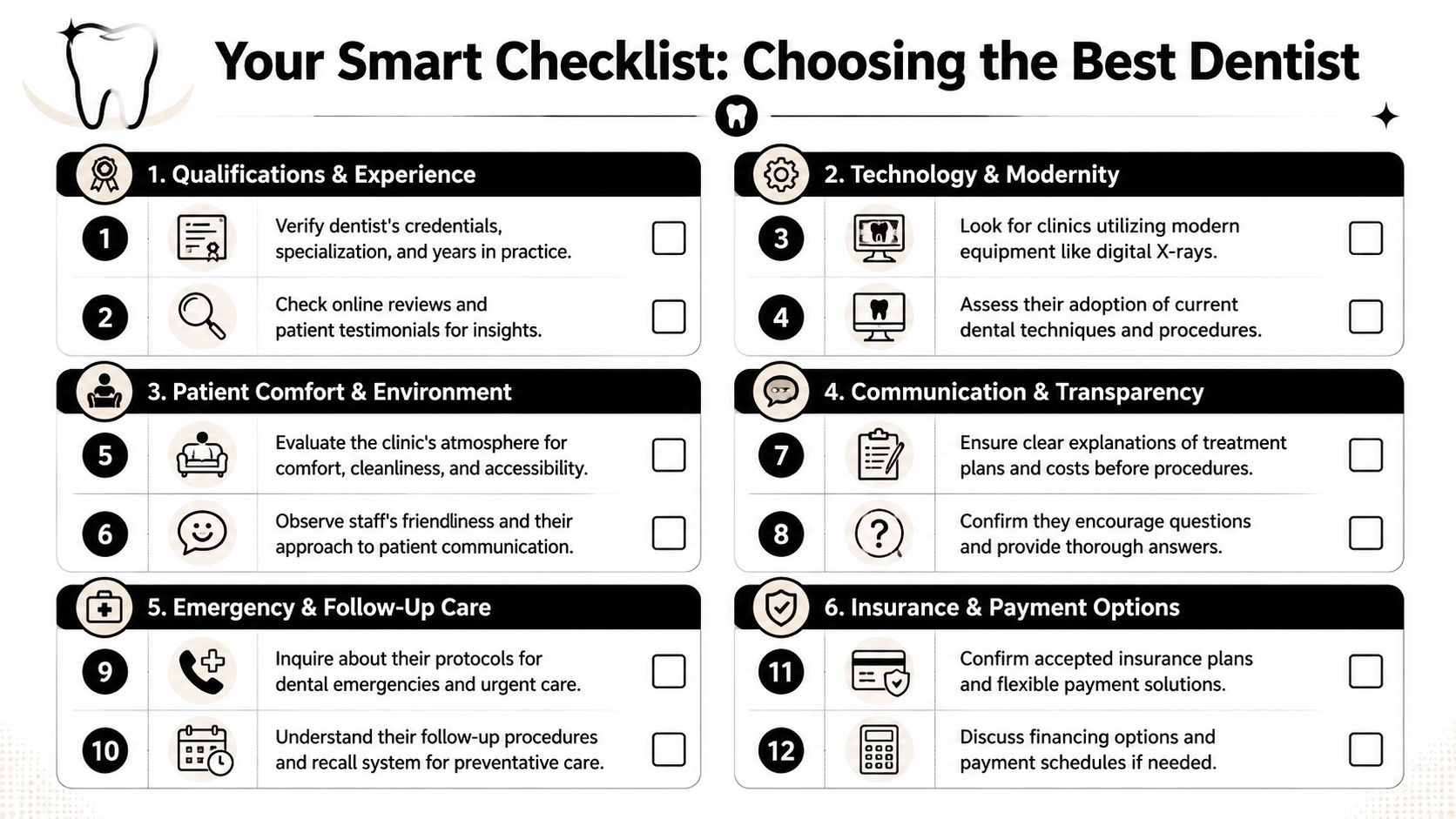
A smart choice starts before the appointment. When you call or visit a dental office, you're not just deciding whether they can clean teeth. You're deciding whether they diagnose carefully, communicate clearly, and treat people with respect.
Green flags to look for
Some signs are easy to miss if you don't know what to watch for.
- Clear explanations: The office explains what they found, what it means, and what your options are.
- No-pressure treatment planning: You get recommendations and priorities, not a rushed sales pitch.
- Visible organization: The team seems prepared, the office looks clean, and scheduling feels structured.
- Respect for your concerns: Anxiety, cost worries, and time constraints are treated as real factors, not inconveniences.
- Follow-up systems: The office makes it easy to stay on schedule for preventive visits and unfinished treatment.
Red flags that deserve caution
A polished website doesn't erase poor systems.
- Vague pricing conversations: If basic financial questions can't be answered clearly, expect frustration later.
- Immediate pressure for elective work: Cosmetic or major treatment should be discussed carefully, not pushed quickly.
- Dismissive communication: If questions seem unwelcome before you become a patient, that usually doesn't improve after.
- Fragmented answers about emergencies: If nobody can explain how urgent visits are handled, access may be unreliable.
A good dental office doesn't make you feel rushed, talked down to, or trapped in a treatment decision.
Questions to ask your potential new dentist
Use this list when calling or meeting an office for the first time.
| Category | Question to Ask |
|---|---|
| Qualifications | Who will perform my exam and explain my treatment plan? |
| Preventive care | What does a new patient exam include? |
| Technology | Do you use digital x-rays or digital scanning when appropriate? |
| Comfort | How do you help patients who feel nervous about treatment? |
| Emergency care | If I have sudden pain or break a tooth, how does your office handle it? |
| Family care | Can you coordinate care for children, teens, and adults in one office? |
| Treatment planning | Will I receive a written plan with clear priorities? |
| Financials | How do you explain insurance estimates, payment options, and out-of-pocket costs? |
| Scheduling | How easy is it to book follow-up hygiene visits before I leave? |
What online visibility can and can't tell you
A strong online presence can help patients find an office, but it shouldn't be the only factor in your decision. If you're curious how practices improve discoverability and reputation online, this guide on optimizing search visibility for dental offices offers useful context.
Still, use online research as a starting point, not the final verdict. The best test is whether the office answers direct questions with patience and precision.
Navigating Insurance and Payments Without Stress
Money worries stop a lot of people from getting dental care on time. That doesn't mean they don't value it. It usually means the process feels confusing, unpredictable, or harder to budget for than it should be.

Start with clarity, not assumptions
If you have dental insurance, ask practical questions early. Is the office in network with your plan? If not, do they still help with claims? What parts of your visit are typically covered, and which expenses are commonly paid out of pocket?
Those questions matter because insurance isn't the same as a treatment plan. Your benefits may influence timing and cost, but they shouldn't be the only reason a dentist recommends or delays care.
If you're comparing local options, this resource on how to find a dentist that accepts my insurance can help you ask better questions before your first visit.
If you don't have insurance
A large portion of working-age adults lack dental insurance and often delay care because of cost, which can lead to more expensive emergencies later. In-house membership plans and transparent pricing are practical ways modern practices help bridge that gap for families (affordable dental care guidance for uninsured adults).
For many patients, the biggest relief isn't a perfect insurance situation. It's knowing the cost range, the order of treatment, and whether the office offers flexible payment options.
What to ask before treatment begins
Financial transparency should feel straightforward. Ask for the written estimate. Ask what is urgent and what can be phased. Ask whether preventive care, restorative treatment, cosmetic work, and larger procedures can be scheduled in stages.
A useful conversation often includes:
- What needs attention first: Pain, infection risk, or structural damage should usually be prioritized.
- What can be planned later: Cosmetic upgrades or elective improvements may be scheduled when timing is better.
- How payments are handled: Monthly options, membership programs, or phased treatment can make care easier to manage.
- What the estimate includes: You want to understand the expected cost before treatment starts.
Patients in Sunhampton and Monterrey often tell us the same thing: the cost feels less intimidating once someone explains it plainly. That is how finances should be handled in dental care. With specifics, patience, and no surprises where possible.
What to Expect During Your Visit to Aspiring Smiles
The first visit is often the part people worry about most. Not because the dentistry is mysterious, but because they don't know how the office will treat them.
At the office at 3211 N Tenaya Wy Suite 122, Las Vegas, NV 89129, the process should feel organized from the start. The first phone call or online request should confirm the reason for your visit, whether that's a new patient exam, a cleaning, cosmetic interest, tooth pain, or a more complex restorative concern. If you like to prepare forms ahead of time, these medical form templates for new patients show the type of information many offices request before an appointment.
A visit should feel calm and clear
When you arrive, expect a welcoming check-in, a review of your health history, and a focused conversation about what brought you in. Dr. Patel and the team should examine not just the obvious complaint, but the condition of your teeth, gums, bite, and any existing dental work.
Then comes the part that matters most. A clear explanation of findings and options. If treatment is needed, you should hear what needs attention now, what can wait, and what the next step would look like. There shouldn't be pressure.
Continuity matters after the appointment
A key sign of a top-tier dental practice is continuity of care. Making it simple to schedule your next hygiene appointment before you leave helps keep your oral health on track and supports better long-term outcomes (continuity of care benchmark in dental practices).
Patients do better when follow-up is easy. Good offices don't leave preventive care to memory alone.
That kind of system matters for busy households in Las Vegas. It turns a one-time visit into an ongoing plan that is easier to maintain.
Frequently Asked Questions About Dental Care in Las Vegas
How do I know if I need an emergency dentist or if it can wait?
If you have significant tooth pain, swelling, a broken tooth, a lost crown, or signs of infection, call right away. Even when the problem doesn't seem dramatic, prompt evaluation can prevent a more complicated situation.
Can one office really handle care for my whole family?
In many cases, yes. A well-equipped family dental practice can often coordinate preventive, cosmetic, restorative, and urgent care for children, teens, and adults. That makes scheduling simpler and helps keep treatment planning consistent.
Will I be referred elsewhere for dental implants or Invisalign?
That depends on the office and your specific case. It's worth asking directly whether implant planning, Invisalign, restorative treatment, and emergency care can be coordinated in one place or if outside referrals are common.
What if I feel nervous about seeing a dentist?
Tell the office before your visit. Good teams adjust their communication, pacing, and comfort approach when they know a patient is anxious. You shouldn't feel judged for being nervous.
Is the office accepting new patients from neighborhoods like Desert Shores or Sun City Summerlin?
If you're in Las Vegas and nearby neighborhoods such as Desert Shores, Sunhampton, Sun City Summerlin, Monterrey, Lone Mountain, Mar-A-Lago, or Painted Desert Estates, it's reasonable to ask about appointment availability and scheduling options when you call.
If you're ready to stop guessing and choose dental care with a clearer process, schedule a visit with Aspiring Smiles Dental and Braces. Whether you need a cleaning, a second opinion, cosmetic treatment, dental implants, or an emergency appointment, the team can help you take the next step with practical guidance and patient-focused care in Las Vegas.