Cosmetic Dental Insurance Plans: Las Vegas Guide 2026
A lot of people in Las Vegas start in the same place. They want a whiter smile, straighter teeth, or to finally fix the tooth that shows when they laugh, but the next thought is usually about cost. Then insurance paperwork enters the picture, and what felt exciting starts to feel confusing.
That confusion is normal. Dental insurance was never built to make every smile upgrade simple, and cosmetic dental insurance plans often sound broader than they really are. If you live in Las Vegas, NV, or nearby neighborhoods like Desert Shores, Sunhampton, Sun City Summerlin, Lone Mountain, Monterrey, Mar-A-Lago, or Painted Desert Estates, it helps to know where insurance tends to stop and where other options begin.
Your Guide to Navigating Cosmetic Dentistry Costs in Las Vegas
Most patients don't struggle because they lack options. They struggle because the rules aren't obvious. A plan may help with one part of treatment and deny another part that seems closely related. That leaves many people wondering whether a cosmetic dentist near me can work within their budget.

Here's the big picture. In the U.S., 87% of the population has some form of dental benefit, but those plans are mainly designed for preventive and restorative care, not appearance-based treatment, according to the National Association of Dental Plans overview of dental benefits. That same resource explains that standard plans commonly cover preventive services at 100%, while major procedures such as crowns are often covered at about 50%, and purely cosmetic services are often excluded.
Why this matters in real life
When seeking a dentist in Las Vegas, NV for veneers, whitening, or a more complete smile makeover, your first question shouldn't be, "Does insurance cover cosmetic dentistry?" It should be, "Which parts of my treatment are cosmetic, and which parts are restorative or function-related?"
That one distinction changes almost everything.
A patient might come in asking for a cosmetic improvement, but the underlying dental need may involve worn enamel, a cracked tooth, missing teeth, or bite problems. In those situations, insurance may contribute to the part of care that restores health or function, even if the final result also looks better.
Practical rule: Insurance usually helps more when a treatment fixes damage, pain, chewing problems, or structural weakness. It helps less when the goal is appearance alone.
A practical starting plan
Before you commit to treatment, focus on these steps:
- Get a diagnosis first: You need to know whether the concern is purely cosmetic or partly restorative.
- Ask for a written treatment plan: This helps separate what might be billable to insurance from what probably won’t be.
- Check timing: Some treatments can be staged in a way that makes your benefits go further.
- Look beyond insurance: Membership plans, financing, and flexible payment arrangements often matter more than the policy itself.
For Las Vegas families and adults comparing a dentist near me, the smartest move is not guessing. It's getting a clear exam, dental x-rays if needed, and a straightforward breakdown of what works, what doesn't, and what your real out-of-pocket path looks like.
Cosmetic vs Medically Necessary Dental Care
Insurance companies don't usually decide coverage based on whether a treatment improves your smile. They decide based on whether the treatment is considered medically necessary or primarily cosmetic. That's the line patients need to understand before they move forward with cosmetic dental insurance plans.
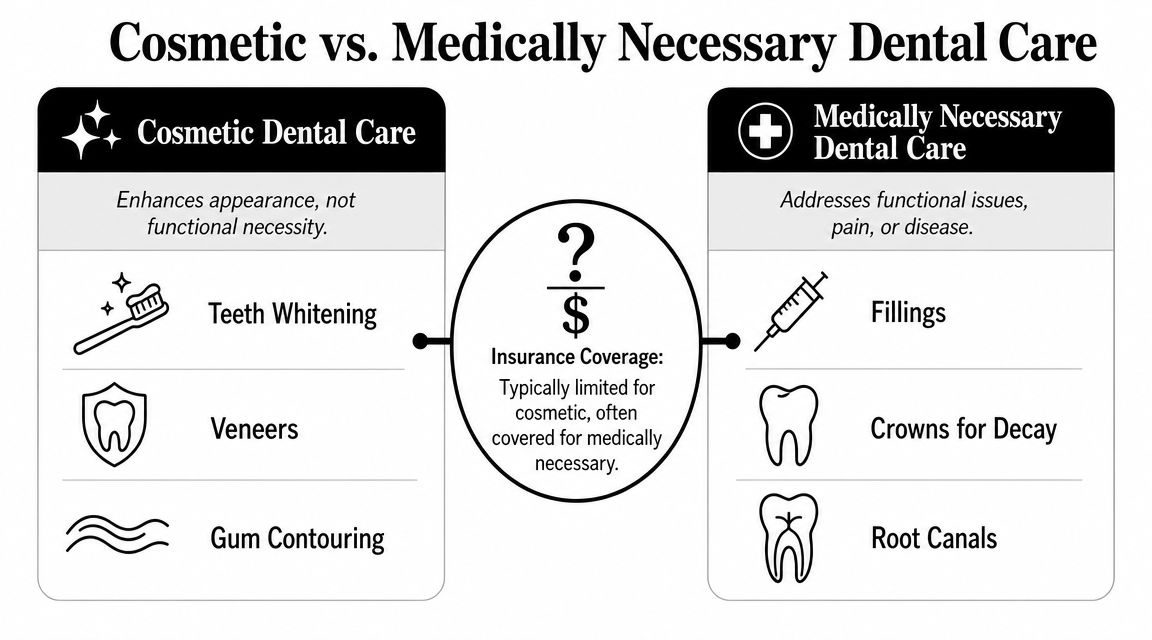
According to Delta Dental's explanation of full coverage dental insurance, most major-market plans follow a familiar structure. Preventive care is often paid at 100%, basic care at 80%, and major restorative work at 50%. That same guidance says purely cosmetic procedures like teeth whitening and most veneers are rarely provided or not covered unless they're documented as functionally necessary.
What insurance usually means by cosmetic
A cosmetic procedure is typically one chosen to improve appearance without addressing disease, pain, or function.
Common examples include:
- Teeth whitening
- Most veneers
- Bonding done only to improve appearance
- Gum contouring for smile design alone
These treatments can make a major difference in confidence. They just usually don't fit the rules most insurers use for reimbursement.
What counts as medically necessary
A medically necessary treatment usually addresses oral health, structure, chewing function, damage, or pain.
That can include:
- Fillings for decay
- Crowns on broken or weakened teeth
- Root canal treatment
- Tooth replacement when function needs to be restored
- Orthodontic care tied to functional bite issues
A treatment can have a cosmetic result and still qualify for benefits if it also solves a clinical problem. That's why crowns, implants, and some orthodontic treatment sometimes receive partial coverage when veneers or whitening do not.
| Procedure | Typically Considered Cosmetic (Often Not Covered) | Typically Considered Medically Necessary (Often Partially Covered) |
|---|---|---|
| Teeth whitening | Yes | No |
| Veneers for color or shape only | Yes | No |
| Bonding for a small aesthetic change | Yes | No |
| Crown on a cracked or heavily damaged tooth | No | Yes |
| Filling for decay | No | Yes |
| Implant replacing a missing tooth with functional need | No | Yes |
| Orthodontic treatment for bite correction | Sometimes no | Often yes, depending on plan details |
A procedure doesn't become covered just because it looks natural or improves your smile. Coverage usually follows the reason it was needed.
Patients often ask about veneers versus crowns because the two can look similar in photos. The reason for treatment is what matters. A veneer placed mainly to enhance appearance is generally treated differently than a crown used to restore a damaged tooth.
If you want a deeper breakdown of that distinction, this cosmetic dentistry insurance guide from our office is a useful next read.
How to Maximize Your Dental Insurance Benefits
Once you understand the cosmetic-versus-restorative split, the next step is using your plan carefully. Many patients leave benefits unused because they don't know what to ask, or they approve treatment before confirming how their plan applies.
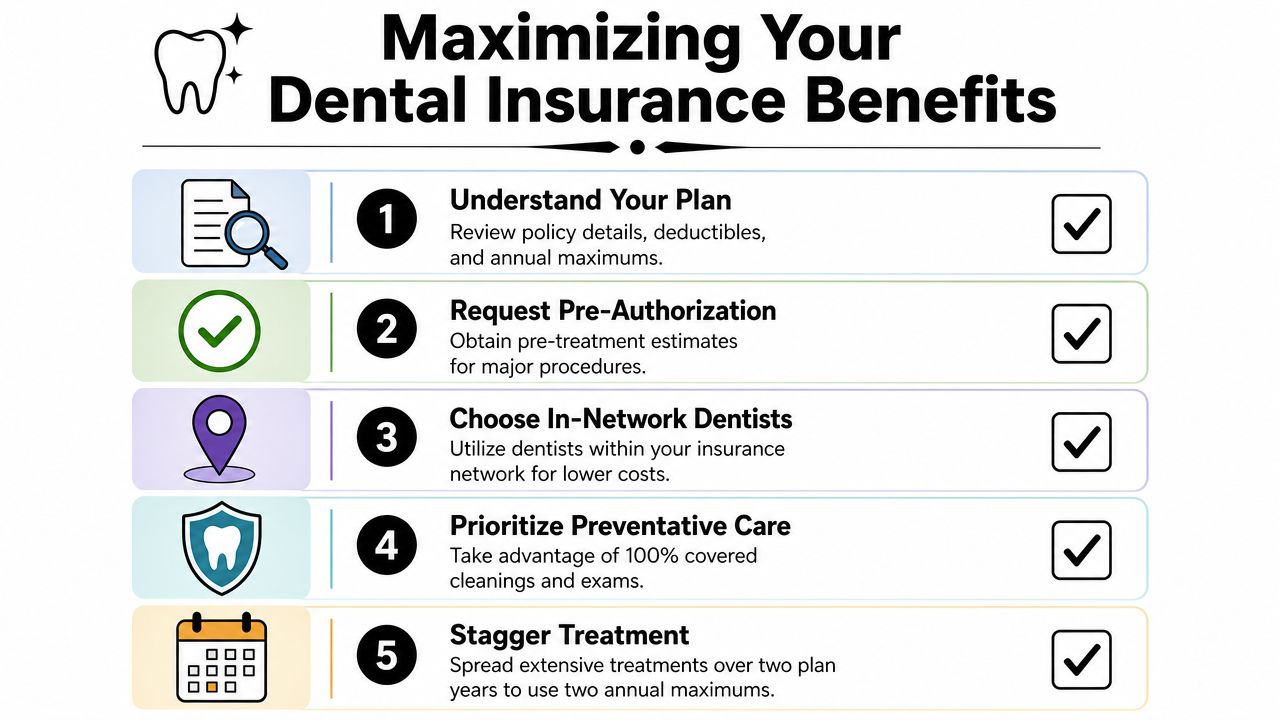
A strong starting point is knowing what a more useful plan looks like for cosmetic-adjacent care. Industry guidance notes that, for patients seeking cosmetic results, the best value often comes from a PPO with at least a $2,000 annual maximum and about 50% coverage for major services, while some enhanced plans may cover 50% to 60% of orthodontic costs with a separate lifetime maximum around $1,000 to $1,500, as described in this guide to better-value cosmetic dental plans.
Questions to ask before treatment starts
Call your insurer or ask the dental team to verify these details:
-
What's my annual maximum?
This affects how much room you have for crowns, implants, or other major treatment. -
Do I have separate orthodontic benefits?
Some plans handle braces or aligners under different rules. -
Is there a waiting period for major services?
A plan can list a service as covered and still delay eligibility. -
Is my dentist in network?
That may affect your portion, even when the same procedure is approved. -
Can you provide a pre-treatment estimate?
This is one of the best ways to reduce surprises.
How to read the paperwork better
A lot of confusion happens after treatment, when an Explanation of Benefits arrives. That document doesn't always read clearly, especially when the insurer applies frequency limits, alternate benefits, or plan exclusions. If you've ever looked at one and thought, "I still don't know what this means," One For All Medical's EOB guide gives a straightforward explanation of how to interpret those statements.
This short video can also help you think through coverage before you commit to treatment.
Practical ways to make benefits go farther
- Use preventive visits on time: Cleanings, exams, and dental x-rays often protect both your oral health and your budget by catching problems earlier.
- Request a written pre-estimate for major work: This won’t guarantee payment, but it gives you a much clearer forecast.
- Consider treatment timing: If care can safely be staged, some patients use benefits across two plan periods.
- Choose the right office support: Insurance gets easier when the team can help review benefits, claim categories, and expected patient responsibility.
When looking online for a dentist that accepts your insurance, this local insurance acceptance guide can help narrow down what to verify before booking.
Financing Your Smile When Insurance Says No
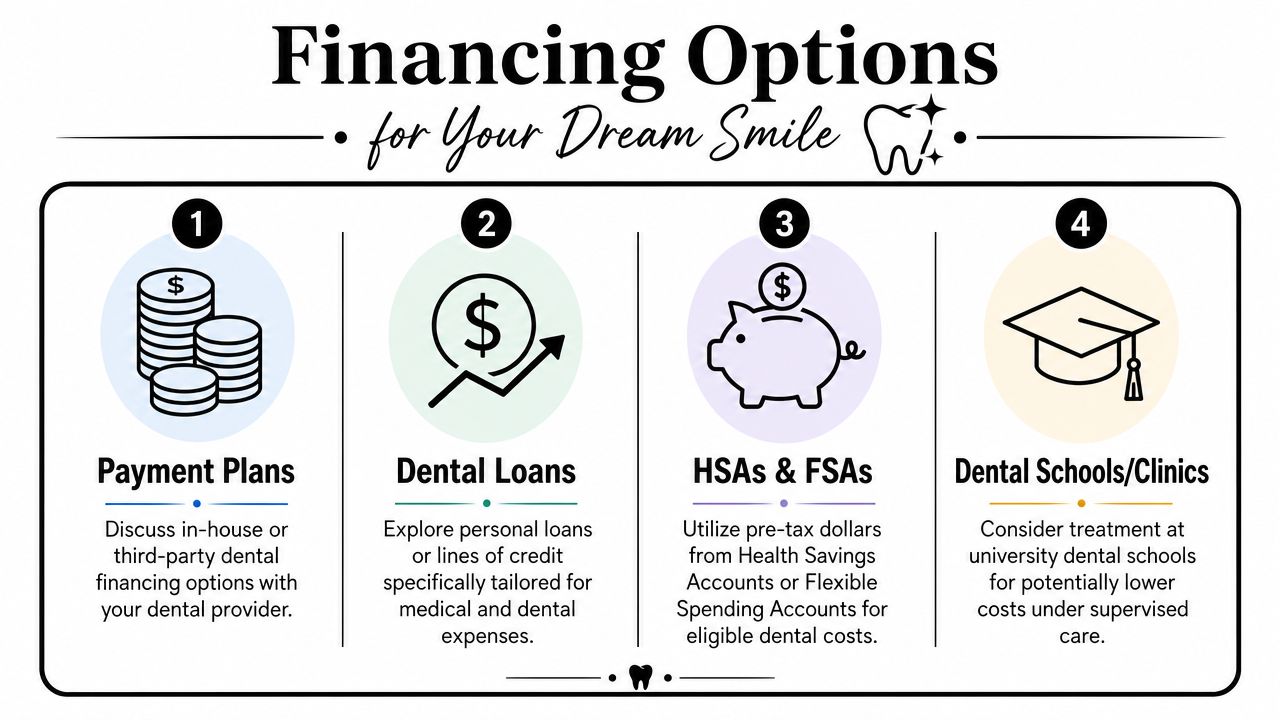
Sometimes the answer from insurance is simple and disappointing. Whitening isn't covered. Veneers aren't covered. The cosmetic part of your treatment plan is your responsibility. That doesn't mean you have to stop. It means you need a different payment strategy.
That situation is increasingly common. One industry source estimated the U.S. cosmetic dentistry market at $11.5 billion in 2022 and projected it to reach nearly $20 billion by 2026, even while traditional insurance coverage remains limited, as noted in these cosmetic dentistry market statistics. In practice, that means many patients pay for smile improvements through a mix of benefits, financing, and in-office alternatives.
Four common ways patients move forward
Membership plans
An in-house membership plan isn't insurance. It usually works as a direct office program with set savings on exams, cleanings, and many procedures. That can be useful for patients who don't want to deal with waiting periods, denials, or annual maximums. For some people, that simplicity matters more than having a traditional policy that excludes the treatment they want.
Aspiring Smiles Dental and Braces offers a membership program for patients who want a local alternative when insurance falls short. In practical terms, this can be helpful for uninsured patients or for people pursuing services that standard dental plans often don't support well.
Third-party financing
Financing companies can break treatment into monthly payments. This is often the most direct option when someone wants to begin care now rather than waiting to save the full amount first.
Patients commonly use this route for:
- Veneers
- Teeth whitening combined with restorative work
- Dental implants
- Larger phased cosmetic and restorative cases
HSA and FSA funds
Health Savings Accounts and Flexible Spending Accounts can sometimes be used for eligible dental expenses. The key issue is whether the procedure qualifies under the account rules. Restorative portions of treatment are more likely to fit than purely aesthetic services.
Ask before assuming. A treatment plan that mixes functional and cosmetic goals may have some parts that qualify and others that don't.
Discount plans and fee schedules
Dental discount plans are different from insurance and different from an office membership. They usually give access to reduced fees through a participating network, but they don't pay claims on your behalf. For some patients, that's enough. For others, a direct office membership is easier because the terms are clearer and the relationship is local.
If your plan says no, don't treat that as the final answer. Ask what other payment path gets you to the same clinical result safely.
What usually works best
The most practical approach is often a layered one. Insurance can be applied to any restorative portion. Pre-tax funds may help if part of the treatment is eligible. Financing can spread the remaining balance. A membership plan may reduce costs where insurance offers little value.
That combination is often more realistic than hunting for true stand-alone cosmetic dental insurance plans, because those plans are uncommon and usually narrower than patients expect.
Your Cosmetic Dentistry Visit at Aspiring Smiles in Las Vegas
When patients come in for cosmetic concerns, the first appointment usually isn't about selling a procedure. It's about understanding what bothers them, what they're hoping to change, and whether the issue is cosmetic, restorative, or both.
At the Las Vegas office on N Tenaya Way, the visit starts with conversation. Some patients want a brighter smile before a major life event. Others are dealing with a chipped front tooth, older dental work, or missing teeth and want a solution that looks natural. Those are very different situations, even if both patients say they want cosmetic dentistry.
What happens at the consultation
Dr. Patel begins by listening. That matters because the right treatment depends on your goals, your oral health, and your budget. If needed, the team takes dental x-rays and performs a full evaluation to check the condition of teeth, gums, bite alignment, and any existing restorations.
From there, the discussion gets more specific. If whitening makes sense, that may be a simple path. If a tooth is structurally compromised, restorative treatment may need to come first. If you're exploring dental implants near me after tooth loss, the conversation includes both appearance and chewing function.
How the treatment plan is built
A good plan doesn't focus only on the final smile. It also accounts for comfort, longevity, timing, and cost.
That usually means reviewing:
- Clinical needs: decay, cracks, wear, missing teeth, bite issues, or gum health
- Cosmetic goals: shade, shape, spacing, symmetry, and smile line
- Budget factors: insurance potential, phased care, and alternatives if a service isn’t covered
- Service options: veneers, crowns, implants, Invisalign, teeth whitening, or restorative dentistry
The most helpful cosmetic consultation is the one that tells you not just what can be done, but what makes sense for your mouth.
Many Las Vegas patients also arrive with concerns unrelated to appearance alone. A tooth may be painful, loose, or broken. In that case, the visit may overlap with restorative care, emergency dentist concerns, or even a tooth extraction discussion before long-term cosmetic planning begins.
What patients can expect
The experience should feel clear, not rushed. You should leave knowing what the problem is, what your options are, which parts may have insurance relevance, and what your next step would be if you decide to proceed.
For families and adults in Desert Shores, Sun City Summerlin, Sunhampton, Lone Mountain, Monterrey, Mar-A-Lago, and Painted Desert Estates, that's often the difference between delaying care and moving forward confidently.
Las Vegas Cosmetic Dentistry Insurance FAQs
Does dental insurance cover teeth whitening
Usually no. Whitening is typically considered a cosmetic service, so most plans don't cover it.
Are veneers ever covered by insurance
Most of the time, veneers are treated as cosmetic and excluded. If a tooth has structural damage, your dentist may discuss whether a different restorative option is more appropriate and more likely to fit standard insurance rules.
Can crowns be covered if they also improve my smile
Yes, sometimes. A crown may receive partial coverage when it's needed to restore a damaged or weakened tooth, even though it also improves appearance.
Are dental implants covered
Coverage varies widely. Some plans help with parts of implant treatment when the care is considered restorative, but others apply exclusions or limitations. A benefits check and pre-treatment estimate are important before starting.
Is Invisalign cosmetic or medically necessary
It can be either, depending on the reason for treatment and the specifics of the plan. If tooth movement is tied to bite function, crowding that affects oral health, or another documented need, insurance may treat it differently than elective alignment for appearance alone.
What if I don’t have insurance
You still have options. Many patients move forward with a combination of office membership savings, staged treatment, or financing rather than relying on traditional insurance.
Is a dental discount plan the same as insurance
No. A discount plan generally gives access to reduced fees through participating providers, while insurance typically reimburses covered services under plan rules. They work differently and create different expectations.
How do I know what my treatment will really cost
The most reliable approach is an exam, a written treatment plan, and a benefit review before treatment begins. That gives you a clearer estimate than trying to interpret a generic plan brochure on your own.
Should I delay cosmetic work until my insurance improves
Not always. If the concern is connected to a damaged tooth, missing tooth, or bite issue, delaying may let the problem become more complicated. It makes more sense to get an evaluation and then decide whether to treat now, phase care over time, or use a non-insurance payment option.
How is a membership plan different from traditional insurance
Traditional insurance usually comes with coverage rules, exclusions, maximums, and claim decisions. A membership plan is typically simpler. It doesn't function like insurance, but it can offer a more predictable path for patients who want ongoing care and reduced fees without the usual insurance obstacles.
If you're looking for a dentist in Las Vegas, NV who can help you sort through cosmetic treatment costs without the usual confusion, Aspiring Smiles Dental and Braces can help you review your options, understand where insurance may apply, and build a practical plan for your smile. Whether you're comparing a cosmetic dentist near me, exploring dental implants near me, scheduling cleaning and exams, or trying to solve a painful dental problem before it becomes an emergency, the next step is a consultation with clear answers.