Dentist Near Me Braces: A Las Vegas Patient’s Guide
If you're typing dentist near me braces into Google, you're probably not just browsing. You may be noticing crowding in the mirror, dealing with a bite that doesn't feel right, or trying to find one office in Las Vegas that can make the process simple for your whole family.
That search often starts with a straightforward goal. You want straighter teeth. But most patients quickly realize they also need answers about the right treatment, the right provider, the true cost, and whether they can fit visits into life in Las Vegas, NV. That's especially true for busy households in Desert Shores, Sun City Summerlin, Lone Mountain, and Painted Desert Estates, where convenience matters almost as much as the treatment itself.
Your Search for Braces in Las Vegas Ends Here
A lot of people start the same way. They search for a nearby office, open several tabs, and then get stuck comparing ads, before-and-after photos, and vague offers. One office says free consults. Another highlights clear aligners. A third focuses on cosmetic dentistry. What's usually missing is practical guidance.
Orthodontic treatment isn't a niche service anymore. The global orthodontics market was valued at about USD 6.5 billion in 2023 and has been projected to grow at roughly 10% through the late 2020s, which reflects how braces and aligners have become a mainstream family-service category rather than a narrow specialty option according to this orthodontics market overview. That matters locally because patients in Las Vegas now have access to more treatment options, more technology, and more types of providers than they did in the past.
What patients usually want to know first
Most new patients aren't asking for a lecture on orthodontics. They want clear answers to questions like these:
- Is this a braces case or an Invisalign case
- Do I need a general dentist, an orthodontist, or both
- Will treatment fit my work, school, or family schedule
- What will the total cost likely include
- Can I handle cleanings, exams, x-rays, and orthodontic care in one place
Most confusion doesn't come from the treatment itself. It comes from having too many choices and not enough explanation.
For people comparing local offices, online reputation often plays a role too. If you're sorting through options, a Local SEO review tool can help you understand how practices manage patient feedback and visibility online.
If you want to start with a local practice page built around nearby care, this Las Vegas dentist near me resource is a useful first step.
Beyond a Straighter Smile The Health Benefits of Orthodontics
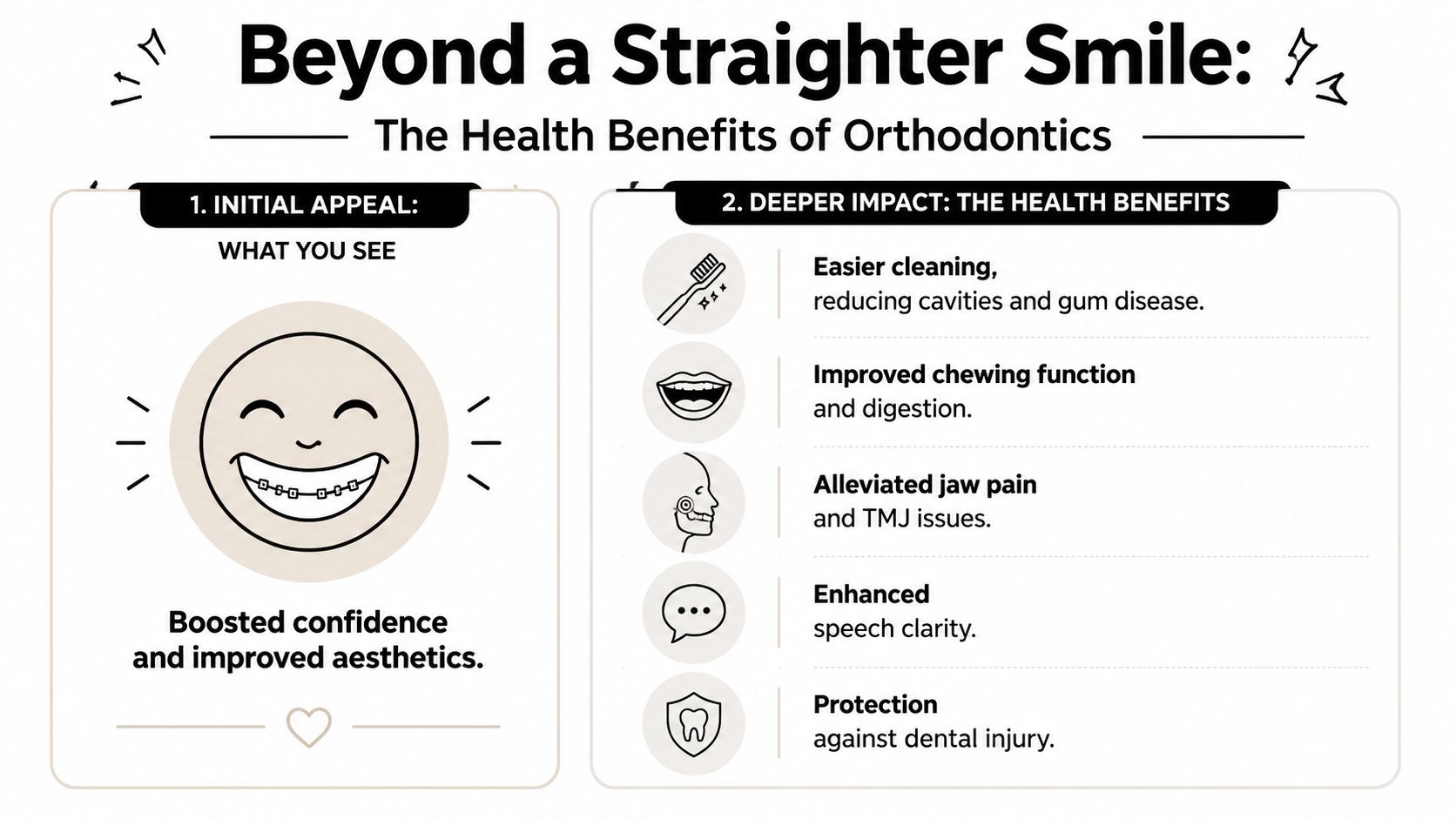
Straight teeth are often the reason patients begin looking into braces. The bigger value is what better alignment can do for daily oral health.
When teeth are crowded, rotated, or out of bite, they can create places that are harder to clean and harder to protect. Some patients notice food trapping. Others notice uneven wear, jaw strain, or difficulty biting into certain foods. Those issues aren't always dramatic at first, but they add up over time.
What alignment changes in daily life
Orthodontic treatment can improve more than appearance. In plain terms, properly positioned teeth are often easier to keep clean and easier to use normally.
Some of the most meaningful benefits include:
- Cleaning access. Straighter teeth can make brushing and flossing more effective, especially in crowded areas.
- Bite balance. A better bite can reduce the extra pressure that certain teeth absorb every day.
- Chewing function. Patients with crossbites, overbites, or spacing issues often notice that eating feels more natural once teeth are aligned.
- Comfort. Some people with bite problems also report jaw fatigue or tension, especially when their teeth don't meet evenly.
- Protection. Teeth that protrude or sit in a poor bite relationship may be more vulnerable to chips and wear.
Orthodontics isn't just for kids anymore
The patient mix has changed. Adults now make up about one-third of orthodontic treatment demand in developed markets, and the introduction of Invisalign in 1997 helped expand interest in more discreet treatment options for working adults and families as noted in this Invisalign background overview.
That shift matters in Las Vegas. Adults often want treatment that works around meetings, travel, social events, and parenting schedules. They're also more likely to ask practical questions about aesthetics, comfort, and whether treatment can happen alongside routine dental care.
Practical rule: If alignment problems are affecting how you clean, chew, or close your teeth together, this is about oral health, not just cosmetics.
Common signs it's worth getting evaluated
You don't need to diagnose yourself before booking a consultation. But it's smart to get checked if you notice any of these:
| Concern | Why it matters |
|---|---|
| Crowding | Can make home care harder and create plaque traps |
| Gaps | May affect bite and food trapping |
| Overbite or underbite | Can influence wear and chewing |
| Crossbite | Can create uneven tooth contact |
| Shifting teeth | Often signals that alignment is changing over time |
A good exam connects those symptoms to a treatment plan that fits your case, not just the most marketable appliance.
Finding Your Perfect Fit Braces and Invisalign Options
The right orthodontic system depends on two things. First, what your teeth and bite need. Second, what your routine will realistically support.
Some patients want the most discreet option possible. Others need a treatment that doesn't depend on remembering to wear aligners. Some are dealing with mild crowding. Others need more involved bite correction. That's why comparing options side by side is more useful than asking which one is “best.”
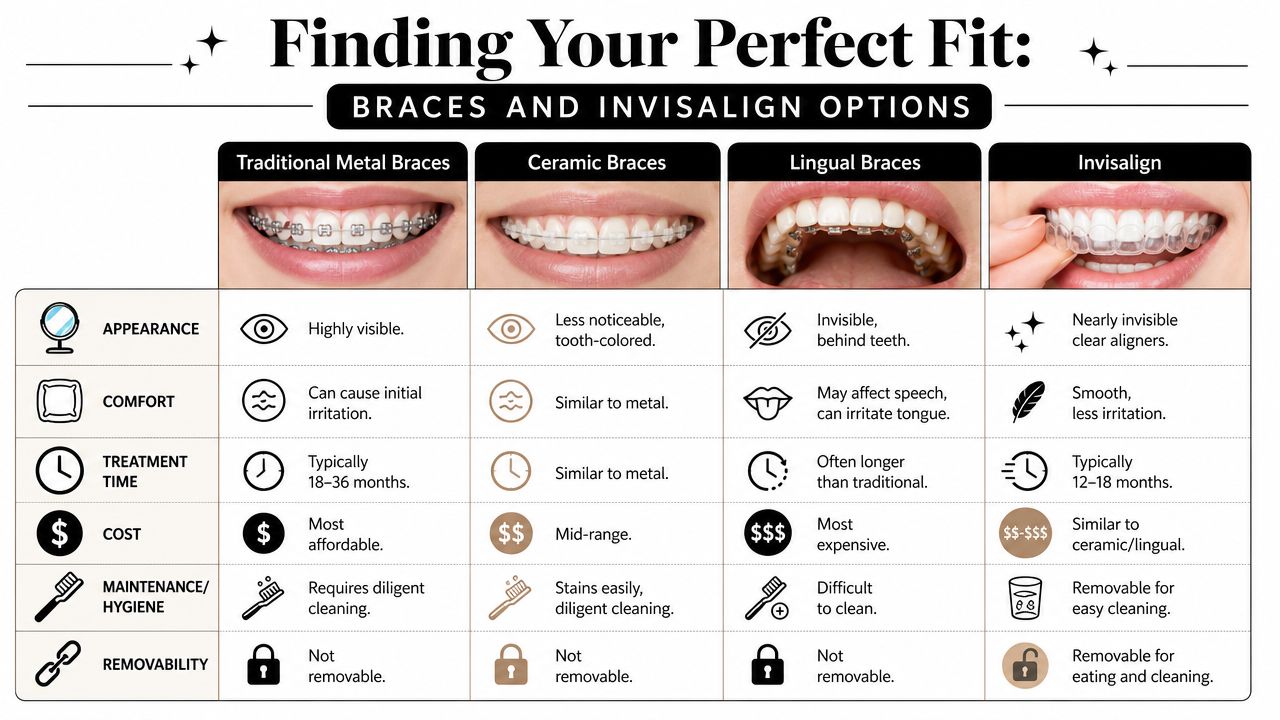
A simple comparison of the main options
| Option | What patients like | Trade-offs to consider |
|---|---|---|
| Traditional metal braces | Reliable, fixed in place, effective for many kinds of movement | More visible, food restrictions, more brushing effort |
| Ceramic braces | Less noticeable than metal | Can require careful hygiene to avoid staining around brackets |
| Lingual braces | Hidden behind the teeth | Can feel different on the tongue and may affect speech at first |
| Invisalign clear aligners | Removable, nearly invisible, easier for meals and brushing | Only works well if worn as directed |
A visual walkthrough can also help if you're deciding between aligners and fixed appliances.
What works well for different lifestyles
Metal braces are often a practical choice when the goal is dependable tooth movement without relying on patient compliance for wear time. They stay on. That helps when someone tends to lose removable items or forgets instructions.
Ceramic braces suit patients who want a more subtle look but still need a fixed appliance. They can be a good middle ground for adults and teens who want less visibility without switching to aligners.
Lingual braces appeal to patients who want their braces hidden from the front. They can be useful in selective cases, but they're not automatically the easiest choice. Comfort and speech adaptation matter more here than many people expect.
A lot of adults ask first about clear aligners. If that sounds like you, this guide on whether you're a good candidate for Invisalign is a helpful next read.
What doesn't work as well as patients hope
Some expectations cause problems from the start:
- Choosing by appearance alone. The least visible option isn't always the best one for bite correction.
- Assuming removable means easier. Invisalign is convenient, but only if you're consistent.
- Ignoring hygiene habits. Fixed braces need careful brushing. Aligners need regular cleaning too.
- Treating all crowding as “minor”. Mild-looking front tooth crowding can still come with bite issues that affect the full plan.
The best appliance is the one that matches both the biology of your case and the reality of your routine.
Your Treatment Journey from Consultation to Retainer
Most patients feel better once they know what the process looks like. Orthodontic treatment is structured, predictable, and easier to manage when you understand each phase.
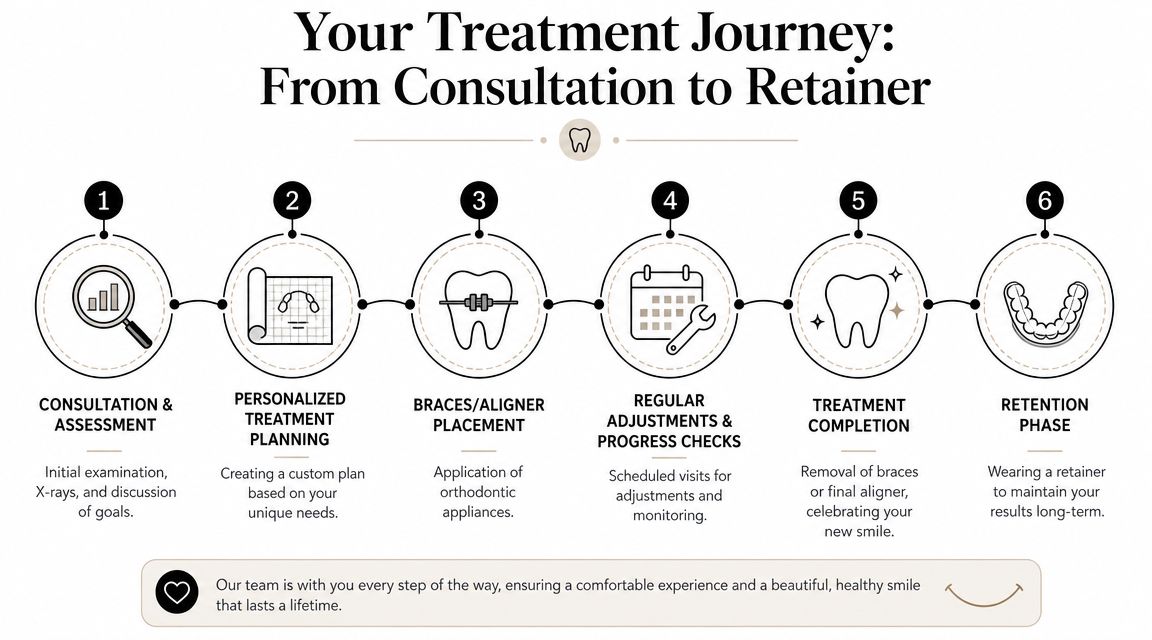
Step by step through treatment
Consultation and records
The first visit usually includes an exam, a discussion of your goals, and diagnostic records such as photos, scans, and dental x-rays. At this stage, crowding, spacing, and bite relationships are evaluated carefully.Treatment planning
Your provider decides whether the case is best handled with metal braces, clear braces, aligners, or a coordinated plan involving other dental services. Some patients also need restorative or periodontal planning before or during orthodontic care.Starting treatment
Braces are placed or the first set of aligners is delivered. You'll also get instructions on eating, cleaning, and what to expect during the first several days.
Why treatment takes time
Braces don't “push teeth over” in one simple movement. They work by applying continuous, gentle force to remodel the surrounding bone and ligaments, which is a biological load-response process. That's why timing depends on age, bone response, and case complexity, and why consistent follow-up matters as explained by the University of Louisville orthodontic clinic.
That point is worth understanding because patients often assume speed is mostly about the appliance. It isn't. Your body has to respond safely to the movement.
Teeth move because bone and supporting tissues remodel over time. Good orthodontics respects that biology instead of trying to rush it.
The middle and final phases
Once treatment is underway, regular visits keep progress on track. These appointments are used for adjustments, monitoring tooth movement, and checking how well the bite is settling.
Patients from Lone Mountain, Desert Shores, and nearby parts of Las Vegas often appreciate having these visits scheduled around work and school routines. Consistency matters. Missed checks can slow progress or allow small problems to become bigger ones.
The last phase is retention. After braces come off or aligner treatment ends, teeth need support while the surrounding tissues stabilize. That's what the retainer is for. It protects the result you worked for.
Navigating Cost Insurance and Financing for Braces
Cost is one of the first things patients want to know, and it should be. Orthodontics is a real investment, so you deserve more than a low teaser price.
One useful benchmark is that full orthodontic care can start at about $4,172 plus a separate records fee in a university-based setting, but that number doesn't tell the whole story. Final cost can change based on appliance type, case complexity, and whether higher-level imaging such as cone-beam CT is needed for root position, impacted teeth, or more complex jaw relationships as outlined by The Ohio State University orthodontic clinic.
What actually changes the price
A realistic financial conversation usually includes several moving parts:
- Type of appliance. Metal braces, ceramic braces, lingual systems, and clear aligners don't all involve the same materials or workflow.
- Case complexity. Mild spacing is different from bite correction, impacted teeth, or treatment that needs coordination with other services.
- Diagnostic needs. Some cases need standard records only. Others need more advanced imaging.
- Refinements and retention. Patients should ask what's included at the end of treatment and what happens if the case needs adjustments.
The better question to ask
Instead of asking, “What's your starting price?” ask this:
What is included in the total treatment fee, and what would change that number during care?
That question gets closer to the complete answer. It helps uncover whether records, retainers, additional aligners, emergency visits, or more advanced imaging are part of the estimate or separate.
What transparency should look like
A clear financial discussion should cover:
- Insurance review so you know whether orthodontic benefits apply
- Payment plan options so treatment can fit monthly budgeting
- Included services such as records, retainers, and progress visits
- Possible add-ons if the case changes or becomes more complex
Patients in Las Vegas often compare offices by convenience first. That makes sense. But for braces, convenience without pricing clarity can backfire. A good office should help you understand not just how to start treatment, but how to budget for the full course of care.
Why Las Vegas Chooses Aspiring Smiles Dental and Braces
One of the biggest problems with the phrase dentist near me braces is that it hides an important decision. Are you looking for a general dentist who offers limited orthodontic care, a specialist practice focused only on tooth movement, or a setting that combines orthodontics with broader dental treatment?
That distinction matters. Patients often struggle to choose between a general dentist or a specialist for braces, and a practice that integrates both offers a meaningful advantage by coordinating everything from cleanings and fillings to extractions and implants alongside orthodontic treatment as described in this provider-selection discussion.
Why a hybrid model is practical
A hybrid model works well for patients because teeth rarely exist in isolation from the rest of the mouth. Someone may need orthodontic treatment and also need routine exams, a tooth extraction, restorative dentistry, cosmetic planning, or long-term implant coordination.
For many families in Sunhampton, Mar-A-Lago, Monterrey, and Sun City Summerlin, one office that can handle those needs under one roof is easier to manage. It can also reduce the confusion that happens when multiple offices are involved in one treatment plan.
Aspiring Smiles Dental and Braces is a natural fit for this decision. The practice provides orthodontic care within a broader dental setting, so patients can address alignment while staying connected to preventive, restorative, cosmetic, and emergency dental services in Las Vegas.
What patients should look for in any office
Not every patient has the same insurance setup, and some households compare medical and dental benefit options together. For families evaluating broader coverage questions, this overview of Florida family health insurance may help explain how dental and vision benefits are often considered alongside family health planning.
When choosing a local provider, focus on these factors:
- Coordinated care if your case may involve more than straightening teeth
- Clear communication about treatment limits, expectations, and follow-up
- Modern diagnostics for planning and monitoring
- Scheduling convenience for ongoing visits in Las Vegas
Frequently Asked Questions About Getting Braces
Do braces hurt
They can cause soreness, especially when they're first placed or adjusted. Most patients describe it as pressure rather than sharp pain. Soft foods, good hydration, and a short adjustment period usually help.
How do I clean my teeth with braces
Brush carefully around brackets and along the gumline. Flossing takes more attention with fixed braces, but it's important because plaque tends to collect around hardware. If you use aligners, clean both your teeth and the trays consistently.
How long will I need to wear a retainer
Retainers are part of treatment, not an optional extra. Teeth can shift after active treatment ends, so wearing your retainer as directed protects the result. The exact schedule depends on your case and provider instructions.
Can I still play sports or musical instruments
Usually, yes. Patients who play contact sports should ask about protective mouthgear. Musicians, especially wind-instrument players, often need a short adaptation period, but most adjust well.
Is Invisalign always better for adults
Not always. Adults often like Invisalign because it's discreet and removable, but some cases are better managed with fixed appliances. The best option depends on your bite, tooth movement needs, and how consistently you'll wear aligners.
Should I see a general dentist or a specialist for braces
That depends on case complexity and whether you also need broader dental treatment. For many patients, an integrated office is helpful because it can coordinate orthodontics with cleanings, fillings, extractions, cosmetic work, and long-term restorative planning.
If you're ready to stop comparing tabs and get clear answers, schedule a consultation with Aspiring Smiles Dental and Braces. The team serves Las Vegas, NV and nearby neighborhoods with complete dental care, clear communication, and treatment plans built around real life.