Night Guard for Grinding in Las Vegas: A Patient’s Guide
You wake up with a sore jaw, a dull headache near your temples, or teeth that suddenly feel sensitive when you drink something cold. Sometimes a partner hears grinding at night. Sometimes nobody hears anything, and the first clue is a chipped edge on a tooth or a crown that starts feeling “off.”
That pattern is common in dental offices across Las Vegas, NV. Sleep bruxism, or nighttime teeth grinding, affects approximately 21% of the global population, which means roughly 1 in 5 people grind at night, often without realizing it until symptoms appear, according to this overview of bruxism prevalence and night guard care. To avoid needing a dentist near me, a dentist in Las Vegas, NV, or even an emergency dentist because a tooth has already cracked, the better move is to get the problem identified before it becomes a bigger restorative issue.
Night guards can play an important role, but not in the way many people assume. They protect teeth. They don't automatically solve the reason you're grinding. That's why the right starting point is an exam, not a random appliance from a store shelf.
Your Dentist for Grinding Relief in Las Vegas
Bruxism often starts as a symptom people try to push through. They blame stress, sleeping in a bad position, sinus pressure, or a “normal” headache. Then the pattern repeats. The jaw stays tight. The teeth get flatter. A filling chips. Chewing on one side becomes more comfortable than the other.
For patients in Las Vegas neighborhoods such as Desert Shores, Sun City Summerlin, and nearby communities, that cycle usually has a practical solution. The first step is identifying whether the problem is straightforward grinding, clenching, muscle tension, a bite issue, or something else that needs closer attention.
Signs that shouldn't be ignored
A night guard for grinding may be worth discussing if you notice:
- Morning jaw soreness that fades later in the day
- Temple headaches when you wake up
- Tooth sensitivity without an obvious cavity
- Flattened or chipped teeth
- Tight facial muscles when you chew or yawn
- Clicking or strain in the jaw joint
Some patients come in for a routine visit, new patient exams, cleaning and exams, or dental x-rays and only then learn that heavy wear is building up on the teeth. Others first arrive because they think they need tooth extraction, restorative dentistry, or an emergency dentist after a crack or failed filling.
Important point: A night guard works best when it's part of a diagnosis, not a guess.
Why local care matters
A dental exam in Las Vegas does more than confirm that you're grinding. It helps determine what your teeth, jaw joints, and existing dental work are dealing with every night. That matters whether you have natural teeth, crowns, bridges, veneers, or are researching Dental implants near me because you've already lost teeth to wear and fracture.
Patients looking for a cosmetic dentist near me also need this conversation. Grinding can shorten and chip front teeth, which affects both function and appearance. Protecting enamel early is often simpler than rebuilding it later with cosmetic dentistry or restorative dentistry.
In practical terms, grinding relief starts with listening to the symptoms, checking for damage, and choosing protection that fits your bite.
What Is Bruxism and Why It Is a Problem
Bruxism means grinding or clenching your teeth. It can happen during the day, during sleep, or both. The nighttime version is especially frustrating because you can't consciously stop it while you're asleep. Many people only find out they have it after a dentist sees wear patterns, fracture lines, or overworked jaw muscles.
What patients usually notice first
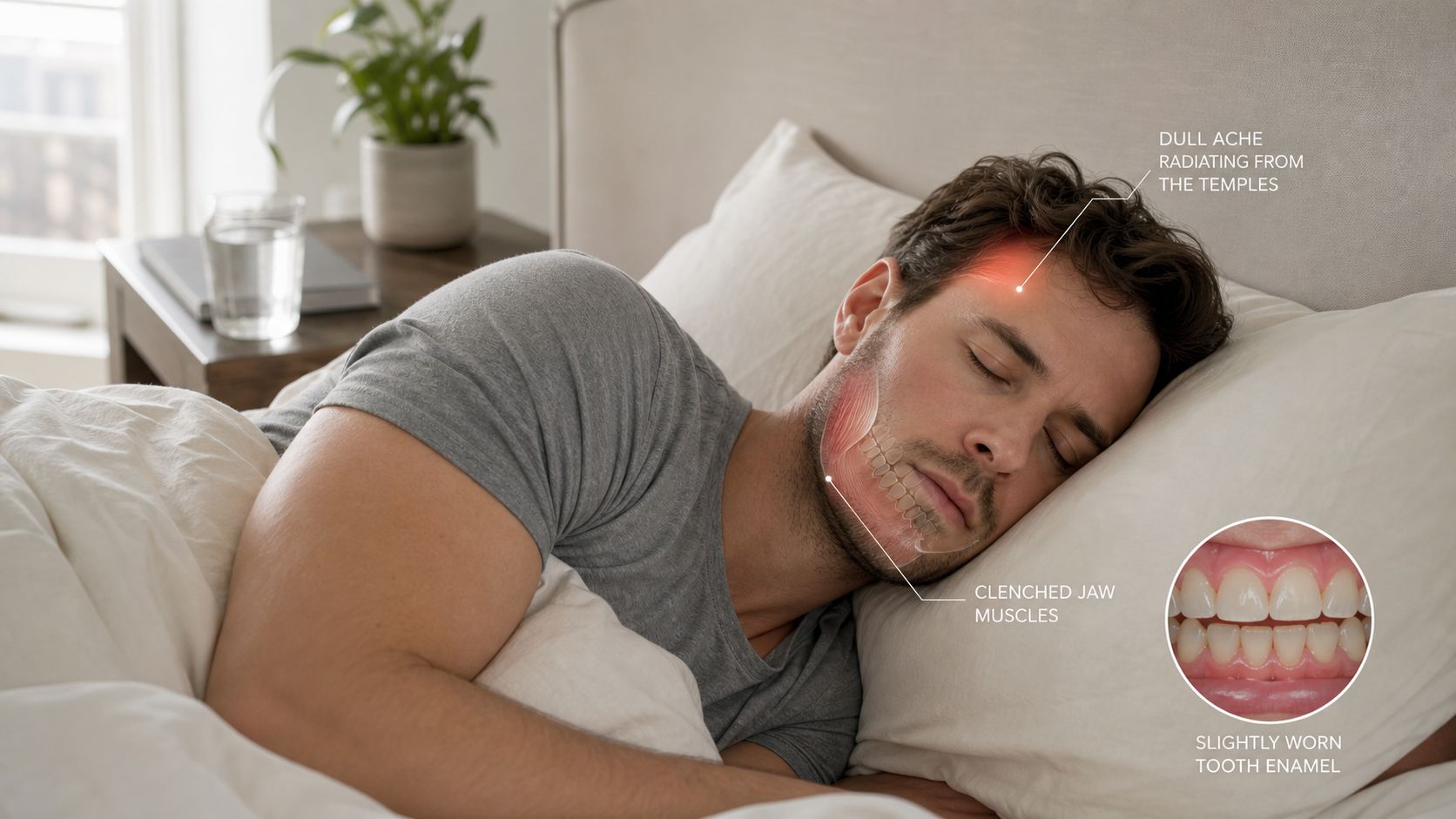
The symptoms aren't always dramatic. More often, they build slowly:
- Headaches on waking
- Ear-area pain that isn't an ear infection
- Sore chewing muscles
- Sensitive teeth
- Small chips or flattened biting edges
- A feeling that the bite has changed
If you've been trying to connect those symptoms on your own, the issue may be bruxism. A more detailed discussion of self-check signs appears in this guide on how to stop grinding teeth at night.
The real cost of untreated grinding
The damage from clenching isn't limited to enamel. It also affects dental work you've already paid for. According to clinical education on occlusal treatment modalities, untreated grinding can cause crowns, bridges, or implants to fail 3–5 times faster because of cyclic loading fatigue. That's one of the clearest reasons dentists take bruxism seriously.
That matters in several common situations:
| Situation | Why grinding is a problem |
|---|---|
| Natural teeth | Repeated force can create chips, cracks, and shortened enamel |
| Crowns and bridges | Pressure concentrates at restoration margins and support points |
| Dental implants | Excessive force stresses the restoration and surrounding bite system |
| Cosmetic work | Veneers and bonding can fracture or debond under repeated clenching |
For some patients, a cracked tooth eventually means root canal treatment, a crown, or extraction. For others, the issue shows up as recurring repairs that never seem to last. Patients searching for restorative dentistry, tooth extraction, or dental implants often have a history of force-related wear somewhere in the background.
Grinding doesn't have to be loud to be destructive. Quiet clenching can still overload teeth and restorations night after night.
Why jaw joints get involved
The teeth aren't the only structures under strain. Jaw muscles can stay overactive for hours, and the temporomandibular joints have to work against that pressure. That's why some patients report clicking, stiffness, or pain that seems to radiate toward the temple or ear.
Proper evaluation matters. The goal isn't only to stop visible wear. It's to reduce ongoing strain before you need more involved treatment.
Choosing the Right Night Guard Custom vs OTC
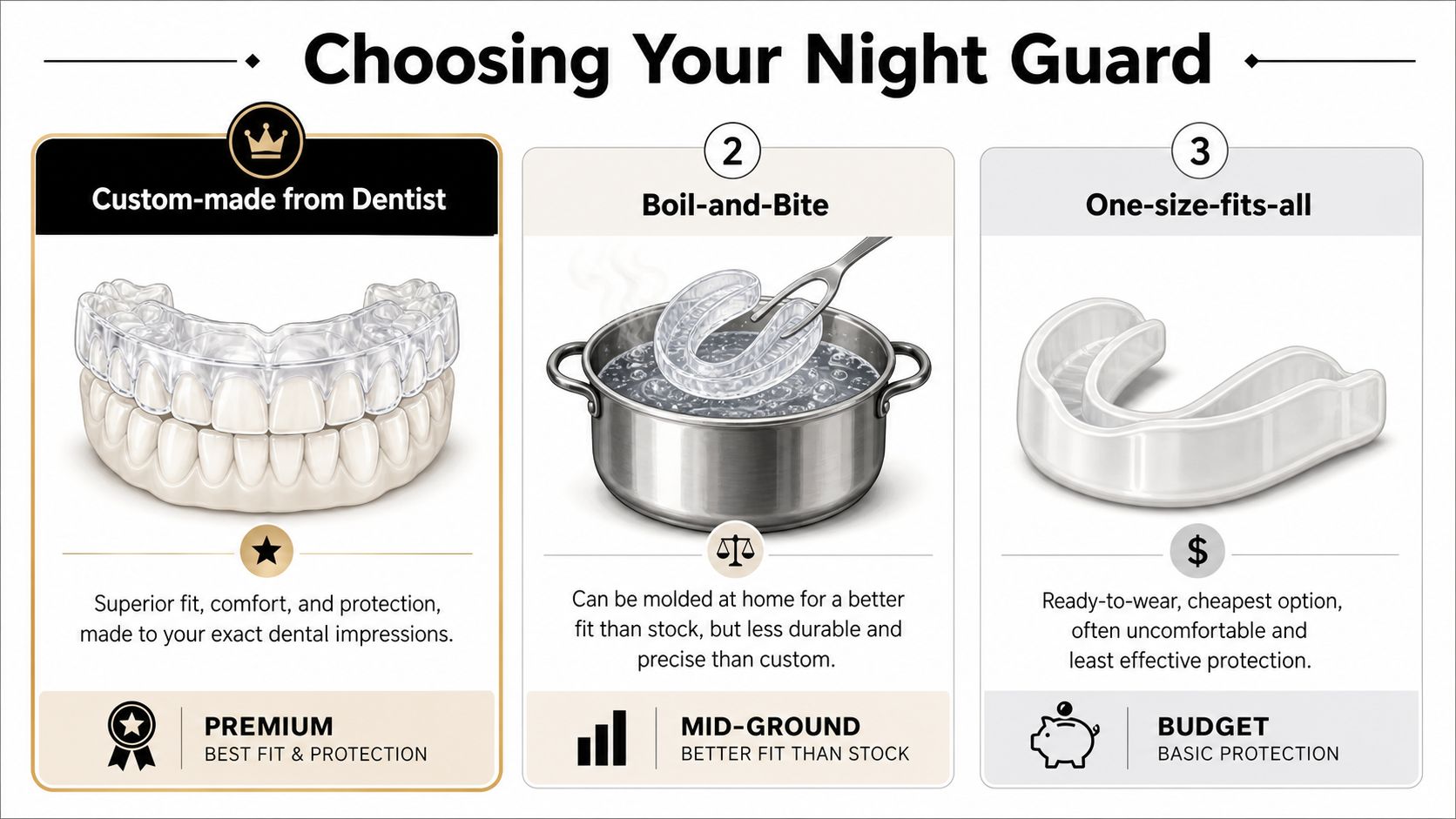
Patients usually compare three options. A custom-made guard from a dentist, a boil-and-bite guard, and a one-size-fits-all stock guard. They don't perform the same way, and they don't carry the same risks.
The quick comparison
| Type | What it offers | Where it falls short |
|---|---|---|
| Custom-made from a dentist | Precise fit, better force distribution, material selected for your case | Higher upfront cost, requires an exam and fabrication |
| Boil-and-bite | Better than stock if you need something short term | Less precise, less durable, fit can distort |
| One-size-fits-all | Lowest barrier to purchase | Bulky, least exact fit, easiest to reject during sleep |
The cheapest choice often feels attractive when you're in pain. That makes sense. But fit isn't a minor detail with bruxism. A guard has to stay in place, feel stable, and protect without adding new strain.
Why custom matters
A professionally made night guard for grinding is designed around your bite. That means the appliance isn't just a piece of plastic between your teeth. It's chosen and adjusted to reduce direct tooth-on-tooth contact and manage force more predictably.
That distinction matters more if you have crowns, bridges, veneers, or implants. It also matters if you've already tried a store-bought guard and woke up feeling like your jaw was working harder, not less.
The risk people miss
One of the biggest misconceptions is that a night guard cures grinding. It doesn't. It's a protective device. It can be useful, but it doesn't automatically solve the reason the grinding is happening.
That becomes especially important when sleep breathing problems may be involved. As explained in this discussion of mouth guards, grinding, and sleep apnea risk, a major misconception is that night guards cure grinding, and for patients with undiagnosed sleep apnea, using a mouth guard can worsen the condition. That's why a professional dental evaluation should come before relying on an OTC guard.
Practical rule: If you grind, snore, wake up tired, or feel like your jaw pain is part of a bigger sleep problem, don't self-diagnose with a drugstore guard.
When each option makes sense
A simple way to understand it:
- Stock guard: Temporary convenience, not a long-term answer.
- Boil-and-bite: A middle-ground option if you're waiting for care, but still limited.
- Custom guard: Best choice when you need real fit, longevity, and a diagnosis that considers the full picture.
Aspiring Smiles Dental and Braces provides custom-fitted night guards as part of a broader dental evaluation, which is the safer route when the concern isn't just wear, but also jaw pain, restorations, or possible sleep-related issues.
Your Custom Night Guard Fitting in Las Vegas
Patients are often surprised by how straightforward the process is. The appointment isn't rushed, and it shouldn't feel mysterious. A proper fitting starts with identifying the pattern of wear and checking whether the symptoms point to simple bruxism, TMJ strain, or a more complex bite issue.
What happens at the first visit
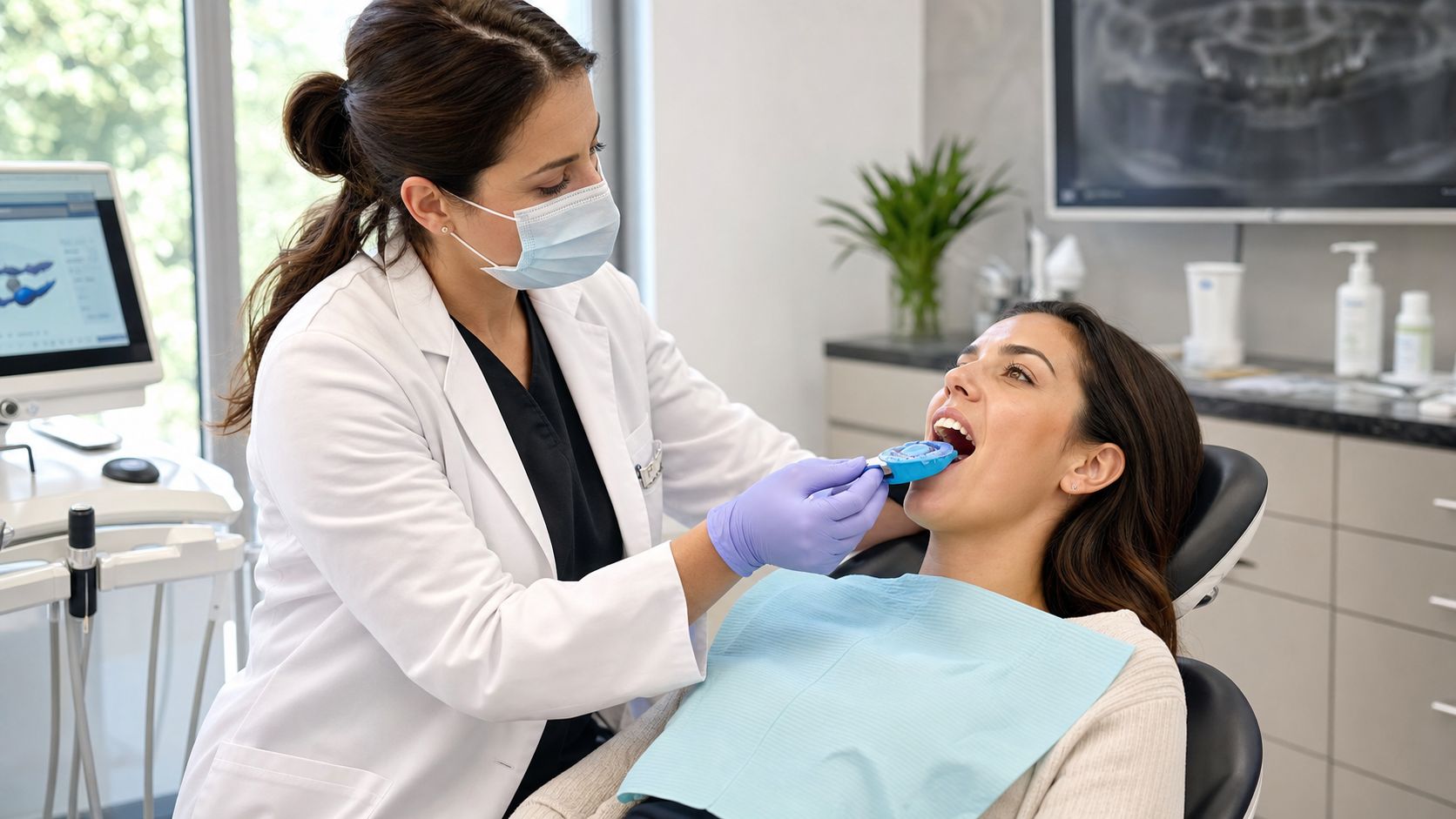
For many patients in Lone Mountain, Painted Desert Estates, and nearby parts of Las Vegas, the first step looks a lot like any thorough dental visit. The teeth are examined for flattening, chips, cracks, gum recession, and pressure-related wear. Existing dental work is checked. Jaw movement is reviewed. If needed, dental x-rays help rule out other causes of pain.
After that, impressions or digital scans are taken so the guard is built to match your teeth rather than a generic shape. That's what separates a custom appliance from something bought off the shelf.
A well-made guard should feel secure. It should be snug without feeling painful or bulky. If it rocks, pinches, or changes the bite in an obvious way, it needs adjustment.
Choosing the material
Not every grinder needs the same type of appliance. According to this guide to night guard thickness and material selection, moderate-to-heavy grinders often require a 2mm–3mm dual-laminate guard, with a rigid exterior and a softer interior for comfort, and these guards typically last 1–3 years. Material and thickness matter because comfort alone isn't enough. The appliance also has to hold up under force.
A simple overview looks like this:
| Guard style | Often considered for |
|---|---|
| Hard acrylic | Lighter wear patterns or cases needing a firm surface |
| Dual-laminate | Moderate to heavy grinding where both durability and comfort matter |
Here's a short visual overview of how custom appliances are used in practice:
What delivery day feels like
When the guard comes back from the lab, the fit is checked carefully. Patients usually want to know two things right away. Will this feel bulky, and how long until I get used to it?
Quick adaptation is typical when the guard is properly made and adjusted. It should seat fully, stay in place, and come out without a struggle. If pressure points show up after a few nights, a follow-up adjustment is part of making the appliance wearable.
A custom guard isn't successful because it exists. It's successful because you can actually sleep in it consistently.
Night Guard Costs Care and Maintenance
Cost matters because patients are comparing a professional appliance with products they can buy the same day. The difference is real, but so is the difference in fit, durability, and oversight.
What you can expect to pay
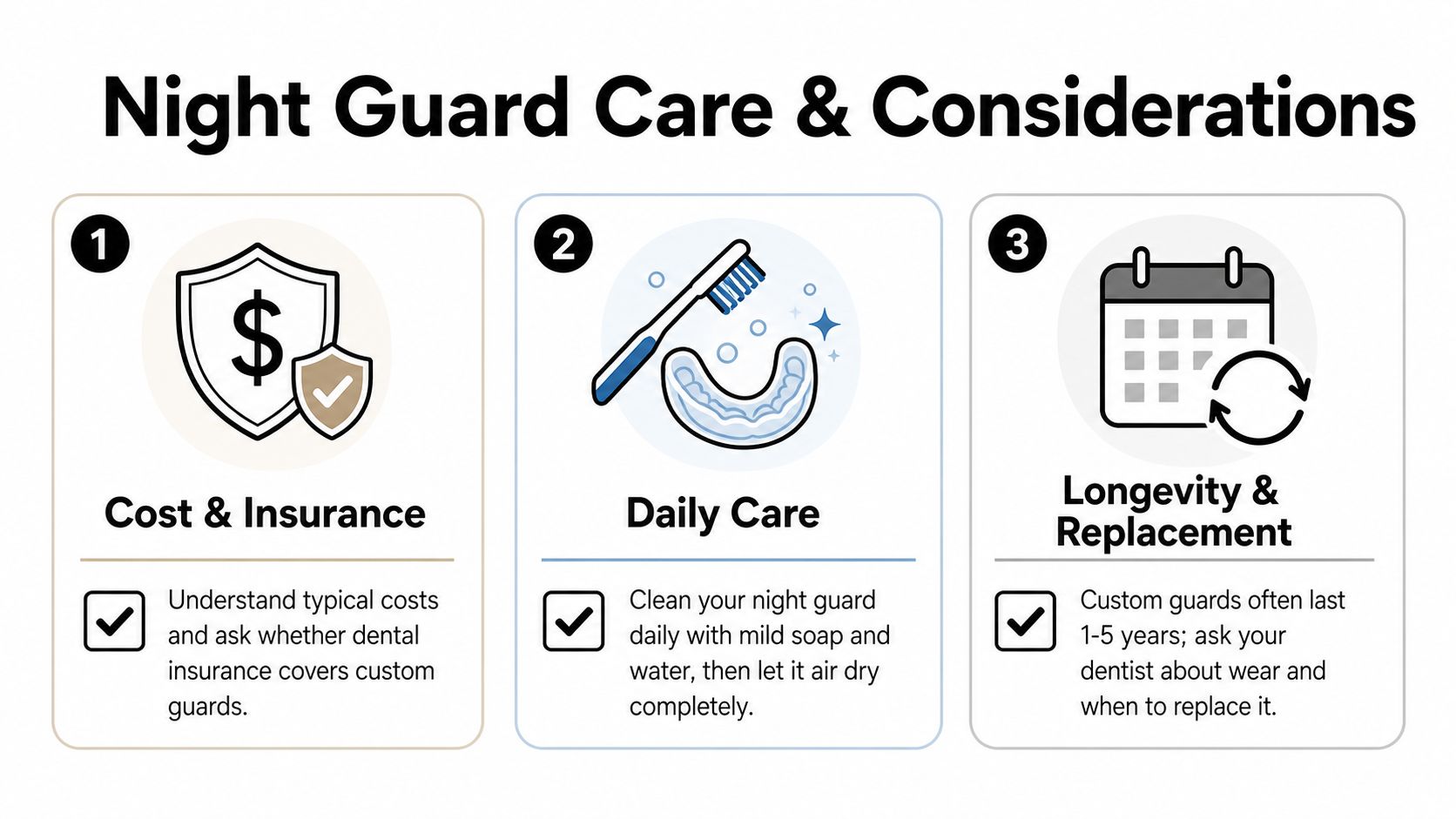
According to this market overview of night guard pricing, a professionally made night guard typically ranges from $300 to $800, while over-the-counter options usually range from $15 to $100. The lower-cost options are cheaper upfront, but they don't offer the same precision or long-term durability.
If you're comparing options, it helps to ask a few direct questions:
- What's included in the fee. Some appliances include the exam, impressions, fitting, and adjustments.
- Will insurance help. Coverage varies, so it's worth checking your dental benefits before you decide.
- What happens if it needs adjustment. Fit matters, and a custom guard may need refinement after delivery.
Daily care that actually helps
Maintenance is simple, but it needs to be consistent. A night guard sits in a warm, moist environment, so hygiene matters.
- Rinse it after use with cool or lukewarm water
- Clean it gently with mild soap and a soft brush
- Let it dry fully before placing it in its case
- Store it in a ventilated container, not wrapped in tissue or left on a bathroom counter
- Bring it to dental visits so the fit and wear can be checked
A few habits shorten the life of an appliance quickly. Hot water can distort it. Toothpaste can be too abrasive for some materials. Leaving it where a pet can reach it is a common way to lose a guard entirely.
When it's time for a replacement
There isn't one universal replacement date because wear depends on how heavily you grind and what material you're using. But there are predictable signs that a guard needs attention:
| Sign | What it may mean |
|---|---|
| Visible wear spots or holes | The material is breaking down |
| Looser fit | The guard has distorted or your bite has changed |
| Cracks at the edges | The appliance may no longer protect evenly |
| Persistent odor or buildup | Cleaning isn't enough and replacement may be more appropriate |
Patients already investing in crowns, bridges, veneers, or dental implants usually see the value in maintaining the appliance that protects that work. In that sense, a night guard isn't just a comfort item. It's part of long-term restorative maintenance.
Night Guard FAQs from Our Las Vegas Patients
Patients usually have a few last questions before they decide whether to move forward. These are the ones that come up most often in Las Vegas.
Will a night guard stop me from grinding completely
Usually, no. A night guard protects teeth and can reduce the effects of grinding, but it isn't a guaranteed cure for the grinding behavior itself. The goal is protection, symptom relief, and preventing further damage while the dentist determines whether anything else is contributing to the problem.
How long does it take to get used to wearing one
Most patients need a short adjustment period. The key is fit. If the appliance is made correctly and adjusted when needed, it should feel secure rather than awkward. If it feels painful, unstable, or so bulky that you can't sleep with it, it needs to be checked.
Can a night guard change my bite
A properly made and monitored appliance should be designed to protect your bite, not disrupt it. Problems are more likely when people wear poorly fitted store-bought guards for long periods without an exam. If you already have jaw clicking, locking, or facial pain, it makes sense to discuss TMJ disorder treatment from a dentist as part of the evaluation.
When should I stop waiting and book an appointment
Book an exam if you have recurring morning jaw pain, chipped or flattened teeth, unexplained sensitivity, frequent temple headaches, or dental work that keeps breaking. The same goes for patients looking for a dentist near me, emergency dentist, cosmetic dentist near me, or dentist in Las Vegas, NV because the symptoms have already moved beyond simple wear.
If the problem is affecting your sleep, comfort, or dental work, it's time for a diagnosis instead of another temporary fix.
A custom night guard can be helpful. The more important step is making sure the appliance matches your bite and that the underlying cause of the grinding hasn't been missed.
If you're dealing with jaw pain, worn teeth, or broken dental work in Las Vegas, NV, schedule a consultation with Aspiring Smiles Dental and Braces. Patients from Desert Shores, Sunhampton, Sun City Summerlin, Monterrey, Lone Mountain, Mar-A-Lago, and Painted Desert Estates can get a clear exam, practical recommendations, and treatment that protects teeth without guessing at the cause.