
Invisalign for Teens Cost: Prices & Plans in Las Vegas
Invisalign for teens in Las Vegas often falls in the $3,000 to $8,000 range, and the final price depends on your teen's case, treatment details, and how the plan is paid for. That's why the key question usually isn't just “How much is Invisalign?” but “What will my family end up paying by the end?”
If you're reading this, there's a good chance your teenager wants a straighter smile but doesn't want metal braces showing in every school photo, team picture, or social event. At the same time, you're trying to make a smart decision about cost, convenience, and whether clear aligners will really fit your child's routine.
Families searching for a dentist near me or a dentist in Las Vegas, NV often start with the sticker price. What matters more is the total cost of treatment, including insurance, financing, possible extras, and how smoothly the process goes from the first scan to the final retainer. That's the part many parents want explained clearly.
Your Teen Wants a Straighter Smile Here Is What to Expect
Teen orthodontic decisions usually start the same way. Your child notices crowded teeth, spacing, or a bite that feels off. Then comes the practical concern from the parent side. Will treatment work, how disruptive will it be, and how much will it cost?
Invisalign Teen can be a good fit when a teen wants a more discreet option and a family wants flexibility. The aligners are clear, removable, and generally easier to work around school, sports, and daily brushing than brackets and wires. For many parents, that makes the conversation feel less overwhelming.
Why parents often hesitate
Cost is the first hurdle for most families. Not because straight teeth don't matter, but because orthodontic care is a real investment. If you're also budgeting for routine dental care, cleaning and exams, dental x-rays, new patient exams, or even other needs like a tooth extraction or an emergency dentist visit, it's reasonable to want the full picture before committing.
There's also the question of follow-through. Clear aligners only work when a teen wears them as directed. Some teens are highly motivated. Others need reminders. A good treatment plan has to match the patient, not just the smile.
Practical rule: The best orthodontic option isn't the one that looks best on paper. It's the one your teen will actually wear consistently and your family can manage comfortably.
What local families usually want to know
Parents from Desert Shores, Sunhampton, Sun City Summerlin, Monterrey, Lone Mountain, Mar-A-Lago, and Painted Desert Estates often ask the same things:
- What's included in the fee so there aren't surprises later
- How long treatment may take based on the bite and alignment issues
- Whether insurance helps enough to make clear aligners realistic
- How this compares with braces in total cost, not just monthly payments
For families already looking into cosmetic dentistry, restorative dentistry, or long-term smile improvements, Invisalign can also be part of a broader plan. Straightening teeth can make future care simpler, improve cleaning, and support better mouth health over time.
The Typical Invisalign for Teens Cost in Las Vegas
Most families in Las Vegas see Invisalign for teens cost presented as a broad range, and that's accurate as a starting point. In real-world treatment planning, teen cases commonly land between $3,000 and $8,000. That range helps with budgeting, but it still doesn't tell you where your child's case will fall.

The national benchmark
A useful reference point comes from national pricing. The average cost of Invisalign for teenagers in the United States without insurance is approximately $5,108, with a broad range from $1,800 to $9,500, and case complexity is the main reason prices vary, according to this Invisalign cost review citing national teen pricing.
That national average gives families a reasonable baseline. It also explains why one teen may be quoted for a relatively simple plan while another needs a much more involved correction.
What that fee usually covers
A treatment quote often includes the major parts of the process, not just the trays themselves. In many offices, parents are paying for a full course of care that may include:
- Initial evaluation: Review of alignment, bite, and smile goals
- Digital records: Scans or imaging used to create the aligners
- Custom aligners: The series of trays used during treatment
- Progress visits: Follow-up appointments to monitor movement
- Final retention planning: Guidance on keeping teeth in position after active treatment
What matters is whether those items are clearly spelled out up front. A low headline number can look appealing until you learn that refinements, attachments, or follow-up items are handled separately.
One of the better ways to prepare before your visit is to review a local treatment overview such as this Las Vegas Invisalign pricing page, then bring specific questions about what is and isn't included.
A useful quote doesn't just give a price. It shows what the family is paying for, what may change the fee, and how the office handles adjustments if treatment needs evolve.
For parents comparing options under searches like cosmetic dentist near me or even broader family care terms, that level of clarity matters just as much as the number itself.
Key Factors That Determine Your Final Invisalign Price
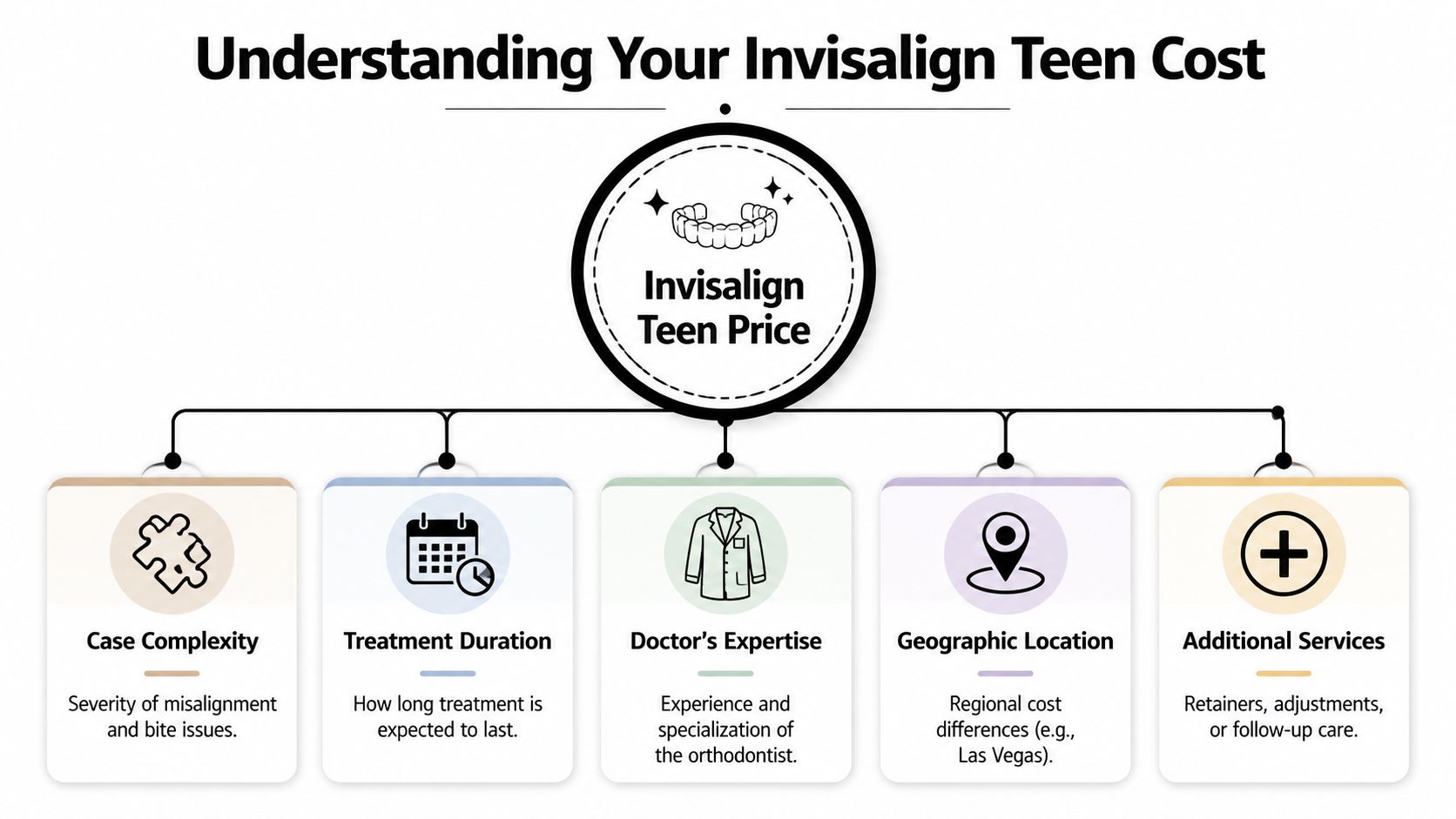
Two teens can both be told they need Invisalign and still receive very different estimates. That isn't arbitrary. The final fee usually reflects how difficult the movement is, how long treatment is expected to last, and whether the case needs extra tools beyond the aligners.
Case complexity changes everything
A teen with mild spacing or minor crowding is different from a teen with rotations, bite issues, or teeth that need more controlled movement. The more complicated the correction, the more planning and aligner stages are usually involved.
That's why online price ranges can only go so far. They don't show whether your child's case is simple, moderate, or more demanding from a tooth movement standpoint. Complexity is often the biggest driver of cost.
Treatment length affects the total
Longer treatment generally means more monitoring, more aligners, and more chances for small mid-course changes. Some teens move through treatment predictably. Others need refinements because teeth don't always respond exactly the same way in real life as they do in a digital plan.
A parent may see the initial price and assume all clear aligner cases are similar. They're not. The estimated duration often tells you more about the true workload than the marketing headline does.
Add-ons and overlooked charges
Many families are often surprised. Some treatment plans need attachments, buttons, or bands to guide specific tooth movements. Those items can be clinically important, but not every office explains them well during the first pricing conversation.
A 2025 analysis from the American Association of Orthodontists indicates that 30% of complex orthodontic cases may incur unexpected $200 to $500 add-ons for auxiliary hardware like buttons or bands, which means parents should ask directly how these items are handled in the estimate.
Ask one direct question before starting: “If my teen needs attachments, refinements, or replacement trays, are those already included in the fee?”
Other practical issues can affect the final out-of-pocket amount too. Lost aligners, extra visits related to compliance, or mid-treatment adjustments may or may not be bundled into the quoted fee. That's why clear communication matters more than a broad advertised range.
What to ask before agreeing to treatment
A smart consultation focuses on details, not just the headline number.
- Included services: Ask whether scans, progress checks, and retainers are part of the quote.
- Complexity-related items: Ask how the office prices attachments, buttons, or other auxiliary hardware.
- Refinement policy: Find out how the practice handles cases that need additional aligners to finish well.
- Replacement aligners: Clarify what happens if a tray is lost or damaged.
- Payment structure: Ask whether financing changes the total amount paid.
This is the same kind of practical discussion families should expect when reviewing larger treatment plans like dental implants or restorative dentistry. The clearer the plan, the fewer financial surprises later.
Invisalign Teen vs Traditional Braces A Cost and Lifestyle Comparison
Parents often hear that Invisalign and braces are “comparable.” That's partly true, but it's incomplete. A better comparison looks at both the daily experience and the full cost of ownership.
Traditional braces usually stay on full time, which removes the compliance issue. Invisalign offers flexibility and appearance benefits, but that flexibility only helps if your teen uses it responsibly. Cost can also shift depending on how the treatment is financed.
Side by side comparison
| Feature | Invisalign Teen | Traditional Braces |
|---|---|---|
| Appearance | Clear and less noticeable | Metal brackets and wires are more visible |
| Removal | Removable for meals and brushing | Fixed in place |
| Food limits | Fewer restrictions when aligners are removed to eat | More food restrictions |
| Oral hygiene | Usually easier to brush and floss | Cleaning around brackets takes more effort |
| Office visits | Progress visits are still important | Adjustment visits are part of treatment |
| Discipline required | High, because trays must be worn as directed | Lower, because braces stay on |
| Cost structure | Can look manageable monthly, but financing details matter | Often compared as a more straightforward baseline |
Lifestyle trade-offs matter
For a teen who plays sports, performs on stage, or feels very self-conscious about braces, Invisalign can be a strong choice. It may also help with brushing and flossing because the aligners come out. That can be a real advantage when a teen already struggles with home care between routine cleanings.
Braces still have strengths. They don't depend on the patient remembering to put trays back in after lunch, after band practice, or after a game. For some teens, that reliability makes them the better value even if the family likes the look of clear aligners more.
If your teen is disciplined, Invisalign may feel easier day to day. If your teen tends to lose things or ignore routines, braces may be the more predictable option.
The financing question parents should ask
This is the part many families don't hear early enough. Monthly payments can make treatment feel easier to start, but they can also raise the total amount paid.
Recent 2025 data from the National Consumer Credit Protection Agency shows that 22% of orthodontic patients opt for 36-month financing, which, with a common 4 to 6% APR, can increase the total treatment cost by $400 to $900 compared to an upfront payment for braces.
That doesn't mean financing is a bad idea. It means convenience and total cost aren't always the same thing. If a family is comparing Invisalign with braces, they should compare:
- Upfront cost: What each option costs before financing
- Financed cost: What the total becomes after interest or administrative fees
- Lifestyle fit: Whether the teen will follow the plan
- Care impact: How the option affects brushing, flossing, and comfort
Families searching terms like dentist in Las Vegas, NV, cosmetic dentist near me, or even emergency dentist are usually looking for practical care, not sales language. The honest answer is simple. Invisalign can be worth the investment when the teen is motivated and the financial plan is clearly understood. Braces may be the better buy when compliance is likely to be a challenge.
Making Invisalign Affordable With Insurance and Payment Plans
The good news is that many families don't pay the full sticker price out of pocket. Insurance can reduce the cost, and payment planning can make treatment more manageable if the structure is explained clearly from the start.

What insurance may cover
According to official Invisalign data summarized in GoodRx's review of Invisalign costs and insurance coverage, approximately 92% of qualifying patients receive some insurance coverage, and the average coverage amount across the United States is $1,772 USD.
That matters because orthodontic coverage often works as a lifetime benefit rather than unlimited ongoing coverage. Parents should check whether their plan applies to clear aligners the same way it applies to braces, and whether there are age limits, waiting periods, or annual maximum issues that affect timing.
Questions that save families money
Before starting treatment, ask the office and your insurer these specific questions:
- Orthodontic benefit: Does the plan include orthodontic treatment for dependents?
- Invisalign eligibility: Is Invisalign covered the same way as braces under this policy?
- Payment timing: Does the insurance pay at once or in stages over treatment?
- Benefit limits: Is there a lifetime orthodontic maximum?
- Coordination details: Will the office help verify coverage and estimate the remaining balance?
Many parents also use flexible spending or health spending funds when available. That can make a meaningful difference in how the cost fits into the family budget.
For families trying to plan beyond one dental decision, resources like Peaceful Mindful Pocket's family advice can help organize timing, monthly priorities, and medical spending choices without turning the process into guesswork.
Payment plans can help, but read the total
A monthly option can be the reason treatment becomes possible. That's useful and often necessary. What parents should look at closely is whether the payment plan is interest-free, interest-bearing, or tied to administrative fees over time.
Some offices also provide practical financing information in one place, such as these dental payment plan details, which can help families compare options before committing.
A short explainer can make that process easier:
Payment plans are helpful when they reduce stress without hiding the actual total. If the quote is transparent, families can make a calm decision instead of reacting to a monthly number alone.
Your Teen's Invisalign Journey at Our Las Vegas Office
Once a family decides to move forward, the process usually feels much simpler than expected. Most teens do well when they know what's coming and when parents understand how each stage supports the final result.
The first visit
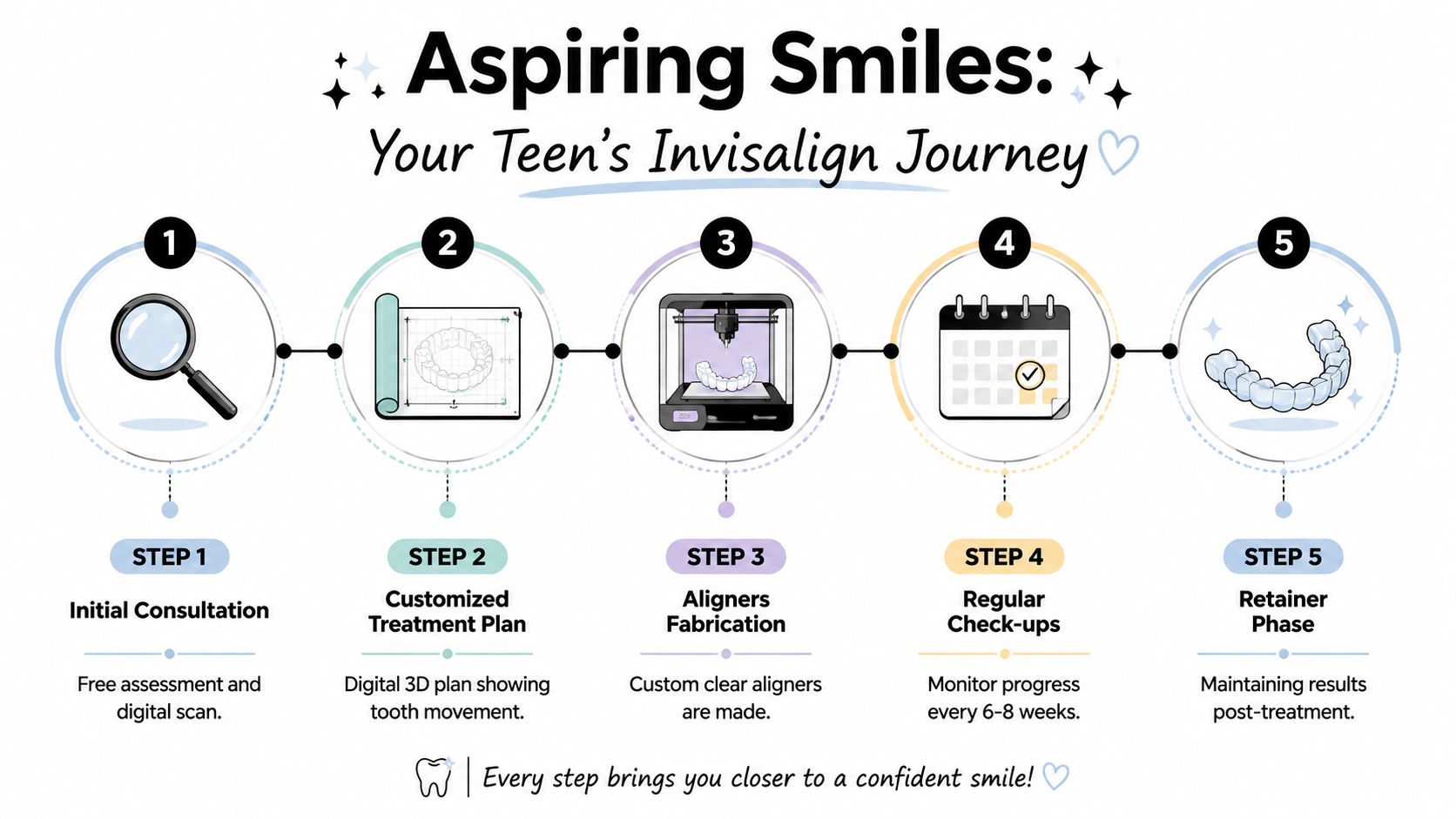
The first appointment focuses on whether Invisalign is a good fit. That includes a clinical exam, a review of your teen's bite and alignment, and digital records to understand how teeth need to move. If your child is also due for routine dental care, this is often a good time to review cleaning and exams, dental x-rays, and any other concerns affecting oral health.
This early step matters because not every teen case should be treated the same way. Some patients are strong aligner candidates. Others may need a different recommendation based on how the teeth and bite come together.
Building the treatment plan
After records are gathered, the doctor maps out a custom plan. With this plan, the treatment becomes personal. The movements are planned specifically for your child's teeth, and the aligners are made to follow that sequence.
At this point, parents usually want to know two things. How long will this take, and how many office visits will it involve? The answer depends on the case, but the goal is always the same. Keep the process efficient while making sure the smile ends in a healthy, stable position.
Wearing aligners and checking progress
Once the aligners arrive, your teen begins wearing them in sequence and returns for progress checks. Those visits are used to confirm that the teeth are tracking as planned and to address any questions about fit, comfort, or daily wear.
Consistent wear matters more than enthusiasm on day one. Teens who build a simple routine usually have the smoothest experience.
This part of treatment works best when the family treats aligners like any other health routine. Keep them clean, store them properly, and follow instructions closely. That prevents avoidable delays and reduces the chance of needing extra adjustments.
Finishing and protecting the result
When active movement is done, the smile isn't the end of treatment yet. Retainers protect the result. Without retention, teeth can shift back over time, which undercuts the time and money already invested.
For families choosing among services that may include cosmetic dentistry, restorative dentistry, or even future needs like dental implants near me, this is an important mindset. Good dental care doesn't stop when the visible problem looks better. It includes protecting the outcome.
A local office such as Aspiring Smiles Dental and Braces can coordinate that kind of care in one setting, including follow-up guidance that fits family schedules in Las Vegas neighborhoods like Desert Shores, Lone Mountain, and Sun City Summerlin.
Frequently Asked Questions About Invisalign for Teens
What if my teen loses an aligner
Call the office as soon as you notice it's missing. The right next step depends on where your teen is in treatment. Sometimes wearing the previous tray briefly makes sense. Other times the next tray or a replacement is the better option.
Does Invisalign hurt
Most teens feel pressure when they switch to a new aligner. That usually means the tray is working. It's often described as soreness or tightness rather than sharp pain, and it tends to improve as the teeth adjust.
Can my teen still play sports or instruments
Usually, yes. That's one reason some teens prefer Invisalign. The aligners are removable, which can make daily activities easier than fixed braces in some situations. If your teen plays a contact sport, ask about the best plan for mouthguard use.
How often are appointments needed
Visits are typically spaced out compared with many traditional braces schedules, but regular checks still matter. The office needs to confirm that the teeth are moving as planned and that your teen is staying on track.
Is Invisalign only cosmetic
No. Straighter teeth can support easier cleaning, healthier gums, and a better bite, not just appearance. That's why clear aligner treatment often fits into broader dental care planning, alongside preventive care and other restorative needs.
If you're weighing Invisalign for teens cost and want a clear answer based on your child's actual needs, schedule a consultation with Aspiring Smiles Dental and Braces. We'll review the smile, explain the treatment options, and help you understand the out-of-pocket picture for your family in Las Vegas, NV.