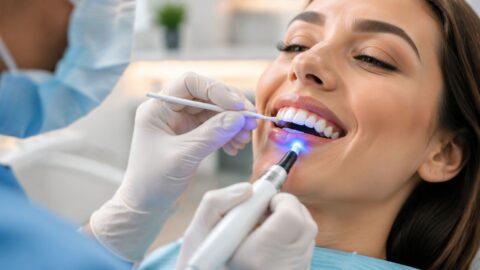
Your Guide to a Cosmetic Dental Filling in Las Vegas, NV
If you're looking in the mirror and noticing a small dark spot on a front tooth, or an old silver filling that shows every time you laugh, you're not alone. Many patients start searching for a dentist near me, a cosmetic dentist near me, or a dentist in Las Vegas, NV because they want something simple. They want their tooth repaired without it looking repaired.
A cosmetic dental filling does exactly that when it's the right treatment. It restores a tooth damaged by decay or minor wear while blending into your natural smile. For many people in Las Vegas, including families in Desert Shores, Sunhampton, Sun City Summerlin, Monterrey, Lone Mountain, Mar-A-Lago, and Painted Desert Estates, that combination of health and appearance matters just as much as comfort.
Restore Your Smile with a Cosmetic Dentist in Las Vegas
A common reason patients call our office is embarrassment over a tooth that technically “works” but doesn't look good. Sometimes it's a visible cavity near the gumline. Sometimes it's an older metal filling that darkens the smile. Sometimes a front tooth has a small chip that catches the light in the wrong way.
That situation can feel bigger than it sounds. You talk a little less. You smile with your lips closed. You put off photos. Then a search for a cosmetic dentist near me turns into a search for an answer that looks natural and doesn't feel complicated.
Cosmetic dentistry isn't a niche concern anymore. Nearly one in five Americans, 17%, have undergone a cosmetic dental procedure, and 82% report satisfaction with the results according to data on cosmetic dentistry popularity and satisfaction. That tracks with what patients ask for every day. They don't just want a tooth fixed. They want their smile to feel like their own again.
Why many patients choose tooth-colored fillings
A cosmetic dental filling uses tooth-colored material to repair a cavity or small area of damage without the obvious look of metal. In the right case, it can be one of the most conservative ways to improve both function and appearance.
A filling should disappear into your smile. If people notice your dental work before they notice your smile, the material or design probably wasn't the right fit.
Patients who care about a brighter, fresher appearance often think about their smile as part of overall facial appearance. If that sounds familiar, this article on how to add white teeth to your anti-aging routine offers a useful perspective on why teeth matter so much in the way the face reads.
Local care that fits daily life in Las Vegas
For patients trying to find a dentist in Las Vegas, NV who can handle both restorative and cosmetic concerns, convenience matters too. Busy schedules, school pickups, work, and last-minute dental concerns all push people to delay treatment.
That delay often turns a small issue into a larger one. A tooth-colored filling can be a straightforward answer when the damage is limited and the tooth still has healthy structure to preserve.
Understanding Cosmetic Dental Filling Materials
Material choice changes the result. A cosmetic filling is not just "the white one." The right option depends on how much tooth is missing, where the tooth sits in your smile, and how much pressure it takes when you chew.
In practice, composite resin handles most cosmetic fillings because it lets us repair a tooth conservatively and match the surrounding enamel closely. Porcelain and glass ionomer also have a place, but they solve different problems.
Composite resin for most direct fillings
Most cosmetic fillings placed in one visit are made from nano-hybrid composite resin. This material combines a resin base with very small filler particles, which helps it hold up well while still reflecting light in a way that looks natural, as described in this review of modern composite materials.
For many Las Vegas patients, composite is the practical starting point because it bonds directly to the tooth. That usually means less drilling than a crown and a more natural result than older metal fillings.
Composite is often a good fit for:
- A visible cavity on a front tooth or premolar
- A small chipped edge that affects the smile
- An old filling that no longer blends with surrounding enamel
- Minor wear or shape correction where preserving natural tooth structure matters
It does have limits. If a tooth has a large fractured area, heavy bite stress, or too little healthy enamel left, a filling may not be the safest long-term answer.
Porcelain for larger or more demanding cases
Porcelain is tooth-colored too, but it is usually used in inlays, onlays, veneers, or crowns rather than a direct filling placed chairside. I discuss that option with patients when the repair is too large for composite alone, or when the goal includes more significant shape or surface changes.
The main advantages are appearance and stain resistance. The trade-off is that porcelain usually requires more planning, lab fabrication, and in some cases more tooth preparation than a direct composite filling.
That difference matters. A small cavity can often be treated with composite and keep more natural tooth intact. A tooth with a large old filling, a weakened cusp, or a broader cosmetic problem may be better served by porcelain.
Glass ionomer for selected situations
Glass ionomer is useful, but it is usually not my first pick for an adult who wants the best cosmetic result in the smile zone. It bonds chemically to tooth structure and releases fluoride, which can help in certain cases.
That makes it a reasonable option in below-the-gumline areas, some root-surface cavities, and some pediatric treatments. According to this step-by-step dental filling guide, it generally has a shorter service life and a more modest shade match than composite.
Comparing Your Cosmetic Filling Options
| Material | Aesthetics | Durability | Best For |
|---|---|---|---|
| Composite resin | Excellent shade matching and natural translucency | Strong for small to medium restorations | Visible cavities, minor chips, direct tooth-colored fillings |
| Porcelain | Excellent appearance and strong stain resistance | Often chosen for larger or higher-demand cosmetic work | Inlays, onlays, veneers, crowns, larger smile corrections |
| Glass ionomer | Fair to moderate cosmetic blend | Shorter lifespan than composite | Below-gumline areas, selected pediatric or low-stress situations |
Practical rule: Composite usually makes sense for a small repair that blends in. If the tooth needs more coverage, more reshaping, or stronger support, porcelain may be the better choice.
Patients often ask the same question. "Can you just do a white filling?" Sometimes the answer is yes. Sometimes a veneer or crown protects the tooth better and gives a more stable cosmetic result. The right material matches the size of the problem, the condition of the remaining tooth, and the way your bite functions day to day.
What to Expect During Your Dental Filling Appointment
Fear usually drops once patients know what happens during the visit. A cosmetic filling appointment is structured, precise, and usually much easier than people expect.
A simple visual overview can help first.
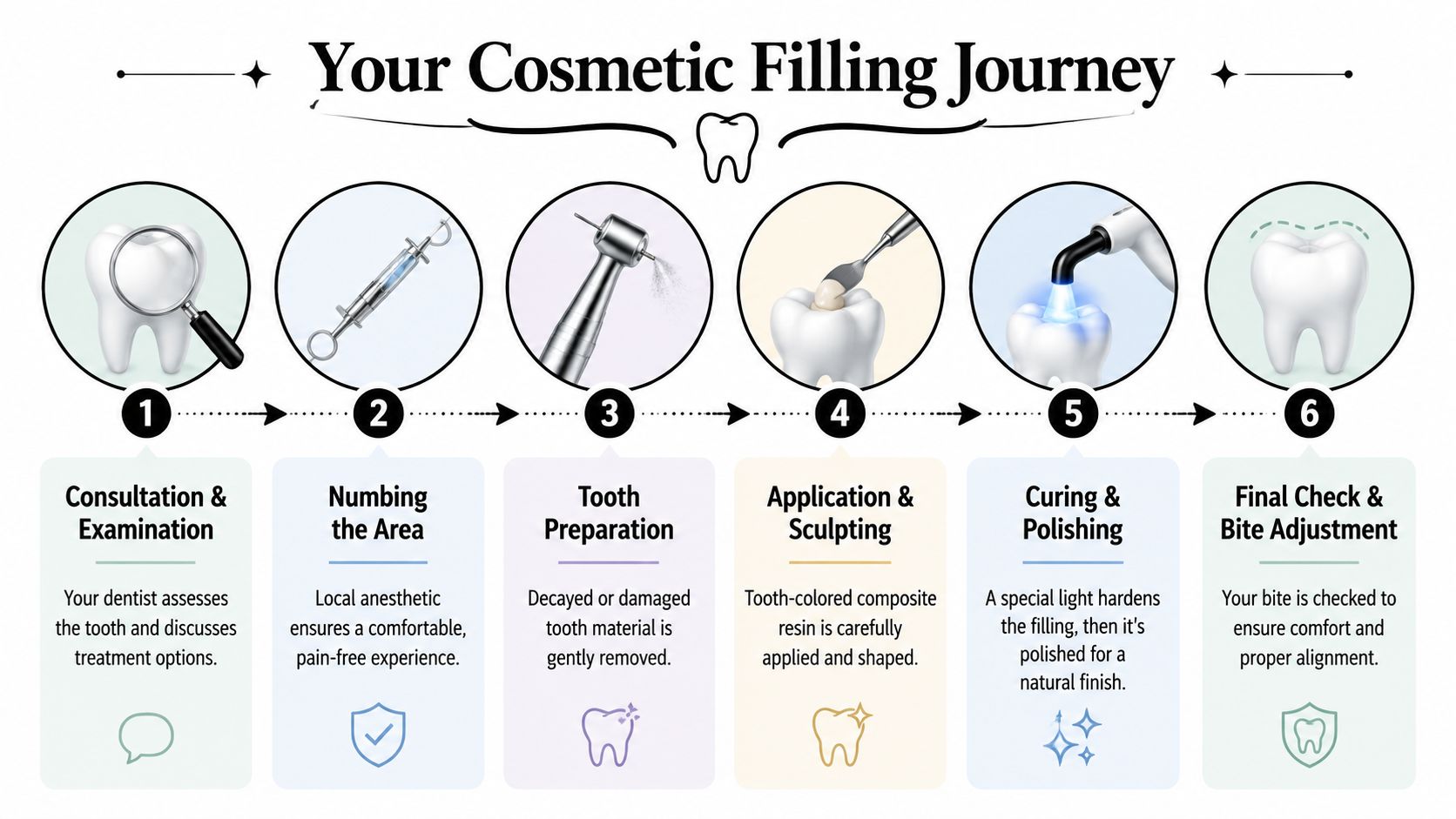
The appointment step by step
The visit starts with an exam. If you're coming in because of sensitivity, a visible cavity, or a rough edge, the tooth is checked closely to confirm whether a filling is enough or whether another treatment would protect the tooth better. If needed, this is also where dental x-rays and a broader review of your oral health fit in.
Once the plan is clear, the area is numbed so the procedure stays comfortable. Then the damaged or decayed portion of the tooth is removed carefully. The goal is to clean out the problem while preserving healthy tooth structure.
According to this demonstration of composite placement, the dentist uses a mild acid etch to create a microscopic rough surface, then applies a liquid bonding agent so the composite adheres strongly. The material is placed in thin layers and hardened with a curing light for a durable, natural-looking result.
Why layering and shaping matter
Composite isn't packed in all at once like a patch. It's built in layers, then shaped to match the contours of your tooth. That detail matters most in visible areas, where tiny changes in edge shape, texture, and gloss can affect how natural the tooth looks.
Here is a video that helps patients visualize the process more clearly.
The final steps patients often don't realize are important
The last part of the visit is where comfort and appearance come together.
- Refining the shape helps the filling blend into the smile and support the way the tooth functions.
- Polishing the surface smooths the restoration so it feels natural and doesn't collect plaque as easily.
- Checking the bite helps prevent a high spot that can make a tooth feel “off” later that day.
For patients in Las Vegas looking for cleaning and exams, new patient exams, restorative dentistry, or emergency dental services, this same attention to detail matters in every treatment. Good dentistry isn't just placing material. It's making the tooth feel normal again.
Benefits and Lifespan of Tooth-Colored Fillings
The main reason patients choose a tooth-colored filling is simple. They want the repair to blend in. But appearance isn't the only advantage.
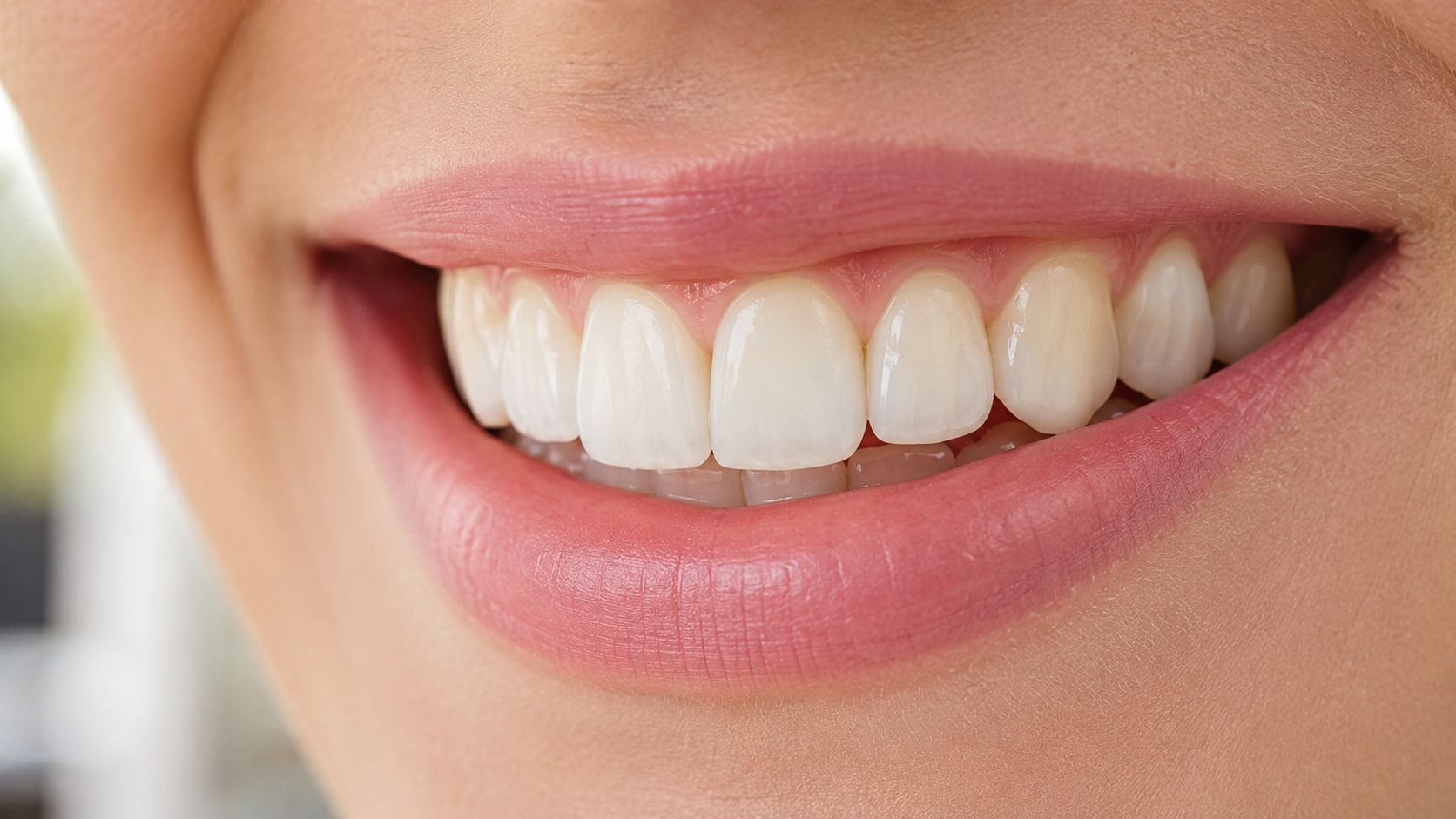
What works well about composite fillings
Composite bonds directly to the tooth, which makes it useful for conservative dentistry. In many cases, less healthy tooth structure needs to be removed than with a larger indirect restoration. That's a real benefit when the damage is limited.
Patients also like that composite can be matched to nearby enamel. That matters for front teeth, but it also matters when you laugh wide or have a visible premolar that shows when you speak.
A few practical advantages stand out:
- Natural appearance because the material is shade-matched to your tooth
- Conservative repair because the dentist can often preserve more healthy structure
- Versatility because the same material can repair cavities, minor chips, and worn edges
- Comfort because a properly adjusted filling should feel like part of the tooth
How long they last and what shortens that lifespan
Composite fillings last 7 to 10 years on average, and the bite is checked with colored articulating paper so high spots can be adjusted and excess strain can be avoided, based on this guide to filling material options and bite adjustment.
That average is useful, but it isn't a promise. Longevity depends heavily on habits and bite forces. Patients who clench or grind often place more stress on the edges of cosmetic restorations. The same is true for people who chew ice, bite hard candy, or use front teeth like tools.
If a filling keeps taking more force than it was designed to handle, it won't fail because the material is “bad.” It fails because the bite keeps overloading it.
What helps a cosmetic filling last longer
Good maintenance is practical, not complicated.
- Keep up with routine visits so small edge wear or staining can be checked early
- Wear a nightguard if you grind because grinding can shorten the life of a visible filling
- Avoid hard chewing habits like ice, hard candy, or opening packages with your teeth
- Stay current with cleaning and exams so decay doesn't start around an older restoration
For many people searching for a dentist near me or cosmetic dentist near me, composite fillings are the right mix of beauty, function, and conservative treatment. They just work best when the case is selected well and the bite is managed carefully.
Cost of Cosmetic Fillings in Las Vegas
Cost matters. Patients ask about it early because they want to plan, and they should. A filling is common dental care, but the final fee still depends on the tooth, the size of the repair, and how complex the placement is.
Typical cost range
In the U.S., the average cost for a tooth-colored composite resin filling ranges from $200 to $600 without insurance, or $175 to $250 with insurance, depending on the tooth's condition and the size of the filling, according to this breakdown of dental filling costs.
A small filling on an easy-to-reach tooth usually falls very differently from a larger restoration that requires more shaping and finishing. That's why an exam matters before anyone gives a meaningful estimate.
What affects the final fee
The biggest factors are usually straightforward:
- Size of the cavity because larger restorations take more material and time
- Location of the tooth because some areas are harder to isolate and restore well
- Condition of the tooth because cracks, old fillings, or deeper decay may change the plan
If you're comparing options, this page on cavity filling cost gives additional context that can help you prepare for the conversation.
Access and planning matter too
Patients in Las Vegas often come in asking whether they should delay a filling until it hurts more or until insurance changes. That usually doesn't save money in the long run if decay progresses and the treatment becomes larger.
For patients also considering services like teeth whitening, dental implants near me, tooth extraction, or other restorative dentistry, it helps to view fillings as part of a broader plan. A small repair done at the right time is often the most conservative option available.
Fillings vs Veneers or Crowns Which Is Right for You
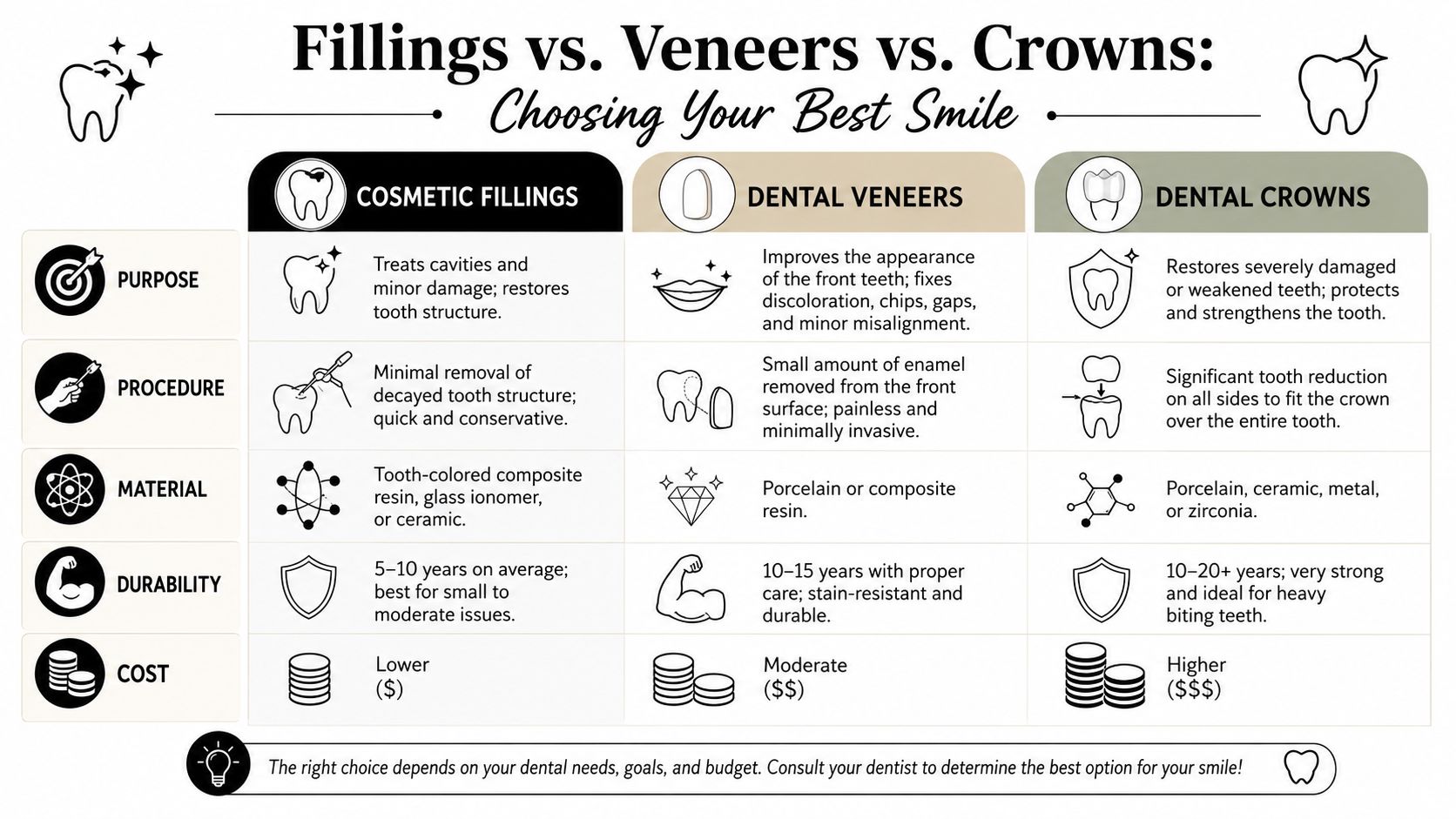
This is one of the most important decisions in cosmetic dentistry. A filling, veneer, and crown can all improve the look of a tooth, but they solve different problems. Choosing the wrong one usually leads to disappointment, extra cost, or a result that doesn't hold up as well as it should.
When a cosmetic filling is the right choice
A cosmetic filling is usually best when the tooth has a small to medium cavity, a minor chip, a worn edge, or an older filling that needs to be replaced. It's a repair-first treatment. The tooth still has enough healthy structure, and the goal is to restore it without covering the whole visible surface.
This is often the most conservative answer. It preserves tooth structure and can usually be completed in one visit.
When veneers make more sense
Veneers are usually chosen when the main issue is cosmetic rather than decay-driven. Think shape, color, small spacing concerns, or front teeth that need a more uniform appearance than a filling can create.
Porcelain is commonly used for these kinds of custom smile restorations. As noted in this overview of porcelain in cosmetic dentistry, porcelain is often used for veneers, inlays, onlays, and crowns, and it is highly stain-resistant with an expected lifespan of 12 to 15 years.
When a crown is the safer treatment
A crown is usually the better choice when the tooth is too compromised for a filling to predictably protect it. That may mean a very large old filling, a fractured tooth, or extensive structural loss. If the remaining tooth walls are weak, a filling may look good at first but fail because it doesn't provide enough coverage.
A filling repairs a portion of a tooth. A crown protects the tooth as a whole. That's the real dividing line.
A practical decision model
Use this framework when you're trying to understand the recommendation:
- Choose a filling if the damage is limited and the tooth is still strong overall.
- Choose a veneer if the tooth is structurally sound but the front-facing appearance needs more change than a filling can deliver.
- Choose a crown if the tooth needs protection as much as it needs cosmetic improvement.
Patients who want to compare those last two options in more detail can review this guide on the difference between veneers and crowns.
For local patients considering cosmetic dentistry, emergency repair, or restorative care, one practical option available is Aspiring Smiles Dental and Braces, which offers white fillings as part of broader general, cosmetic, and restorative dental treatment in Las Vegas.
Your Cosmetic Filling Questions Answered
Patients usually ask very practical questions after they understand the basics. Here are the answers that matter most in day-to-day life.
Will the procedure hurt
During the appointment, the area is numbed to keep treatment comfortable. Afterward, it's common to have temporary sensitivity to heat or cold for a few weeks, and patients should chew carefully until anesthesia wears off to avoid biting the tongue or cheeks, according to this guide to post-filling sensitivity and aftercare.
Can old silver fillings be replaced with tooth-colored ones
Often, yes. Whether replacement makes sense depends on the condition of the existing filling, the amount of remaining tooth structure, and whether the tooth has cracks or recurrent decay. Some old fillings can be replaced with composite. Others need a larger restoration for better protection.
How do I care for a new cosmetic filling
Care is simple and practical.
- Brush and floss consistently to reduce the chance of decay forming around the edges
- Pay attention to your bite and call if the tooth feels high when you chew
- Avoid hard habits that can chip or stress the restoration
- Keep regular visits for exams, cleanings, and dental x-rays when needed
Is a filling enough if the tooth is very visible
Sometimes yes, sometimes no. If the problem is small, a filling can look excellent on a front tooth. If the tooth also needs major color, contour, or surface correction, a veneer may produce a better result. If the tooth is heavily damaged, a crown may be safer.
That decision is where a careful exam matters most. The goal isn't to push one treatment. It's to match the treatment to the tooth.
If you're looking for a dentist in Las Vegas, NV, a cosmetic dentist near me, help with an unexpected cavity, or guidance on whether you need a filling, veneer, crown, tooth extraction, or even dental implants near me, Aspiring Smiles Dental and Braces offers complete care for patients across Las Vegas, including Desert Shores, Sunhampton, Sun City Summerlin, Monterrey, Lone Mountain, Mar-A-Lago, and Painted Desert Estates. Schedule a visit to discuss your smile goals, get a clear diagnosis, and find the treatment that fits your tooth, your budget, and your daily life.