
Natural Looking Veneers: Transform Your Smile in Las Vegas
You know the feeling. You catch your reflection before a school play, a dinner out in Summerlin, or a photo with family in Las Vegas, and the issue isn't your smile itself, it's that one chipped edge, one uneven tooth, or one shade that looks too bright to feel like you. Natural looking veneers are about fixing that without creating a smile that looks boxed in or overdone.
At Aspiring Smiles Dental and Braces in Las Vegas, NV, the focus is on cosmetic dentistry that still looks like you. Patients from Desert Shores, Sunhampton, Sun City Summerlin, Monterrey, Lone Mountain, Mar-A-Lago, and Painted Desert Estates often want the same thing, a confident smile that fits their face, age, and personality. The right veneer plan does that by balancing shade, texture, and tooth shape with a conservative treatment approach.
Natural Looking Veneers at Our Las Vegas Cosmetic Dentist
A lot of people start the conversation because they want to look better in photos. What they really want, though, is to stop worrying that their teeth will look fake when they laugh, talk, or smile in everyday life.
That's where careful cosmetic planning matters. Veneers can brighten, smooth, and reshape teeth, but the result should still blend into the rest of your smile. At Aspiring Smiles Dental and Braces, the process is centered on patient comfort, clear communication, and treatment planning that respects your natural tooth structure. That matters because the most believable veneer results usually come from small, precise decisions, not dramatic changes.
A local approach built around your face, not a template
The practice serves people looking for a dentist in Las Vegas, NV, a cosmetic dentist near me, or even a broader dentist near me search when they're ready to improve their smile. Some patients also come in asking about teeth whitening, restorative dentistry, or whether veneer treatment could fit alongside future care like dental implants near me or other restorative work.
A good veneer plan should answer practical questions before any tooth is prepared:
- What will my smile look like at rest? The lips, gums, and face matter as much as the teeth.
- Will the veneers match my age? A smile that looks believable today should still feel appropriate years from now.
- How much enamel has to be changed? Conservative planning usually makes the final result more natural.
Practical rule: If a veneer design looks great in isolation but doesn't fit the person's face, it isn't a good design.
Patients often like to know that veneers aren't just about surface appearance. Clinical research shows porcelain veneers have a long track record, with strong survival over time when care is consistent, which is one reason they're treated as a durable cosmetic option rather than a short-term fix peer-reviewed veneer survival data.
Understanding Natural Looking Veneers
Natural looking veneers are defined by more than color. If the shade is right but the tooth surface is flat, too opaque, or overly symmetrical, the smile can still look artificial.
What makes a veneer look real
Natural teeth aren't one flat shade from top to bottom. They have subtle variation, lighter areas near the edge, and surface character that changes how light moves across them. That's why a veneer has to imitate translucency, shade gradient, and micro-texture, not just the basic tooth color.
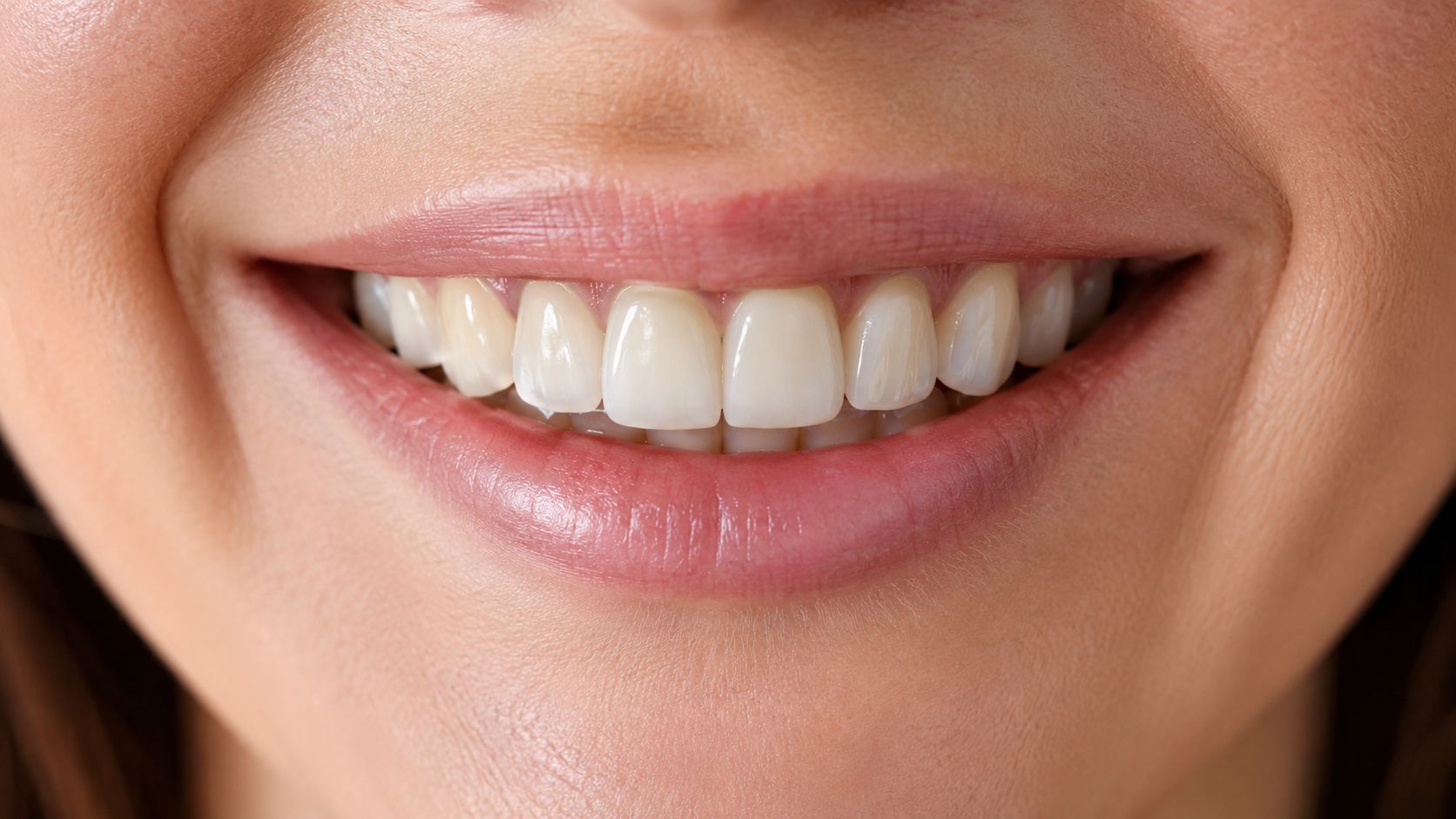
Material matters because the way a veneer handles light can make or break the illusion. Feldspathic porcelain is widely treated as the translucency benchmark because its layered ceramic structure reproduces enamel-like light scatter, while lithium disilicate is a common modern option that keeps a natural look and adds strength at about 360 to 400 MPa material properties and optical behavior.
A believable veneer also has to meet the gumline cleanly. If the edge is bulky or too bright, the eye goes straight to the restoration instead of the smile as a whole. That's why high-quality cosmetic work pays attention to transitions, not just the front surface.
The best cosmetic result often isn't the whitest one. It's the one your eye accepts without thinking about it.
A second piece that people miss is age-appropriate design. A very uniform, extremely bright smile can look impressive on day one and unnatural later if it fights the rest of the face. Natural results usually keep some variation in texture and shade so the smile doesn't read as a row of identical shells.
Comparing Porcelain and Composite Veneers
Patients often ask whether porcelain or composite looks more natural. The honest answer is that both can improve a smile, but they do different jobs, and they don't age the same way.
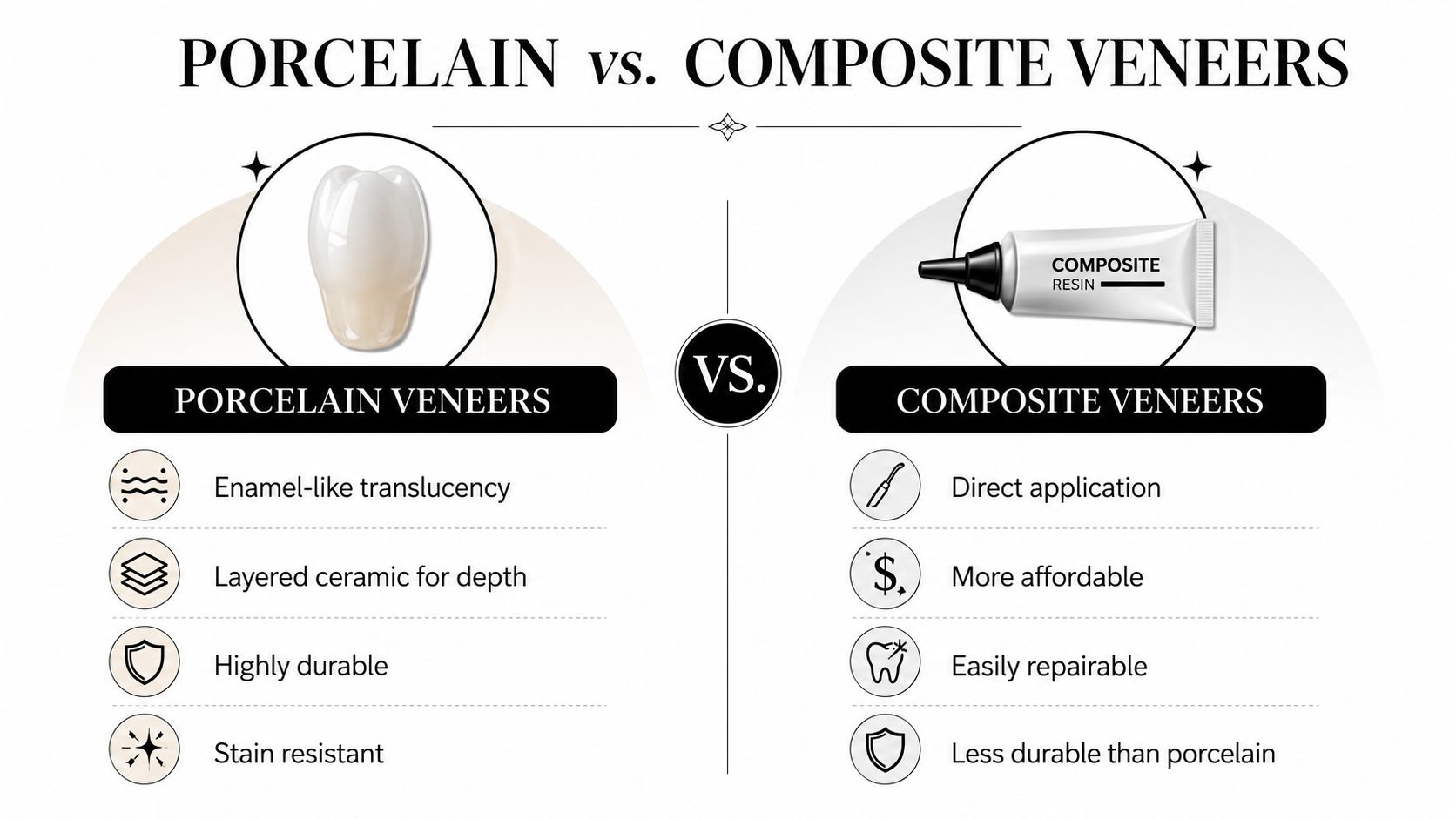
Porcelain is usually the stronger choice when the goal is depth, stain resistance, and a more enamel-like finish. Composite can still be useful when someone wants a faster or more budget-conscious option, especially for small repairs or selective reshaping. The trade-off is that composite generally doesn't carry the same long-term optical stability as porcelain.
Where porcelain stands out
Porcelain's biggest advantage is how it handles light. It can look less “flat” because the ceramic layers mimic the way enamel scatters light. Long-term clinical data also supports porcelain as a durable option, with survival outcomes that remain strong over many years long-term veneer survival study.
Where composite still makes sense
Composite is usually the easier material to repair chairside. It can be a practical choice for patients who want a more conservative or phased approach, especially if they're testing a smile change before committing to a fuller cosmetic plan.
A useful way to think about it is this:
- Porcelain veneers fit patients who want the most refined finish and longer-term stability.
- Composite veneers fit patients who want faster treatment and simpler repairability.
- Zirconia is usually reserved for higher-load situations where translucency can be less ideal, since its role is more about durability than the most lifelike light behavior.
| Typical Veneer Costs by Material | Average Cost | Cost Range |
|---|---|---|
| Porcelain | Varies by case | Varies by case |
| Composite | Varies by case | Varies by case |
That table is intentionally simple because the actual choice isn't just material. It's how the material, bite, smile line, and shade plan work together.
For patients who want a deeper look at conservative options, a step-by-step guide to no-prep dental veneers can help frame how minimal-coverage planning differs from traditional veneer design.
Clinical Steps for Designing Realistic Veneers
The most natural results come from a process that's controlled from the first scan to the final polish. There's no shortcut around planning, and good cosmetic dentistry shows that in the details.
From digital preview to final bonding
The first step is usually smile analysis and planning. Digital tools help map tooth proportions, the midline, and how the smile should look when your lips move naturally. A mock-up gives you a preview before anything permanent happens, which is important because patients shouldn't have to guess what the result will look like.
After that comes conservative preparation. In many cases, veneer preparation reduces only 0.2 to 0.5 mm of enamel to preserve translucency at the incisal edge and maintain natural light transmission and bond strength conservative enamel reduction. That small amount matters more than commonly realized, because enamel is the surface that helps a veneer blend instead of stand out.
Impressions or intraoral scans are then used to capture the exact shape of the teeth and surrounding tissues. The lab can use that data to layer ceramic with more depth and character. That's where the difference between a generic shell and a lifelike restoration becomes visible.
Dental insight: A veneer doesn't look natural because it's white. It looks natural because its thickness, edge design, and surface finish let light behave the way it does on enamel.
Final placement depends on precise bonding and finishing. The margins have to seat cleanly, and the polish has to be smooth without making the tooth look like plastic. That last step is easy to underestimate, but it's one of the main reasons a veneer either disappears into the smile or draws attention for the wrong reason.
If you want to compare planning styles, Aspiring Smiles Dental and Braces uses a patient-centered approach that can be adapted to the smile goals and tooth conditions in front of us. The right sequence matters because each stage affects the next one.
Who Is a Good Candidate and Maintenance Tips
The best veneer candidates are people who want cosmetic improvement and already have a stable foundation to build on. That usually means healthy gums, enough enamel for bonding, and realistic expectations about shade and shape.
A veneer isn't the first step for every smile. If gum inflammation, untreated decay, or heavy bite stress is present, those issues need attention first. Strong candidates also understand that veneers can refine a smile, but they won't solve every alignment or bite concern by themselves.
What tends to make veneers age well
Porcelain veneers have a strong durability record. Clinical studies report a 94.4% survival rate at 5 years and 93.5% at 10 years, which supports the idea that proper design and maintenance matter over time clinical veneer survival data. That's encouraging, but it also means the result depends on daily care.
Maintenance is usually straightforward:
- Brush gently with a non-abrasive toothpaste.
- Keep regular cleanings and check-ups, so the edges and gums stay healthy.
- Protect against grinding if you clench at night.
- Be careful with hard habits, like chewing ice or using teeth as tools.
Patients often ask about stains, especially after coffee, tea, or wine. Veneers themselves don't respond to whitening the way enamel does, so a helpful resource for understanding surface maintenance is removing surface stains from veneers. That kind of guidance can help people avoid unnecessary damage from over-scrubbing or harsh products.
A good candidate also needs to think beyond day one. Gum recession and natural tooth changes can affect how any cosmetic work looks over time, which is why age-appropriate planning matters as much as color matching.
The goal isn't a smile that looks perfect in one photo. It's a smile that still feels believable when you're older, speaking, laughing, and living in it every day.
Costs Financing and Insurance Options
Veneers are a premium cosmetic treatment, and the numbers reflect that. In the U.S. in 2026, the average cost per veneer is $1,765, with a range of $500 to $2,895 depending on material, expertise, and location 2026 veneer pricing summary. That's why transparent pricing conversations matter before treatment starts.
Las Vegas patients usually want to know what drives the difference. Material choice, the number of teeth involved, and the level of customization all affect the final fee. Cosmetic treatment is also different from restorative care in how insurance is handled, so the financial conversation should be direct from the beginning.
| Typical Veneer Costs by Material | Average Cost | Cost Range |
|---|---|---|
| Porcelain veneers | Case dependent | Case dependent |
| Composite veneers | Case dependent | Case dependent |
For a broader breakdown of budgeting questions, how much veneers cost is a helpful reference point.
What patients should ask about payment
- Is there a phased treatment plan? Some patients choose to treat the most visible teeth first.
- Are payment plans available? Many practices offer financing or in-house options to spread out cost.
- Will insurance help at all? Cosmetic treatment is often limited in coverage, but related diagnostics or restorative needs may be handled differently.
The smartest financial decision is to compare the cost against how long the result is likely to last and how much it improves daily confidence. A lower upfront price doesn't always mean a better value if the result feels fake or needs early replacement.
Questions to Ask Your Dentist and Before After Examples
A veneer consultation should feel specific. If the answers stay vague, the design probably will too.
Start with the questions that reveal how customized the plan really is.
- What shade system do you use? This helps you understand how the final color is selected.
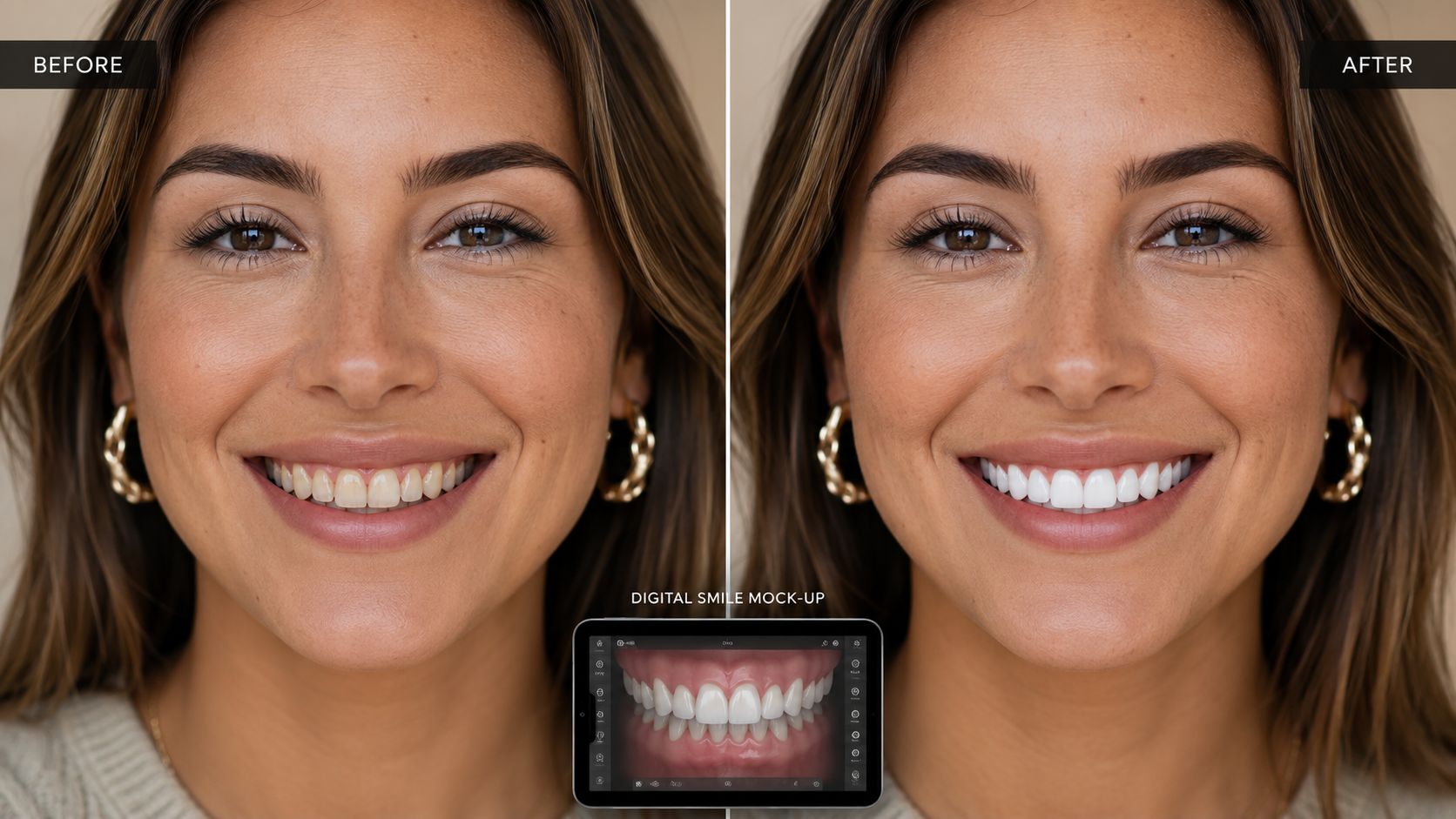
- Can I see a digital mock-up of my proposed smile? That gives you a preview before committing.
- How conservative will the preparation be? You want to know how much enamel is being changed.
- How do you handle gumline blending and edge texture? Those details often separate natural results from obvious ones.
The most useful before-and-after examples are the ones that show design decisions, not just a better-looking smile. One patient may need a softer shape and less brightness to fit an older facial profile. Another may need minor spacing correction with more translucency at the edges so the veneers don't look solid or heavy.
That's why a consultation should include visual proof. If a dentist can point to how a mock-up changed, why a shade was adjusted, or how the tooth length was balanced with the lips, you're looking at a real cosmetic plan rather than a one-size-fits-all treatment.
Midway through that conversation, it also helps to ask how the practice handles other services if your case needs them. For some patients, that may include cleaning and exams, dental x-rays, tooth extraction, dental implants near me, or emergency dentist care before cosmetic work begins. At Aspiring Smiles Dental and Braces, that broader treatment range makes it easier to coordinate smile planning without bouncing between offices.
The best before-and-after result still looks like the same person. It just looks healthier, brighter, and more balanced.
Schedule Your Veneer Consultation in Las Vegas
If you've been thinking about natural looking veneers but don't want a smile that feels too bright or too uniform, a consultation is the right next step. Patients across Desert Shores, Sun City Summerlin, Lone Mountain, and the surrounding Las Vegas neighborhoods come in looking for a result that fits their face and holds up over time.
At Aspiring Smiles Dental and Braces, veneer planning is designed around comfort, precision, and a natural finish. The office is located at 3211 N Tenaya Wy Suite 122, Las Vegas, NV 89129, and new patients can call, request an online appointment, or stop by to talk through options in person.
A CTA for Aspiring Smiles Dental and Braces.