How Often Should You Get Teeth Cleaned in Las Vegas
Most healthy adults benefit from professional teeth cleanings every six months, while patients with gum disease, diabetes, implants, braces, or smoking habits often need cleanings every 3 to 4 months based on personalized risk assessment. The right schedule depends on how quickly plaque and tartar return, your gum health, medical history, and the dental work in your mouth.
You may be asking because you can't remember your last cleaning, your gums bleed when you floss, or you're searching for a dentist near me before a small concern becomes a painful one. In Las Vegas, a practical answer starts with your current oral health, not an automatic calendar reminder. At Aspiring Smiles Dental and Braces, Dr. Patel and the team review your dental history, lifestyle, gum condition, and goals before recommending preventive care.
Why Las Vegas Patients Ask About Teeth Cleaning Frequency
A new patient often arrives with the same uncertainty: “I know I'm supposed to get cleanings regularly, but am I already overdue?” Someone with healthy gums and little tartar may do well with a six-month routine. Another patient may notice buildup returning quickly, have a history of periodontal treatment, or wear braces and need a closer maintenance schedule.
A professional cleaning removes plaque and hardened tartar from areas that brushing and flossing can't fully reach. That matters because tartar can irritate the gumline and make it harder to keep inflammation under control at home. A cleaning appointment also gives the dental team an opportunity to examine the teeth, gums, restorations, and other areas that may not cause symptoms yet.
Your schedule should reflect your mouth
The question “how often should you get teeth cleaned” has no universal answer. The American Dental Association's home-care guidance states that there's no single optimal recall interval for everyone. A healthy adult who maintains stable gums may not need the same schedule as someone managing gum disease, dry mouth, diabetes, or an implant.
That individualized approach is especially useful in family dentistry. Children, teens with orthodontic appliances, adults with crowns or veneers, and older adults with dentures or implants can all have different preventive needs. A recall interval may also change as your gum health improves or as tartar begins returning more quickly.
Aspiring Smiles Dental and Braces serves families in Las Vegas, including Desert Shores, Sun City Summerlin, Lone Mountain, and nearby communities. The team offers extended weekday and Saturday hours, so preventive care can fit more realistically around work, school, and family commitments. Whether you're looking for a dentist in Las Vegas, NV for a routine exam or a new patient visit, the first appointment should establish where your oral health stands today.
Practical rule: The best interval is the one that keeps your teeth and gums stable between visits.
The Truth Behind the Six Month Cleaning Recommendation
The familiar twice-yearly recommendation has been part of mainstream dental advice for decades. It remains a sensible starting point for many adults with healthy gums, low decay risk, and manageable plaque accumulation. It's easy to remember, and regular examinations help a dentist identify changes before they become urgent.
The six-month schedule, however, isn't a rigid clinical law. The Cleveland Clinic summary of cleaning frequency notes that most dentists still recommend cleanings every six months, while other summaries of American Dental Association guidance emphasize that the interval should reflect the patient's risk profile.
Why a calendar rule falls short
The ADA reports that a systematic review found no consensus on the best recall frequency for minimizing caries or periodontal disease risk. That doesn't mean cleanings lack value. It means the evidence doesn't support one schedule for every person, regardless of gum health, decay history, or buildup pattern.
The same distinction appears in evidence reviewed by the Canadian Agency for Drugs and Technologies in Health, which summarizes a Cochrane review finding insufficient short-term evidence that routine six-monthly scale-and-polish produces better gingival bleeding, plaque, or patient-centered outcomes than annual or no routine cleaning for low-risk adults. This finding is most relevant to people who already have good home care and low oral-health risk. It shouldn't be used to skip examinations or ignore bleeding, sensitivity, loose teeth, or visible buildup.
UK guidance also illustrates the range of reasonable recall planning. NHS information says adult check-up intervals can range from 3 months to 2 years, with adults who have good oral health potentially needing visits once every 12 to 24 months. NICE-based guidance similarly allows recall intervals from 3 to 24 months, depending on caries and periodontal risk, as summarized by Age UK's dental care guidance.
The practical conclusion is straightforward. Six months works well as a baseline for many healthy adults, but your dentist should adjust the interval when your risk changes.
Finding Your Personalized Cleaning Schedule
A useful way to understand your recall plan is to sort your oral health into a risk category. This isn't a substitute for an examination, but it can explain why one patient receives a six-month recommendation while another is asked to return sooner.
| Risk Level | Recommended Interval | Common Conditions and Factors |
|---|---|---|
| Low risk | Every 6 months is often appropriate | Healthy gums, low decay risk, limited tartar, consistent home care |
| Moderate risk | Commonly every 3 to 4 months | Gingivitis, frequent tartar buildup, difficulty cleaning certain areas |
| Higher risk | Often every 3 months | History of gum disease, diabetes, smoking or vaping, dry mouth, braces or Invisalign, dental implants |
These intervals reflect risk-based prevention, not a judgment about how well you brush. The risk-based cleaning guidance from Carrollton Dental Group identifies healthy adults as potential six-month patients, while people with gingivitis or recurring tartar commonly need visits every 3 to 4 months. It also describes shorter maintenance schedules for patients with gum disease, diabetes, smoking, dry mouth, orthodontics, or implants.
Low risk does not mean no care
A patient with healthy gums, low decay risk, and little tartar may remain on a six-month cadence. Strong brushing and interdental cleaning can support that schedule, but routine exams still matter because early cavities and gum changes may not hurt.
Moderate-risk patients often notice bleeding, persistent inflammation, or tartar returning before the next routine visit. A three-to-four-month interval gives the dental team more opportunities to disrupt buildup and reinforce home-care techniques before the problem advances.
Periodontal maintenance is different
After definitive periodontal therapy, expert guidance recommends maintenance cleanings at about every three months because that interval has been associated with better control of subgingival bacterial burden, reduced disease progression, and improved tooth retention. The Journal of Dental Hygiene periodontal maintenance guidance also notes that more fragile patients may need intervals shorter than two months, while stable early-disease patients may extend to 4 to 6 months.
The exact plan should respond to your examination findings. Gum measurements, bleeding, tartar patterns, bone levels, restorations, and your response between appointments all help determine whether the interval should stay the same, become shorter, or eventually be extended.
What Happens During a Professional Cleaning and Exam
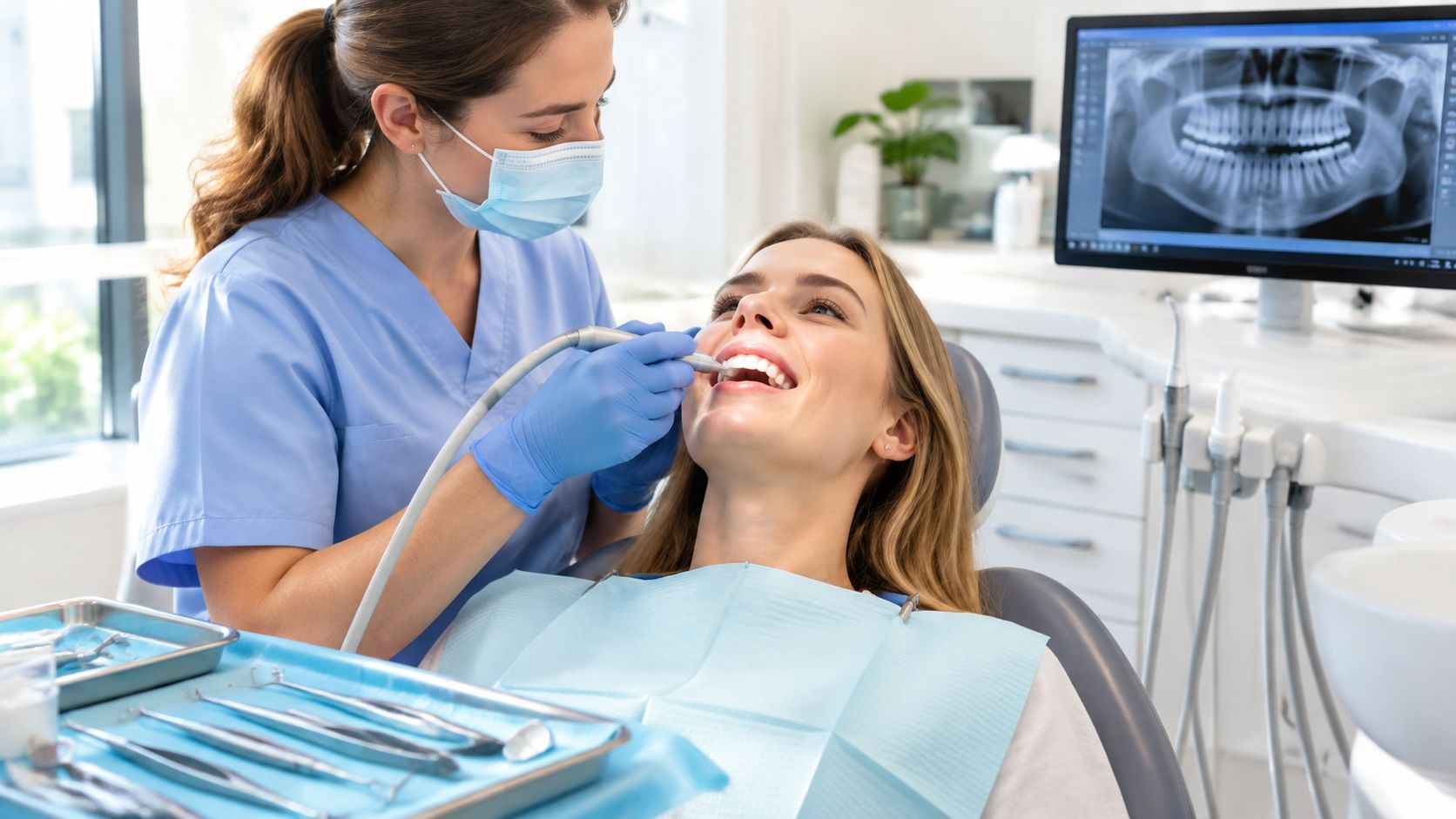
A professional cleaning at Aspiring Smiles Dental and Braces is more than polishing the visible surfaces of your teeth. The team combines preventive care with an examination so you understand what's healthy, what needs attention, and which next step makes sense.
What the appointment may include
First, the dentist or hygienist reviews your medical and dental history. Changes such as diabetes, new medications, dry mouth, smoking, orthodontic treatment, or recent dental work can affect the recommended recall interval.
Next comes the examination. The team checks your teeth and gums for signs of decay, inflammation, recession, tartar, damaged restorations, and other concerns. Dental x-rays may be recommended when they're needed to evaluate areas that can't be seen during a visual examination.
Professional scaling removes plaque and hardened tartar from the tooth surfaces and along the gumline. Polishing then smooths the teeth and removes surface staining. If you have gum disease or deeper buildup, the team may discuss deep cleaning, also called scaling and root planing, rather than treating the appointment as a routine prophylaxis.
You can learn more about the process in this guide to what professional cleaning involves. The visit is also a chance to ask about sensitivity, bleeding, bad breath, or areas that feel difficult to clean.
A cleaning exam may reveal needs beyond prevention. Depending on the findings and your goals, the conversation could include restorative dentistry, crowns, veneers, Zoom teeth whitening, Invisalign clear aligners, dental implants, or implant-supported dentures. Those discussions should be based on your needs, not added automatically to a routine visit.
A short video can also help you visualize the general cleaning experience before your appointment.
Maintaining Your Smile Between Dental Visits
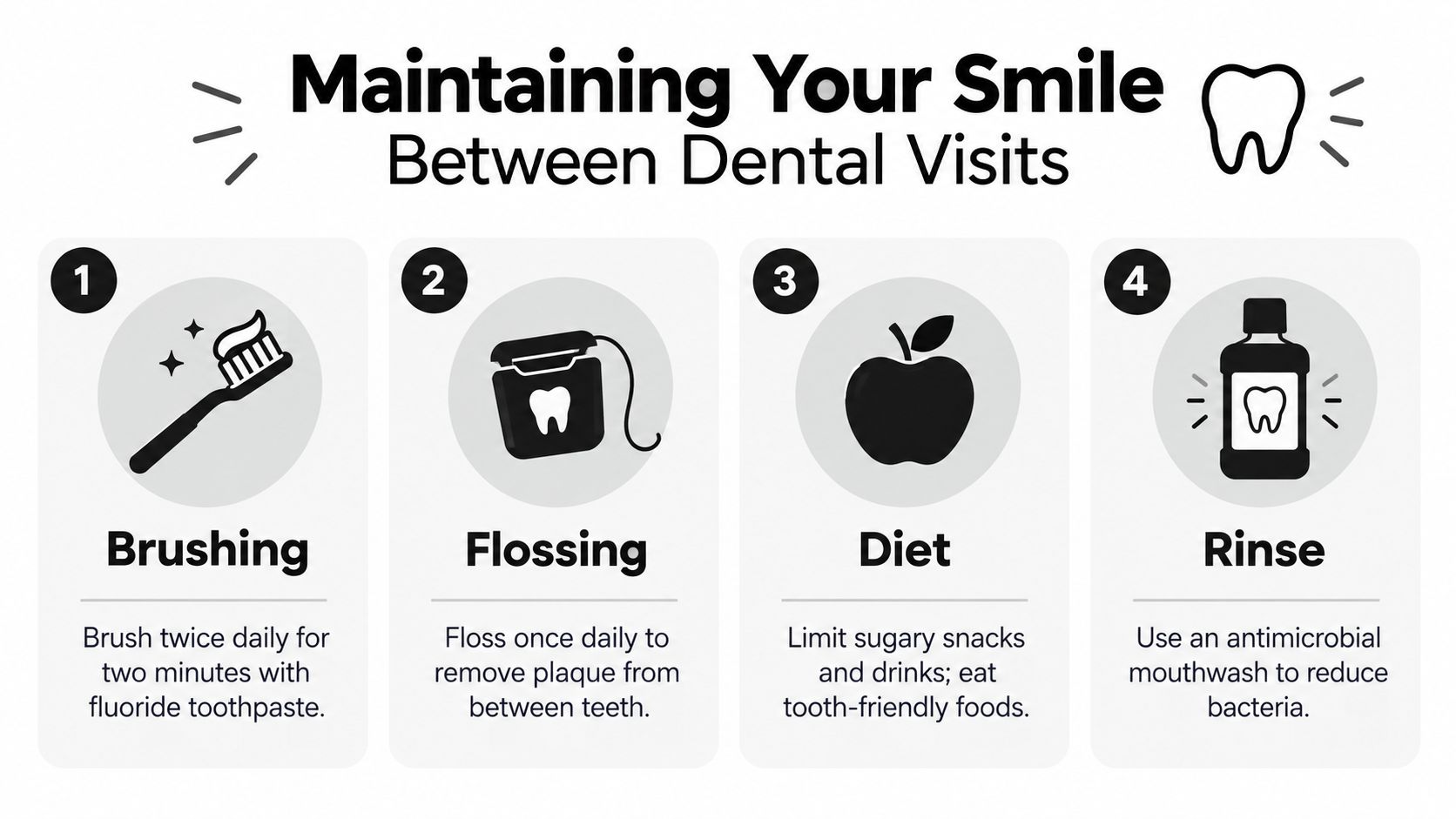
Your home routine affects how well your teeth and gums hold up between professional appointments. It won't remove hardened tartar, but it can reduce the amount of soft plaque available to irritate the gums and contribute to decay.
Brush twice daily with fluoride toothpaste, using gentle pressure and angling the bristles toward the gumline. Clean the outer, inner, and chewing surfaces rather than focusing only on the teeth that show when you smile. Floss once daily, or use an interdental brush or water flosser if traditional floss doesn't work well for your hands, braces, or dental work.
Adjust care to your dental work
Braces and clear aligners create extra surfaces where plaque can collect. Clean around brackets, attachments, and the gumline, and follow the cleaning instructions provided for your appliance. Dental implants and restorations also need careful brushing and interdental cleaning around their margins.
Diet matters, too. Limiting sugary drinks and acidic foods helps reduce challenges to enamel. Water is a practical choice when your mouth feels dry, particularly if medication or a health condition affects saliva. An antimicrobial mouthwash may help reduce bacteria, but it shouldn't replace brushing or interdental cleaning.
Smoking and vaping can increase staining and make gum health harder to maintain. If you use tobacco or nicotine products, tell your dentist so the team can factor that information into your preventive plan.
Good home care may help a low-risk patient remain comfortable on a longer interval. It doesn't eliminate the need for closer maintenance when gum disease, implants, diabetes, orthodontics, or rapid tartar buildup increase risk.
How Regular Cleanings Prevent Costly Dental Problems
Professional cleaning removes tartar that home brushing can't eliminate. When patients postpone care, buildup and gum inflammation may progress until treatment requires more than routine prevention.
Early examinations can identify a small cavity before it becomes a larger structural problem. They can also reveal gum changes before advanced disease threatens the tissues and bone supporting the teeth. When disease advances, patients may eventually face procedures such as tooth extraction, dental implants, or implant-supported dentures. Preventive visits don't guarantee that these treatments will never be needed, but they give the dental team a better opportunity to address problems while care is simpler.
Prevention protects options
A patient who comes in with pain may need urgent evaluation from an emergency dentist, while someone who keeps regular exams may address a concern during a planned visit. The same principle applies to restorative and cosmetic care. A healthy foundation makes it easier to plan crowns, veneers, teeth whitening, Invisalign, or implants safely and predictably.
Untreated gum disease has also been linked with systemic health concerns, so oral care belongs within your broader approach to wellness. The benefit isn't only a brighter smile. It's the ability to maintain comfortable chewing, stable teeth, and a treatment plan that responds before a manageable issue becomes disruptive.
Aspiring Smiles Dental and Braces accepts insurance, offers flexible payment options, and provides a membership program for ongoing care. Those choices can make it easier for Las Vegas families to keep preventive appointments instead of waiting for pain or an urgent dental problem.
Schedule Your Next Teeth Cleaning in Las Vegas
Whether you're due for a routine six-month cleaning or need periodontal maintenance every three months, a dental examination can clarify the schedule that fits your mouth. Aspiring Smiles Dental and Braces is located at 3211 N Tenaya Wy Suite 122, Las Vegas, NV 89129, serving patients from Desert Shores, Sunhampton, Sun City Summerlin, Monterrey, Lone Mountain, Mar-A-Lago, and Painted Desert Estates.
The practice welcomes new patients of all ages and offers extended weekday and Saturday hours. You can schedule a dental cleaning and exam online, ask about cosmetic or restorative dentistry, or discuss a membership option for ongoing preventive care. If you're researching how local dental services are presented online, VisiLocali's guide to the Google Business Profile services section offers useful background.
Visit Aspiring Smiles Dental and Braces for personalized cleanings, dental exams, restorative care, cosmetic dentistry, implants, and compassionate emergency dental services in Las Vegas. Contact the team today to find the right cleaning interval and schedule your next appointment.