
Dental Cleaning Benefits for Las Vegas Families
You're booking a dental cleaning for your child between school pickup and work when you realize you can't remember your own last appointment. Nothing hurts, but your gums sometimes bleed, your teeth feel less smooth, and searching for a dentist near me in Las Vegas, NV brings up another question: what do you need?
A preventive visit should give you answers, not judgment. At Aspiring Smiles, the conversation starts with your concerns, your health history, and what makes care manageable for your family.
Why Las Vegas Families Rethink the Routine Cleaning
A cleaning can feel easy to postpone when you're balancing everyone else's needs. For families in Desert Shores, Sun City Summerlin, and Lone Mountain, the challenge may be finding time, understanding insurance, or getting comfortable enough to return after years away.
The most useful way to think about dental cleaning benefits is to separate the appointment from the polish. Professional cleaning addresses deposits on teeth. The accompanying examination, risk assessment, and conversation help your dentist decide what needs attention and what can be monitored.
Prevention means more than a cleaner smile
The CDC explains that preventive dental visits provide education, preventive services, and opportunities to detect cavities, periodontal disease, and oral cancer earlier. That makes the visit a health checkpoint, not just a cosmetic service.
You don't need to arrive knowing whether you have a cavity or gum disease. You might only know that flossing feels uncomfortable, a tooth looks different, or you're worried about your child's brushing. Those observations are useful starting points.
- For a busy parent: Ask what needs attention now and what can be planned around work and school.
- For someone returning to care: Explain what kept you away so the team can help you move forward.
- For a cosmetic concern: Describe whether you want cleaner-looking teeth, a different shade, or a change in shape.
A useful visit ends with clarity
Your dentist should explain the findings in plain language and distinguish preventive care from treatment for an existing problem. You should also understand why any additional service is recommended before deciding how to proceed.
That's especially important if you're choosing a new dentist in Las Vegas, NV. A personalized plan should fit your mouth and circumstances rather than treating every family member's appointment as interchangeable.
What Actually Happens During a Professional Cleaning
The chair, instruments, and unfamiliar sounds can make a cleaning seem more complicated than it is. The basic purpose is straightforward: assess your mouth, remove appropriate deposits, and help you protect your teeth between appointments.
This illustration shows the general sequence, although individual visits can differ.
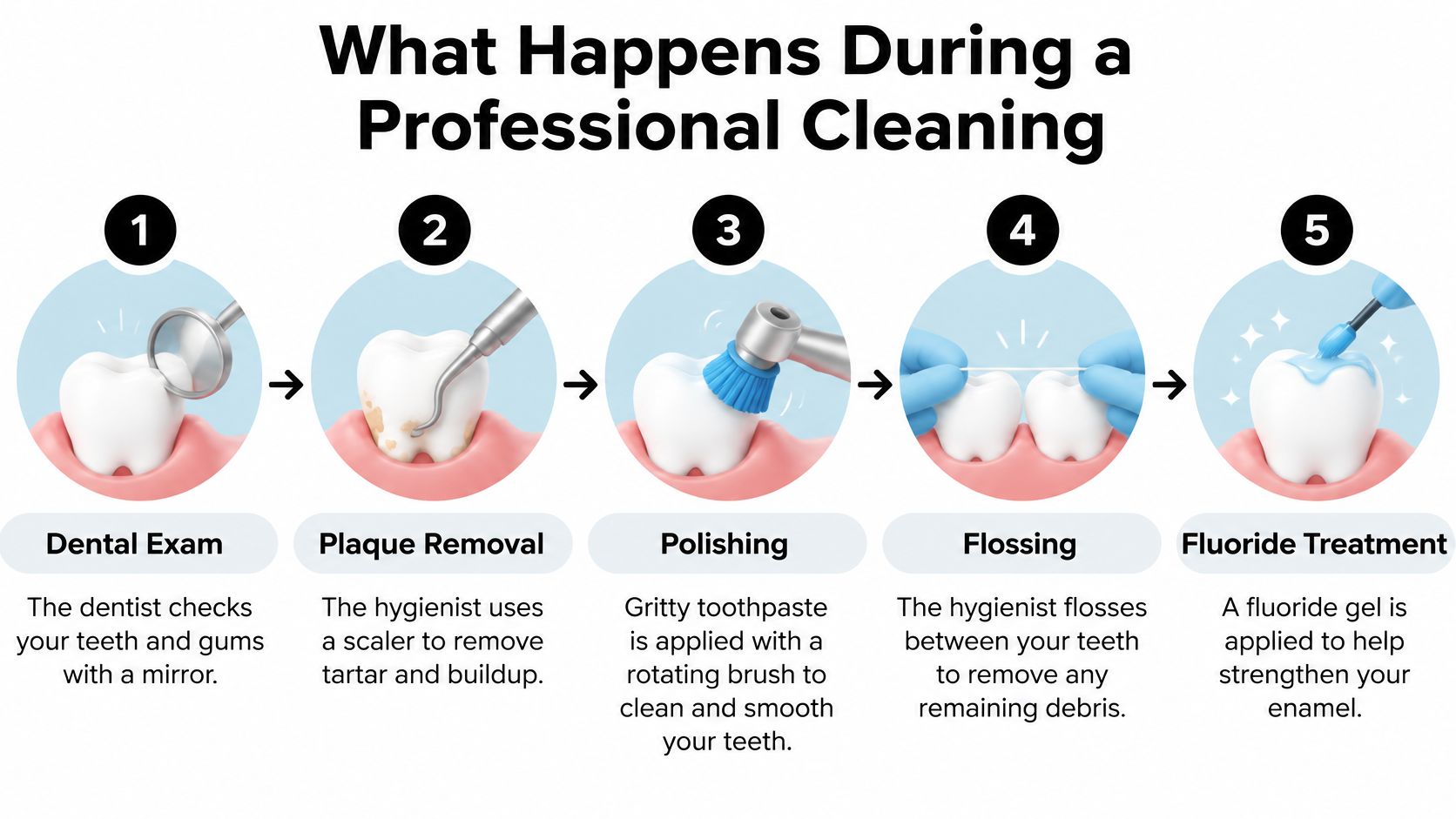
Examination and deposit removal
The dental team reviews your concerns and checks your teeth and gums. A hygienist may assess gum bleeding and measure the spaces between the teeth and gums, often called gum pockets, to help identify the appropriate type of care.
Scaling means removing hardened tartar, also called calculus, with dental instruments. Think of it as lifting a firmly attached deposit rather than scrubbing harder with a toothbrush. Professional instruments reach deposits that ordinary home brushing can't reliably eliminate.
Tell the hygienist if an area feels sensitive. You can ask for an explanation, a pause, or a discussion of comfort options rather than trying to push through discomfort on your own.
Polishing and personalized prevention
Polishing addresses surface deposits and stains; it isn't the same as bleaching teeth. Cleaning between teeth and reviewing your technique can also be part of the visit.
Fluoride is a separate preventive decision, not an automatic finishing step. CDC fluoride guidance explains that fluoride supports remineralization and reduces enamel mineral loss, while cleaning solely to prepare teeth for fluoride application is unnecessary.
Comfort reminder: Agree on a hand signal before treatment so you can request a break without having to speak.
For another way to become familiar with the appointment, you can watch this video before your visit.
The exact order can change with your needs. If the examination identifies active gum disease, the dentist may recommend a different treatment approach instead of proceeding with a routine cleaning.
Clinical and Cosmetic Benefits You Can Expect
The clinical benefits matter most, even when the smoother feeling afterward is what you notice first. A preventive appointment combines hands-on care with decisions about disease risk, home habits, and whether treatment is necessary.
The scale of dental disease helps explain why that matters. According to the CDC's oral-health overview, 57% of adolescents ages 12–19 have had cavities in permanent teeth, and at least 90% of adults age 20 and older have had cavities in permanent teeth. Those figures describe lifetime experience, not a prediction about what your dentist will find.
Clinical benefits with realistic limits
The benefits come from the complete preventive plan, not polishing alone.
- Gum-health support: Removing deposits can support control of local irritation, while gum measurements help distinguish a maintenance need from active disease.
- Cavity-prevention guidance: Your dentist can connect your risk assessment to fluoride, food and drink habits, and more effective daily cleaning.
- Earlier treatment decisions: An examination creates an opportunity to address disease before symptoms become severe.
- Protection of remaining teeth: Identifying decay and periodontal problems supports a plan aimed at preserving comfortable function.
A cleaning won't repair an established cavity, replace a missing tooth, or guarantee that you'll never need an emergency dentist. It also shouldn't be described as a treatment for heart disease. If you're exploring broader health questions, the practice's discussion of heart disease and oral health is a place to continue that conversation with your dental and medical teams.
Cosmetic changes without overpromising
Removing surface stains and buildup may leave teeth looking brighter and feeling smoother. Cleaning can also help with freshness when deposits contribute to the concern, but persistent bad breath deserves evaluation rather than repeated polishing.
A useful distinction is cleaner versus whiter. Cleaning addresses material on the tooth surface; professional teeth whitening is a separate cosmetic service. If your main goal is a different tooth shade, say so before assuming a cleaning will produce that result.
For a family photo or an important work event, knowing what each service can realistically achieve is more helpful than a promise of a perfect smile.
How Often You Really Need a Cleaning
Not every adult needs an identical cleaning schedule. The right interval depends on the findings in your mouth, your history, and how well you can manage daily care.
A Cochrane review of routine scaling and polishing included 1,711 adults without severe periodontitis who regularly attended dental care. Over two to three years, scheduled cleaning every six or twelve months produced little or no difference in gingivitis, pocket depth, or oral-health-related quality of life compared with cleaning when clinically indicated or requested; the clearest difference was a small reduction in calculus.
What that evidence means for you
Those findings don't mean professional cleaning is useless or that people with periodontal disease should skip maintenance. They mean a fixed schedule shouldn't substitute for assessing an individual patient.
Cleaning Frequency by Risk Profile
| Patient Profile | Typical Recall Interval | Key Triggers |
|---|---|---|
| Regularly attending adult with healthy gums and low disease risk | Individualized rather than automatically fixed | Stable gum findings, little buildup, effective home care |
| Adult at elevated periodontal risk | Twice-yearly care may be appropriate under the analysis above | Bleeding, periodontal risk, difficulty controlling deposits |
| Patient with active or previously treated periodontal disease | A separate periodontal treatment and maintenance schedule | Pocket findings, disease history, response to treatment |
| Patient with changing prevention needs | Reassessed as circumstances change | Dry mouth, appliances, medication changes, new decay |
Your dentist may also consider tobacco use, diabetes, pregnancy, restorations, and your ability to clean comfortably at home. A teen with braces and a grandparent experiencing medication-related dry mouth may need different preventive plans, even within the same family.
Ask, “What findings explain my recommended interval, and what would make it change?”
That question helps turn a calendar reminder into an informed decision. Your interval should be reviewed as your health and oral findings change, not carried forward without explanation.
How Cleanings Fit With Other Family Dentistry Services
A preventive appointment is a useful place to organize dental decisions, especially if you're unsure whether your concern is cosmetic, restorative, or urgent. The dentist can help distinguish a preference, such as a brighter shade, from a problem that needs treatment.
This diagram shows the main connections between preventive visits and broader family dentistry.
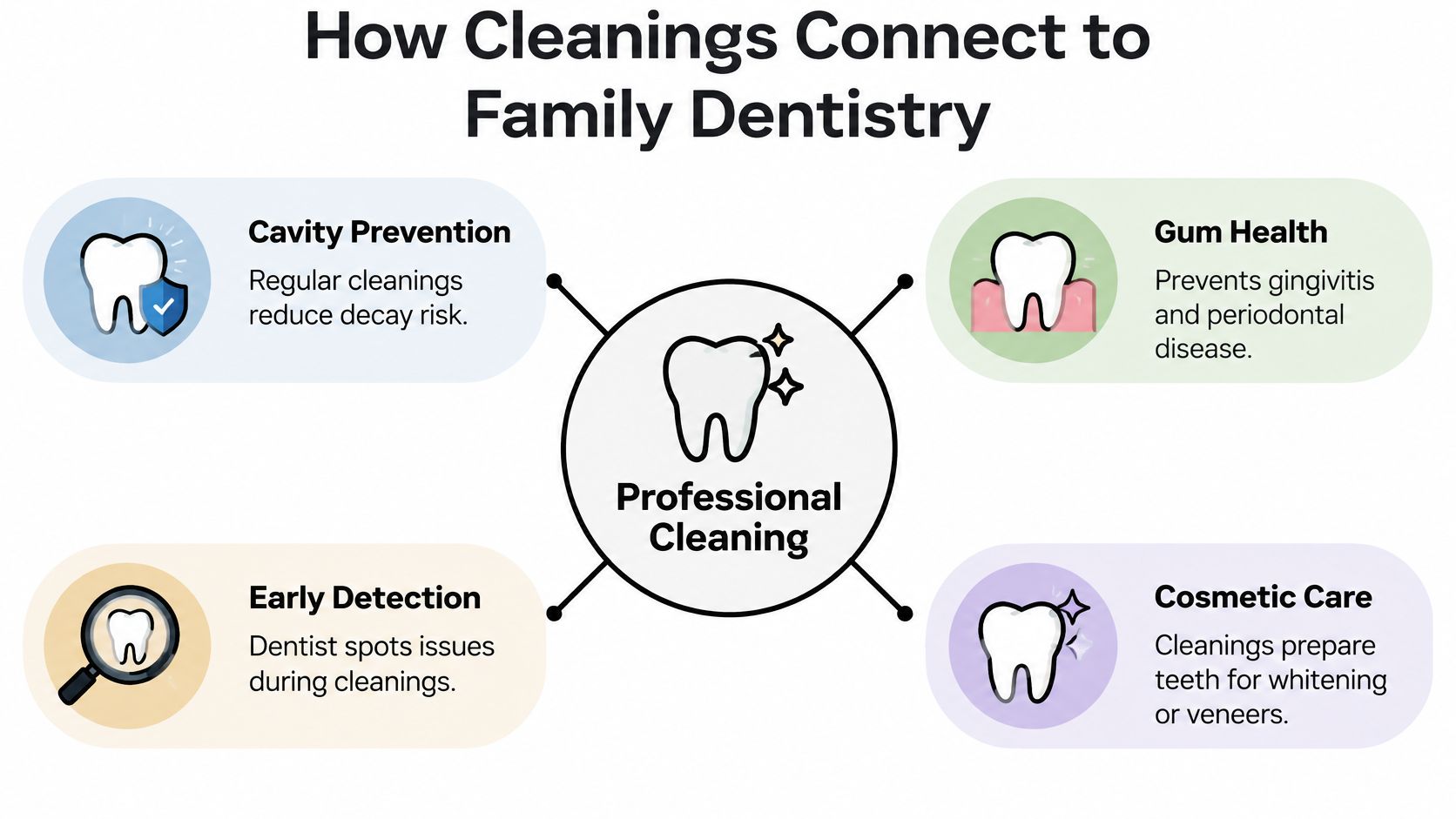
Exams and dental X-rays answer different questions
A hands-on examination comes first. Dental X-rays add information when the dentist expects it to affect your care; they shouldn't be automatic at every appointment.
The FDA's guidance on selecting patients for dental radiographs calls for reviewing history, previous images, examination findings, and risk before ordering imaging. Whether bitewing, panoramic, or another image is appropriate depends on the question the dentist needs to answer.
Children's preventive planning also deserves individual attention. The ADA's caries-risk guidance recommends brushing twice daily with fluoride toothpaste, daily cleaning between teeth, and additional fluoride options when risk warrants them. Parents can also ask whether sealants belong in their child's prevention plan.
Matching the service to the concern
At the practice, related care includes Invisalign, Zoom teeth whitening, veneers, crowns, and dental implants. These services address different goals and shouldn't be presented as interchangeable extensions of a cleaning.
- Appearance concerns: A search for a cosmetic dentist near me may lead to a conversation about whitening, bonding, or veneers.
- Missing teeth: Searching for dental implants near me calls for a separate consultation about replacement options and suitability.
- Damaged teeth: Restorative dentistry may be needed when cleaning alone can't address the problem.
- Pain or a possible tooth extraction: Ask for an evaluation rather than booking only a routine preventive visit.
A cleaning doesn't guarantee that a filling won't break or a toothache won't occur. Its practical value is that you can discuss concerns before deciding which service to book next, rather than trying to diagnose yourself from a search result.
Access, Cost, and Anxiety in the Las Vegas Area
Knowing that preventive care matters doesn't automatically make it easy to obtain. Cost, a difficult past experience, language needs, disability, or an unpredictable work schedule can all affect whether an appointment happens.
An out-of-state oral-health plan published in 2025 reports that nearly one-third of adults didn't see a dentist annually, rising to 55% among adults without dental insurance. Those aren't Las Vegas estimates, but they illustrate why affordability belongs in the prevention conversation.
Get financial details before treatment
The practice offers insurance acceptance, a membership program, and flexible payment options. Your specific benefits, membership inclusions, and payment terms should be confirmed directly rather than assumed.
For uninsured patients, the practice's information about dental cleaning without insurance can help you prepare questions before requesting an appointment.
- Insurance questions: Ask whether your plan is accepted and what portion of the proposed visit may be your responsibility.
- Membership questions: Confirm which services are included and which would involve separate charges.
- Treatment estimates: Request a breakdown distinguishing examination, imaging, preventive cleaning, and any recommended periodontal treatment.
Make comfort and logistics part of booking
For households in Painted Desert Estates, Mar-A-Lago, and Sunhampton, extended weekday and Saturday availability may help with scheduling. Online appointment requests offer another way to begin the conversation, although the office should confirm your appointment time.
Tell the team if you need explanations before instruments are used, breaks during treatment, or adjustments related to sensory needs or disability. If you prefer communication in another language, ask what assistance is available before the visit.
You don't have to minimize fear or discomfort to be considered a cooperative patient.
Ask whether family appointments can be coordinated, rather than assuming everyone must make separate trips. The most useful access plan is one the office has confirmed and your household can realistically follow.
What to Expect at Your First Visit to Aspiring Smiles
Your first visit begins before you sit in the dental chair. When requesting an appointment, describe whether you're seeking preventive care, have a specific concern, or are returning after a long gap.
At 3211 N Tenaya Wy Suite 122, Las Vegas, NV, the front desk can help you review paperwork and financial questions. Bring relevant insurance information, a medication list, and any previous dental records or images you can obtain.
A prepared check-in helps the team understand your starting point.
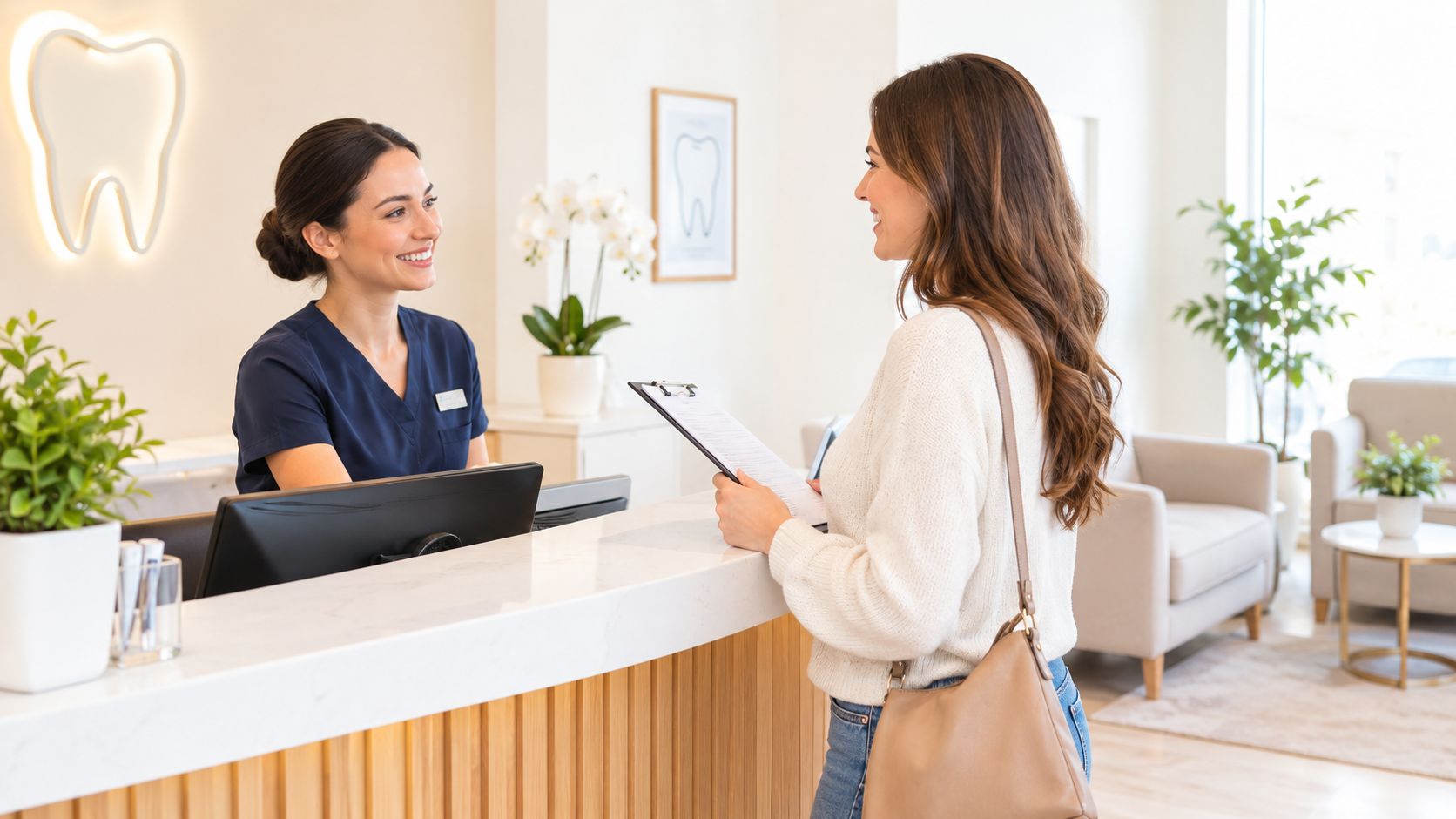
Share what you want the team to know
Dr. Patel and the dental team need more than a list of symptoms. Tell them about past dental experiences, medical changes, and what would help you feel comfortable.
Your new-patient evaluation provides the opportunity to review periodontal findings, discuss an oral-cancer screening, and determine whether imaging is necessary. Don't assume the examination and a particular type of cleaning will always be completed together; ask what the planned visit includes.
Leave knowing the next step
Before treatment proceeds, you should understand the recommendation and have an opportunity to ask questions.
- For adults: Ask which findings need treatment, which need monitoring, and how the prevention plan fits your daily routine.
- For children: Ask about tell-show-do introductions, where the clinician explains an instrument, demonstrates it, and then uses it.
- For parents: Confirm whether you can stay nearby and how the team handles a child who needs a pause.
Ask the office how much time to reserve, including check-in and discussion. The goal isn't to rush through an unfamiliar experience, but to leave with a clear understanding of your oral health and a manageable plan.
Schedule Your Next Cleaning With Confidence
You don't need a perfect brushing routine or an explanation for every missed appointment before seeking care. You need an evaluation that starts with your current circumstances and helps you decide what to do next.
For families in Monterrey and across the surrounding Las Vegas neighborhoods, the next step can be simple: request an appointment online or call the office to discuss the right visit type. Mention any symptoms, insurance questions, or comfort needs when you contact the team.
Start with your most important question
If you're unsure what to book, say so. A question such as “I haven't been in for a while, and I'd like to understand what I need” gives the office a useful starting point.
The value of a preventive visit isn't meeting an arbitrary deadline. It's getting informed, individualized care that you can continue with confidence.
Aspiring Smiles Dental and Braces offers preventive exams and cleanings alongside family, cosmetic, restorative, and emergency dental care in Las Vegas. Visit Aspiring Smiles Dental and Braces to request an appointment and discuss a cleaning plan that fits your oral health, comfort needs, and schedule.