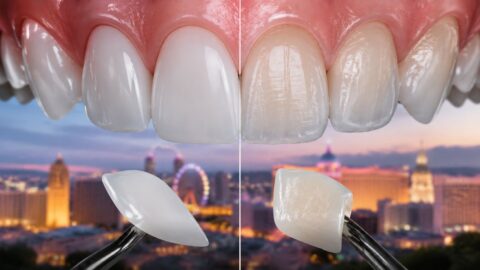
Porcelain vs Composite Veneers in Las Vegas
You're staring at two very different ways to fix the same problem. You want a brighter smile, but you also want the choice to make sense five years from now, not just on the day you leave the office. That's where porcelain vs composite veneers stops being a beauty debate and becomes a planning decision.
If you live in Las Vegas, that decision gets even more practical. Coffee, tea, smoking, and a busy social life all affect how veneers age, and so does how much enamel you're willing to give up for the result. At Aspiring Smiles Dental and Braces in Las Vegas, NV, the right answer usually comes down to your habits, your timeline, and how permanent you want this to be.
| Criterion | Porcelain Veneers | Composite Veneers |
|---|---|---|
| Main material | Ceramic | Tooth-colored resin |
| Visits | Usually lab-made across multiple visits | Often completed chairside in one visit |
| Tooth preparation | More enamel reduction | No or minimal tooth reduction in most cases |
| Repairability | Less repairable if chipped | Easier to repair chairside |
| Long-term feel | More durable and stain-resistant | More conservative and flexible |
Why Las Vegas Patients Are Choosing Between Porcelain and Composite Veneers
A lot of people start this conversation after years of hiding their teeth in photos, at work, or on nights out. In Las Vegas, that pressure builds fast. You live around bright lights, cameras, and social settings, so a smile that only looks good in perfect lighting usually is not enough.
Veneers are thin coverings bonded to the front of teeth to change shape, color, and spacing. The central question is not whether veneers can improve a smile. It is which material fits your life without forcing you into the wrong long-term plan.
The decision is about more than appearance
Porcelain has the stronger long-term evidence base. A 2021 systematic review of porcelain laminate veneers reported porcelain veneer survival ranging from 80.1% to 100% under 5 years, 47% to 100% at 5 to 7 years, and 53% to 94.4% at 10 to 12 years. It also said a firm estimate beyond 20 years is still lacking. Individual long-term studies in that review reported 94.4% survival at 5 years, 93.5% at 10 years, and 82.93% at 20 years. Other reviews cite a 10-year cumulative survival rate of 95.5% for porcelain laminate veneers when major failure modes are counted (clinical review on veneer longevity).
Composite has a different job. It is the more conservative, more repairable choice, and it works well when you want a meaningful cosmetic upgrade without committing to the more irreversible path. In plain terms, porcelain is the durability benchmark, while composite is the flexible option that asks for less up front. A clinical guide for dentists also notes that composite is easier to modify later, while porcelain tends to give a more controlled esthetic finish and stronger stain resistance (clinical guide for dentists).
Practical rule: If you want the result to hold its color and shape for as long as possible, choose porcelain. If you want to preserve tooth structure and keep future options open, composite deserves serious consideration.
At a Las Vegas cosmetic consultation, that trade-off matters more than any glossy before-and-after photo. A patient in Desert Shores who drinks coffee daily has different priorities than someone in Sun City Summerlin who wants a conservative change before a major life event. The right veneer is the one that matches how you live, how much enamel you are willing to give up, and how open you want to keep future orthodontics, whitening, and maintenance.
What Porcelain and Composite Veneers Are
Porcelain veneers are thin ceramic shells made in a dental lab and bonded to the front of the teeth. Composite veneers are built from tooth-colored resin that the dentist sculpts directly onto the tooth. That one difference changes the whole process, from preparation to repair.
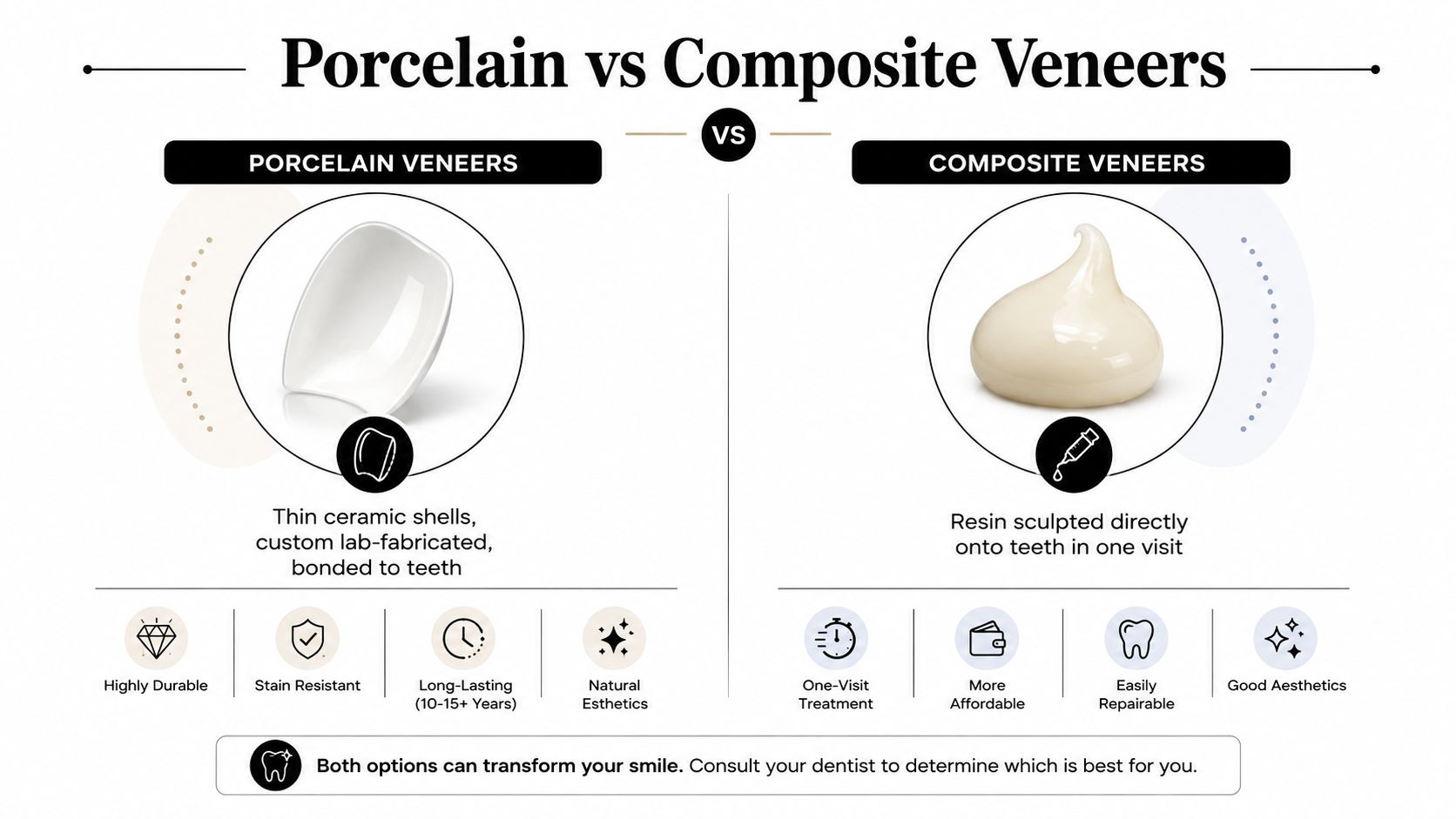
Lab-made ceramic versus chairside resin
Porcelain usually takes more planning because the final shells are fabricated outside the mouth. That gives the dentist and the lab more control over translucency, contour, and surface finish. Composite is placed directly on the tooth, shaped chairside, and hardened as it is built.
That fabrication difference changes what patients notice most. Porcelain gives a more controlled esthetic finish and stronger stain resistance, while composite gives faster placement and easier modification if something changes later, as outlined in this clinical guide for dentists. If you want one polished result and do not want to think about it much after placement, porcelain usually fits better.
Prep, reversibility, and repair
Direct composite veneers typically need no or minimal tooth reduction in most cases, while porcelain veneers usually require about 0.3 to 0.7 mm facial enamel reduction and are therefore irreversible once prepared, according to the clinical guide for dentists. That matters if you are comparing veneer treatment with future orthodontics, crowns, or other restorative work.
Composite is also easier to repair chairside. Porcelain, if it chips significantly, usually needs a new lab-made piece. That does not make porcelain fragile. It means the repair path is different, and you should know that before you start.
Porcelain and composite also differ in fabrication timing. Some practices can make composite same-day, while porcelain typically requires lab work and multiple visits, as shown in this same-day versus lab fabrication comparison. If your schedule is packed and you want something done quickly, that detail can matter as much as the cosmetic result.
Side by Side on Aesthetics, Durability, Prep, and Repair
A veneer decision should be judged on how it fits the rest of your smile plan, not just how it looks on day one. The key questions are simple. How natural do you want the result to look over time? How much wear are you trying to avoid? How much tooth structure are you willing to give up? And if something changes later, how easy do you want the repair or adjustment to be?
| Criterion | Porcelain Veneers | Composite Veneers |
|---|---|---|
| Aesthetics | More controlled translucency and color stability | Good esthetics, especially in skilled hands |
| Durability | Historically the longer-lasting option, often 10 to 20 years with proper care | Shorter service life, often about 5 to 7 years or 4 to 8 years depending on care |
| Tooth prep | Usually requires about 0.3 to 0.7 mm enamel reduction | Usually no or minimal tooth reduction |
| Repair | Less repairable if fractured | Easier to repair chairside |
Porcelain gives you longevity and color stability. Composite gives you flexibility and a smaller upfront commitment.
Where porcelain wins
Porcelain is the better pick if you care about stain resistance and long-term color control. That matters in Las Vegas, where coffee, tea, wine, and dry-climate habits can make weaker materials show their age faster. Porcelain keeps its surface and shade better, so the result tends to look more predictable over time, not just in photos right after treatment.
Porcelain also makes more sense if you want a smile plan that stays stable while you handle other treatment later. If whitening is still on your list, or if you may need orthodontics, crowns, or other restorative work down the road, porcelain gives you a cleaner long-term finish once the rest of the plan is settled. If you want the result to hold its shape and color with less day-to-day babysitting, porcelain is the smarter choice.
Where composite wins
Composite wins when you want conservatism and flexibility. If you are not ready to commit to enamel reduction, or you expect your smile plan to change, composite leaves you room to adjust. That is a practical advantage for patients who may still want whitening, aligners, crowns, or other restorative work later.
Composite also fits smaller cosmetic corrections well. If you are improving only a few front teeth or want a lower-commitment fix before deciding on a bigger makeover, composite gives you that option. It is easier to modify and easier to repair, which makes it a sensible choice for patients who care more about preserving tooth structure and keeping future options open than about getting the longest possible lifespan.
If you want to compare the financial side of both materials, review our Las Vegas veneer cost guide.
Cost in Las Vegas and What Drives the Difference
People search for veneer pricing before they ever book a consultation, and that's normal. The honest answer is that the cost difference comes from what's built into the treatment, not just the material itself.
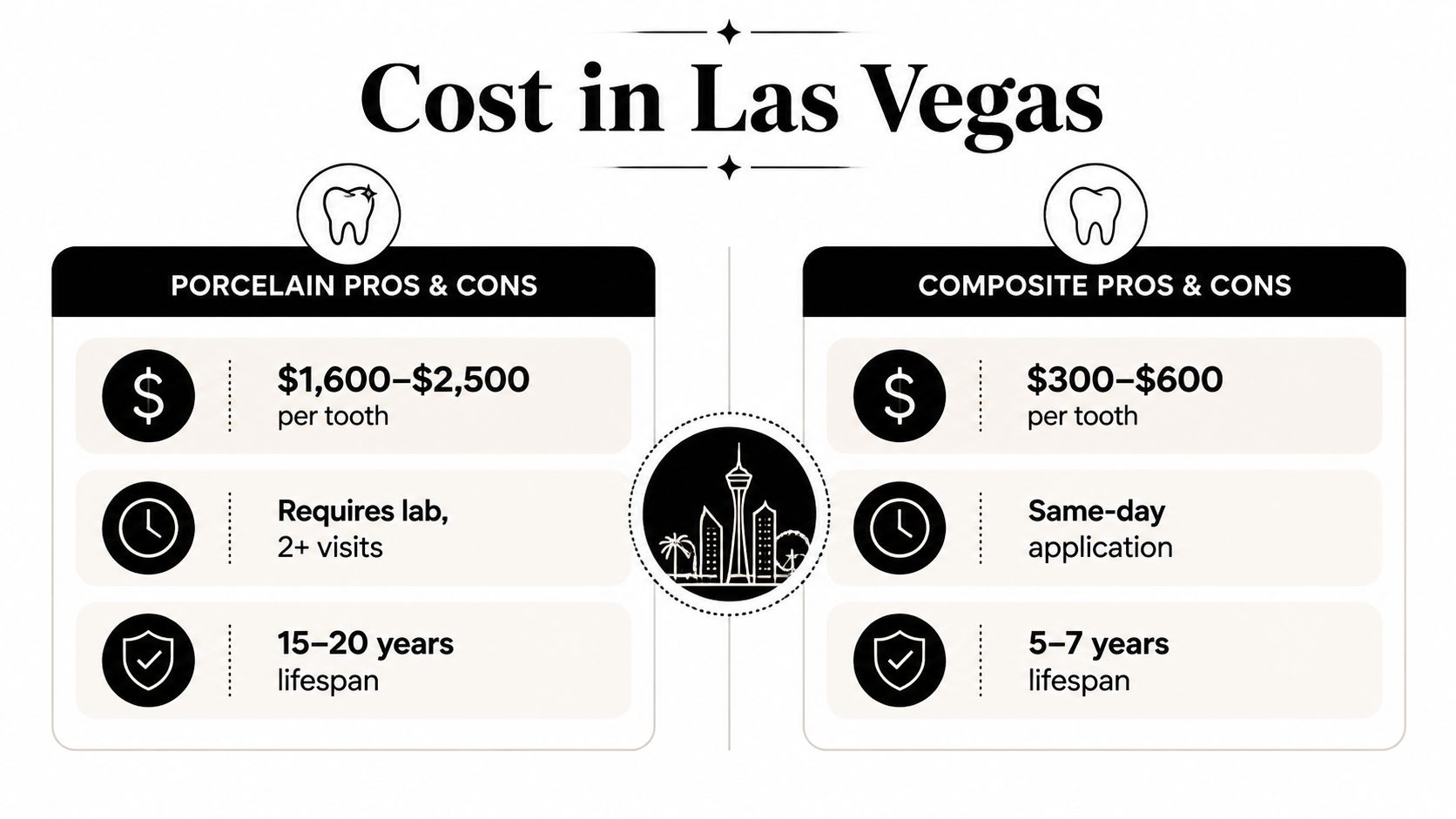
Why porcelain usually costs more
Porcelain costs more because it takes more coordination. You're paying for lab fabrication, more visits, and a more involved planning process. That higher upfront cost buys you the material's longevity, stain resistance, and more controlled esthetics.
Composite is usually more affordable because it's built directly in the mouth, often in one visit, with less laboratory overhead. For patients who want a noticeable improvement now without a larger immediate investment, that matters.
What changes the final fee
The final price in Las Vegas depends on the number of teeth, the complexity of the case, the lab work required, and whether insurance plays any role in the overall treatment plan. If you're treating only a few front teeth, the cost picture looks very different than if you're redesigning a full smile.
Aspiring Smiles Dental and Braces also supports patients with flexible payment options, insurance acceptance, and a membership program that can make cosmetic care more manageable. If you want a practical breakdown of how veneer pricing works, their guide on how much veneers cost is the right place to start.
Cost should match the plan, not just the sticker price
A cheaper veneer that needs earlier replacement can cost more over time. A more expensive veneer that holds its shade and shape longer can be the smarter buy if you want fewer touch-ups later. That's why cost alone is a weak way to choose.
The right question is simple. Do you want the lowest upfront entry point, or do you want to invest in a longer-lasting result that asks less from you over the years?
Which Option Fits Your Smile and Lifestyle
A young professional in Las Vegas who is getting ready for wedding photos or a career move usually wants a fast turnaround and a polished result with limited prep. That person often chooses composite if the goal is to improve a few teeth quickly and keep the treatment conservative. If the same patient wants the most refined esthetic finish and is comfortable with a longer process, porcelain is the stronger call.
A daily coffee or tea drinker is a different case. If you want the original shade to stay stable with less upkeep, porcelain fits better because it holds up against staining over time. That matters in everyday life, not just in the mirror on day one.

When I'd steer you one way or the other
A patient planning future orthodontics, crowns, or implant-related work should think carefully before committing to enamel reduction. Composite is the safer placeholder if the smile plan may change later. If your teeth are already stable and you want a more permanent cosmetic upgrade, porcelain is usually the better call.
A budget-conscious patient who wants a meaningful change now and accepts future maintenance is a strong composite candidate. That does not mean settling. It means choosing the material that fits the current moment.
A patient who grinds, has gum problems, or already has a lot of restorative work needs a customized exam before choosing anything. Veneers do not exist in a vacuum. Bite forces, existing fillings, and how the teeth meet all affect the final recommendation.
If your plan might change, do not lock yourself into an irreversible treatment too early.
For practical care tips after placement, review the veneer maintenance guide at how to care for veneers before you decide. If you want a broader local search perspective on how patients find veneer care and cosmetic dentistry, local search tips for dentists is a useful reference on the marketing side, and lead generation for dentists explains how practices attract those patients, but your treatment choice still has to come from your teeth and your goals.
What the Treatment Experience Looks Like at Aspiring Smiles
Most patients feel better once they know what happens from the first visit onward. A veneer consultation at a Las Vegas practice starts with a conversation about goals, then moves into an exam, photos, and planning so the final result matches your face, bite, and timeline.
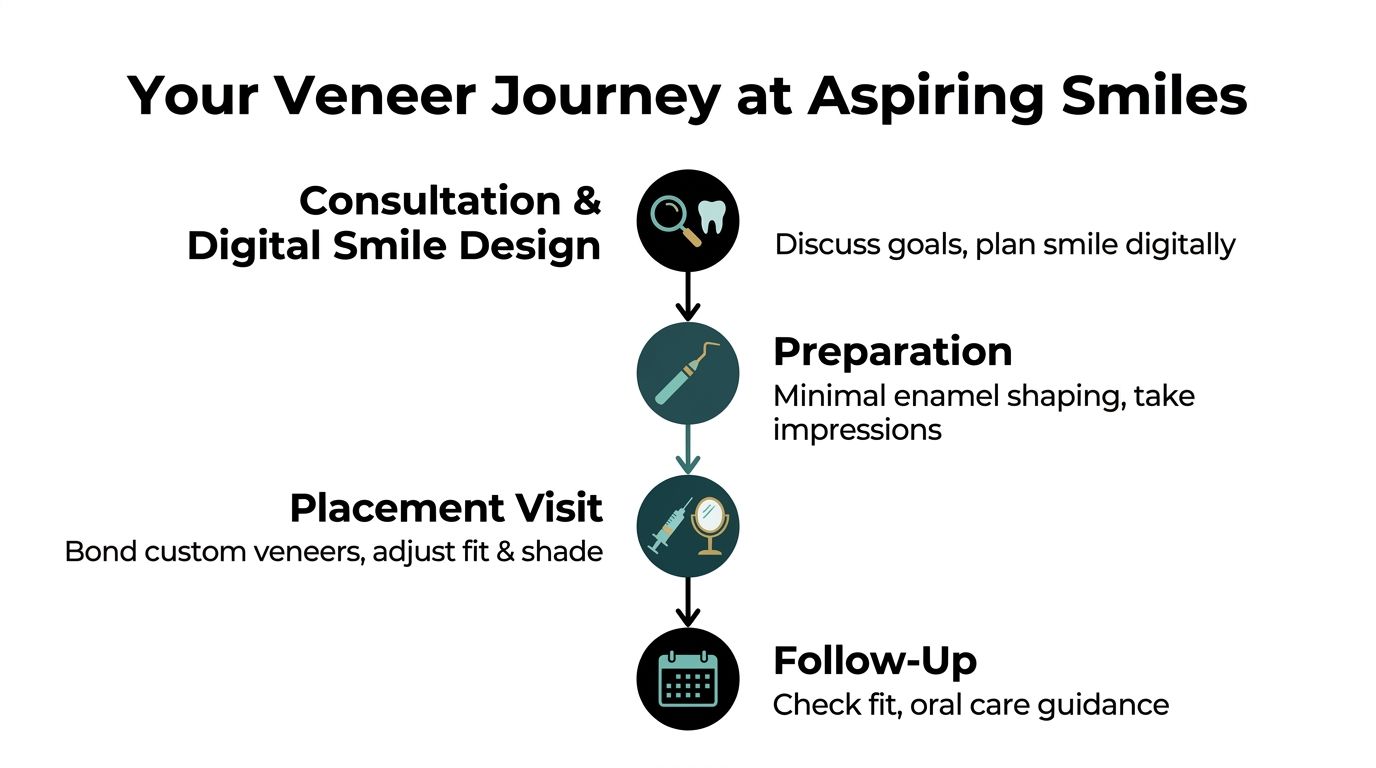
Porcelain and composite follow different timelines
Porcelain usually starts with preparation, then impressions or scans, then a lab phase, then final bonding. Temporary veneers may protect the teeth in between. Composite skips the lab step because the resin is layered and shaped directly on the tooth during the appointment.
Composite treatment is more straightforward chairside. The dentist places the resin, sculpts it, hardens it with a curing light, and polishes the final surface before you leave. That's why it's a good fit for patients who want a same-day cosmetic change.
What recovery usually feels like
After porcelain prep, mild sensitivity can happen while the final restorations are being made. Patients are usually given guidance on eating, cleaning, and protecting the teeth until placement day. Composite can also need a short adjustment period, but the timeline is generally simpler because the result is completed in one visit.
The follow-up matters more than expected. Small bite adjustments, polish checks, and oral hygiene coaching help the veneers last longer and look better. That's especially true if you drink staining beverages, clench, or already have existing restorations.
For dental teams that want a clearer way to turn consults into booked cases, the resource on lead generation for dentists is a practical example of how appointment-focused practices communicate treatment value without confusing patients. In the chair, though, the goal is simpler. You need a plan that fits your mouth and doesn't create regret later.
How to Choose the Right Veneer for Your Goals
Ask yourself three direct questions. How long do you want this smile to last as-is. How much enamel are you willing to give up. And how important is same-day convenience compared with lab-crafted esthetics.
If your top priority is longevity and stain resistance, porcelain is the clear favorite. If your top priority is conserving tooth structure and keeping the option to change course later, composite makes more sense. That's the most honest way to look at porcelain vs composite veneers in Las Vegas.
A simple decision rule
- Choose porcelain if you want a longer-term smile makeover, better shade stability, and you're comfortable with a more permanent process.
- Choose composite if you want a conservative, repairable option with less prep and a lower upfront commitment.
- Choose a custom plan if you have grinding, gum concerns, prior crowns, or a larger smile redesign that may need whitening or alignment first.
Aspiring Smiles Dental and Braces can also fold veneers into a larger treatment plan that includes whitening, Invisalign, crowns, implants, or other restorative work when needed. That matters because the right veneer decision is rarely isolated from the rest of your smile.
If you're comparing options in Las Vegas, don't guess from photos or price posts. Book a consultation at the Tenaya Way office and get a recommendation based on your teeth, your habits, and the way you live.
Aspiring Smiles Dental and Braces offers veneer consultations, cosmetic dentistry, restorative care, and full smile planning for Las Vegas patients who want a clear recommendation instead of a generic internet answer. If you're weighing porcelain vs composite veneers, visit Aspiring Smiles Dental and Braces to schedule a consultation and talk through the right option for your smile.