How Long Does Zoom Whitening Last and How to Extend It
Zoom whitening typically lasts 12 to 15 months with Zoom WhiteSpeed followed by Zoom DayWhite, and it can remain visibly lighter for 1 to 3 years with good habits. Noticeable color rebound often begins at 6 to 12 months, but whitening usually fades gradually rather than ending on a fixed expiration date.
You may be asking because a wedding, family photo session, job interview, or special event is approaching. Perhaps you want to feel more comfortable smiling when you meet friends around Las Vegas. Whatever prompted your search for how long does Zoom whitening last, the practical answer depends on more than the treatment you receive in the dental chair.
Your coffee routine, tobacco exposure, daily brushing and flossing, natural enamel, stain type, and touch-up plan all influence how long your smile stays bright. A professional evaluation also matters because whitening won't change the color of crowns, fillings, veneers, or other dental restorations.
Introduction to a Brighter Smile in Las Vegas NV
A patient may visit a Las Vegas dental office before a wedding, family gathering, or photo session and ask how many months Zoom whitening will last. A more accurate answer is a timeline, not an expiration date. The immediate result is the brightest point, while daily habits and planned maintenance determine how gradually the shade drifts afterward.
That difference matters when the event is approaching. Someone near Desert Shores, Sun City Summerlin, or Lone Mountain may need professional teeth whitening that fits around work and family responsibilities. A patient searching for a dentist near me or a cosmetic dentist near me should understand what whitening can and cannot change before choosing treatment.
What the timeline really means
Whitening results usually soften gradually rather than disappear overnight. The earliest change may be subtle, then become easier to notice as staining returns and the post-treatment shade loses some of its intensity. Your smile can still look brighter than it did before treatment, even after the initial result has faded.
Touch-ups can refresh the shade and extend the period when your teeth look noticeably lighter. The timing depends on your habits, the type of discoloration, and whether a dentist recommends in-office whitening, take-home care, or both. Maintenance works like repainting a room before the original color fully shows through. Small, planned refreshes can prevent a larger drop in brightness.
A consultation with Aspiring Smiles Dental and Braces can include a discussion of Zoom whitening, cleaning and exams, or a new patient exam. The dentist can help match the plan to your event, sensitivity concerns, and preferred level of maintenance.
Whitening changes natural tooth structure, so crowns, fillings, veneers, and other restorations may not lighten in the same way. A Las Vegas, NV dentist can also check for cavities, gum concerns, and enamel wear before treatment. If another problem affects your smile, the appropriate care may involve restorative dentistry, veneers, crowns, tooth extraction, dental implants, or emergency dental services instead of whitening alone.
Understanding How Zoom Teeth Whitening Works
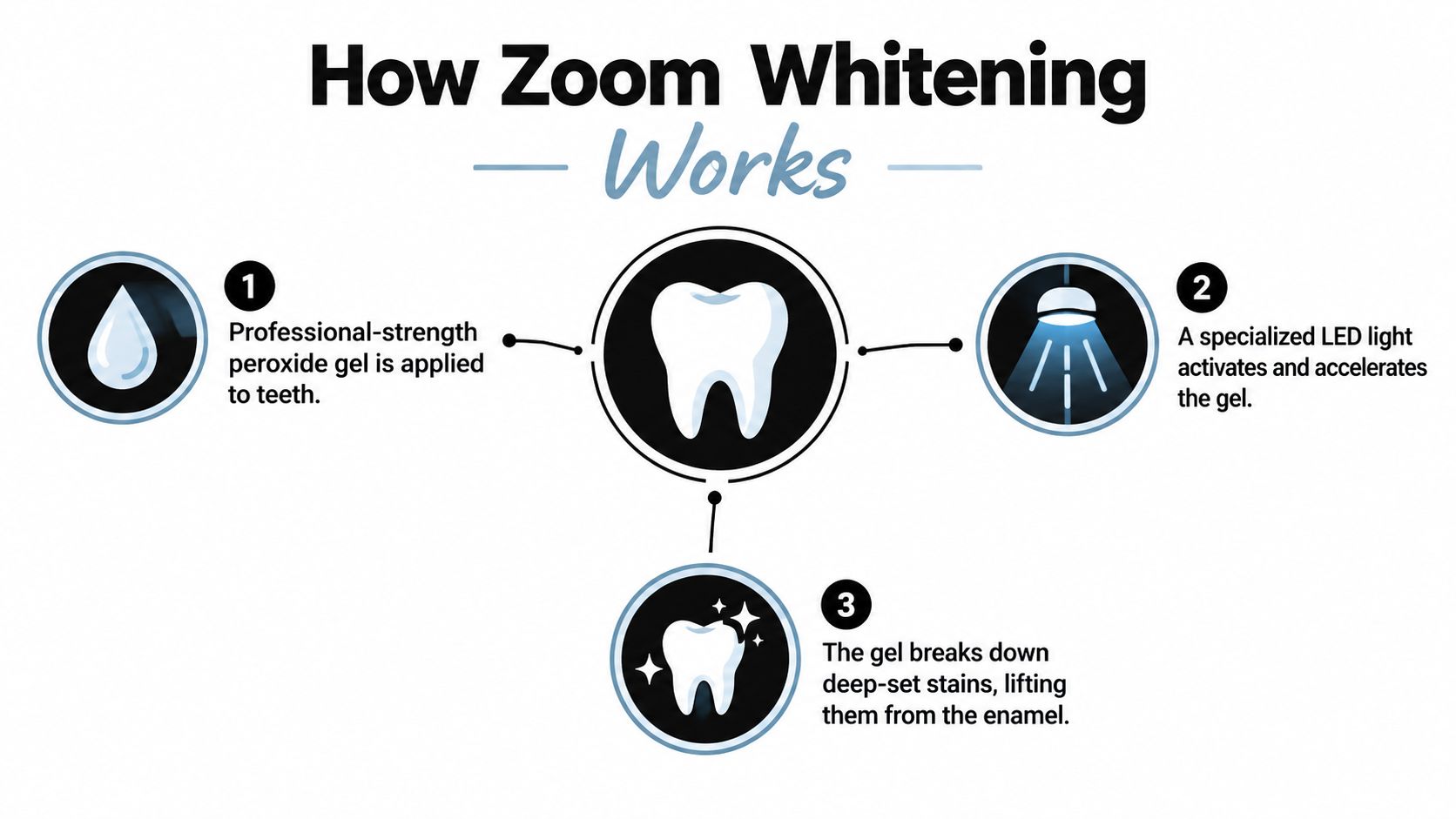
Zoom whitening is a professional cosmetic treatment designed to lift discoloration from natural teeth. The process uses a professional-strength peroxide gel and a specialized light. A simple comparison is a white shirt with a stubborn stain. Washing the shirt removes surface debris, but a targeted stain treatment helps loosen discoloration that has settled deeper into the fabric. Zoom uses a similar idea for certain stains on enamel.
During an appointment, the dental team evaluates your teeth and protects the surrounding tissues before applying the whitening gel. The specialized light activates the gel, helping the whitening ingredients work efficiently. The treatment is designed to brighten natural tooth structure, not to recolor dental restorations.
Why professional evaluation comes first
Whitening isn't appropriate for every tooth at every moment. A cleaning can remove plaque and surface buildup that makes teeth appear dull. Dental x-rays may help identify problems that aren't visible during a basic examination, while an exam can reveal decay, cracks, gum inflammation, or sensitivity risks.
That evaluation is especially important if you have uneven discoloration. Whitening may respond well to stains from food, beverages, tobacco, or aging, but internal discoloration can behave differently. The American Dental Association notes that tetracycline-stained teeth may require three to four months of nightly treatment on average, showing why stain type and protocol matter to both treatment duration and later durability. See what Zoom whitening involves before your consultation.
What you notice after treatment
The most obvious change usually appears soon after professional treatment. The smile looks brighter because the whitening process has lifted stain molecules from the natural tooth surface and structure. That result is a starting shade, not a permanent replacement for daily care.
At-home Zoom kits follow a different pace. Philips reports that visible results from Zoom take-home kits can appear in 1 to 2 weeks, with wear times of 30 to 90 minutes depending on product strength, as described in its Zoom at-home whitening guide. Philips professional materials also state that Zoom WhiteSpeed can make teeth up to 8 shades whiter in 45 minutes, while take-home whitening can produce noticeable results within 1 to 2 weeks in its patient whitening brochure.
How Long Zoom Whitening Typically Lasts
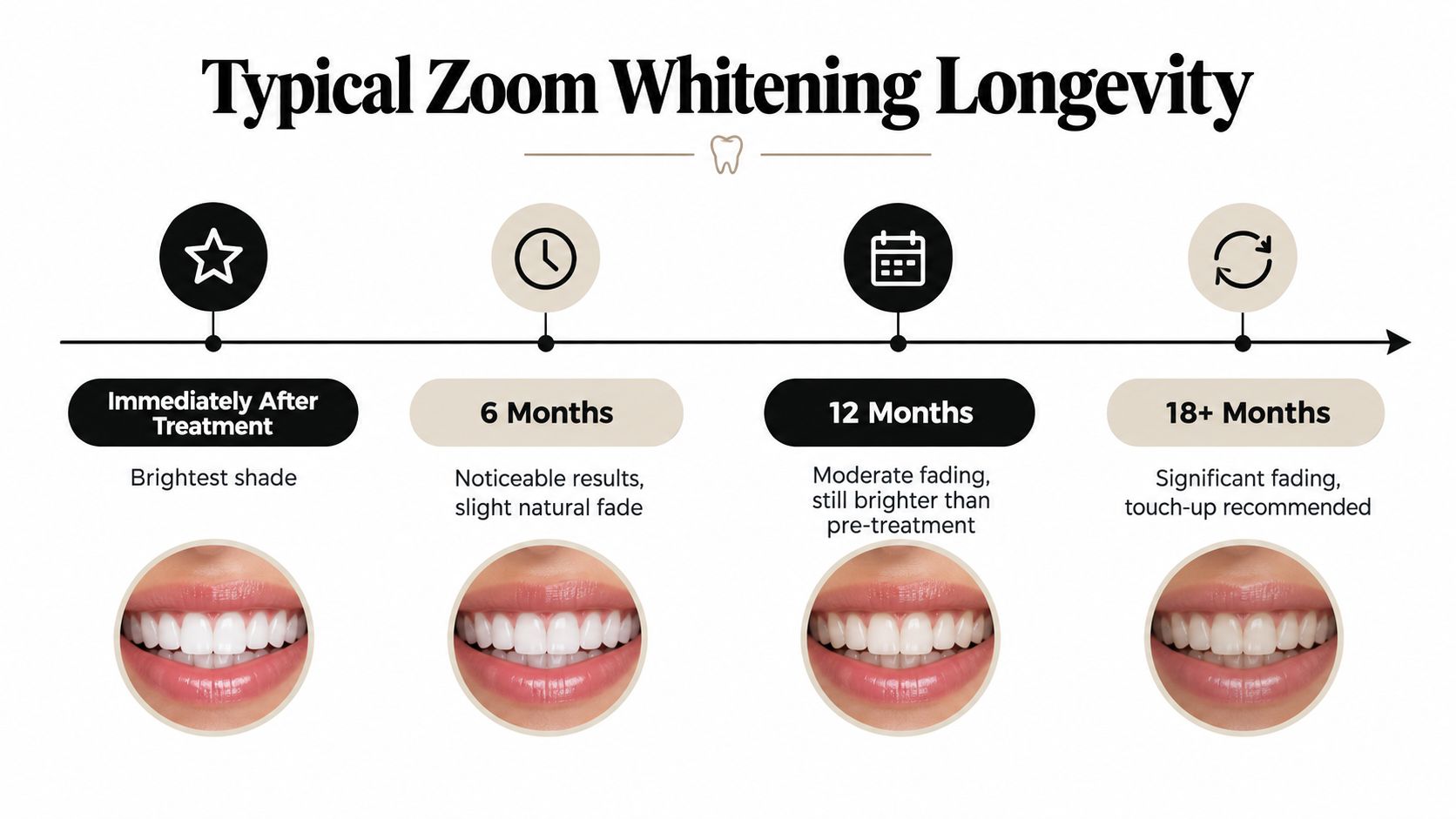
After leaving a Las Vegas dental office with a noticeably brighter smile, it is natural to wonder when that brightness will disappear. Zoom whitening does not have a fixed expiration date. The immediate result is usually the lightest shade, then new staining and the tooth's natural color gradually influence it. Early fading can be subtle, often appearing as a softer brightness before a major change is obvious.
A commonly referenced timeline for Zoom WhiteSpeed followed by Zoom DayWhite is 12 to 15 months, based on the study discussed in Healthline's review of Zoom whitening. Broader professional guidance indicates that in-office whitening may remain visibly improved for 1 to 3 years, with some chairside results lasting up to 24 months.
A practical timeline
Noticeable shade rebound commonly begins within 6 to 12 months, according to the American Dental Association's whitening overview. Rebound means the shade is moving away from its immediate post-treatment brightness. It does not mean the treatment suddenly stopped working.
Clinical follow-up research also supports meaningful stability around the first year, although results vary by protocol. A clinical study indexed by PubMed found that in-office whitening remained measurably stable for about 1 year, with most protocols showing no meaningful change between treatment completion and the one-year follow-up. One carbamide peroxide protocol did show significant rebound.
The useful question isn't “When does whitening expire?” It's “When will my shade begin to drift, and what maintenance will keep it brighter?”
Why fading isn't all-or-nothing
Tooth color usually changes by degrees, like a dimmer switch rather than an on-off switch. The review of tooth whitening durability reports that teeth may remain lighter than baseline for up to a year or longer, while coffee, red wine, smoking, and touch-up routines affect the pace of change.
Touch-ups can reset the shade before it returns to its starting point, potentially extending the period a patient feels satisfied with the result. The appropriate timing depends on the original stain and treatment plan. Recent surface staining may respond differently from long-standing internal discoloration, so a Las Vegas cosmetic dentist should assess your teeth instead of promising one universal lifespan.
Key Factors That Affect Your Whitening Results
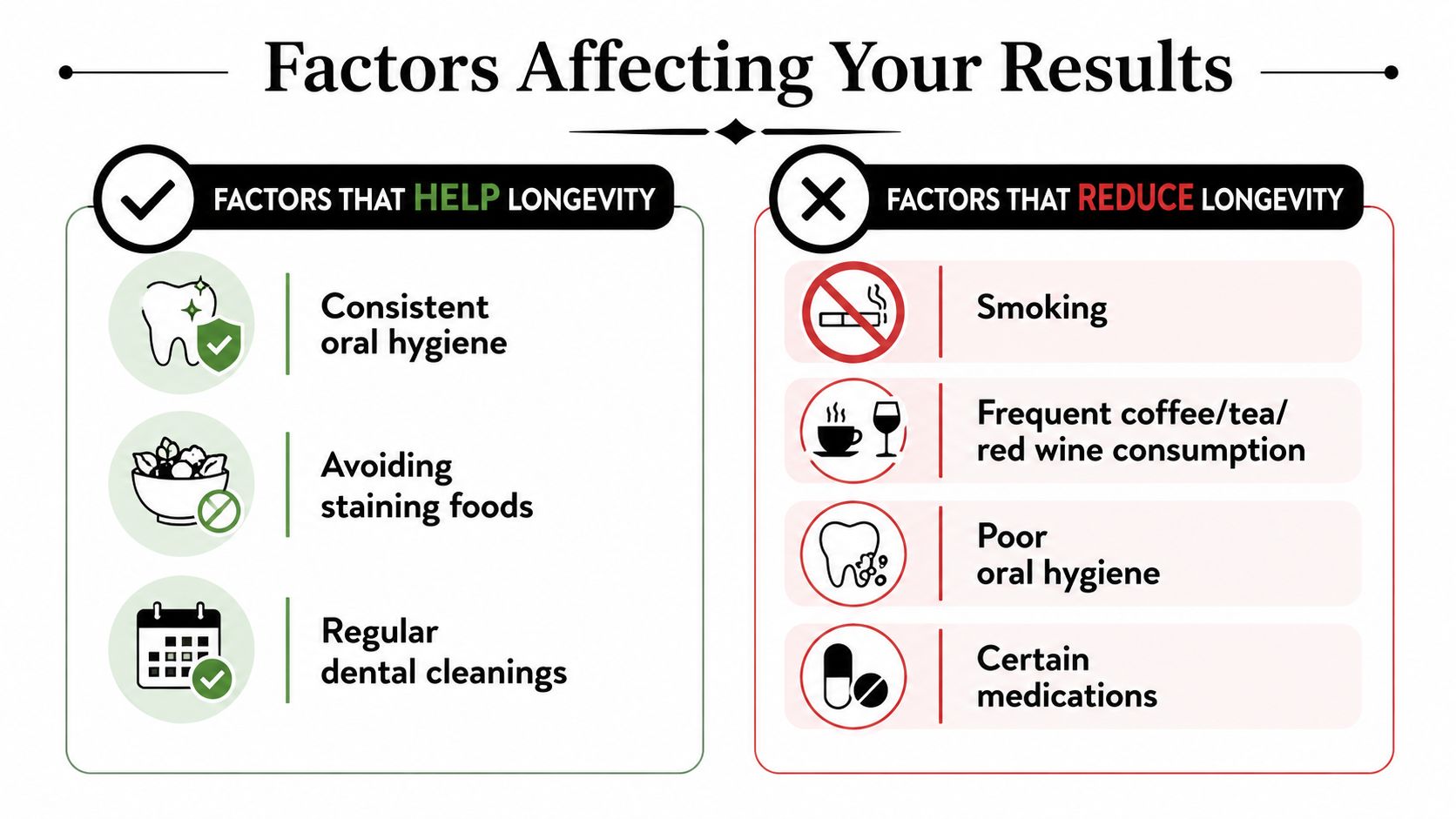
Two patients can receive similar whitening care and see different timelines. One may drink dark beverages throughout the day, while another rarely consumes them. One may maintain regular brushing, flossing, and professional cleanings, while another allows plaque and stain to build up between visits.
Daily stain exposure
Coffee, tea, red wine, dark sauces, and highly pigmented foods can introduce new pigments to enamel. In Las Vegas, a patient may enjoy iced coffee during a commute, red wine with dinner, or dark foods at social gatherings. None of those choices automatically rules out whitening, but frequent exposure can make the brighter shade drift sooner.
Rinsing with water after a staining drink can reduce the time pigments remain in contact with the teeth. Your dental team can help you identify which habits matter most without turning maintenance into an unrealistic list of restrictions.
Tobacco and oral hygiene
Smoking and other tobacco use can add staining that competes with the whitening result. The same is true of inconsistent oral hygiene. Plaque creates a rougher surface where discoloration can collect, while brushing and flossing help remove buildup before it becomes more difficult to manage.
Routine cleaning and exams support both appearance and oral health. A cleaning won't recreate the full effect of Zoom, but it can remove surface deposits that make teeth look less bright. It also gives your dentist an opportunity to monitor enamel, gums, and restorations.
Enamel, stain type, and aftercare
Natural enamel characteristics affect how teeth look and how they respond. Some discoloration sits near the surface, while other changes are related to the inner tooth structure or medication exposure. The ADA's discussion of tetracycline staining illustrates why a more persistent stain may require a longer protocol than ordinary food staining.
Aftercare chemistry may also influence durability. A Philips science summary reports that adding ACP retained nearly 10% more of the original whitening result at day 180 compared with control in the material it reviewed. That finding supports a broader point: durability can depend on follow-up care and formulation, not only on the office session.
Your post-treatment habits are part of the whitening treatment.
How to Make Your Zoom Results Last Longer
A maintenance plan doesn't need to be complicated. It should fit your normal routine and account for the habits most likely to darken your smile. Your dentist can adjust the plan if you have sensitivity, enamel wear, restorations, or a history of difficult staining.
Start with gentle immediate care
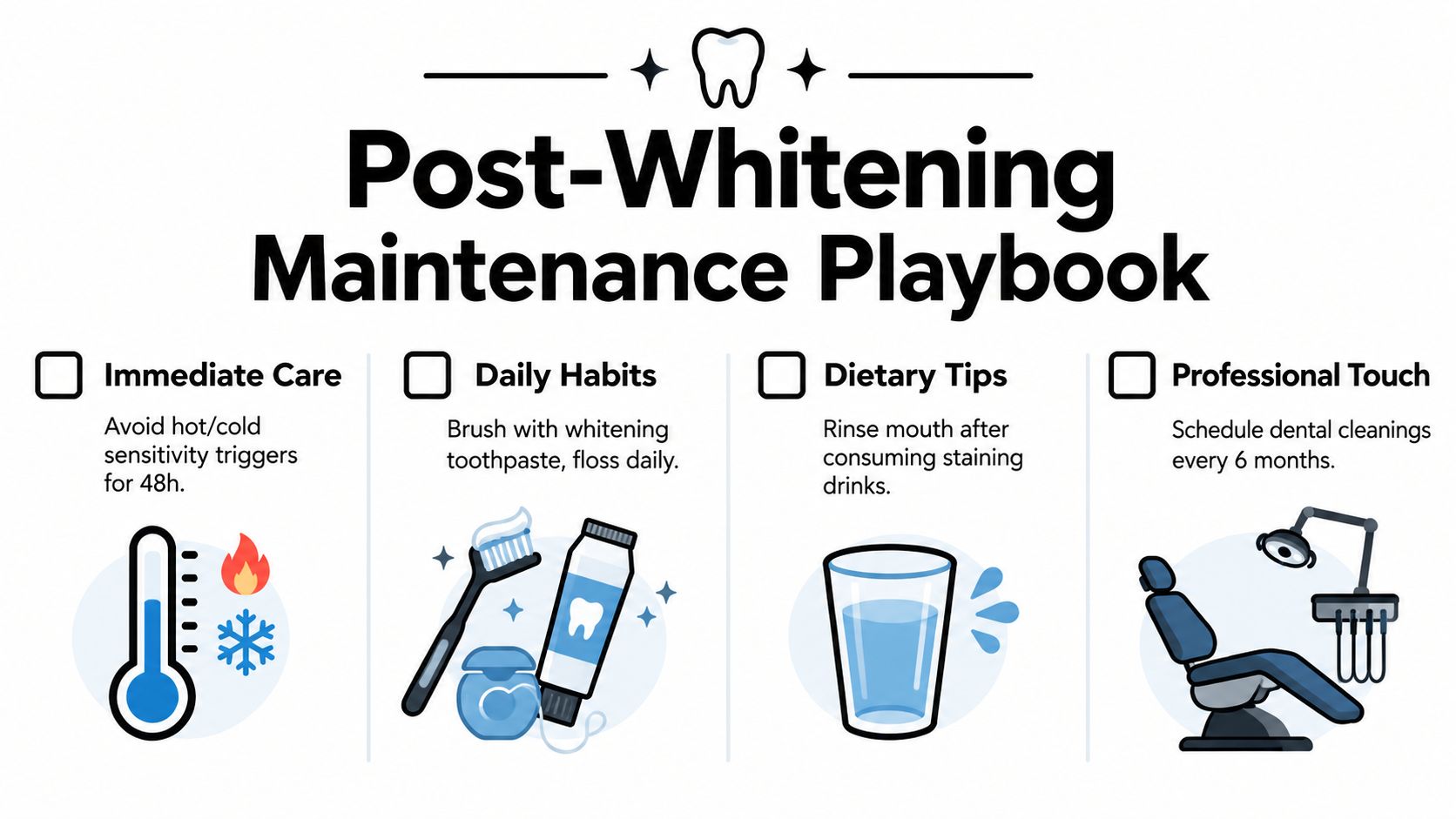
Follow the personalized instructions provided after treatment. If your teeth feel sensitive, avoid triggers that make the discomfort worse and use the products recommended by your dental team. Don't add extra whitening products on your own because you want a faster result.
Daily care does the quiet work of preserving brightness. Brush consistently, floss to clean between teeth, and keep scheduled cleaning and exam visits. These habits protect your gums and teeth while also limiting the buildup that can make a smile look dull.
Use small responses to staining habits
You don't necessarily have to eliminate every beverage or food you enjoy. Try practical adjustments:
- Rinse after dark drinks: Water helps clear residue after coffee, tea, or other staining beverages.
- Keep brushing consistent: A regular brushing routine helps manage surface discoloration and plaque.
- Clean between teeth: Flossing supports gum health and prevents buildup in areas a toothbrush can't reach.
- Ask before touching up: A dentist should confirm that your teeth and gums are ready for additional whitening.
The Zoom whitening aftercare guidance from Aspiring Smiles Dental and Braces can help you understand how to care for your smile after treatment. If you smoke or frequently consume staining drinks, a dentist may recommend a more individualized maintenance approach.
Plan touch-ups around your real life
Touch-ups can refresh a smile as the shade gradually drifts. The right timing depends on your original stain, your current color, sensitivity, and whether you use take-home trays. A touch-up should be planned, not improvised.
Cosmetic services can also be coordinated with restorative dentistry. If a crown, veneer, or filling is visible in your smile, whitening the natural teeth may create a color mismatch because restorations don't whiten in the same way. A consultation helps you decide whether whitening should come before other cosmetic or restorative treatment.
In Office Whitening Compared to Combined Whitening Approaches
In-office Zoom whitening offers a concentrated, professionally supervised way to brighten natural teeth. A combined approach adds take-home tray whitening after the office treatment. The choice isn't just about speed. It also involves how much control you want over maintenance and how your dentist plans to support the shade over time.
Long-term research suggests that combining in-office and at-home tray whitening can improve durability compared with in-office whitening alone. A long-term clinical study on whitening approaches found that efficacy gradually decreased over time across groups, but the combined approach produced longer-lasting results. Another in-office study reported clinically acceptable, stable color outcomes for up to 18 months after high-concentration bleaching.
Durability of whitening approaches
| Approach | Typical Stability | Key Finding |
|---|---|---|
| In-office Zoom alone | Strong initial brightening with gradual shade drift | Clinical follow-up found measurable stability for about 1 year, depending on protocol. |
| In-office treatment plus take-home trays | Longer-lasting maintenance potential | Long-term evidence found the combined approach lasted longer than in-office care alone. |
| Zoom take-home whitening | Gradual brightening at home | Philips reports visible results in 1 to 2 weeks, with wear time depending on product strength. |
In-office care may suit someone preparing for an event who wants a faster visible change. Combined care may suit a patient who wants professional supervision plus a way to manage gradual fading at home.
Choosing the right fit
Your dentist should consider the type of discoloration, the condition of your enamel and gums, sensitivity risk, and the color of existing restorations. Patients who need broader care may also discuss veneers, crowns, restorative dentistry, or other cosmetic services before deciding how to sequence treatment.
A combined plan isn't automatically necessary for every patient. It becomes useful when your goals, stain exposure, and maintenance preferences support ongoing tray use. The important decision is choosing a protocol you can follow safely and consistently.
What to Expect When You Visit Aspiring Smiles Dental and Braces
At Aspiring Smiles Dental and Braces, new patients can discuss Zoom teeth whitening in a modern, comfortable setting at 3211 N Tenaya Wy Suite 122, Las Vegas, NV 89129. Dr. Patel and the team focus on clear communication, gentle techniques, and a treatment plan shaped around your shade goals, dental health, comfort, and lifestyle.
Your visit may include a new patient exam, cleaning and exams, and dental x-rays when clinically appropriate. The team can also evaluate sensitivity, gum health, tooth-colored fillings, crowns, veneers, and other factors that affect the final appearance. That process helps you decide whether whitening is the right next step or whether restorative dentistry should come first.
Patients in Sunhampton, Monterrey, Mar-A-Lago, and Painted Desert Estates, as well as families near Desert Shores and Sun City Summerlin, can request care from a local dentist in Las Vegas, NV. The practice also provides family dentistry, cosmetic dentistry, dental implants, All-on-4 solutions, implant-supported dentures, Invisalign, tooth extraction, and emergency dental services when those needs arise.
Extended weekday and Saturday hours, online appointment requests, flexible payment options, and insurance acceptance can make scheduling easier. Whether you're searching for a dentist near me, dental implants near me, an emergency dentist, or a cosmetic dentist near me, a conversation about your goals is a practical starting point.
Schedule a consultation with Aspiring Smiles Dental and Braces to discuss Zoom teeth whitening, aftercare, and a maintenance plan suited to your smile. You can also request a new patient exam to address sensitivity, staining, dental health, or other cosmetic and restorative concerns before treatment.