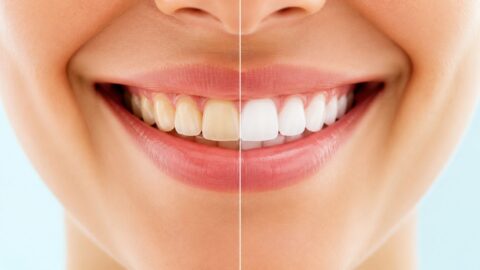
Does Teeth Whitening Work on Yellow Teeth: Insights 2026
You notice it in the mirror first. The teeth that used to look bright now look a little warmer, a little duller, and you start wondering whether teeth whitening can fix what you're seeing or whether the color is coming from deeper inside the tooth.
That's a fair question, especially if you're looking for a dentist in Las Vegas, NV and want straight answers instead of marketing. At Aspiring Smiles Dental and Braces, patients often ask whether whitening will work on yellow teeth, and the honest answer is that yellow teeth are usually the type most likely to respond when the discoloration is on the enamel or from normal aging, while deeper gray or brown changes can be less predictable American Dental Association patient guidance on whitening.
Why Do Teeth Turn Yellow?
A patient will often point to one tooth in a selfie and say, “That one used to be whiter.” Usually, the problem falls into one of two buckets, extrinsic staining or intrinsic staining. Extrinsic staining comes from the outside, meaning pigments sit on the enamel from things like coffee, tea, red wine, tobacco, and other daily habits.
Intrinsic yellowing starts from within the tooth. As enamel gets thinner with age, the darker yellow dentin underneath shows through more clearly, so the smile can look warmer even if the teeth are still healthy. Genetics, some medications, and trauma can also affect tooth color, which is why not every yellow smile behaves the same way in whitening treatment.
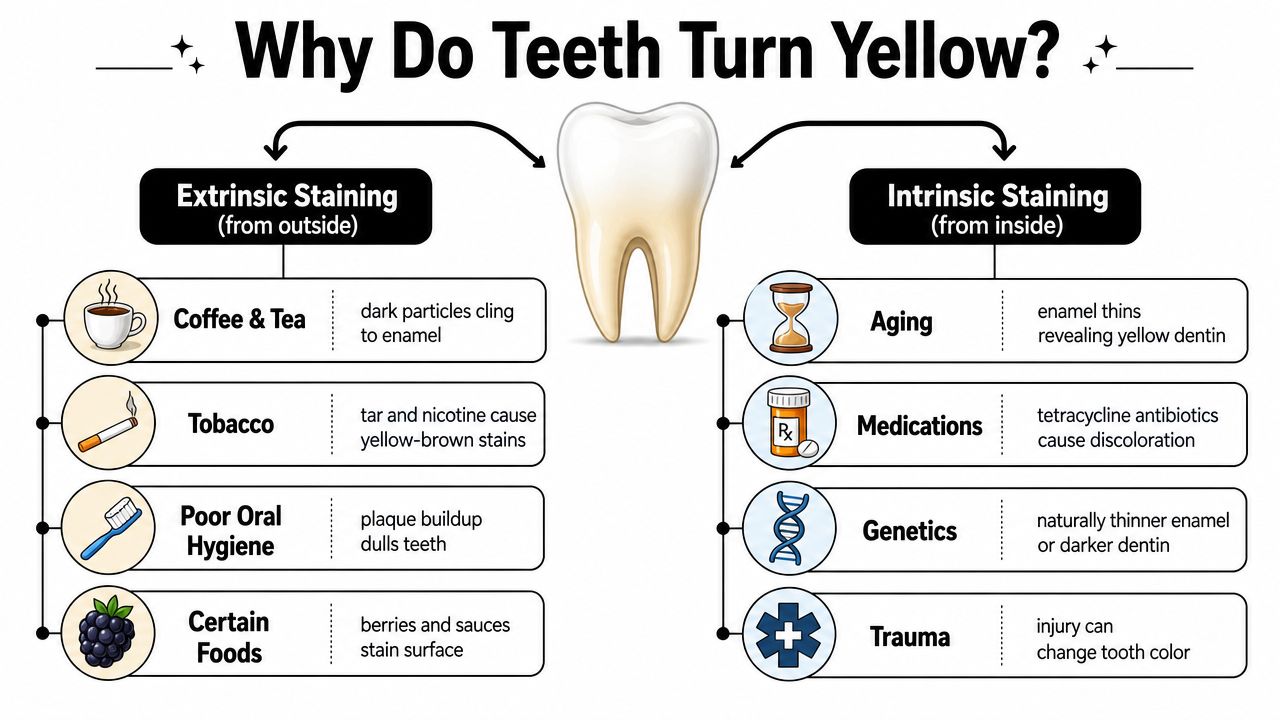
For a Las Vegas patient, the key question is not just “Why are my teeth yellow?” It's “What kind of yellowing do I have?” That distinction matters because whitening works on natural tooth structure, not on every possible cause of discoloration. Yellow teeth from surface staining or mild age-related color change are the ones that usually respond best, which is why this question comes up so often in cosmetic dentistry visits.
A quick way to think about it is this, if the color changed gradually from everyday life, whitening may help. If the color came from a restoration, a past injury, or a deeper structural issue, the answer may be different. If you want a simple explanation of common causes, you can also review what causes tooth discoloration before you decide what to do next.
Practical rule: yellow doesn't automatically mean “needs aggressive treatment.” It often means the tooth is still a good whitening candidate, but the cause of the yellowing has to be identified first.
In neighborhoods like Desert Shores, Sunhampton, Sun City Summerlin, Monterrey, Lone Mountain, Mar-A-Lago, and Painted Desert Estates, that first step usually happens during a routine exam. A good dentist will look at the shade, the enamel, and any existing dental work before recommending whitening or a different cosmetic option.
How Different Whitening Methods Work on Yellow Teeth
Whitening works because peroxide can break apart stain molecules inside the tooth and change how they reflect light. In plain language, hydrogen peroxide and carbamide peroxide help lift the color that has built up in the enamel, which is why yellow teeth often look brighter after treatment. The difference between products is how much peroxide reaches the tooth, how long it stays there, and whether a dentist is guiding the process.
For yellow teeth, that detail matters. A mild, even yellowing on natural enamel often responds well, while uneven color or discoloration tied to dental work usually needs a different plan.
In-office whitening and custom trays
In-office whitening uses a stronger gel applied by the dental team, so it is set up for faster, more noticeable change in one visit. Cleveland Clinic notes that in-office bleaching takes about one hour, while most take-home whitening plans use 30- to 60-minute daily sessions for up to six weeks Cleveland Clinic tooth discoloration guidance. Custom trays differ from strips because the gel sits more evenly around the teeth, which helps when the yellowing is spread across several front teeth.
That even contact is one reason trays are often a good fit for patient-specific whitening. A dentist can also adjust the plan if your teeth feel sensitive or if the color change is coming in unevenly. If you are weighing the options, exploring the different teeth whitening options gives a clear look at how supervised whitening compares with simpler over-the-counter choices.
Strips and toothpastes
Over-the-counter strips and whitening toothpastes can help with lighter surface staining, but they usually work more slowly. They use lower peroxide levels, or in the case of some toothpastes, more limited stain removal, so they are better for maintenance than for a major color change. In a clinical comparison, dentist-supervised at-home bleaching produced greater measurable color change than whitening strips, even though the difference was not always visible to the naked eye.
That can be confusing for patients. A product may sound gentle and still help a little, but gentle care does not always mean the most visible improvement. For yellow teeth, strips and toothpaste may trim away some surface stain, while dentist-guided whitening is more likely to make the underlying shade look lighter.
What whitening cannot change
This part matters just as much. Whitening changes natural tooth structure only, so crowns, veneers, fillings, and other restorations will not lighten with the rest of the smile. If a front tooth already has dental work, the color plan may need to include cosmetic dentistry or restorative dentistry instead of just whitening.
Whitening is a stain-management tool, not a universal color fix. The method has to match the cause of the yellowing.
For many patients searching for a cosmetic dentist near me, the right answer is not the strongest product on the shelf. It is the method that fits the tooth, the shade goal, and the amount of time you want to spend treating it.
What Results and Timelines to Expect
Here's a practical way to compare the options. The strongest clinical evidence is encouraging for yellow teeth, especially when the color change sits on or just inside the enamel. A meta-analysis of dentist-prescribed home bleaching found an average improvement of 6.4 shade-guide units compared with 0.7 in placebo, and 93% of treated patients achieved at least a 2-shade improvement versus 20% in placebo PubMed meta-analysis. In plain terms, whitening can work well on yellow teeth because that kind of discoloration is usually more responsive than deeper gray or brown staining.
Patients sometimes expect a dramatic before-and-after look the moment treatment starts, then feel unsure if the process is working when the change looks modest in the mirror. That reaction is common. A clinical comparison found that dentist-supervised at-home bleaching produced greater color change than whitening strips, even when the difference was not obvious to the naked eye. So the shade can improve in a way that is measurable before it feels dramatic day to day.
Timelines at a glance
| Whitening Method | Typical Result | Treatment Timeline |
|---|---|---|
| In-office whitening | Fast, noticeable brightening | About one hour |
| Dentist-supervised take-home trays | Strong improvement with gradual change | 30- to 60-minute daily sessions for up to six weeks |
| Over-the-counter strips or toothpaste | Milder, slower brightening | Ongoing use over time |
That time difference matters because whitening is not the same as scrubbing a stain off a countertop. In-office treatment gives a quick visible jump, custom trays work more gradually but can produce a stronger overall change, and strips or toothpaste usually make smaller maintenance-level improvements. For yellow teeth, the method you choose affects both how soon you notice a change and how much change you can reasonably expect.
Some patients are surprised when teeth look a little darker again soon after treatment. That rebound is normal while the enamel rehydrates during the first 24 to 72 hours, and mild shade relapse often settles within 1 to 2 weeks Gold Coast Dental discussion of post-whitening rebound. The whitening can still be successful, the teeth just need time to settle into their final shade.
The result is also not permanent. The NHS says professionally supervised whitening may last around 3 years if you follow your dentist's advice NHS teeth whitening guidance. That does not mean the treatment failed. It means the teeth will still pick up new stain over time, so maintenance, like periodic cleanings and good home care, plays a real role in keeping the lighter shade.
For patients in Las Vegas who want a brighter smile for work, events, or everyday confidence, the main question is not just whether whitening works. It is which method gives the amount of change you want within the time you have, and whether that plan fits the way your teeth respond.
Are You a Good Candidate for Teeth Whitening?
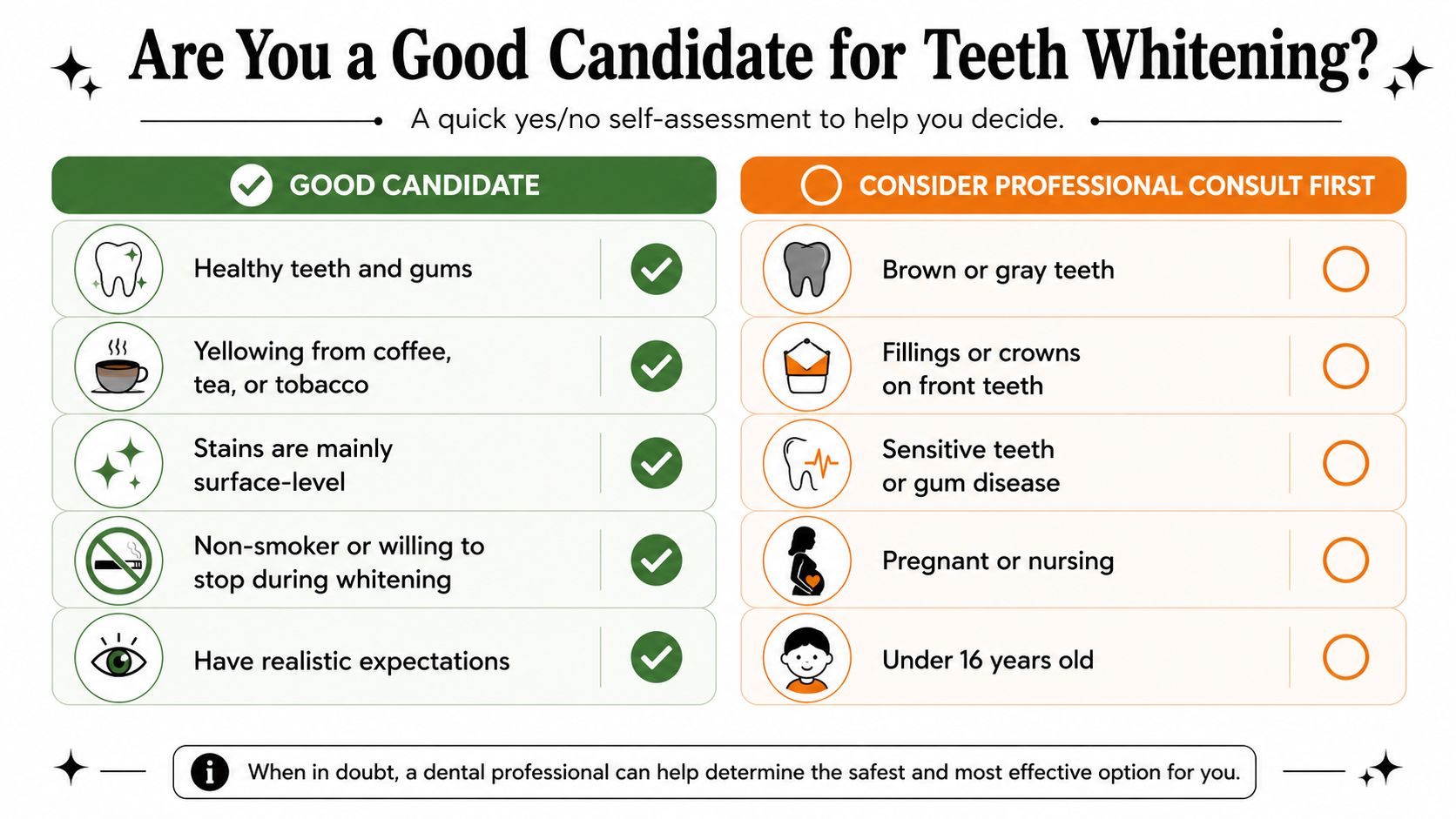
Not every yellow smile should be treated the same way. Good candidates are usually people whose teeth look yellow from surface stains, aging-related enamel thinning, or a mix of both. The ADA's patient guidance notes that yellow teeth will probably bleach well, while brown teeth may respond less and gray tones may not bleach at all ADA whitening guidance.
A simple self-check
Healthy teeth and gums, whitening tends to go better when the mouth is already in good shape.
Yellowing from coffee, tea, or tobacco, these are common stain patterns that often respond.
Stains that sit on the surface, these are more likely to lighten than deep structural discoloration.
Realistic expectations, whitening improves shade, it doesn't make every tooth look identical.
Brown or gray teeth, these often need a professional evaluation first because they can be less responsive.
Front fillings or crowns, these won't change color with whitening.
Sensitive teeth or gum disease, these need attention before treatment.
Pregnancy, nursing, or age under 16, these situations call for dentist guidance first.
At Aspiring Smiles Dental and Braces in Las Vegas, Dr. Patel and the team evaluate all of this during new patient exams so you're not guessing at home. That visit is where a dentist can tell whether your yellowing is the kind that whitening can improve, and whether a Zoom whitening approach, custom trays, or another cosmetic option makes more sense.
For some patients, whitening is only part of the answer. If a visible front tooth has an old filling, a veneer, or a crown that doesn't match the rest of the smile, cosmetic dentistry or restorative dentistry may be the better path. If there's a missing tooth or a damaged one that can't be saved, services like tooth extraction or dental implants near me become part of the bigger picture, not because they whiten teeth, but because they restore the smile properly.
If the front teeth have restorations, whitening first can create a mismatch. A dentist should check the order of treatment before you start.
Risks, Limitations, and Safety Considerations
Whitening is common, but it still needs to be used carefully. The most frequent side effect is tooth sensitivity, especially with stronger peroxide products. That sensitivity is usually temporary, but it's one of the main reasons patients should talk with a dentist before starting a whitening plan.
Gum irritation is another issue. If whitening gel contacts soft tissue, the gums can get sore or irritated, which is why supervised treatment uses protective barriers and, in many cases, trays that fit the teeth closely. A good fit matters because it keeps the gel where it belongs and reduces the chance of a messy, uneven result.
Overuse can backfire. Using strips more often than directed, repeating bleaching too often, or chasing results with unregulated salon treatments can increase irritation and make teeth feel worse instead of better. The problem isn't only comfort, it's that too much whitening can create a cycle where sensitivity rises and the patient keeps changing products without ever getting stable results.
There are also hard limits. Whitening won't transform deep intrinsic stains from causes like certain medications or injury, and it won't change the color of crowns, veneers, or fillings. That's why a careful exam matters more than a fast purchase at the store.
A local consultation in Las Vegas helps you sort out what's safe and what's realistic for your mouth. If you're considering cosmetic dentistry but aren't sure whether whitening, veneers, crowns, or another option is the right fit, the dentist can match the treatment to the color problem instead of guessing.
One helpful way to explain whitening safety to patients is to treat it like any other dental care decision. A routine exam, cleaning and exams, and dental x-rays can reveal whether the teeth and gums are ready for bleaching, or whether something else needs to be addressed first. That keeps the plan focused on both appearance and oral health.
Next Steps at Aspiring Smiles Dental and Braces
If you're in Las Vegas and your yellow teeth are making you hide your smile, the next step is a professional consultation. A dentist can look at the shade, the enamel, and any restorations, then tell you whether whitening is likely to help or whether another cosmetic or restorative option would work better.
Aspiring Smiles Dental and Braces, led by Dr. Patel, offers Zoom teeth whitening along with Invisalign clear aligners, dental implants, crowns, and veneers. The office is located at 3211 N Tenaya Wy Suite 122 in Las Vegas, accepts insurance, offers flexible payment options, and has extended weekday and Saturday hours for convenience. If you want a practical overview of how patient education can support treatment acceptance and clearer conversations in a dental office, dental education for clinics is a useful resource.
Whether you're a new patient looking for a dentist near me or you already know you want a brighter smile, a consultation gives you a clear plan. It's the safest way to find out whether your yellow teeth are a good whitening match and what results you can realistically expect from care in Las Vegas.
If you're ready to find out whether whitening will work for your yellow teeth, schedule a visit with Aspiring Smiles Dental and Braces in Las Vegas. The team can evaluate your smile, explain your options clearly, and help you choose the right treatment for a brighter result.