Zoom Whitening in Office: Your Las Vegas Guide
You're looking in the mirror before a wedding, reunion, interview, or special family event, wishing your smile looked a little brighter. If you're searching for “dentist near me” or “cosmetic dentist near me” in Las Vegas, NV, in-office Zoom whitening can provide a fast, professionally supervised change, but the most satisfying result comes from understanding what the treatment can and can't do.
At Aspiring Smiles Dental and Braces, Dr. Patel and the team approach whitening as cosmetic dental care, not a one-size-fits-all light show. Your teeth, gums, existing fillings, crowns, veneers, sensitivity history, and shade goals all affect the right plan. A thoughtful consultation helps make the result safer, more comfortable, and more predictable.
Starting Your Zoom Whitening Journey With a Consultation
A patient may arrive wanting the brightest smile possible before an upcoming milestone. During the conversation, the important question usually isn't only how white the teeth should become. It's also whether the discoloration is on the surface, inside the tooth, related to aging, or connected to existing dental work.
That distinction matters because whitening changes natural tooth structure, but it doesn't change the color of crowns, veneers, or fillings. If a front tooth has a restoration, whitening the surrounding natural teeth could create a mismatch rather than a more uniform smile. In some cases, whitening first and planning restorative work afterward produces a better color match.
Why the examination comes first
Before applying peroxide, a cosmetic dentist near me should evaluate the condition of the teeth and gums. Cavities, leaking fillings, gum inflammation, exposed roots, cracks, and recession can make whitening uncomfortable or inappropriate until those concerns receive attention. A new-patient exam may include cleaning and exams, dental x-rays when clinically appropriate, and a discussion of your previous dental care.
The American Dental Association explains that professional whitening may use a peroxide-containing gel with or without light activation, and that in-office hydrogen peroxide treatments are applied under controlled conditions (American Dental Association guidance on whitening). That control starts with knowing what's in the mouth before treatment begins.
Practical rule: The best whitening plan is based on your teeth's condition and your desired shade, not simply on choosing the strongest-looking equipment.
Dr. Patel and the team at Aspiring Smiles Dental and Braces use the consultation to discuss timing, sensitivity, lifestyle, and whether in-office treatment, take-home trays, or a combined approach makes more sense. Someone who drinks staining beverages regularly may need a different maintenance conversation from someone preparing for a single event. Patients from Desert Shores, Sunhampton, Sun City Summerlin, Monterrey, Lone Mountain, Mar-A-Lago, and Painted Desert Estates can request a local consultation without treating the appointment like a sales transaction.
Preparing Your Smile for the In-Office Procedure
The chairside setup is one of the most important parts of Zoom whitening in office. The peroxide gel should contact the teeth, not the delicate tissues around them, so careful isolation protects the lips, cheeks, and gums.
What happens before the gel
A professional cleaning may come first if plaque or surface stain is present. Removing that buildup gives the whitening gel a cleaner, more even surface to work on. Whitening won't correct a cavity or replace a cleaning, so patients with broader dental needs may first need preventive or restorative care.
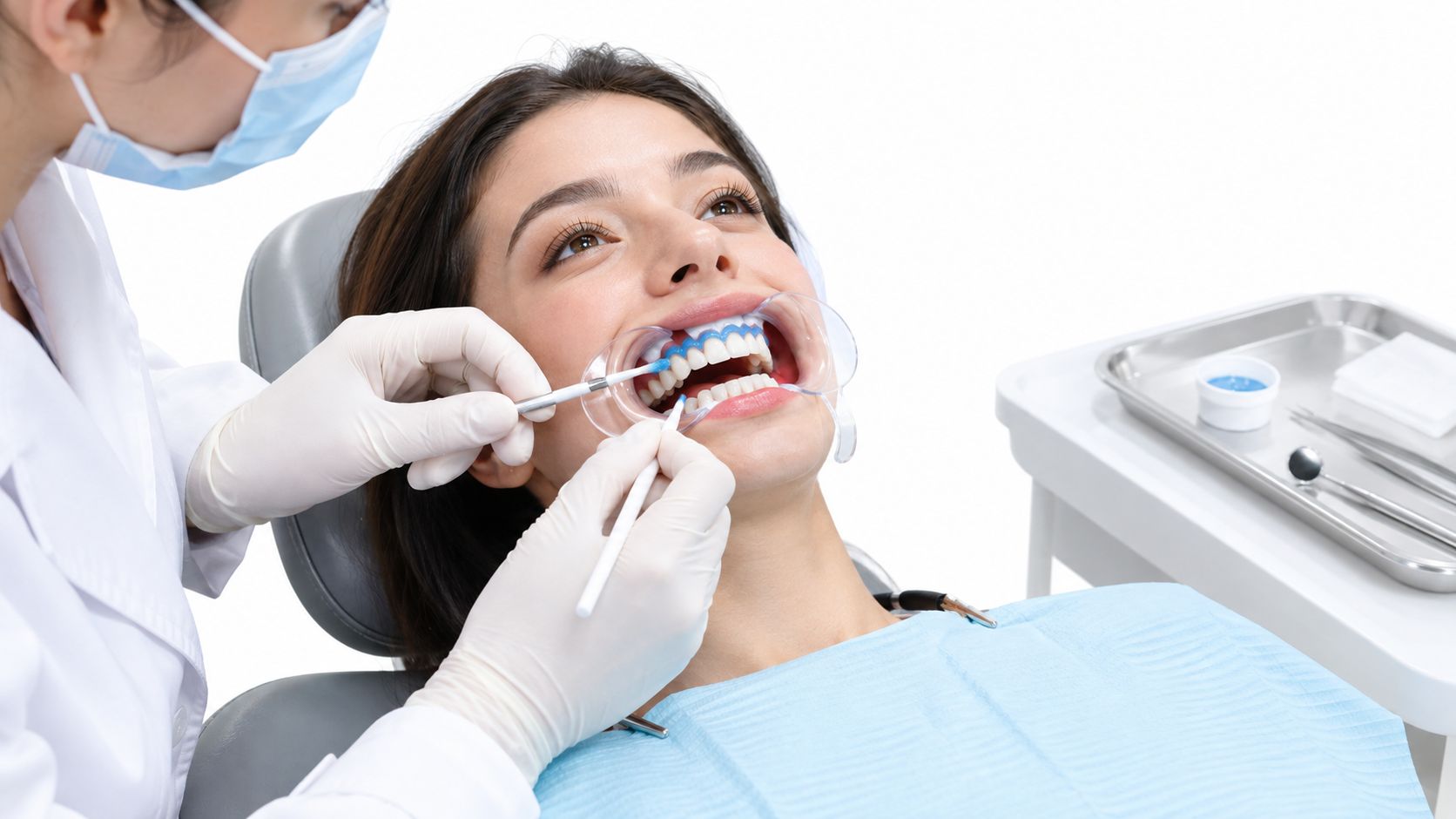
Once the teeth are ready, the team gently places a cheek and lip retractor. This keeps the lips away from the working area and allows the clinician to see the visible tooth surfaces clearly. A protective resin or gum barrier is then applied along the gumline and carefully hardened or set according to the system's protocol.
The barrier isn't decorative. It creates separation between the concentrated peroxide and soft tissue that could become irritated if gel touches it. The team checks the seal before proceeding and adjusts anything that doesn't look secure.
A calm setup improves the experience
You'll be shown where to rest your jaw and how to communicate if you need a pause. The team can also review what you may feel, such as pressure from the retractor, mild warmth, or temporary tingling. Knowing the sequence ahead of time helps replace uncertainty with a clear plan.
If you're already dealing with tooth sensitivity, gum recession, or discomfort from cold drinks, mention it before treatment. That information can influence the protocol and the comfort measures selected for you.
The Gel Application and Light Activation Process
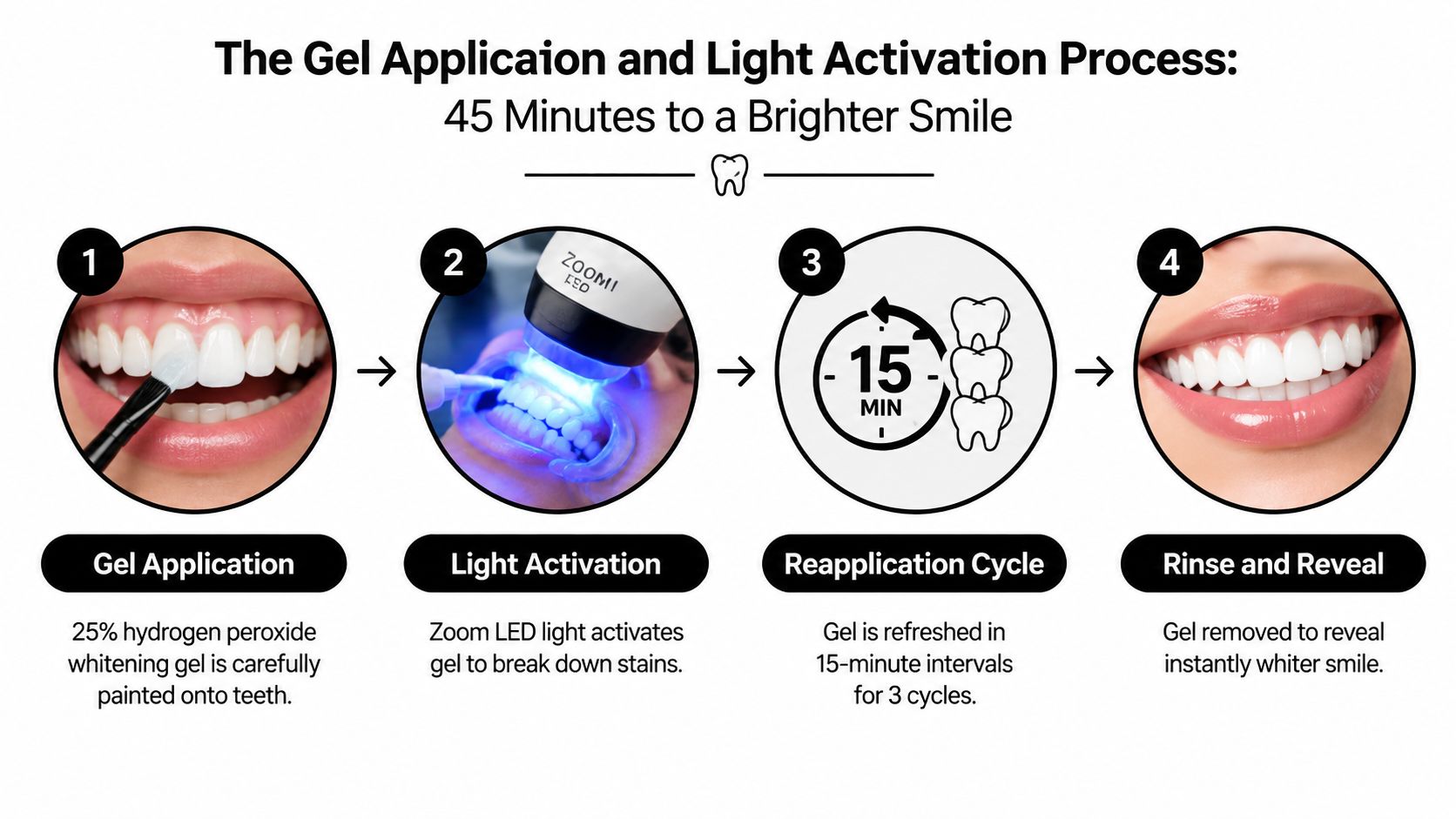
Philips' in-office Zoom system is designed around 25% hydrogen peroxide gel and a standard active whitening time of 45 minutes, usually delivered in three 15-minute cycles. Philips states that the system can whiten teeth by up to 8 shades in one visit (Philips Zoom Whitespeed 25% hydrogen peroxide kit).
The clinician paints the gel onto the visible surfaces of the isolated teeth. The peroxide breaks down stain compounds within the tooth, while the Zoom light is positioned according to the system's protocol. After the first cycle, the gel is removed, the teeth are assessed, and fresh gel is applied for the next cycle.
What the light actually contributes
The light is a visible part of the Zoom experience, but it shouldn't be presented as the only reason teeth whiten. The peroxide chemistry is the primary whitening mechanism, and clinical evidence doesn't support the assumption that more light automatically means a better result.
A clinical comparison of in-office protocols using 15% to 25% hydrogen peroxide reported rapid shade improvement of approximately 6 to 9 shade-guide units, with Zoom showing a 1 to 2 shade-unit advantage over a comparator kit at measured time points (Philips scientific overview of Zoom whitening). However, randomized data involving a 15% hydrogen peroxide Zoom2 system found that light activation didn't add meaningful whitening benefit compared with a no-light control.
That's why monitoring each cycle matters more than extending exposure. The clinician checks the shade response and your comfort, then decides whether to continue, modify, or stop according to the planned target.
The appointment may feel like a series of short, predictable stages. Some patients notice warmth or tingling, while others mainly notice the retractor and the need to keep still. A rinse and shade assessment follow the final cycle.
A visual walkthrough can help you understand the sequence before your appointment:
Managing Sensitivity and Ensuring Patient Comfort
Sensitivity is the concern I hear most often from people considering professional whitening. The honest answer is that temporary sensitivity can occur, especially with stronger peroxide concentrations, but discomfort isn't something a responsible dental team should dismiss or leave you to manage alone.
Peroxide can move through the tooth during bleaching and temporarily affect the nerves inside the tooth. Teeth may also feel more reactive after treatment as they recover from the whitening process. Gum recession, exposed root surfaces, cracks, large fillings, and a history of cold sensitivity can raise the likelihood of an uncomfortable experience.
Stronger isn't always better
A 2026 randomized clinical trial found that 35% hydrogen peroxide produced stronger whitening than 6% hydrogen peroxide, with a mean color-change difference of ΔE00 = 6.3. Sensitivity occurred in 74% of patients using the higher concentration compared with 44% using the lower concentration (2026 randomized clinical trial on hydrogen peroxide concentration).
That creates a practical trade-off. A patient seeking maximum brightness may accept a higher sensitivity risk, while someone with recession or a history of painful cold zings may value a gentler protocol more than the largest immediate shade change.
The team can screen for risk before treatment and use desensitizing strategies afterward. A 2025 clinical study reported transient sensitivity in 39.4% of Zoom2 patients and found that adding light activation didn't improve the whitening outcome (2025 systematic review and clinical evidence on whitening sensitivity). That evidence supports a straightforward conversation about comfort, rather than assuming the light makes every protocol superior.
Comfort measures are part of the treatment
Depending on your examination and history, the team may adjust the whitening approach, shorten exposure, use a desensitizing product, or recommend a staged plan. Tell the clinician if you feel sharp zings, burning at the gums, or discomfort that's more than mild. You never need to stay silent to “get through” whitening.
Your comfort is clinical information. It helps the team decide whether the current cycle is appropriate and whether the protocol should change.
Post-Care Instructions for Lasting Results
A brighter smile immediately after treatment is gratifying, but the first result isn't always the final settled shade. Teeth can appear to rebound slightly as they rehydrate, and randomized clinical evidence has documented significant color rebound by day 7 after an in-office gel-and-light protocol (clinical trial evidence on whitening rebound and sensitivity).
That change doesn't mean the treatment failed. It means the shade should be judged over time, not only in the dental chair under bright operatory lighting. Recent evidence also indicates that a combined in-office and at-home approach can maintain efficacy longer than in-office whitening alone, although questions about long-term durability and the added value of light activation remain (study of combined in-office and at-home whitening).
Protect the early result
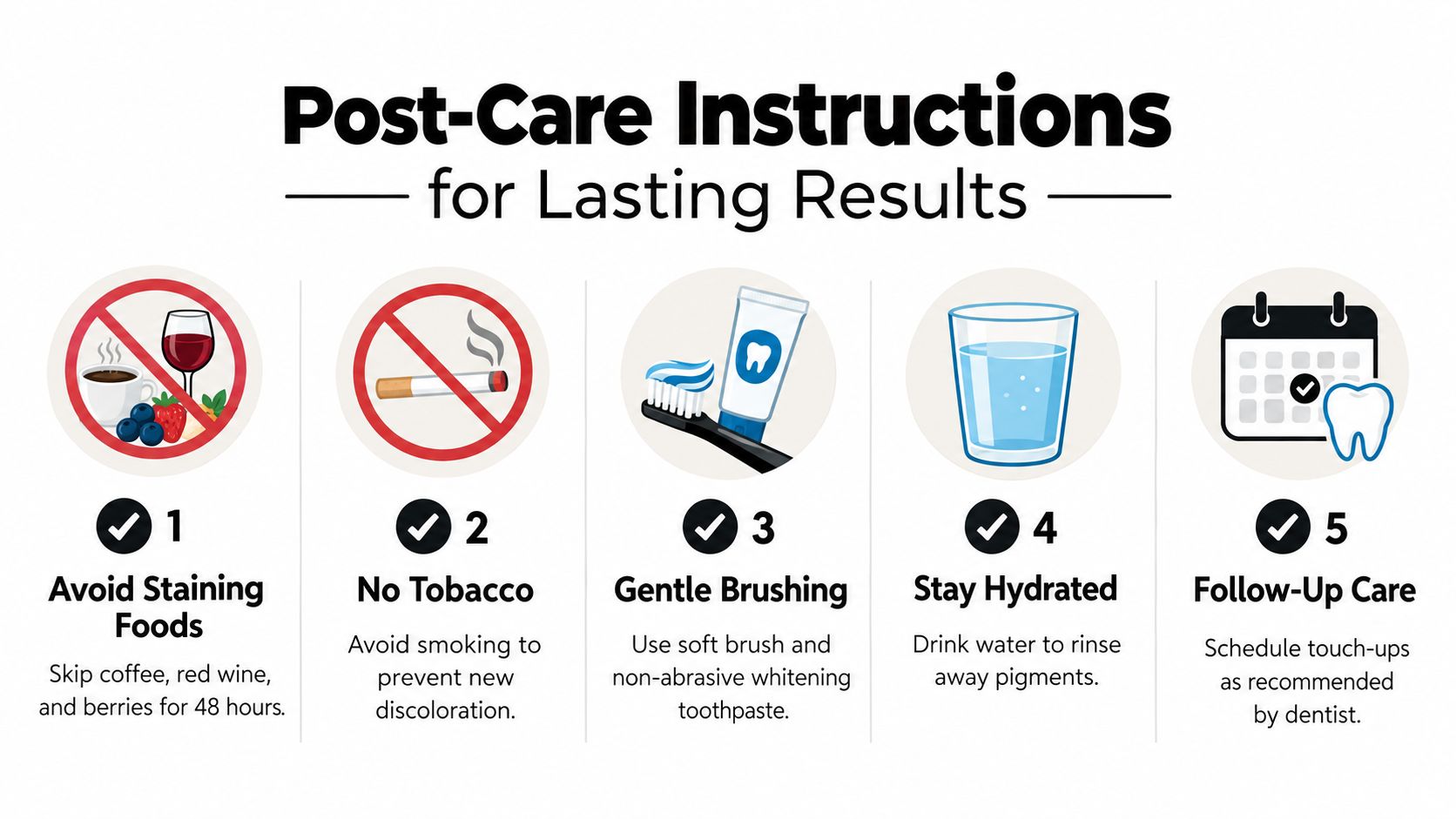
For the first 48 hours, many clinicians recommend limiting strongly pigmented foods and drinks while the teeth are more vulnerable to new staining. Practical choices include water, lighter-colored foods, and careful attention to beverages that contact the front teeth.
- Avoid common stain sources: Coffee, red wine, berries, and tomato sauce can add pigment during the early recovery period.
- Skip tobacco: Smoking and other tobacco exposure can quickly work against a brighter smile.
- Brush gently: Use a soft toothbrush and avoid aggressive scrubbing or highly abrasive products.
- Drink water: Water helps rinse away pigments and supports a cleaner-feeling mouth.
- Plan maintenance: Your dentist may recommend take-home trays or future touch-ups based on your shade goals and habits.
For a detailed home routine, review teeth whitening aftercare. Regular brushing, flossing, dental cleanings, and sensible maintenance usually matter more than chasing repeated high-intensity treatments.
Scheduling Your Cosmetic Dentistry Appointment in Las Vegas
Zoom whitening can be a sensible choice when you want a noticeable cosmetic change without beginning a larger restorative case. It may also be one part of a broader plan that includes veneers, crowns, Invisalign, or restorative dentistry. If you're searching for a dentist in Las Vegas, NV, the consultation should clarify whether whitening alone can deliver the appearance you want.
Aspiring Smiles Dental and Braces serves patients across Las Vegas, including Desert Shores, Sun City Summerlin, and Lone Mountain, with extended weekday and Saturday hours designed around work, school, and family schedules. Patients from Sunhampton, Monterrey, Mar-A-Lago, and Painted Desert Estates can also request an appointment to discuss cosmetic or general dental care.
Choosing the right next step
A whitening consultation may identify plaque or gum concerns that should be treated first. It may also reveal that a patient needs restorative planning, such as a crown, veneer, dental implant, or another solution for a damaged or missing tooth. Someone experiencing swelling, severe tooth pain, or a dental injury should seek an emergency dentist rather than scheduling cosmetic treatment first. Likewise, a planned tooth extraction or dental implants near me search requires a separate examination and treatment plan.
For readers interested in how dental facilities are planned and built, how much does a dental office build offers useful background on dental office construction considerations. For whitening itself, the more important decision is personal: whether your teeth and gums are ready, whether your shade goal is realistic, and whether you're comfortable with the maintenance involved.
Request your cosmetic dentist appointment in Las Vegas online or contact the practice by phone. The team can discuss Zoom whitening in office, sensitivity concerns, cleaning and exams, dental x-rays, Invisalign, veneers, implants, and other services during the appropriate consultation.
Aspiring Smiles Dental and Braces offers professionally supervised Zoom whitening in Las Vegas, with a personalized evaluation focused on comfort, shade goals, and lasting maintenance. Visit Aspiring Smiles Dental and Braces to request a consultation and take the next step toward a brighter, healthier-looking smile.