Emergency Dental Care Fort Myers: Your 2026 Local Guide
A cracked tooth during dinner. A crown that slips off before bed. A child who takes an elbow during a weekend game and suddenly has a tooth in their hand. Dental emergencies rarely happen when life is quiet, and they almost never feel manageable in the moment.
If you're searching for emergency dental care Fort Myers but need help in Las Vegas, NV, the first priority is simple. Stay calm, protect the tooth or injured area, and choose the right place for treatment. Many urgent dental problems can be treated quickly in a dental office, and knowing that can save time, stress, and unnecessary expense.
A Dental Emergency in Las Vegas Demands a Calm and Quick Response
On a Saturday night in Sun City Summerlin or after school near Lone Mountain, the pattern is often the same. Pain starts suddenly, worry spikes, and people aren't sure whether to wait, call a dentist, or head to the hospital. That uncertainty is part of what makes dental emergencies feel worse than they are.
This is also very common. The CDC reported an annual average of 1,944,000 ED visits for tooth disorders during 2020 to 2022, and adults ages 25 to 34 made up the largest share at 29.2%, which shows how often urgent dental problems disrupt daily life across the country according to the CDC dental emergency data brief.
What panic gets wrong
The first mistake people make is assuming every urgent dental problem belongs in a hospital ER. The second is waiting too long because they hope the pain will settle down on its own.
Both choices can make a bad day harder.
A severe toothache usually doesn't mean you need a hospital. A knocked-out tooth needs speed, not indecision. A broken filling may not look dramatic, but it can expose sensitive tooth structure and turn mild discomfort into constant pain by the next morning.
Practical rule: If the problem is centered on a tooth, filling, crown, or gum area and you're breathing normally, a dental office is often the right first call.
What a calm response looks like
Start by identifying the problem. Is it pain, swelling, bleeding, trauma, or a lost restoration? Then protect the area and avoid making it worse. Don't chew on the injured side. Don't keep testing the tooth. Don't put off a call because it's after hours.
Families in Desert Shores, Sunhampton, Monterrey, Mar-A-Lago, and Painted Desert Estates need the same thing in that moment. A clear plan. Not guesswork.
Here's the practical mindset that works:
- Control the immediate issue by rinsing gently or using a cold compress.
- Preserve anything that came out such as a crown, filling, or tooth.
- Get triaged quickly so you know whether you need a same-day dentist or emergency medical care.
What Counts as a Dental Emergency
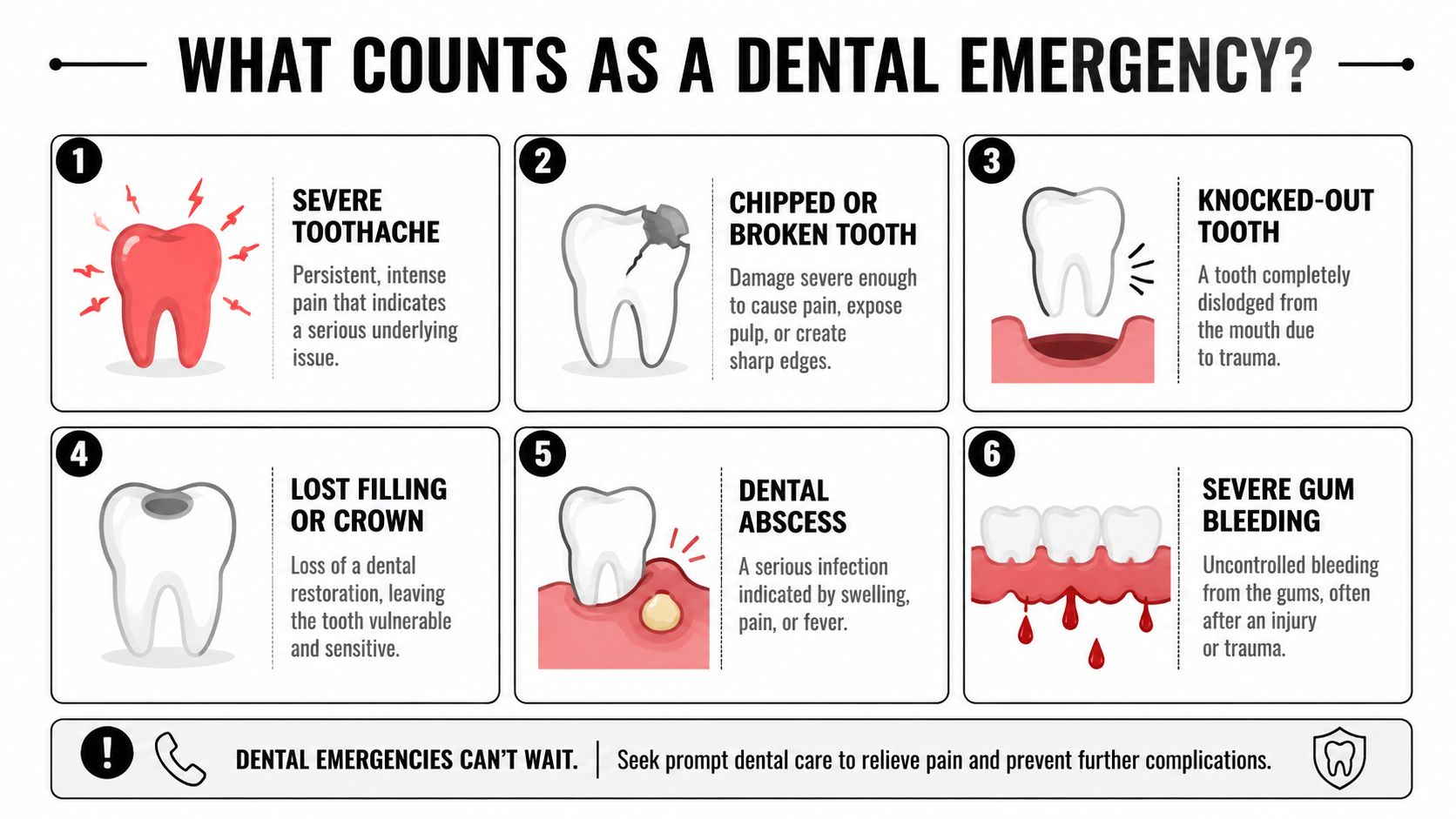
A dental emergency is any problem that threatens your health, your tooth, or your ability to function normally today. The fastest way to sort it out is to ask three questions. Is the pain severe or getting worse. Is there swelling, bleeding, or trauma. Could waiting until a routine visit raise the chance of infection or permanent damage.
Problems that usually need same-day dental care
Severe toothache
Strong, throbbing, constant pain usually needs prompt evaluation. Common causes include deep decay, inflammation inside the tooth, a crack, or infection. If you need help getting pain under control while you arrange care, our guide on how to stop severe tooth pain can help with safe first steps.
Chipped or broken tooth
A small chip with no pain can sometimes wait a short time. A larger fracture, visible missing tooth structure, sharp edge, or new sensitivity should be seen quickly. The trade-off is simple. Waiting may turn a repairable break into a tooth that needs more extensive treatment.
Knocked-out tooth
This is a true time-sensitive emergency. A tooth that is completely out of the mouth has the best chance of being saved when you act fast and get dental care right away.
Lost filling or crown
This can look minor and still become urgent. Once a restoration comes off, the exposed tooth may become sensitive, crack more easily, or shift enough to make replacement harder.
Problems that can turn serious quickly
Abscess or facial swelling
Swelling near a tooth or in the gums, a pimple-like bump, pressure, drainage, a bad taste, or pain with swelling can point to infection. If the swelling is spreading, you have trouble opening your mouth, or you feel sick overall, treat it as urgent.
Severe gum bleeding
Ongoing bleeding after trauma, after a recent extraction, or from an injured area needs prompt attention. Light bleeding from irritated gums is different from bleeding that continues despite pressure.
One sign changes the decision immediately. Swelling that affects swallowing, breathing, or the area under the jaw is no longer a routine dental office problem.
Problems that may wait for a regular appointment
Some issues can wait briefly if symptoms stay mild and stable:
- Minor sensitivity that is short-lived and manageable
- A tiny chip with no pain and no rough edge
- A loose retainer or appliance that is not cutting the cheeks or gums
- Food trapped between teeth that settles after gentle flossing
The hard part is that dental problems do not always stay in their lane. Mild sensitivity can become a sleepless night. A loose crown can become a cracked tooth. That is why a clear triage approach matters more than guessing based on appearance alone.
A practical triage rule
Use home care for short-term relief when symptoms are mild, stable, and limited to minor discomfort. Call an emergency dentist in Las Vegas the same day when you have significant pain, a broken tooth, a lost crown or filling with exposed tooth structure, a knocked-out tooth, swelling near a tooth, or bleeding that does not settle. Go to the hospital ER if the problem involves trouble breathing, trouble swallowing, rapidly spreading facial swelling, major facial trauma, or bleeding that will not stop.
In practice, the right first visit is often about diagnosis and stabilization. Some emergencies can be fully treated in one appointment. Others need pain relief, infection control, protection of the tooth, and a follow-up procedure once the area is calmer. That is normal, and it is often the safest approach.
Immediate First Aid You Can Do at Home
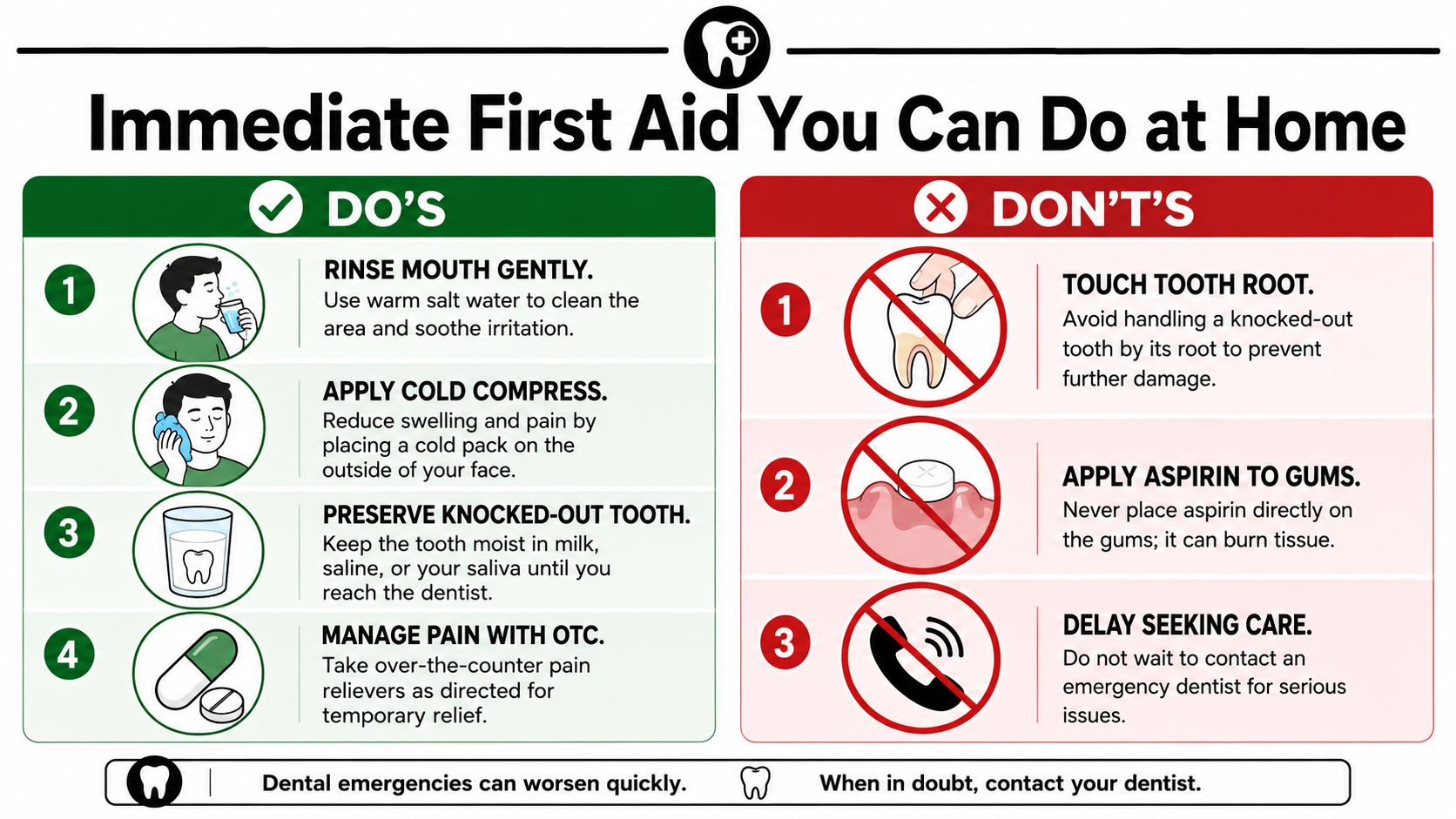
What you do before you get to the dentist can lower pain, protect the tooth, and prevent the situation from getting worse. The goal at home isn't to fix the emergency. It's to buy time safely.
Start with the basics
For many urgent dental problems, the first steps are simple:
- Rinse gently with warm water to clear debris.
- Use a cold compress on the outside of the cheek if there's swelling.
- Avoid chewing on the affected side.
- Take over-the-counter pain medicine as directed on the label, if you can safely use it.
One thing doesn't work and often makes matters worse. Don't place aspirin directly on the gum or tooth. It can irritate the tissue and won't treat the cause of the pain.
For extra guidance on pain relief before you're seen, this page on how to stop severe tooth pain is a useful next step.
What to do for the most common emergencies
If you have a severe toothache
Rinse the mouth gently. Floss carefully if food may be trapped, but don't dig around the area with sharp objects. Use a cold compress on the cheek if swelling is present.
If a crown or filling fell out
Keep the restoration if you still have it. Don't chew on that side, because the exposed tooth may crack or become much more sensitive.
If a tooth is chipped or broken
Rinse with warm water and save any pieces you can find. If the edge is sharp, avoid touching it with your tongue or chewing near it.
A short visual can help when things feel chaotic. This video walks through basic emergency steps.
If a tooth is knocked out
This is the situation where technique matters most. For a knocked-out tooth, there is a clinically validated 30-minute window for successful re-implantation. The tooth must be held by the crown, not scrubbed, and kept in cold milk or saliva to preserve the periodontal ligament cells, according to this guidance on knocked-out tooth first aid.
Use this sequence:
- Pick it up by the crown only. Don't touch the root.
- If it's dirty, rinse it gently. Don't scrub or scrape it.
- Try to keep it moist. Cold milk is preferred. Saliva is another option.
- Seek dental care immediately.
The biggest avoidable mistake is letting the root dry out while deciding what to do next.
What not to do
A few choices create more damage than people realize.
| Situation | What helps | What to avoid |
|---|---|---|
| Tooth pain | Rinse, cold compress, temporary pain control | Placing aspirin on gums |
| Broken tooth | Save pieces, protect the area | Chewing on the injured side |
| Lost crown | Keep the crown and call promptly | Throwing it away or waiting several days |
| Knocked-out tooth | Keep it moist and move fast | Touching the root or wrapping it dry |
Emergency Dentist or Hospital ER When and Where to Go in Las Vegas
The most useful question in a dental emergency isn't just “How bad is this?” It's “Who can treat the problem I have?”
Many emergency dental pages don't clearly separate dental office triage from ER-level red flags like airway compromise or uncontrolled bleeding. That gap matters for patients trying to avoid unnecessary hospital costs when a same-day dental visit is the more appropriate choice, as discussed in the ADA resource on dental care access and triage gaps.
When a dentist is usually the right first call
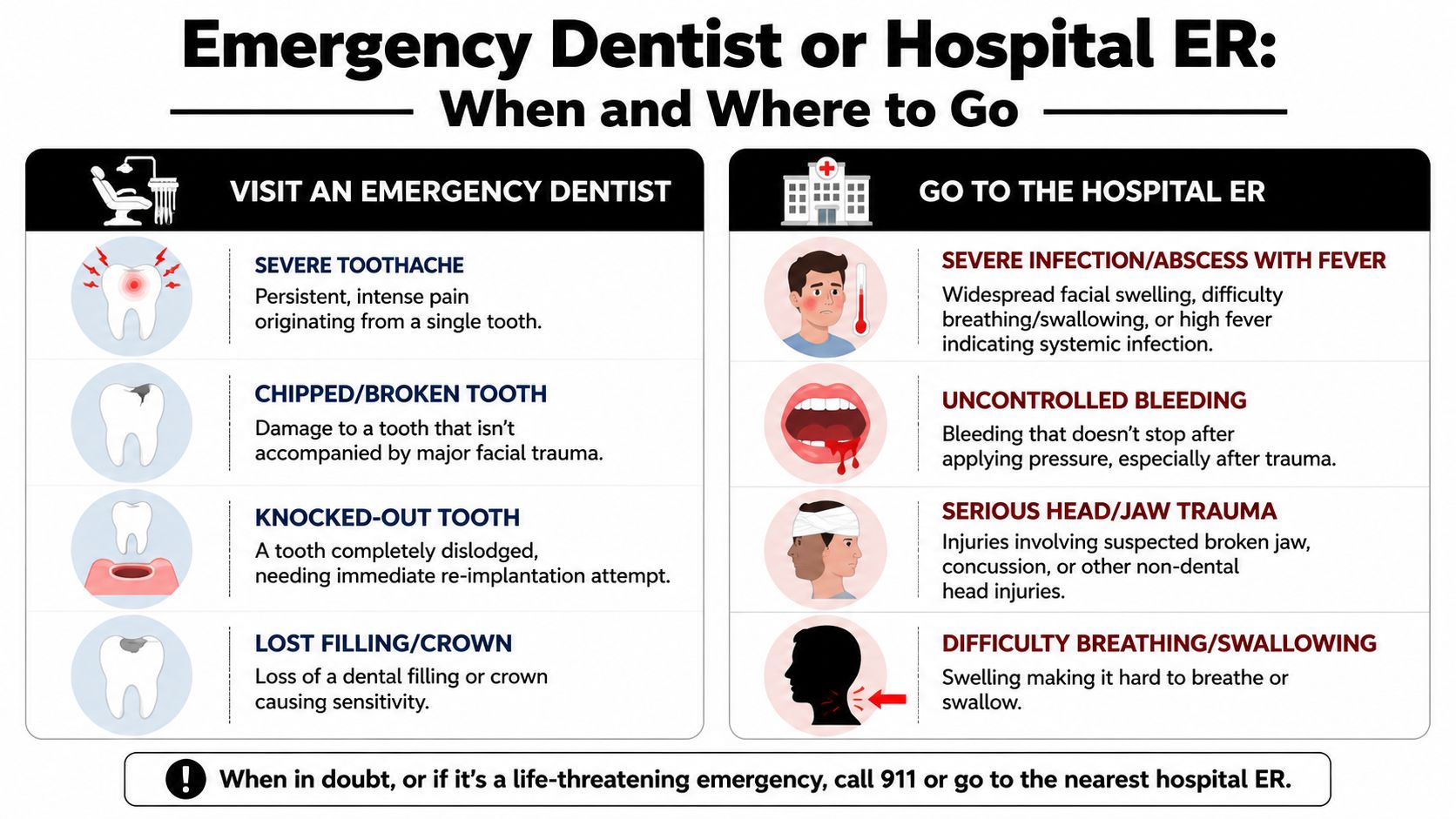
A dental office is generally best equipped for problems like these:
- Tooth pain that's intense, constant, or waking you up
- A chipped or broken tooth without major facial trauma
- A knocked-out adult tooth
- A lost crown or filling
- Localized swelling in the gum or around one tooth
- Pain when biting after a crack or fracture
These problems usually need a dental exam, imaging, and treatment aimed at the tooth itself. That's what a dentist is set up to provide.
When the hospital ER makes more sense
Go to the ER or call 911 if the emergency goes beyond the tooth and involves your breathing, circulation, or serious trauma.
Seek emergency medical care for:
- Difficulty breathing or swallowing
- Uncontrolled bleeding that doesn't stop with pressure
- Rapidly spreading facial swelling
- Severe trauma involving the jaw, head, or face
- Signs of a medical emergency along with dental injury
A simple rule works well. If the danger is to your airway, your ability to stop bleeding, or there's major trauma, choose the ER.
A quick decision guide
| Symptom | Best first stop |
|---|---|
| Throbbing toothache | Emergency dentist |
| Lost crown or filling | Emergency dentist |
| Broken tooth from biting | Emergency dentist |
| Knocked-out tooth | Emergency dentist |
| Swelling with trouble swallowing | Hospital ER |
| Heavy bleeding after injury | Hospital ER |
| Suspected broken jaw | Hospital ER |
This distinction matters in Las Vegas because the wrong stop often means slower relief. Hospitals can help with medical stabilization. They usually aren't the place for a crown replacement, reimplanting a tooth, or repairing a fractured molar.
Your Trusted Emergency Dentist in Las Vegas NV
When you need urgent dental care, convenience matters almost as much as clinical skill. A patient with swelling, a broken front tooth, or a lost crown doesn't want a long search. They want a practice that serves Las Vegas families, understands same-day urgency, and can move from diagnosis to treatment without sending them all over town.
That's especially important in neighborhoods like Desert Shores, Sunhampton, Sun City Summerlin, Monterrey, Lone Mountain, Mar-A-Lago, and Painted Desert Estates, where families are balancing work, school, traffic, and pain all at once.
What patients should look for in an emergency dentist
Not every office handles urgent cases the same way. The strongest option usually has a few things in place:
- Prompt scheduling for people in active pain
- Digital dental X-rays available during the visit
- Restorative services such as crowns and fillings
- Tooth extraction capability if a tooth can't be saved
- A plan for follow-up care if definitive treatment needs a second visit
If you're searching for a dentist near me, an emergency dentist, or even long-term solutions after trauma such as dental implants near me, the question isn't just distance. It's whether the office can diagnose the problem quickly and carry treatment forward.

Emergency care is more than pain relief
A good emergency visit should do more than numb the area and send you home. It should answer four practical questions:
- What's causing the pain
- Can the tooth be saved
- What needs to happen today
- What will restore function and appearance after the emergency passes
That last point matters more than many patients expect. An urgent appointment may lead to a filling, root canal evaluation, crown, or tooth extraction. If the tooth can't be preserved, the conversation may shift later to replacement options such as bridges or implants. For patients also thinking about appearance, the same office may provide ongoing restorative dentistry and even cosmetic dentistry after the urgent phase is handled.
The best emergency dental care doesn't stop at the crisis. It builds the path back to normal eating, speaking, and smiling.
Why local access changes outcomes
People do better when they can get examined quickly, return easily for follow-up, and speak with a team that knows their history. That's why local access in Las Vegas, NV matters. In an emergency, short travel time and straightforward scheduling reduce one more layer of stress.
What to Expect During Your Emergency Visit at Aspiring Smiles
It is 7:30 p.m., your tooth is throbbing, and you are trying to decide whether this will turn into a long, painful night. The visit should bring that uncertainty down fast. A good emergency appointment has a clear job. Find the source, control the immediate problem, and tell you what needs to happen today versus what can wait.
What happens before you arrive
The emergency visit starts on the phone. Our team asks direct questions about pain, swelling, bleeding, trauma, and whether a tooth is cracked, loose, or out of place. Those details help us sort the problem quickly and give you useful instructions before you leave home.
This first step matters because dental emergencies are not all handled the same way. A knocked-out tooth, facial swelling, and a broken filling do not move on the same timeline. Good triage saves time, stress, and in some cases, the tooth itself.
What the exam is designed to answer
Once you arrive, we focus on three questions. What is causing the problem. How urgent is it. What treatment will help you the most today.
That usually means an exam and, when needed, dental X-rays. We look for infection, deep decay, a cracked root, bite trauma, a failed crown or filling, or damage that is not obvious from the outside. In many urgent visits, the first appointment centers on diagnosis and stabilization, with final treatment scheduled after the pain and inflammation are under control, as noted earlier in this guide.
What we may do the same day
Same-day treatment depends on what we find and how inflamed the area is. If a crown has come off, it may be possible to re-cement it. If a tooth is chipped, we may smooth a sharp edge or place a protective repair. If pressure from infection is causing severe pain, treatment may focus on relieving that pressure and starting the right next step.
Some cases need a staged plan. That is common and often the safest choice. A badly broken tooth may need temporary protection first, then a final crown or extraction decision after a closer evaluation. If you are worried about cost at that moment, ask us directly. Patients often have more than one path, including options explained on our page about emergency dental care without insurance.
What you should leave with
You should leave with less pain, a written plan, and a clear follow-up timeline.
That plan may include what to eat, what to avoid chewing on, how to manage soreness, and what warning signs mean you should call us again the same day. If the emergency exposed a larger problem, we may recommend a return visit for a new patient exam, added imaging, or restorative treatment to protect the tooth long term.
Billing should be clear too. Emergency care often involves an exam, imaging, and either same-day treatment or a temporary fix. Fee communication matters, especially for self-pay patients, and RevGuard's patient charging rules outline why consistency and transparency matter.
An emergency visit should not leave you guessing. It should leave you stable, informed, and able to make the next decision with a calm head.
Managing the Cost of Emergency Dental Care
Cost stops many people from seeking care when they need it most. That hesitation is understandable, but waiting often lets a manageable problem become more painful and more complicated.
One reason to start with a dentist instead of the ER is price. The American Dental Association notes that ED visits for dental pain can cost roughly $400 to $1,500 per visit, while a visit to a dentist's office for the same issue typically costs about $90 to $200, according to this ADA-cited comparison of ER and dental office costs.
What patients should ask about right away
When you call a dental office with an emergency, ask practical questions:
- Does the office accept your insurance
- What part of the visit is diagnostic
- What treatment might be done the same day
- Are financing options available if more work is needed
Those questions matter because emergency care can involve more than one visit. The first appointment may focus on diagnosis and pain relief, while the final restoration happens later.
If you don't have insurance
Lack of dental insurance shouldn't keep you from getting evaluated. Many offices offer flexible ways to manage urgent treatment, and patients often have more options than they expect. If you're comparing your choices, this page on emergency dental care without insurance can help you think through the basics before you call.
If you're paying out of pocket, it also helps to understand how healthcare billing rules affect transparent pricing. A practical industry resource is RevGuard's patient charging rules, which explains why clear self-pay policies matter for patients as well as providers.
The trade-off that matters most
The cheapest move in the short term is often doing nothing. That's rarely the lowest-cost choice overall.
A lost filling can become a broken tooth. A painful tooth can become an infection. A crown that felt “annoying but manageable” can turn into a weekend emergency if it leaves the tooth unprotected too long.
Getting examined promptly gives you options. Options are what keep treatment simpler.
If you need fast, clear guidance from a dentist in Las Vegas, NV, contact Aspiring Smiles Dental and Braces. The team serves patients across Desert Shores, Sunhampton, Sun City Summerlin, Monterrey, Lone Mountain, Mar-A-Lago, and Painted Desert Estates with compassionate urgent care, family dentistry, restorative treatment, and long-term smile solutions. If you're dealing with tooth pain, a broken tooth, a lost crown, or another urgent problem, reach out now to request an appointment and get the next step handled quickly.