Full Mouth Dental Implants Cost in Las Vegas: 2026 Guide
Full mouth dental implants in Las Vegas often cost $18,000 to $35,000 per arch, and full mouth restoration nationally ranges from $17,000 to $90,000, with an average around $34,000 according to national implant cost data. If you're looking up full mouth dental implants cost right now, you're probably trying to answer a very personal question: can I finally fix my teeth, and can I realistically afford it?
For many people in Las Vegas, that search starts after years of putting up with failing dental work, missing teeth, loose dentures, pain while chewing, or the habit of smiling with lips closed. A patient may be managing around certain foods, avoiding photos, or worrying that a dental emergency is getting closer. Others are comparing a cosmetic dentist near me, a restorative dentist in Las Vegas, NV, or even an emergency dentist after another broken tooth makes the decision urgent.
The hard part isn't just the treatment. It's the uncertainty. Patients want a straight answer on cost, what affects it, what insurance may help with, and whether the result will feel worth it years from now. In Las Vegas neighborhoods like Desert Shores, Sunhampton, Sun City Summerlin, Monterrey, Lone Mountain, Mar-A-Lago, and Painted Desert Estates, that concern is the same. People want durable care, clear communication, and no surprises.
Your Guide to Full Mouth Dental Implants in Las Vegas
A patient sits in my chair after years of patchwork dentistry. A few teeth have crowns. One side does most of the chewing. A denture may be loose, or several teeth may be close to failing at once. At that point, another small repair often stops feeling like a good use of time or money.
Full mouth dental implants come up when the goal shifts from getting through the next emergency to rebuilding a smile on a steadier foundation. In Las Vegas, that conversation usually starts with cost, but patients are also trying to understand something more specific. They want to know what treatment will hold up, what maintenance will look like, and whether the plan fits their budget without surprises a year or five years later.

Why Las Vegas patients ask about cost first
That instinct makes sense. Full mouth treatment is a major restorative decision, not a routine visit like exams, x-rays, or a single filling. It affects how you eat, how you speak, how your bite feels, and how much follow-up care you may need over time.
In my experience, Las Vegas patients are not only asking, "What is the fee?" They are asking whether the quoted price includes sedation, extractions, temporary teeth, imaging, lab work, follow-up visits, and future maintenance. Those details matter because two treatment plans can sound similar and be priced very differently once everything is spelled out clearly.
Practical rule: If a quote looks unusually low, ask for an itemized breakdown and ask what happens after surgery, not just on surgery day.
What this means for real treatment decisions
"Full mouth implants" is a broad term. One patient may be a good candidate for a full-arch solution with fewer implants and a fixed bridge. Another may need gum treatment, tooth removal, bone grafting, or a phased plan before final teeth can be made safely and comfortably.
A higher fee does not automatically mean better care. A lower fee does not automatically mean better value. The more useful question is whether the treatment plan matches your bone support, bite, health history, esthetic goals, and long-term maintenance needs.
That is where a local discussion matters. A national article may give a wide price range, but it usually does not explain how Las Vegas practice fees, specialist referrals, lab choices, financing terms, and follow-up care can change what you pay.
When full mouth treatment may be worth discussing
A full-arch or full-mouth implant discussion often makes sense if you are dealing with problems like these:
- Several failing teeth at once: Repeated repairs can add up quickly without giving you a stable long-term result.
- Loose or uncomfortable dentures: Many patients want more security while eating, laughing, and speaking.
- Heavy wear or widespread damage: Rebuilding one tooth at a time is sometimes possible, but not always the smartest plan.
- A smile that affects daily confidence: Full mouth cases often improve function and appearance together.
This treatment is about more than looks. Patients usually notice the biggest difference in ordinary moments. Eating in public feels easier. Speech feels more natural. Life stops revolving around which teeth might break next.
Understanding Your Investment A Breakdown of Full Mouth Implant Costs
A Las Vegas patient may come in after seeing one ad for a full arch at a low starting price and another office quoting a much higher number for what sounds like the same treatment. In practice, those numbers often include very different things. The key question is what is built into the plan, what may be billed separately later, and what kind of result the treatment is designed to deliver.
What you are actually paying for
A full mouth implant fee usually covers several layers of care. Surgery is only one part of it. Planning, imaging, sedation in some cases, the temporary teeth, the final teeth, lab fabrication, and follow-up visits can all affect the total.
At the treatment level, the core components are still the same:
| Part | What it does | Why it matters |
|---|---|---|
| Implant post | Sits in the jawbone like an artificial root | Provides the base support |
| Abutment or connector | Joins the implant to the prosthesis | Affects fit, stability, and how parts seat together |
| Crown, bridge, or full-arch prosthesis | The visible teeth | Shapes appearance, bite, speech, and chewing comfort |
For a full arch, the fee is usually based on a system, not a simple per-tooth calculation. That is why two treatment plans can both be called "full mouth implants" and still land in very different price ranges.
Why full mouth quotes vary so much in Las Vegas
Local costs are shaped by more than the implants themselves. In Las Vegas, the final number can shift based on the imaging used, whether a specialist is involved, the type of temporary teeth provided, and the lab making the final prosthesis. A zirconia final arch will be priced differently from an acrylic option. A case that can be completed with fewer implants may cost less up front, but that has to make sense for the patient's bone support, bite forces, and long-term goals.
Patients comparing offices should ask whether the quote is for one arch or both, whether sedation is separate, and whether the office is including delivery of the final teeth or only the surgical phase.
If you are reviewing options for a fixed full-arch solution, our page on All-on-4 dental implants in Las Vegas explains how that approach is commonly structured.
Costs that may appear before the implants are placed
This is the part generic national articles often skip. Many patients need work done before the implants ever go in, and those steps can change the budget in a meaningful way.
Common pre-treatment items include:
- 3D imaging and records for diagnosis and surgical planning
- Extractions for teeth that cannot be saved
- Bone grafting or ridge preservation if added support is needed
- Gum treatment if active infection or inflammation is present
- Temporary appliances during healing in staged cases
I tell patients this plainly. A low advertised number is not helpful if it leaves out the work needed to make treatment safe and predictable.
Bundled pricing versus itemized pricing
Both approaches can be reasonable, but they serve patients differently.
A bundled fee can make planning easier because it groups the main steps into one number. An itemized estimate can be easier to audit because you can see each charge line by line. Problems start when a patient is given a package price without a clear explanation of what happens if treatment takes more visits, needs extractions, or requires a replacement temporary.
Ask these questions before saying yes:
- How many implants are planned for each arch?
- Does the quote include temporary teeth and final teeth?
- Are extractions, sedation, and imaging included?
- Who makes the final prosthesis, and what material is planned?
- What follow-up care is included during healing?
- What maintenance or repair costs could come later?
That last question matters more than many patients realize.
The materials and design choices matter
A lower quote may reflect a removable design, fewer included visits, lower-cost materials, or a temporary prosthesis that is being mistaken for the final result. A higher quote may include more planning time, stronger final materials, more detailed lab work, and longer follow-up.
Patients who are researching different types of implants often find that the name of the treatment is only the starting point. The design of the restoration, how it is maintained, and what is included in the fee matter just as much as the implant brand itself.
Clear pricing builds trust. Patients should be able to see what they are buying, what they may need later, and why one plan costs more than another.
Comparing Your Full Mouth Restoration Options in Las Vegas
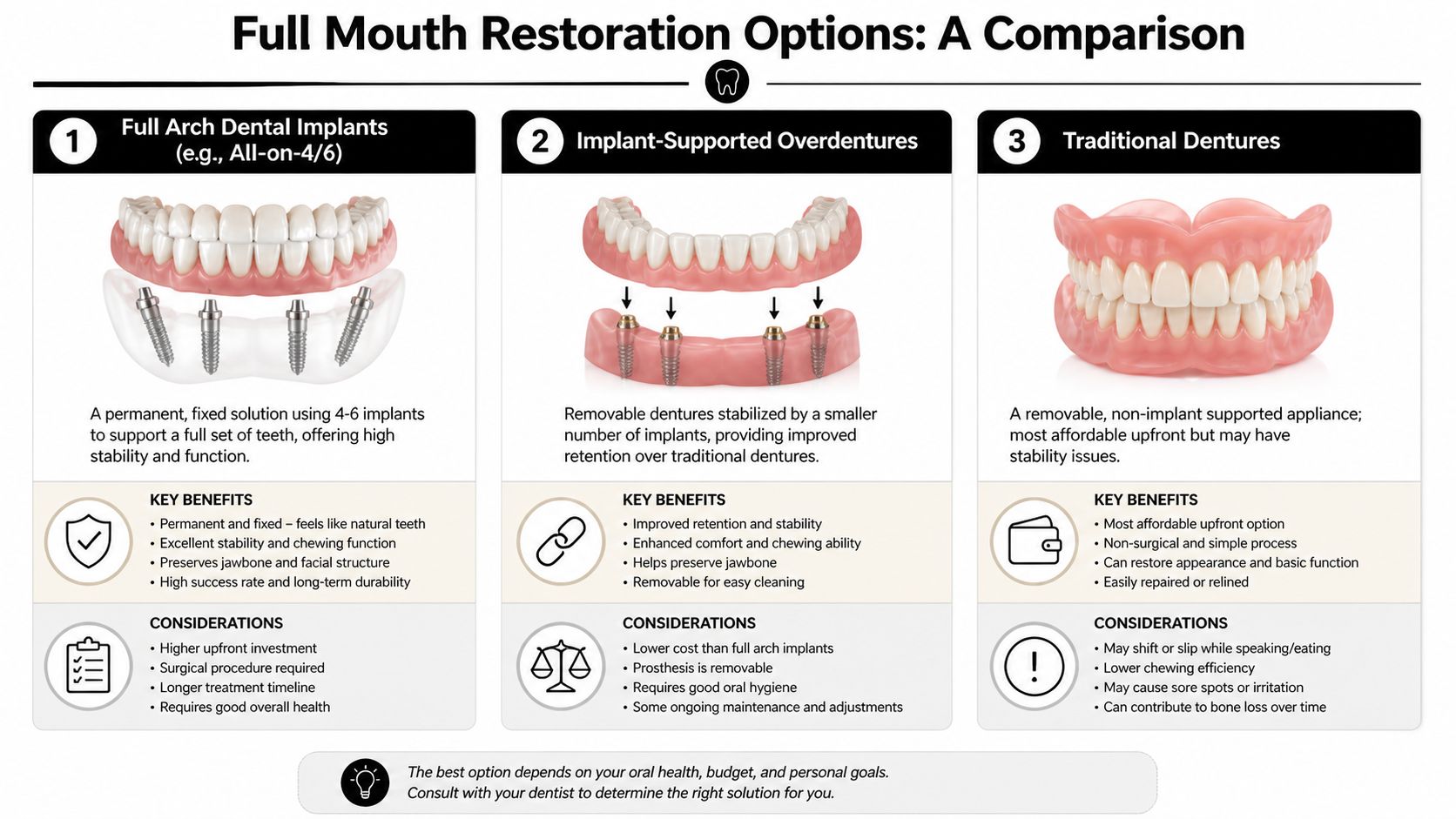
Not every full mouth solution works the same way. Some are fixed. Some are removable. Some are designed to reduce surgery. Others involve more hardware and a larger upfront investment.
All-on-4 and All-on-6
For many patients, All-on-4 is the most practical middle ground between stability and cost. This technique uses four specially angled implants to support a full arch, and it often avoids bone grafting in 80-90% of cases, which can lower overall costs by 20-40% compared with traditional methods that use 6-8 implants according to this overview of the All-on-4 technique.
That matters in real life because fewer implants can mean a simpler surgery and less preparatory treatment for the right patient. It's one reason many people who have been told they have bone loss still ask about full-arch implants instead of assuming they aren't candidates.
If you'd like a more patient-focused overview of different types of implants, that guide can help you understand where full-arch systems fit among other implant options. Patients considering this approach in Las Vegas can also review All-on-4 dental implants in Las Vegas to see how a full-arch treatment is typically presented in a clinical setting.
Implant-supported dentures
Implant-supported dentures, often called snap-on dentures, sit between traditional dentures and fixed full-arch implants. They use implants for retention, but the prosthesis is removable.
For many patients, the appeal is budget control. This option can be less expensive than a fixed bridge while still offering better hold than a conventional denture. It can be a good fit for patients who want more confidence during eating and speaking but aren't ready for a fixed restoration.
The trade-off is maintenance. Because the appliance is removable, daily handling and long-term component wear are part of the picture. Some patients like that flexibility. Others strongly prefer a solution that stays in place.
Individual implants across the mouth
This is the most extensive route. It may offer the most tooth-by-tooth replacement, but it also tends to involve more surgery, more components, and a higher total cost.
That option isn't automatically wrong or excessive. In selected cases, it's appropriate. But for many patients with widespread tooth loss, replacing every tooth individually isn't the most efficient plan.
| Option | Best known for | Main trade-off |
|---|---|---|
| All-on-4 or All-on-6 | Fixed full-arch support with fewer implants | Not ideal for every anatomy or bite pattern |
| Implant-supported dentures | Better retention with removable design | More day-to-day handling and attachment upkeep |
| Individual implants | Highly customized replacement approach | More complex treatment and higher total investment |
The best option is the one that matches your bone support, bite, expectations, and willingness to maintain it. The "best" treatment on paper can still be the wrong treatment for you.
How patients usually choose
Patients in neighborhoods like Painted Desert Estates and Sunhampton often narrow the decision based on three things:
- How fixed they want the teeth to feel
- How much surgery they're comfortable with
- How they want to balance upfront cost with maintenance later
A careful clinical exam matters more than an online estimate. Good treatment planning isn't about selling the biggest case. It's about finding the most predictable solution for the mouth in front of you.
What Factors Influence the Final Cost of Your Dental Implants
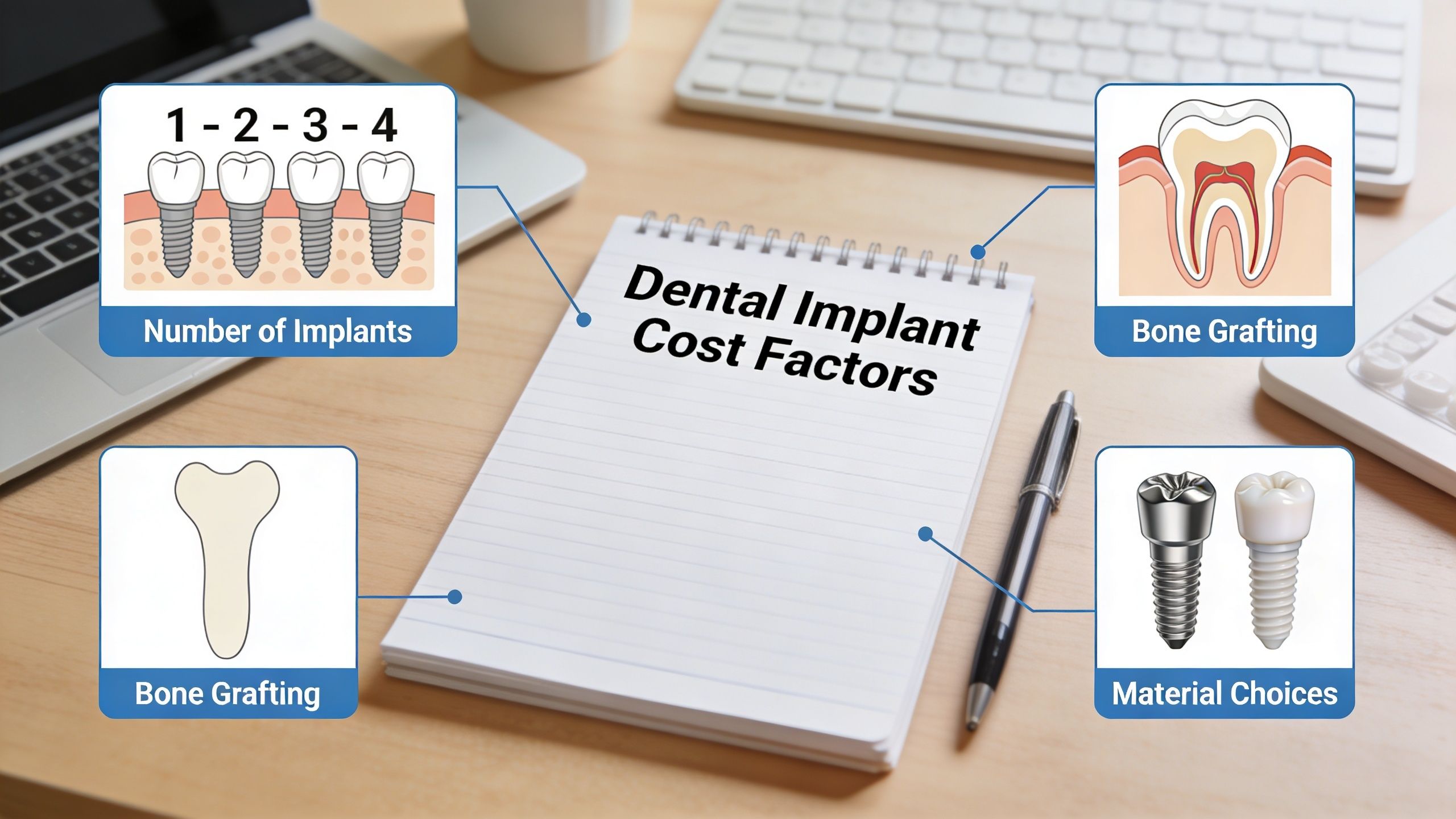
Two Las Vegas patients can both ask for "full mouth implants" and receive very different treatment plans. That usually comes down to four things: the prosthetic material, the amount of surgery, the level of diagnostic planning, and the judgment behind the case design.
The materials used for your new teeth
Your final teeth can be made from different materials, and that choice affects both the fee and how the restoration performs over time. Some options are more budget-conscious at the start. Others cost more because they offer a different balance of strength, esthetics, repairability, and wear.
I advise patients to choose material based on chewing forces, smile goals, and habits, not just the initial number on the estimate. A patient who clenches at night may need a different prosthetic design than someone whose main priority is a natural look in photos and conversation.
The amount of surgery involved
Surgery is another major driver of cost. Some patients are ready for implant placement with minimal preparation. Others need extractions, bone grafting, sinus work, or treatment in phases so the foundation is stable before the final teeth are made.
That difference matters in real dollars and in treatment time.
A quote for full mouth implants in Las Vegas should make it clear whether it includes the surgical visits only, or also the preparatory care that often determines whether the result will last. Patients who want more context on long-term value often ask whether dental implants are worth the investment. That is the right question to ask, because the least expensive surgical plan is not always the one with the lowest lifetime cost.
The planning and diagnostic side
Good implant treatment is planned before the first appointment in the surgical chair. CBCT imaging, digital scans, bite analysis, photographs, and restorative planning all add time and expense, but they also reduce guesswork.
This is one area where online estimates often fall short. A low quote may leave out records, surgical guides, or the extra planning needed for a patient with a collapsed bite, uneven bone levels, or years of dental wear. In a city like Las Vegas, where patients often compare offices across a wide price range, that missing detail is one of the biggest reasons estimates can look similar at first and feel very different once treatment begins.
The dentist's experience and case selection
Experience affects cost, but it also has a significant impact on decision-making. Full mouth implant cases are not only about placing implants correctly. They also involve choosing who is a good candidate for immediate teeth, who needs staged treatment, and when a simpler option may be safer and more predictable.
That judgment can prevent expensive problems later.
Patients with advanced gum disease, heavy grinding, multiple broken teeth, or old dental work that has been patched for years often need a more careful approach. In those cases, part of what you are paying for is a plan that fits your mouth, your health history, and your budget without hiding the likely costs along the way.
Beyond the Initial Price Long-Term Value and Potential Hidden Costs
The upfront fee is only part of the story. Full mouth implant treatment also has a long-term ownership cost, a detail many generic articles fail to address.
Maintenance isn't optional
Implants aren't "set it and forget it" dentistry. They need regular home care, professional maintenance, and periodic evaluation of the prosthesis, bite, and surrounding gum tissue.
According to this long-term cost discussion, peri-implantitis can affect up to 43% of implants over 5-10 years, annual specialized cleanings can cost $200-$500, and a full prosthesis may need replacement after about a decade. Those aren't reasons to avoid implants. They're reasons to go into treatment with open eyes.
Where hidden costs usually come from
Most surprise expenses don't come from the initial surgery. They come later, in situations like these:
- Inflamed implant tissue: Problems around implants can require additional treatment and monitoring.
- Wear on the prosthesis: Teeth and framework components take real chewing forces every day.
- Missed maintenance: Skipping routine care can turn a manageable issue into a larger repair.
- Bite changes over time: Adjustments may be needed to protect the restoration.
Patients who compare only the starting quote can miss this bigger picture. A lower-priced treatment that requires more repairs, more remakes, or more frequent interventions may not be the less expensive choice in the long run.
Cheap dentistry often becomes expensive when it has to be redone.
Why quality at the start matters
Careful planning, accurate fit, and realistic maintenance coaching are essential. A patient should know how to clean around the implants, how often the restoration needs to be checked, and what signs mean it's time to come in sooner.
For many people, the value of full mouth treatment is measured over years of meals, conversations, and ordinary daily comfort. If you're still deciding whether the investment makes sense, this perspective on whether dental implants are worth it can help frame the decision beyond the initial bill.
What works and what doesn't
What works is choosing a treatment plan you can realistically maintain. What doesn't is stretching into a complex solution if you're unlikely to follow through on hygiene, cleanings, or repairs when needed.
The strongest full mouth results usually come from a combination of good surgery, a prosthesis matched to the patient, and long-term follow-up. When one of those pieces is missing, the costs don't disappear. They just show up later.
Financing Your New Smile Insurance and Payment Options in Las Vegas
For many families, the first practical question isn't clinical. It's financial. They want to know how to move forward without guessing.
Insurance usually helps selectively
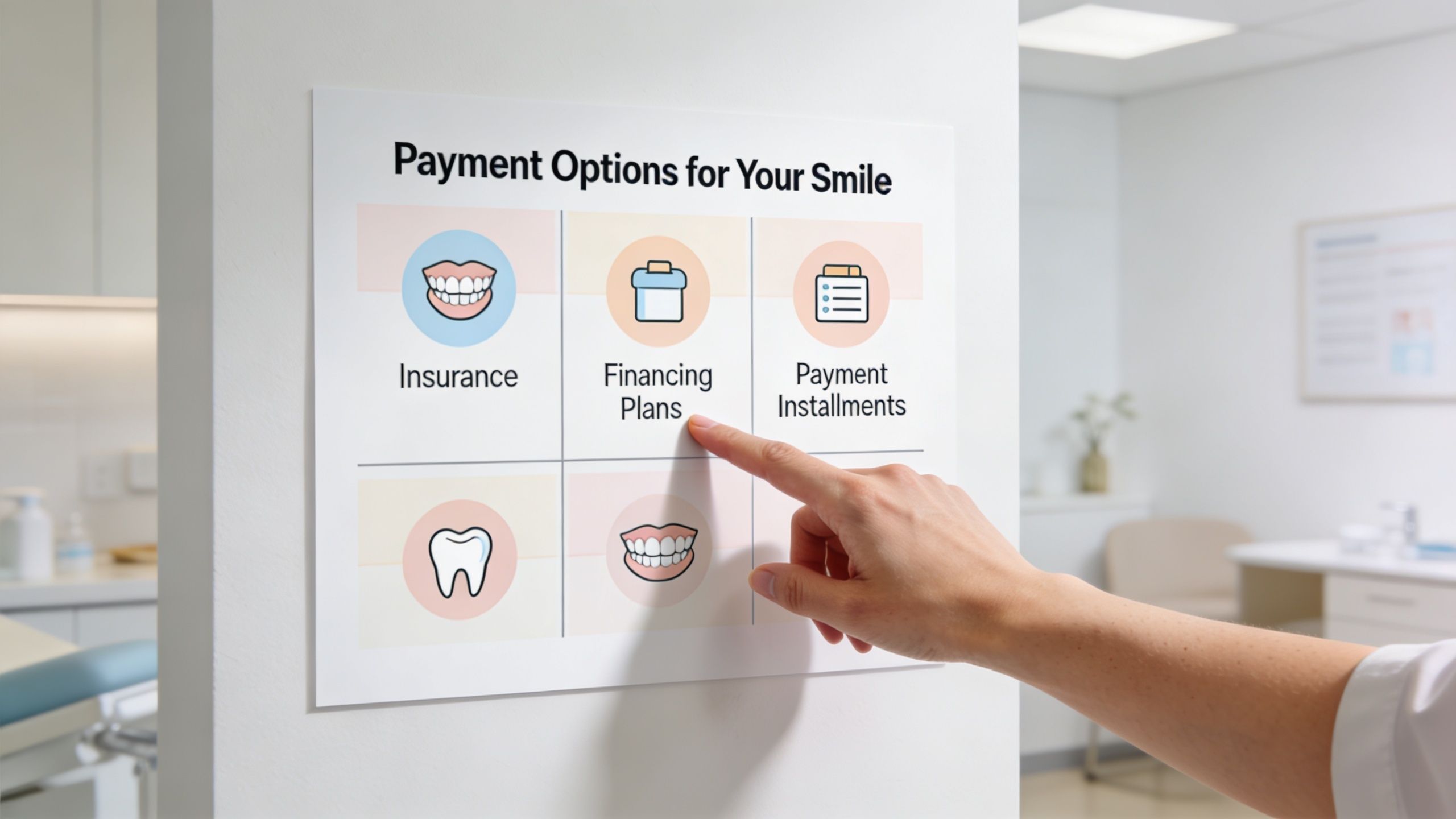
In Las Vegas, implant care can run higher than national pricing. In markets like Las Vegas, costs can be 15-25% higher than national averages, and while traditional insurance is often limited, some Medicare Advantage plans in Nevada may reimburse up to $5,000 per arch for qualifying seniors, according to this discussion of local implant financing and coverage.
That doesn't mean insurance covers everything. In many cases, it may contribute to portions of treatment rather than the entire full-arch procedure. Patients in Sun City Summerlin often ask specifically about Medicare Advantage, and that question is worth reviewing carefully before treatment starts.
A practical way to approach the money side
When patients ask about affordability, the most useful path is usually this:
- Verify your benefits first. Don't assume implants are excluded or included based on a summary.
- Ask for a written treatment plan. You need to see what parts of care are bundled and what may be separate.
- Review financing at the same time. Insurance and financing are often used together, not one or the other.
- Think beyond the deposit. Monthly affordability matters more than reacting to the total number alone.
If you're comparing family coverage broadly, this overview of Pounds Health Insurance for your family may be a helpful starting point for understanding how dental benefits can fit into a larger household plan.
Flexible payment matters because timing matters
Many people don't pursue treatment because they assume they must pay the entire amount upfront. In reality, dental offices often work with phased payments, outside financing, or membership-style savings arrangements for patients without strong dental coverage.
A useful financing conversation should answer:
- What can insurance realistically contribute?
- Can treatment be staged if needed?
- Are there monthly payment options?
- What fees are due before surgery versus later?
For patients who like seeing financing topics explained verbally, this short video offers additional context:
The local reality in Las Vegas
Because local costs can run higher, financial planning matters more here than patients often expect. The goal isn't just to find a way to start. It's to choose a plan you can finish and maintain.
That includes asking about follow-up care, prosthesis maintenance, and future service needs before you commit. A beautiful quote on day one isn't enough if the ongoing care feels unclear afterward.
What to Expect on Your Journey at Aspiring Smiles Dental
The first visit usually starts with conversation, not surgery. Patients come in carrying different concerns. Some are worried about pain. Others are embarrassed by the condition of their teeth. Many seek an honest opinion after years of avoiding the issue.
Your consultation and planning visit
A full mouth implant consultation typically includes a detailed exam, digital imaging, discussion of your health history, and a close look at what's still working and what isn't. If you're from Lone Mountain, Mar-A-Lago, or nearby parts of Las Vegas, the experience should feel calm and organized, not rushed.
The important part of this visit is clarity. You should leave knowing whether the likely path is a fixed full-arch option, implant-supported denture treatment, staged restorative care, or something more conservative.
Patients usually feel less anxious once they can see the plan. Uncertainty is often harder than the treatment itself.
The treatment phase
Once the diagnosis is clear, the plan moves into sequence. That may include removing failing teeth, preparing the bone and gums, placing implants, and providing a temporary or transitional set of teeth while healing progresses.
Comfort matters here. Sedation options, clear post-op instructions, and scheduled follow-up visits help make the surgical day more manageable than many people expect. Patients often imagine the procedure will feel more chaotic than it is.
Healing, fit, and long-term follow-up
After surgery, the focus shifts to healing and function. The team monitors tissue health, implant integration, bite balance, and how the temporary or final restoration is fitting in daily life.
This phase matters because small issues are easiest to fix early. Pressure spots, cleaning challenges, speech adjustments, and bite refinements are all normal parts of fine-tuning a major restorative case.
A good implant experience doesn't end when the teeth are delivered. It continues through maintenance, periodic checks, and making sure the smile still works well in real life, not just in the operatory.
Frequently Asked Questions About Full Mouth Implants
Does full mouth implant treatment hurt?
The procedure itself is managed with local anesthesia, and many patients also choose sedation to stay more comfortable. Most of the discomfort people worry about is tied to healing afterward, not to the surgery itself. Clear instructions, rest, and follow-up support make a big difference.
How long does the process take?
That depends on your starting point. Some patients move through treatment in a more direct way. Others need extractions, healing time, or staged restorative steps before the final teeth are delivered. The right timeline is the one that protects the long-term result.
Is fixed always better than removable?
Not always. Fixed full-arch restorations appeal to patients who want teeth that stay in place. Removable implant-supported dentures can still be a strong solution for the right person, especially if cost, hygiene access, or anatomy makes that route more practical.
Which material is better for the final teeth?
That depends on your bite, goals, and maintenance expectations. Some materials are chosen for appearance and strength. Others can make treatment more accessible on the front end. This is one of the most important parts of treatment planning because it affects both cost and long-term wear.
Am I too far gone for implants?
Many people assume they are. Some aren't. Others may still qualify for a full-arch approach even if they've had years of dental problems. The only reliable way to know is a clinical exam with imaging.
Should I fix one problem tooth at a time instead?
Sometimes yes. Sometimes that's exactly what keeps patients stuck in an expensive cycle of repeated repairs. If several teeth are failing together, a full mouth plan may be more efficient and more predictable than patching one area after another.
If you're comparing options for full mouth dental implants cost and want a clear, local opinion, Aspiring Smiles Dental and Braces offers a full range of implant, restorative, cosmetic, and family dental care in Las Vegas, NV. Whether you're searching for a dentist near me, dental implants near me, a cosmetic dentist near me, or help after a tooth extraction or dental emergency, you can schedule a consultation to get a personalized evaluation, a transparent treatment plan, and practical guidance on insurance and payment options.