Emergency Dental Number in Las Vegas: Call Aspiring Smiles
If you're searching for an emergency dental number, you're probably dealing with pain, swelling, a broken tooth, or a mouth injury that can't wait. In that moment, you don't need vague advice. You need to know who to call, whether it's urgent, and what to do in the next few minutes.
For families in Las Vegas, NV, including Desert Shores, Sunhampton, Sun City Summerlin, Monterrey, Lone Mountain, Mar-A-Lago, and Painted Desert Estates, the right move is usually simple. Call a dentist first for a dental problem, unless you're having trouble breathing, severe uncontrolled bleeding, or another medical emergency that belongs with 911.
Your Trusted Emergency Dentist in Las Vegas
It usually starts fast. You're eating and hear a crack. Your child wakes up crying from tooth pain. Your face starts swelling late at night. Panic sets in because you don't know if this is a dentist problem, an ER problem, or something you should just try to sleep off.
Don't guess.
If the issue is your tooth, gums, crown, filling, jaw pain from a dental source, or an oral infection, calling a dedicated emergency dentist is usually the fastest path to real treatment. In the United States, tooth disorders led to an average of 1.9 million emergency department visits annually from 2020 to 2022, according to CDC data on tooth-related emergency department visits. A hospital can help with pain control and immediate safety concerns, but it often doesn't provide the definitive dental treatment that solves the problem.
That's why I tell patients to save the emergency room for true medical danger, not routine dental crises that feel dramatic but need dental care.
What a local emergency call should do
A good emergency dental number should connect you with someone who can do three things quickly:
- Sort the urgent from the dangerous so you know whether to come in, monitor at home briefly, or call 911
- Give simple first-aid instructions that protect the tooth and reduce damage
- Get you scheduled fast so you aren't stuck waiting and worsening
Practical rule: Dental pain needs a dentist. Breathing problems need 911.
If you're the kind of person who wants systems to work clearly when stress is high, it can help to find your ideal healthcare solution and understand how responsive patient communication should feel. In an emergency, clear call handling matters.
Why local care beats guessing online
Las Vegas patients often waste valuable time trying to decide if they should wait until morning. That's the wrong instinct when pain is intense, swelling is growing, or a permanent tooth has been knocked out. In neighborhoods like Sun City Summerlin and Lone Mountain, a nearby dental office is far more useful than endless internet searching.
If your tooth hurts badly, your face is swelling, or you've broken a tooth, call an emergency dentist now. Waiting rarely makes a true dental emergency cheaper, simpler, or less painful.
What Qualifies as a Dental Emergency
Not every dental problem needs treatment in the next hour. Some do. The key is knowing the difference.
A dental emergency is any oral problem that involves severe pain, infection, trauma, uncontrolled bleeding, or risk of losing a tooth. A minor annoyance can wait. A spreading infection should not.
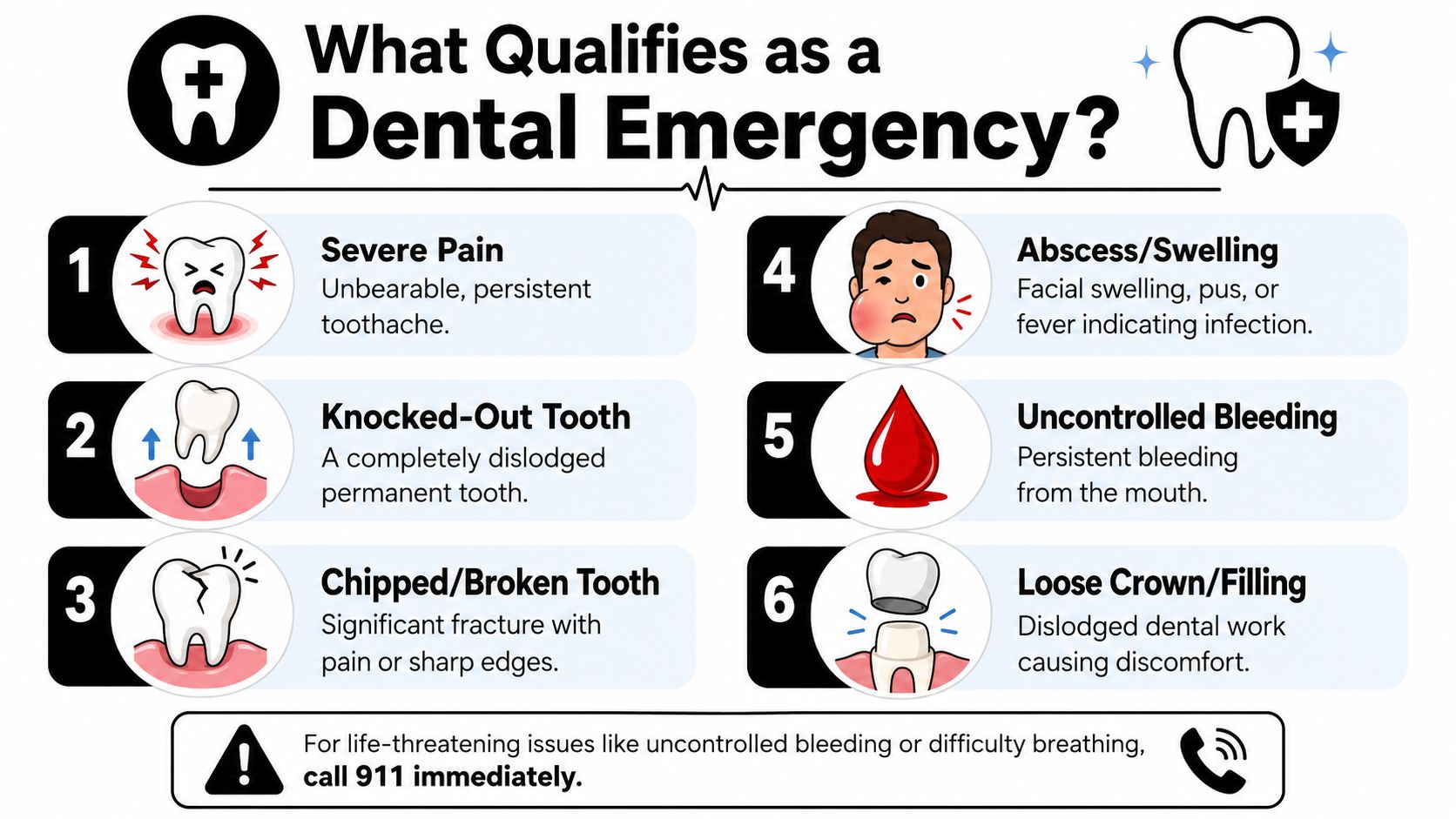
A useful line to remember is this: if the problem is getting worse quickly, interfering with eating or sleeping, or involves trauma or swelling, treat it as urgent and call.
A 2023 ADA study found that 42% of ER visits for dental issues could be diverted to dental clinics with proper triage, as noted in this overview of emergency dental triage guidance. That's a strong reminder that many people head to the wrong place because nobody helped them sort the situation properly.
Call 911 for these situations
Some problems are not dental-office emergencies. They are medical emergencies.
- Difficulty breathing
- Trouble swallowing because of swelling
- Severe uncontrolled bleeding
- Major facial trauma
- Loss of consciousness or suspected head injury
If any of those are happening, stop reading and call 911.
Call an emergency dentist for these situations
These are the classic reasons to use an emergency dental number:
- Knocked-out permanent tooth
- Severe toothache that won't let up
- Facial or gum swelling
- Abscess, pus, or bad taste with pain
- Broken or cracked tooth with pain or sharp edges
- A crown, bridge, or filling that came off and leaves the tooth exposed
- Bleeding after dental work that doesn't settle down
- Jaw pain or bite changes after a blow to the mouth
Swelling is the symptom people ignore most often. It's also the one I worry about most when infection may be involved.
Is It a Dental Emergency Your Action Guide
| Symptom | Level of Urgency | Immediate Action |
|---|---|---|
| Knocked-out permanent tooth | Emergency now | Pick it up by the crown, keep it moist, and call immediately |
| Severe toothache with throbbing pain | Same-day emergency | Rinse gently, use a cold compress on the outside, and call |
| Facial swelling or suspected abscess | Same-day emergency | Call right away. If breathing or swallowing is affected, call 911 |
| Broken tooth with pain | Urgent | Save pieces if possible, rinse gently, and get seen quickly |
| Lost filling or crown with mild discomfort | Urgent but often not 911-level | Call for prompt care and protect the tooth |
| Mild tooth sensitivity with no swelling or trauma | Soon, but not immediate | Book an exam and avoid extremes of hot and cold |
What people get wrong
The biggest mistake is minimizing an infection because the pain comes and goes. The second biggest mistake is going to the ER for a purely dental issue that needs a dentist's tools, dental x-rays, and treatment planning.
If you're deciding between "wait and see" and "call now," call now. You can always be told it's less urgent. That's far better than discovering too late that it wasn't.
Immediate First-Aid Steps for Dental Emergencies
You don't need to fix the problem at home. You need to prevent it from getting worse before you're seen.
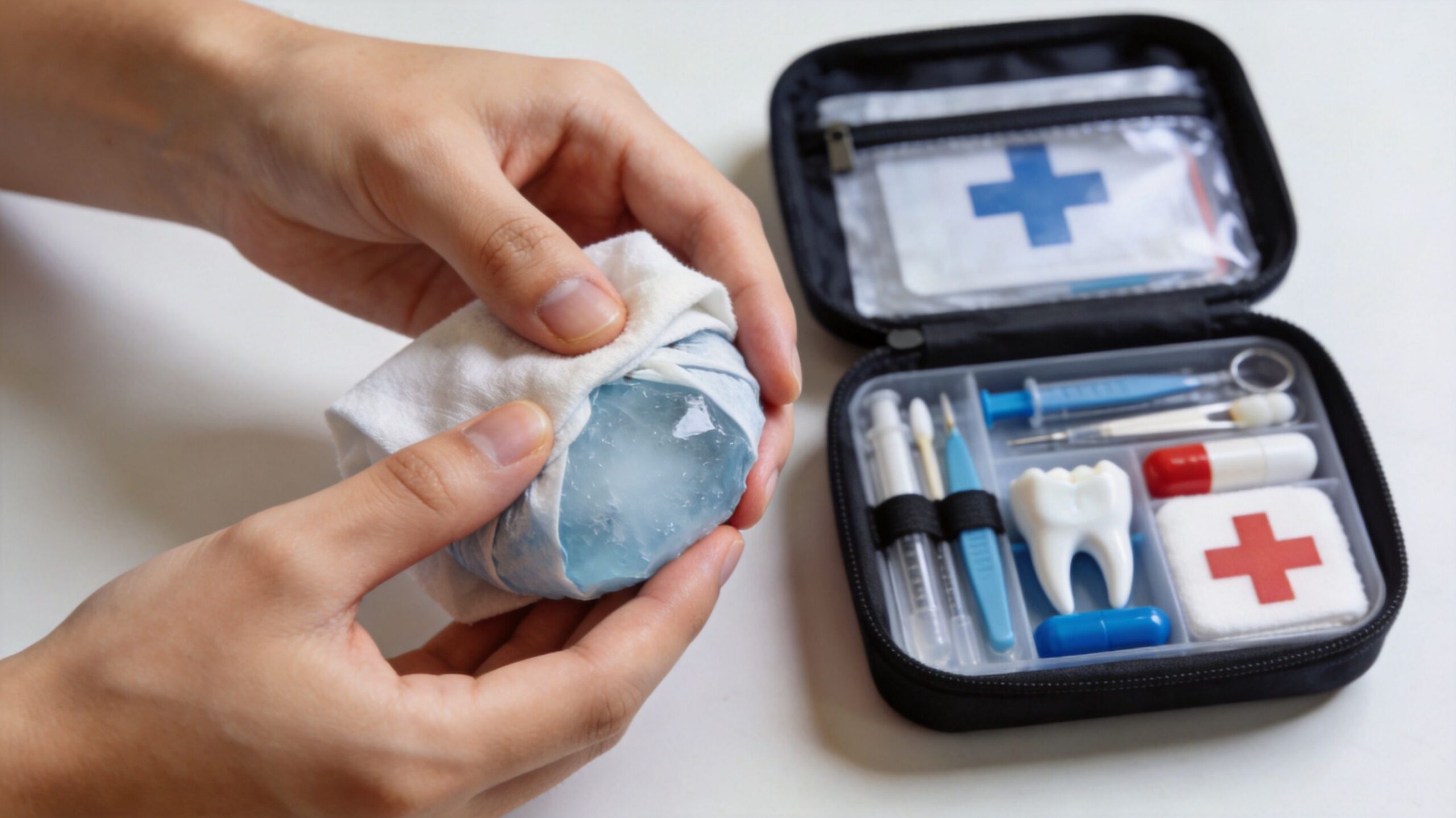
Start with the basics. Stay calm, rinse your mouth gently with lukewarm water, and don't poke at the area with sharp objects or your fingers. If you're bleeding lightly, use clean gauze and gentle pressure.
If a tooth gets knocked out
A knocked-out permanent tooth is time-sensitive. Hold it by the top part you normally see in the mouth, not by the root. If it's dirty, rinse it briefly with water. Don't scrub it.
If you can place it back in the socket gently, do that. If not, keep it moist in milk or in your mouth beside the cheek if it's safe to do so. Then call immediately and head in.
If you have a severe toothache
Tooth pain usually means inflammation, infection, a crack, or deep decay. The goal is to calm the area without making it worse.
- Rinse gently: Use warm water to clear debris.
- Use a cold compress outside the face: Wrap ice in cloth and apply in short intervals.
- Avoid heat: Heat can aggravate swelling.
- Don't place aspirin on the gum: It won't fix the tooth and can irritate tissue.
Cold on the outside is helpful. Putting random products directly on the tooth usually isn't.
If a tooth chips or breaks
Find any pieces you can. Rinse your mouth gently. If a sharp edge is cutting your lip or cheek, cover it carefully with dental wax if you have it.
Pain after a fracture matters. A small cosmetic chip can often wait briefly. A larger break with pain, sensitivity, or visible inner tooth structure should be treated quickly.
A short visual guide can help if you're trying to do the right thing under stress:
If a crown or filling falls out
Keep the crown if you still have it. Don't chew on that side. That exposed tooth can become very sensitive very fast.
If the area isn't painful, you still shouldn't wait too long. Teeth that lose crowns or fillings are more vulnerable to fracture, food packing, and worsening discomfort.
If swelling starts
Swelling needs respect. Use a cold compress on the outside of the face and call right away. If swelling is spreading or you feel sick, don't delay.
The right first aid is simple. Protect the area, avoid DIY fixes, and get professional care fast.
What to Expect When You Call Our Emergency Number
People often delay the call because they think they need to have the "right" description of the problem first. You don't. Just call and explain what happened in plain language.
The American Dental Association requires dentists to be available for emergencies, and dental teams use triage questions to assess pain levels and symptoms before arrival, as outlined in the ADA emergency treatment guidance for dental practices. That process isn't red tape. It's how a good office gets ready for you before you walk through the door.
The questions you'll likely be asked
Expect a few direct questions, such as:
- Where is the pain?
- How strong is it on a 1 to 10 scale?
- Is there swelling, bleeding, fever, or trauma?
- Did a tooth break, come out, or loosen?
- When did this start?
Those answers help the team decide how urgently you need to be seen and what setup may be needed for your visit.
Why the phone call matters
That short conversation can change everything. If you report facial swelling, the team prepares differently than if you're calling about a lost filling. If you've knocked out a tooth, they know speed matters. If your symptoms sound dangerous, they'll tell you not to drive around looking for a dentist and to get emergency medical help.
Patients also worry about missing details while they're upset. That's normal. If you need a quick way to organize or pull contact information for family support during a stressful health moment, a tool for extracting contact details can help you gather numbers from notes or documents fast.
Call first. A few calm questions can save you a wasted trip and get the right chair, team, and treatment ready.
What happens after the call
Once the office has your symptoms, you'll usually be told one of three things. Come in right away. Come in later the same day. Or use a specific home step first and then come in.
If you want a clearer sense of how to get ready, this practical emergency dentist visit preparation guide is worth reviewing before you leave home.
The main point is simple. The call is part of the treatment. It lowers confusion, speeds up care, and helps you walk in with a plan.
Our Hours Location and After-Hours Care
When you need urgent dental care, logistics matter. You don't want to hunt for an address, wonder whether the office is open, or guess what happens after hours.
The office is located at 3211 N Tenaya Wy Suite 122, Las Vegas, NV 89129. That's convenient for patients in Desert Shores, Painted Desert Estates, Lone Mountain, and nearby parts of northwest Las Vegas.
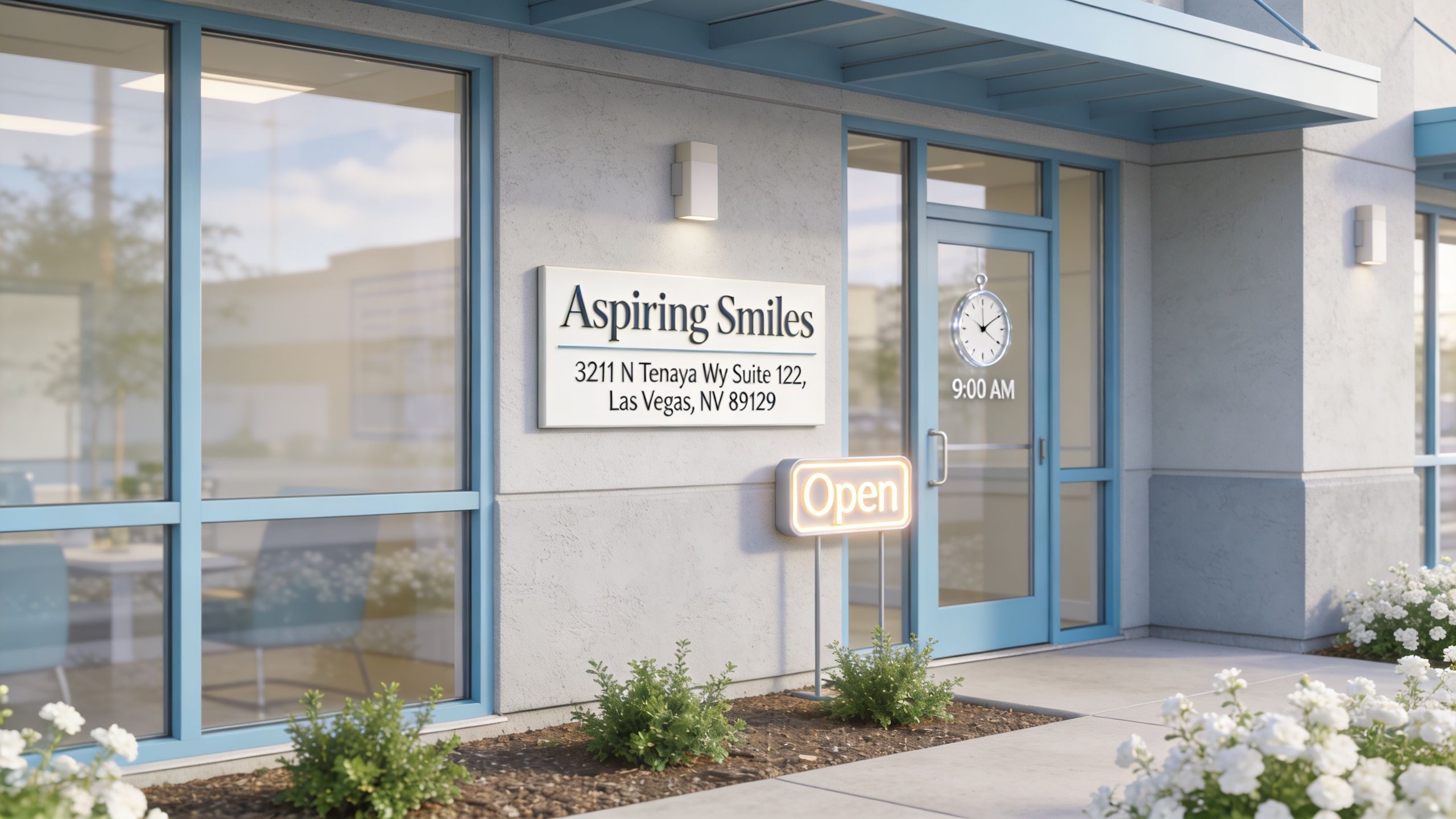
Why extended access matters
Practices with extended hours and dedicated emergency lines can achieve same-day appointment rates over 85%, reducing stress compared with the long waits common in hospital emergency rooms, according to this review of emergency scheduling and access. For patients, that means a simple advantage. You get treated by the right provider sooner.
If you're dealing with a weekend problem, don't assume you'll need to wait until Monday. Review the office's weekend emergency dental care information and call for guidance.
After-hours care should still feel clear
A reliable emergency dental number should never leave you wondering what to do next. After-hours coverage should direct you to the next appropriate step, whether that means an urgent callback, a next-available emergency visit, or instructions to seek medical care immediately if your symptoms suggest a serious health risk.
Here is the practical approach:
- During office hours: Call as soon as symptoms start
- After hours: Follow the emergency call instructions and leave clear details
- If swelling affects breathing or swallowing: Call 911 immediately
- If you're unsure: Call anyway and let the team triage the situation
Local access matters in a real emergency
When pain hits, distance suddenly feels longer. That's why being close to neighborhoods like Sunhampton, Monterrey, and Mar-A-Lago matters. Fast access means less time suffering in the car and less chance of putting off care because it feels complicated.
If you're searching for a dentist near me, emergency dentist, or even longer-term care like tooth extraction, restorative dentistry, or dental implants near me after an emergency, local convenience is part of good care. It isn't a luxury. It's part of what gets people treated early.
Insurance and Payment Options for Emergency Visits
Cost stops people from getting care more often than it should. That's a bad reason to let a tooth infection or fracture get worse, but it's a real one.
A 2025 Kaiser Family Foundation report showed that 60% of uninsured adults delay dental care due to cost, as cited in this discussion of emergency dental affordability and access. If you're worried about payment, say that upfront when you call. A good office should be able to explain your options clearly.
What to ask before you come in
You don't need to be shy about money questions. Ask:
- Do you accept my dental insurance?
- What payment options are available if I don't have insurance?
- Is there an in-house membership plan?
- Will I get a clear cost breakdown before treatment starts?
Those are reasonable questions, especially in an emergency.
My recommendation on cost concerns
Don't let fear of the bill keep you at home with swelling, infection, or serious pain. Ask for the exam fee, ask what the immediate treatment priorities are, and ask what can be phased if needed. Emergency care often starts with diagnosis, pain relief, infection control, and protecting the tooth or surrounding tissue.
For many Las Vegas families, a membership plan and flexible payment arrangements can make urgent care much more manageable. What's important is transparency. You should know what the dentist sees, what needs to happen now, and what your financial choices are before treatment moves forward.
Frequently Asked Questions About Emergency Dental Care
Will emergency dental treatment hurt
The goal is to stop pain, not add to it. Emergency visits focus on diagnosis, numbing when needed, and stabilizing the problem quickly and gently.
What if my regular dentist is closed
Call an emergency dentist. Don't wait through the weekend with swelling, trauma, or severe pain just because your usual office isn't available.
Is a cracked tooth an emergency
Sometimes yes. If the crack hurts, leaves a sharp edge, changes your bite, or exposes the inner part of the tooth, it needs prompt care.
How quickly can I usually be seen
That depends on your symptoms and the day's schedule, but urgent problems are triaged first. Calling is always better than waiting and hoping it settles down.
Should I text or call
Call for anything urgent. If you're interested in how practices should communicate safely with patients, this guide to HIPAA patient messaging gives helpful context on secure communication standards.
Can an emergency visit lead to other treatment later
Yes. An emergency appointment handles the immediate problem first. After that, you may need follow-up restorative care such as a crown, root canal, tooth extraction, or replacement options like dental implants near me if a tooth can't be saved.
If you need fast, compassionate help, contact Aspiring Smiles Dental and Braces. The team serves Las Vegas families with emergency dental care, same-day support when available, flexible payment options, and a calm approach that helps you move from panic to a clear treatment plan.