Root Canal Near Me: A Guide for Las Vegas, NV
A deep toothache has a way of taking over everything. You try to drink water, lie down, answer a text, or get through work, and that one tooth keeps demanding attention. For many people in Las Vegas, that’s the moment the search starts: root canal near me.
If that’s where you are right now, take a breath. A root canal isn’t a punishment for having a bad tooth. It’s a treatment designed to remove infection, relieve pain, and help you keep your natural tooth instead of losing it.
Dealing With Severe Tooth Pain in Las Vegas
A common story goes like this. The tooth felt “off” for a few days. Then the ache turned into throbbing. Hot coffee made it worse. Chewing on one side became impossible. By nighttime, the pain was hard to ignore, and the search for a dentist near me or emergency dentist suddenly felt urgent.
That kind of pain is scary because it feels unpredictable. People often worry that the treatment will hurt more than the problem itself. In reality, root canal treatment is meant to stop the pain source by treating the infected tissue inside the tooth.

Why this happens
Inside every tooth is a soft center called the pulp. It contains nerves and blood vessels. When deep decay, a crack, or past dental damage reaches that inner space, bacteria can get in. Once that happens, the pressure and inflammation can create severe pain.
People are often surprised by how common this treatment is. Dentists perform around 15 million root canals each year, and modern techniques often make the experience feel similar to a routine filling, according to this overview of root canal treatment.
A root canal treats the reason for the pain. It doesn't create the problem. It solves it.
When tooth pain becomes an emergency
You shouldn’t wait and hope this kind of pain disappears on its own. An infected tooth may quiet down temporarily, but that doesn't mean the problem is gone. It often means the nerve is becoming more damaged while the infection continues.
For families in Desert Shores, Sunhampton, Sun City Summerlin, Monterrey, Lone Mountain, Mar-A-Lago, and Painted Desert Estates, getting examined quickly matters. The sooner a dentist identifies the cause, the better the chance of saving the tooth with restorative dentistry instead of moving toward a more involved solution like tooth extraction and later replacement.
Signs You Might Need a Root Canal
Not every toothache means you need a root canal. But certain symptoms raise concern because they suggest the inside of the tooth may be infected or inflamed.
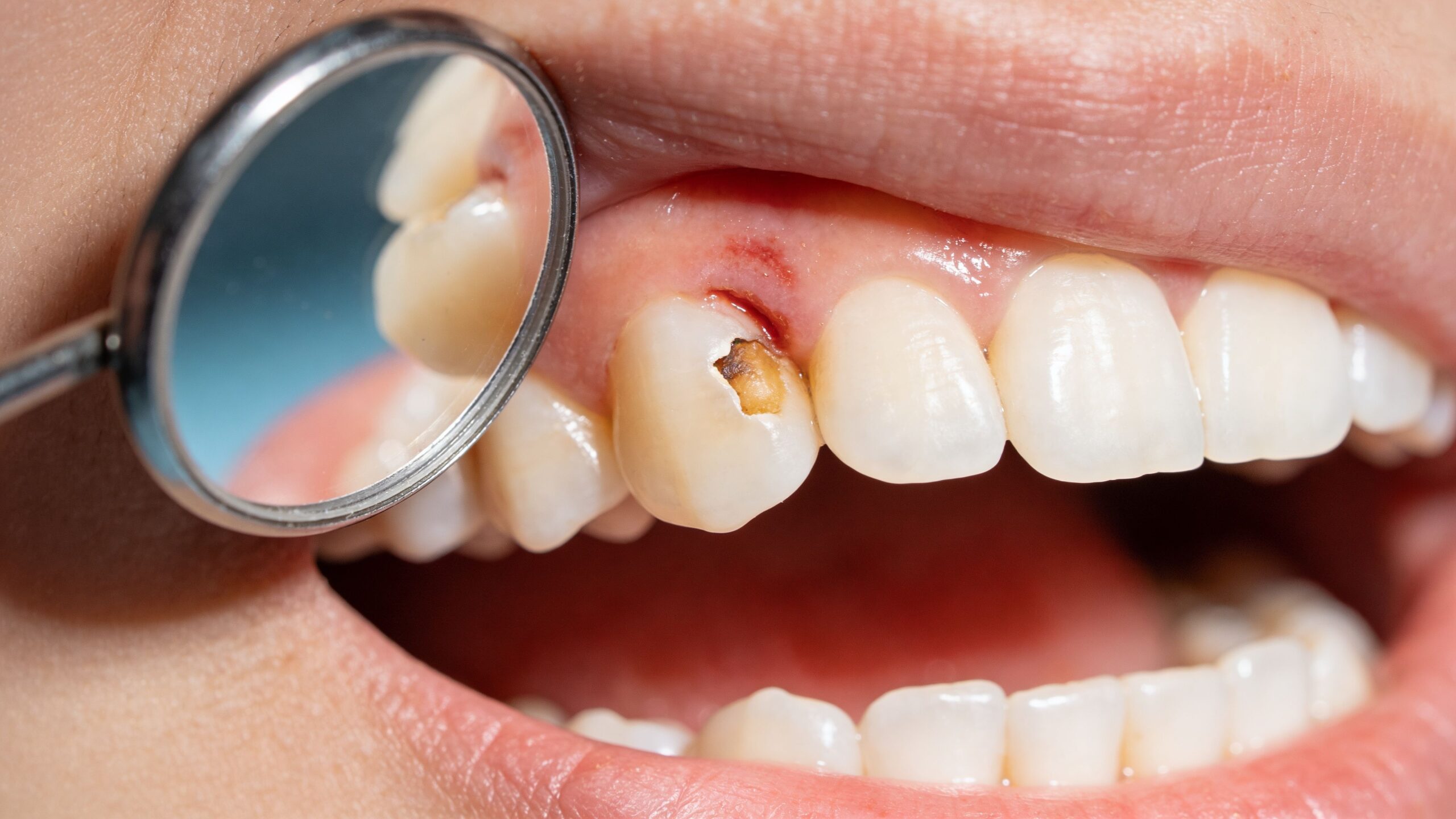
Symptoms patients often notice first
Some signs are dramatic. Others are subtle and easy to dismiss.
Lingering hot or cold sensitivity
If a sip of coffee or cold water triggers pain that hangs on, the nerve inside the tooth may be irritated.Pain when biting or chewing
Pressure can irritate an inflamed tooth and the tissues around the root.Swollen or tender gums near one tooth
This can happen when infection starts draining into the surrounding area.A darkened tooth
A tooth that looks grayer than the others may have internal damage.A pimple-like bump on the gums
Patients sometimes describe this as a blister or recurring bump. It can be a sign that infection is trying to drain.
A quick visual can help if you want to see how dentists explain the problem to patients.
What’s actually happening inside the tooth
A root canal treats infection in the dental pulp, which is the innermost layer of the tooth containing the nerves and blood vessels. When bacteria reach that space, the pulp can become inflamed or die. That’s why symptoms can range from sharp pain to pressure, swelling, or even a bad taste in the mouth.
Dentists don’t diagnose this by guesswork. They look at your symptoms, examine the tooth, take dental X-rays, and test how the tooth responds. The goal is to tell the difference between a problem that needs a filling, a crack that may need another kind of care, and a tooth that needs endodontic treatment.
Signs that mean don’t wait
Some situations call for prompt care because delay can make the problem worse.
Practical rule: If pain is keeping you from sleeping, chewing, or concentrating, it’s time to schedule an exam.
You should also move quickly if you notice:
- Swelling that seems to spread
- Drainage or a foul taste
- Pain that returns after seeming to calm down
- A tooth that suddenly feels different from the rest
Patients in Las Vegas often search for emergency dentist, dentist in Las Vegas, NV, or root canal near me at this stage. That’s the right instinct. Relief starts with an accurate diagnosis.
The Root Canal Procedure at Aspiring Smiles Explained
Most of the fear around root canals comes from not knowing what happens. The procedure is much less mysterious once you break it into steps. Think of it as cleaning and sealing the inside of the tooth so bacteria can't keep causing pain.
The infection sits inside the tooth’s pulp, and root canal treatment has a very high success rate of 90 to 95 percent, especially when the tooth is properly restored with a crown afterward, according to Cleveland Clinic’s root canal overview.
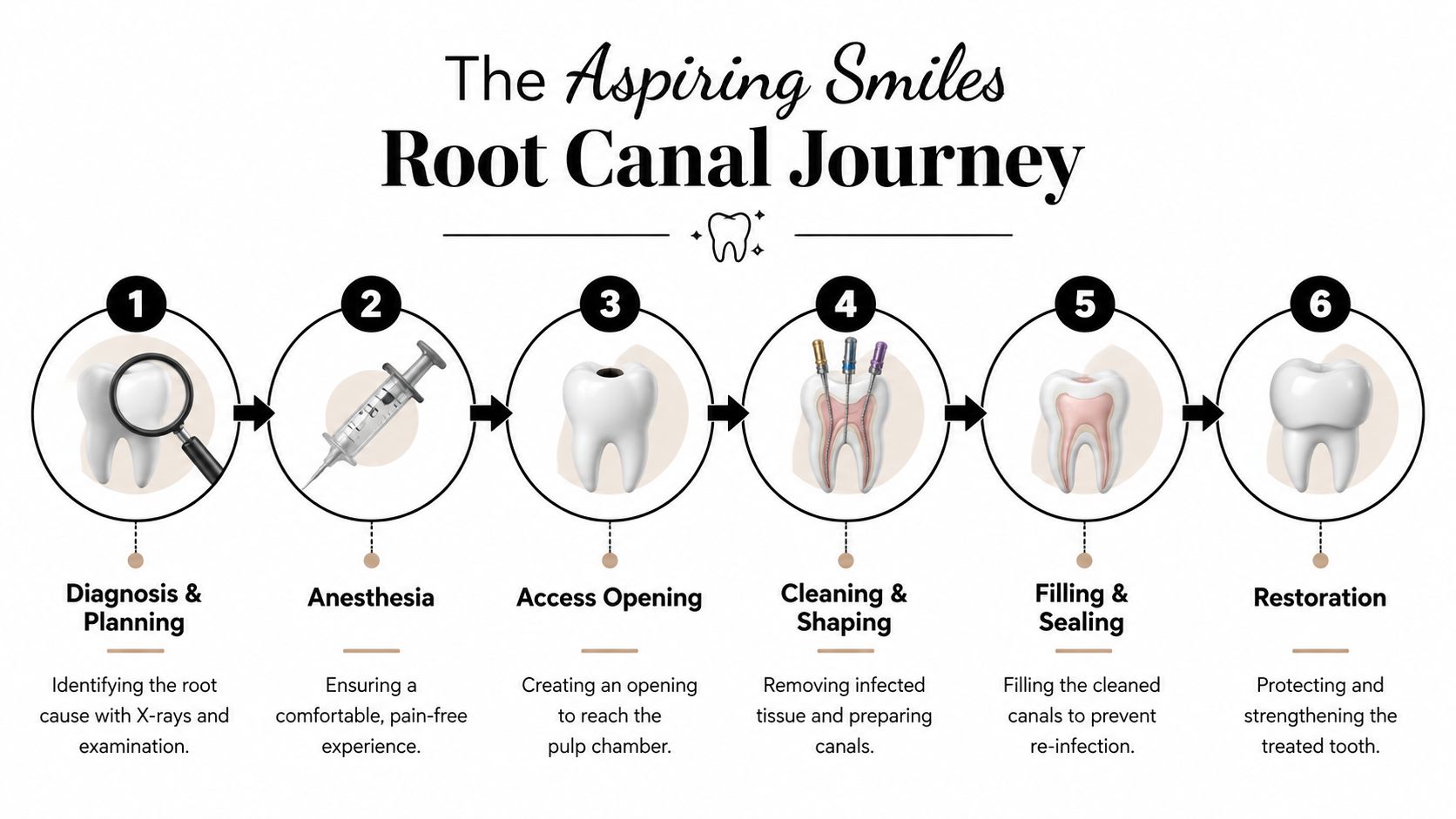
What happens during treatment
Diagnosis and planning
The visit starts with an exam and dental X-rays. That lets the dentist see the shape of the roots and signs of infection around the tooth.Numbing the area
Local anesthesia is used so the area is comfortable. This is the part many nervous patients care about most, and it’s why the procedure is usually felt as pressure rather than pain.Creating a small opening
The dentist makes an opening in the top of the tooth to reach the infected pulp.Cleaning the canals
Small instruments clean out the damaged tissue inside the tooth. The canals are shaped so they can be disinfected and sealed properly.Filling and sealing
After cleaning, the empty spaces are filled with a dental material that helps seal the canals and reduce the chance of reinfection.Protecting the tooth
The tooth is restored, often with a crown, so you can bite comfortably and protect the tooth long term.
For patients who want a more visual explanation, this step by step guide to the root canal procedure walks through the process in patient-friendly language.
What patients usually feel
The goal of treatment is relief. Before the procedure, the tooth is inflamed and pressurized. During the procedure, the area is numbed and the infected tissue is removed. Afterward, some soreness is possible, especially when biting, but that’s different from the deep pain of an active infection.
A lot of confusion comes from old stories people heard years ago. Today’s root canal is built around comfort, careful imaging, and predictable steps.
Most patients feel more anxious before the appointment than they do during it.
Why the final restoration matters
The root canal removes infection from inside the tooth, but the tooth still needs protection afterward. Back teeth in particular handle a lot of chewing force. If they aren’t restored well, they can crack.
That’s one reason root canals are often part of a bigger restorative plan that may also involve a crown, follow-up imaging, and ongoing dental care. In a full-service practice, that can happen alongside your regular cleaning and exams, new patient exams, dental X-rays, and other restorative needs.
Why a Root Canal Is Better Than a Tooth Extraction
When a tooth is badly infected, many patients ask a fair question. Why not just pull it?
Sometimes extraction is the right choice. But when a tooth can be saved, keeping your natural tooth is usually the simpler and more conservative path. Your own tooth is already in the right position, already connected to your bite, and already familiar to your mouth.
Keeping the tooth usually keeps life simpler
A root canal lets you keep the tooth you already have. That matters for everyday things people don’t always think about until the tooth is gone.
| Choice | What it means for you |
|---|---|
| Root canal | Treats the infection while preserving the natural tooth |
| Extraction | Removes the tooth, but may leave a gap that affects chewing and appearance |
When a tooth is removed, nearby teeth can start shifting. Chewing may feel uneven. Depending on the location, smiling and speaking can feel different too. Replacing the tooth later may involve dental implants, a bridge, or another restorative option.
Extraction can be the start of more treatment
Some patients think extraction is the quick fix and the root canal is the bigger commitment. In many cases, the opposite is true over time. Saving the tooth can help you avoid the extra decisions, healing, and replacement planning that follow removal.
Here’s the basic tradeoff:
Save the tooth now
You treat the infection and protect what nature already gave you.Remove the tooth now
You solve one problem, but may create another if the missing space affects function or appearance.
If a natural tooth can be predictably saved, preserving it is often the most straightforward form of restorative dentistry.
This is especially important for adults balancing family schedules, work, and long-term costs. A root canal can be the treatment that ends the emergency without turning it into a bigger reconstruction plan later.
When extraction still has a role
There are situations where a tooth is too damaged to save. A severe crack, extensive breakdown, or other structural issue can make extraction necessary. In those cases, replacement options matter, including implants or other restorations.
But if the tooth is restorable, a root canal often protects your comfort, bite, and daily routine with fewer long-term disruptions.
Your Recovery and Aftercare Journey
You get home after a root canal, the numbness starts to wear off, and the first question is usually simple. What should this feel like now?
For many patients, the answer is reassuring. The sharp, throbbing pressure from an infected tooth is often gone, but the area can still feel sore for a few days. A treated tooth may feel bruised when you chew, especially if the infection was active before your visit. That soreness usually comes from the tissues around the tooth settling down, much like a sore ankle feels tender even after the injury has been addressed.

What to do in the first days
The goal is to protect the tooth while the surrounding area calms down.
Chew on the other side if you can
This reduces pressure on a tender tooth.Stick with softer foods at first
Yogurt, eggs, pasta, soup, and other easy-to-chew foods are often more comfortable early on.Brush and floss gently
Keeping the area clean helps healing. You do not need to avoid normal hygiene.Take medicines exactly as directed
If your dentist recommended a pain reliever or another medication, follow those instructions closely.Come back for the final restoration on time
The root canal treats the inside of the tooth. The outside still needs to be protected.
Why the final crown matters so much
This part can be confusing, especially if the pain is already better. Patients sometimes assume the tooth is finished once the nerve is removed. In reality, a root canal cleans out infection from inside the tooth, but it does not make a weakened tooth strong again.
A back tooth that has had a root canal often needs a crown because chewing places repeated force on it every day. The crown works like a helmet for the tooth. It helps hold the remaining structure together and lowers the chance of cracking later.
If your dentist at Aspiring Smiles recommends a crown, the reason is usually long-term protection, not extra treatment for its own sake. Our guide to aftercare for root canals explains what to expect between the procedure and the final restoration.
When to call the office
Healing is not identical for every patient. Mild soreness can be normal. Symptoms that get worse need attention.
Call if you notice:
- Pain that increases instead of improving
- New swelling, or swelling that gets larger
- A bite that feels noticeably uneven
- A temporary filling or temporary crown that comes loose
- Fever or a bad taste that does not go away
For busy Las Vegas patients, recovery questions often come up after hours, after the numbness fades, or when eating feels strange the next day. That is normal. Clear instructions, realistic expectations, and a plan for follow-up care help turn a stressful dental emergency into a steady return to comfort, function, and trust in your tooth again.
Root Canal Cost and Insurance in Las Vegas
A lot of patients can handle the idea of the procedure once it is explained. The harder question is often, "How much is this going to cost me?"
That concern is understandable. Tooth pain creates pressure to act fast, but cost can make people pause, especially if they are unsure what insurance will cover or whether a crown will be needed after treatment.
Root canal fees usually depend on two things. Which tooth is being treated, and how difficult it is to clean and seal the canals inside it. A front tooth is often more straightforward. A molar usually takes more time because it has more roots and smaller spaces to treat. The final total may also include the exam, X-rays, and the restoration placed afterward.
Cost confusion often causes more stress than the procedure itself. The Maryland State Dental Society's resource on low-income dental care, insurance questions, and cost transparency explains that patients are more likely to move ahead with treatment when they understand fees, coverage, and payment options clearly.
What to ask before you schedule
If you are comparing options for urgent dental care in Las Vegas, ask for the full picture up front:
What portion of the root canal is covered by my insurance?
Benefits vary by plan, waiting periods, and whether the tooth is considered urgent or restorative care.Will I need a crown after the root canal?
Saving the tooth often involves both the root canal and the final restoration.What will my estimated out-of-pocket cost be before treatment starts?
A written estimate helps you avoid guessing while you are already dealing with pain.Are payment options or an in-office membership plan available if I do not have insurance?
That can make timely treatment more realistic for many families.
Aspiring Smiles Dental and Braces provides root canal treatment, accepts insurance, and offers flexible payment options and a membership program. For many Las Vegas patients, that kind of clarity matters almost as much as the treatment itself. When a tooth is throbbing, people need relief, but they also need straight answers about the bill.
Your Local Emergency Dentist in Las Vegas NV
Tooth pain rarely improves by being ignored. If you’re searching for root canal near me, emergency dentist, or dentist near me in Las Vegas, the most useful next step is a prompt exam so the problem can be identified and treated.
Dr. Patel and the team at Aspiring Smiles serve patients across Las Vegas, including Desert Shores, Sunhampton, Sun City Summerlin, Monterrey, Lone Mountain, Mar-A-Lago, and Painted Desert Estates. The office is located at 3211 N Tenaya Wy Suite 122, Las Vegas, NV 89129.
If you’re dealing with severe tooth pain, swelling, or a tooth that feels impossible to chew on, don’t keep waiting for it to settle down. Schedule a visit through Aspiring Smiles Dental and Braces so a dentist can evaluate the tooth, take dental X-rays if needed, and talk you through your options, whether that’s a root canal, a crown, or another form of restorative dentistry.
Frequently Asked Questions About Root Canals
A root canal sounds intimidating until you know what is happening. For many patients, the fear comes from uncertainty more than the treatment itself. These are some of the questions dentists hear most often from patients in Las Vegas who want pain relief, clear answers, and no surprises.
Is a root canal painful
The tooth infection usually causes far more pain than the procedure. A root canal works like cleaning out an infected space so the pressure can settle down and the tooth can heal.
With local anesthesia and current techniques, many patients say it felt similar to getting a filling, just longer. If you feel nervous, say so. A compassionate dental team will explain each step, check that you are fully numb, and help you feel more in control during the visit.
How many appointments does it take
It depends on the tooth, how inflamed the area is, and whether a crown is needed afterward. Some root canals are finished in one appointment. Others are completed in stages so the tooth can be cleaned, sealed, and restored properly.
If you are the kind of person who wants to know the plan in advance, ask for the visit sequence before treatment starts. That simple conversation can make the process feel much more manageable.
Can I go back to work after a root canal
Many patients do return to work the same day. If your mouth stays numb for several hours, or your job involves constant speaking, you may feel more comfortable taking the rest of the day to recover.
Mild soreness afterward can happen, especially if the tooth was badly infected before treatment. That does not mean the procedure failed. It often means the area was already irritated and now needs a little time to calm down.
How do I choose the right local dentist for a root canal?
Start with clarity and comfort. You want a dentist who explains what they see on the X-rays, tells you whether the goal is to save the tooth, discusses cost and insurance before treatment begins, and answers questions without rushing you.
That matters even more when you are in pain. A good local office should make the process feel straightforward, not confusing. If you want to understand why nearby practices show up so prominently online, this article on optimizing local search for dentists explains the marketing side. As a patient, your focus is simpler. Choose a dentist who is close enough for follow-up care and clear enough to earn your trust.
If you still have questions, Aspiring Smiles Dental and Braces can walk you through the diagnosis, treatment steps, and expected recovery in plain language so you know what comes next and how the plan helps relieve pain while protecting your natural tooth.