Crowns Cosmetic Dentistry in Las Vegas, NV
A lot of people who search for a cosmetic dentist near me are dealing with the same private frustration. One tooth chips. A dark tooth stands out in photos. An old filling keeps showing when you laugh. Or your smile just looks more worn than you feel.
That's where crowns cosmetic dentistry often changes the conversation. A crown can do more than cover damage. In the right case, it can rebuild strength, improve shape, balance color, and help a smile look healthy again without looking overdone. For patients in Las Vegas, NV, including Desert Shores, Sunhampton, Sun City Summerlin, Monterrey, Lone Mountain, Mar-A-Lago, and Painted Desert Estates, that matters. You want a result that looks natural in everyday life, not something that draws the wrong kind of attention.
Your Cosmetic Dentist for Crowns in Las Vegas
If you've been hiding one side of your smile, chewing on the other side, or avoiding close-up photos, you're not overreacting. Small dental flaws can feel big when they're front and center every day.
A cosmetic crown is often the right middle ground between appearance and function. It doesn't just brighten a tooth or smooth a rough edge. It covers the full visible portion of the tooth, which gives your dentist much more control over shape, contour, color, and strength. That's why crowns work so well when the problem is more than surface deep.
Why crowns are such a common choice
Crowns aren't a niche procedure. They're a core part of modern restorative and cosmetic care. The global dental crowns market was valued at USD 3.37 billion in 2025 and is projected to reach USD 5.80 billion by 2034, reflecting ongoing demand for both function and aesthetics, according to Fortune Business Insights dental crowns market data.
That growth makes sense in a real dental chair. Patients want teeth that feel solid, look natural, and fit their lives. Crowns check those boxes when a tooth is cracked, heavily filled, misshapen, worn down, or discolored beyond what whitening can fix.
Practical rule: If a tooth needs both cosmetic improvement and structural support, a crown is often more predictable than a purely surface-level treatment.
What patients usually want from a cosmetic crown
Individuals aren't asking for a “perfect” smile. They're asking for a smile that looks like them, only healthier and more balanced.
Common goals include:
- A natural color match so one tooth doesn’t stand out
- A better shape for a tooth that looks too short, narrow, flat, or uneven
- More confidence after a chip, fracture, or old dental work
- Reliable chewing comfort when a weak tooth has become hard to trust
For anyone looking for a dentist in Las Vegas, NV who can blend cosmetic dentistry with restorative dentistry, crowns are often one of the most useful tools we have.
Understanding Cosmetic Dental Crowns
A dental crown is a custom-made cover that fits over the visible part of a tooth. I often describe it to patients as a protective shell made to look and feel like a real tooth. Once it's bonded in place, it becomes the new outer surface of that tooth.
That full-coverage design is what makes crowns different from many other cosmetic options. A crown can change more than color. It can also correct shape, improve contour, restore worn edges, and reinforce a tooth that has lost strength.
Restorative purpose and cosmetic benefit
Some crowns are placed mainly because a tooth needs protection. That includes a cracked tooth, a tooth with a very large filling, or a tooth that has had root canal treatment. In those cases, the cosmetic improvement is a bonus.
Other crowns are planned with appearance as a major goal. That might mean improving a front tooth that looks dark, oddly shaped, badly worn, or out of proportion with nearby teeth. The crown still needs to function well, but the visual design becomes a bigger part of treatment.
That dual role is why crowns remain so widely used. An estimated 15 million adults in the United States have at least one crown or bridge, according to this overview of dental crown use.
When a crown makes sense
A cosmetic crown may be a good option if you have:
- A broken or cracked tooth that also affects your smile
- A large old filling with too little healthy tooth left around it
- A tooth that’s severely discolored and unlikely to improve with teeth whitening
- A misshapen tooth that looks out of line with the rest of your smile
- A worn tooth from grinding or years of heavy bite pressure
- A tooth supporting a bridge as part of restorative dentistry
- A tooth after root canal therapy that needs protection
A crown is often the better choice when the tooth needs a full rebuild, not just a cosmetic touch-up.
What a crown does not do well
Crowns are useful, but they aren't the answer for every small flaw. If a front tooth has a tiny chip and the rest of the tooth is healthy, bonding may be enough. If the problem is overall crowding or bite alignment, Invisalign or orthodontic treatment may be a better first step. If the tooth is missing entirely, a crown alone can't replace it. That's where dental implants near me becomes part of the conversation.
Patients usually do best when the decision starts with the condition of the tooth, not just the look of the smile.
Choosing the Right Crown Material for Your Smile
Material matters. Two crowns can look similar in a photo and behave very differently in the mouth. The right choice depends on where the tooth sits, how hard you bite, whether you grind your teeth, and how much cosmetic detail matters in that spot.
The main options most patients compare
Older porcelain-fused-to-metal, or PFM, crowns still have a role in some cases. They combine a metal base with tooth-colored porcelain layered on top. They're functional, but cosmetically they have a clear limitation. Over time, some patients notice a darker look near the gumline.
All-porcelain or ceramic crowns usually give the most enamel-like appearance, especially on front teeth. They reflect light in a way that often looks softer and more natural. The trade-off is that some ceramic options aren't the best pick for patients with heavy bite pressure on back teeth.
Zirconia sits in the middle of the Venn diagram in a very useful way. It's strong, esthetic, and versatile. Contemporary cosmetic dentistry favors zirconia because it offers remarkable fracture resistance and aesthetics without the metal line risk associated with older PFM crowns, according to this review of cosmetic dental crown materials.
Dental Crown Material Comparison
| Material | Best For | Aesthetics | Durability |
|---|---|---|---|
| PFM | Some back teeth and cases where strength matters more than the most natural look | Good, but may show a metal line near the gum over time | Strong |
| All-Porcelain or Ceramic | Front teeth and high-visibility areas | Excellent, with very natural translucency | Good, depends on bite forces |
| Zirconia | Front or back teeth, especially when strength and appearance both matter | Very good to excellent | Excellent |
How I think about material selection
For a front tooth, the question is often, “Will this blend in when I talk and smile?” For a molar, the question is usually, “Will this hold up when I chew?” The best material choice answers both the cosmetic and functional parts of the problem.
Here's the practical version:
- PFM works when you need a reliable crown and the tooth isn’t in the most visible part of the smile.
- All-ceramic shines when esthetics are the top priority and the bite allows it.
- Zirconia is often the safest all-around choice when patients want a strong, attractive restoration with broad uses for front and back teeth.
Patients who want a deeper explanation of material differences can review the different types of dental crowns before their visit.
The best-looking crown is not always the one with the most beauty-focused marketing. It's the one chosen for the right tooth, in the right bite, for the right patient.
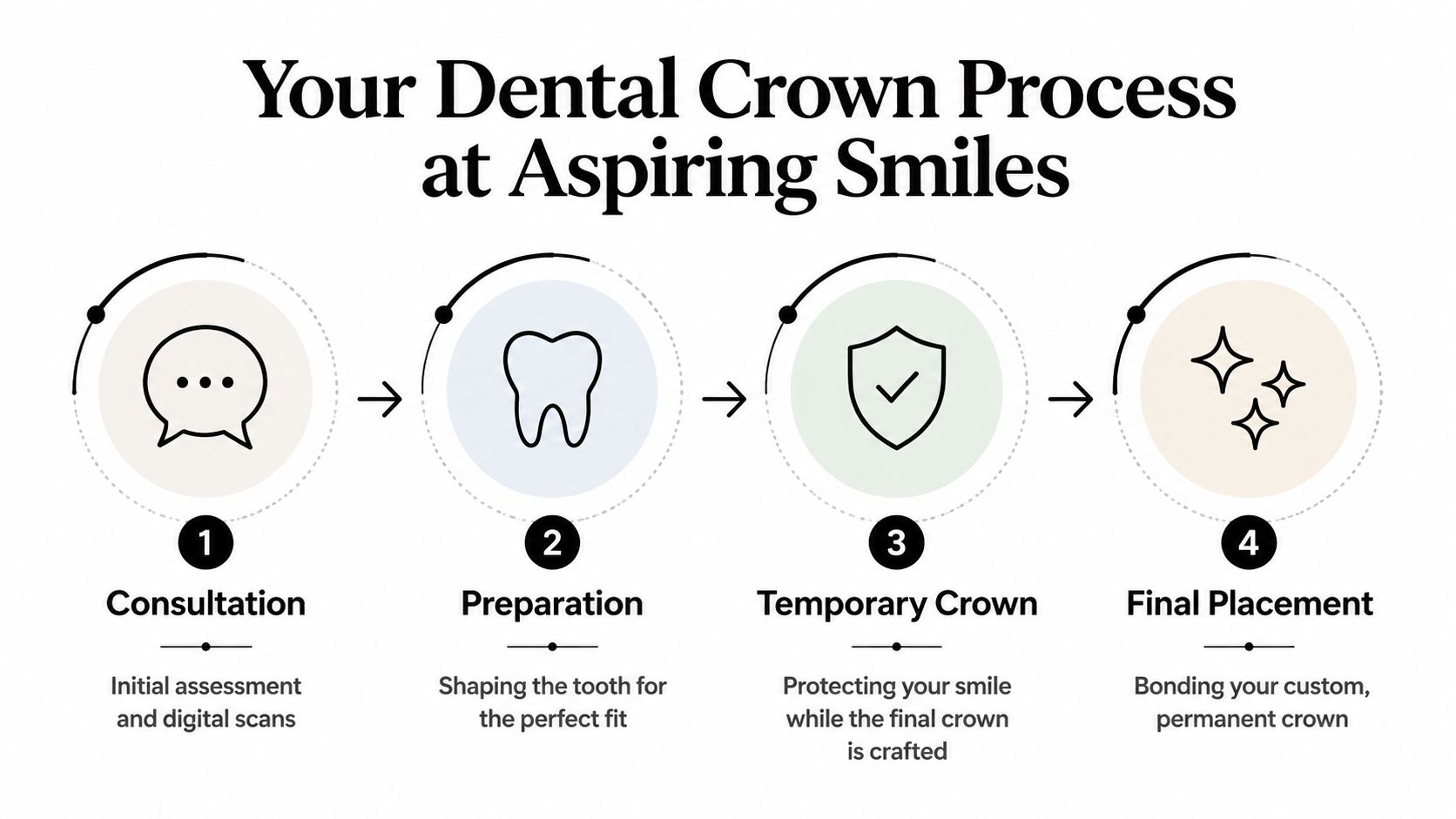
Your Dental Crown Process at Aspiring Smiles
Most patients feel better once they know what happens. A crown procedure is usually more straightforward than people expect, especially when digital tools replace old-fashioned impressions and guesswork.
It starts with planning, not drilling
The first visit is a conversation and an exam. We look at the tooth, the surrounding bite, gum health, and the role that tooth plays in your smile. If the crown is in a cosmetic area, shape and shade matter as much as strength.
This is also where digital planning helps. Modern crown treatment often begins with an intraoral scan instead of a tray filled with impression material. That scan creates a detailed digital model of the tooth and helps guide the design.
The first treatment visit
The tooth is gently shaped so the final crown can fit securely and look natural. That preparation is precise. Too little reduction can create a bulky result. Too much removes healthy structure unnecessarily.
After the tooth is prepared, a digital scan captures the exact form of the area. Computer-Aided Design and Computer-Aided Manufacturing technology uses that intraoral scan to design and mill a precisely fitting crown from ceramic or zirconia, often supporting same-day restorations in equipped practices, as described in this CAD/CAM crown technology overview.
A temporary crown is then placed if the final crown will be delivered at a later appointment. That temporary protects the prepared tooth and lets you function normally while the final restoration is being completed.
The final placement visit
At the delivery visit, the temporary crown comes off and the permanent one is tried in. This part matters more than people realize. The crown should fit the margin closely, contact the neighboring teeth properly, and meet the bite without feeling high or awkward.
I check several things before bonding a crown:
- Fit at the edges so the crown seats cleanly on the tooth
- Contact points so food doesn’t trap easily between teeth
- Bite balance so the tooth doesn’t take excess force
- Shade and contour so it belongs in your smile
If everything looks and feels right, the crown is bonded into place. Patients often notice the difference immediately. The tooth feels whole again.
For a more detailed preview, patients can review what to expect when getting a dental crown before treatment.
A well-made crown shouldn't just look better in the mirror. It should disappear into your bite so naturally that you stop thinking about that tooth.
What comfort usually looks like
Most crown appointments are manageable with local anesthetic and careful pacing. Some teeth are more sensitive than others, and some cases are more complex, but the process is routine in a modern office. If you've been delaying treatment because you expect a long, difficult procedure, that fear usually fades once the plan is clear.
Crowns vs Veneers, Bonding, and Implants
A crown is powerful, but it has a specific job. The right treatment depends on whether the tooth is healthy, damaged, missing, lightly flawed, or structurally compromised.
Crowns vs veneers
Veneers cover the front surface of a tooth. They're excellent when the tooth is mostly healthy and the goal is cosmetic improvement, such as refining color, shape, or small gaps on front teeth.
Crowns cover the full visible tooth. That means they're usually better when the tooth is already weakened, heavily restored, fractured, or badly worn. According to this review of crowns for cosmetic enhancement, veneers have a 90% survival rate at 10 years, while crowns offer greater structural integrity and may last 12 to 20 years for teeth with moderate wear or damage.
That difference matters in real cases. A front tooth with mild cosmetic flaws may be a veneer tooth. A front tooth with a large filling, crack, and dark color often becomes a crown tooth.
Crowns vs bonding
Bonding is the conservative option for small defects. It can work well for a minor chip, a little unevenness, or a small dark area near the edge of a front tooth. It's quick and useful.
Bonding is not the best tool for every problem. It doesn't provide the same level of coverage or reinforcement as a crown. If a molar has a crack or a large old filling, bonding may improve the look briefly but won't give that tooth the support it needs.
If the issue is small and mostly cosmetic, bonding often works. If the tooth is compromised, a crown usually works better and lasts more predictably.
A quick overview may help if you're comparing treatment paths:
- Choose veneers for surface-level cosmetic changes on otherwise healthy front teeth.
- Choose bonding for tiny repairs where preserving maximum natural tooth is the priority.
- Choose a crown when the tooth needs both cosmetic improvement and full structural coverage.
For patients who like seeing a visual explanation, this short video gives a helpful overview of restoration concepts:
Crowns vs dental implants
Many patients often misunderstand this. A crown and an implant are not competitors in the same sense.
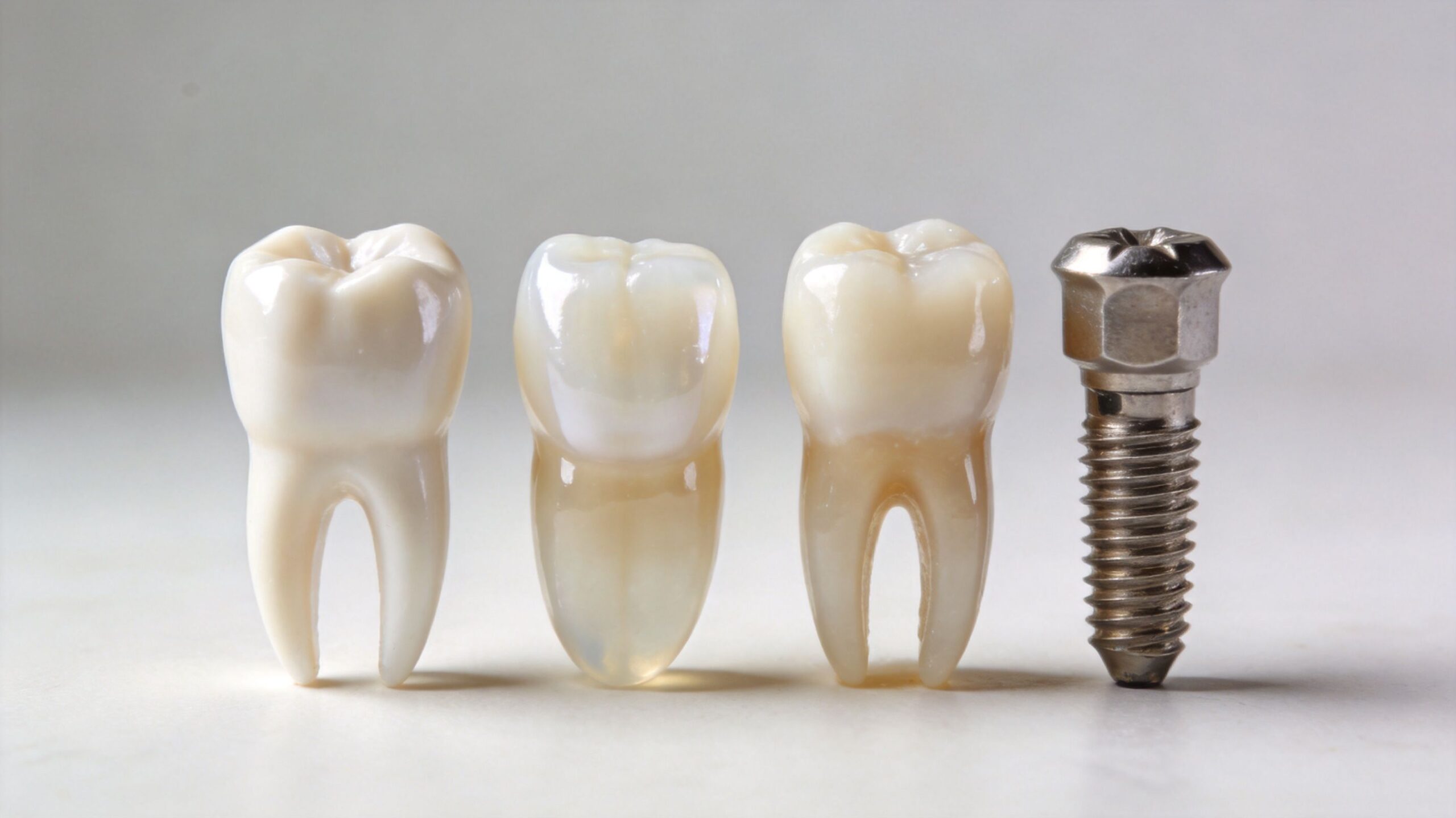
A crown saves and restores a tooth that is still present. A dental implant replaces a tooth that is missing. In many implant cases, the visible top portion is still a crown, but it sits on an implant fixture rather than on a natural tooth.
So if you're searching for dental implants near me because a tooth is gone, a crown by itself won't solve the problem. If the tooth can still be preserved, a crown may help you avoid extraction and replacement.
Your Investment in a Lasting Smile
The first question many patients ask is simple. “How much will this cost me?” The honest answer is that crown fees vary by material, tooth location, complexity, and whether other treatment is needed first. A front tooth that needs detailed cosmetic matching is different from a back molar being restored mainly for strength.
That's why a real exam matters. If a patient also needs a buildup, root canal treatment, replacement of an old filling, or bite adjustment, the final plan changes. Insurance can also affect out-of-pocket cost depending on whether the crown is considered restorative, cosmetic, or a blend of both.

What affects the investment
Instead of focusing on a single price, I encourage patients to look at the factors behind it:
- Material choice affects both appearance and strength
- Tooth position changes how much esthetic detail is needed
- Condition of the underlying tooth can add steps before the crown is placed
- Technology used can improve precision and convenience
- Long-term goals matter if you’re planning broader cosmetic dentistry or restorative dentistry
How to protect your crown over time
A crown is durable, but it still depends on the tooth and gums around it. The best crown in the world won't perform well if plaque builds up at the margin or heavy grinding goes unaddressed.
Here's the simple maintenance checklist I give patients:
- Brush carefully at the gumline because the edge of the crown needs to stay clean
- Floss daily to reduce inflammation and food trapping between teeth
- Keep regular cleaning and exams so small issues are caught early
- Avoid using teeth as tools for packages, bottle tops, or hard objects
- Be cautious with very hard foods if you have a history of chipping restorations
- Mention clenching or grinding if you wake with jaw tension or wear marks
What works and what does not
What works is consistency. Good home care, routine dental care, and attention to bite habits usually keep crowns looking and functioning well.
What doesn't work is assuming a crown is maintenance-free. It can't get decay the way natural enamel does, but the tooth underneath and around it can still develop problems. That's why cleaning and exams, dental x-rays when needed, and follow-up care matter just as much as the crown itself.
A crown is a long-term restoration, not a one-time event. The patients who do best treat it like an investment they maintain.
Schedule Your Cosmetic Crown Consultation Today
If one tooth is keeping you from smiling freely, it's worth getting a clear answer. Crowns can restore a tooth after damage, improve a tooth that looks out of place, and become an important part of a larger smile plan that may also include teeth whitening, Invisalign, restorative dentistry, or even dental implants near me when a missing tooth is part of the picture.
For many Las Vegas patients, the hardest part is taking the first step. They've lived with the chip, the discoloration, or the weak tooth long enough that it starts to feel normal. It doesn't have to stay that way. A careful consultation can tell you whether a crown, veneer, bonding, or another option is the best fit for your goals.
If you're comparing providers, convenience also matters. Tools like best medical scheduling solutions show how much easier healthcare access can be when appointment systems are simple and patient-friendly. That same ease should carry into your dental care experience.
Patients in Las Vegas, NV, including Mar-A-Lago, Sunhampton, and Painted Desert Estates, deserve straightforward guidance and treatment that fits real life. Whether you need cosmetic dentistry, a new patient exam, emergency dentist care, or help deciding between saving a tooth and replacing one, getting seen early usually gives you more options.
If you're ready to talk through your options, schedule a consultation with Aspiring Smiles Dental and Braces. Dr. Patel and the team provide personalized care for patients across Las Vegas, including Desert Shores, Sun City Summerlin, Lone Mountain, Monterrey, and nearby neighborhoods. Whether you want a natural-looking cosmetic crown, a second opinion on a damaged tooth, or a full smile plan, they'll help you understand what works, what doesn't, and what makes the most sense for your smile.