How Does Invisalign Work: Your 2026 Clear Guide
If you're reading this, there's a good chance you already know what you want. You want straighter teeth, but you don't want a mouth full of metal. You may have searched for a cosmetic dentist near me or a dentist in Las Vegas, NV because you're ready to do something about crowding, spacing, or a bite that feels off. What usually stops people is uncertainty. How does Invisalign work, and will it really fit real life?
That hesitation is normal. Many adults put off orthodontic treatment for years because they assume braces are their only option. Teens often worry about photos, school, sports, and comfort. Parents want something effective, but they also want something manageable. Invisalign appeals to all of those concerns because the system is built around clear, removable aligners that move teeth in small, planned steps.
This guide walks through the full experience in plain language. You'll see what the aligners do, how treatment is planned, what daily wear feels like, and how to think through Invisalign versus braces. If you're looking for a local path forward in Las Vegas, including Desert Shores, Sunhampton, Sun City Summerlin, Monterrey, Lone Mountain, Mar-A-Lago, and Painted Desert Estates, this should help you feel much more prepared for that first conversation.
Your Guide to a Straighter Smile with Invisalign in Las Vegas
A lot of people first think about Invisalign in small moments. They notice a front tooth that overlaps in pictures. They catch themselves smiling with their lips closed at work. They see a gap that seems more obvious than it used to. The desire usually isn't about perfection. It's about feeling comfortable when you talk, laugh, or meet someone new.
Traditional braces can feel like a big leap, especially for adults with busy jobs or parents who don't want a treatment that changes how they look day to day. That's where Invisalign often enters the conversation. It uses clear, custom aligners instead of brackets and wires, which makes treatment feel more private and easier to work into normal life.
One reason people trust the system is that it isn't new or experimental. Since its development, Invisalign has been used to treat over 18 million people worldwide as of early 2025, and 80,000 dentists and orthodontists have been trained to provide it. It has also become a leading choice for mild to moderate orthodontic issues and often finishes treatment up to 50% faster than traditional braces, according to this Invisalign success overview.
Why patients in Las Vegas ask about it
Life in Las Vegas moves fast. People want treatment that works without making every meal, meeting, or social event feel complicated. Invisalign usually appeals to patients who care about three things:
- Appearance during treatment because the trays are clear and much less noticeable than metal braces
- Flexibility with meals because you remove the aligners before eating
- A more comfortable feel because there are no brackets or wires rubbing against the lips and cheeks
You don't have to choose between improving your smile and feeling like yourself during treatment.
Common problems Invisalign may help correct
For the right patient, Invisalign can be a good option for issues such as crooked teeth, gaps, and certain bite concerns. Many people who ask about cosmetic dentistry are also dealing with functional concerns they may not have connected to alignment, like harder-to-clean areas, uneven wear, or a bite that doesn't feel balanced.
A consultation matters because clear aligners aren't just a cosmetic accessory. They're a planned dental treatment. Before moving forward, a dentist may recommend a new patient exam, dental x-rays, and a close review of your gums, bite, and any existing dental work. That way, the goal isn't only a straighter smile. It's a healthier one.
Understanding Invisalign Clear Aligners
Invisalign is a system of custom-made clear aligners. Each tray is shaped to fit your teeth at a specific stage of treatment. You wear one set for a prescribed period, then move to the next set. Every new tray continues the sequence, nudging your teeth toward their planned positions.
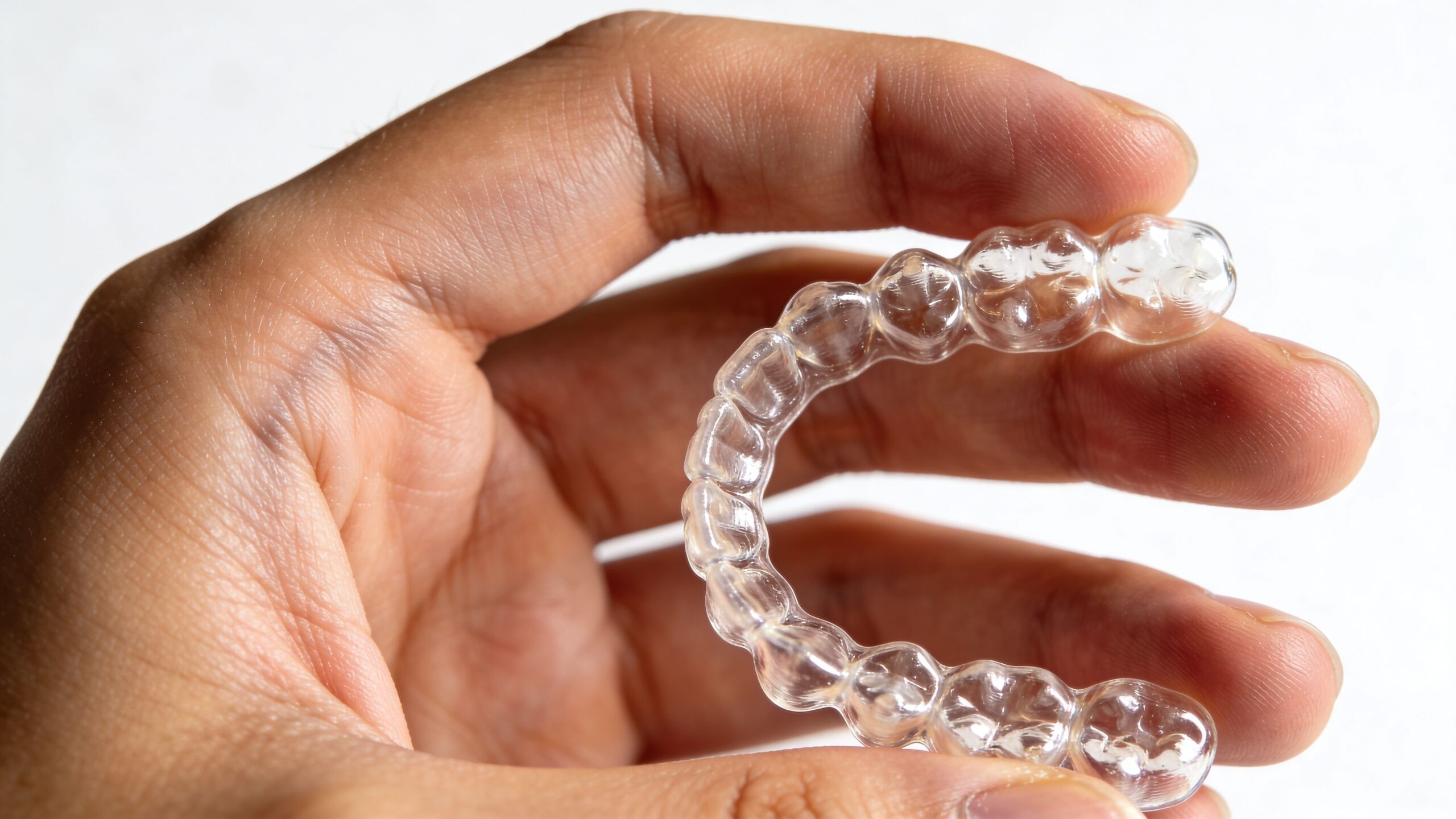
The material matters. Invisalign uses a patented material called SmartTrack, and the aligners are built from measurements of your mouth rather than a generic mold. That custom fit is one reason treatment can be more controlled than over-the-counter or one-size-fits-all options. The trays don't just cover the teeth. They apply gentle force in a sequence your dentist plans in advance.
What the aligners are designed to fix
Invisalign is often best for mild to moderate orthodontic issues. That includes crowding, crooked teeth, spaces between teeth, and certain minor bite corrections such as overbites and underbites. It can be a very practical choice for patients who want a more discreet treatment and who are willing to wear the trays consistently.
It's also important to be honest about limits. Some complex tooth movements are less predictable than others, and some patients are better served by braces or by a broader restorative plan that may include crowns, veneers, or other treatment. A good dentist won't force Invisalign into cases where it isn't the right fit.
Who tends to do well with Invisalign
Many patients are relieved to hear they don't have to guess whether they're a candidate. A proper assessment makes that clear. In general, Invisalign often works well for:
- Adults with mild crowding or spacing who want a subtle alternative to braces
- Teens who can follow a wear schedule and keep up with trays responsibly
- Patients planning cosmetic improvements who want alignment addressed before whitening or veneers
- People with healthy gums and teeth who are ready for active treatment
- Busy professionals or parents who want fewer lifestyle disruptions during orthodontic care
Practical rule: The best Invisalign candidate isn't the person with the "perfect" teeth for aligners. It's the person with the right dental needs and the discipline to wear the trays as directed.
Why patients trust the system
Patient confidence usually grows once they realize Invisalign has been used across age groups and case types. Reported satisfaction is strong. Invisalign has a 96% patient satisfaction rate, and success rates range from 80% to 97% for properly selected mild to moderate cases. By Q1 2025, over 4.5 million teenagers had used the system, according to these Invisalign statistics.
Those numbers don't mean every case is simple. They do show that when the case is chosen carefully and the patient follows instructions, Invisalign can be highly effective. That's why the first visit matters so much. It's where a dentist confirms whether clear aligners match your goals, your bite, and your daily routine.
Your Invisalign Journey at Aspiring Smiles
The Invisalign process makes more sense when you picture it as a series of small, supervised steps rather than one big commitment. Most patients start out with the same questions. Will the scan be uncomfortable? Will I be able to see what my smile may look like? What if a tooth doesn't move the way we expected? Those are all normal questions, and the process is built to answer them early.
At a local Invisalign consultation, the first goal is clarity. Your dentist checks your teeth, gums, bite, and overall oral health. If you need a cleaning, filling, or other care first, that usually happens before aligner treatment begins. A healthy mouth gives Invisalign a much better foundation.
Step 1 begins with a digital scan
One of the most helpful tools in modern Invisalign treatment is the iTero scanner. Instead of relying on messy traditional impressions, the scanner creates a digital 3D model of your teeth. That model helps your dentist study how your bite fits together and where each tooth needs to move.
The technology is precise. The Invisalign process uses 3D digital imaging from iTero scanners to plan tooth movements of 0.25 to 0.3 mm per aligner set. That level of control, together with SmartTrack material and attachments, contributes to an 84% on-time completion rate globally, with fewer than 10% of cases requiring major refinements, as described in this overview of scans, trays, and checkups.
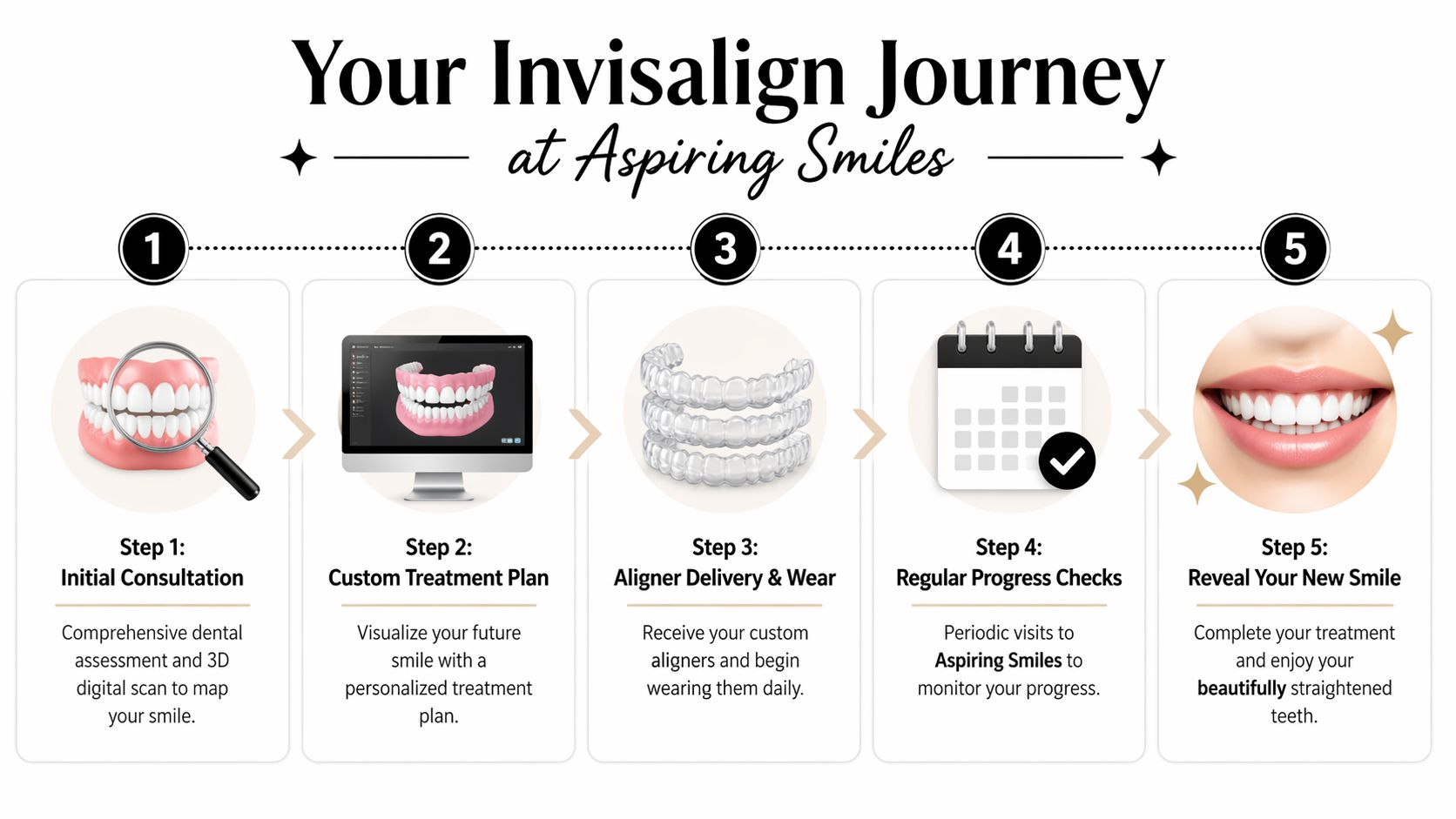
Step 2 turns the scan into a treatment map
After the scan, your dentist uses ClinCheck software to build the treatment plan. This is one of the moments patients find most reassuring because they can often see a digital simulation of their expected tooth movement before treatment starts. It doesn't guarantee a perfect copy of the simulation, but it gives you a very clear roadmap.
Your dentist isn't just looking at straight front teeth. They also consider bite contact, spacing, tooth shape, and whether certain teeth need to move before others. That sequencing matters. Some movements are simple, while others need extra help.
Step 3 may include small helpers on the teeth
Many Invisalign cases use attachments. These are small, tooth-colored shapes bonded temporarily to specific teeth. They give the aligner more grip so it can guide harder movements more effectively. If you've heard someone say their aligners had "little bumps," this is what they mean.
Some patients also need IPR, which stands for interproximal reduction. In plain language, that means your dentist lightly reshapes a tiny amount of enamel between selected teeth to create the space needed for proper alignment. Patients often worry this sounds dramatic, but when it is recommended, it's usually very conservative and planned carefully.
Attachments don't mean your case is going badly. They usually mean your dentist is giving the aligners better control over specific teeth.
Step 4 is where consistency pays off
Once your aligners arrive, you'll receive several sets along with instructions on when to switch to the next tray. Each set continues the movement pattern laid out in your plan. The fit should feel snug, especially when starting a new tray, because the aligner is guiding your teeth toward the next position.
Progress visits are still important even though there are no wire adjustments like braces. These appointments let your dentist check fit, track movement, answer questions, and make sure your bite is developing the way it should. Many Invisalign patients like that these visits are focused and efficient.
If you're curious about the general timeline, this guide on how long Invisalign takes gives a helpful overview of what can affect treatment length.
Step 5 finishes with retention, not just removal
A lot of people think treatment ends when the final tray comes off. In reality, the final stage is retention. Teeth can shift back if they aren't held in place after active movement. That's why retainers matter. They protect the time and effort you've invested.
Here is the usual flow patients experience:
-
Consultation and records
Your dentist examines your mouth, reviews your goals, and gathers scans or imaging. -
Digital planning
ClinCheck maps the sequence of movements and shows how the smile is expected to change. -
Aligner wear
You begin using your trays in the prescribed order, usually changing to the next set on schedule. -
Progress checks
Your dentist monitors movement, checks attachments if needed, and makes adjustments to keep treatment on track. -
Retainers after completion
Once the teeth are in position, retainers help maintain the result.
A good Invisalign journey feels guided, not confusing. You should know what each stage is doing and why it matters. That steady guidance is often what turns initial doubt into confidence.
Living with Invisalign What to Expect Day to Day
The clinical plan matters, but daily habits decide whether Invisalign feels smooth or frustrating. Most patients settle into a rhythm within the first week. At first, you may think about the trays constantly. Then they start feeling like part of your routine, similar to putting in contacts or wearing a nightguard.
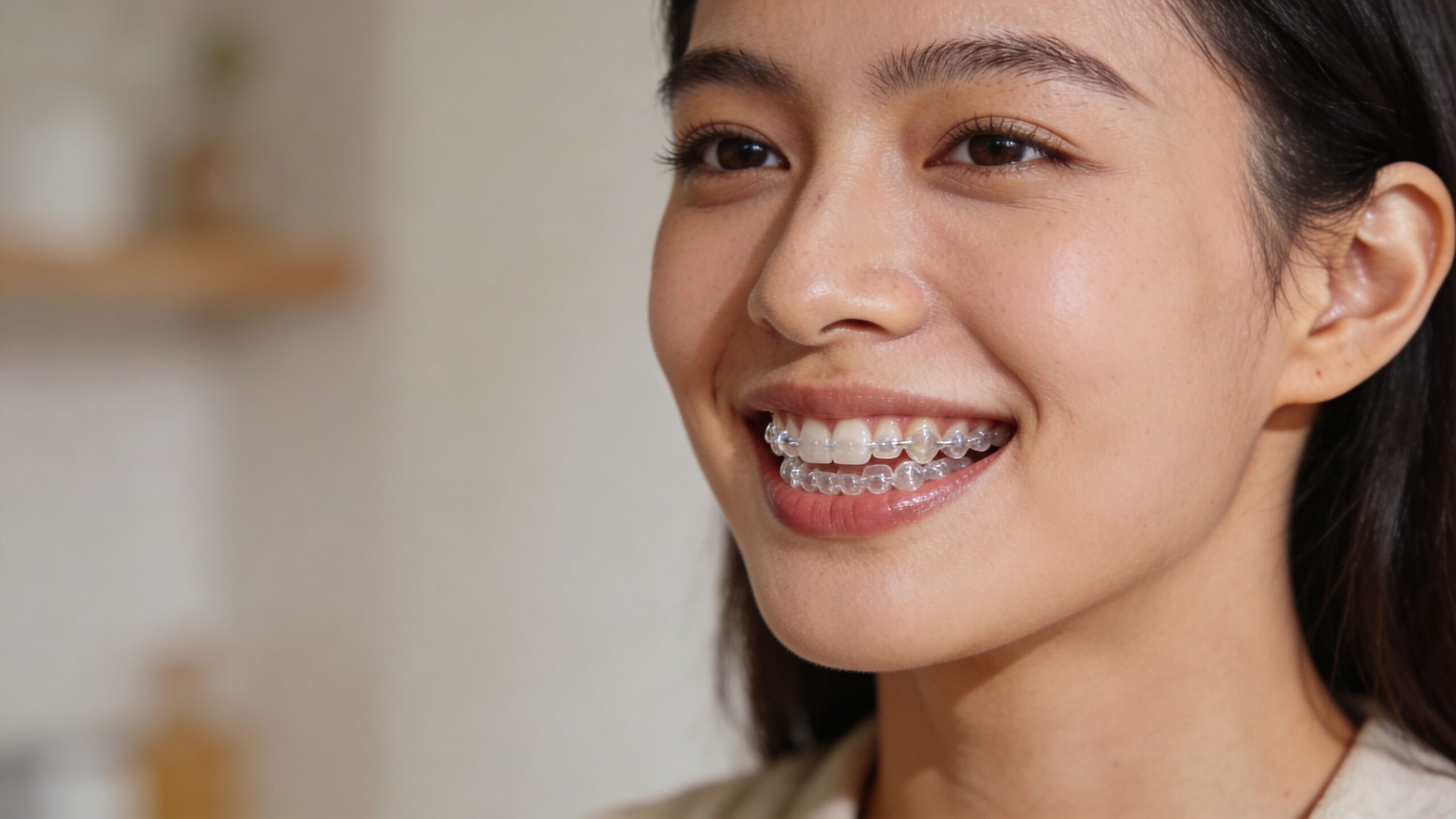
A normal day with Invisalign usually means wearing the aligners most of the time, taking them out to eat, brushing before putting them back in, and switching to a new tray when scheduled. The biggest adjustment isn't pain for many. It's building consistency.
Wear time isn’t a minor detail
Invisalign works best when the aligners stay in long enough each day to keep steady pressure on the teeth. If trays sit in their case for long stretches, treatment can slow down or become less predictable. That's why dentists spend so much time talking about wear habits.
This is one of the few parts of Invisalign that is not flexible. Wearing aligners for less than 18 hours a day can reduce treatment efficacy by up to 40%. Tools such as Invisalign Virtual Care have been shown to improve adherence by 25% through remote monitoring, according to this review of compliance and remote monitoring.
The tray only works when it's on your teeth. Consistency is what turns a good treatment plan into a successful result.
Eating, drinking, and cleaning
Many patients love that Invisalign doesn't restrict food choices the way braces can. But that freedom comes with one simple rule. Remove the aligners before meals and most drinks, then clean your teeth before placing them back in.
A few habits make day-to-day wear much easier:
- Take trays out before eating so they don’t trap food or get damaged
- Drink water freely with aligners in but remove them for coffee, tea, soda, or anything that may stain or affect the trays
- Brush before reinserting so you don’t hold food particles and plaque against the teeth
- Rinse the trays regularly to keep them fresh
- Store them in a case instead of napkins or pockets, where they often get lost
The first days with a new tray
New aligners often create pressure for the first day or two. That's expected. It usually means the tray is actively moving the teeth into the next planned position. Most patients describe it as tightness rather than sharp pain.
Speech can feel slightly different at first, especially with certain sounds, but many patients adapt quickly. If you have an important presentation or event, it's often smart to switch to a new set at night so you sleep through part of that adjustment window.
A short visual can help if you're wondering what wearing Invisalign looks like in real life:
What patients usually get confused about
Some of the most common misunderstandings are simple.
| Daily question | Straight answer |
|---|---|
| Can I snack all day? | You can, but frequent snacking means more tray removal and less wear time. |
| Should the tray feel tight? | Yes, especially when starting a new set. Mild pressure is normal. |
| Can I skip a few hours and catch up later? | Consistency works better than trying to make up missed time. |
| Do I still need brushing and flossing? | Absolutely. Removable trays make hygiene easier, not optional. |
A patient who understands the routine usually feels much less stressed. Invisalign isn't difficult, but it does ask you to be intentional. If you build the habit early, the treatment tends to feel very manageable.
Invisalign vs Traditional Braces Which Is Right for You?
Invisalign and traditional braces both move teeth. The better choice depends on your dental needs, your comfort preferences, and how much responsibility you want to manage yourself. Some patients are clear aligner people immediately. Others need the reliability of braces because they don't want to think about wear time or tray changes.
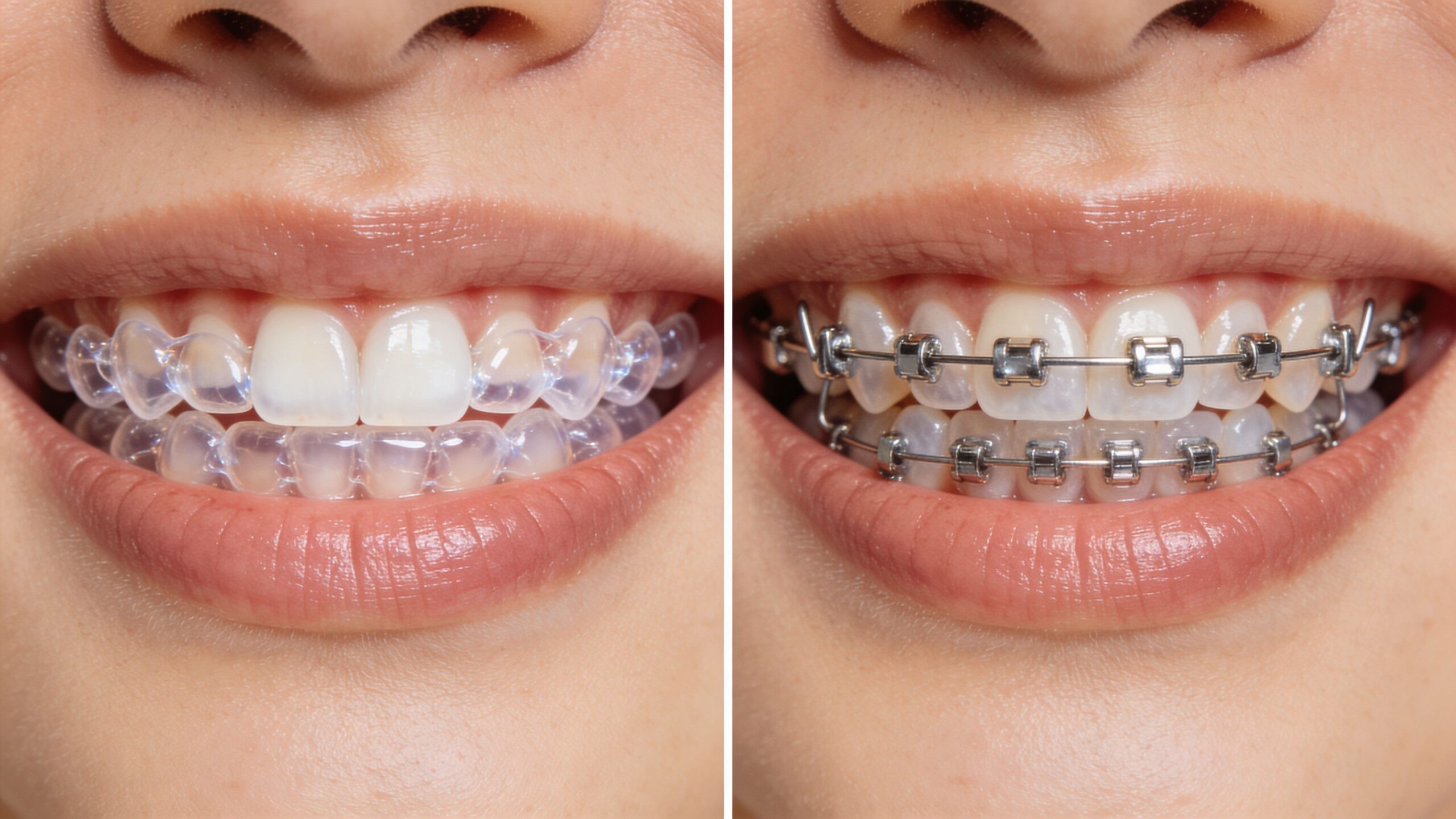
The biggest difference is visibility. Invisalign uses clear trays that are much harder to notice in conversation or photos. Braces use brackets and wires attached to the teeth full time. For adults in client-facing jobs and teens who feel self-conscious, that difference can matter a lot.
Comfort and oral hygiene
Comfort is another major point of comparison. Invisalign trays are smooth plastic, so there are no tightening wires and fewer rough spots rubbing the lips and cheeks. Braces are effective, but they often come with more irritation, especially after adjustments.
There are oral health advantages too. Because aligners are removable, patients can brush and floss more normally during treatment. Compared with traditional braces, Invisalign has been associated with 50% less gingival inflammation. Its multi-point force system can also produce an initial alignment velocity that is nearly twice as fast at 0.15 mm per week versus 0.08 mm per week for certain movements, according to this step-by-step explanation of the Invisalign process.
Lifestyle differences that matter
For many people, the everyday experience makes the decision easier than the technical details do.
-
If appearance matters most
Invisalign usually wins because the trays are discreet. -
If you want fewer food restrictions
Invisalign gives you more freedom because you remove the trays before eating. -
If you don't want to manage compliance
Braces may fit better because they stay on the teeth. -
If cleaning around hardware sounds frustrating
Invisalign is often easier because you can brush and floss normally.
Some patients don't need the "best" orthodontic system in theory. They need the one they're most likely to follow successfully every day.
A quick side-by-side view
| Decision factor | Invisalign | Traditional braces |
|---|---|---|
| Appearance | Clear and subtle | More visible |
| Removal | Yes, for meals and brushing | No, fixed on teeth |
| Food limits | Fewer limits | More restrictions |
| Hygiene | Easier to brush and floss | More cleaning around brackets |
| Responsibility | Patient must wear trays consistently | Less day-to-day patient management |
The right answer isn't always the same for every smile. During a consultation, a dentist looks at your bite, your goals, and your lifestyle, then recommends the option that gives you the best chance of finishing with a healthy, stable result.
Frequently Asked Questions About Invisalign
Even after patients understand the basics, a few practical questions usually remain. These are often the questions that stand between "I'm interested" and "I'm ready to book."
Invisalign FAQ at a Glance
| Question | Short Answer |
|---|---|
| Does Invisalign hurt? | It usually feels like pressure or tightness, especially with a new tray, rather than severe pain. |
| How much does Invisalign cost? | Cost depends on your case complexity, treatment length, and whether other dental work is needed first. |
| What if I lose an aligner? | Call your dental office promptly so they can tell you whether to wear the previous tray, move forward, or come in. |
| Can Invisalign work with crowns or other dental work? | In many cases, yes, but your dentist needs to examine your restorations and bite first. |
Does Invisalign hurt more than braces
Most patients say Invisalign feels more comfortable than braces because there are no brackets or wires scraping the cheeks. That said, "comfortable" doesn't mean you feel nothing. When you start a new tray, you should expect some pressure. That's the aligner doing its job.
Discomfort is often strongest in the first day or two after switching trays, then it settles. If a patient feels persistent pain, a rough edge, or a tray that won't seat properly, that's a reason to call the office rather than guess.
How much does Invisalign cost in Las Vegas
The cost of Invisalign varies from patient to patient, so it's best discussed after an exam and scan. The total can depend on how complex your tooth movement is, how many aligners are needed, whether attachments or refinements are likely, and whether you need other care first, such as fillings, gum treatment, or restorative work.
Some dental offices offer financing, accept insurance, or provide payment options that make treatment more manageable. The most useful next step is a consultation where the dentist can give you a treatment-specific estimate instead of a generic number that may not apply to your case.
What happens if I lose or crack a tray
This is common enough that patients shouldn't panic. A lost aligner doesn't automatically ruin treatment. What matters is timing. If you've just started a tray, your dentist may want you to keep wearing the previous one until a replacement plan is confirmed. If you're near the end of that tray's schedule, the office may advise something different.
What you shouldn't do is leave your teeth unsupported for days while deciding what to do. Call the office quickly. Keep all old trays unless your dentist tells you otherwise, because a previous aligner can sometimes help temporarily.
Can I get Invisalign if I already have crowns or other dental work
Often, yes. Many adults considering Invisalign already have crowns, fillings, bridges, or cosmetic work. Existing dental treatment doesn't automatically rule out clear aligners, but it does make the planning phase more important. Your dentist has to evaluate how the aligners will fit, how your bite functions, and whether any restorations need special attention.
This is also where a full-service dental office helps. If your smile goals involve both alignment and appearance, your plan may include more than one type of care over time, such as cleaning and exams, whitening, veneers, crowns, or restorative dentistry. The sequence matters, and a personalized exam helps put those pieces in the right order.
Begin Your Invisalign Consultation at Aspiring Smiles
If you've been wondering how does Invisalign work, the simplest answer is this. It moves teeth through a carefully planned series of custom clear aligners, and it works best when a dentist designs the plan well and you wear the trays consistently. For many patients, that creates a straighter smile with less disruption to work, school, meals, and daily life.
What makes the experience feel easier is guidance. A local dental team can evaluate whether Invisalign is right for your bite, explain what to expect before you commit, and help you stay on track once treatment begins. That matters whether you're mainly focused on cosmetic dentistry, preparing for future restorative care, or just trying to fix crowding that's hard to clean.
Patients in Las Vegas often want one office they can trust for more than a single service. If you're also looking for a dentist near me, an emergency dentist, help with tooth extraction, dental implants near me, preventive care, or a cosmetic dentist near me, it's helpful to start with a practice that can look at the full picture of your oral health.
If you're still unsure whether clear aligners fit your needs, this candidate guide for Invisalign is a useful next step. Patients across Las Vegas, including Desert Shores, Sunhampton, Sun City Summerlin, Monterrey, Lone Mountain, Mar-A-Lago, and Painted Desert Estates, often begin with the same simple question you may have right now. Could this work for me?
If you're ready to take the next step, schedule a consultation with Aspiring Smiles Dental and Braces. The team offers patient-centered care for families across Las Vegas, NV, with support for Invisalign, cleaning and exams, dental x-rays, cosmetic dentistry, restorative dentistry, dental implants, and emergency dental needs. You can request an appointment online, ask questions about treatment options, and get a personalized plan that fits your smile, schedule, and goals.