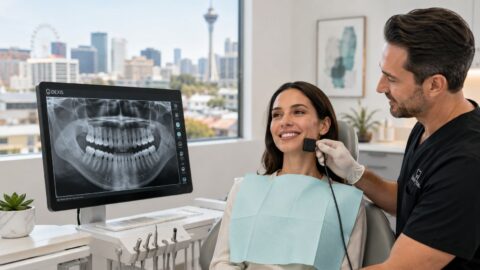
Dental X-Rays Near Me: A Las Vegas Patient Guide
A lot of people search for Dental X-Rays Near Me when something feels uncertain. Maybe you just moved to Las Vegas, maybe a tooth has started throbbing, or maybe you're overdue for a cleaning and want a dentist who explains things clearly. If you're in Lone Mountain, Painted Desert Estates, Desert Shores, or nearby neighborhoods, that search often comes with one big question: Do I need x-rays, and how often is too often?
That concern is reasonable. Most patients aren't worried about sitting in the chair for a few minutes. They're worried about what the images might show, how much radiation is involved, and whether the visit will lead to a long list of treatments they didn't expect. Clear answers matter.
Your Trusted Local Dentist in Las Vegas NV
A new patient might come from Sun City Summerlin after settling into the area and realizing it's time to establish care with a local office. Another might be in Desert Shores with a child who says food keeps getting stuck between two back teeth. Someone else may be searching late at night after waking up with swelling and wondering if they need an emergency dentist, a tooth extraction, or just a careful exam.
In all of those situations, x-rays are often part of the conversation. Not because they're automatic, but because they're one of the best ways to understand what's happening below the surface. A visual exam shows a lot. It doesn't show everything.
Many people also want a dentist who feels local, not rushed. If you're trying to choose a dentist near you in Las Vegas, it's helpful to know what a thoughtful visit should feel like. You should be able to ask why an image is being recommended, what type is needed, and whether there are alternatives.
Good dental care starts with explanation, not pressure.
That matters in a city as spread out as Las Vegas. Patients from Sunhampton, Monterrey, Mar-A-Lago, and Painted Desert Estates may all be searching for the same thing, but their reasons are different. One person wants a new patient exam. Another is thinking about dental implants near me. Someone else is comparing a cosmetic dentist near me with a general family dentist who can also handle restorative dentistry and emergency dental care.
Local practices are paying more attention to how patients find care online. For a broader look at how that works, this comprehensive playbook for dental marketing success gives useful context on how patients search, compare, and decide.
If you're reading this because you're trying to make a smart choice in Las Vegas, the most important thing to know is simple. Dental x-rays aren't just a box to check. They're a tool your dentist may use to protect your health, avoid surprises, and catch problems before they turn into pain.
Why Your Dentist Recommends Dental X-Rays
What you can see in the mirror is only part of the story. Teeth have multiple surfaces. Roots sit inside bone. Infections can form where you can't see them. Gum disease often affects the bone around teeth long before a patient notices a dramatic change.
That's why dental x-rays matter. They help dentists see what a light, mirror, and visual exam can't reveal on their own.
A quick visual can show a cracked filling, plaque buildup, gum irritation, or a chipped edge. An x-ray can reveal the hidden part of a cavity between teeth, changes in bone support, an impacted tooth, or signs of infection near the root. Those are very different kinds of information.
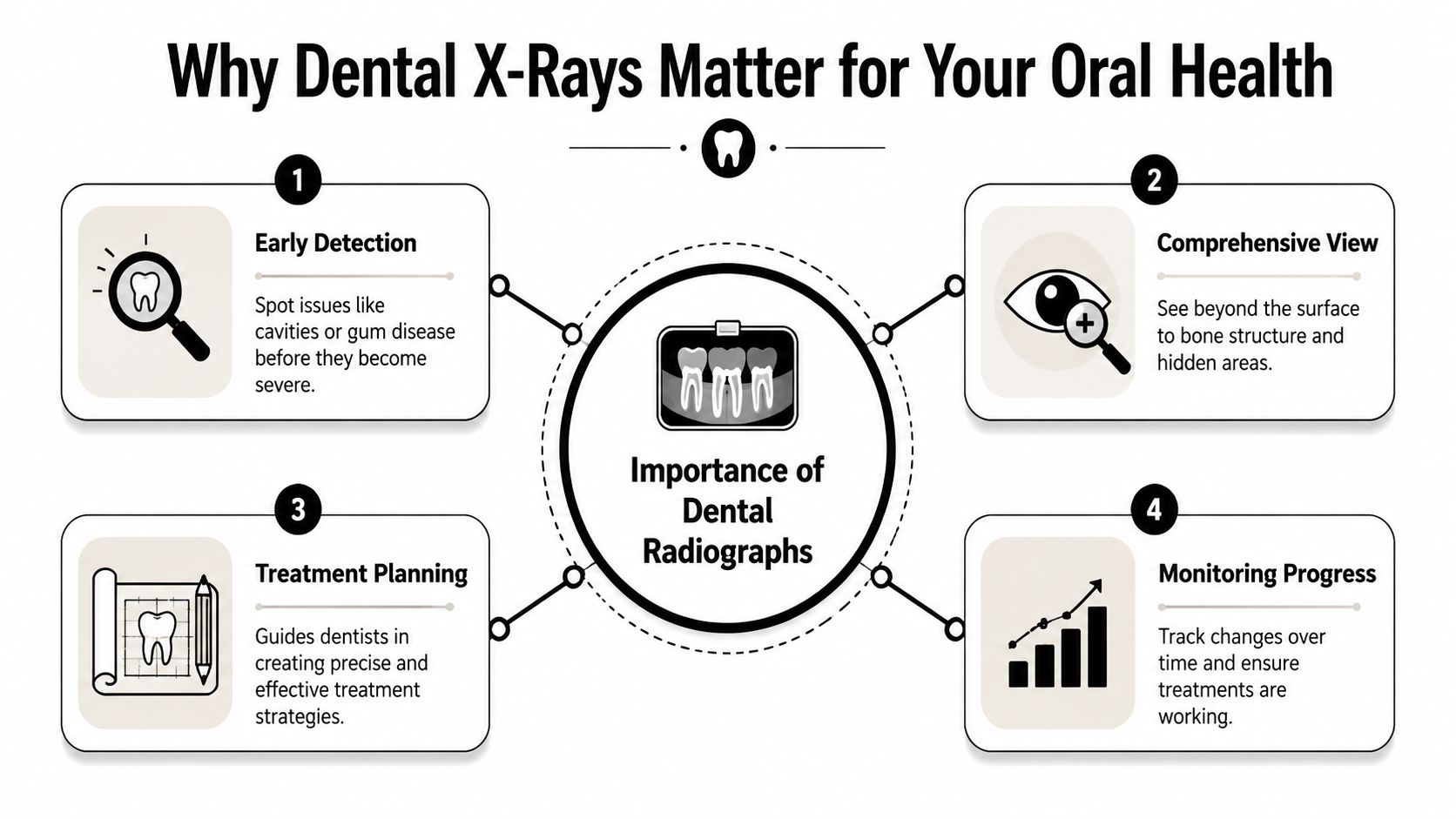
What x-rays help your dentist find
Cleveland Clinic notes that dental x-rays are used to detect cavities between teeth, bone loss, infections, impacted teeth, abscesses, cysts, and some tumors, and they also help with planning for implants, braces, dentures, and post-operative healing in its guide to dental x-rays.
That list helps explain why a dentist may recommend imaging even when a patient says, "I don't have pain." Early decay between teeth may not hurt yet. Bone loss can progress unnoticed. A wisdom tooth can be pressing in a harmful direction long before it becomes an emergency.
Why early information matters
When dentists find problems early, treatment is usually simpler. A small area of decay may need a conservative filling. If that same area goes unseen for too long, it can progress deeper and require more involved restorative dentistry. The same goes for infections, periodontal concerns, and treatment planning before a crown, extraction, braces case, or implant placement.
A dental x-ray isn't about selling treatment. It's about reducing guesswork.
For patients looking for a dentist in Las Vegas, NV, this is especially relevant during new patient exams. If you've switched offices, haven't had a cleaning in a while, or are exploring cosmetic dentistry, your dentist needs a complete picture before making recommendations.
Some visits also call for a wider planning lens. If you're considering tooth extraction, replacing missing teeth, or evaluating spacing before braces, images help the dentist map the safest and most predictable next step.
This short video gives a helpful overview of why these images are part of modern diagnosis.
A Guide to Common Dental X-Ray Types
Patients often hear terms like bitewing, periapical, or panoramic and assume they're interchangeable. They aren't. Each type of x-ray has a different job. Understanding that can make the visit feel much more straightforward.
Bitewings for routine checks
Bitewings are the images many patients get during regular exams and cleanings. They're especially useful for spotting decay between back teeth and checking bone levels in areas where gum disease may be developing. If your dentist says, "I want to see between these teeth," bitewings are usually what they mean.
RadiologyInfo explains that bitewings are the standard routine check for finding decay between teeth, and repeat timing depends on a person's risk. Children or teens with higher cavity risk may need them every 6 to 12 months, while low-risk adults may need them every 24 to 36 months, according to the guidance summarized in its panoramic x-ray overview.
Periapical images for one specific tooth
A periapical x-ray is smaller and more focused. It shows the full tooth from crown to root, plus the bone around it. Dentists often use this type when a tooth is painful, when there's concern about infection, or when they need a closer look before or after treatment.
If someone comes in saying, "This one tooth hurts when I bite," a periapical image may tell the dentist much more than a broad routine view.
Panoramic images for the big picture
Panoramic x-rays show the entire mouth in a single 2-D image. They're useful for seeing the relationship between teeth, jaws, and developing or impacted teeth. They're often chosen for initial assessments and for planning treatment such as braces or extractions.
This is the image many patients remember because the machine rotates around the head instead of placing a small sensor inside the mouth.
CBCT for advanced planning
CBCT stands for cone beam computed tomography. This is a more advanced three-dimensional scan that gives highly detailed views of teeth, roots, bone, and nearby structures. Dentists don't use it for every routine visit. They use it when planning needs more precision, especially for surgical or implant cases.
If you're researching treatment options and want to understand when 3-D imaging may be recommended, this page on 3D cone beam dental scans in Las Vegas gives a clear overview.
Comparing Dental X-Ray Types at Aspiring Smiles
| X-Ray Type | What It Shows | Commonly Used For |
|---|---|---|
| Bitewing | Upper and lower back teeth in one area, especially the spaces between teeth | Checking for cavities between teeth and monitoring bone levels |
| Periapical | One tooth from the chewing surface to the root and surrounding bone | Investigating tooth pain, infection, or a specific problem area |
| Panoramic | The entire mouth in one broad 2-D image | Initial assessments, braces planning, extractions, impacted teeth |
| CBCT | A detailed 3-D view of teeth, bone, roots, and nearby structures | Implant planning, surgical evaluation, complex diagnosis |
Practical rule: The right x-ray isn't the biggest one. It's the one that answers the clinical question clearly.
For patients searching Dental X-Rays Near Me, that distinction matters. A routine exam usually doesn't need the same imaging as a dental implant consultation or a complicated tooth extraction. The type should match the reason for the visit.
Are Dental X-Rays Safe What Las Vegas Patients Should Know
Radiation is the first concern many people raise, and it's the right question to ask. You should feel comfortable asking your dentist why an x-ray is needed, what kind is being taken, and how often you need one.
The short answer is reassuring. Modern dental offices commonly use digital imaging, and current guidance focuses on keeping exposure as low as possible while still getting the information needed for care.
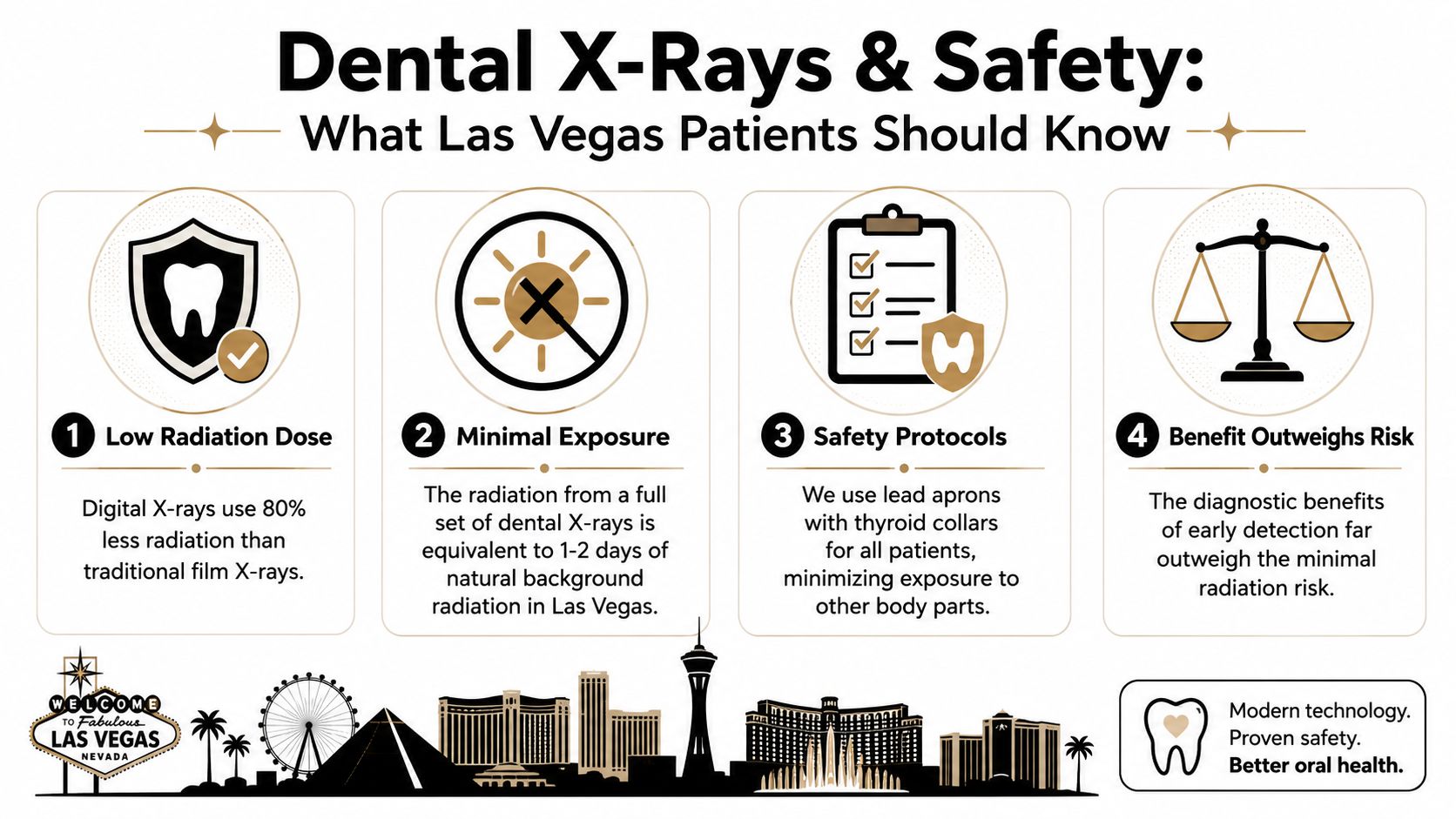
Modern digital systems use far less radiation
The American Dental Association says x-rays should be taken based on clinical need after an exam, not on a one-size-fits-all routine. The ADA also notes that dose reduction is improved with digital receptors, rectangular collimation, correct positioning, and the fastest receptor available in its guidance on dental radiographs.
That same ADA guidance states that digital x-rays can use about 80% to 90% less radiation than traditional film. That's one reason digital systems have become standard in many practices.
Healthy adults don't need unlimited imaging
Many online articles fall short. They talk about newer technology, but they don't answer the question patients are really asking: How many x-rays does a healthy adult need?
The answer depends on risk. A healthy adult with low cavity risk, stable gums, and no active symptoms may need routine bitewings less often than someone with frequent decay, past restorations, or active periodontal concerns. X-rays shouldn't be ordered because "it's been a while" in a vague sense. They should be ordered because your dentist has a clinical reason.
For people in Las Vegas who are looking for a new patient exam, this is a good sign of careful care. A dentist who explains why this image, why now is more trustworthy than one who treats every patient the same.
If your mouth is healthy, your imaging schedule should reflect that.
Safety also depends on technique
Many patients also ask about protective gear and whether older habits are still standard. The ADA notes that thyroid collars are no longer recommended in dentistry because they can interfere with imaging and lead to repeat exposures. Current guidance places more emphasis on accurate technique and equipment choices that reduce unnecessary dose from the start.
That's useful to know because it shows how dental safety evolves. Good safety isn't about doing things the old familiar way. It's about following the most current evidence-based approach.
Administrative privacy matters too. If you're sharing records or health paperwork digitally, secure communication practices help protect your information outside the exam room. This overview of protecting your sensitive information online is a practical reference.
For most patients, the key takeaway is simple. Dental x-rays are used carefully, modern systems are designed to reduce exposure, and frequency should be based on your health status, not an arbitrary schedule.
What to Expect During Your X-Ray Visit at Our Office
A lot of x-ray anxiety disappears once patients know what the visit feels like. In most cases, it's quick, calm, and far less uncomfortable than people expect.
You check in, meet the team, and head to the imaging area. A staff member explains which images are needed and why. If you're a new patient, that may be part of a full exam. If you're coming in with a specific concern, the imaging may focus on that one area.
What the process feels like
For a bitewing or periapical image, the assistant places a small digital sensor in your mouth and asks you to hold still for a moment. The image is captured in seconds. You may need to reposition once or twice so the dentist gets a clear view.
For a panoramic image, you stand or sit at the machine while it rotates around your head. Nothing touches the back of your throat, and the process is usually easy for patients who dislike intraoral sensors.
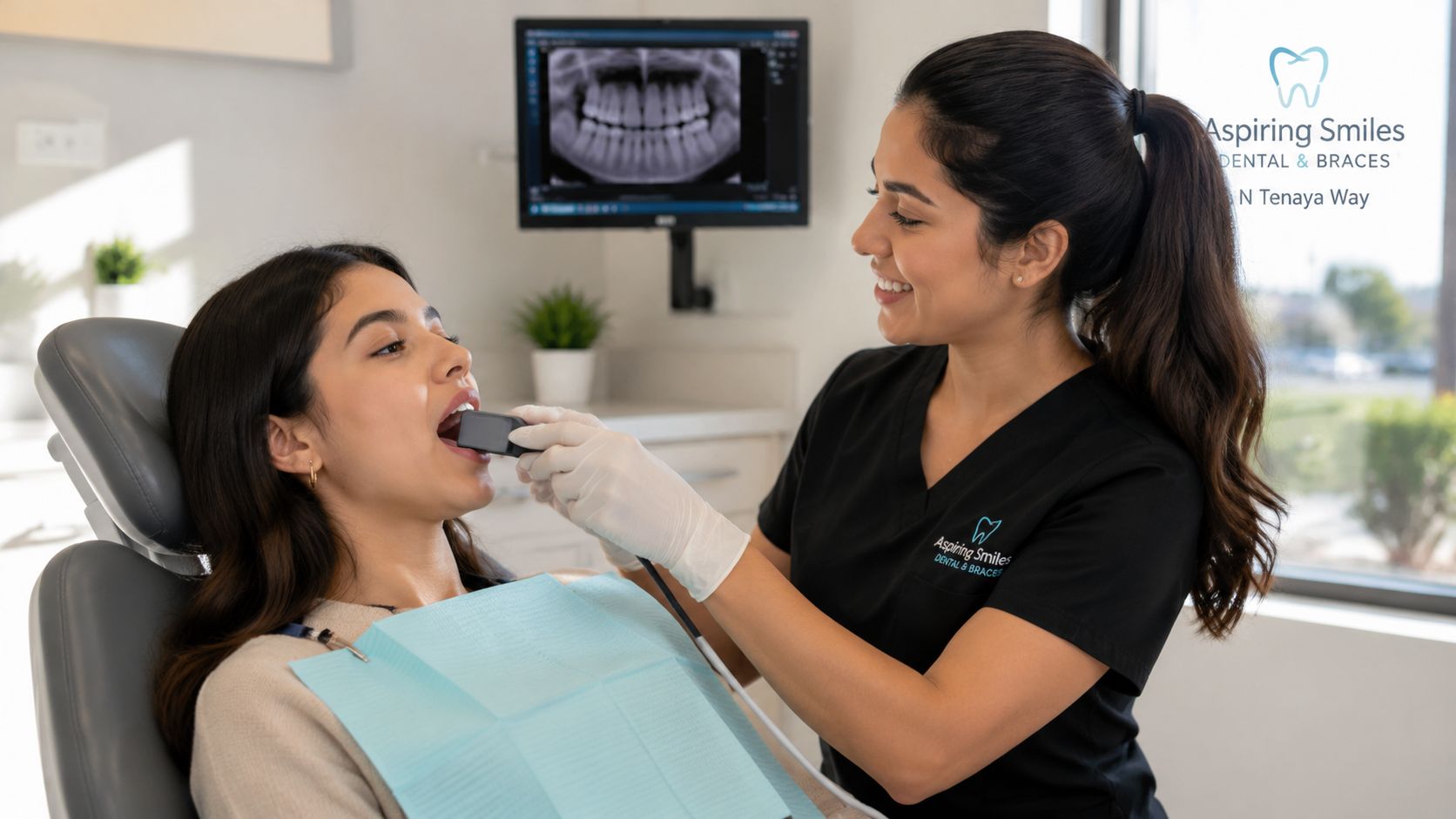
What happens after the images are taken
This is the part many patients care about most. They don't just want the image taken. They want someone to explain what it means.
Independent industry research cited in your brief notes that 25% of patients feel anxious about the interpretation of their x-rays, not just the procedure itself. That makes sense. The unfamiliar part isn't always the image. It's the fear of missing something serious or not understanding what the dentist sees.
A good visit includes a conversation. The dentist reviews the images, points out areas of concern if there are any, and explains what looks healthy. If nothing concerning is visible, that's worth saying clearly too.
You should leave knowing what was seen, what wasn't seen, and what happens next.
That kind of communication matters whether you're visiting for a routine cleaning and exams appointment, discussing restorative dentistry, or trying to decide if a painful tooth needs treatment right away.
Schedule Your Dental Exam and X-Rays in Las Vegas Today
If you've been searching for Dental X-Rays Near Me, the best next step is to book an exam with a dentist who uses imaging thoughtfully and explains it clearly. That's especially important if you're new to Las Vegas, overdue for care, dealing with tooth pain, or trying to plan treatment such as dental implants, cosmetic dentistry, or a possible tooth extraction.
Patients across Las Vegas, including Desert Shores, Sunhampton, Sun City Summerlin, Monterrey, Lone Mountain, Mar-A-Lago, and Painted Desert Estates, deserve dental care that feels both careful and understandable. X-rays should support the visit, not overshadow it. They help your dentist check for hidden decay, evaluate bone and roots, and make smarter decisions before a problem becomes larger.
A strong dental home can also help with more than one need. Many patients who begin with a new patient exam later return for cleanings, emergency dentist visits, restorative work, teeth whitening, braces planning, or long-term smile care.
If you've been putting off an appointment because of uncertainty about radiation or frequency, don't wait for pain to make the decision for you. Ask questions. Get answers. Let a local Las Vegas dental team evaluate what you need.
If you're ready to book with Aspiring Smiles Dental and Braces, you can request an appointment for an exam, dental x-rays, emergency care, cosmetic dentistry, restorative treatment, or dental implant planning. The office welcomes new patients in Las Vegas and focuses on clear communication, modern technology, and patient-first care.