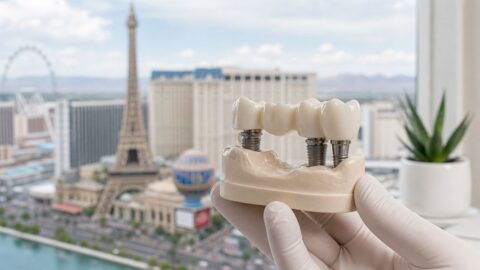
Implant Supported Bridge: Restore Your Smile in Las Vegas
If you're dealing with several missing teeth right now, daily life can start to feel smaller than it should. Chewing gets awkward. Certain foods end up off-limits. You may catch yourself smiling with your lips closed in photos or covering your mouth when you laugh.
I'm Dr. Patel, and I talk with Las Vegas patients about this every week. People from Desert Shores, Sun City Summerlin, Lone Mountain, Sunhampton, Monterrey, Mar-A-Lago, and Painted Desert Estates often come in thinking their only choices are “pull more teeth,” “get a denture,” or “just live with it.” In many cases, there's a stronger option that feels much closer to having real teeth again: an implant supported bridge.
For patients searching for a dentist near me, dental implants near me, or a dentist in Las Vegas, NV, the hardest part is usually knowing where to start. If you've also been looking into tooth extraction, restorative dentistry, cosmetic dentist near me, or even an emergency dentist because a broken tooth led to a larger problem, this guide is meant to make the process clear. I'll walk you through what an implant bridge is, who it helps, what treatment looks like in our Las Vegas office, and what you can realistically expect afterward.
Restore Your Smile with a Dentist in Las Vegas
Missing multiple teeth affects more than appearance. It can change the way your bite fits together, make chewing uneven, and leave nearby teeth with too much space to drift into. Many people also notice they speak a little differently or avoid social situations because they don't feel like themselves.
That's why I don't think of an implant supported bridge as a cosmetic extra. I see it as a practical, long-term form of restorative dentistry that helps rebuild comfort, function, and confidence. If you've been searching for a dentist in Las Vegas, NV who can explain your options without making things feel complicated, that's exactly how we approach care.
What everyday problems patients usually notice
Some patients come in after a recent tooth loss. Others have been managing the gap for years. The concerns sound different, but they often lead back to the same issues:
- Chewing trouble: Crunchy, chewy, or tougher foods become frustrating on one side of the mouth.
- Smile hesitation: Patients often say they smile less freely at work, family events, or on the Strip when taking photos.
- Shifting teeth: Teeth next to the gap can start moving, which may change your bite and make cleaning harder.
- Ongoing irritation: A broken tooth, old dental work, or untreated decay can create a cycle of discomfort that keeps coming back.
Practical rule: If you're missing several teeth in a row, replacing them is about more than looks. It helps protect how the rest of your mouth works.
Why local care matters
Choosing treatment close to home makes a real difference. If you live near Desert Shores or Sun City Summerlin, it helps to have your new patient exam, dental x-rays, follow-up visits, and long-term maintenance handled by a nearby team that knows your history. The same is true if you're in Lone Mountain, Painted Desert Estates, Monterrey, Mar-A-Lago, or Sunhampton and want one trusted office for dental care, cleaning and exams, and more advanced tooth replacement.
Patients often start by looking for help with one concern, then realize they also need a full plan. Sometimes that includes dental implants, sometimes a tooth extraction, and sometimes support from an emergency dentist if a failing tooth is causing pain now. The goal is always the same. Relieve the current problem and rebuild a smile you can rely on.
What Is an Implant Supported Bridge
An implant supported bridge is a fixed replacement for several missing teeth in a row. Instead of using neighboring natural teeth as anchors, it's supported by titanium implants placed in the jawbone. It resembles a sturdy overpass: the implants act as deep foundation posts, and the bridge sits securely on top.
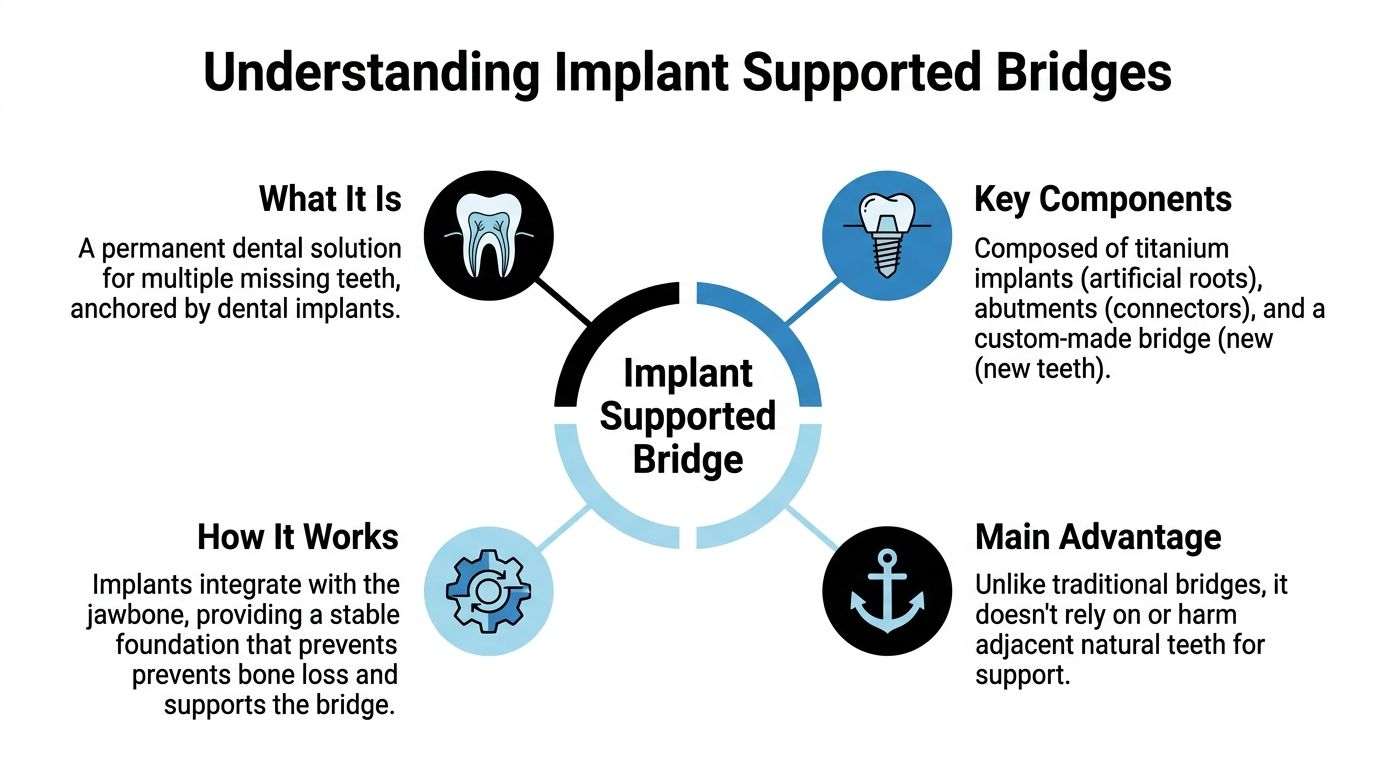
That difference matters. A traditional bridge depends on the teeth on either side of the gap. An implant bridge bypasses those teeth entirely and uses the jawbone for support.
The three parts that make it work
A simple way to understand it is to break it into pieces.
- Implants: These are titanium posts placed in the jawbone. They act like artificial tooth roots.
- Abutments: These small connector pieces attach to the implants at the gum line.
- Pontics: These are the custom replacement teeth that make up the visible bridge.
A clear patient explanation from Harlem Dentistry's overview of implant-supported bridges notes that an implant-supported bridge is anchored by titanium implants in the jawbone, bypassing natural teeth, and that it consists of implants, abutments, and custom pontics. The same source explains that the process typically takes 3–6 months for osseointegration, which is the period when the bone fuses to the implant.
Later in the section, this short video gives a helpful visual overview of how the restoration fits together.
What osseointegration means in plain language
Osseointegration sounds technical, but the idea is straightforward. Your jawbone heals around the titanium implant and holds onto it. That's what creates the stable base for chewing and speaking.
Because the support comes from implants instead of neighboring teeth, we don't have to reshape healthy teeth just to hold a bridge in place. That's one of the biggest reasons patients who are comparing options often prefer this treatment. It's fixed, it feels more secure than a removable appliance, and it's designed to function like part of your mouth rather than something that sits on top of it.
When patients understand that the “bridge” sits on implanted supports instead of borrowed support from other teeth, the whole treatment starts to make much more sense.
Are You a Good Candidate for This Solution
An implant supported bridge works best when the problem matches the design. In most cases, that means several missing teeth in a row, a healthy enough mouth to support healing, and enough jawbone to hold the implants securely. The exact answer comes from an in-person exam, but there are some useful signs that tell us whether this is worth exploring.
People who often qualify
This treatment is commonly a strong fit for patients who:
- Have consecutive missing teeth: It's especially useful when there's a span of teeth missing in one area rather than isolated gaps in different parts of the mouth.
- Want a fixed option: Many people like the idea of something that stays in place and doesn't come out at night.
- Have healthy gums or are willing to treat gum issues first: A stable foundation matters before we place implants.
- Want to protect nearby healthy teeth: Since an implant bridge doesn't rely on adjacent natural teeth, it can be a conservative choice in the long run.
A practical example is the patient missing three teeth in a row after an old bridge failed or a cracked tooth had to be removed. Another common example is someone who has been told they need extractions and wants a plan that restores both function and appearance after healing.
What can make treatment more complex
Some situations need extra planning. Heavy smoking, uncontrolled diabetes, active gum disease, or habits like clenching can affect healing and long-term stability. That doesn't always rule treatment out, but it does mean we need to be careful and thorough.
Bone quantity matters too. If the jawbone has thinned after tooth loss, implants may need additional support before placement. Consequently, a complete workup is important, especially if you've waited a while to replace the missing teeth.
A yes-or-no answer online isn't enough. Candidacy depends on your bite, your bone, your gums, and your health history together.
How we determine it in the office
At your new patient exam, I look at the whole picture, not just the gap in the smile. That usually includes:
- A conversation about what's bothering you now. Pain, chewing limits, appearance, or all three.
- A clinical exam to check the teeth, gums, and bite.
- Dental x-rays and imaging to evaluate bone support and spacing.
- A discussion of alternatives if an implant supported bridge isn't the best first step.
Sometimes the first step is treating infection, handling a tooth extraction, or improving gum health. In other cases, patients who thought they weren't candidates turn out to have good options once we plan carefully. That's why a consultation with a local dentist near me search result should lead to a real exam, not guesswork.
Implant Bridges vs Traditional Bridges and Dentures
When patients compare tooth replacement options, they usually want straight answers about comfort, durability, maintenance, and long-term effects on the rest of the mouth. That's the right way to think about it. The best choice isn't just the one that fills the space today. It's the one that supports your oral health years from now.
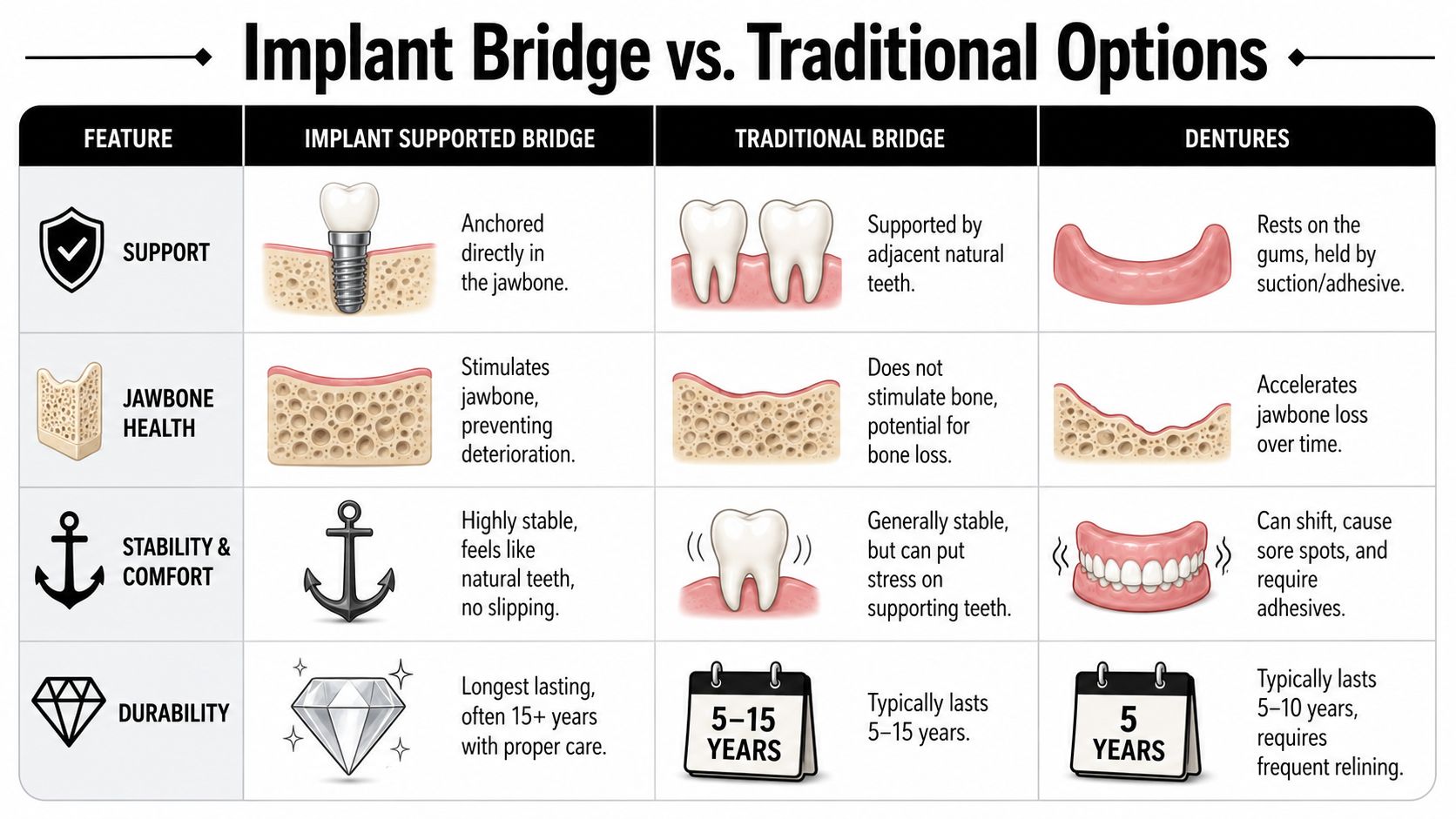
Side by side differences that matter
| Feature | Implant Supported Bridge | Traditional Bridge | Dentures |
|---|---|---|---|
| Support | Anchored in the jawbone | Supported by nearby natural teeth | Rests on the gums |
| Effect on adjacent teeth | Doesn't require reshaping neighboring teeth | Requires preparation of support teeth | Doesn't use adjacent teeth, but doesn't anchor to bone |
| Everyday feel | Fixed and secure | Fixed, but depends on support teeth | Removable and may shift |
| Bone support | Helps maintain stimulation in the jaw | Doesn't stimulate the jaw in the missing-tooth area | Doesn't stimulate the jaw and may feel less stable over time |
Implant supported bridge
This option is usually the closest to rebuilding the missing teeth from the root up. It's fixed in place, so patients often say it feels more natural for chewing and speaking.
Strong long-term data supports that reputation. A study available through PubMed Central on implant-supported fixed restorations reports a 97.1% cumulative survival rate at the implant level. The same source notes that traditional bridges anchored to natural teeth show a 30% failure rate within five to seven years, and that implant bridgework can last 15–25 years or more, compared with the 5–15 year lifespan of conventional bridges.
If you're comparing options and want a fuller look at treatment planning, our page on dental implants in Las Vegas explains how implant-based solutions are selected for different situations.
Traditional bridge
A traditional bridge can still be a reasonable option in some cases, especially when a patient isn't ready for surgery or needs a different type of treatment plan. But it has a built-in tradeoff. To support the bridge, the teeth next to the gap usually need to be reshaped.
That means healthy tooth structure may be removed to hold the restoration. If those support teeth later develop decay, fracture, or nerve issues, the entire bridge can be affected. Patients often don't realize that a “fixed” option can still place a lot of stress on natural teeth that were otherwise serviceable.
Dentures
Removable partial dentures fill the space and can be useful for some patients, especially when a short-term or lower-commitment option is needed. They can also help when someone needs to replace more teeth but isn't yet ready for implants.
Still, they behave differently from fixed restorations. They sit on the gums, may move during chewing, and often take more day-to-day adjustment. Some patients do well with them. Others never quite feel at ease.
The key difference is where the support comes from. Implants use the jawbone. Traditional bridges borrow support from teeth. Dentures rest on soft tissue.
Your Implant Bridge Journey at Aspiring Smiles
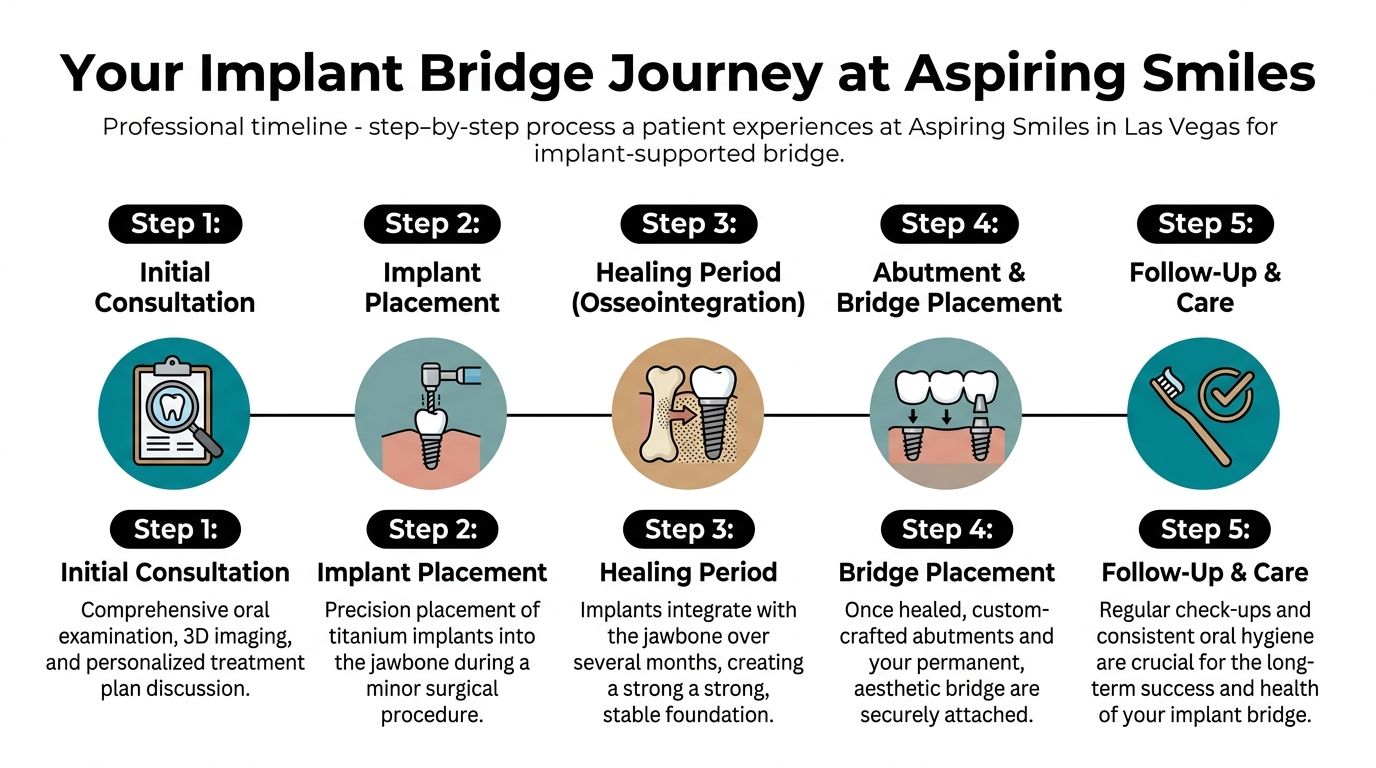
Patients usually feel better once they know the sequence. An implant supported bridge isn't one long mystery appointment. It's a series of planned stages, and each one has a purpose.
Your first visit and planning
The first step is a thorough consultation. We examine your teeth and gums, take imaging, review your medical history, and map out whether an implant bridge is the best fit or whether another service should happen first, such as treating infection or removing a damaged tooth.
For many Las Vegas patients, this is the appointment where things finally feel organized. Instead of worrying about random symptoms, you leave with a step-by-step plan that matches your mouth, your goals, and your schedule.
Implant placement
Once the plan is ready, the titanium implants are placed into the jawbone. This is a minor surgical procedure, and we focus carefully on comfort, clear instructions, and gentle technique.
Some patients expect this stage to feel more intense than it is. In reality, patients often describe the experience as manageable and easier than they feared, especially when they know what's happening and what recovery will involve.
Healing time matters for a reason
After placement, the bone needs time to fuse with the implants. That healing stage is what creates the stable support for the final bridge. It's not idle waiting. It's the biological part of treatment doing its job.
A helpful clinical point from Dental Associates of Jersey City's explanation of implant-supported bridges is that within the first three months after tooth loss, a patient can lose up to 25% of the surrounding jawbone. The same source explains that placing titanium implants helps halt that rapid deterioration by integrating with the jawbone and creating a stable foundation.
Bone doesn't wait. If you've lost teeth and have been postponing treatment, part of the consultation is figuring out how much support remains and how to preserve it.
Final bridge placement and follow-up
Once healing is complete, we attach the abutments and seat the custom bridge. This is the rewarding part patients have usually been picturing from the start. You get to see the shape, color, and fit of your new teeth in place.
After that, follow-up care keeps everything on track. We check healing, bite balance, home care, and comfort. If you live near Mar-A-Lago, Lone Mountain, or Sunhampton, having those visits handled locally makes the whole process much easier to maintain over time.
Recovery and Long-Term Care for Your New Smile
Recovery after implant placement is usually straightforward when patients know what to expect. For the first few days, I usually tell people to plan on rest, softer foods, and being gentle with the area. Mild soreness and some swelling can happen, but clear home instructions make a big difference.
The first stretch after treatment
A simple recovery checklist helps:
- Choose softer foods: Yogurt, eggs, soups, smoothies, and other non-crunchy foods are easier on the area early on.
- Keep the mouth clean: Brush carefully and follow the cleaning instructions we give you around the surgical sites.
- Take it easy: Give your body time to heal, especially during the first several days.
- Call if something feels off: If discomfort seems unusual or you have a question, reach out. Reassurance matters.
Caring for the bridge for years to come
Long-term care is where good habits pay off. Even though the implant itself can't get a cavity, the surrounding gums and tissues still need attention. Brush thoroughly, clean under and around the bridge as directed, and stay consistent with professional visits for cleaning and exams.
Many patients benefit from tools like a water flosser or floss threader because they make it easier to clean around the bridge design. If you'd like practical home-care tips, our guide on how to properly care for dental implants is a helpful place to start.
A long-term review from Bajars Dental on implant and bridge success rates reports that modern implant-supported bridges have a 90–95% success rate over 10 years and can last 20–30 years or even a lifetime with proper care and regular maintenance.
Daily home care and routine dental visits protect the tissues around the implants. That's what helps a strong restoration stay healthy for the long haul.
Cost and Scheduling Your Consultation in Las Vegas
For many patients, cost is the question that keeps them from making the call. That's understandable. An implant supported bridge is a major restorative treatment, and the fee depends on your specific case, including how many teeth are being replaced, what materials are chosen, and whether you need additional care first.
A patient guide from Burch Dental on the number of teeth supported by an implant bridge states that an implant-supported bridge replacing 3–4 teeth on two implants typically costs between $10,000–$15,000. That generally covers the implants, abutments, and bridge, while additional procedures such as bone grafting can increase the total.
That number can feel significant at first glance, but it helps to weigh it against what the treatment is designed to do. You're not only replacing missing teeth. You're restoring chewing, supporting oral health, and choosing a fixed solution intended for long-term use.
Questions patients often ask
- Will it look natural? Yes. The bridge is custom designed to fit your smile, bite, and facial features.
- Is the procedure painful? Most patients do well with treatment and feel relieved once they understand each step.
- Can I start with a consultation only? Absolutely. A consultation is where you get answers, imaging, and a personalized recommendation.
- What if I've been searching for a dentist near me for more than implants? That's common. Many patients also want help with cosmetic dentistry, teeth whitening, dental x-rays, or care from an emergency dentist if they've been putting off treatment until now.
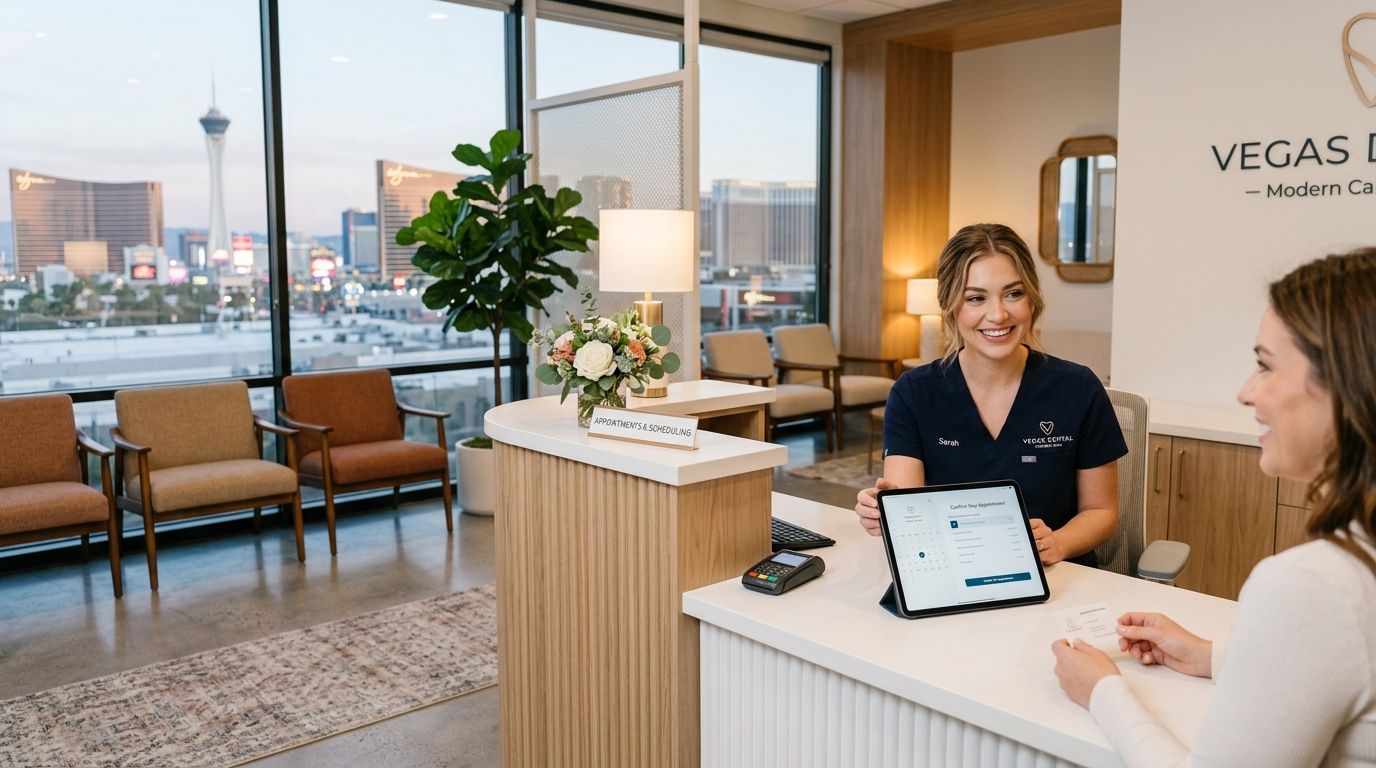
If you like researching providers before booking, it can also help to understand how local dental practices appear online. This guide to local search for dentists offers useful context for evaluating nearby offices and finding care that matches what you need in Las Vegas.
Whether you live in Sunhampton, Monterrey, Desert Shores, Sun City Summerlin, Lone Mountain, Mar-A-Lago, or Painted Desert Estates, the next step is simple. Book a consultation, get a clear diagnosis, and find out whether an implant bridge is the right fit for your smile.
If you're ready to replace missing teeth with a stable, natural-looking solution, schedule a consultation with Aspiring Smiles Dental and Braces. Dr. Patel and the team welcome patients across Las Vegas, NV for personalized dental care, dental implants, restorative dentistry, new patient exams, and compassionate support from your first visit onward.