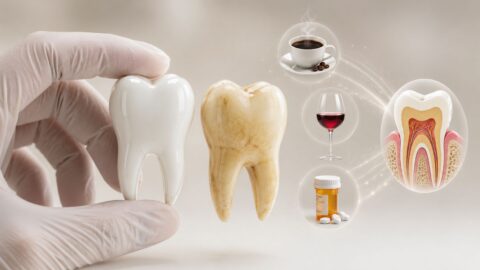
What Causes Tooth Discoloration: Dentist Explains
You catch your smile in the bathroom mirror before work, or in a photo on your phone, and something looks different. Maybe your teeth seem more yellow than they used to. Maybe one front tooth looks darker than the others. Maybe you've already tried whitening strips and now you're wondering why the color still doesn't look right.
That concern is common, especially for adults and families in Las Vegas who want a healthy, confident smile but don't want to guess at the cause. Some discoloration is simple surface staining from coffee, tea, tobacco, or daily wear. Some isn't. A single gray or dark tooth can point to a deeper issue inside the tooth, and that's where generic advice often falls short.
Patients searching for a dentist near me, a cosmetic dentist near me, or a dentist in Las Vegas, NV usually want two things at once. They want an answer, and they want a solution that precisely fits. If you live in Desert Shores, Sunhampton, Sun City Summerlin, Monterrey, Lone Mountain, Mar-A-Lago, or Painted Desert Estates, getting that clarity locally matters.
Brighten Your Smile with a Cosmetic Dentist in Las Vegas
A lot of people assume stained teeth mean they need whitening. Sometimes that's true. Sometimes whitening is exactly the wrong first step.
A patient might come in after noticing that their smile looks dull in pictures, especially under bright Nevada sun. Another person may say the problem started after years of coffee on the commute, dark sodas, or tobacco use. Someone else may point to just one tooth and say, “This one changed color, but it doesn't even hurt.” Those are three very different situations, and they shouldn't be handled the same way.
When discoloration affects more than appearance
Tooth color changes can affect confidence quickly. People smile less, cover their mouth when they laugh, or avoid close-up photos. For some patients, the bigger frustration is not knowing whether the issue is cosmetic, medical, or both.
That uncertainty is exactly why a careful dental evaluation matters. A cosmetic concern can be tied to routine surface staining, but it can also connect to older dental trauma, a dying nerve, medication-related changes, or enamel wear.
Practical rule: If all of your teeth look gradually duller, staining is often the culprit. If one tooth looks noticeably darker than the rest, it deserves a closer exam.
Local care that starts with the cause
In Las Vegas, where patients often want both health-focused and appearance-focused treatment, the best cosmetic dentistry starts with diagnosis. A new patient exam, dental X-rays when needed, and a conversation about your habits help determine whether you need teeth whitening, restorative dentistry, or treatment for an underlying dental problem.
That's especially important if you're also dealing with pain, a history of injury, or a tooth that has already had treatment. In those situations, a cosmetic fix alone may not last.
For patients looking for a cosmetic dentist near me, cleaning and exams, dental x-rays, or even an emergency dentist because a dark tooth appeared suddenly, the goal is simple. Find out what caused the discoloration, then choose the treatment that works.
Understanding the Types of Tooth Discoloration
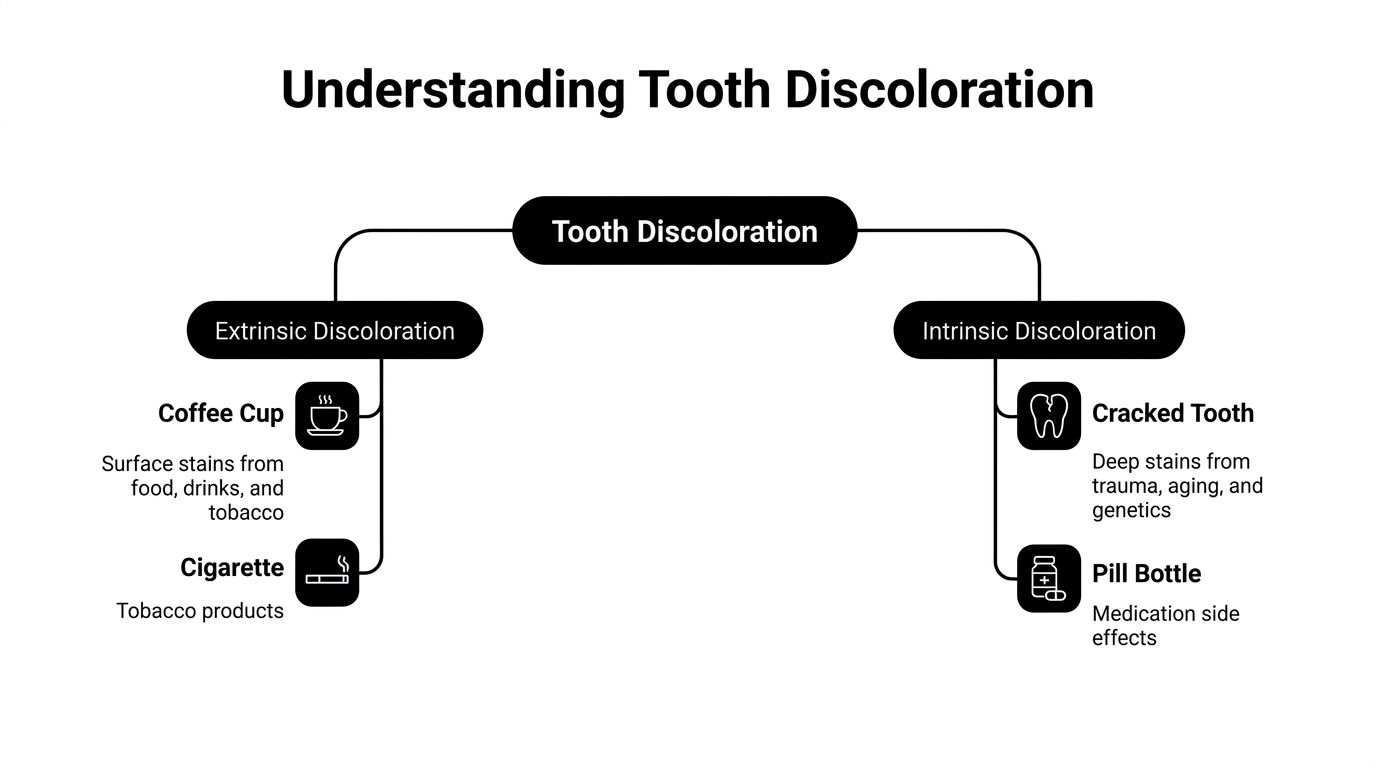
Most tooth discoloration falls into three broad categories. Once you know which category your teeth fit into, the treatment options make much more sense.
Extrinsic discoloration
Extrinsic discoloration means staining on the outer surface of the tooth. This is similar to a coffee mug that picks up color on the outside over time. The enamel is exposed to pigments from drinks, foods, tobacco, and plaque buildup, so the surface starts to look yellow, brown, or dull.
A survey of self-reported tooth discoloration found that 78.6% of people attributed it to staining foods and drinks, while 86.8% of patients with discoloration in another study cited pulp-related issues as the cause, showing how common both external and internal factors are, according to this tooth discoloration survey summary.
Extrinsic stains often respond well to:
- Professional cleanings that remove plaque and surface buildup
- Whitening treatment when the enamel itself is healthy
- Daily habit changes such as rinsing after dark beverages
Intrinsic discoloration
Intrinsic discoloration happens inside the tooth. This is more like colored glass than a stained mug. The color change is built into the deeper tooth structure, so brushing, polishing, or over-the-counter whitening may do very little.
Common examples include teeth that darken after trauma, internal bleeding, certain medications during tooth development, or changes inside a tooth after the nerve has been damaged.
Age-related discoloration
Age-related color change doesn't always fit into one neat box. Over time, enamel can wear thinner, and the naturally darker dentin underneath shows through more. Teeth can start to look less bright even when someone brushes well and doesn't smoke.
Here's a simple way to think about the differences:
| Type | Where the color change starts | What it often looks like | What usually helps |
|---|---|---|---|
| Extrinsic | Surface enamel | Yellow or brown staining across several teeth | Cleaning, whitening, stain control |
| Intrinsic | Inside the tooth | Gray, brown, banded, or one dark tooth | Diagnosis first, then targeted treatment |
| Age-related | Enamel thinning plus dentin showing through | General darkening over time | Whitening, bonding, veneers, or crowns depending on severity |
Surface stains are common. Internal discoloration is common too. The difference matters because the right treatment for one can be ineffective for the other.
Common and Hidden Causes of Stained Teeth
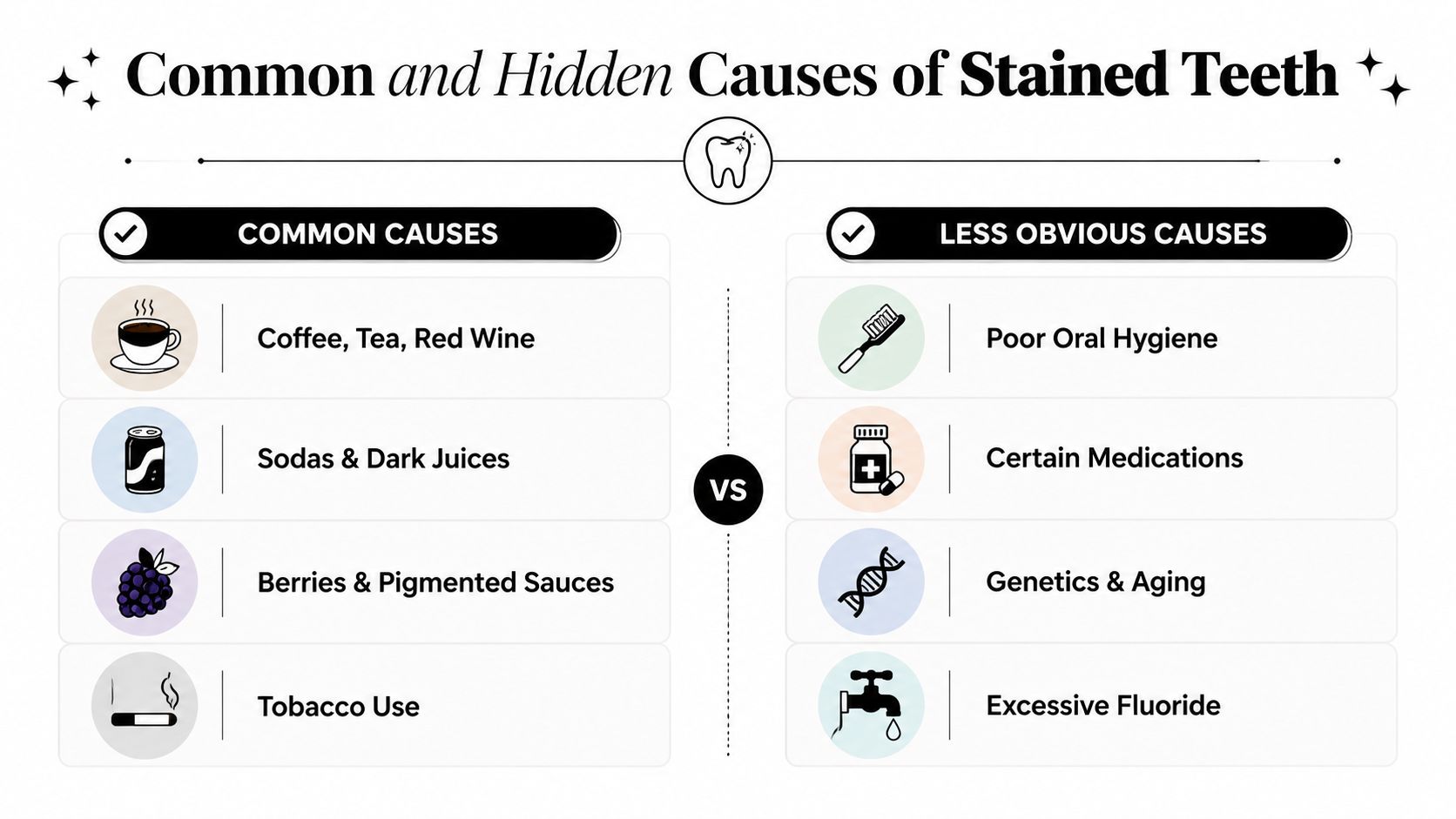
When patients ask what causes tooth discoloration, they usually name coffee first. Coffee absolutely contributes, but it's only part of the story. Some causes are easy to spot. Others stay hidden until a dental exam or X-ray reveals what's going on.
Everyday causes on the surface
Surface staining tends to build slowly. It usually affects multiple teeth instead of one isolated tooth.
The most common contributors include:
- Dark beverages like coffee, tea, cola, and red wine
- Pigmented foods such as berries and richly colored sauces
- Tobacco products that leave yellow or brown deposits
- Inconsistent oral hygiene that allows plaque and stain to cling to enamel
A common pattern in Las Vegas is frequent sipping. Instead of one coffee in the morning, many people drink dark or acidic beverages over several hours. That repeated exposure gives pigments and acids more contact time with enamel.
Medication and environmental causes
Not all discoloration comes from lifestyle choices. Some is linked to medications or early environmental exposure.
Certain medications are well-documented causes of discoloration. Tetracycline antibiotics taken during tooth development can cause permanent yellow-brown or gray bands, while long-term use of mouthwashes with chlorhexidine can lead to noticeable brown stains in up to 50% of users, according to MedlinePlus guidance on tooth discoloration.
Other medications can also contribute to a yellowish cast over time, including some antihistamines, antipsychotic drugs, and several blood pressure medications. In those cases, the answer usually isn't to stop a prescribed medicine on your own. It's to bring a full medication list to your dental visit so the discoloration can be interpreted in context.
The single dark tooth that shouldn't be ignored
This is the part many general articles miss. If one tooth changes color by itself, especially if it turns gray or brown, the issue may be inside the tooth rather than on it.
That can happen after:
- A hit to the tooth during sports, a fall, or an accident
- Nerve damage that developed slowly after trauma
- Previous dental treatment followed by internal changes
- Hidden infection or inflammation inside the tooth
A tooth can lose vitality without causing dramatic pain. That's why a single discolored tooth deserves more than a whitening strip.
One dark tooth often tells a different story than several stained teeth. It may be signaling internal damage, not just cosmetic staining.
If you've had a root canal in the past and the tooth looks darker or feels off, patients sometimes find it helpful to review post-root canal infection signs before coming in. It won't replace an exam, but it can help you recognize when discoloration may be tied to something deeper.
A short visual explanation can also help make the differences easier to spot:
New habits that can make staining worse
Some newer habits work against enamel even when patients think they're making a healthy or cosmetic choice. Acidic drinks and repeated unsupervised whitening can roughen the tooth surface, which makes future staining more likely to cling.
That matters because people often respond to discoloration by whitening more aggressively, when the actual issue is enamel wear, dehydration, internal tooth damage, or a mismatch between the stain type and the treatment they picked.
How We Diagnose Tooth Discoloration at Aspiring Smiles
A good diagnosis starts with looking beyond the color itself. The same shade change can come from very different causes, and the exam should sort that out before any cosmetic treatment is chosen.
What we look for during the exam
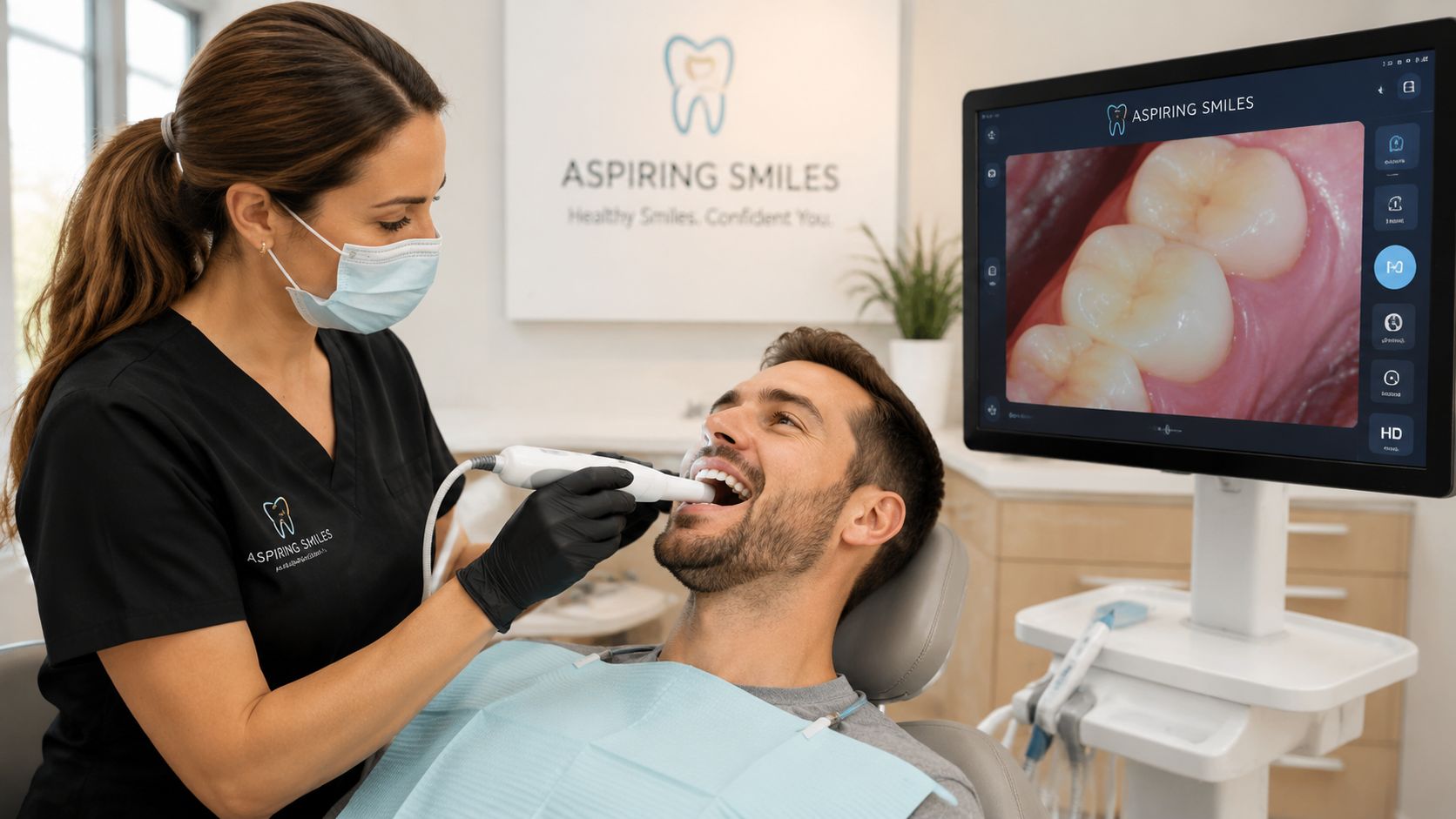
The first step is a visual evaluation. We look at whether the discoloration affects one tooth or many, whether the color is yellow, brown, gray, or mottled, and whether the enamel surface looks smooth, rough, worn, chipped, or restored.
We also ask targeted questions:
- When did you first notice it
- Did the color change happen gradually or suddenly
- Have you had a fall, sports injury, or old dental work on that tooth
- Do you use whitening products, mouth rinses, tobacco, or dark beverages regularly
That history often reveals the pattern. General yellowing points in one direction. A single gray front tooth after an old bump to the mouth points in another.
Why X-rays matter for hidden causes
Some causes of discoloration can't be confirmed just by looking. Dental X-rays help reveal whether a tooth has internal changes, previous endodontic treatment issues, decay under an old restoration, or signs that the nerve may no longer be healthy.
Intrinsic discoloration often results from chemical changes within the tooth after trauma or nerve death. Hemoglobin byproducts from internal bleeding can penetrate the tooth's structure, creating gray or brown chromogens that cannot be brushed away and require professional diagnosis to identify, as explained by Cleveland Clinic's overview of tooth discoloration.
A whitening product can lighten surface stains. It can't tell you whether a dark tooth still has a healthy nerve.
Matching the diagnosis to the right care
That's where the visit becomes useful, not just informative. Once the cause is clear, the treatment plan gets much more precise.
For some patients, the answer is a cleaning and professional whitening. For others, it may involve monitoring, a restorative option, or referral into more advanced treatment planning if the tooth structure or pulp health has changed. If the discoloration is paired with pain, swelling, or a damaged tooth, the visit may also shift toward urgent care, which is why some people searching for an emergency dentist are dealing with a color change that signals a deeper problem.
Restoring Your Bright Smile with Cosmetic and Restorative Dentistry
Treatment works best when it matches the cause. Whitening can be excellent for surface stains, but it won't solve every discoloration problem. Patients get the best result when they stop asking for the brightest option and start asking for the right option.
When whitening makes sense
If the discoloration is mostly external, professional teeth whitening is often the cleanest and most conservative choice. It's designed for surface-level staining from food, drinks, and tobacco, and it works best after the teeth have been examined and cleaned.
In-office systems such as Zoom are useful when the enamel is healthy and the patient wants a faster, more even change than strips or paint-on gels usually provide. Whitening can brighten a smile noticeably, but it doesn't change crowns, fillings, or deep internal discoloration.
What whitening usually does well:
- Lifts common surface stains from daily habits
- Brightens multiple teeth evenly when discoloration is generalized
- Works predictably when the underlying tooth structure is healthy
What whitening doesn't do well:
- Mask a single dead or traumatized tooth
- Correct deep banding from developmental staining
- Repair worn, chipped, or heavily restored teeth
When cosmetic coverage is the better answer
For stains that are deeper, patchier, or structurally tied to the tooth, coverage-based cosmetic treatment is often more reliable.
Dental bonding can help with smaller areas of discoloration or shape irregularities. Composite resin is placed directly on the tooth to improve color and appearance. If you want to learn how this option works for mild to moderate cosmetic concerns, our page on dental bonding treatment explains where it fits.
Veneers are thin custom coverings placed on the front of visible teeth. They can work well when the issue is intrinsic discoloration, shape concerns, or a smile that needs broader cosmetic refinement.
Crowns cover the entire visible portion of a tooth. They're often the better choice when a tooth is both discolored and structurally compromised, such as after fracture, large fillings, or prior root canal treatment.
The overlooked treatment for one dark tooth
Many patient resources fail to explain that localized discoloration on a single tooth can indicate hidden pathology like pulp necrosis. This gap often delays treatment and makes it important to consider options beyond whitening, such as internal bleaching or crowns, as discussed in this patient education article on localized tooth discoloration.
Internal bleaching is different from standard whitening. It's used in select cases for a tooth that has darkened from inside, often after root canal therapy. Instead of trying to brighten the whole smile from the outside, the treatment targets the specific tooth that changed color.
If one tooth is dark and the others look healthy, the best cosmetic result often comes from treating that tooth differently from the rest.
At Aspiring Smiles Dental and Braces, treatment options for discoloration may include whitening, bonding, veneers, crowns, or restorative planning depending on whether the problem is surface stain, internal discoloration, structural damage, or a combination of issues.
For patients also dealing with missing or failing teeth, cosmetic planning sometimes overlaps with restorative care. In more advanced cases, that may mean discussing crowns, replacement options, or even Dental implants near me searches that start as cosmetic concerns but turn out to involve long-term tooth stability.
Preventing Future Stains and What to Expect at Our Las Vegas Office
Prevention doesn't require perfection. It requires consistency and a plan that fits real life.
Habits that help your teeth stay brighter
A few practical changes make a real difference:
- Brush and floss consistently so plaque and stain don't sit on enamel longer than they need to
- Rinse with water after dark or acidic drinks if you can't brush right away
- Stay current with cleaning and exams so buildup is removed before it becomes more stubborn
- Use whitening products carefully because more product isn't always better
Modern lifestyle trends, such as acidic cold-brew coffee and unsupervised use of at-home whitening kits, can increase enamel porosity, making teeth more susceptible to future staining and even causing blotchy discoloration, as noted in WebMD's review of tooth discoloration causes.
Nutrition plays a role in oral health too, especially when patients are trying to support enamel and bone health as part of a broader routine. If you enjoy learning about nutrient-focused wellness topics, VitzAi's comprehensive vitamin K2 guide offers a general overview worth reading alongside advice from your medical and dental providers.
What your visit looks like here in Las Vegas
For many new patients, the biggest relief is knowing the appointment won't feel rushed. A visit typically starts with a conversation about what you've noticed, followed by a visual exam and dental X-rays if they're needed to rule out hidden causes.
Patients from Desert Shores, Lone Mountain, Sun City Summerlin, and nearby neighborhoods often want a practice that can handle both routine dental care and cosmetic planning in one place. That includes new patient exams, cleaning and exams, teeth whitening, restorative dentistry, and urgent concerns when a dark tooth appears unexpectedly.
If whitening is part of your plan, our guidance on teeth whitening aftercare can help you keep results looking cleaner for longer.
Schedule Your Consultation for a Whiter Smile Today
Tooth discoloration can be simple, or it can be a sign that a tooth needs closer attention. That's why guessing usually leads to frustration. The most effective treatment depends on whether the problem is a surface stain, internal discoloration, enamel wear, old trauma, or a tooth that needs restorative care.
If you've been looking for a dentist in Las Vegas, NV, a cosmetic dentist near me, or an emergency dentist because one tooth suddenly looks darker, a professional evaluation can give you a clear answer. In some cases, whitening is enough. In others, bonding, veneers, crowns, or additional treatment will give you a healthier and more natural-looking result.
Patients across Sunhampton, Monterrey, Mar-A-Lago, Painted Desert Estates, and nearby Las Vegas neighborhoods don't need to keep wondering what changed or whether it's serious. A focused exam can tell you what's causing the discoloration and what will effectively improve it.
If your smile looks dull, patchy, or uneven, or if you're concerned about one specific tooth, schedule a consultation and get a treatment plan built around the underlying cause.
Ready to take the next step toward a healthier, brighter smile? Schedule a visit with Aspiring Smiles Dental and Braces for a new patient exam or cosmetic consultation at 3211 N Tenaya Wy Suite 122, Las Vegas, NV 89129. You can request an appointment online or call (725) 215-2309 to speak with the team about teeth whitening, dental x-rays, restorative dentistry, tooth extraction needs, emergency dental care, or long-term options such as dental implants.