Bruxism Treatment in Las Vegas: A Patient’s Guide
Waking up with a sore jaw can make the whole day feel off. Maybe your temples ache before you've had coffee. Maybe your partner says they hear grinding at night, or you've noticed a tooth that suddenly feels more sensitive when you drink something cold.
A lot of people in Las Vegas assume this means they just need a night guard and the problem will disappear. It's understandable, but it's not quite that simple. Bruxism treatment is usually about protecting your teeth, easing muscle strain, and reducing triggers that keep the clenching going.
If you've been searching for a dentist near me, a dentist in Las Vegas, NV, or even an emergency dentist because jaw pain or a cracked tooth has started to worry you, it helps to know what's really going on and what kind of dental care can help.
Tired of Jaw Pain? Bruxism Treatment in Las Vegas Can Help
You go to bed tired, hoping for rest, and wake up feeling like your jaw worked the night shift. Your teeth feel tight. Your face feels tired. Sometimes the headache starts before your feet hit the floor.
That pattern is common with bruxism. Some people grind their teeth while they sleep. Others clench during the day while driving, working, or dealing with stress, without realizing it. What matters most is that the discomfort is real, and it can affect your teeth, jaw joints, and daily comfort.
For many patients, the first confusing part is this. A guard can help, but it doesn't automatically make the grinding stop. Honest care starts with that truth. It's one reason patients appreciate straightforward education from local practices that focus on symptoms, damage prevention, and long-term relief instead of quick promises.
Why local care matters
When jaw pain starts interfering with sleep, eating, or concentration, convenience matters. You want a dental office that's close to home, familiar with your concerns, and able to help you move from uncertainty to a practical plan. That's especially important for families in Desert Shores, Sunhampton, and Sun City Summerlin who want one trusted place for exams, dental x-rays, restorative dentistry, and urgent dental care if a tooth cracks.
Practical rule: If jaw soreness keeps returning, or your teeth are showing wear, it's worth getting checked before the damage becomes harder to repair.
Patients often begin with an online search, then compare offices, reviews, and services. If you're curious how dental practices dominate local search for dental clinics, that resource gives useful context on why some offices are easier to find when you need help quickly. For patients, the bigger point is simple. Access matters when pain is disrupting your routine.
Bruxism is manageable. The right dental team can help protect your smile, relieve strain, and decide whether you may also need support for related jaw issues, restorative work, or follow-up care.
What Is Bruxism and Why Does It Happen
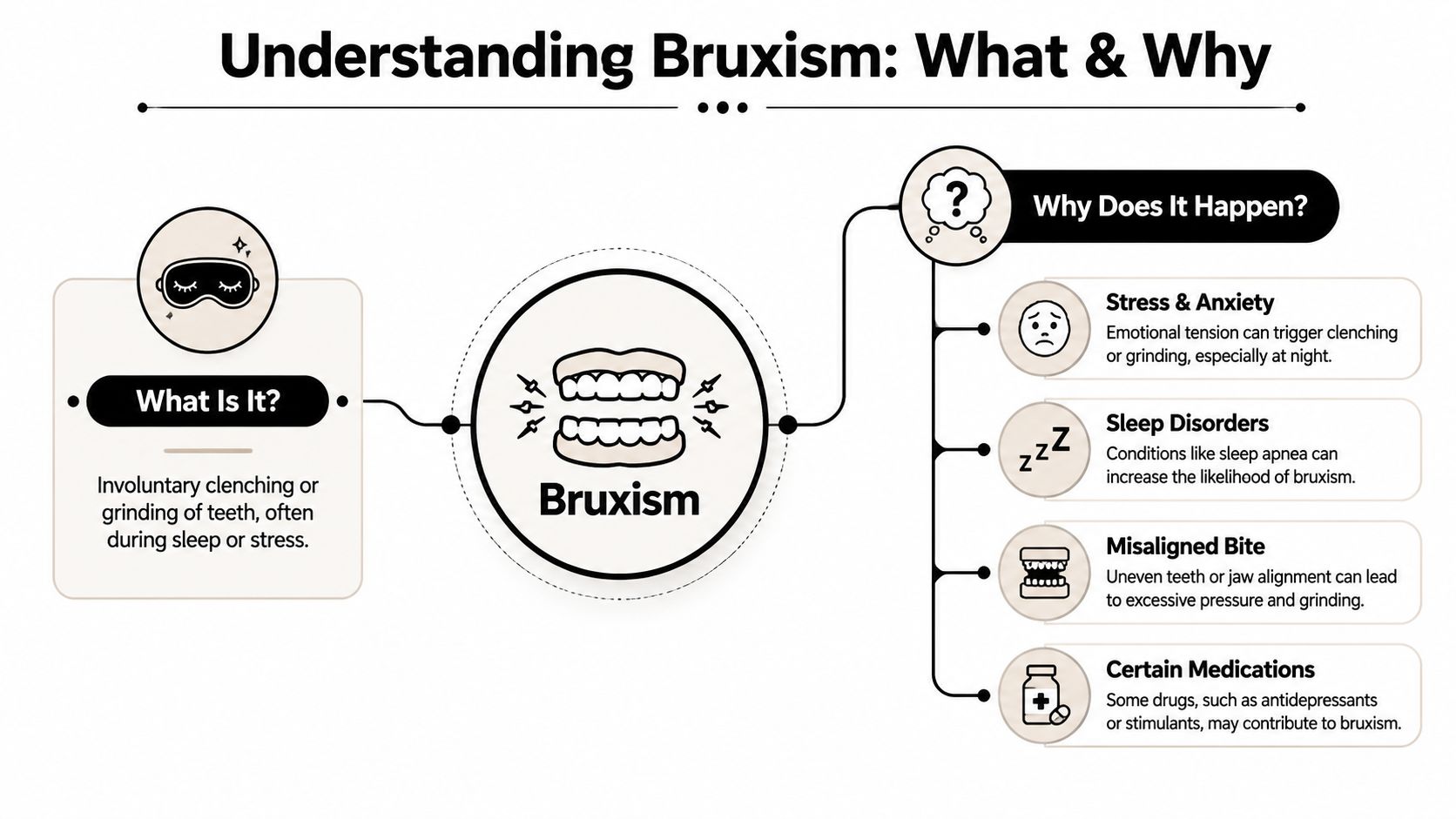
Bruxism means clenching or grinding your teeth. It can happen while you're awake or while you're asleep, and those two patterns don't always feel the same.
Some people notice awake bruxism as a tight jaw during stressful meetings or traffic. Sleep bruxism is different because you may have no idea it's happening until symptoms show up, or someone else hears the grinding. Bruxism is also common. It affects approximately 22.22% of the global population when combining both sleep and awake forms. In adults, sleep bruxism occurs in about 8% of the population, while awake bruxism can affect up to 31.0%, often linked to stress and anxiety, according to this overview of bruxism prevalence and associated factors.
Two forms patients often mix up
A simple way to think about it is this:
| Type | What it usually feels like | What patients often notice |
|---|---|---|
| Awake bruxism | Daytime clenching | Tight jaw, pressed teeth, facial tension |
| Sleep bruxism | Grinding or clenching during sleep | Morning soreness, headaches, worn teeth, partner hears grinding |
Many patients in Monterrey and Lone Mountain first come in thinking they have a tooth problem only. Then the exam shows a bigger pattern involving teeth, muscles, and jaw function.
Common reasons it starts
Bruxism doesn't always have one single cause. In everyday practice, several things can overlap.
- Stress and anxiety often show up as daytime clenching or nighttime tension.
- Lifestyle factors such as caffeine, alcohol, and smoking may be involved.
- Sleep-related issues can play a role in some patients.
- Bite and tooth wear changes may make symptoms feel worse, even when they didn't start the problem.
Bruxism is often less about one damaged tooth and more about repeated pressure on the whole chewing system.
Signs that deserve a dental exam
The symptoms can be subtle at first. Then they build.
- Morning jaw soreness that fades later in the day
- Temple headaches or facial fatigue after sleep
- Tooth sensitivity when enamel starts wearing down
- Flattened or chipped teeth from repeated pressure
- Clicking, tightness, or tenderness around the jaw
- Interrupted sleep for you or the person next to you
This is why bruxism can overlap with other concerns people search for, including tooth extraction, restorative dentistry, cleaning and exams, and even a cosmetic dentist near me when worn front teeth start changing the look of the smile.
Your First Step Toward Relief Getting a Diagnosis
The first visit for jaw pain is usually much simpler than patients expect. It starts with a conversation. When did the soreness begin? Is it worse in the morning? Have you broken a filling, chipped a tooth, or noticed headaches or neck tension?
Then comes the clinical part. A dentist checks for wear patterns, tiny cracks, tenderness in the chewing muscles, bite changes, and signs that the jaw joints are under strain. This is also where new patient exams and dental x-rays become useful. They help show whether the problem is limited to the surface of the teeth or whether there's deeper damage that needs restorative planning.
What the exam usually includes
Most bruxism evaluations include a few practical checkpoints:
- Symptom review. You describe the pain, timing, and habits you've noticed.
- Mouth exam. The dentist looks for wear, fractures, gum changes, and stress on crowns or fillings.
- Jaw and muscle check. Tenderness, tightness, and movement patterns can reveal a lot.
- Imaging when needed. Dental x-rays help rule out other causes of pain and show whether teeth or restorations have been affected.
When a broader evaluation makes sense
Sometimes the dental findings suggest that clenching is only part of the picture. If symptoms point toward a sleep-related issue or more complex jaw dysfunction, a referral for additional evaluation may be appropriate. That doesn't mean the dental visit was incomplete. It means your care is being handled thoroughly.
If your symptoms involve both tooth wear and facial pain, a good diagnosis should look at both. Not just one.
That careful approach matters because the right diagnosis shapes the right treatment. Some patients need protection for enamel. Others need pain relief, bite stabilization, restorative repair, or guidance on tension habits they didn't know they had.
Finding the Right Bruxism Treatment for You
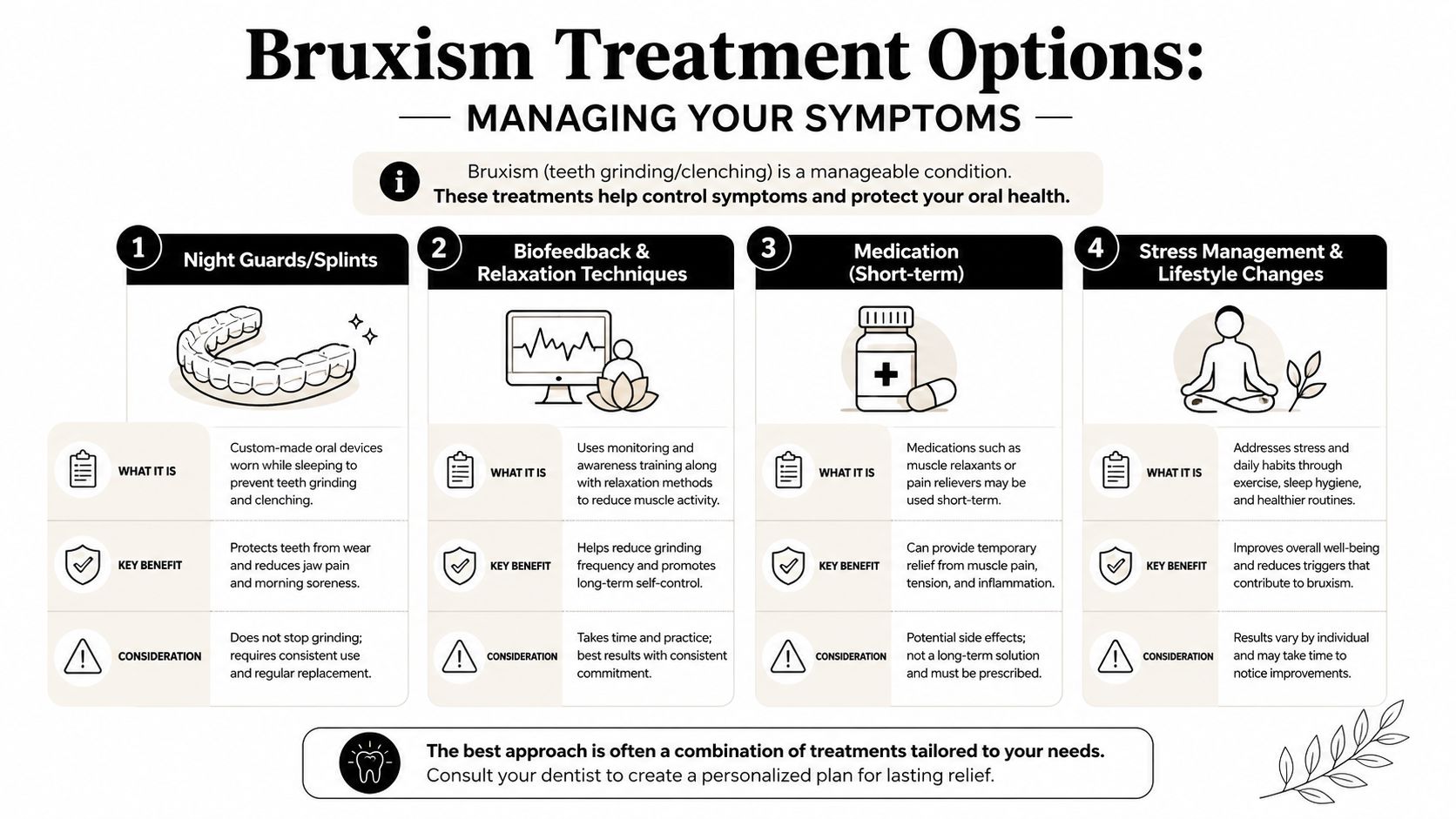
The most important thing to know is this. There is currently no established cure for bruxism, and no effective treatment permanently stops sleep bruxism activity. Management is directed toward protecting teeth and restorations, reducing bruxism frequency, and relieving pain, as explained in this clinical consensus on bruxism management. That may sound frustrating at first, but it's helpful because it sets realistic expectations.
Relief usually comes from combining treatments, not chasing one magic fix.
What night guards really do
Many people often misunderstand this aspect. Occlusal splints from hard acrylic resin provide definitive mechanical protection against tooth wear but do not reduce the frequency of bruxism events. Their primary clinical utility is strictly protective, not therapeutic for the underlying disorder, according to this clinical review of occlusal splints for sleep bruxism.
In plain language, a night guard helps protect your teeth from the force of grinding. It doesn't guarantee the grinding itself will stop.
That still makes it valuable. If your enamel is flattening, your restorations are under stress, or you've started chipping teeth, a custom appliance can act like protective armor while you work on the rest of the plan. Patients looking into options can learn more about a custom night guard for grinding.
A side by side way to think about treatment
| Approach | Main role | Best use |
|---|---|---|
| Custom night guard | Protects teeth and dental work | Wear prevention, crack prevention |
| Behavior awareness | Reduces daytime clenching habits | Awake bruxism, stress patterns |
| Physical measures | Eases jaw muscle strain | Tightness, soreness, fatigue |
| Short-term medication in selected cases | May reduce jaw motor activity or pain | More severe cases under supervision |
A short visual overview can help make these options easier to understand.
The part many patients skip
Some of the most useful progress happens outside the mouth. That includes catching yourself when your teeth are touching during the day, softening the jaw, limiting excess caffeine if it seems to make symptoms worse, and building stress reduction into the week.
In selected severe cases, medications such as clonazepam and clonidine have shown a 40% to 60% reduction in jaw motor events in sleep bruxism patients, though they're generally reserved for short-term use because long-term safety data is limited, according to this review of medication approaches in sleep bruxism.
A guard protects your teeth. Habits, stress support, and targeted care address the reasons your jaw keeps overworking.
That combination is what makes bruxism treatment practical and honest.
Advanced Solutions for Severe Bruxism and Tooth Damage
Some patients don't come in with mild wear. They come in after a crown fractures, a back tooth cracks, or the jaw muscles feel exhausted every morning. In those cases, the treatment plan may need to move beyond basic protection.
One option for more resistant cases is botulinum toxin, commonly called Botox. It isn't used as a cosmetic shortcut here. It's a muscle-focused treatment. Botulinum toxin injections into the masseter and temporalis muscles are a viable adjunct for severe, resistant bruxism. It is reserved for patients who have not found relief with conservative approaches and works by minimizing grinding power, not by stopping the grinding events themselves, as described in this chapter on botulinum toxin and bruxism management.
When advanced care makes sense
This option may be considered when a patient has:
- Ongoing muscle overload despite using conservative measures
- Repeated tooth damage from heavy grinding force
- Persistent soreness that keeps returning
- Complex restorative needs where lowering force matters
That distinction matters. The goal isn't to claim the behavior is cured. The goal is to reduce the strength of the clenching enough to protect teeth and improve comfort.
Repairing teeth after bruxism damage
Once the grinding force is being managed, the next question is often how to rebuild what's been damaged. That can involve different parts of dentistry depending on the condition of the teeth.
A worn or cracked tooth may need a crown. Front teeth with visible edge wear may be restored with cosmetic or restorative options, depending on the case. If a tooth is too damaged to save, tooth extraction may become part of the plan, followed later by replacement options such as dental implants near me or implant-supported restorations.
For patients whose smile has changed over time, there can also be a cosmetic side to treatment. Restoring the bite often improves function first, but it can also support a healthier, more balanced appearance. That's where cosmetic dentistry, veneers, crowns, and even teeth whitening may become relevant after the teeth are stable.
The order matters. Protect first. Calm the muscles. Then repair the damage in a way that can stand up to daily use.
What to Expect at Your Las Vegas Dental Visit
When you come in for jaw pain or suspected grinding, the visit should feel calm, clear, and personal. At 3211 N Tenaya Wy Suite 122, patients are guided through the problem in everyday language, not rushed through a list of technical terms. Dr. Patel focuses on what you're feeling, what your teeth are showing, and what steps make sense for your life.

A bruxism visit usually centers on three practical goals. No treatment permanently cures sleep bruxism. Clinical management is directed toward protecting teeth from damage, reducing the activity level of bruxism, and providing pain relief, as outlined in this review of sleep bruxism management goals. Those goals guide the whole appointment, from diagnosis to treatment planning.
How the visit usually feels for patients
For someone coming from Painted Desert Estates, Lone Mountain, or Mar-A-Lago, the process is often reassuring because it's broken into manageable decisions.
- First conversation. You explain symptoms, habits, and any recent tooth problems.
- Clinical findings. The dentist shows you signs of wear, muscle tension, or cracked restorations if present.
- Personalized options. You discuss whether your care should focus on protection, pain relief, repair, or referral for additional evaluation.
- Practical planning. Timing, insurance, payment options, and follow-up are reviewed clearly.
If your pain feels like TMJ too
Some patients start by saying, “I think I grind my teeth,” but the bigger issue is joint discomfort, clicking, or limited motion. If that sounds familiar, it may help to read how TMJ treatment can help relieve jaw pain and discomfort.
The right visit doesn't just identify damage. It helps you understand what's causing the strain and what can be done next.
That kind of clarity matters whether you need a night guard, restorative dentistry, cosmetic repair, emergency treatment, or a plan that combines several of those services.
Protect Your Smile with Long-Term Care and Prevention
Bruxism usually isn't a one-visit issue. It's an ongoing pattern that needs monitoring, especially if you've already worn enamel, broken dental work, or developed recurring jaw pain. The good news is that long-term care can be very effective when you pair professional treatment with simple home habits.
At home, keep the focus on reducing strain. Eat softer foods during painful flare-ups. Avoid chewing ice, hard candy, or very chewy foods when your jaw is already tired. Notice whether your teeth are touching during the day. In a relaxed jaw, they usually shouldn't be. Gentle stretching, warm compresses, and better awareness of stress clenching can all support what your dental treatment is doing.
Signs you shouldn't wait on
Sometimes this starts as routine dental care. Sometimes it becomes urgent. Contact an emergency dentist promptly if you notice:
- A cracked or broken tooth that happened during clenching or grinding
- Sudden swelling or sharp pain around a tooth that has been under pressure
- A crown or filling that breaks loose after heavy nighttime grinding
- A jaw that locks or becomes hard to open comfortably
- Severe bite pain that makes chewing difficult
Why regular follow-up matters
Even if your symptoms improve, follow-up visits still matter. Your dentist can check whether wear is progressing, whether your guard still fits properly, and whether any teeth now need restorative treatment. That kind of monitoring helps protect both comfort and appearance.
This is also where broader dental care fits in. Cleaning and exams, updated dental x-rays, replacement of damaged restorations, and cosmetic touch-ups all support the same goal. A smile that feels comfortable, functions well, and looks healthy.
If you've been searching for a dentist in Las Vegas, NV, cosmetic dentist near me, dental implants near me, or help for persistent jaw pain, don't keep waiting for it to resolve on its own. Bruxism treatment works best when the damage is addressed early and the plan is designed for how your jaw, teeth, and daily habits function.
If jaw pain, worn teeth, or nighttime grinding are affecting your comfort, schedule a visit with Aspiring Smiles Dental and Braces. Dr. Patel and the team provide patient-focused dental care in Las Vegas with exams, dental x-rays, night guards, restorative treatment, cosmetic dentistry, emergency dental services, and long-term support designed to protect your smile and help you feel better.