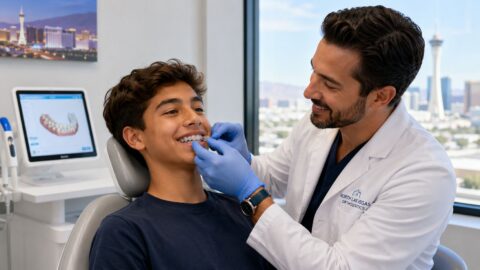
Find North Las Vegas Orthodontists for Your Smile
You may be sitting at your kitchen table right now, looking at photos of your smile, wondering whether it's finally time to do something about crooked teeth, crowding, or a bite that just doesn't feel right. Maybe your child's dentist mentioned orthodontic care. Maybe you've been typing “dentist near me” or “North Las Vegas orthodontists” into your phone and trying to sort through what actually matters.
That first step can feel bigger than it should. People usually aren't just choosing braces or clear aligners. They're choosing a process, a team, a schedule that has to fit real life, and a plan that feels manageable from day one through the moment the braces come off or the last aligner goes in.
Your Trusted Orthodontist in North Las Vegas
A lot of people start with the same quiet concern. They smile with their lips closed in photos. They notice one tooth that turns inward. They avoid crunchy foods because their bite feels off. Parents often see it differently. They notice a child chewing on one side, mouth breathing, or feeling self-conscious before school pictures.
That's why finding the right local care matters. In North Las Vegas and nearby communities like Sun City Summerlin, Lone Mountain, and Painted Desert Estates, patients usually want the same things. They want clear answers, a comfortable office, and a treatment plan that doesn't feel rushed or confusing.

What local patients usually need most
The best orthodontic experience rarely starts with appliances. It starts with listening. A teen may care most about how visible treatment will be. An adult may ask whether aligners will affect work meetings. A parent may want to know if treatment is necessary now or if waiting makes more sense.
Those are good questions. They deserve direct answers, not a sales script.
For readers looking for a closer view of local orthodontic options, the group orthodontics page is a helpful place to see how treatment can be adapted to different ages and bite concerns.
Practical rule: The right orthodontic plan should make daily life easier to manage, not harder to understand.
A community-centered approach matters
North Las Vegas orthodontists serve people with busy schedules, school pickups, work commutes, and family responsibilities. That means convenience matters. So do communication, follow-up, and making room for questions without making patients feel rushed.
The strongest practices usually have a calm, organized rhythm. You know what happens next. You know who to call if a bracket comes loose or an aligner doesn't fit the way it should. You know your concerns won't be brushed aside.
That kind of consistency builds trust. And when you're committing to months of care, trust is a big part of what makes the whole journey feel worth starting.
Understanding Orthodontic Care and Why It Matters
Orthodontic care is often described as smile correction, but that's only part of the picture. Straight teeth can look great, but the bigger issue is how the teeth and jaws work together every day when you bite, chew, speak, and clean your mouth.
When teeth are crowded, rotated, or out of alignment, brushing and flossing become harder. When the bite is off, certain teeth can take more force than they should. Some patients notice jaw tension, uneven wear, or a feeling that their teeth don't come together naturally.
It's about function, not just appearance
A malocclusion is the clinical term for a bite or alignment problem. That might mean crowding, spacing, an overbite, underbite, crossbite, or open bite. These issues can range from mild to more involved, but even a problem that looks small in the mirror can affect comfort and oral hygiene.
The American Association of Orthodontists reports that untreated malocclusions can result in a higher risk of tooth decay, gum disease, and TMJ disorders due to difficulties in cleaning and improper jaw function.
That matters because orthodontic treatment isn't only about getting straighter front teeth. It's often about reducing strain and making daily care easier.
What a proper evaluation should include
A thoughtful orthodontic exam usually starts with more than a quick glance. Good planning depends on a full picture of your mouth, bite, and jaw position.
That often includes:
- A new patient exam that looks at crowding, spacing, bite relationship, and oral health
- Dental x-rays to check tooth position, roots, and supporting structures
- Photos or digital scans that help map movement and compare treatment options
- A conversation about goals so the plan fits your lifestyle, not just the diagnosis
A healthy smile should be easier to clean, easier to bite with, and more comfortable to live with.
Patients who are also exploring broader practice topics sometimes like reading outside the clinical setting too. If you're curious how local service businesses think about patient communication and education online, this marketing blog for owners offers a useful look at how businesses organize information so people can make clearer decisions.
How orthodontic care supports overall dental treatment
Orthodontics also connects to general and restorative dental care. If teeth are crowded or the bite is unstable, routine cleaning and exams may reveal areas that collect plaque more easily. In some situations, cosmetic dentistry looks better and lasts more predictably when alignment is addressed first.
That's why orthodontic planning should never happen in isolation. A good evaluation considers the full mouth, including gum health, chewing patterns, and how future care such as restorative dentistry or cosmetic treatment may fit into the timeline.
Braces vs Invisalign Common Treatments in Las Vegas
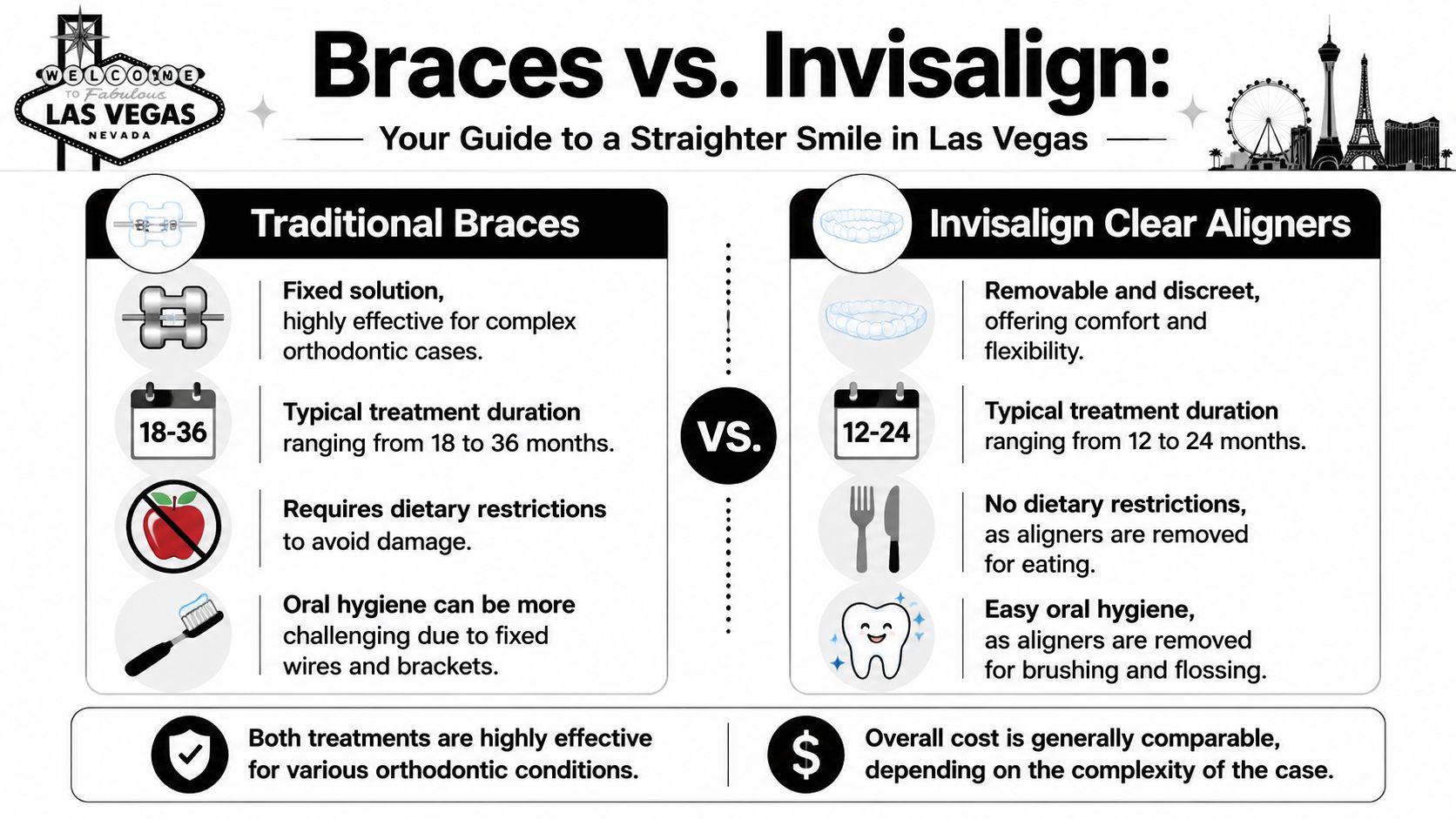
Most patients narrow their decision to two options. Traditional braces or Invisalign clear aligners. Both can be effective. The better choice depends on your bite, your habits, and how much structure you want built into the process.
Some people do best with a treatment they can't remove. Others want the flexibility of taking aligners out for meals, brushing, and social events. Neither option is automatically better. Each works well in the right case.
How braces and Invisalign differ day to day
Here's a practical side-by-side view:
| Treatment | Often works best for | Daily routine | Main trade-off |
|---|---|---|---|
| Traditional braces | Patients who need fixed control for more involved tooth movement | Brackets and wires stay in place all the time | Cleaning takes more effort and some foods need to be avoided |
| Invisalign | Patients who want a removable, lower-profile option | Aligners come out for eating and brushing | Success depends on wearing them consistently |
Braces are dependable because they're always on. That can be a major advantage for younger patients or adults who don't want the burden of remembering trays throughout the day. They're also a strong option when the bite needs more detailed correction.
Invisalign appeals to patients who want treatment to look subtle and feel less intrusive in meetings, photos, and social settings. The trays are removable, which makes meals easier and brushing more familiar. But removable also means optional, and optional can turn into inconsistent if the patient isn't committed.
What works well and what doesn't
Braces work well when a patient wants structure. They don't work as well for people who snack on hard or sticky foods and don't want to adjust those habits.
Invisalign works well for organized patients who will wear aligners as directed and keep track of trays. It doesn't work as well when aligners spend too much time in a case instead of in the mouth.
For many adults in Monterrey, Desert Shores, Mar-A-Lago, or Sunhampton, the decision comes down to lifestyle fit more than appearance alone.
- Choose braces if you want a fixed system, your case is more complex, or you'd rather not think about removing and replacing aligners all day.
- Choose Invisalign if you value discretion, want fewer food restrictions, and know you'll follow the routine closely.
- Pause and ask more questions if you're choosing based only on what a friend had. Orthodontic plans should match your bite, not someone else's story.
For patients comparing aligner care in more detail, this page on how Invisalign works gives a useful overview of the mechanics and expectations.
Questions to bring to your consultation
A strong consultation usually gets more specific than “Which is better?” Better questions include:
- Which option fits my bite best
- How will this affect brushing, flossing, and routine cleaning and exams
- Will I need attachments, elastics, or other add-ons
- What kind of follow-up schedule should I expect
- Which option fits my work, school, or sports routine
The best appliance is the one you'll actually manage well for the full course of treatment.
That's the point many people miss. A technically excellent treatment plan can still be the wrong choice if it doesn't fit real life in Las Vegas.
How to Choose the Right North Las Vegas Orthodontist
Choosing among North Las Vegas orthodontists gets easier when you stop looking for flashy promises and start looking for patterns. Good orthodontic care leaves clues. The office feels organized. The treatment explanations are clear. The technology supports comfort instead of replacing conversation. And the team respects that you're making a long-term decision.
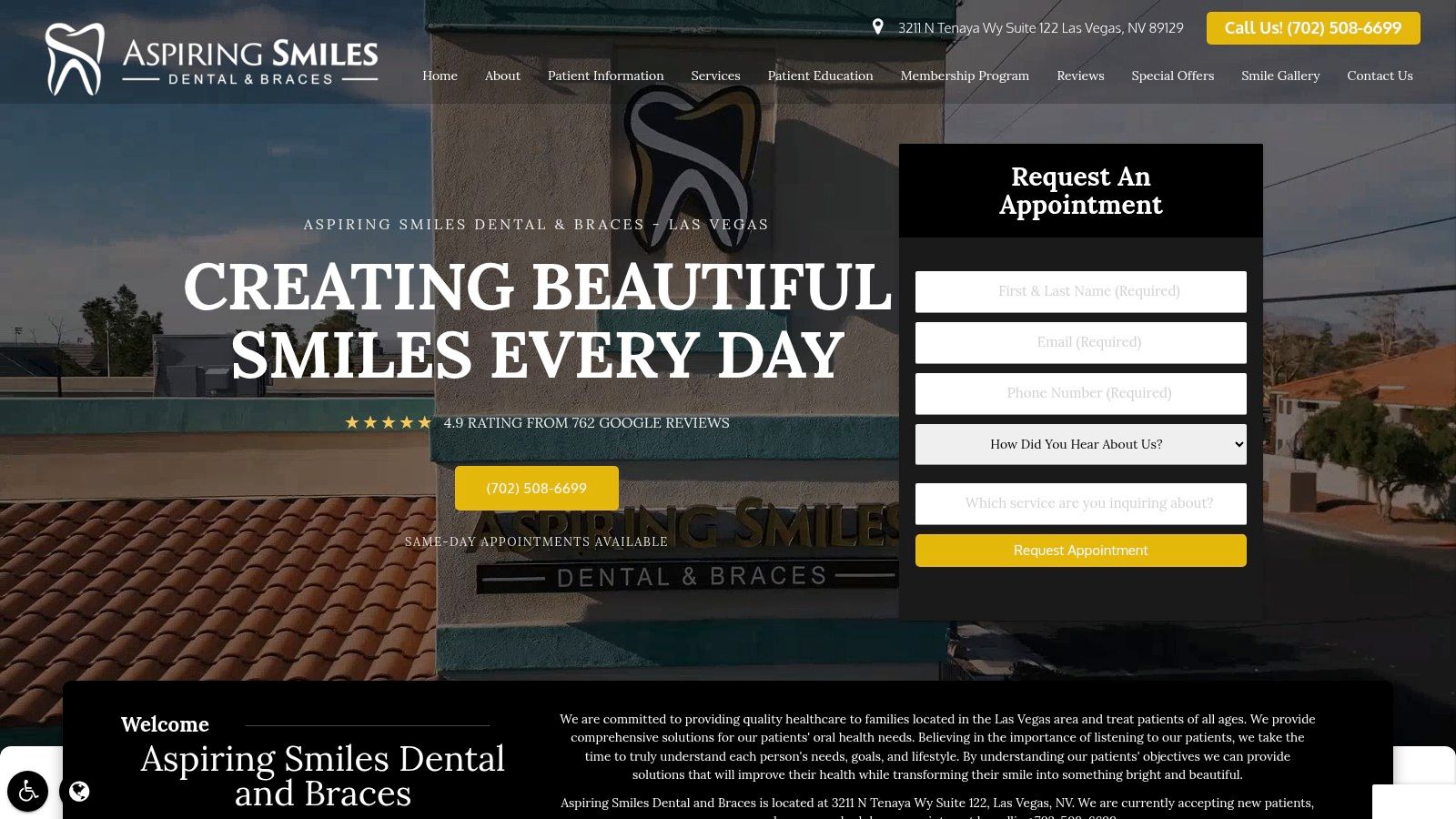
A helpful first step is reviewing the practice itself, including how it presents patient care and services online.
What to look for before you book
Not every office that offers orthodontic treatment approaches it with the same level of planning. These details tend to matter most:
- A complete diagnostic process. You want more than a quick recommendation. Look for digital imaging, dental x-rays, exam findings, and a real conversation about your goals.
- Comfort-focused tools. Digital scanning is often easier than traditional impressions. Modern workflows can make appointments smoother and more accurate.
- Clear explanations. If the team can't explain why they recommend braces instead of aligners, or why timing matters, keep asking.
- A full-service perspective. Orthodontics should fit alongside dental care, cosmetic dentistry, restorative dentistry, and emergency dentist needs when life gets messy.
A lot of patients search “dentist in Las Vegas, NV” because they want one home base for care, not a patchwork of disconnected visits. That's a reasonable goal.
The office experience matters more than people think
An orthodontic relationship can last a long time. You'll notice whether appointments run smoothly. You'll notice whether the team remembers your concerns. You'll notice whether scheduling feels manageable if you live near Desert Shores, Lone Mountain, Painted Desert Estates, or Sun City Summerlin.
Those small details affect whether treatment feels sustainable.
Here's a closer look at the patient environment and what that experience can feel like in practice.
Questions worth asking at the first visit
You don't need a complicated checklist, but you should leave the consultation with answers to a few essentials.
| Question | Why it matters |
|---|---|
| What are you treating first | It shows whether the plan is individualized |
| What happens if something breaks or doesn't track | It tells you how follow-up care is handled |
| How do you make visits more comfortable | It reveals how patient-centered the office really is |
| How does this fit with future cosmetic or restorative work | It helps avoid treatment conflicts later |
What to listen for: Specific answers build confidence. Vague reassurance usually doesn't.
If a practice can explain treatment in plain language, use modern tools thoughtfully, and make the process feel straightforward, that's usually a strong sign you're in the right place.
Your Orthodontic Journey at Aspiring Smiles
Understanding the process provides reassurance once they know what the process looks like. The unknown is often harder than the treatment itself. When patients from Desert Shores or Sunhampton call to ask about braces or aligners, their first concern usually isn't the technical side. It's the practical side. How many visits will this take? What happens first? How does payment work?
The journey usually starts with a consultation and a conversation. You talk about what's bothering you, whether that's crowding, spacing, jaw discomfort, or a smile you've never felt fully comfortable showing. The team reviews your bite, takes the needed records, and builds a plan around your goals and oral health.
The first appointment and treatment planning
That initial visit often feels more relaxed than patients expect. You're not committing to treatment the moment you sit down. You're gathering information and getting a professional opinion grounded in your actual bite.
A typical early sequence includes:
- Scheduling the visit through a phone call or online request
- Reviewing health and dental history so nothing important gets missed
- Taking records such as scans, photos, and x-rays if needed
- Discussing treatment choices including braces, Invisalign, and timing
- Going over finances so you understand insurance, payment options, and next steps
When that sequence is handled well, patients leave with clarity instead of uncertainty.
Starting treatment and settling into the routine
Once the plan is approved, the next step is getting started. For braces, that means placing brackets and reviewing care instructions. For Invisalign, it means fitting trays, checking attachments if needed, and showing you how to insert, remove, and clean the aligners properly.
The first few days are usually an adjustment period. Teeth can feel tender. Eating may shift toward softer foods briefly. Speech may feel slightly different at first with aligners. Most patients adapt quickly when expectations are clear from the start.
A smooth start depends less on toughness and more on preparation. Patients do better when they know what normal feels like.
Follow-up visits then become the rhythm of care. Those visits are where the plan stays on track. Wires are adjusted, brackets are checked, aligners are reviewed, and small problems are caught before they become frustrating setbacks.
The financial side should be straightforward
Cost questions are normal. They should be discussed early, not treated like an awkward final step.
What helps most is transparency:
- Insurance guidance so patients understand what their plan may help cover
- Flexible payment plans that spread out costs in a manageable way
- A membership program for patients who want another pathway to accessible care
- Clear written expectations so there aren't surprises later
That combination matters for families balancing multiple appointments, adults investing in cosmetic dentistry later, or patients who may also need services like dental implants near me searches often lead them to explore. Orthodontic care should feel possible, not out of reach.
FAQs for Las Vegas Families Teens and Adults
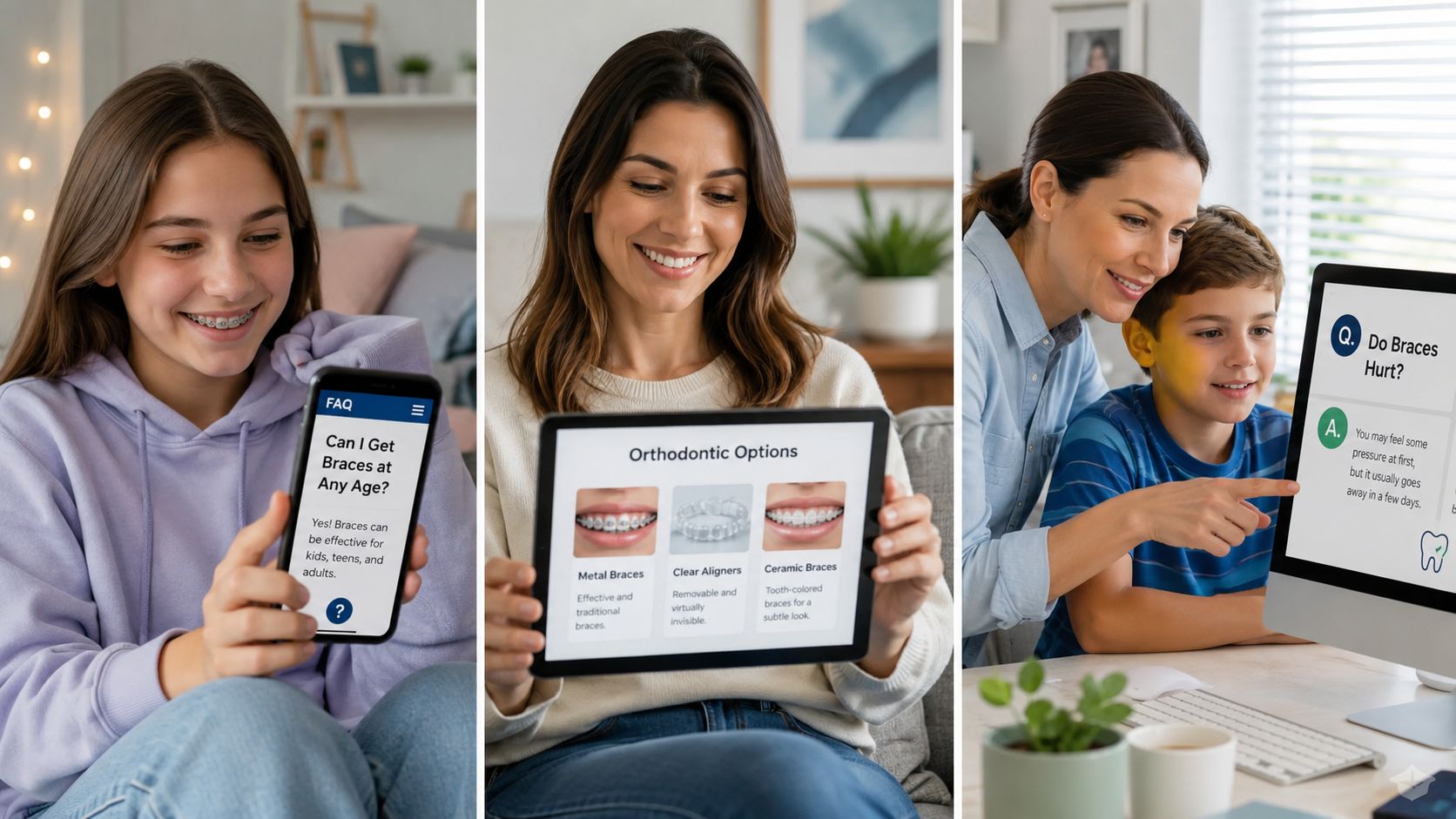
Orthodontic questions change with age. Parents want to know when to start. Teens want practical tips that work. Adults usually want reassurance that treatment can fit into work and daily life without feeling awkward.
What is the ideal age for a child's first orthodontic check-up
The best time is when bite development, spacing, and jaw growth can be evaluated before concerns become harder to manage. That doesn't mean every child needs immediate treatment. Many don't.
What matters is catching patterns early. Crossbites, crowding, and habits that affect development are easier to monitor when a family isn't waiting until all concerns become obvious.
Am I too old for braces
No. Adults choose orthodontic treatment all the time. The key question isn't age. It's whether the teeth, gums, and bone support treatment well and whether the plan fits your goals.
Adults often prefer Invisalign because it's discreet, but braces can still be the better choice in some cases. If you're worried about professional appearance, ask to compare options based on your work routine, not just aesthetics alone.
Orthodontic treatment should fit your life stage. It doesn't have to look the same for a child, a teen, and an adult.
How can teens keep teeth clean with braces
Consistency matters more than perfection. The goal is to clean around brackets and wires carefully every day so food and plaque don't stay trapped.
These habits help most:
- Brush after meals when possible so food doesn't sit around brackets for hours
- Use the mirror to check for missed spots near the gumline and between brackets
- Floss with the right tools such as threaders or orthodontic floss aids if recommended
- Keep routine cleaning and exams on schedule because home care and office care work together
Can orthodontic care connect with other dental needs
Yes. Some patients are also thinking about teeth whitening, cosmetic dentist near me searches, restorative dentistry, or even a tooth extraction before treatment can begin. Others want to know what happens if they have a dental issue mid-treatment.
That's why a connected dental home matters. When your orthodontic care and general dental care support each other, decisions feel simpler and treatment tends to feel more coordinated.
Start Your Journey to a Healthier Smile Today
A better smile isn't only about appearance. It's about function, comfort, confidence, and knowing your teeth are easier to care for every day. That's why the right orthodontic plan should feel personal from the beginning. It should reflect how you live, what concerns you most, and what kind of support you'll need along the way.
For some patients, the next step is braces. For others, it's Invisalign. Some need a full consultation first because they're also considering emergency dentist care, cosmetic work, restorative dentistry, or longer-term plans that may include implants. The right path isn't always the fastest sounding one. It's the one that makes sense for your mouth and your life in Las Vegas, NV.
If you've been searching for North Las Vegas orthodontists, dentist near me, or dentist in Las Vegas, NV, the most useful next move is simple. Book a consultation and get clear answers based on your actual bite, not guesses from the internet. A good visit should leave you informed, comfortable, and able to decide without pressure.
Patients across Desert Shores, Sunhampton, Sun City Summerlin, Monterrey, Lone Mountain, Mar-A-Lago, and Painted Desert Estates deserve orthodontic care that feels local, organized, and compassionate. Starting the conversation now can save you months of second-guessing.
Ready to take the next step with Aspiring Smiles Dental and Braces? Call the office to schedule a consultation, request a visit through the online scheduler on the website, or stop by 3211 N Tenaya Wy Suite 122, Las Vegas, NV 89129. If you want a caring team, modern treatment options, and a clear plan for your smile, this is a comfortable place to begin.