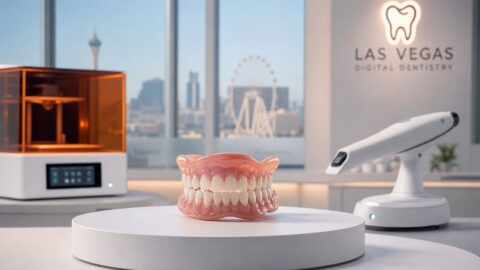
Latest Dentures Available: 2026 Guide for Las Vegas
If you're reading this, there's a good chance something about your teeth or dentures isn't working the way it should. Maybe your denture slips when you talk. Maybe eating in public feels stressful. Maybe you've started avoiding photos, restaurants, or even certain foods because your mouth just doesn't feel dependable anymore.
That situation is common, and it isn't something you should have to tolerate. For many adults in Las Vegas, especially those comparing a dentist near me, a cosmetic dentist near me, or dental implants near me, the primary question isn't whether dentures exist. It's which of the latest dentures available will feel secure, look natural, and fit daily life.
Your Guide to the Latest Dentures in Las Vegas
A patient usually doesn't begin this process by asking for CAD/CAM milling or 3D printing. They begin with a problem. Their lower denture moves when they chew. Their upper denture feels bulky. Their smile looks older than they feel. Or they've had a tooth extraction and now need a realistic plan for replacing missing teeth before speech, nutrition, and confidence get worse.
That demand is growing. As of 2020, approximately 40.99 million Americans were wearing dentures, and that figure was projected to reach 42.46 million by 2025, with growth especially driven by adults over 50, according to denture usage data and trends in America. More patients needing tooth replacement has pushed denture technology forward in a meaningful way.
What Las Vegas patients usually want
Those seeking the latest dentures available in Las Vegas aren't asking for the newest thing just because it's new. They want practical improvements:
- Better stability so the denture doesn't shift while eating or speaking
- A more natural appearance that doesn't look flat, bulky, or artificial
- Less irritation on the gums
- Fewer appointments and fewer remakes
- Clear options that fit both lifestyle and budget
Many denture problems aren't personal failures. They're signs that the appliance, the material, or the fit no longer matches the mouth.
At Aspiring Smiles Dental and Braces, patients often come in after years of putting up with discomfort because they assumed all dentures were basically the same. They aren't. A modern digital denture, a flexible partial, and an implant-supported full arch each solve a different kind of problem. The right choice depends on your bone support, remaining teeth, goals, comfort needs, and whether you want something removable or fixed.
For those seeking a dentist in Las Vegas, NV who can help compare real options, this guide aims to simplify the decision. Whether you live in Desert Shores, Sunhampton, Sun City Summerlin, Monterrey, Lone Mountain, Mar-A-Lago, or Painted Desert Estates, the goal is the same. Get back to eating, speaking, and smiling without constantly managing your teeth.
Why Traditional Dentures Can Fall Short
Traditional dentures still help many patients, and in some situations they remain a sensible starting point. But they also come with limitations that people feel every day. The most common complaints are familiar. Slipping during meals, clicking while talking, sore spots, the need for adhesive, and a fit that seems to worsen over time.
What changes after teeth are lost
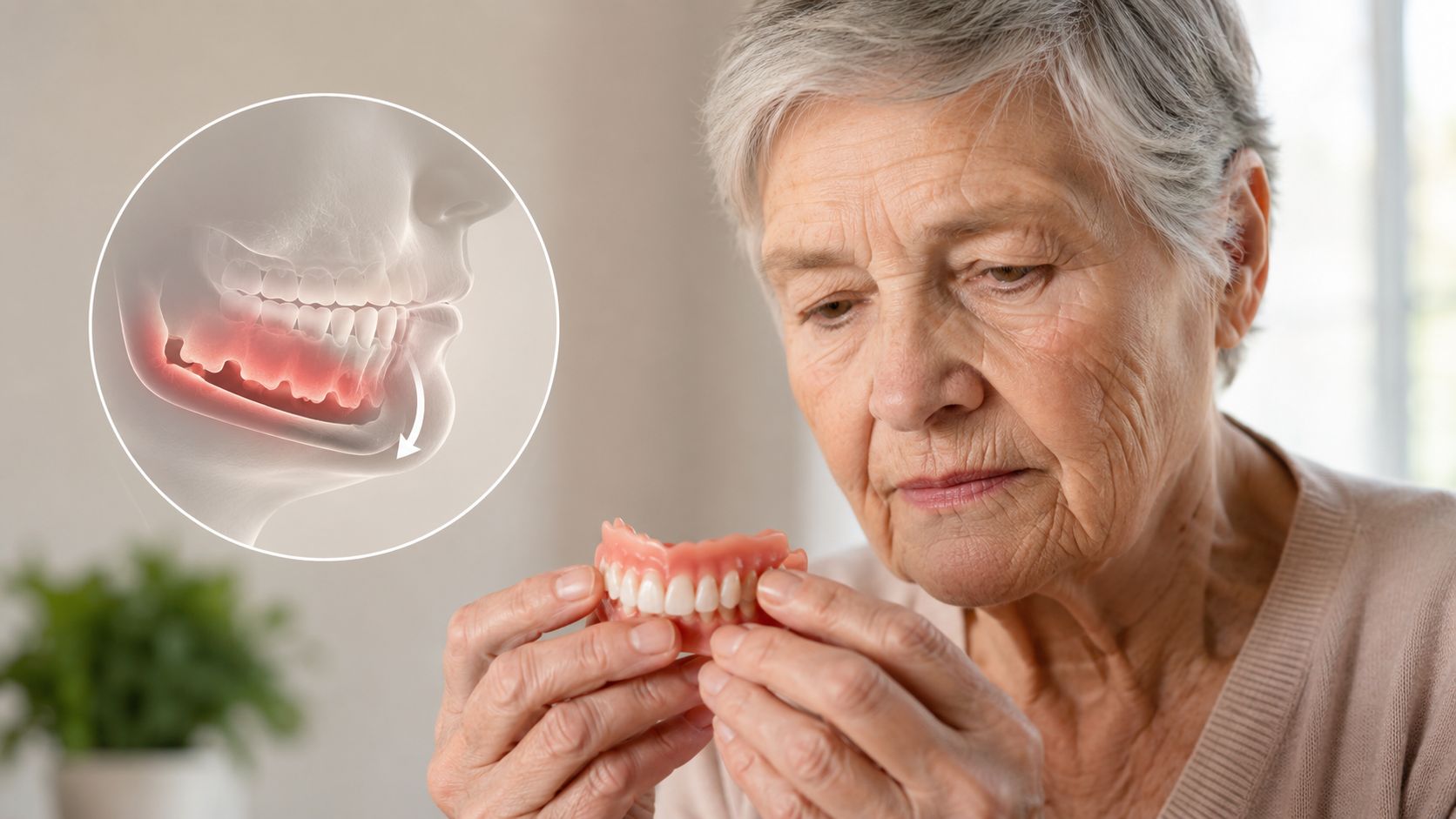
When natural teeth are gone, the jaw no longer gets the same stimulation through the tooth roots. Over time, the bone can shrink. That's one reason a denture that once felt acceptable can start rocking, rubbing, or loosening. Patients often think the denture "wore out," but the mouth has changed too.
A conventional full denture sits on the gums rather than being anchored into the jaw. That means it depends heavily on anatomy, suction, muscle control, and careful maintenance. For upper dentures, this can work reasonably well. For lower dentures, stability is often more challenging because the tongue and cheeks are constantly moving the appliance.
Why older workflows often create frustration
The broader industry has shifted for a reason. The global denture market is projected to grow from $2.09 billion in 2020 to $3.38 billion in 2028, largely because investment is moving toward newer materials and digital workflows that address the weaknesses of older methods, according to the latest denture market outlook from AGD.
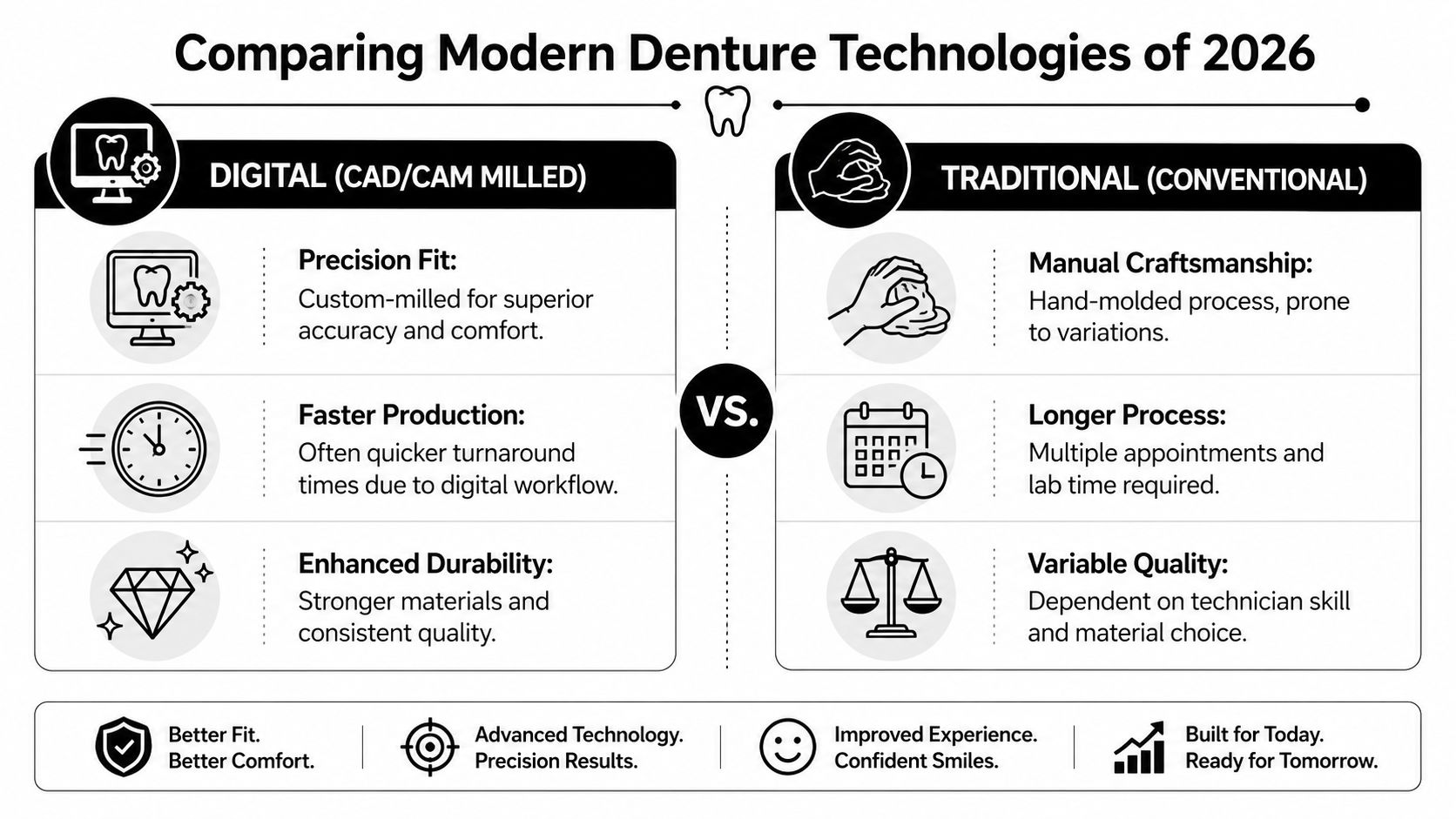
That aligns with what patients experience in the chair. Traditional fabrication can work, but it's more dependent on manual steps. Each impression, bite record, wax try-in, and lab stage creates another chance for small inconsistencies that affect the final fit.
Practical rule: If you're relying on more adhesive every year, the issue usually isn't your effort. It's that your denture or underlying support needs to be re-evaluated.
What tends to work and what doesn't
A simple way to think about conventional dentures is this:
| Situation | Traditional denture result |
|---|---|
| Short-term tooth replacement | Often acceptable |
| Very limited budget | Often practical |
| High chewing demands | Often frustrating |
| Severe lower denture looseness | Usually not the best long-term answer |
| Patients wanting a fixed feel | Usually disappointing |
This is also why many patients who first search for a dentist near me for a replacement denture later ask about restorative dentistry, cosmetic dentistry, or dental implants. They don't just want another appliance. They want one that solves the daily problems the old one never did.
Comparing Modern Denture Technologies of 2026
The latest dentures available don't all belong in one category. Some are removable. Some are fixed. Some are ideal when a patient still has a few healthy teeth. Others are built for full-arch replacement. The main difference is not marketing language. It's how the denture is designed, made, and supported.
Digital dentures
Digital dentures use intraoral scans or digitized records, on-screen design, and CAD/CAM production. In practical terms, that means the denture can be designed with more consistency before it is milled or printed. The fit is typically more precise than older manual methods because the design is checked in a digital model before fabrication begins.
The material side matters too. The latest digital dentures use high-performance polymers and CAD/CAM milling to enhance fracture resistance by 40%, and AI-driven design platforms can analyze facial proportions and smile dynamics to create a hyper-realistic look that mimics natural gum translucency, according to this review of advanced digital denture materials and design systems.
That doesn't mean every patient needs the most advanced digital workflow. It means digital options are solving real issues. Better fit. Better strength. Better aesthetics.
3D-printed dentures
3D-printed dentures are also digital, but their strength is speed and repeatability. They're built layer by layer from a digital design. For some patients, that's useful when faster turnaround matters, such as replacing a failing denture quickly or moving through treatment with fewer delays.
They can be a strong option when the goal is efficient fabrication and a custom fit. The trade-off is that not every printed appliance is the same. The outcome depends on the printer, the resin, the finishing process, and how carefully the case is designed. A "printed denture" isn't automatically premium. The workflow behind it matters.
Flexible partial dentures
Flexible partial dentures are different from full digital dentures. They're usually considered when a patient is missing some teeth, not all teeth. Instead of a rigid acrylic feel, they use more flexible materials that can be gentler for certain mouths.
They can work well when:
- Sensitive gums are a concern
- Metal clasps are undesirable
- A lighter-feeling partial is preferred
The limitation is function. Flexible partials can be comfortable and cosmetic, but they aren't the answer for every bite. Patients with heavier chewing forces or complex wear patterns may do better with a more rigid restorative design.
A quick side-by-side view
| Denture type | Best for | Main strength | Main trade-off |
|---|---|---|---|
| Digital milled denture | Full denture patients wanting precision | Consistent fit and strong materials | Higher initial cost in some cases |
| 3D-printed denture | Patients wanting digital speed | Faster production and reproducibility | Quality depends heavily on workflow |
| Flexible partial denture | Patients missing some teeth | Comfort and discreet appearance | Not ideal for every bite pattern |
Patients who like learning before they commit often benefit from broader patient education for medical practices, especially when comparing treatment language, financing questions, and care expectations across health services.
All-on-4 and Implant-Supported Dentures Explained
For patients who are tired of movement, implant-based solutions are usually where the conversation changes. This is the category that comes up most often when someone searches dental implants near me and says, "I want something that feels secure."
Implant-supported overdentures
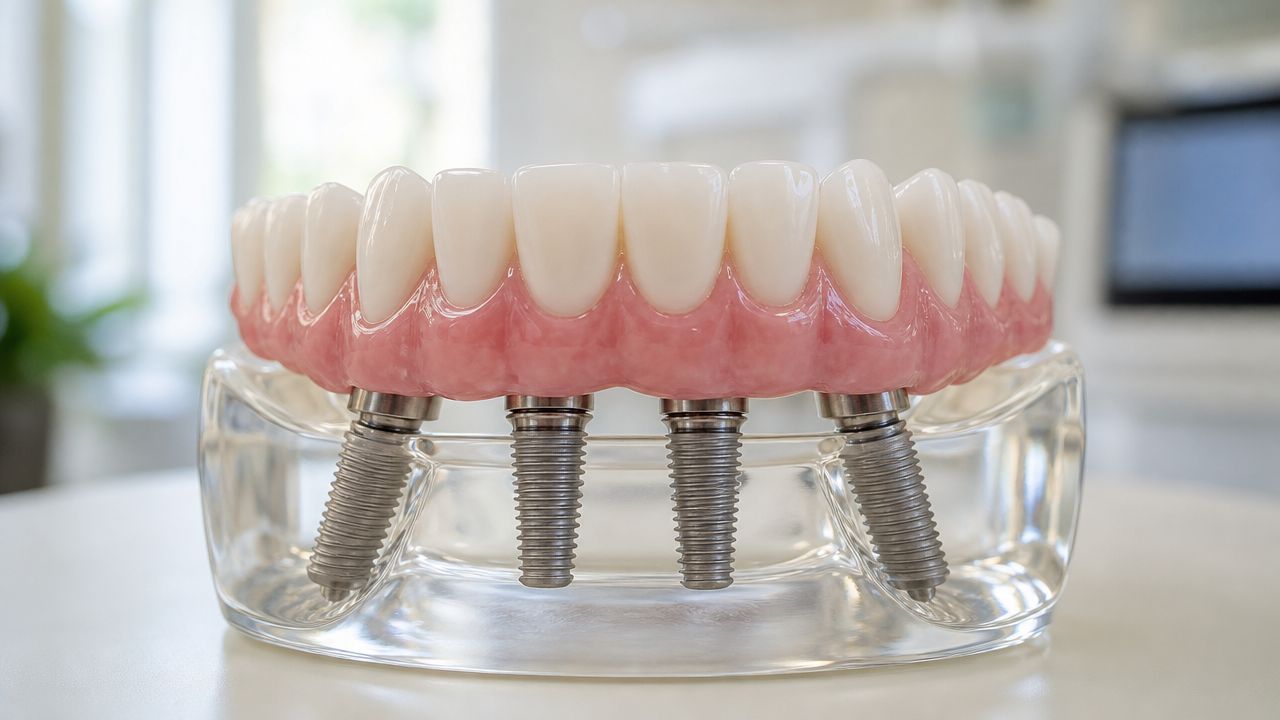
An implant-supported overdenture is still removable by the patient, but it attaches to implants placed in the jaw. The denture snaps onto those supports instead of floating only on the gums. That difference changes how it feels in daily life. Less slipping. Less shifting during meals. Less anxiety while talking.
The functional gain is significant. Implant-supported overdentures are considered the gold standard, restoring about 70 to 80 percent of natural chewing force compared to only 25 to 35 percent for conventional dentures, and patient satisfaction is consistently between 85 and 95 percent, according to this overview of modern implant overdenture performance.
How All-on-4 is different
All-on-4 refers to a full-arch restoration supported by implants that is fixed in place. This is different from a snap-in overdenture. The patient doesn't remove it at home. It functions more like a permanent set of teeth attached to implants.
That fixed design appeals to patients who want the highest level of stability and don't want the day-to-day routine of removing a denture. It can be especially appealing for people who've struggled for years with lower denture looseness or who want a more confident chewing experience.
For patients comparing costs and treatment paths, this page on All-on-4 denture cost in Las Vegas helps explain the planning side in plain language.
If your biggest complaint is movement, an implant-supported option usually deserves a serious conversation before you agree to another conventional remake.
A short visual explanation can help make the mechanics easier to understand:
Who tends to choose which option
Patients usually sort into one of two groups:
- Snap-in overdenture patients want strong retention but still like being able to remove the denture for cleaning.
- All-on-4 patients want a fixed full-arch solution that feels closer to natural teeth in day-to-day use.
Both can be part of a strong restorative dentistry plan. The right choice depends on bone support, oral health, goals, and whether removability feels like a benefit or a drawback to you.
The Health and Lifestyle Benefits of New Dentures
Modern dentures' value isn't the software, the resin, or the milling unit. It's what changes in ordinary life. Meals get easier. Speech feels less self-conscious. Social situations stop feeling like something to manage.
What patients usually notice first
Most patients don't describe their improvement in technical terms. They talk about comfort and freedom. They say they can order what they want at dinner. They don't worry as much about words slipping out awkwardly. They smile without covering their mouth.
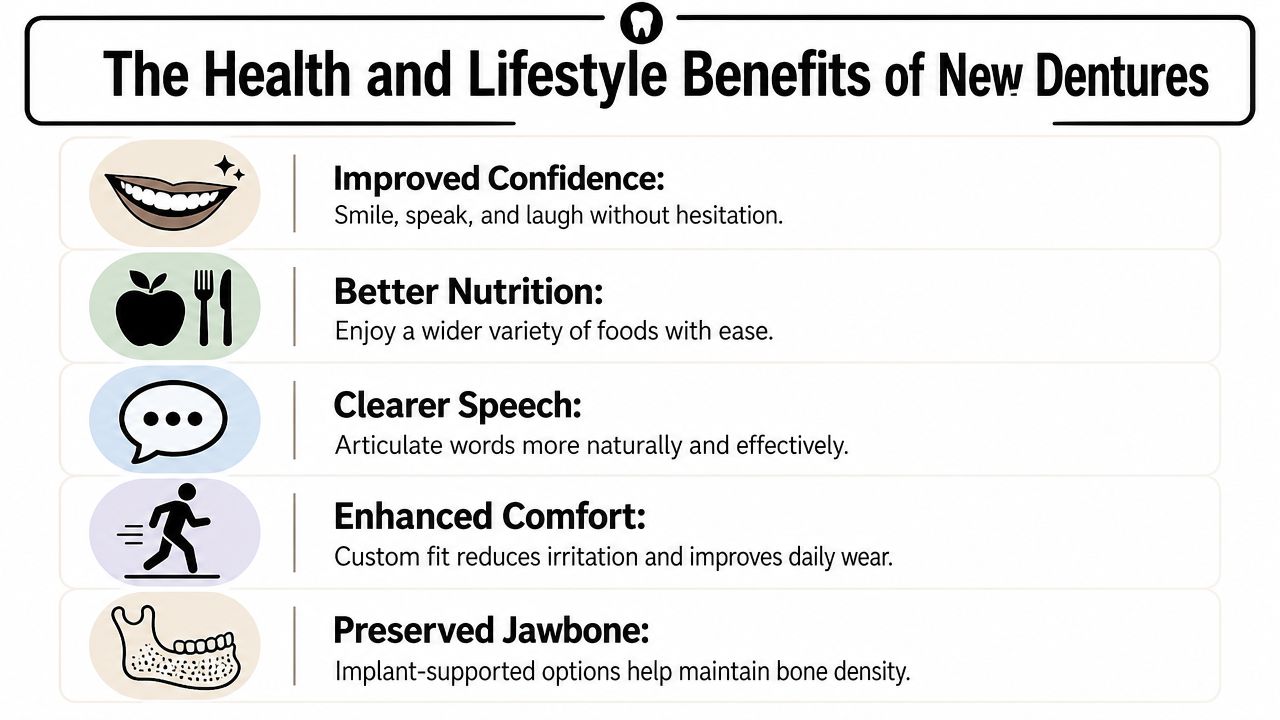
Some of the most meaningful benefits include:
- Improved confidence because the smile looks more natural and feels more dependable
- Better food choices when chewing is more comfortable and efficient
- Clearer speech when teeth stay where they should
- Less gum irritation when fit and support improve
- Better facial support from well-designed prosthetics that restore lost structure
Durability matters too
A denture is not just a cosmetic purchase. It's a long-term functional device. Traditional acrylic dentures typically last 5 to 8 years, while modern implant-supported dentures made from materials like zirconia can last 15 to 20+ years with proper care, according to this overview of newer denture materials and longevity.
That doesn't mean every patient should jump straight to zirconia or a fixed implant bridge. It does mean long-term value deserves attention. A lower upfront cost can be less satisfying if you're dealing with repeated looseness, repairs, sore spots, or replacements.
Why this matters beyond appearance
A stable denture supports more than a smile. It can support daily nutrition, comfort, and confidence in social settings. For some patients, it also reduces the stress that comes with worrying about how they sound or whether their teeth will move in front of other people.
Better dentures don't just replace teeth. They reduce the amount of mental energy a person spends thinking about their mouth.
That benefit often matters just as much as the cosmetic result, even for patients who initially start by searching for cosmetic dentist near me, teeth whitening, or other appearance-focused care. Once a denture fits and functions well, everyday life often feels easier.
What to Expect at Aspiring Smiles Dental and Braces
Most patients feel some nerves before a denture consultation, especially if they've had a bad experience elsewhere or haven't seen a dentist in a while. The visit should feel organized, respectful, and easy to follow. You shouldn't be left guessing what comes next.
The first visit
The appointment usually starts with a conversation about what isn't working. That may be loose dentures, missing teeth, pain while chewing, embarrassment about appearance, or frustration after an old appliance broke. If you're also overdue for cleaning and exams, dental x-rays, or a new patient exam, those pieces can help shape a safe treatment plan.
Then comes the clinical evaluation. The team checks your gums, remaining teeth if you have them, bite, and overall oral condition. If needed, they also look at whether related treatment such as tooth extraction, restorative care, or implant planning should happen first.
How planning feels today
Modern denture planning is more comfortable than many patients expect. Digital records and scanning can reduce the need for messy traditional impressions in many cases. That makes the process easier for patients with a strong gag reflex or those who detested older denture visits.
A useful starting point for patients comparing options is this page on dentures in Las Vegas, which outlines full, partial, and implant-supported choices in a service-focused way.
What the process is like for local patients
For families and adults in Desert Shores, Sunhampton, Sun City Summerlin, Monterrey, Lone Mountain, Mar-A-Lago, and Painted Desert Estates, the practical experience matters just as much as the final result. Patients want appointments that run clearly, explanations in plain English, and a treatment plan that fits their life.
The following often proves most helpful:
- Clear choices so you understand the difference between conventional dentures, digital dentures, and implant-supported solutions
- Comfort-focused visits with gentle techniques and straightforward communication
- A personalized plan based on your mouth, your goals, and what you want your daily routine to feel like
- Support for urgent needs if broken dentures, pain, or infection mean you may also need an emergency dentist
A good denture process shouldn't feel like guesswork. It should feel like a series of manageable decisions, made with enough information that you know why one option fits better than another.
Financing Your New Smile and Scheduling a Consultation
Cost matters. Patients know that, and a good dental office should speak about it directly. New dentures can be a meaningful investment, especially when implants or fixed full-arch treatment are involved, but that doesn't mean the conversation ends there.
Ways patients usually make treatment manageable
The practical path often includes a mix of insurance benefits, staged treatment, financing options, or an in-house membership program. For some people, the right move is to start with a removable solution and plan ahead for implants later. For others, it makes more sense to address the long-term answer first so they don't keep paying for short-term fixes.
If you're sorting through coverage questions, especially public benefits, this overview of adult Medicaid dental care can help you understand what may or may not be included before your appointment.
What to do next
If you're dealing with loose dentures, missing teeth, repeated sore spots, or a smile that no longer feels like yours, don't wait for the problem to become harder to solve. Book a consultation, bring your questions, and be honest about what you want. Some patients prioritize lower cost. Some want the most stable result possible. Some need help deciding between removable and fixed treatment.
The right plan starts with a real evaluation, not a generic answer online. Once your mouth is examined and your goals are clear, the choice between the latest dentures available becomes much easier.
If you're ready to replace uncomfortable dentures, explore implant-supported options, or get a clear second look at what's possible, schedule a consultation with Aspiring Smiles Dental and Braces. The team can help you compare practical solutions for comfort, appearance, function, and budget so you can move forward with confidence.