How to Care for Veneers in Las Vegas
You just left the chair in Las Vegas with new veneers, and the first thing you notice is your reflection in the parking lot mirror. The smile looks great, but now every sip of coffee, every bite of lunch, and every little twinge in the gums feels louder than it did an hour ago. That reaction is normal, and the way you handle the next few days matters more than you might expect.
How to care for veneers is really about protecting two things at once, the porcelain or composite on the front, and the natural tooth and gum tissue underneath. When patients treat veneers like a one-and-done cosmetic fix, they usually end up frustrated. When they treat them like a restoration with simple daily maintenance, the result tends to age much better over time.
Caring for Veneers in Las Vegas Starts with the First 48 Hours
The first two days are when most patients feel the most uncertain. The bonding is settling, the gums can feel mildly inflamed, and hot or cold drinks may seem sharper than expected. If you live anywhere from Desert Shores to Lone Mountain, that often means the first real test is not a major event, it's the normal Las Vegas routine, road coffee, a quick lunch, or an evening out.
What those first days usually feel like
New veneers can feel slightly “different” before they feel natural. Some people notice temperature sensitivity, a little fullness near the gumline, or the instinct to check the edges with their tongue. That doesn't automatically mean something is wrong.
The practical goal is to keep the area calm while the tissues settle. Lukewarm, softer foods work better than anything crunchy or sharply hot. A day of steering clear of ice, nuts, and sticky candy gives the veneer margins a better chance to stabilize without extra stress.
Practical rule: if a food could chip a regular tooth, it can chip a veneer too.
At this stage, the mouth is not asking for perfection, just restraint. That's especially true if you tend to sip coffee on the drive from Sunhampton or grab something quick after work near Sun City Summerlin. The temptation is to act normal immediately, but a short adjustment window protects the long-term result.
What a follow-up visit is checking
A good early follow-up looks at the bite, the margins, and the bond. That's where small issues get caught before they become chips, gum irritation, or uneven pressure on a veneer. It's also the point where the dentist can tell whether the restoration is settling comfortably or needs a small adjustment.
If the gums look puffy for a few days, that's usually part of the healing response. If the redness lingers, worsens, or starts bleeding around one veneer while the others look fine, that deserves a closer look. The point of early care is not to panic over every sensation, it's to notice what's fading and what isn't.
What to Do Right After Your Veneers Are Placed
The first evening after placement should feel calm, not complicated. Soft foods are the safe move, and lukewarm is better than very hot or very cold while the mouth is still adjusting. If you're tempted to test the new veneers with something hard, don't. That's how small problems start.
Eating, brushing, and the first clean
It's usually fine to brush, but gentle technique matters more than force. Use a soft brush and keep the motion light along the gumline, not aggressive across the veneer surface. The gum tissue around new veneers can look red or puffy for a short time, and that often settles as the mouth adapts.
For soreness, people commonly use standard over-the-counter pain relief they already tolerate well, but any medication choice should follow the label and your dentist's guidance if you have medical conditions or other prescriptions. If pain is getting worse instead of better, that's not the usual recovery pattern.
A common mistake is treating day two like a regular day and reaching for almonds, ice, or a hard protein bar because the teeth “feel fine.” They may feel fine right up until a margin gets overloaded. A better choice is to keep the bite soft for a little longer and let the veneer do its job without testing it.
What normal recovery should look like
Normal recovery is usually about less drama, not more. The gums should quiet down, temperature sensitivity should ease, and the bite should start to feel balanced. If one tooth feels high, sharp, or off when you close down, that's a reason to call for the check rather than try to adapt around it.
Many patients are surprised that the first follow-up is about more than appearance. It's a chance to verify that the new smile is functioning the way it should. That matters just as much in cosmetic dentistry as it does in restorative dentistry, because comfort and longevity are tied together.
Daily Cleaning That Protects Veneers, Gums, and Margins
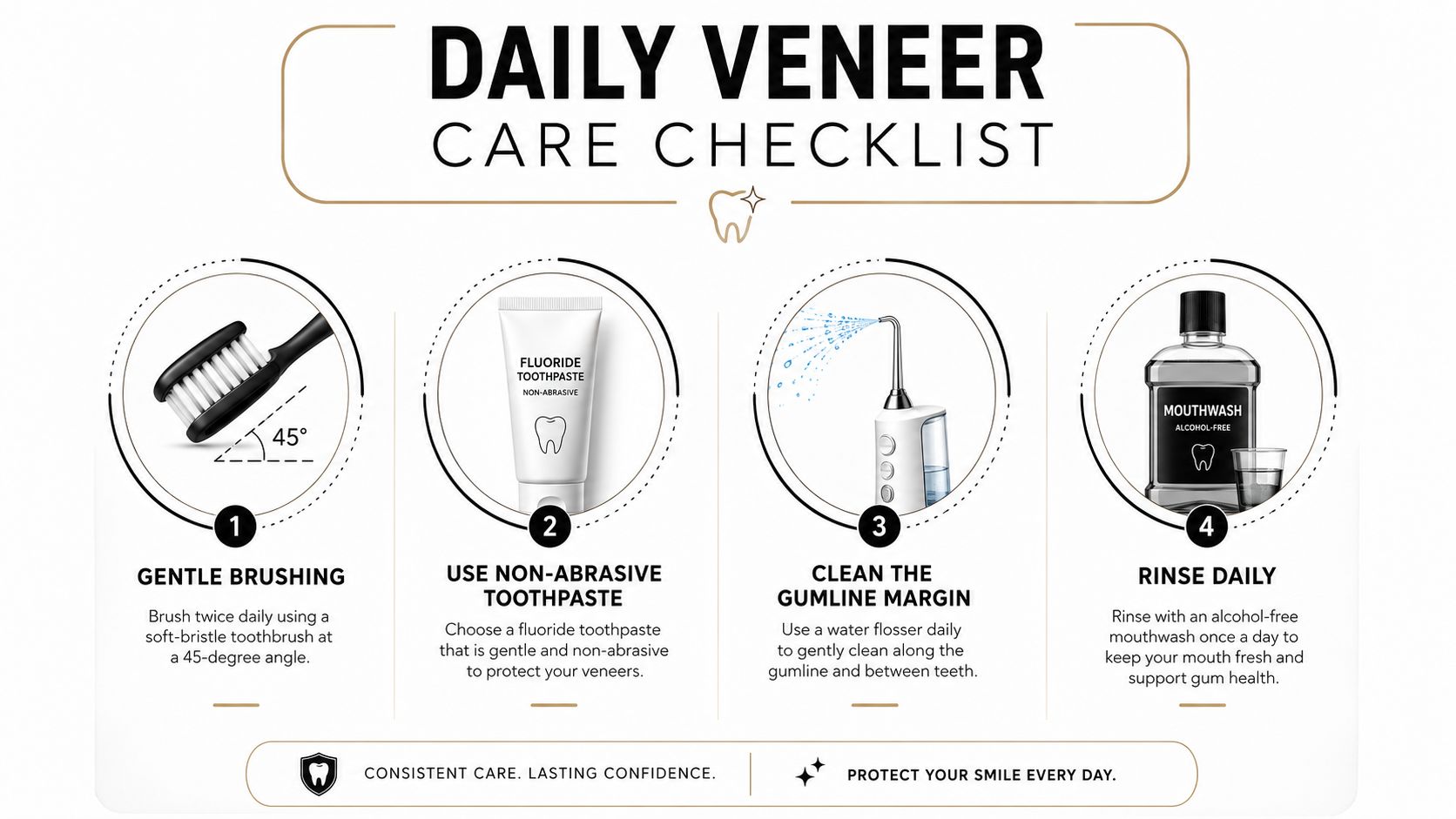
The biggest difference between good veneer care and sloppy veneer care is not effort, it's technique. Scrubbing the face of a veneer doesn't clean it better. It just raises the risk of scratching the polished surface or irritating the gumline where the veneer meets the tooth.
The mechanics that matter most
Use a soft-bristled toothbrush and a non-abrasive toothpaste, ideally one designed to avoid unnecessary wear. Some aftercare guidance points to a low Relative Dentine Abrasivity, or RDA, below 70 as a helpful benchmark because more abrasive pastes can dull polished surfaces over time. The important part is to clean the margin with gentle circular motions rather than scrubbing straight across the veneer.
Flossing also needs a little technique. A C-shape floss motion hugs the tooth, clears the gumline, and lets the floss slide out sideways instead of snapping upward against the veneer edge. If regular string floss catches often, PTFE floss or a water flosser can be easier on the restoration.
Avoid whitening toothpaste, baking soda pastes, and charcoal products. They sound harmless, but they're a poor fit for polished restorations because they can roughen the surface and make the edge look dull over time. For patients worried about cavities under restorations, this guide to preventing cavities under veneers is worth keeping handy.
Clean the gumline, not the gloss. That one change protects more veneer margins than aggressive brushing ever will.
The routine is simple enough for a morning commute in Las Vegas. If you're brushing after a latte before heading to work near Monterrey or Painted Desert Estates, use the gentle method right away. Coffee stains are easier to manage when you don't grind them into the edge of the restoration.
Porcelain vs Composite Veneers and Why Their Care Differs
Porcelain and composite both improve a smile, but they don't age the same way. Porcelain usually holds its shine and resists stain better, while composite is easier to repair and touch up. The trade-off is that composite tends to show surface wear and discoloration sooner.
A simple care comparison
| Care Factor | Porcelain Veneers | Composite Veneers |
|---|---|---|
| Stain resistance | Better resistance to everyday stain | More prone to discoloration |
| Surface wear | Resists routine wear well, can chip with impact | More prone to surface wear |
| Repairability | Repairs are more limited and may need replacement | Usually easier to repair or polish |
| Reaction to abrasive toothpaste | Can lose polish if over-scrubbed | Dulls and roughens more quickly |
| Reaction to grinding | Chips can show at the margin | Wear tends to show more broadly |
The average lifespan difference matters because habits shape the outcome. A veneer-care guide notes porcelain veneers often last 10 to 15 years on average, while composite veneers often last 4 to 8 years on average. Those ranges are not promises, but they do show how strongly maintenance affects longevity. Learn more about veneer lifespan
Grinding is where the material difference really shows up. Porcelain may chip at the edge if the bite is overloaded, while composite usually wears down faster. That's why a custom night guard is more useful than hoping you'll “just stop” clenching during sleep.
If you already wear a night guard, keeping it clean matters too. A practical cleaning product like this 5 month supply night guard cleaner can help keep the appliance fresh without making the care routine complicated.
Habits and Foods That Shorten Veneer Lifespan
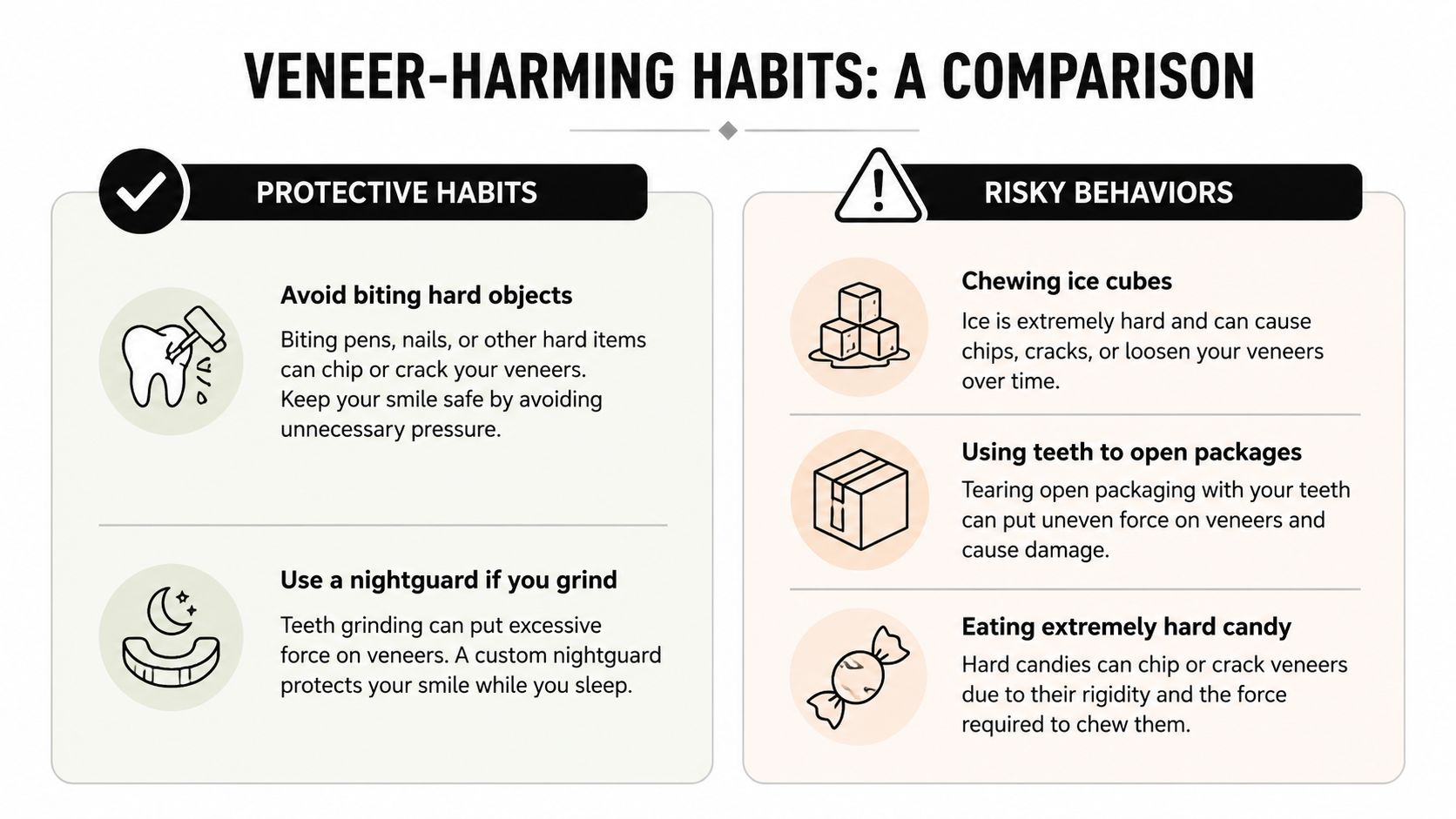
The daily habits that wear veneers down are usually ordinary, not dramatic. Ice in a drink at dinner, a pen in the car, a fingernail while sitting through traffic, these are the small stresses that add up. In Las Vegas, that often means your veneer risks show up in the car, at the gym, or during a late night out.
The habits worth changing first
Hard chewing is the obvious one. Ice, hard candy, and cracking shells with your teeth can put direct force on veneer edges, which is exactly what you don't want. If you need a substitute, let the ice stay in the cup and choose a softer snack or cut food into smaller pieces.
Grinding is the less obvious problem. People clench at work, while lifting, or during sleep without realizing it, and that pressure can chip, loosen, or fracture a veneer. A custom night guard made by a dentist protects better than a boil-and-bite tray because it fits the bite instead of shifting around.
Sports deserve their own rule. If you do contact training, pickup basketball, or anything with facial impact risk, a mouth guard is the right call. That recommendation is simple because the downside is not simple, a single impact can damage several teeth at once.
Drinks and staining
Coffee, tea, red wine, and dark cocktails can stain the edges of the smile even when the veneer material itself resists stain fairly well. Porcelain usually holds up better than composite, but the gumline can still darken from plaque, staining, or tissue changes over time. Smoking and vaping also make stain control harder and can affect gum health, which is a bigger issue than color alone.
If you use your teeth as tools, they will eventually act like tools were used on them.
Replace one risky habit at a time. Open packages with scissors, not teeth. Keep a water bottle nearby if you drink coffee throughout the day. Use a night guard if you clench. Those small swaps protect the smile you already invested in.
Warning Signs That Mean a Veneer Needs Attention
A veneer doesn't usually fail all at once. It gives clues first. The key is knowing which clues matter and which ones are just part of the normal adjustment period.
What to watch for at home
Brown edges can point to gum recession or a bond problem at the margin. Sharp edges often mean a chip, even a small one that doesn't look dramatic in the mirror. Persistent sensitivity to cold or pressure can suggest a margin leak, and pain when biting can mean the bite is off or the veneer has loosened.
Bleeding around one veneer that does not improve after a week of gentle cleaning deserves attention too. That can mean the gum tissue is inflamed around that restoration, especially if the rest of the mouth feels fine. The right move is not to guess, it's to have the area checked while the problem is still small.
A little sensitivity early on is not the same thing as a true warning sign. Mild temperature awareness in the first month can happen as the mouth adjusts. A slight color difference between a veneer and a natural tooth can also be normal, especially before whitening discussions or polishing are considered.
When to call sooner
Call if the veneer feels loose, catches on floss more than it used to, or changes how your bite feels. Also call if pain starts when you chew, not just when you drink something cold. Those are the moments when waiting usually makes the repair harder.
Small issues are often easier to polish, adjust, or repair than replace. That's why patients in Spring Valley, Sunhampton, and the neighborhoods nearby shouldn't try to “watch it for months” if something feels off. Early care protects the work you already had done and often keeps the fix simple.
Long-Term Veneer Health with Aspiring Smiles in Las Vegas
Routine veneer care should fit real life, not fight it. For patients in Las Vegas, that usually means building a rhythm around a cleaning and exam about every six months, then adding an earlier check if grinding, staining, or a bite issue shows up. Professional follow-up matters because a dentist can inspect the margins, watch for recession, and catch problems before they turn into replacement cases.
What a maintenance visit should include
A good veneer maintenance appointment usually includes a margin check, a gentle professional polish with non-abrasive paste, a bite evaluation, gum health assessment, and an oral cancer screening. If you grind your teeth or drink a lot of coffee, the plan may include more frequent observation. That is not overkill, it's how you keep a cosmetic restoration from becoming a recurring repair.
For patients near Desert Shores, Sunhampton, Sun City Summerlin, Monterrey, Lone Mountain, Mar-A-Lago, and Painted Desert Estates, convenience matters as much as technique. A practice with extended weekday and Saturday hours makes it easier to stay on schedule instead of letting upkeep slide. That matters for new patient exams, cleaning and exams, dental x-rays, cosmetic dentistry follow-up, and even emergency dentist visits when a veneer chips unexpectedly.
The right dental home should also feel comfortable if you're thinking beyond veneers, whether that means restorative dentistry, teeth whitening, tooth extraction, or dental implants near me for a future tooth replacement conversation. Veneer care works best when the dental office already knows your bite, your habits, and your goals.
If your veneers feel great, keep the rhythm. If something feels off, don't wait for it to get worse. Bring it in early, and the fix is usually simpler.
If you're ready for a veneer checkup or you've noticed a chip, edge roughness, or new sensitivity, visit Aspiring Smiles Dental and Braces in Las Vegas for a new patient exam or consultation. The team can help you protect your veneers, review your cleaning routine, and decide whether you need a polishing, adjustment, or urgent care visit.