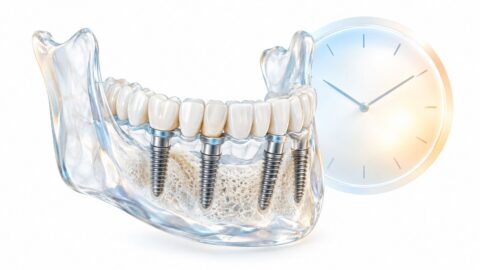
All on 4 Dental Implants Recovery Time: What to Expect
If you're reading this in Las Vegas, there's a good chance you're weighing two worries at once. You want fixed teeth again, but you also want an honest answer about how long recovery really takes. That question matters whether you're searching for a dentist near me, comparing dental implants near me, or trying to figure out if full-arch treatment will keep you out of work and on a liquid diet for months.
All on 4 can restore your smile quickly, but the part that confuses most patients is this: looking normal, feeling normal, and being fully healed are not the same thing. If you've been dealing with missing teeth, loose dentures, pain when chewing, or a smile you're tired of hiding, understanding the all on 4 dental implants recovery time helps you plan with less stress and better expectations.
What All on 4 Recovery Really Means in Las Vegas
You leave your surgery appointment with a full set of temporary teeth, stop for a smoothie on the way home, and by that evening you can smile without the gaps or loose denture you had that morning. That quick change is real. It also creates the biggest misunderstanding about all on 4 recovery.
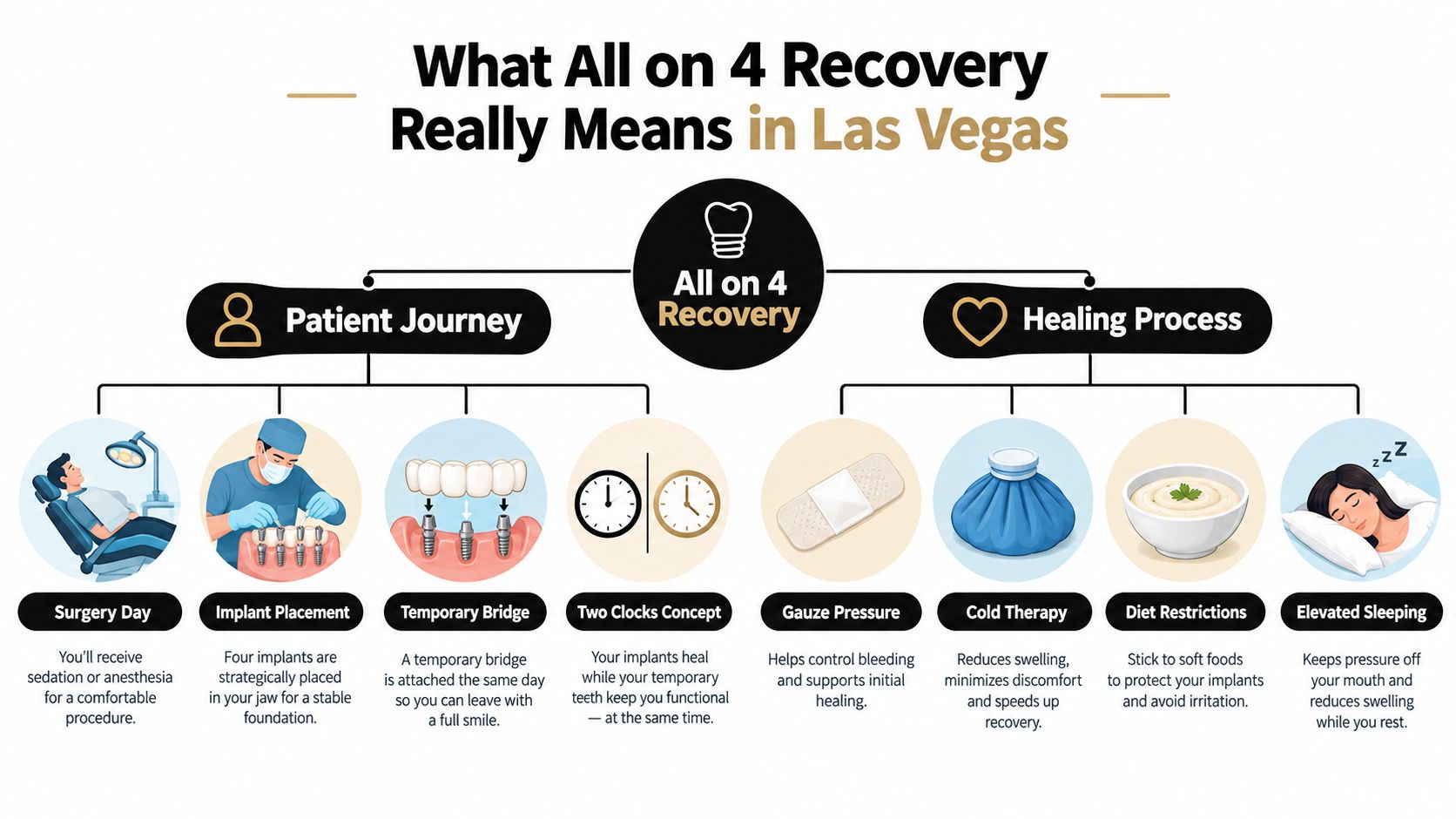
Recovery has two parts, and they do not finish at the same time.
One part is how you feel. Cleveland Clinic notes that many patients return to routine activities within a few days, often feel much more normal within about a week, and still need several months for the jawbone to heal around the implants in Cleveland Clinic's implant-supported dentures guidance.
The other part is what your bone is doing under the surface. During that longer phase, the implants are stabilizing in the jaw through osseointegration. You cannot judge that process by looking in the mirror or by the fact that your temporary teeth feel usable.
A simple way to picture it is a house with finished walls before the concrete has fully cured. The structure may look complete early, but it still needs protected time before it can handle full force.
That is why same-day teeth can confuse patients. The teeth are attached early so you do not have to spend months without a smile, but early function is not the same as full biologic healing. Research on immediate loading supports placing a provisional or final prosthesis within 24 to 48 hours in selected cases, as reviewed in this PubMed review of immediate-loading All on 4 studies.
Your first bridge is part of treatment, not the last chapter of treatment. If you want to see how that phase is planned from surgery through restoration, Aspiring Smiles explains the All on 4 dental procedure step by step.
For Las Vegas patients, that usually means staged office visits instead of one procedure and done. Patients from Desert Shores, Sunhampton, Sun City Summerlin, Monterrey, Lone Mountain, Mar-A-Lago, and Painted Desert Estates are commonly scheduled for an early post-op check to confirm the sites are settling well, then follow-up visits for bite adjustments, hygiene review, and progress checks before final restoration planning begins.
So if you feel pretty normal before your implants are fully integrated, nothing about that is strange. Feeling better is the early recovery milestone. Biological healing is the longer one.
The First Week After All on 4 Surgery
On the first night after surgery, many Las Vegas patients notice the same thing. Their new teeth are in place, but their mouth still feels like it has been through a procedure. Both can be true at once. You can have a restored smile and still be in the earliest stage of healing.
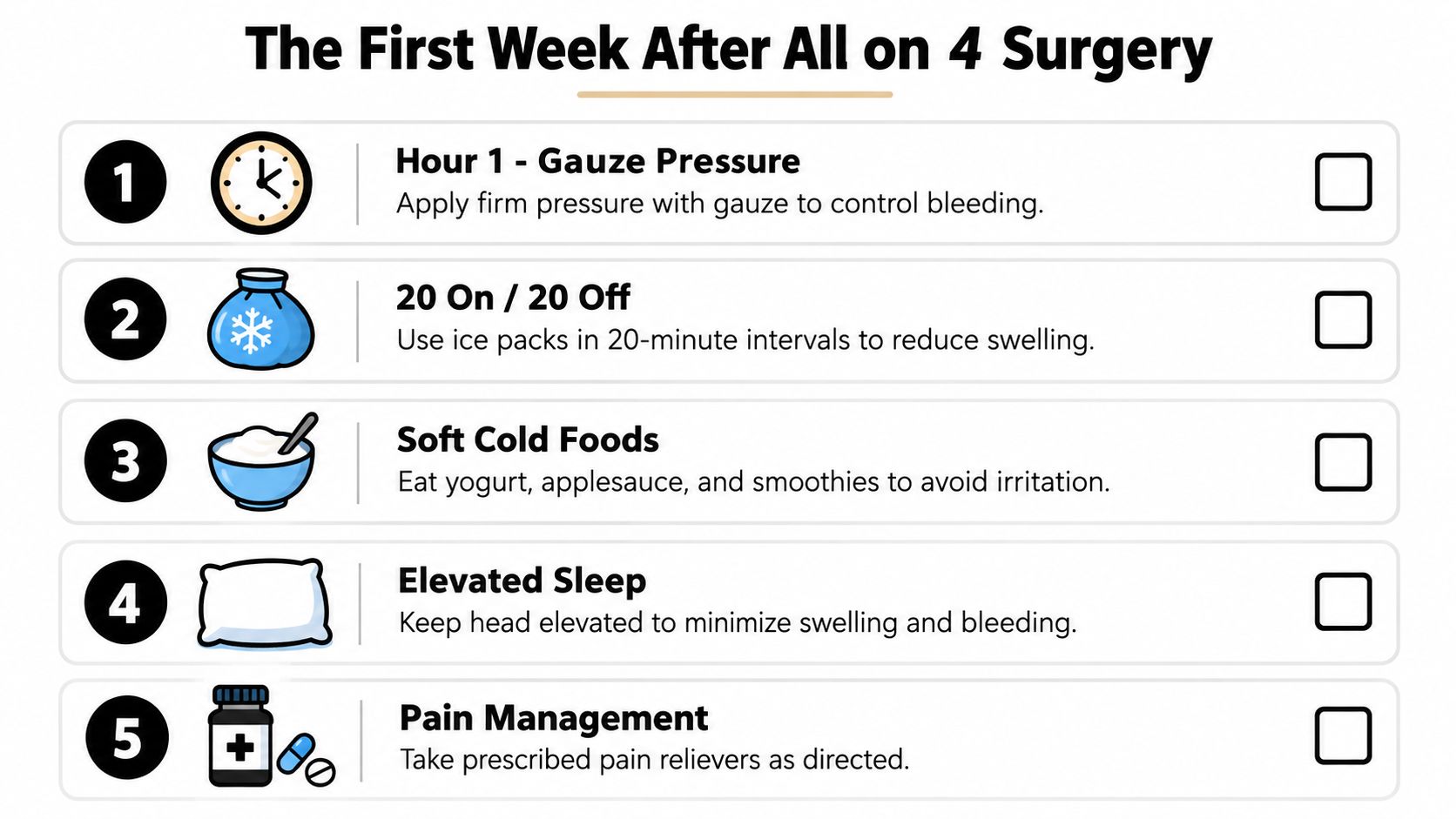
Your first week is mostly about protecting the surgical sites while your body forms a stable seal around them. Bone healing has barely started. What you do in these first few days helps set up the quieter healing that continues for months, even after you feel more like yourself.
The first 72 hours
Start simple. Keep steady pressure on the gauze your team placed, and expect some light blood-tinged saliva early on. Mild oozing is common. Heavy bleeding that fills gauze quickly or does not slow down is the kind of change that deserves a call.
Swelling often builds before it improves, which can surprise patients. Ice packs used in a 20 minutes on, 20 minutes off pattern during the first day can help limit that early swelling. Cool, soft foods are usually easiest. Yogurt, applesauce, pudding, smoothies eaten with a spoon, and mashed foods tend to be more comfortable than anything hot, crunchy, or chewy.
Sleep with your head raised on two pillows or in a reclined position. Skip straws, smoking, spitting, and poking at the sites with your fingers or tongue. Those actions can disturb the early clot and the delicate tissue trying to close over the area.
The mouth often looks worse before it looks better. That is common in the first few days.
What is usually normal, and what is not
A useful way to judge week-one symptoms is this: normal symptoms usually fade little by little, even if they peak before they improve.
These changes are commonly expected during the first week:
- Swelling that becomes more noticeable before it starts going down
- Bruising along the cheeks, jawline, or under the chin
- Tenderness when talking a lot or opening wide
- Mild oozing in the first day or two
- Fatigue from the procedure, medications, and eating less than usual
- A low fever soon after surgery that settles down
These changes are more concerning and should prompt a call to the office:
- Bleeding that stays heavy instead of tapering off
- Swelling that keeps worsening after the first few days
- Fever that rises or does not improve
- Drainage, a bad taste, or an odor that seems new
- Pain that suddenly gets stronger instead of more manageable
- A temporary bridge that feels loose, uneven, or starts hitting in one spot
That last point matters. Many patients assume discomfort means the implants are failing. Often, the issue is simpler, such as bite pressure on the temporary teeth or irritated tissue that needs to be checked.
What to do each day
Day two is when home care usually starts to feel more active. You may be instructed to rinse gently with chlorhexidine or warm salt water. Gentle means letting the liquid roll around your mouth, not forceful swishing.
Take prescribed medications on schedule. It is easier to stay ahead of soreness than to catch up once pain builds. Keep meals soft and low-force for the full first week, because chewing pressure can stress the area even when your teeth look stable.
A simple day-by-day rhythm helps:
- Stay on your medication schedule
- Choose foods you can swallow with little or no chewing
- Sip water often so your mouth does not get dry
- Walk and move lightly around the house
- Hold off on strenuous exercise for the first couple of days, then return only as your surgeon advises
- Avoid smoking or nicotine use during healing
Recovery in Las Vegas has one extra factor people do not always expect. The dry climate can leave your mouth feeling sticky or irritated, especially if you are breathing through your mouth while sleeping. Frequent sips of water and following the rinse instructions from your dental team can help keep tissues more comfortable.
Why the week-one check matters
By day seven, many patients feel noticeably better and assume the hard part is over. The harder part physically may be over, but the biologic healing is still in its early phase. A follow-up visit at about one week gives your dental team a chance to check the tissue, clean around areas you cannot see well yet, review hygiene, and adjust the temporary bridge if your bite is landing too heavily in one spot.
That visit is less about whether you feel normal and more about whether healing is staying on track. Those are not always the same thing.
Weeks Two Through Six of Healing
Around the second week, many Las Vegas patients tell us the same thing. "I can get through my day now, so I must be mostly healed." That feeling is common, and it is only part of the story. During this stretch, daily life usually gets easier, while the deeper healing around the implants is still in progress.
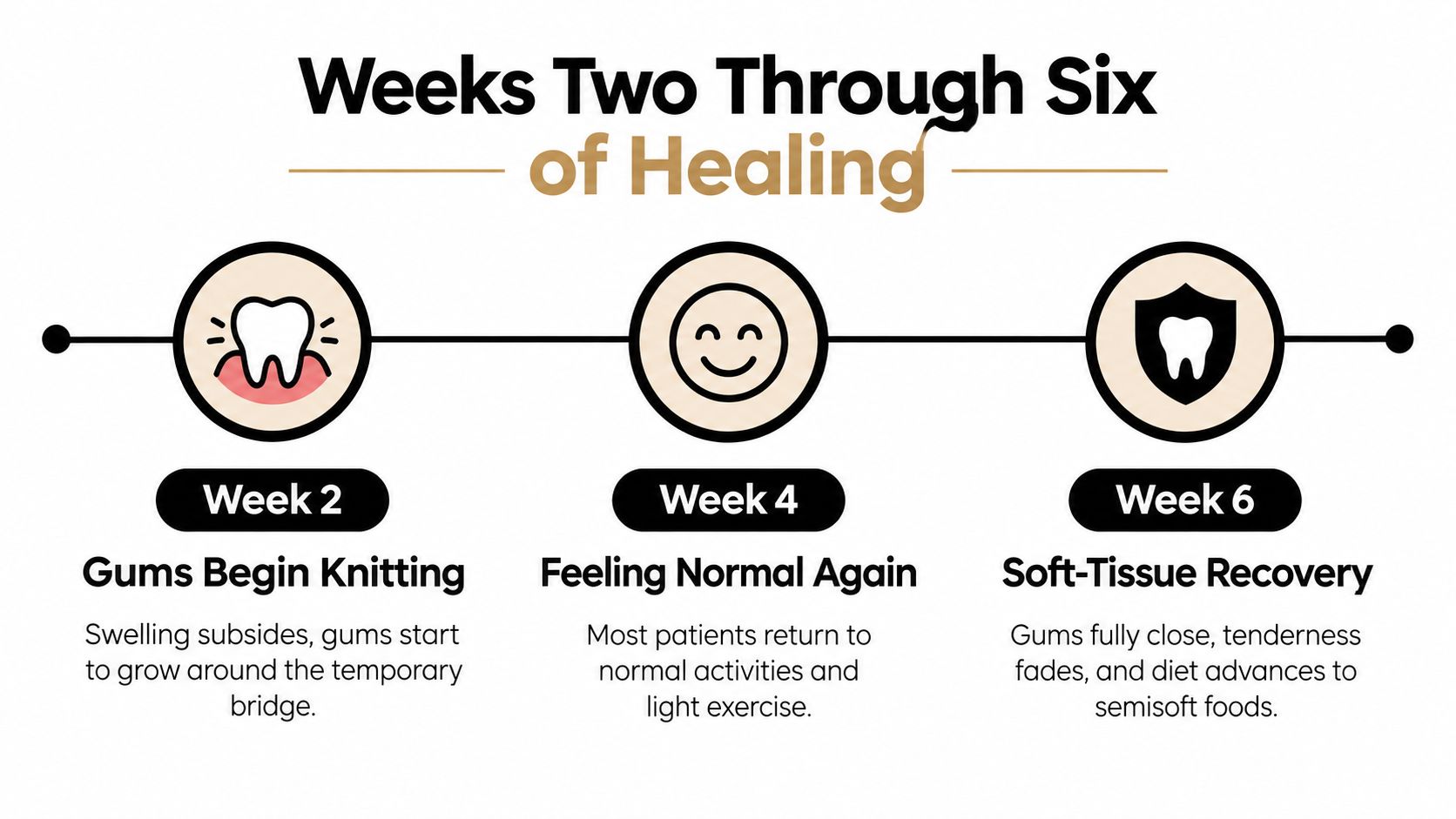
Your gums are settling around the temporary bridge, sore spots often calm down, and speech usually starts to feel more natural. At the same time, the implants are still relying on protected healing. The temporary teeth can make life feel normal before your jawbone is biologically ready for full chewing force.
That difference matters. Feeling normal and being healed are not the same milestone.
What usually changes during weeks two through six
This phase is mostly about soft tissue getting calmer and your routine becoming more predictable. A practical way to picture it is this: the outside of the area often looks better first, while the foundation underneath is still setting, much like concrete that looks firm on top before it is ready to bear full weight.
Many patients notice:
- Less swelling and tenderness
- Better sleep and easier talking
- Fewer sharp sore spots from the surgery itself
- More confidence eating soft foods
- Mild gum sensitivity when cleaning around the bridge
Food usually expands in stages, but force still needs to stay low:
- Week two: Scrambled eggs, oatmeal, yogurt, flaky fish, well-cooked pasta
- Weeks three and four: Soft chicken in small pieces, tender ground meats, cooked vegetables, rice, soft casseroles
- Weeks five and six: More variety, while still avoiding hard, crunchy, chewy, and sticky foods
A helpful rule is to choose foods you can cut easily with a fork. If a food asks your implants to grind, tear, or crunch, it is too early.
For a visual explanation of this middle phase, this video gives helpful context:
What is normal, and what deserves a call
Some unevenness is expected during this window. One side may feel a little more tender than the other. Your bite may feel slightly different from day to day as swelling drops and your muscles adapt. A little irritation from food collecting under the temporary bridge can also happen if cleaning is still awkward.
What should happen over time is a steady trend toward easier days.
Call your Las Vegas dental office the same day if you notice:
- Pain that starts increasing instead of easing
- A bad taste or odor that does not go away after cleaning or rinsing
- A temporary bridge that feels loose, rocks, or clicks
- A new swollen area, pimple-like bump, or drainage
- A white patch that stays in place and does not rinse away
- Trouble biting because one area hits much harder than the rest
The pattern matters as much as the symptom. Mild soreness that slowly improves is usually expected. Symptoms that get worse after you had been improving deserve attention.
Why bite checks matter in this phase
Weeks two through six are also a common time for small bite adjustments. As tissues settle, the temporary bridge can start taking more pressure in one spot than another. That does not always mean something is failing. It can mean the bridge needs a simple adjustment so the implants are not overloaded during healing.
Las Vegas adds one practical issue. Dry air can make your mouth feel sticky, especially overnight, and that can make the gums around the temporary bridge feel more irritated than patients expect. Water, the rinse routine your dental team gave you, and careful cleaning under the bridge can make this stage much more comfortable.
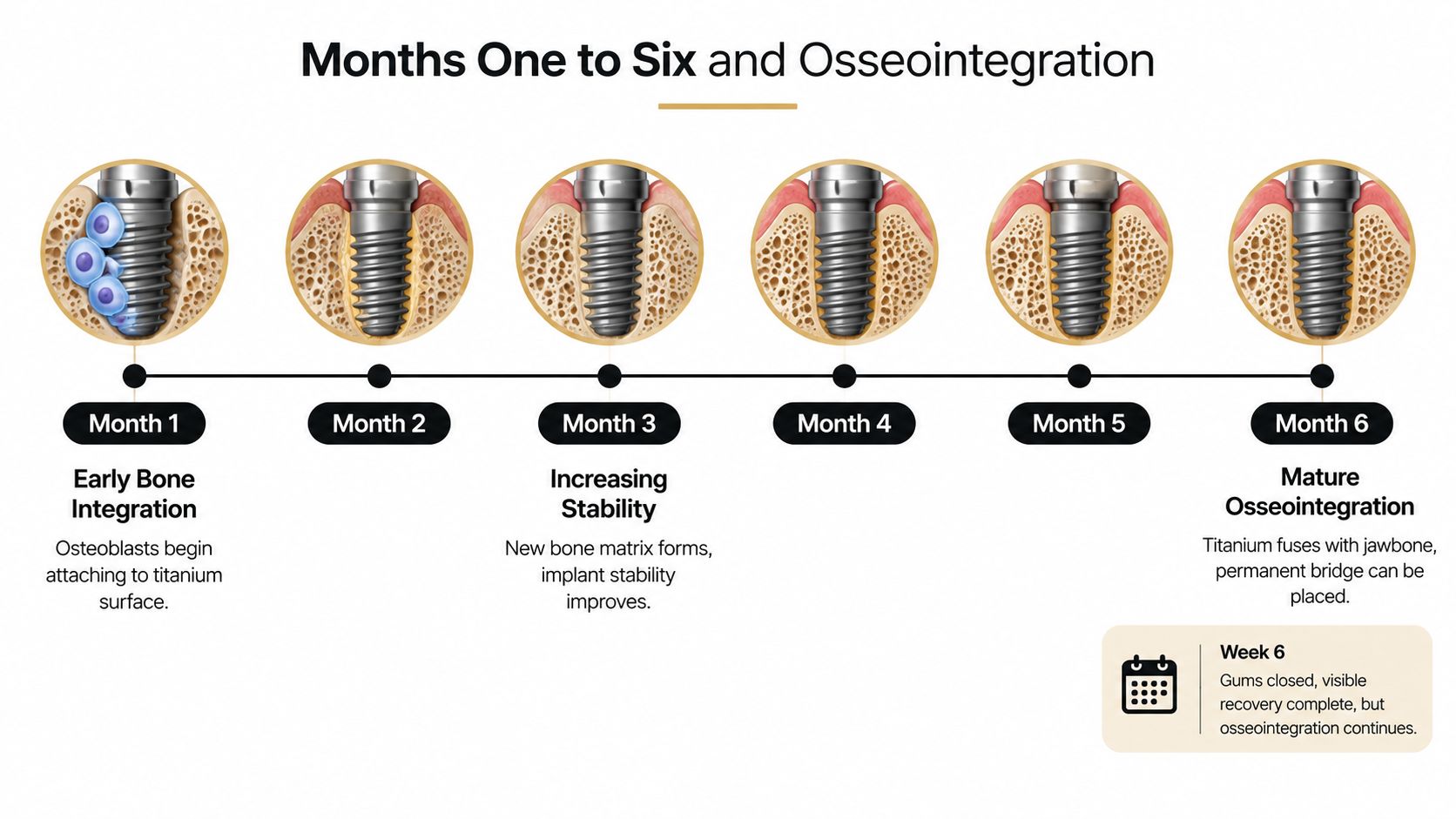
Months One to Six and Osseointegration
By this point, many Las Vegas patients tell us some version of the same thing: "I feel pretty normal again." That is encouraging, but it can also be misleading. Feeling normal is about comfort and function. Biological healing is about bone locking onto each implant, and that process keeps going long after the gums look calm.
What osseointegration means in real life
Osseointegration is the bond between your jawbone and the titanium implants. A simple way to picture it is fresh concrete around a post. Early on, the post may stand in place, but the material around it still needs time to harden and strengthen before it can handle full force every day.
That is why this stage asks for patience. You may be talking comfortably, smiling easily, and eating more normally, while the bone is still maturing around the implants under the surface.
Why "I feel fine" can be confusing
Comfort is not the same as full strength.
An implant can feel quiet and stable to you while it is still in a protected healing phase biologically. That is the main reason your temporary teeth are not the finish line. They help you get through daily life while your body does the slower work that no mirror can show.
During months one through six, your job is to avoid overloading the implants before that bond is ready.
What that means for daily life
A good rule is to judge foods by force, not just by texture. If you need a strong first bite, heavy tearing motion, or a lot of pressure on the front teeth, the implants and temporary bridge may be taking more load than they should.
Focus on habits like these:
- Choose softer foods that break apart easily
- Cut food into smaller pieces instead of biting hard into it
- Skip sticky foods that can tug on the temporary bridge
- Tell your dental office if you clench or grind, especially at night
- Keep follow-up visits so your bite can be checked as healing progresses
Small bite changes matter here. If one area starts hitting harder than the others, that extra pressure can stress implants that are still integrating.
What follow-up visits are checking
These appointments are not just routine check-ins. Your Las Vegas dental team is looking for signs that the implants are staying stable, the bite remains balanced, and the tissues around the bridge are staying healthy. In some cases, imaging is part of that review before the final restoration is planned.
If you want to see how this phase fits into the full process, this dental implant timeline from surgery through final teeth lays it out step by step.
Las Vegas adds one practical issue during these months. Dry air can make your mouth feel more parched than your healing progress would suggest, which sometimes leads patients to assume something is wrong when the bigger issue is dryness and plaque buildup around the temporary. If soreness is mild and improving, that is usually expected. If pressure, swelling, drainage, or a new loose feeling shows up, call the office.
Temporary Teeth Versus Final Restoration
A common point of confusion happens a few months after surgery. A patient in Las Vegas starts feeling more like themselves, can speak more comfortably, and may even assume the hard part is over. Then they hear they are still wearing temporary teeth and need to wait for the final bridge. That can feel confusing unless you separate two different kinds of recovery.
Feeling normal and being biologically healed are not the same thing. Your temporary teeth help you get through daily life while the implants bond with bone under the surface. That bonding process takes longer than the day-to-day soreness does, which is why the teeth you leave with on day one are not the finish line.
Temporary vs Final All on 4 Prosthesis
| Feature | Temporary Bridge | Final Restoration |
|---|---|---|
| Material | Usually a lighter provisional material made for the healing phase | Usually a stronger long-term material such as zirconia or a milled hybrid |
| Timing | Placed early so you do not leave without teeth | Delivered after healing and implant stability are confirmed |
| Purpose | Supports appearance and basic function while healing continues | Built for long-term bite strength, refined fit, and daily function |
| Bite adjustment | May need changes as gums settle and your bite shifts during recovery | Fine-tuned after healing patterns are clearer |
| Chewing expectations | Best for careful chewing and softer foods | Made to handle a wider range of normal chewing once your dentist clears you |
| Aesthetic detail | Made to look natural during treatment | Usually more detailed in contour, shade, and polish |
| Fit precision | Designed for the transition period | Made after healing changes are measured more precisely |
The easiest way to understand the difference is to compare it to a cast and a finished shoe. A cast helps you get through healing, but no one mistakes it for the final result. Temporary teeth serve a similar role. They let you smile, talk, and eat in a limited way while your mouth changes shape and the implants stabilize.
Final restoration appointments happen after your dentist can judge a more settled foundation. Gum tissue often changes contour as swelling resolves. Bite pressure can shift. Small changes in implant stability and tissue shape matter here because the final bridge is meant to fit a mouth that has finished the main phase of healing, not a mouth that is still changing week by week.
That is why judging the whole procedure by the way the temporary feels can lead to the wrong conclusion. If the temporary feels a little bulkier, less polished, or more limited with chewing, that does not mean the end result will feel the same. It usually means you are still in the protected stage of treatment.
For Las Vegas patients, dry air can make a temporary bridge feel rougher or bulkier than it really is because the mouth dries out faster and surfaces become more noticeable. If the bridge feels strange but stable, and nothing is getting progressively sore, swollen, or loose, that is often part of the adjustment period. If you notice a crack, a change in fit, a clicking feeling, or a spot that suddenly starts taking all the bite pressure, call the office.
Daily Aftercare Habits That Protect Your Implants
After the surgical phase, recovery becomes a habits issue. Patients who do well long term usually aren't doing anything dramatic. They're doing small things consistently.
The cleaning routine that matters
A fixed bridge still needs daily cleaning, especially underneath it. Food and plaque can collect where the bridge meets the gums, and that area won't stay healthy on brushing alone.
Common tools during recovery include:
- Water flosser: Useful for flushing beneath the bridge when your dentist says it's appropriate
- Soft interdental brush: Helpful for gentle access around the prosthesis
- Soft toothbrush and non-abrasive toothpaste: Better for daily cleaning without rough scrubbing
- Alcohol-free or prescribed antimicrobial rinse: Often used to reduce irritation while supporting hygiene
Aspiring Smiles Dental and Braces offers full-arch implant care in Las Vegas, including follow-up visits where patients can be shown how to clean around a temporary bridge and monitor healing around implants.
Small habits that help more than people think
Sleep position matters early on. Keeping your head slightly raised in the first weeks can make mornings feel easier by limiting overnight swelling.
Smoking is one of the clearest threats to implant healing. If you already know quitting will be difficult, tell the office early so the conversation happens before that struggle affects recovery.
A few habits are worth repeating because patients often stop them too soon:
- Brush gently but thoroughly: Don't skip areas because you're nervous
- Rinse after meals if instructed: It helps reduce trapped debris
- Watch for bite changes: A spot that suddenly feels "high" can irritate the whole arch
- Show up for follow-ups: Healing isn't judged by appearance alone
Follow-up visits support the routine
Most patients benefit from a cadence that includes an early post-op check, a later soft-tissue review, and imaging before the final bridge. Those visits don't just confirm healing. They catch small issues while they're still easy to manage.
People searching for a dentist in Las Vegas, NV, cosmetic dentist near me, or implant care often focus on the surgery itself. The daily maintenance side of care matters just as much. The same office that handles implant work may also help you stay on track with broader dental care, cleaning and exams, new patient exams, and other restorative needs over time.
Why All on 4 Is Not a Faster Biological Recovery
The phrase "same-day teeth" makes people assume the body heals faster with All on 4. That's not what same-day loading means.
It means a temporary prosthesis can be attached early so you don't spend the healing period without teeth. A recent neutral summary notes that patients often stay on a soft or mechanical-soft diet for weeks to months, with some guidance extending that restriction to 6 to 8 weeks, while temporary prostheses are worn during osseointegration before final restoration at roughly 3 to 6 months, as explained in this All on 4 recovery diet and maintenance review.
Early function is not early fusion
This is the key distinction. Early function lets you smile and manage day-to-day life sooner. It doesn't mean the implant has finished bonding to bone sooner.
An easy local analogy helps. In Las Vegas terms, same-day teeth are like getting access to the ticket right away. The biologic "clearance" still takes time. The visible part of the transaction happens early. The deeper process doesn't speed up just because it looks complete.
Why overconfidence causes problems
Patients often run into trouble when they assume comfort equals readiness. The temporary bridge can feel stable enough for normal habits before the bone has completed its job.
That can lead to:
- Excessive chewing force
- Micromovement at the implant site
- Disrupted healing
- Possible need for additional treatment if integration fails
The implant design and placement strategy may improve support and use available bone efficiently, but they don't erase the healing biology. Two clocks are still running. One is how you feel. The other is how your body bonds implant to bone.
Warning Signs and Your Next Step in Las Vegas
You wake up on day four, look in the mirror, and notice your face seems puffier than it did yesterday. Or your temporary teeth suddenly feel a little different when you rinse. That is the moment to stop guessing and call.
Recovery after All on 4 has two tracks. One is how you feel. The other is how the tissues and bone are healing under the surface. A patient can feel fairly normal and still need an exam if symptoms start moving in the wrong direction. Early calls usually make problems easier to sort out.
Warning Signs After All on 4 Surgery
| Warning Sign | What It Usually Means | Action to Take |
|---|---|---|
| Swelling that gets worse after the first few days | Healing may not be following the expected pattern | Call the office the same day and be ready to send a photo |
| Bleeding that starts up again instead of steadily easing | The area may need direct instructions or an exam | Apply pressure as instructed and contact the office |
| Fever that is clearly elevated or makes you feel sick | Possible infection or another issue that needs review | Call the same day for guidance |
| Numbness that does not gradually improve | The nerve area may need evaluation | Report when it started, where you feel it, and whether anything has changed |
| Temporary bridge feels loose, shifts, or rocks | The prosthesis needs prompt attention | Stop chewing on it and call immediately |
| Pus, bad-tasting drainage, or a strong new odor | Possible infection around the surgical area | Call as soon as you notice it |
| Pain that grows stronger instead of easing day by day | Healing may be irritated or complicated | Tell the team where it hurts, how strong it is, and what medication you took |
What should prompt a call right away
Look for direction, not perfection.
Mild soreness, bruising, and swelling can be normal early on. What matters is whether each day is gradually calmer than the one before it. If swelling increases, pain intensifies, drainage appears, or the bridge feels mobile, do not wait for your next scheduled visit.
Photos help. If you can safely take a clear picture in good light, send it when you call. That gives the dental team a faster read on whether you need home instructions, a medication adjustment, or a same-day visit in the office.
Do not compare your recovery to a friend, a relative, or a video online. Compare it to the direction your own symptoms should be going.
Quick answers to common questions
Driving after surgery
If you had sedation, plan on a ride home. Do not drive until your surgical team says it is safe and you are fully alert.
Flying soon after treatment
Travel is common in Las Vegas, but timing matters. If you have a flight planned close to surgery, tell the office before treatment so follow-up and emergency planning are clear. A patient who feels fine in a hotel room can still need local care if swelling or bleeding changes suddenly.
Smoking
Smoking slows healing and raises the risk of implant problems. Cutting down is better than nothing, but stopping during recovery gives your implants a better chance to bond well.
Going back to the gym
Light activity often returns before hard exercise. If your pulse is up, your face feels more pressure, or the surgical area starts throbbing, you are probably doing too much too soon. Ask the office when you can return to lifting, high-intensity workouts, or long outdoor sessions in the Las Vegas heat.
If you are in Las Vegas and are weighing restorative dentistry, emergency dentist care, tooth extraction, dental x-rays, or full-arch implant treatment, the safest next step is a consultation with a team that follows healing from surgery through final teeth, not just day one.
Aspiring Smiles Dental and Braces provides All on 4 treatment, implant planning, restorative care, and follow-up support for patients in Las Vegas, NV who want clear guidance from surgery day through final restoration. If you're dealing with missing teeth, failing dentures, or want an honest conversation about recovery, schedule a consultation to review your options, healing timeline, and what treatment would look like in your case.