Abscessed Tooth Untreated: Risks and Next Steps
You've had a throbbing tooth for days, but tonight the pain suddenly feels better. Maybe the swelling drained, or perhaps the over-the-counter medication finally helped. In Las Vegas, it's easy to hope the problem can wait until your schedule clears. An abscessed tooth that feels better may still be infected, and delaying care can turn a dental problem into an urgent medical emergency.
If you're searching for a dentist near me, an emergency dentist, or a dentist in Las Vegas, NV, use the change in symptoms as a reason to arrange prompt evaluation, not as proof that the infection is gone. The right next step may be drainage, a root canal, or tooth extraction, depending on whether the tooth can be saved.
What an Untreated Abscessed Tooth Really Means
A Las Vegas patient may spend days chewing on one side, taking pain medicine at night, and waiting for a throbbing tooth to settle. Then a gum bump appears, or a foul-tasting fluid drains and the pain fades. That change can feel like recovery, but it may mean the infection has found a temporary outlet.
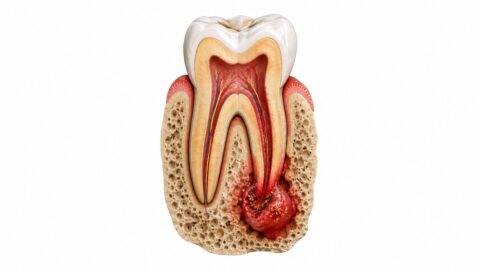
A dental abscess forms when bacteria pass through decay, a crack, or another opening into the tooth's inner pulp. After the pulp becomes infected or dies, bacteria and inflammatory fluid collect near the root tip. The immune system can contain some inflammation around the tooth, yet it cannot reliably clear a sealed root canal from within.
The problem is sealed inside the tooth
The infection sits in a confined space that the immune system cannot clean out. Saltwater rinses may soothe the gum, and an over-the-counter pain reliever may make the night manageable. Leftover antibiotics can reduce some symptoms temporarily. None removes dead pulp, an infected root canal, or the damaged tooth sustaining the infection.
Practical rule: Relief can help you get through the night, but treating the tooth is what addresses the source.
An untreated abscess can remain quiet for a while before entering the jawbone or nearby soft tissues. The pain level does not show how safe the situation is. Cleveland Clinic explains that an abscessed tooth may fail to heal without treatment and can extend into the jaw, face, and neck, which is why prompt dental care matters (Cleveland Clinic's explanation of an abscessed tooth).
What home measures can and cannot do
Use appropriate over-the-counter pain relief according to the label, choose softer foods, and keep heat away from facial swelling. Do not squeeze, puncture, or drain a gum bump yourself. These actions can drive bacteria into surrounding tissue and make professional treatment harder.
Your next step depends on the symptoms. Localized tooth pain or gum swelling calls for a prompt dental appointment. Spreading swelling, fever, difficulty swallowing, or breathing trouble calls for urgent care now. In Las Vegas, contact a dentist such as Aspiring Smiles Dental and Braces for an evaluation, then follow the recommended treatment, whether that means drainage, root canal treatment, or extraction.
Why an Abscess Will Not Heal Without Treatment
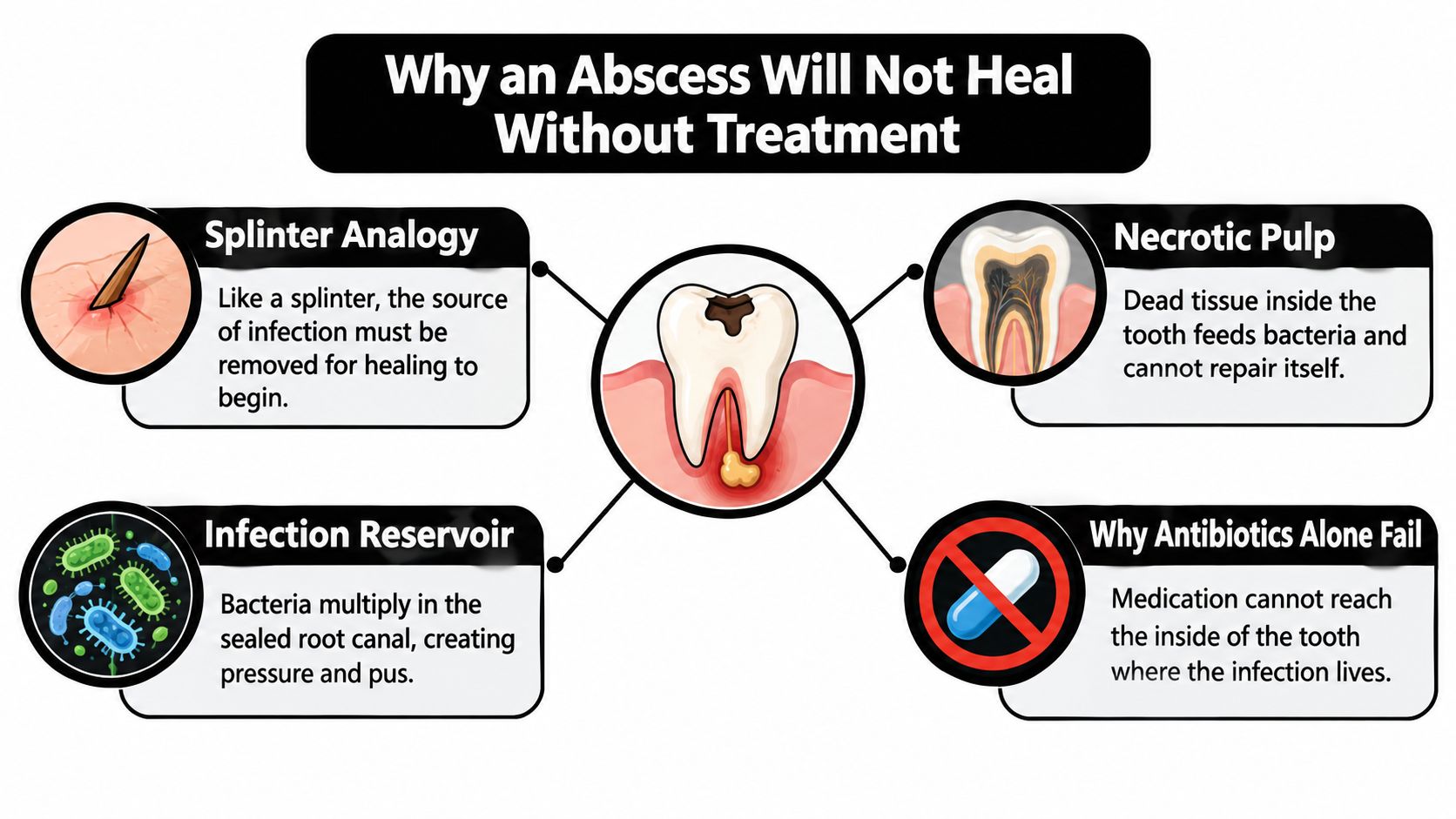
Healing requires removing the source of infection. Until the necrotic pulp is cleaned out or the tooth is removed, bacteria can keep repopulating the root canal system. A dentist may need to clean and seal the canals, drain the abscess, or extract the tooth, depending on the tooth's condition.
An untreated abscessed tooth is a persistent bacterial infection, not a problem that reliably resolves by itself. Antibiotics alone do not remove dead pulp, an infected root canal, or another source inside the tooth, as explained in dental abscess prescribing guidance from the Scottish Dental Clinical Effectiveness Programme.
Three facts explain the persistence
First, the pulp can become necrotic, meaning the living tissue inside the tooth has died. Dead tissue cannot repair itself or mount an effective immune response. Bacteria may remain inside the root canal system even when the tooth's outer surface looks fairly normal.
Second, the infection can form a reservoir within the tooth and surrounding tissues. Pressure and pus may move through the bone toward the gum, producing a bump or temporary drainage. That release may reduce pressure without removing the diseased tooth.
Third, antibiotics circulate through the body, but they do not replace physical treatment of the infected source. A dentist may prescribe them when infection is spreading or systemic symptoms are present. They are not automatically appropriate for every localized abscess.
Localized does not mean harmless
A localized abscess may cause tenderness, pain when chewing, gum swelling, or a bad taste. Pain can ease after drainage or as the tooth's nerve dies, yet the infection may remain. That false recovery still requires a dental assessment.
A dental examination and X-rays help determine whether the tooth can be restored and whether the infection has moved beyond it. Root canal treatment removes infected pulp and seals the cleaned canals, as explained in this guide to tooth infections and when a root canal is needed. Extraction removes a tooth that cannot be predictably saved.
Arrange prompt care with Aspiring Smiles Dental and Braces in Las Vegas. Choose emergency evaluation for spreading swelling, fever, trouble swallowing, or breathing difficulty. For localized symptoms, book the earliest dental appointment available rather than waiting for pain to return.
How the Infection Spreads When Care Is Delayed
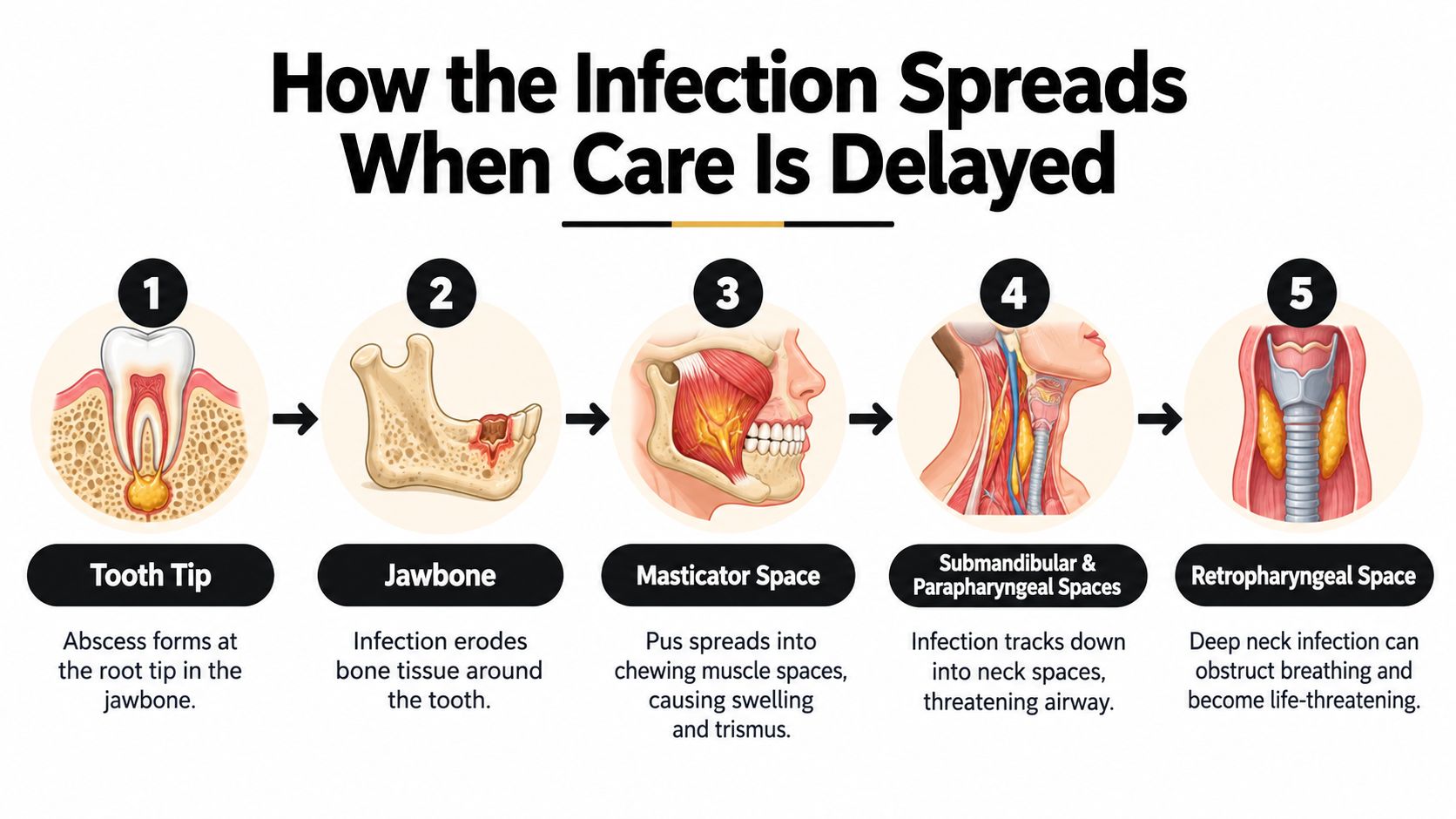
A tooth abscess can begin at the root tip and move beyond the jawbone. Infection may enter the spaces around the chewing muscles, under the jaw, beside the throat, or behind it. These areas connect with structures involved in swallowing, breathing, the eye, and the bloodstream.
Spread is not inevitable, and an abscess may stay localized for a while. Delay still creates a serious risk because a deep-space infection can progress quickly and require dental, surgical, medical, and airway treatment.
The route from tooth to deep tissue
Follow the possible path outward:
- Tooth tip: Infection collects around the root, causing pressure, tenderness, or gum swelling.
- Jawbone: It can extend through the bone into nearby tissue.
- Masticator spaces: Spread near the chewing muscles may produce facial swelling and limited mouth opening.
- Submandibular and parapharyngeal spaces: Infection can reach the floor of the mouth and neck, where swelling may interfere with swallowing and the airway.
- Retropharyngeal spaces: A deep neck infection can threaten breathing or spread farther through the body.
A systematic review of 12 studies involving 2,205 patients identified 417 complications, with an overall complication rate of 18.91%. Reported hospital stays lasted about 1.15 to 10 days, while study costs ranged from approximately AUD 2,402 to USD 47,836.60 (systematic review of severe odontogenic infections). These findings describe hospitalized severe infections, not every untreated toothache. They show why worsening dental infection needs prompt attention.
Historical reports show the danger of severe spread before modern antibiotics, imaging, airway protection, and surgery. Fatality rates for dental infections in the pre-antibiotic era were approximately 10% to 40%.
Reported mortality for Ludwig's angina fell from roughly 50% to 54% to approximately 4% to 8% with modern management (review of dental abscess morbidity and mortality). Modern treatment greatly improves outcomes, but it does not make waiting safe. If swelling is spreading or swallowing or breathing is becoming difficult, seek emergency care. For a localized abscess, contact Aspiring Smiles Dental and Braces in Las Vegas for the earliest available dental evaluation.
The False Recovery Trap When Pain Disappears
The pain stops, you sleep better, and chewing feels normal again. That relief can hide a tooth that still needs treatment. Do not cancel your dental appointment because the symptoms settled.

An abscess may drain through the gum, lowering pressure and easing throbbing. A salty taste, fluid near the gum, or a bump that changes size can signal drainage, but the infected tooth still needs assessment.
Why pain can disappear
Pulp death is a separate reason symptoms may fade. The pulp contains the tooth's nerves and blood vessels. If decay or infection destroys that tissue, the tooth may stop responding normally to heat, cold, or pressure. The disappearance of pain means the nerve may no longer be functioning, not that the infection has cleared.
A non-vital tooth can still harbor bacteria inside its root canal system. Those bacteria can move through the opening at the root tip into the surrounding bone, where they may maintain inflammation or form an abscess. Because the damaged tooth feels less sensitive, you may notice the problem only when swelling, tenderness, or a gum bump returns.
Pain reduction alone does not prove recovery. A drainage opening or a dead pulp can change the symptoms while the source remains.
Do not use leftover antibiotics as a test of whether you are improving, and do not stop seeking care after a weekend flare-up settles. Antibiotics may be appropriate when infection is spreading or causing systemic illness, but they do not repair the tooth or remove infected pulp.
Arrange a same-day or next-day dental evaluation for a suspected abscess, even without pain. A dentist can examine the tooth, take dental X-rays, evaluate nearby tissues, and discuss root canal treatment, drainage, or extraction. Contact Aspiring Smiles Dental and Braces in Las Vegas for the earliest available evaluation.
For a visual explanation of the condition and changing symptoms, this patient-focused video may help before your appointment:
Symptoms That Mean You Need Emergency Care Now
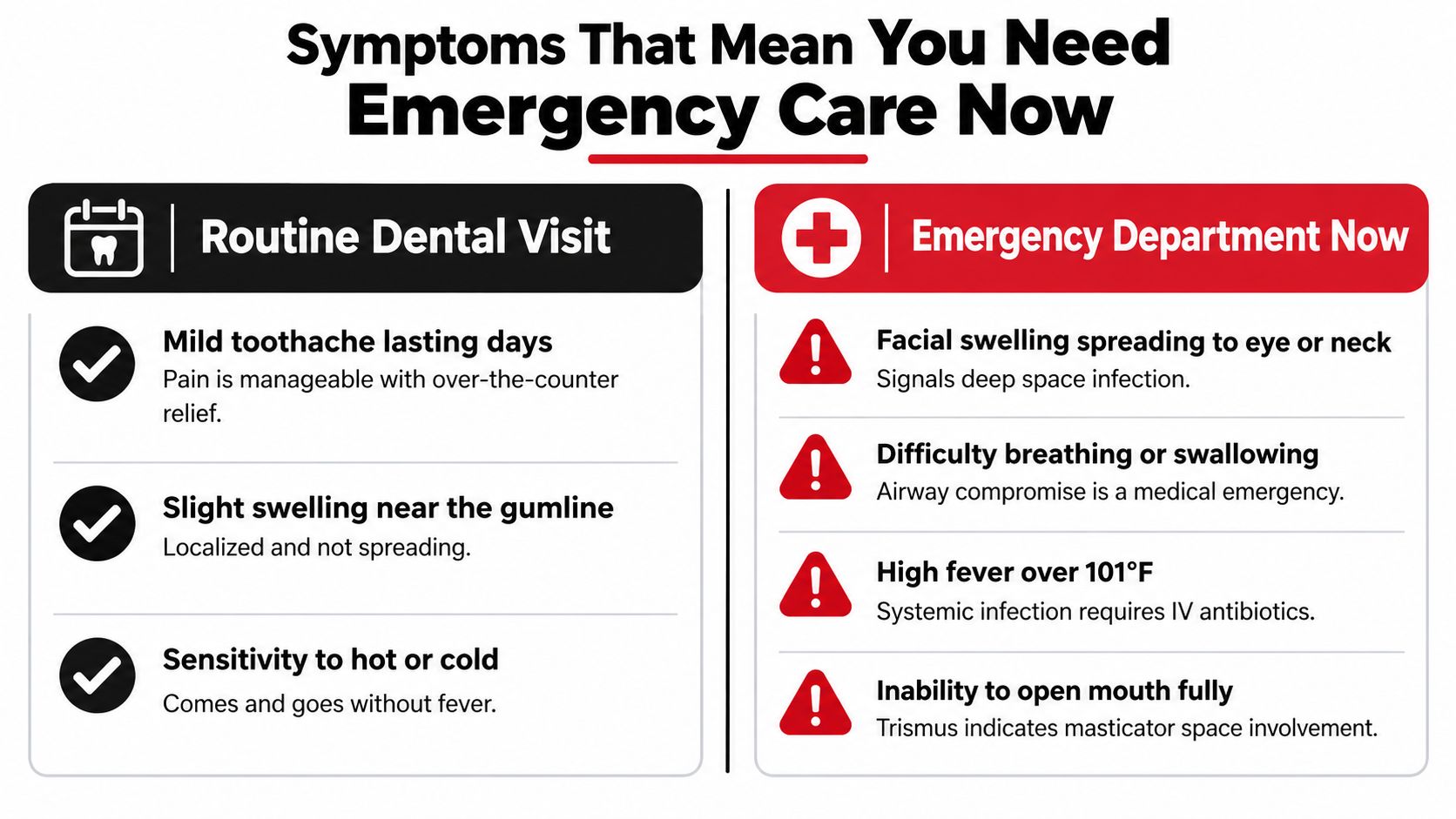
Not every toothache requires an emergency department. Localized pain, mild gum swelling, or sensitivity without systemic symptoms usually calls for prompt dental care. The situation changes when the infection begins affecting your face, neck, swallowing, breathing, vision, or alertness.
Use this triage checklist
Call a dental office for urgent evaluation when you have localized tooth pain, a small gum swelling, pain with chewing, or symptoms that improve and return. Ask for an emergency dental appointment rather than waiting for a routine cleaning and exam.
Go to an emergency department now if you have:
- Breathing difficulty: Any trouble getting air can signal airway involvement.
- Swallowing or speaking difficulty: A muffled voice, painful swallowing, or an inability to swallow normally needs immediate assessment.
- Drooling or floor-of-mouth swelling: These signs can indicate that swelling is affecting normal mouth and throat function.
- Rapidly spreading facial or neck swelling: Expansion toward the eye, jaw, or neck raises concern for deeper tissue spread.
- Markedly limited mouth opening: Severe trismus can occur when infection reaches chewing muscle spaces.
- Eye swelling or vision changes: Infection near the eye can threaten nearby structures.
- Fever with deterioration: Fever, chills, weakness, or a rapidly worsening overall condition may indicate systemic involvement.
- Confusion or unusual drowsiness: Altered mental status is an emergency warning sign.
These symptoms warrant immediate emergency assessment, consistent with maxillofacial dental abscess referral guidance.
If you have trouble breathing, severe trouble swallowing, rapidly expanding neck swelling, confusion, or a rapidly worsening condition, call 911 or go to the emergency department. Don't drive yourself if you're too weak, confused, or short of breath.
Cost, transportation, and weekend hours can complicate decisions for Las Vegas families. While arranging care, stay upright, drink fluids if you can swallow safely, avoid heat on the face, and use only appropriate over-the-counter medication as directed. These steps are temporary. They don't replace dental treatment or emergency evaluation.
If wisdom tooth pain or swelling is part of the problem, this resource on finding emergency wisdom tooth care may help you understand what urgent evaluation can involve.
Treatment Paths and What to Expect at the Dentist
A dental visit for an abscess should answer two questions quickly. Where is the infection, and can the tooth be saved? Your dentist may examine the gum and face, test the tooth, take dental X-rays, and recommend additional evaluation if swelling extends beyond the tooth.
Treatment focuses on controlling the infection and removing its source. Mayo Clinic describes drainage, root canal treatment, and extraction as the main approaches, with antibiotics used more often when infection has spread beyond the immediate abscess (Mayo Clinic treatment information for tooth abscess).
Choosing the right treatment path
| Treatment | When it is used | What happens | Typical recovery |
|---|---|---|---|
| Drainage | When pus and pressure need release | A dentist makes a small opening, drains the area, and may place a temporary drain | Swelling and pressure should be monitored closely, with follow-up for source control |
| Root canal treatment | When the tooth has enough healthy structure to restore | The infected pulp is removed, the canals are cleaned and sealed, and the tooth is usually restored afterward | The tooth may remain tender while surrounding tissues settle, with restoration completed as directed |
| Tooth extraction | When decay, fracture, or infection has made the tooth unrestorable | The tooth is removed and the abscess is drained | Healing is monitored, followed by discussion of replacement options |
Drainage alone may relieve pressure without solving the cause. If the tooth is salvageable, root canal treatment removes infected pulp and seals the pulp chamber and root canals. If it cannot be restored, extraction removes the source, after which a dentist can discuss a bridge, partial denture, or dental implants near me as replacement options.
Antibiotics aren't automatically prescribed for every localized abscess. They may be needed when there is spreading infection, fever, malaise, lymph-node involvement, significant trismus, or another medical reason. Don't share medication or use an old prescription.
Patients comparing broader options can also review Littleover Dental Practice treatments for examples of how practices organize restorative, preventive, and replacement care. At your Las Vegas appointment, ask what must happen today, what can wait, and what follow-up will protect the tooth or replacement.
Getting Prompt Care in Las Vegas Without the Runaround
If you live in Las Vegas, NV, prompt care should be practical, not confusing. Aspiring Smiles Dental and Braces at 3211 N Tenaya Wy Suite 122, Las Vegas, NV 89129, serves families in Desert Shores, Sunhampton, Sun City Summerlin, Monterrey, Lone Mountain, Mar-A-Lago, and Painted Desert Estates.
Dr. Patel's team provides general, restorative, cosmetic, and emergency dental care, including evaluations for severe tooth pain, suspected abscesses, root canal needs, and tooth extraction. The practice welcomes new patients, accepts insurance, offers flexible payment options, and provides extended weekday and Saturday hours with online appointment requests.
Choose the right first call
For a localized toothache, gum swelling, or pain that suddenly disappeared, request a prompt dental appointment. An examination with dental X-rays can identify the source before it becomes harder to treat. The office also provides cleaning and exams, new patient exams, restorative dentistry, crowns, cosmetic dentistry, teeth whitening, Invisalign, dental implants, and other ongoing dental care.
For breathing or swallowing difficulty, rapidly spreading facial or neck swelling, confusion, or severe systemic symptoms, go to the emergency room first. Once you're medically stable, contact the practice for definitive dental follow-up. You can also review how to get emergency dental care before calling.
Families coordinating care for an older adult may also find practical guidance about in-home care for older adults useful while arranging transportation and dental follow-up. Don't let cost, a busy schedule, or temporary pain relief turn a treatable abscess into a larger problem.
Aspiring Smiles Dental and Braces offers prompt evaluations for suspected abscesses, emergency dental care, root canal treatment, tooth extraction, and restorative options when a tooth can't be saved. If your tooth hurts, has swollen, or suddenly feels better after drainage, request an appointment at Aspiring Smiles Dental and Braces today.