
How Much for Tooth Extraction Without Insurance in Las Vegas
You wake up in Las Vegas with a throbbing tooth, a swollen jaw, and one urgent question: how much for tooth extraction without insurance? The answer depends less on a single citywide price and more on whether the tooth is visible, broken, impacted, infected, or difficult to reach.
For a general baseline, an uninsured patient may pay about $150 to $310 for a routine, non-surgical extraction and approximately $260 to $460 for a surgical extraction, based on Delta Dental's out-of-network claims data (Delta Dental's tooth extraction cost guide). Other consumer cost references place simple extractions around $75 to $250, while complex surgical cases can reach about $550 per tooth (GoodRx's extraction cost information).
Those figures are useful starting points, not guaranteed Las Vegas prices. Your dentist in Las Vegas, NV will need to examine the tooth and review dental X-rays before confirming whether you need a simple extraction, a surgical procedure, infection treatment, sedation, or a replacement such as dental implants.

Understanding Tooth Extraction Costs in Las Vegas
The price range is a starting point
A routine extraction generally means the dentist can see and grasp the tooth. A surgical extraction involves additional access, such as an incision, bone removal, or sectioning the tooth into pieces. That difference affects the time, instruments, anesthesia plan, and clinical skill required.
For Las Vegas families in Desert Shores, Sunhampton, Sun City Summerlin, Monterrey, Lone Mountain, Mar-A-Lago, or Painted Desert Estates, the local written estimate matters more than a national average. Fees can vary by office type, provider experience, tooth position, and the complexity discovered during the examination.
Practical rule: Treat the advertised extraction price as the procedure fee, not automatically as the complete cost of care.
A cash-paying patient should ask whether the office offers a self-pay rate and whether a Good Faith Estimate applies before treatment. The estimate should show what you'll pay for the examination, imaging, anesthesia, extraction, medication, and follow-up care.
Finding a tooth extraction near me, choose an office that explains those line items before you consent. A clear estimate can reduce financial stress while helping the dentist focus on relieving your pain safely.
Simple vs Surgical Extraction Fee Differences
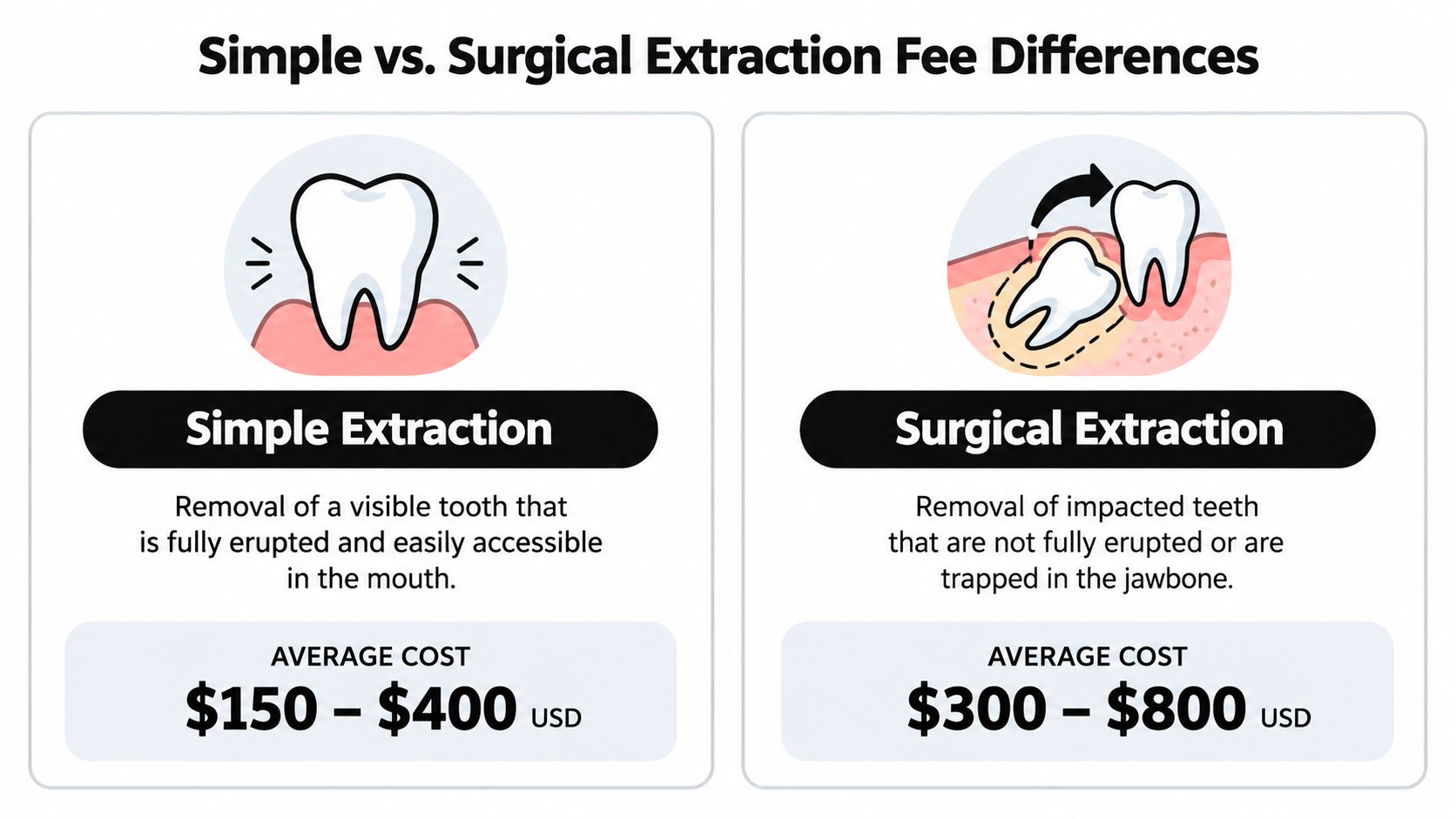
The simplest way to understand extraction pricing is to compare removing a loose, visible tooth with removing a tooth that's hidden or difficult to access. A simple extraction is similar to lifting a key from an open lock. The dentist loosens the tooth and removes it with standard instruments.
A surgical extraction is more like opening a stuck compartment before removing what's inside. The dentist may need to raise gum tissue, remove bone, section the tooth, or place sutures. Broken teeth, impacted wisdom teeth, unusual root shapes, and teeth trapped below the gumline often require this approach.
What the procedure codes reveal
CDT D7140 generally describes forceps or elevation removal of an erupted tooth or exposed root. A surgical code such as D7210 describes extraction requiring bone removal and/or tooth sectioning. Nebraska Medicaid's published fee schedule lists $89.27 for D7140 and $125.81 for D7210, which are reimbursement benchmarks rather than guaranteed uninsured prices (Nebraska Medicaid's dental fee schedule).
The approximately $36.54 difference between those benchmarks illustrates how added surgical steps can affect the base fee. Private cash prices in Las Vegas won't necessarily match a Medicaid schedule, but asking for the applicable CDT code helps you understand what the office is billing.
| Extraction type | What usually happens | Example uninsured benchmark |
|---|---|---|
| Simple extraction | Visible tooth is loosened and removed with standard instruments | About $75 to $300, according to FAIR Health consumer cost guidance (FAIR Health's total treatment cost explanation) |
| Surgical extraction | Incision, bone removal, sectioning, or more involved access may be needed | Roughly $350 to $900 or more in some uninsured situations, depending on complexity and anesthesia |
The final quote depends on the examination. A fully erupted wisdom tooth might be treated as simple, while an impacted tooth may need surgical care and a different anesthesia plan.
Hidden Fees and Additional Treatment Charges
An extraction quote isn't always the complete bill. Think of the quoted procedure fee as one item in a repair estimate. Before work begins, you may also need an examination, dental X-rays, local anesthesia, medication, sedation, or a follow-up visit.
What may appear on the estimate
The office should tell you whether each item is included or separate:
- Examination: The dentist evaluates the tooth, gums, bite, swelling, and overall condition.
- Dental X-rays: Imaging helps show root shape, infection, bone position, and impaction.
- Anesthesia: Local numbing may be included, while nitrous oxide, oral sedation, or IV sedation can be separate.
- Medication: Antibiotics or pain medication may be prescribed when clinically appropriate.
- Postoperative care: Ask whether a checkup, dressing change, or treatment for a complication carries another fee.
- Bone grafting or replacement planning: These services aren't part of every extraction and should be quoted separately when relevant.
A patient with a painful infected tooth may need care beyond removal. The infection itself, the imaging needed to assess it, and the follow-up plan can change the total. The cheapest headline price may not be the lowest overall cost if it excludes an emergency exam or diagnostic visit.
Ask before scheduling: “Does this estimate include the exam, X-rays, local anesthesia, sedation, medications, and follow-up care?”
Uninsured patients can also ask for a written Good Faith Estimate before scheduled treatment. For additional context on how practices issue good faith estimates, review the billing guidance and then ask your Las Vegas dental office to explain any item you don't recognize.
Choosing Between Dentists and Specialists
A general dentist is often a practical first contact for a visible tooth, a routine extraction, or a broader evaluation. A family dentist can also assess whether the tooth might be saved with restorative dentistry, such as a filling, crown, or root canal, rather than removed.
An oral surgeon may be appropriate when the tooth is impacted, severely broken, positioned close to important anatomy, or likely to require more involved surgical access. The specialist route can offer advanced surgical capability, though it may involve a different consultation process, facility setting, or anesthesia arrangement.
Match the provider to the problem
| Situation | A reasonable starting point |
|---|---|
| Visible tooth with straightforward access | General dentist |
| Broken tooth, difficult roots, or impacted wisdom tooth | General dentist evaluation or oral surgeon consultation |
| Sudden pain with swelling or suspected infection | Emergency dentist or same-day dental evaluation |
| Tooth removal followed by replacement planning | Dentist who can coordinate restorative care and dental implants |
Emergency dental care focuses on timely assessment and relief. It doesn't always mean the extraction should happen immediately, because the dentist may first need imaging, infection management, or a review of your medical history.
Seek urgent medical attention for dangerous swelling, trouble breathing, trouble swallowing, or symptoms that suggest the infection is spreading. An emergency department may address immediate medical danger, but definitive dental treatment usually still requires a dental provider.
Your Cost-Saving Checklist Before Treatment
A clear conversation before treatment can prevent many billing surprises. Bring a written list of your symptoms, medications, and questions. If you're calling a dentist near me from Las Vegas, ask the same questions at every office so the estimates are easier to compare.
Start with the complete price
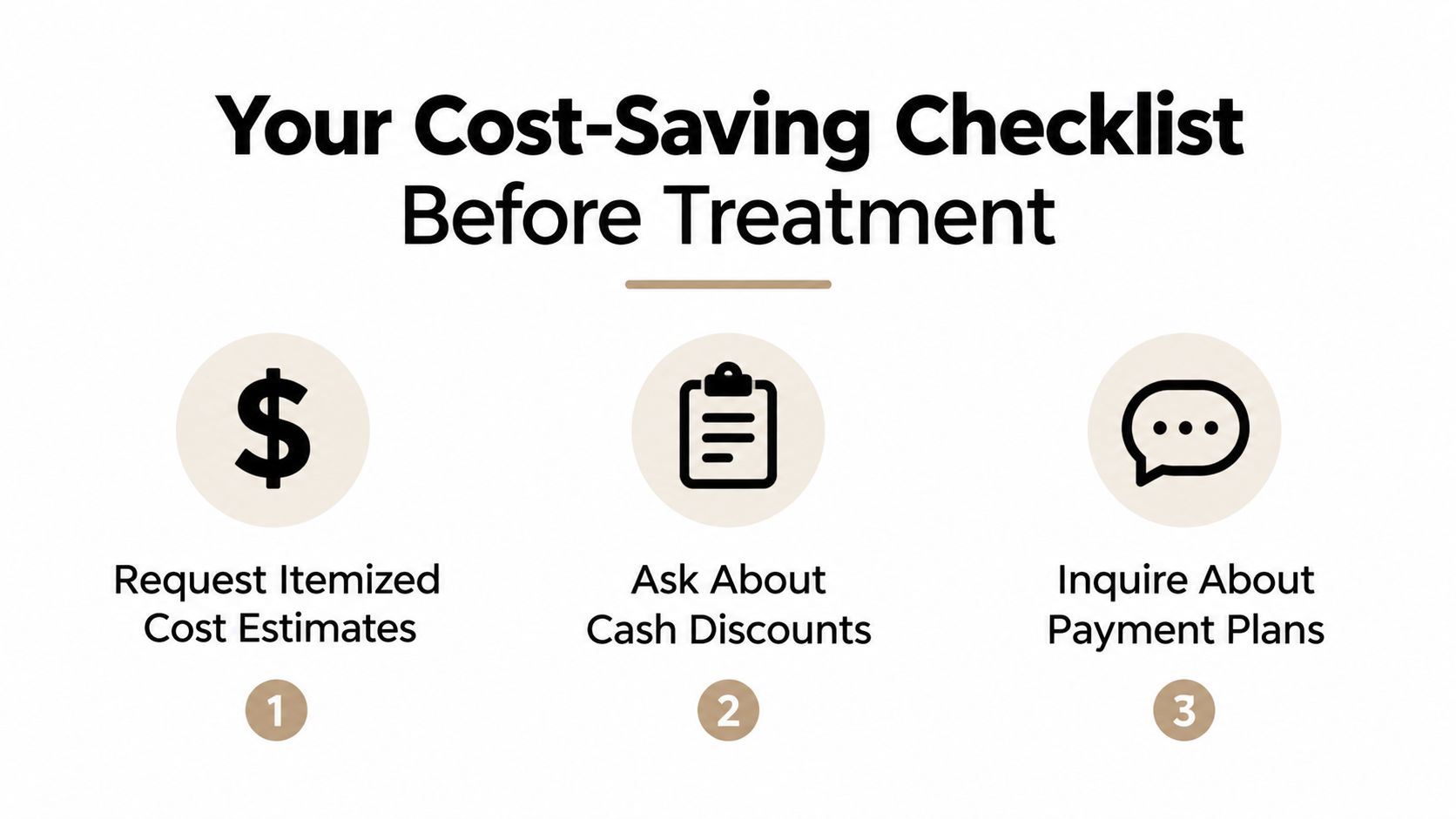
Request an estimate that separates the extraction from every related service. Ask the office to identify the extraction type and CDT code, then confirm whether imaging, local anesthesia, sedation, prescriptions, and follow-up care are included.
A useful call might sound like this:
- “Is this a simple or surgical extraction?” The answer gives you the first indication of clinical complexity.
- “What will I pay today?” Ask for the examination, X-rays, anesthesia, and extraction as separate line items.
- “Could the price change after imaging?” Some teeth look straightforward until the X-ray reveals curved roots, infection, or impaction.
- “Do you offer a self-pay rate?” Cash pricing may differ from a standard billed charge.
- “Are payment plans or a membership program available?” Ask about eligibility, enrollment, and what services the arrangement includes.
Check possible coverage pathways
Nevada Medicaid rules distinguish emergency dental services from planned, non-emergency treatment. The Nevada Dental Association states that adult Medicaid coverage generally includes emergency dental examinations and extractions for eligible residents age 21 and older, while children receive broader dental benefits through age 21 (Nevada Dental Association's low-income resources).
Coverage isn't automatic. Confirm your eligibility, whether the dentist participates in the Nevada Medicaid network, whether the dentist classifies your condition as an emergency, and whether authorization is required. Nevada Medicaid plan guidance says covered services generally don't require member payment when provided by an in-network dentist, while an out-of-network dentist may require the patient to pay all charges (Nevada Medicaid dental-plan guidance).
For a practical explanation of how to verify insurance, use a verification checklist, then confirm the information directly with your plan and dental office. If you need structured payment support, review dental payment plans and ask what terms apply before treatment begins.
Why Prompt Dental Care Protects Your Wallet
A painful tooth rarely becomes easier to evaluate by waiting. Decay, a fracture, gum disease, or infection can change the treatment options, and a tooth that might have been restored may later require removal or more involved care.

The financial lesson is simple: early evaluation creates choices. A dentist can determine whether the tooth needs an extraction, restorative dentistry, emergency treatment, or a replacement plan. Delaying care can also mean managing a more complicated infection, additional appointments, or a surgical procedure instead of a straightforward one.
Aspiring Smiles Dental and Braces provides general, cosmetic, restorative, and emergency dental care in Las Vegas, including extractions, crowns, dental implants, implant-supported dentures, and preventive exams. The office also offers flexible payment options and a membership program for patients who need ways to plan for self-pay care.
If outside financing becomes part of your decision, research the terms carefully and consider resources such as how to apply for a personal loan. Compare the total repayment cost with the dental office's available arrangements, and don't borrow until you understand the payment obligation.
For a visual overview of tooth extraction concerns and treatment planning, the following resource may also help:
Frequently Asked Questions About Extraction Costs
Can I replace the tooth after extraction?
Yes, replacement may be possible with a dental implant, bridge, or partial denture, depending on your health, bone support, bite, and goals. Ask about replacement before extraction if preserving the space or planning an implant matters to you. Searching for Dental implants near me or discussing restorative options during the initial consultation can help you understand the full sequence of care.
Does local anesthesia cost the same as general anesthesia?
No. Local anesthesia numbs the area while you remain awake and is often included in the extraction fee. Deeper sedation or general anesthesia requires additional planning, monitoring, and medication, so it may be billed separately. Ask the dental office exactly which anesthesia option is included in your estimate.
Can Nevada Medicaid cover an extraction?
Eligible adults may have coverage for emergency dental examinations and extractions under Nevada Medicaid rules, but planned non-emergency extractions may not be covered under the cited benefit structure. Verify eligibility, emergency classification, authorization requirements, and network status before treatment. Never assume that every dentist in Las Vegas, NV accepts your plan.
Should I choose a cosmetic dentist near me for an extraction?
A cosmetic dentist can still evaluate a tooth that affects your smile, but extraction decisions should begin with diagnosis and long-term function. If removal is necessary, discuss restorative dentistry, dental implants, dentures, or other replacement choices during the same treatment conversation.
What should I bring to the appointment?
Bring a list of medications and health conditions, describe when the pain began, and tell the dentist about swelling, fever, drainage, or difficulty opening your mouth. Ask for a written estimate before consenting, even if you need emergency dental services.
Aspiring Smiles Dental and Braces offers tooth extraction, emergency evaluations, restorative dentistry, dental implants, and payment options for patients in Las Vegas, NV. Visit Aspiring Smiles Dental and Braces to request an appointment and receive a clear, personalized estimate for your care.