Can You Eat with Invisalign in? a Patient Guide
No, you can't eat with Invisalign aligners in. Remove them before every meal or snack, then put them back after cleaning your teeth, while keeping them out for only the practical 2–4 hours available each day within a 20–22-hour wear schedule.
You may be checking this from a Las Vegas lunch table, fork in hand, wondering whether one quick bite could really matter. The habit is simple: take the trays out, store them safely, eat comfortably, clean your mouth, and reinsert them. That short interruption protects your teeth, your aligners, and the treatment plan your dentist created.
For patients searching for a dentist near me or a dentist in Las Vegas, NV, this is one of the first Invisalign routines we explain. The main concerns are tray damage, trapped food, staining and decay, and lost wear time. The only drink that belongs with aligners in is cool or tepid plain water. If you're choosing meals around your schedule, a resource such as find foods by preference can help you plan satisfying options without turning treatment into a daily guessing game.
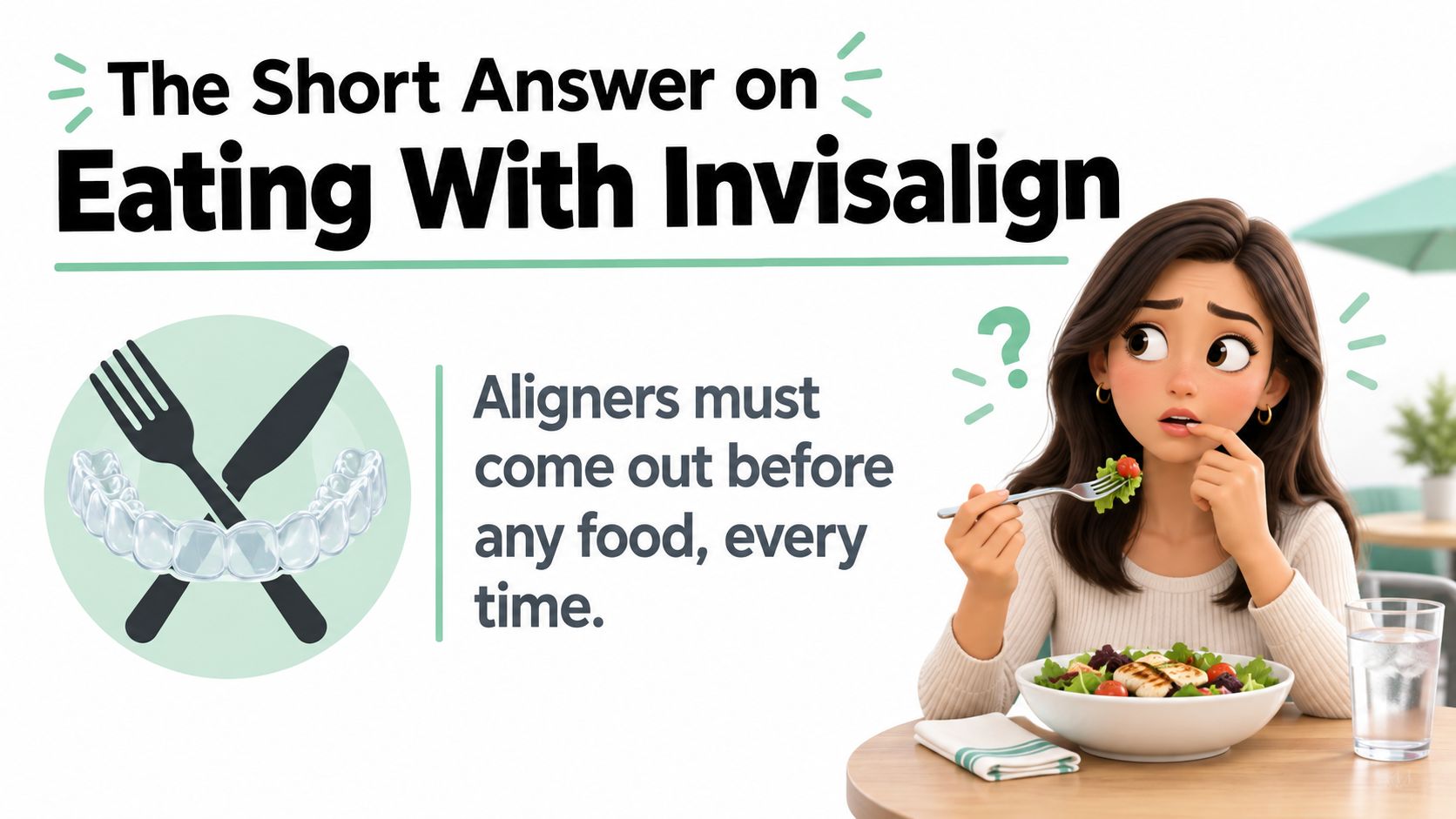
The Short Answer on Eating With Invisalign
At a restaurant in Desert Shores, you might take a bite and suddenly remember your aligners are still in. Stop eating, remove the trays, and place them in their case. Aligners must come out before any food, every time, including a small snack, a soft food, soup, yogurt, ice cream, or a quick taste while cooking.
That rule isn't meant to make meals difficult. Invisalign was designed around removal, so you can eat without the food restrictions associated with fixed orthodontic appliances. The removal itself takes seconds. The important part is not leaving the trays on a napkin, rinsing them with hot water, or forgetting to put them back.
Four reasons the rule matters
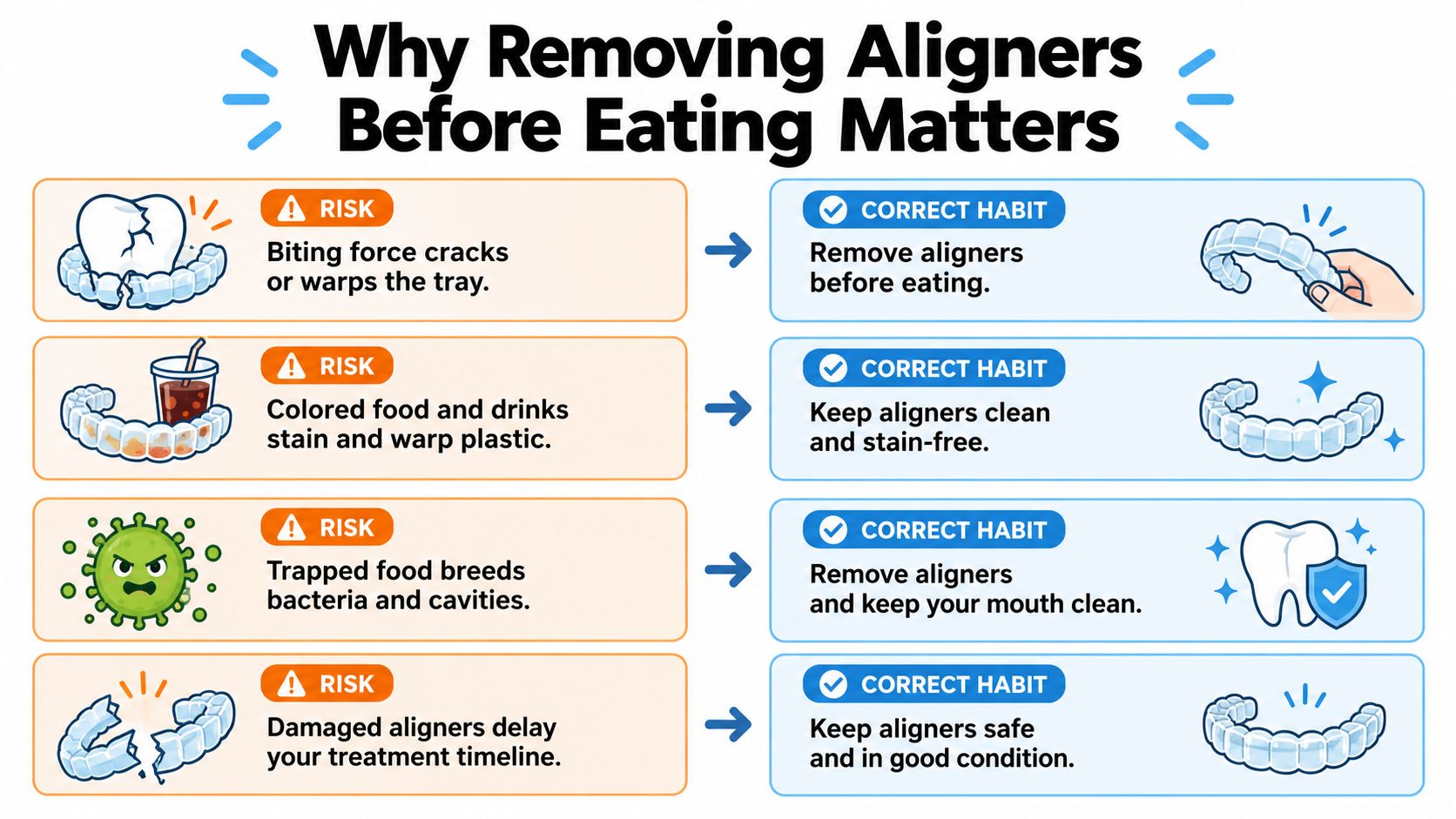
- Chewing can damage the tray. Biting pressure may crack, distort, or change the fit of the thermoplastic material.
- Food can sit against your teeth. Residue trapped beneath an aligner gives sugars and acids longer contact with enamel.
- Pigments can cloud the plastic. Coffee, sauces, berries, and other colored foods can make clear trays more noticeable.
- Time out affects consistency. Every meal, snack, and beverage break uses part of the daily wear window.
Cool plain water is the single exception. Invisalign's patient instructions say trays should be removed for eating and drinking, and that anything other than cool or tepid water can increase the risk of cavities, staining, or warping. The official Invisalign patient instructions also explain that there's generally no food restriction once the aligners are out.
Practical rule: Remove the trays before food, keep them in their case while you eat, and reinsert them as soon as your mouth and aligners are clean.
The rest of your routine becomes easier once you separate the question into four decisions: what can damage the trays, which drinks are safe, how snacking affects wear time, and how to clean up when you're away from home.
Why Removing Aligners Before Eating Matters
Eating with Invisalign in creates several problems at once. The tray is thin and precisely shaped for a particular stage of movement. Chewing forces it to flex in ways it wasn't designed to handle, and even a small change in shape can make the tray feel loose, tight, or uneven.
Your trays need to keep their shape
A damaged aligner may no longer seat fully over your teeth or attachments. That matters because the tray's fit helps deliver the planned, gentle pressure. A warped tray can also feel uncomfortable, encourage you to leave it out, and make it harder to move to the next aligner on schedule.
Heat adds another concern. Hot food and beverages can soften thermoplastic material, and a change in fit can reduce the consistency of the forces acting on your teeth. You may not notice the problem immediately. Some patients only recognize that a tray feels different when they compare it with a replacement or try to advance to the next set.
Food and color stay close to enamel
When food slips between the aligner and your teeth, saliva has less opportunity to wash the residue away. The same enclosed space can hold pigments against the plastic, attachments, or enamel. That can contribute to staining, unpleasant odor, and a higher cavity risk if the trays go back over unclean teeth.
Clear aligners are removable, so you don't need to avoid your favorite foods altogether. You do need to remove the trays first and clean before reinserting them. A clinical study of clear-aligner attachment loss found that eating with aligners inserted didn't significantly increase attachment loss in that dataset. The authors also reported that patients removing trays fewer than five times daily had a lower probability of attachment loss, while manufacturers still advise removal before eating for hygiene and material protection. Read the peer-reviewed attachment-loss study for the details.
The practical takeaway is balanced. The main concern isn't that one bite will instantly break an attachment. It's the cumulative effect of chewing, heat, residue, staining, and repeated handling.
The One Exception and What Counts as Safe to Drink
Cool or room-temperature plain water is the safe drink with Invisalign in. It has no sugar, coloring, or acidity, and it can help rinse your mouth between brushing opportunities. Sip it freely, but don't assume that every clear beverage works the same way.
The easiest test is this: if it has flavor, color, sweetness, acidity, or heat, remove your aligners first. Invisalign's patient guidance recommends removing trays for drinks other than cool or tepid water because other beverages can raise the risk of cavities, staining, and material distortion.
| Beverage | Safe With Aligners In? | Why |
|---|---|---|
| Cool plain water | Yes | It has no sugar, pigments, or added acids. |
| Hot coffee or tea | No | Heat may distort the tray, while dark pigments can stain it. |
| Soda or juice | No | Sugar and acidity can remain against enamel beneath the aligner. |
| Sports drinks | No | Sweet, acidic liquid can increase decay risk when trapped near teeth. |
| Wine | No | Color and acidity can stain trays and expose teeth to an acidic drink. |
| Sparkling or flavored water | No | Flavorings and carbonation may introduce acids, even when the drink seems light. |
| Milk or sweetened creamer | No | Residue can remain against teeth and inside the tray. |
Why “I'll rinse later” isn't the same
A sip of coffee during a long workday may seem harmless because you aren't chewing. The problem is repeated exposure while the aligners remain seated. Liquid can move beneath the tray, and the plastic keeps that environment close to your enamel until you remove and clean it.
If you want coffee, tea, a gym drink, or wine, take the aligners out, finish the beverage, rinse or brush as appropriate, and put the trays back in. This approach also helps prevent a common mistake, drinking something other than water while the aligners are in and assuming a later rinse completely reverses the exposure.
Wear Time and How Eating Habits Affect Your Treatment
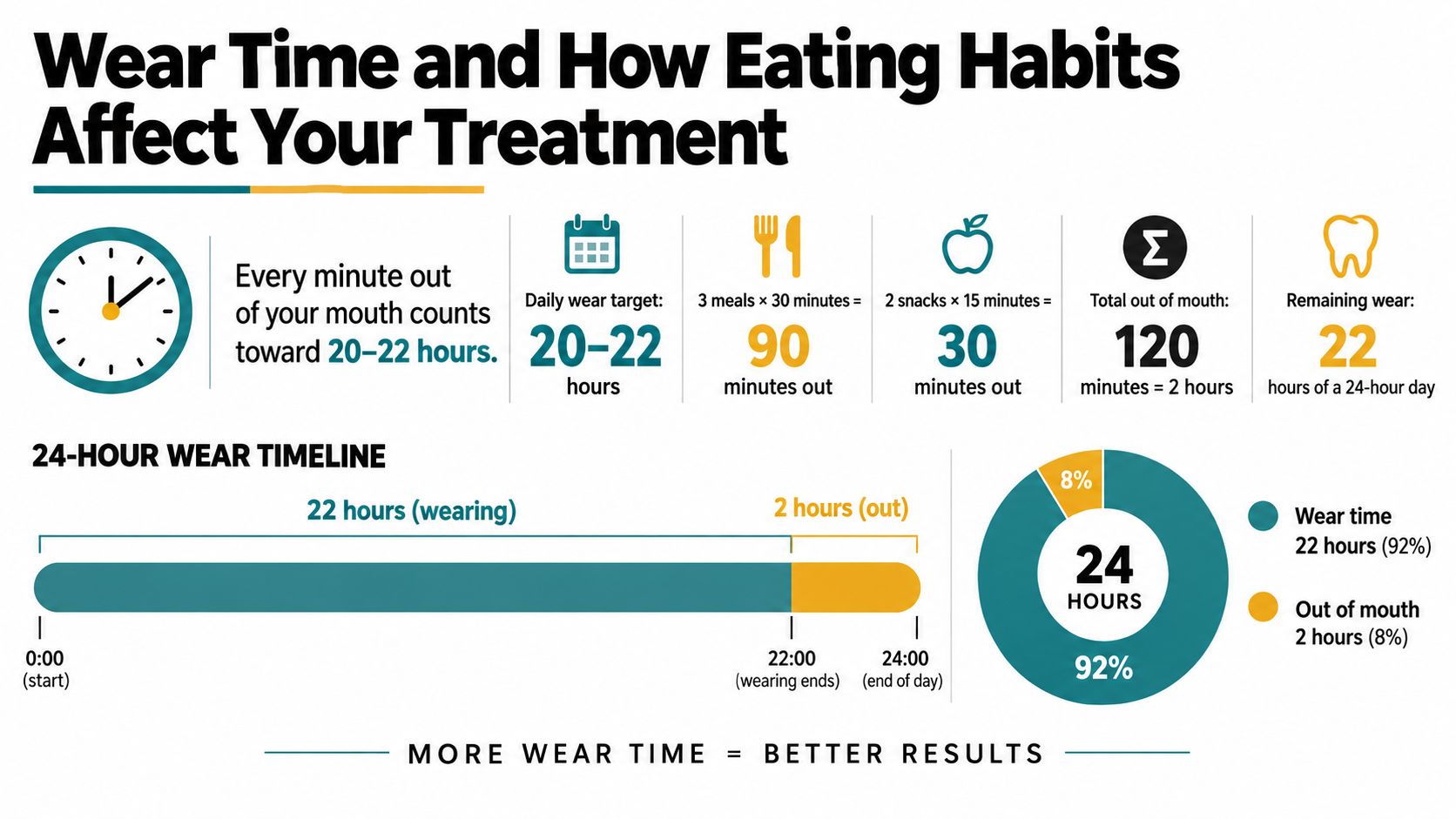
Invisalign guidance commonly sets a daily wear goal of 20–22 hours. That leaves a limited window for meals, snacks, beverages other than water, and oral hygiene. Align Technology describes Invisalign as a removable system, and its patient information explains that trays are removed for eating and drinking. The practical challenge is fitting normal life inside that removal window.
Consider a structured day with three meals lasting 30 minutes each and two snacks lasting 15 minutes each. The meals use 90 minutes, the snacks use 30 minutes, and the total time out is 120 minutes, or two hours. That leaves 22 hours of wear in a 24-hour day, which reaches the upper end of the stated target.
Small breaks can become a large gap
The same schedule changes quickly if lunch runs long, a fourth coffee becomes a slow afternoon drink, or snacks turn into continuous grazing. You don't need to skip meals. You do need to notice how often the trays come out and how long they stay out.
Frequent removal can also create mechanical handling stress. The attachment-loss research linked frequent removal with a higher risk pattern in its dataset, so hygiene and handling both matter. Remove the trays carefully, use the case, and avoid taking them in and out unnecessarily.
A useful habit: Group food and drinks into clear eating windows instead of grazing throughout the day.
Try these adjustments:
- Combine snacks with meals: Eat a planned snack alongside lunch or dinner rather than creating another removal period.
- Set a clear lunch window: Give yourself enough time to eat, rinse, clean, and reinsert without allowing a short meal to become an extended break.
- Keep water available: You can drink cool plain water with trays in, which helps avoid unnecessary beverage removals.
- Track reinsertion: A phone reminder can help if meetings, school, or errands make you lose track of time.
Some patients also ask about related treatments for jaw discomfort or muscle tension. If that's part of your concern, learn more about what low level laser therapy treats and discuss whether it's relevant with a qualified clinician. For local Invisalign planning, review how long Invisalign takes before committing to a schedule.
Consistency matters more than an ideal day. If a meal takes longer than planned, clean your mouth and return to your normal wear routine rather than abandoning the schedule.
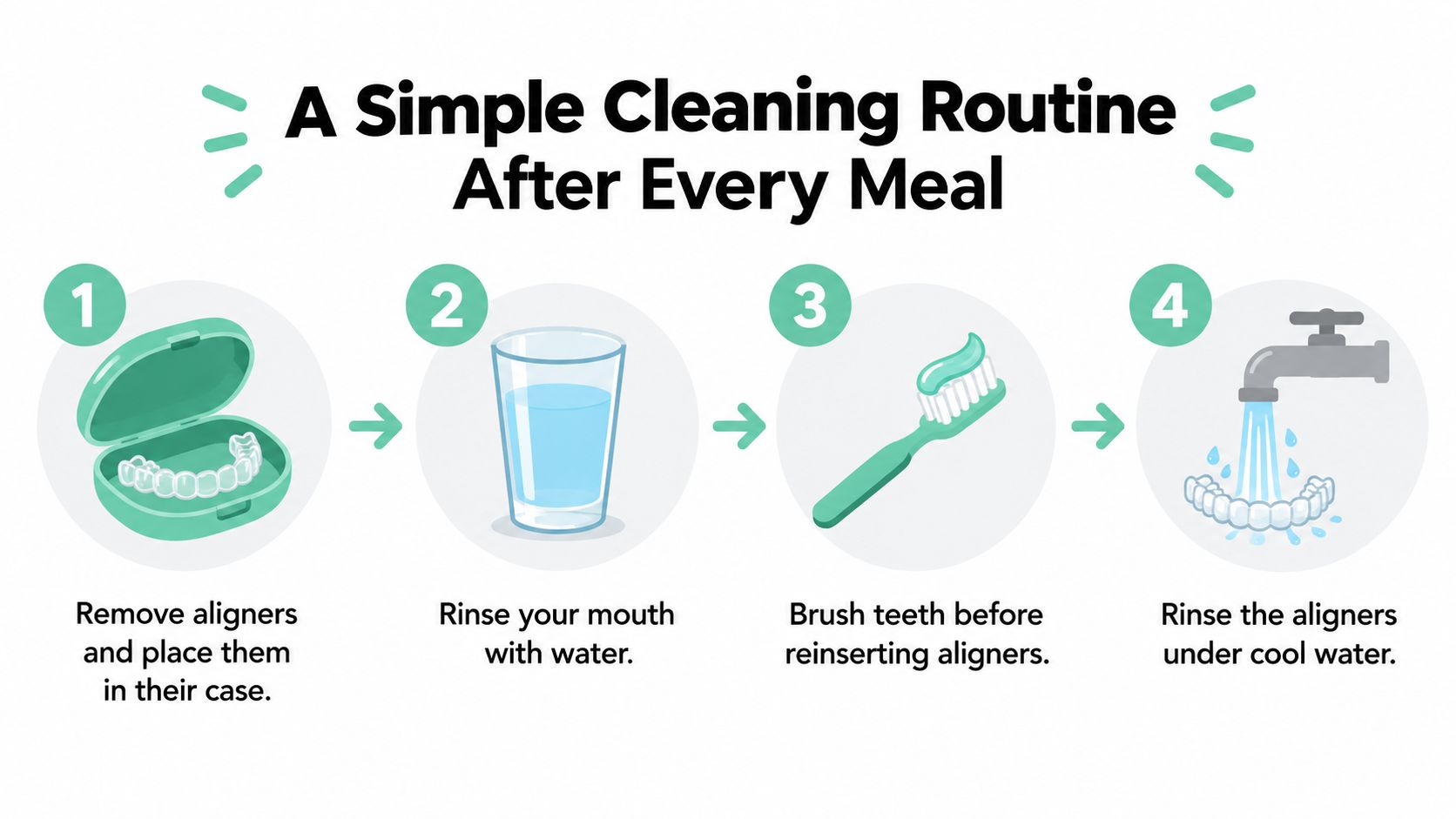
A Simple Cleaning Routine After Every Meal
The best routine is one you can repeat at a restaurant, at work, or between errands in Sun City Summerlin. The order is straightforward: remove, store, rinse, clean, and reinsert.
Follow the same sequence
- Remove the aligners before eating or drinking. Use clean hands and take them out gently.
- Put them in the case. A case protects the trays from napkins, countertops, pockets, and accidental damage.
- Rinse your mouth with water. This clears loose food while you prepare to brush.
- Brush and floss when possible. Pay attention to the areas around attachments and between teeth.
- Clean the aligners. Gently brush them with a soft toothbrush and clear antibacterial soap, then rinse with cool or lukewarm water.
- Reinsert promptly. Put the clean trays back over clean teeth.
Avoid hot water. Heat can change the tray's shape, even if the aligner looks normal afterward. Abrasive toothpaste can also make clear plastic look cloudy, so ask your Invisalign provider which cleaning products suit your specific trays.
When you can't reach a sink
Real life won't always give you a bathroom and a full toothbrush routine. If you're outside, swish water thoroughly, clear visible food, and reinsert only when the mouth and trays are reasonably clean. A short-term backup can include aligner cleaning wipes or sugar-free gum, followed by brushing as soon as you can.
Keep a small kit in your bag or car:
- Travel toothbrush: Choose a soft brush that fits in a compact case.
- Portable flossers: These make quick cleaning easier after lunch.
- A spare case: Useful if your usual case is lost or left at home.
- Compact mirror: Helpful for checking attachments and removing residue.
Do not wrap trays in a tissue. That's how aligners end up in the trash. For a more detailed home routine, use this guide to clean Invisalign aligners. If residue, odor, or cloudiness persists despite cleaning, contact your dental office rather than trying harsh household products.
Smart Tips for Meals, Outings, and Busy Days
A work lunch is easier when you decide the aligner break before the meeting starts. Remove the trays before the first bite, place them in their case, eat within a defined window, and clean your teeth before putting them back. Planning the sequence prevents a long, untracked stretch without wear.
Family dinners call for secure storage and a clear return point. Keep the case in a pocket or bag, away from napkins and plates. Whether you are eating with relatives in Monterrey or Painted Desert Estates, remove the aligners before eating and put them back after cleaning.
Social events can create more friction. At a wedding reception, keep the case in a jacket pocket and drink plain water while waiting for the meal. Remove the trays for the plated course, then clean your mouth before dessert. This avoids repeated snacking, protects the aligners from staining, and makes wear time easier to track.
Frequent small snacks can reduce your daily wear. Group snacks with a meal when possible. Each separate eating occasion adds another removal, rinse, and cleaning cycle, so grazing can cost more aligner time than one planned meal.
You do not need to explain your treatment when someone offers food. “I'll have it with my meal” is enough. If food remains available throughout an evening, choose one eating period instead of taking a bite every few minutes.
Most patients develop simple cues: the case comes out before the plate, plain water stays available, and the trays return after brushing. That rhythm works at home, in Lone Mountain, and during a busy day near Summerlin. Over time, these small choices help keep aligners clear while supporting the wear schedule your provider prescribed.
When to Call Your Dentist in Las Vegas
Call your Invisalign provider promptly if an aligner is warped, cracked, loose, or no longer seats with gentle pressure. Don't force a tray into place or keep wearing a visibly damaged aligner without professional advice. A poor fit can affect comfort and the way the tray works.
A lost tray also deserves a call. Your dentist may need to guide you on whether to use a previous aligner, move forward, or arrange a replacement. The same applies to a broken attachment, a sudden gap that wasn't part of the plan, or difficulty inserting the next set. These signs can indicate that movement isn't progressing as expected.
Problems that shouldn't be ignored
Some concerns aren't emergencies, but they still need attention:
- Ongoing gum soreness: Contact the office if soreness continues beyond the first week of a new tray.
- Persistent discoloration: Yellow or cloudy aligners despite appropriate cleaning may need evaluation.
- A tray that won't advance: Don't switch to the next set if the current one doesn't fit as directed.
- A change in your bite: Report a new or uncomfortable bite rather than waiting for the next routine visit.
Early advice can prevent a small issue from becoming a longer interruption. A local emergency dentist can also help determine whether pain comes from an aligner problem or a separate dental issue, such as decay, a damaged tooth, or gum inflammation.
Aspiring Smiles Dental and Braces serves patients seeking Invisalign guidance in Las Vegas, NV, including Desert Shores, Sunhampton, Sun City Summerlin, Monterrey, Lone Mountain, Mar-A-Lago, and Painted Desert Estates. The practice also provides dental cleanings and exams, dental X-rays, new patient exams, tooth extraction, restorative dentistry, cosmetic dentistry, teeth whitening, dental implants, and emergency dental services.
For Invisalign fit checks, lost-aligner guidance, or broader care such as dental implants near me and cosmetic dentist near me searches, Aspiring Smiles Dental and Braces offers consultations and appointment requests for local patients. Schedule a visit to discuss your aligner routine, check your fit, and create a practical plan for protecting your smile throughout treatment.