What Is Emergency Dental Care in Las Vegas NV
A child's tooth lands in the grass during a Saturday soccer game. A parent wakes with a throbbing molar, facial swelling, and no idea whether to wait until Monday. In both situations, the first question is the same: who should you call right now?
If you're searching for an emergency dentist near me or a dentist in Las Vegas, NV, the right answer depends on the symptoms. Emergency dental care is designed for sudden pain, trauma, uncontrolled bleeding, or infection that could worsen without prompt attention. Aspiring Smiles Dental and Braces serves Las Vegas families, including Desert Shores, Sunhampton, Sun City Summerlin, Monterrey, Lone Mountain, Mar-A-Lago, and Painted Desert Estates, with urgent guidance for problems that can't safely wait for a routine cleaning and exam.
When a Dental Crisis Hits a Las Vegas Family
At Heritage Park, a parent watches a youth soccer match from the sideline as an elbow catches a child in the mouth. A permanent front tooth falls into the grass. The child is frightened, the parent is trying to control the bleeding, and everyone wants to know whether the tooth can be saved.
Across town, another Las Vegas parent wakes with deep pain in a lower molar. By morning, the cheek looks fuller, the tooth throbs with every heartbeat, and ordinary pain medicine isn't helping. That problem may involve an infection requiring quick dental attention.
These situations look different, but both can qualify for emergency dental care, meaning professional treatment for a sudden, severe, or worsening oral problem that shouldn't wait for a routine appointment. Common examples include a knocked-out permanent tooth, severe pain with swelling, uncontrolled bleeding, facial trauma, and an infection that may spread.
The first minutes matter, but panic rarely helps. Pick up the tooth by its crown if it has been knocked out, apply gentle pressure to active bleeding, avoid placing heat on facial swelling, and call an emergency dentist for direction. If breathing or swallowing is affected, the situation moves beyond a dental-office problem and may require immediate hospital care.
Practical rule: Pain, visible damage, and bleeding are the quickest clues that you need professional triage rather than a routine booking.
Emergency visits usually focus on stabilization first. The dentist works to control pain, manage infection, stop bleeding, protect injured tissue, and preserve the tooth when possible. A later visit may still be needed for a crown, root canal, tooth extraction, dental implants, or another restorative solution, but the first priority is preventing the immediate problem from getting worse.
Defining Emergency Dental Care in Plain Language
Emergency dental care means immediate treatment for a dental condition that may become clinically dangerous if delayed, especially uncontrolled bleeding, spreading infection, or severe pain that medication doesn't relieve. The Cleveland Clinic's overview of dental emergencies describes the need to seek prompt help when symptoms suggest serious injury or infection.
Routine dental care includes cleaning and exams, dental X-rays taken as part of preventive monitoring, new patient exams, teeth whitening, and planned restorative or cosmetic dentistry. Those services protect your smile over time, but they aren't designed to manage a tooth that has just been knocked out or an infection that is spreading through the face.
Urgent care sits between routine care and a life-threatening emergency. A lost filling without pain, a small chip without sensitivity, or a crown that comes off without injury may still need a prompt appointment, but the situation can sometimes wait until the office can safely see you. A dentist should still assess the problem because exposed tooth structure can become painful or vulnerable.
What makes a problem an emergency
Call an emergency dentist promptly for:
- Uncontrolled bleeding: Bleeding that continues despite firm pressure needs professional attention.
- A knocked-out or loose permanent tooth: The tooth may need immediate handling and stabilization.
- Severe pain with swelling: Throbbing pain, facial swelling, or a bad taste can indicate infection.
- Facial or dental trauma: A blow may damage the tooth, root, jaw, or surrounding soft tissue.
- Spreading infection: Swelling involving the throat, eye, neck, breathing, or swallowing requires urgent escalation.
The treatment goal usually isn't to complete every restoration during the first visit. It's to stop the immediate threat, reduce discomfort, control infection, and create a clear plan for definitive treatment. For readers who work in emergency medicine and want broader operational context, Happy Billing for emergency physicians offers information about emergency medicine billing.
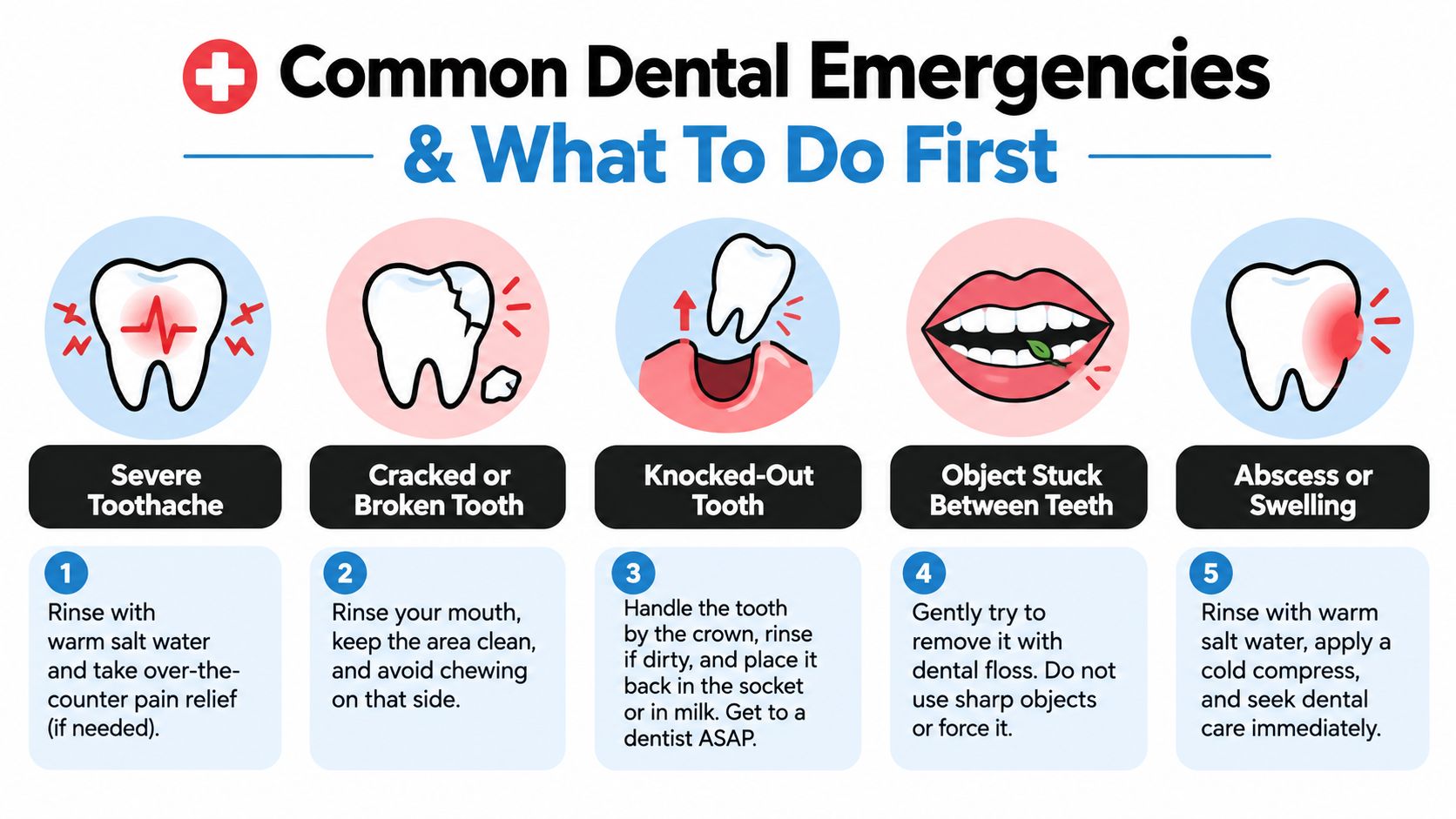
Common Dental Emergencies and What To Do First
The safest home step depends on what happened. Don't place aspirin directly on a tooth or gum, and don't use heat over facial swelling. Temporary measures can protect the area while you arrange hands-on care, but they don't replace an examination.
Severe toothache
A severe toothache may feel like a constant throb, lingering hot or cold sensitivity, or sharp pain when you bite. Swelling, a bad taste, or pain that keeps you awake can point to decay, structural damage, or infection.
Rinse gently with warm salt water and floss carefully around the tooth in case food is trapped. Use a cold compress against the cheek and an over-the-counter pain reliever only as directed on its label. Then call an emergency dentist rather than waiting for the pain to disappear.
Knocked-out permanent tooth
Time is critical. Hold the tooth only by the crown, the part normally visible in the mouth. Rinse it gently without scrubbing the root, try to place it back into the socket if you can do so easily, or keep it in milk or saliva while heading for care.
Clinical guidance states that a knocked-out permanent tooth should ideally be replanted within 60 minutes when immediate replantation isn't possible, and the NHS adult tooth avulsion guidance reinforces handling the tooth by the crown rather than the root. Call the office while arranging transportation, and don't wrap the tooth in a dry tissue.
Broken tooth or lost crown
Save any broken pieces or the crown in a clean container. Avoid chewing on that side, especially if the tooth is sharp or sensitive. Pharmacy dental cement may provide a short-term cover for a lost crown, but don't use household glue, and arrange an appointment so the dentist can check the tooth underneath.
Abscess or swelling
A dental abscess can cause throbbing pain, facial swelling, fever, or a pimple-like bump on the gum. Call promptly, and don't apply heat, which can aggravate swelling. If swelling affects breathing, swallowing, speaking, or the eye, seek emergency medical care immediately. Guidance on dental abscess warning signs explains when hospital care is necessary.
Soft-tissue injury
Cuts to the lip, cheek, tongue, or gums can bleed heavily even when the injury is small. Rinse gently with mild salt water, place clean gauze over the area, and hold steady pressure. A cold compress can help reduce swelling. If bleeding won't slow, or if the injury follows significant facial trauma, contact a dentist or emergency department based on the severity.
Safety and prevention matter after accidents, especially when children are involved. Families may also find broader educational material such as this NY school violence course useful when building awareness around injury prevention and response.
How To Tell If It Is a Real Dental Emergency
Use three questions before you decide where to go:
- Is there uncontrolled bleeding or major visible damage?
- Is the pain severe, persistent, or rapidly worsening?
- Is swelling affecting breathing, swallowing, the eye, or the neck?
A true emergency needs same-day assessment. Examples include uncontrolled bleeding, a knocked-out adult tooth, facial swelling that affects breathing or swallowing, a severe infection with fever, or a suspected jaw fracture. NHS guidance distinguishes emergency dental conditions requiring clinical triage within 60 minutes from urgent unscheduled care, which is generally managed within 24 hours or as soon as practicably possible. See the NHS guidance on unscheduled dental care for that timing distinction.
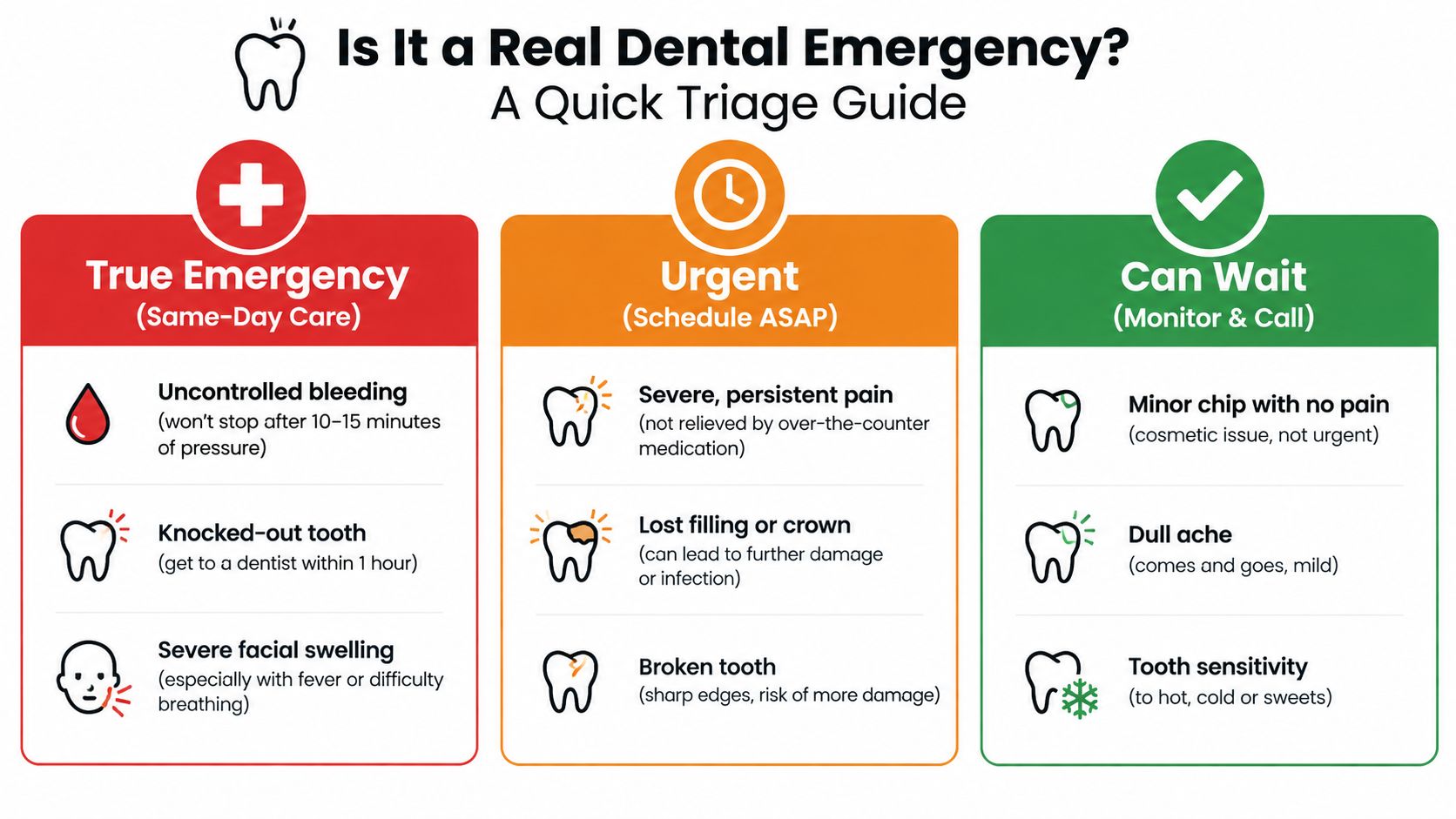
Urgent problems include a persistent throbbing toothache, a lost crown or filling with exposed sensitivity, a broken tooth causing sharp pain, or an abscess without signs that it has spread. A minor chip without pain, mild sensitivity, or a small mouth sore may be suitable for a routine visit, though a dentist should confirm that assessment.
Watch for swelling moving toward the eye or neck, difficulty opening your mouth, a fever above 101°F, or bleeding that continues after 15 minutes of pressure. These signs raise the urgency. If breathing, swallowing, or speaking becomes difficult, don't wait for a standard dental appointment.
What Happens During an Emergency Dental Visit
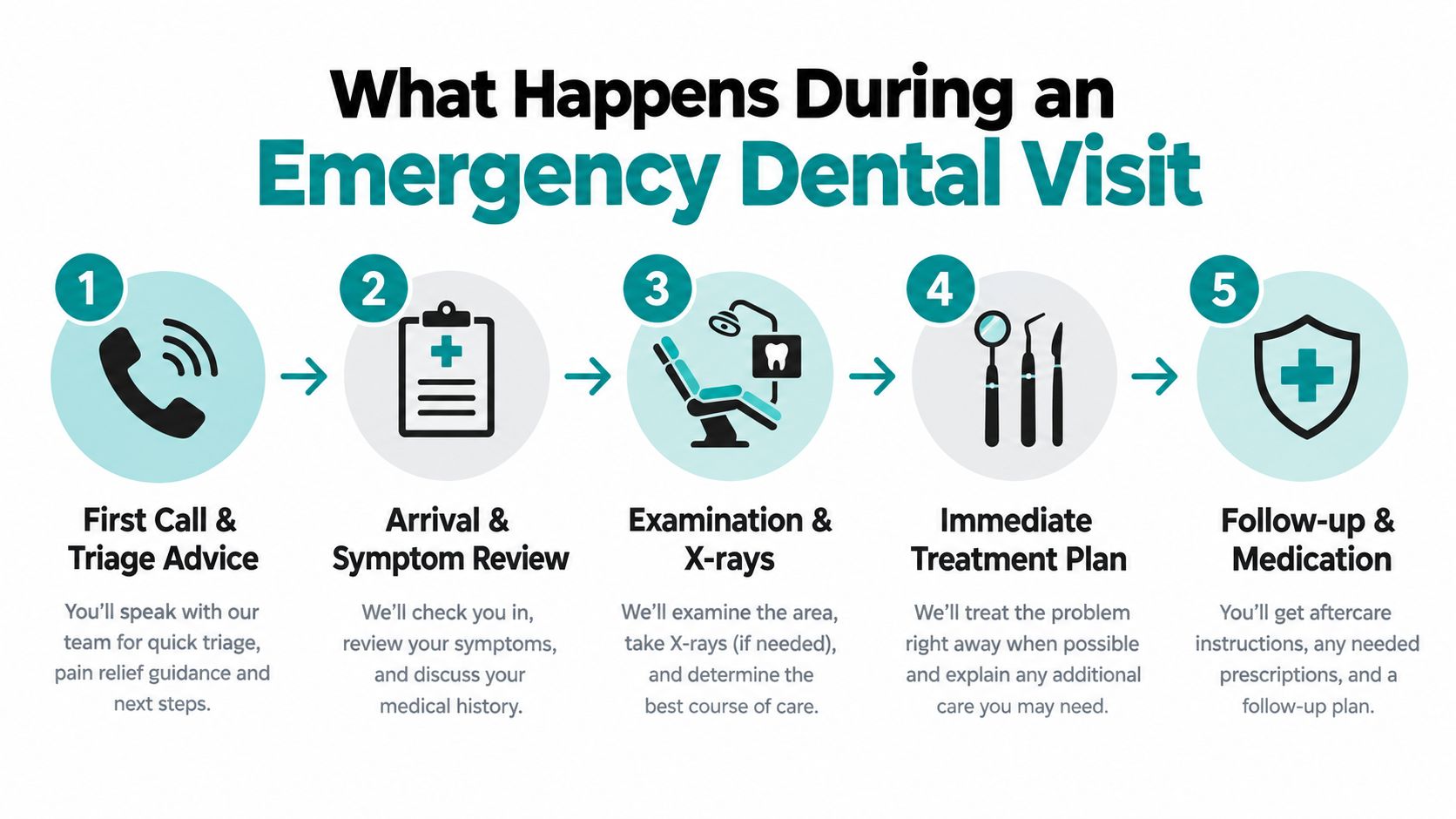
Calling Aspiring Smiles starts with a short conversation, not a commitment to a procedure. The front desk team asks what happened, where the pain is, whether there is swelling or bleeding, and when the symptoms began. That information helps the team decide how quickly you need to be seen and what to do while you travel to the office.
At arrival, the team reviews your medical and dental history. If infection or trauma is involved, the dentist may check relevant vital signs before examining the affected area. The examination stays focused on the immediate problem, but the dentist also looks for signs that the infection or injury involves nearby teeth, gums, bone, or soft tissue.
Imaging and diagnosis
Digital periapical X-rays can show the tooth root and surrounding bone. A panoramic image may provide a wider view of the jaw when trauma, multiple teeth, or deeper structural concerns are involved. Imaging helps the dentist distinguish a surface fracture from root damage, locate infection, and choose a safe treatment.
Stabilization and next steps
Treatment depends on the diagnosis. Possible care includes draining an abscess, recementing or replacing a crown, performing a pulpotomy or root canal when the inner tooth tissue can't recover, splinting a loosened tooth, repairing soft-tissue lacerations, or discussing tooth extraction when saving the tooth isn't realistic. Antibiotics may be appropriate for certain infections, but medication alone doesn't remove the source of a dental infection.
The appointment ends with written aftercare instructions and a follow-up plan. If the first visit provides a temporary repair, the dentist explains the definitive option, which may include a crown, restorative dentistry, dental implants near me, or another tooth-replacement approach.
Before your appointment, review how to prepare for seeing an emergency dentist, especially if you're bringing a child or taking regular medication.
Insurance and Cost of Emergency Dental Care
A sudden dental bill can make a Las Vegas family hesitate, especially without a regular dentist or dental insurance. The ADA reports that dental-related conditions account for a substantial share of avoidable emergency department visits each year. CareQuest's 2025 survey found that 4% of U.S. adults, about 11 million people, sought dental care in an emergency department during the previous year, with emergency use higher among adults without dental insurance than among privately insured adults. The CareQuest 2025 survey findings link that pattern to barriers such as affordability and limited appointment access.
Insurance benefits depend on the plan, network, deductible, and procedure. Before treatment, ask the office what your plan may cover and request an estimate for follow-up care. Prior authorization can delay planned treatment. Patients seeking a broader administrative explanation can review these prior authorization insights for medical practices.
The table uses verified historical cost data, not a quote for your visit.
| Treatment | Typical Dental Office Cost | Typical ER Visit Cost |
|---|---|---|
| Emergency dental care for a non-hospitalized visit | About $749 in historical ADA data, ADA source | Not applicable |
| Dental-related emergency department care | Not applicable | Nearly $3.9 billion in 2022 costs across 1.6 million visits |
These figures show why the ER may provide temporary medical support while a dental office addresses the tooth itself. If coverage is unavailable, review emergency dental care without insurance and ask about financing, in-house payment arrangements, or eligible HSA and FSA use.
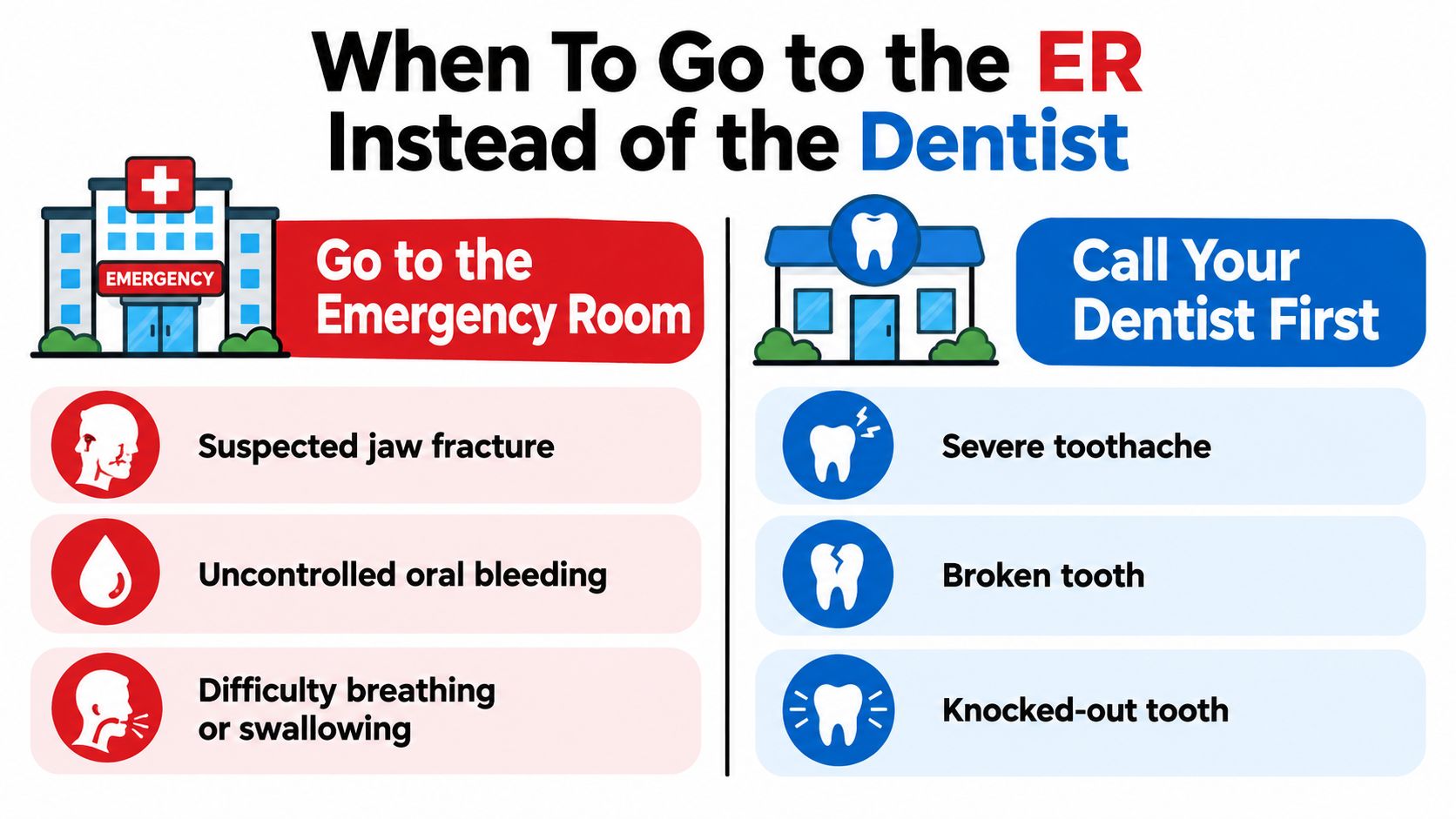
When To Go to the ER Instead of a Dentist
A dental office is usually the right first call for a severe toothache, broken tooth, lost crown, or knocked-out tooth. A hospital emergency department is the better first destination when the problem threatens breathing, swallowing, airway safety, or overall medical stability.
Call 911 for life-threatening symptoms. Go to the nearest hospital emergency department for a suspected jaw fracture, difficulty breathing or swallowing, spreading swelling in the face, neck, or floor of the mouth, suspected concussion, or severe bleeding that doesn't slow after firm pressure. A high fever combined with a dental abscess also needs medical evaluation.
What the ER can do
Hospital teams can stabilize an airway, control serious bleeding, assess head and facial trauma, set fractures, and administer IV antibiotics when medically necessary. They generally can't perform definitive dental procedures such as root canals, extractions, or crown repairs.
Once the hospital has stabilized the medical danger, arrange dental follow-up for the underlying tooth problem. The CDC report on emergency department visits for tooth disorders recorded an annual average of 1,944,000 emergency department visits for tooth disorders during 2020–2022, equal to 59.4 visits per 10,000 people. The same data showed a change from 88.4 visits per 10,000 people during 2014–2016 to the later rate, so utilization patterns have shifted while demand remains substantial.
For plain dental pain without airway or trauma warning signs, calling a Las Vegas emergency dentist first is usually the more direct path to diagnosis and dental treatment.
Reaching Aspiring Smiles for Emergency Dental Care
When a dental problem starts, call Aspiring Smiles Dental and Braces at (702) 508-6699 for guidance and urgent scheduling. Tell the team whether you're dealing with pain, swelling, bleeding, a broken restoration, or a knocked-out tooth. The practice serves patients in Las Vegas, NV, including Desert Shores, Sunhampton, Sun City Summerlin, Monterrey, Lone Mountain, Mar-A-Lago, and Painted Desert Estates.
Have a few details ready:
- Your basic information: Give your name and date of birth.
- The immediate problem: Describe where the pain or injury is and what it feels like.
- The timeline: Explain when the symptoms began or when the accident occurred.
- Your health information: Mention current medications, allergies, and relevant medical conditions.
- The tooth or object: If a tooth, crown, or filling came out, keep it safe and bring it with you.
The office is located at 3211 N Tenaya Wy Suite 122, Las Vegas, NV 89129. During business hours, urgent calls and walk-in requests can be discussed with the team. The practice also offers extended weekday and Saturday availability for active emergencies, though calling first helps the staff prepare for your arrival.
At the visit, you can expect a warm welcome, a focused medical and dental history review, an examination of the painful area, on-site digital dental X-rays when appropriate, and a stabilization plan before treatment begins. Comfort options and appointment timing depend on the procedure and your needs. The team's approach is to address pain during the first visit whenever clinically possible, then explain any follow-up care clearly.
Aspiring Smiles also provides routine dental care, including cleaning and exams, family dentistry, cosmetic dentistry, crowns, veneers, Zoom teeth whitening, Invisalign, dental implants, All-on-4 solutions, and implant-supported dentures. That continuity matters because emergency treatment often needs a later restorative or preventive step.
Save the office number in your phone before an emergency happens. When pain or trauma strikes, having a known dentist near me can make the next decision much easier.
Aspiring Smiles Dental and Braces provides compassionate emergency dental care in Las Vegas, including focused exams, digital X-rays, pain relief, infection management, and follow-up restorative treatment. Call (702) 508-6699 or visit Aspiring Smiles Dental and Braces to request an urgent appointment and take the next step toward a healthier, more comfortable smile.