
Cosmetic Smile Makeover in Las Vegas: Your Complete Guide
You notice the chipped front tooth every time you greet a patient, greet a client, or smile for a photo. Maybe years of coffee have left your enamel darker than whitening strips can handle. Maybe a missing tooth, worn edges, gaps, or crowded teeth make you cover your mouth when you laugh. If you're searching for a cosmetic dentist near me or a dentist in Las Vegas, NV, you need more than a brighter shade. You need a plan that protects your teeth, fits your bite, and respects your budget.
A cosmetic smile makeover can combine veneers, crowns, teeth whitening, bonding, Invisalign, or dental implants, but the right combination depends on your mouth. At Aspiring Smiles Dental and Braces, patients from Desert Shores, Sunhampton, Sun City Summerlin, Monterrey, Lone Mountain, Mar-A-Lago, and Painted Desert Estates can start with an evaluation that separates what's healthy from what needs cosmetic improvement.
What a Cosmetic Smile Makeover Actually Means
A hospitality worker in Las Vegas chips a front tooth on a fork during a busy shift. A longtime coffee drinker sees yellowed enamel that no longer responds well to whitening strips. Another patient has a missing tooth and wants a complete solution rather than a temporary patch. These concerns look different, so they shouldn't all receive the same treatment.
A cosmetic smile makeover is a customized plan using two or more cosmetic or restorative procedures to improve the appearance and function of your smile. The plan may include veneers to change tooth shape, whitening to brighten natural enamel, bonding to repair a chip, clear aligners to improve alignment, crowns to restore weakened teeth, or dental implants to replace missing roots and teeth.
The important point is that a makeover usually isn't one product or one appointment. Your dentist first evaluates your tooth structure, gums, bite, and existing dental work. Only after those foundations are stable should you decide how white, how broad, how straight, or how uniform your smile should look.
Start with health, then design
A responsible plan follows a clear order:
- Examine the foundation. Cleaning and exams, dental x-rays, periodontal measurements, and a bite evaluation help identify decay, gum disease, infection, cracked teeth, or excessive wear.
- Define the target. Your dentist considers tooth color, shape, length, gum display, facial proportions, and the way your teeth meet.
- Choose the least invasive effective option. Whitening may solve a color concern without changing tooth structure. Bonding may repair a small chip without preparing the tooth for a veneer.
- Sequence treatment. Orthodontic movement, periodontal care, tooth extraction, implants, whitening, and restorations may need to happen in a specific order.
Practical rule: Don't approve a cosmetic plan until you understand what happens to your natural tooth structure and what maintenance the result will require.
This health-first approach also matches the broader importance of oral care for overall wellness. Patients who want a helpful plain-language resource can review oral care for overall wellness. A beautiful smile is still part of a living mouth, with gums, bone, nerves, muscles, and a bite that all need attention.
Think of the makeover as a structural and budgeting decision, not just a beauty purchase. The most attractive result is one that looks natural, functions comfortably, and doesn't sacrifice healthy tooth structure for a short-term visual effect.
Who Makes a Good Candidate for a Smile Makeover
A good candidate usually has healthy teeth and supporting bone but feels dissatisfied with one or more visible features. You may be a strong candidate if you're dealing with chips, gaps, stains, worn edges, uneven shapes, mild crowding, or missing teeth and want those concerns addressed as one coordinated plan.
Your goals can be practical as well as cosmetic. A bride-to-be may want a camera-ready smile. A professional may have old composite bonding that has darkened or looks uneven. Someone who grinds at night may have a cracked or shortened front tooth that needs both repair and protection. In each case, the right treatment depends on why the tooth looks that way, not only on what appears in a photograph.
The health filter comes first
Cosmetic dentistry shouldn't cover up an active problem. Before veneers, whitening, or bonding, your dentist may need to complete:
- Gum treatment: Periodontal therapy can control inflammation and improve tissue health before restorations are placed.
- Decay repair: Fillings restore teeth that have cavities before cosmetic materials are added.
- Root canal treatment: An infected or severely irritated tooth may need endodontic care before a crown or veneer is considered.
- Tooth extraction: A non-restorable tooth may require extraction, followed by a replacement plan such as a dental implant.
- Bone grafting: Bone loss may need to be addressed before implant placement.
- Bite correction: Significant bite problems can make cosmetic restorations vulnerable to excessive force.
Veneers on an unhealthy foundation are a poor decision. If your gums bleed easily, a tooth hurts, a filling is failing, or you're experiencing swelling, start with a new patient exam or an emergency dentist visit rather than a cosmetic consultation alone.
Age rarely determines candidacy by itself. Tooth condition, gum health, bone support, bite stability, and your ability to maintain the result matter more. A teenager, adult, or older patient may have different treatment priorities, but the same principle applies: stabilize the mouth before changing its appearance.
If you're unsure whether you need a full makeover or one focused procedure, list every concern you want to change and rank them. A single chipped tooth may need bonding. Several connected issues may justify a coordinated plan. Your evaluation should explain both options without pushing you toward unnecessary treatment.
The Core Procedures Behind Most Smile Makeovers
A cosmetic dentist in Las Vegas has several tools, and each one changes your teeth in a different way. The best choice depends on the amount of structure available, the health of the tooth, the bite, your aesthetic goals, and how much maintenance you're willing to accept.
Six common tools, six different jobs
Porcelain veneers cover the visible front surface of selected teeth. They can change color, length, width, and minor alignment concerns. Veneers suit teeth with adequate enamel and healthy gums, but they're generally irreversible once preparation is completed. Treatment commonly involves a preparation visit, temporaries, a laboratory phase, and a final placement appointment.
Crowns cover the entire visible portion of a tooth. Dentists use them when decay, cracks, large fillings, or substantial wear have already weakened the tooth. Crowns are more invasive than veneers because they protect and replace more of the tooth's outer structure. A tooth preparation, temporary crown, laboratory fabrication, and delivery appointment are typical.
Professional whitening changes the shade of eligible natural teeth without removing tooth structure. It's the most conservative option for healthy teeth that are mainly too dark or stained. In-office whitening may be completed in one appointment, while custom take-home trays require use at home according to your dentist's instructions. Whitening doesn't change tooth shape, spacing, or alignment.
Invisalign clear aligners move teeth and can improve certain bite relationships before cosmetic restorations are considered. Treatment takes longer because teeth must move gradually. The required time depends on the case, and aligners may be followed by whitening, bonding, or veneers once the teeth are positioned.
Composite bonding adds tooth-colored resin to repair chips, reshape edges, or close small gaps. It often requires little preparation and can be completed in one visit, making it a useful choice for modest changes. Bonding is less invasive than veneers, though it can be more vulnerable to staining, chipping, and wear.
Dental implants replace a missing tooth root with a titanium post that supports an abutment and crown. This is the most involved option in the group because it includes oral surgery and healing. Implant treatment is appropriate when a tooth is missing or cannot be saved, and the final crown follows the surgical and healing stages.
| Procedure | What It Changes | Invasiveness | Typical Time | Longevity |
|---|---|---|---|---|
| Porcelain veneers | Front surface color, shape, size, and minor alignment | Permanent tooth preparation | Multiple visits plus laboratory time | Long-term with careful care |
| Full crowns | Entire visible tooth structure and strength | More extensive preparation | Multiple visits plus laboratory time | Long-term, depending on tooth and bite |
| Professional whitening | Shade of eligible natural enamel | No tooth removal | One office visit or a take-home phase | Requires maintenance |
| Invisalign | Tooth position and selected bite concerns | No drilling, gradual movement | Extended treatment period | Depends on retention |
| Composite bonding | Edges, small gaps, and minor shape defects | Minimal preparation | Often one visit per treatment area | Requires repair or refreshment over time |
| Dental implants | Missing tooth root and visible tooth replacement | Surgical placement and restoration | Surgical and restorative phases | Long-term with maintenance |
Smile design also involves the gum line. If excess gum display is part of your concern, you may want to learn about options such as gummy smile correction near Stuart, while remembering that your Las Vegas dentist must determine whether your concern comes from gum position, tooth length, lip movement, or another factor.
The right procedure isn't the most dramatic one. It's the one that solves the actual problem while preserving as much healthy structure and function as possible.
Whitening vs Veneers vs Crowns and Why the Choice Matters
The central question isn't only, “Which option looks best?” It's, “How much natural tooth structure should be changed to reach that result?”
Professional whitening removes zero tooth structure, while veneers remove about 3% to 30% of tooth structure and crowns remove about 63% to 72% of coronal structure, according to the treatment comparison from Core Dental Melbourne. Those figures make the decision structural, not merely cosmetic.
Whitening is the clear first choice when your teeth are healthy and your main concern is shade. It doesn't repair chips, change shape, close gaps, or whiten restorations. Veneers can create a more dramatic change in shade and form, but preparation permanently alters the tooth. Crowns should be reserved for teeth that need full coverage because of decay, fractures, large fillings, or significant structural loss.
| Factor | Professional Whitening | Porcelain Veneers | Full Crowns |
|---|---|---|---|
| Tooth structure changed | Removes zero tooth structure | Removes a portion of tooth structure | Removes the greatest amount among these options |
| Reversibility | Most conservative and least structurally committed | Irreversible after preparation | Irreversible after preparation |
| Main benefit | Improves eligible natural tooth shade | Changes shade, shape, size, and minor alignment | Restores weakened teeth while improving appearance |
| Ideal use | Healthy teeth with discoloration | Healthy teeth with cosmetic shape or color concerns | Damaged or structurally compromised teeth |
| Maintenance | Periodic touch-ups may be needed | Ongoing hygiene, bite protection, and eventual maintenance | Ongoing hygiene, bite protection, and repair or replacement planning |
Enamel doesn't grow back after preparation. That means a patient choosing veneers accepts a long-term maintenance pathway, including possible repair or replacement in the future. You shouldn't choose veneers solely because they create a fast, uniform white appearance.
Shade sequencing matters too. Whitening changes only eligible natural teeth. It doesn't whiten crowns, veneers, fillings, or implants, as explained by North Florida Dentistry's guidance on restored teeth and whitening. If you may whiten, do it before matching new restorations so your dentist can select a shade that fits the surrounding natural teeth.
For a closer look at the structural difference, review the difference between veneers and crowns. If your concern is localized brown discoloration rather than a complete smile redesign, this resource on how to remove brown spots on teeth may help you prepare better questions for your appointment.
How Your Smile Makeover Plan Is Built and Timed
Your plan should be understandable before treatment begins. You should know which teeth are involved, what each procedure changes, what happens first, and how the schedule fits around work, travel, weddings, or other important events.
The planning sequence
Phase one is diagnosis. Your dentist may take clinical photographs, digital x-rays, or a CBCT scan when implants are under consideration. Periodontal charting identifies gum concerns, and bite analysis shows where chewing forces may affect veneers, crowns, bonding, or implants. This is also where you explain what you like and dislike about your current smile.
Phase two is design. A digital smile design, wax-up, or temporary mockup can help you preview proposed tooth shapes and lengths before preparation. A preview won't replace clinical judgment, but it can reveal whether the design feels too long, too white, too broad, or unlike you.
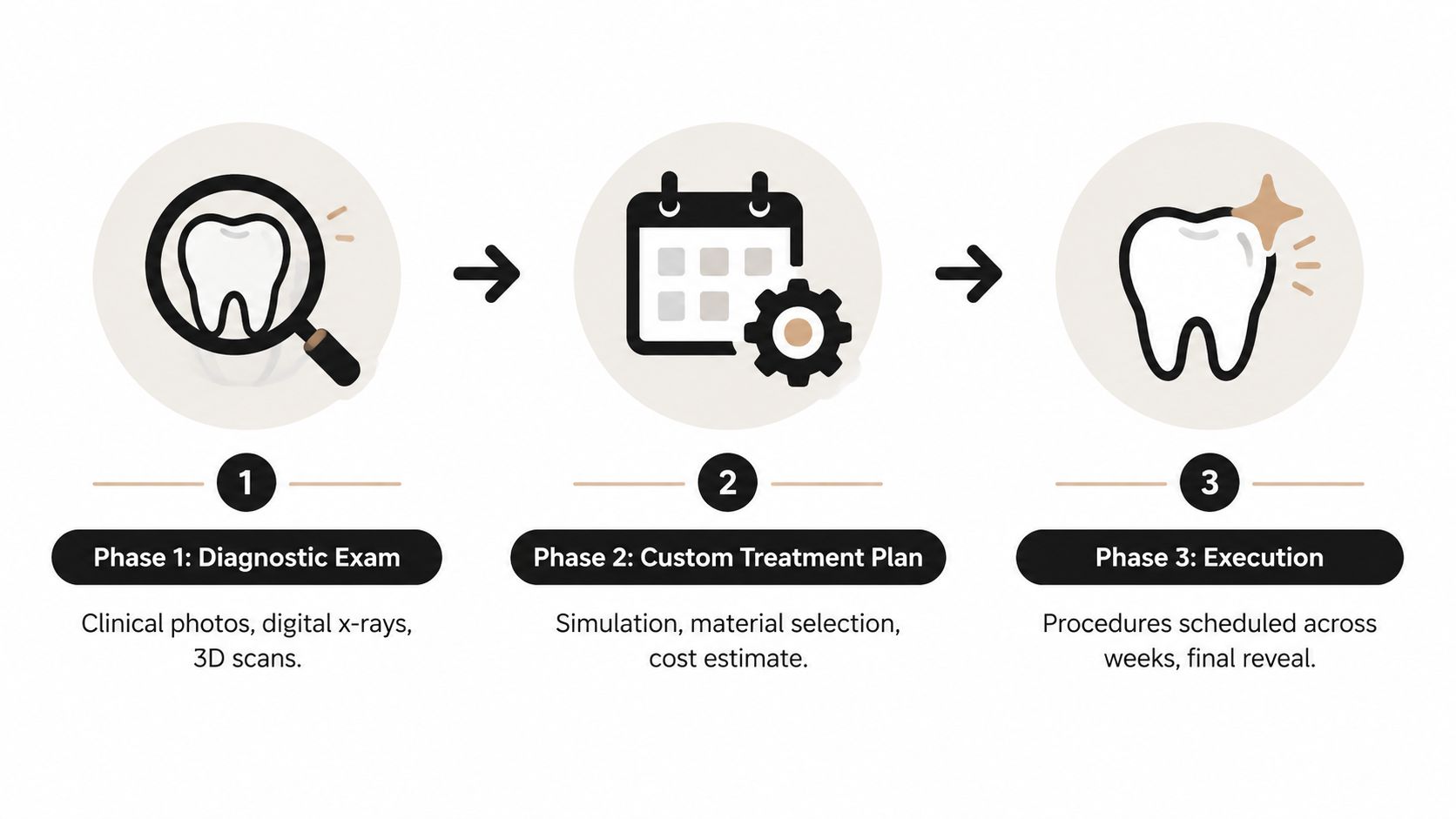
You can learn more about the planning concept through digital smile design at Aspiring Smiles, then ask your dentist which preview method fits your case.
Preparation, laboratory work, and delivery
Phase three is preparation. Teeth may be shaped for veneers or crowns, impressions or intraoral scans are taken, and temporary restorations are placed when needed. Temporaries protect prepared teeth and let you assess the provisional appearance and bite.
Phase four is laboratory fabrication. Veneers and crowns often require a laboratory window of about 2 to 3 weeks, as reported in the treatment planning information provided for this guide. Implant crowns may take longer because surgical healing and restoration planning are separate stages.
Phase five is delivery. Your dentist tries in the restorations, checks color and fit, evaluates your bite, makes adjustments, and then bonds or cements the final work.
Phase six is follow-up. A review at about 1 to 2 weeks checks comfort, bite contact, gum response, and your adjustment to the new contours.
Invisalign cases usually come first when tooth movement is needed, often taking 6 to 12 months before later cosmetic steps. Implant treatment can add 3 to 6 months of surgical healing before the final crown. A makeover may take only a couple of visits over about a month for whitening alone, while a combined orthodontic and implant plan may take 12 months or more.
What a Smile Makeover Costs in Las Vegas and How to Finance It
Cosmetic dentistry costs depend on the number of teeth, the material selected, laboratory fees, preparatory treatment, and whether the plan includes surgery. You should receive a written estimate tied to your actual examination, not a generic package price.
The following Las Vegas planning ranges provide context:
| Treatment | Typical planning range |
|---|---|
| Professional in-office whitening | $400 to $700 |
| Custom take-home whitening trays | $200 to $400 |
| Composite bonding per tooth | $250 to $600 |
| Single porcelain veneer | $1,200 to $2,500 |
| Full-coverage crown | $1,300 to $2,000 |
| Invisalign treatment | $3,500 to $6,500 |
| Single dental implant, including crown and abutment | $3,500 to $5,500 |
These ranges are planning figures, not a quote for your care. A complete case involving 8 to 10 veneers commonly falls between $12,000 and $22,000, while a full-mouth rehabilitation combining implants, crowns, and veneers can exceed $30,000. Your dentist should explain which services are cosmetic, which are restorative, and which costs may arise from periodontal care, tooth extraction, bone grafting, or temporary restorations.
Insurance and payment choices
Dental insurance generally doesn't cover purely cosmetic work. Crowns and implants may receive partial coverage when they're structurally indicated, so diagnostic codes and a detailed treatment plan matter. Ask for a pre-treatment estimate before committing to a major sequence.
Common ways to manage the investment include:
- Third-party financing: Providers such as CareCredit or Cherry may offer promotional financing, subject to approval and the terms of the agreement.
- In-house payments: Some practices divide payments across treatment phases, which can align expenses with preparation, laboratory work, and delivery.
- Membership plans: A practice membership program may offer discounts for an annual fee, particularly for patients without insurance.
- Staged care: Whitening and bonding can sometimes be completed before a later veneer decision, allowing you to spread treatment across your available budget.
Sequencing can change the total spend. Treating gum disease, decay, or bite issues first may prevent premature restoration failure. Whitening natural teeth before selecting veneer or crown shades can also reduce the risk of paying for a mismatch later.
Start with a consultation. That's the only reliable way to connect a number to your teeth, your goals, and the procedures you need.
Recovery Maintenance and Long-Term Care After Your Makeover
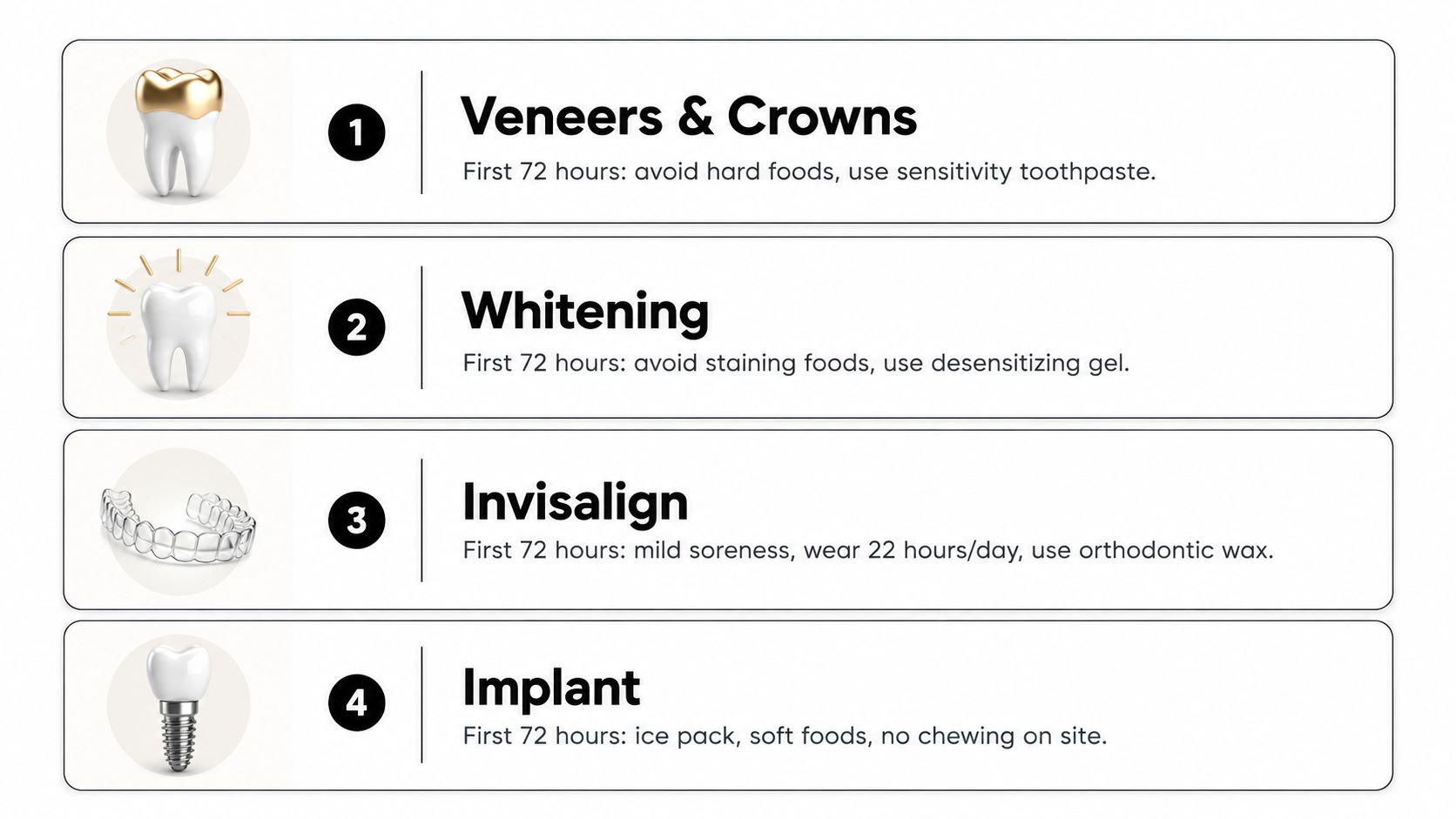
Recovery depends on the procedure, not the phrase “smile makeover.” Whitening may cause temporary sensitivity. Veneers and crowns may leave teeth or gums tender after preparation. Invisalign can create mild pressure as teeth move. Implant placement requires surgical healing and a temporary soft-food period.
During the first 72 hours, follow the instructions for your specific treatment. After veneers or crowns, choose softer foods if chewing feels tender and avoid testing new edges with hard objects. After whitening, limit foods and drinks that trigger sensitivity or staining according to your dentist's instructions. After implant surgery, use cold compresses as directed, eat soft foods, and avoid chewing directly on the surgical site.
Over the first two weeks, mild sensitivity, tenderness, a temporary bite adjustment, or speech changes with new contours can occur. Call the office if pain worsens instead of improving, swelling increases, a restoration feels loose, your bite remains significantly uncomfortable, or an implant site shows concerning symptoms.
Maintenance protects the investment
Veneer and crown patients who grind may benefit from a custom nightguard. Invisalign patients need retainers after active tooth movement. Whitening may need touch-ups every 6 to 12 months, depending on diet, enamel, and habits. Veneer and crown cases often benefit from hygiene visits at 4 to 6 month intervals, based on gum health and your dentist's recommendation.
Flossing matters around every restoration. Ice chewing, using teeth as tools, and untreated grinding can shorten the useful life of cosmetic work. Porcelain and ceramic veneers have strong long-term evidence when dentists select cases carefully and bond conservatively. A systematic review of 25 studies involving 6,500 veneers reported a 10-year cumulative survival rate of 95.5% (PubMed review). A newer meta-analysis found pooled survival at about 10.4 years of 96.13% for feldspathic ceramic, 93.70% for leucite-reinforced glass ceramic, and 96.81% for lithium disilicate, with different complication profiles by material (Journal of Esthetic and Restorative Dentistry meta-analysis).
Longevity isn't guaranteed by the material alone. Enamel preservation, bite design, hygiene, diet, grinding control, and follow-up all influence how your result performs.
Starting Your Smile Makeover at Aspiring Smiles Dental and Braces
Your first visit should answer questions, not create pressure. At Aspiring Smiles Dental and Braces in Las Vegas, a new patient exam may include a 60 to 90 minute appointment with full-mouth x-rays, intraoral photographs, a periodontal check, and a conversation about what you want to change.
That visit helps separate a cosmetic concern from a health or function problem. A stained tooth may need whitening. A painful cracked tooth may need restorative care or a crown. A missing tooth may require an extraction and implant discussion. Crowding or bite concerns may point toward Invisalign before veneers or bonding.
See the plan before treatment
A digital smile mockup, wax-up, or preview can show proposed changes before any tooth is prepared. You can discuss tooth length, width, shade, symmetry, and how the design feels when you speak and smile. That conversation is especially important when you're considering irreversible treatment.
The practice's approach is to sequence decay, gum disease, and bite concerns before cosmetic work. Treatment can be phased rather than sold as one large package, which gives you a clearer view of priorities, timing, and costs. Patients without insurance can ask about the membership program, and financing options may be available through third-party providers or staged payment arrangements.
Aspiring Smiles Dental and Braces provides general, cosmetic, restorative, implant, Invisalign, and emergency dental services for patients in Las Vegas, NV and nearby communities including Desert Shores, Sunhampton, Sun City Summerlin, Monterrey, Lone Mountain, Mar-A-Lago, and Painted Desert Estates. If you're searching for a dentist near me, Dental implants near me, a cosmetic dentist near me, help with a tooth extraction, or an emergency dentist, begin with an exam that addresses your immediate concern and your longer-term goals.
Schedule a cosmetic smile makeover consultation with Aspiring Smiles Dental and Braces to review your teeth, gums, bite, treatment sequence, and payment options. The team can help you decide whether whitening, bonding, veneers, crowns, Invisalign, dental implants, or a focused restorative treatment makes sense for your Las Vegas smile.