Dental Infection Treatment in Las Vegas: A Complete Guide
A toothache that starts as a dull twinge can become the only thing you notice during a busy Las Vegas shift. Pain may interrupt sleep, make it hard to chew, or arrive with swelling along the cheek and jaw. If you're searching for a dentist near me, an emergency dentist, or dental infection treatment in Las Vegas, NV, the safest next step is an examination rather than waiting to see whether the pain disappears.
A dental infection can often be treated comfortably when the source is found early. The right care may involve a filling, root canal therapy, drainage, or tooth extraction, depending on what has happened inside the tooth. This guide explains what causes infection, what you can safely do before your visit, why antibiotics alone usually aren't enough, and what to expect from a local dental appointment serving Las Vegas, Desert Shores, Sunhampton, Sun City Summerlin, Monterrey, Lone Mountain, Mar-A-Lago, and Painted Desert Estates.
Why a Throbbing Tooth Should Not Be Ignored in Las Vegas
A hospitality worker finishes a weekend shift in Las Vegas with a throbbing molar. Ibuprofen makes the pain manageable, so the person decides to wait until Monday. By then, the cheek may be swollen, the tooth may feel too high when biting, and fever or fatigue may signal that the infection is no longer confined to the tooth.
That progression can happen because the tooth has very little room to accommodate inflammation. Beneath the hard enamel and dentin is the pulp, a small chamber containing nerves and blood vessels. When bacteria reach it, the tissue swells inside a rigid shell. Pressure builds, pain intensifies, and infection can eventually move through the root into the surrounding bone.

Practical rule: Pain that fades after becoming severe doesn't necessarily mean the tooth is healing. The nerve may be losing vitality while bacteria continue moving into nearby tissue.
A neglected infection can form an abscess, spread into facial spaces, affect the sinus area, or create swelling that threatens swallowing and breathing. Clinical reviews estimate that 13% of adults seek dental care for dental infection or toothache within four years, and approximately 1 in 2,600 people in the United States are hospitalized because of dental infections (StatPearls review). Those figures don't mean every toothache is dangerous, but they do show why prompt assessment matters.
Early care may involve a simpler procedure and a better chance of preserving the natural tooth. Waiting can turn a manageable cavity or cracked filling into an abscess requiring drainage, root canal therapy, or extraction. The practical journey is straightforward: recognize the warning signs, protect the area at home, arrange dental care, and address the source rather than covering up the pain.
What a Dental Infection Really Is and How It Starts
Think of a tooth as a hard-shelled lantern. Enamel forms the outer shell, dentin supports it underneath, and the pulp inside contains living nerves and blood vessels. A healthy shell keeps bacteria outside. A cavity, crack, leaking filling, or traumatic injury can open a pathway inward.
The process often develops in stages:
- Surface damage begins. Acid produced by plaque weakens enamel and creates decay. A crack or damaged restoration can create a similar entry point.
- The inner tooth becomes irritated. Bacteria move closer to the pulp, causing sensitivity to hot, cold, or pressure.
- The pulp becomes irreversibly inflamed. At this stage, the tissue can't reliably recover on its own. Spontaneous throbbing or lingering sensitivity may appear.
- The pulp loses vitality. As the tissue breaks down, bacteria occupy the root canal space and can travel beyond the root tip.
- An infection forms around the root. The body's response may produce tenderness, swelling, drainage, or an abscess in the surrounding bone.
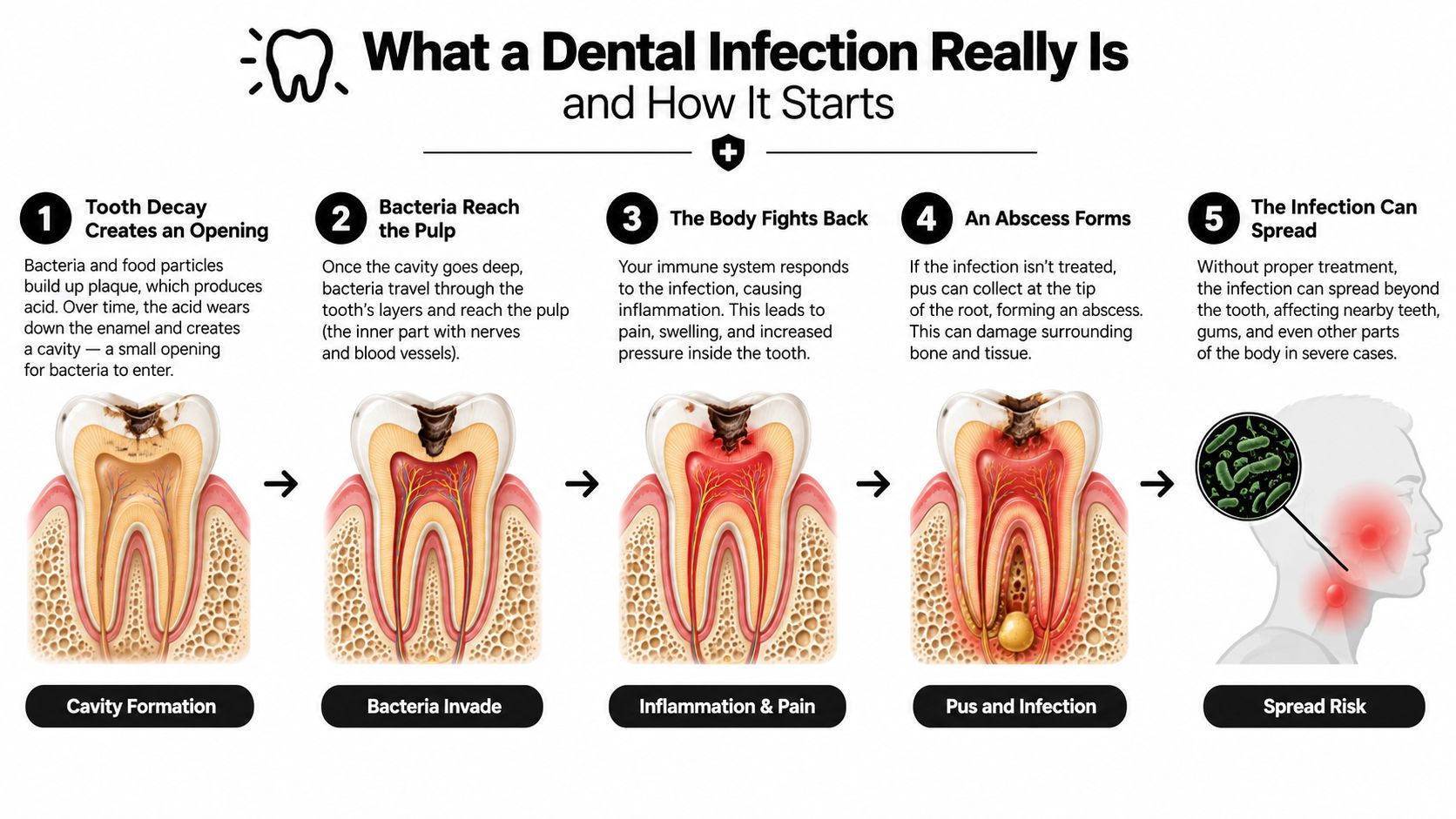
A tooth-origin infection, often managed through endodontic treatment, starts inside the pulp and root canal system. A gum infection begins in the tissues supporting the teeth and may involve gum pockets, bone, and several teeth. The symptoms can overlap, which is why an examination and dental X-rays are important before choosing treatment.
Swelling and pus are often later signs. A tooth can have an active problem before the face swells or a gum bump appears, and pain can change or temporarily stop as the pulp deteriorates. Antibiotics can't remove decayed tooth structure, dead pulp, or a blocked pocket of pus. Dental infection treatment must reach the source through cleaning, drainage, root canal therapy, or removal of the tooth.
The following video offers a visual introduction to how dental infections can develop:
Common Causes and Symptoms You Should Recognize
Several problems can give bacteria access to the inner tooth or supporting tissues. Untreated cavities are a common route, but they aren't the only one. A cracked tooth can open and close under chewing pressure, allowing bacteria deeper into the structure. A loose or lost filling, a deep restoration, trauma from sports or grinding, and advanced gum disease can also create conditions for infection.
The symptom pattern offers clues, but it doesn't provide a diagnosis by itself. Lingering sensitivity after hot or cold food, pain that starts without a trigger, pain that wakes you at night, or sharp pain when biting deserves an appointment. A pimple-like bump on the gum, bad taste, or drainage near one tooth can indicate that an abscess has found a path to the surface.
How to judge the urgency
Milder warning signs include a new sensitivity, a rough or broken filling, or occasional discomfort when chewing. These symptoms still deserve timely dental care because early decay may not hurt consistently.
More concerning signs include persistent throbbing, localized gum swelling, a recurring gum bump, facial tenderness, or a tooth that feels raised when you close your teeth. These symptoms suggest that the problem may have moved beyond a simple surface cavity.
Emergency signs include a fever above 38 C / 101.4 F, severe swelling, tender neck lymph nodes, severe difficulty opening the mouth, trouble swallowing, shortness of breath, or swelling of the neck or area around the eyes (dental abscess warning signs). Difficulty breathing or swallowing, rapidly spreading facial swelling, and high fever need immediate medical attention rather than a routine cleaning appointment.
For a broader explanation of symptoms that can help you compare general infection warning signs, see this guide to when to seek care for infections from VirusFAQ.com. It doesn't replace a dental examination, especially when symptoms are centered on one tooth.
Safe At-Home Steps Before You Reach the Dentist
Home care can make the waiting period more comfortable, but it can't remove an infected pulp or drain a deep abscess. Use these measures as a bridge while you arrange a dental visit:
- Rinse gently: Warm salt water can help keep the surface around the sore area cleaner. Don't swish forcefully if the tissue is very tender.
- Use appropriate pain relief: Ibuprofen or acetaminophen may help when taken according to the product label and your medical circumstances. Ask a pharmacist or clinician if you have questions about interactions, allergies, pregnancy, kidney disease, liver disease, ulcers, or other health conditions.
- Cool the outside of the cheek: A cold compress may reduce discomfort and swelling. Wrap it rather than placing ice directly on skin.
- Choose soft foods: Eat cool, soft foods and chew on the opposite side. Avoid very hot, very cold, sticky, or hard foods if they trigger pain.
- Keep brushing carefully: Clean the rest of your mouth and gently brush around the affected area without pressing into swollen tissue.
Don't put aspirin directly on the gum. It can burn the tissue without treating the infection. Don't apply a heating pad to facial swelling, take someone else's leftover antibiotics, or wait through swelling that is spreading toward the eye, neck, or throat.
If the pain is severe, swelling is increasing, or you can't open your mouth normally, contact a dental office promptly. The emergency dental care guidance can help you identify the next step, but a dentist or emergency medical team should assess serious symptoms directly.
Clinical Dental Infection Treatment Options Explained
The central principle is source control. A dentist must remove or drain the material that is sustaining the infection. For a localized infection, antibiotics alone generally don't resolve the problem when pus, dead pulp, or contaminated tooth structure remains (source-control guidance).
Root canal therapy
A root canal is designed to preserve a tooth that can still be restored. The dentist removes the inflamed or infected pulp, cleans and disinfects the canals, fills the space, and seals the tooth. A crown is often used afterward to protect a tooth that has lost substantial internal structure. Local anesthetic keeps the area numb, and recovery commonly involves temporary tenderness rather than the original pressure pain.
Tooth extraction
Extraction is considered when a tooth is too fractured, weakened, or damaged to restore predictably. Removing the tooth eliminates its infected structure, but the treatment plan shouldn't stop there. Depending on the location and your goals, replacement may involve a bridge, dental implants near me, or an implant-supported restoration.
Incision and drainage
When an abscess has created significant swelling or a collection of pus, a small opening may release pressure and fluid. Drainage can provide relief, but it usually needs to be paired with root canal therapy or extraction to prevent the source from remaining inside the tooth.
Supportive care and review
Pain control, careful cleaning, and follow-up help the area recover. Antibiotics may be added when infection has spread beyond the tooth or systemic symptoms are present. The decision depends on the examination, medical history, allergy history, and whether definitive dental care is immediately available.
Clinical Treatment Options at a Glance
| Option | When It Is Used | What It Does | Typical Recovery |
|---|---|---|---|
| Root canal therapy | The tooth is infected but structurally restorable | Removes infected pulp, cleans canals, and seals the tooth | Temporary tenderness is possible while the tooth is restored and protected |
| Tooth extraction | The tooth can't be predictably saved | Removes the tooth and its infected source | The socket needs healing, followed by discussion of replacement if appropriate |
| Incision and drainage | An abscess has produced a drainable collection or significant swelling | Releases pus and pressure | Relief may begin after drainage, with definitive treatment still needed |
| Supportive medication | Pain, swelling, or systemic spread requires additional management | Supports comfort or treats spread when clinically indicated | Depends on the underlying source and response to treatment |
Patients comparing options can review this resource about tooth abscess treatment cost, then request a written plan based on the actual tooth involved.
Why Antibiotics Alone Rarely Fix a Tooth Infection
Antibiotics can be valuable, but they aren't a substitute for treating the tooth. A dead or infected pulp sits inside a hard structure, and a pocket of pus may be separated from the circulation that carries medication. The medicine may reduce bacterial activity or help control spread, while the cavity, contaminated canal, crack, or abscess remains in place.
The American Dental Association and CDC emphasize definitive conservative treatment, such as drainage, pulpotomy, pulpectomy, root canal therapy, or extraction, as the primary approach. Systemic antibiotics are generally reserved for systemic involvement, including fever, malaise, trismus, lymphadenopathy, or severe immunocompromise (ADA antibiotic stewardship guidance).
This matters beyond one tooth. Dentists account for about 10% of all outpatient antibiotic prescriptions in the United States, so careful prescribing in dental care contributes to patient safety and antibiotic stewardship (ADA antibiotic stewardship guidance). Unnecessary medication can cause allergic reactions, digestive side effects, and resistance. Stopping a prescribed course early or saving doses for later can also make treatment less safe.
Antibiotics are an important helper when indicated. They aren't the repair itself.
When medication is appropriate, guidance commonly favors a short course, often 3 to 7 days, with amoxicillin or penicillin V among common first-line choices (National Library of Medicine treatment reference). Specific selection depends on allergies, medical conditions, local resistance patterns, and the clinical findings. Amoxicillin-clavulanate or metronidazole may be considered when broader anaerobic coverage or other concerns apply (American Association of Endodontists guidance).
Recent clinical references also raise concern about clindamycin resistance and support reassessment at about 72 hours when antibiotics are prescribed (NCBI antimicrobial reference). Your dentist may adjust treatment based on how symptoms respond and whether testing is needed.
What to Expect at Aspiring Smiles Dental and Braces
At Aspiring Smiles Dental and Braces in Las Vegas, the visit begins with a front-desk coordinator who confirms your information and listens to why you called. Tell the team whether the pain began suddenly, whether swelling is changing, and whether you have fever, difficulty swallowing, medication allergies, or a history of dental anxiety.
The dentist then performs a focused examination. Digital dental X-rays can show decay, bone changes, root anatomy, and an abscess that isn't visible from the outside. An intraoral camera may display the cracked filling, cavity, gum swelling, or fractured tooth on a screen, making it easier to understand the recommended treatment.
The diagnostic questions
The dentist may gently tap the tooth, press the surrounding gum and jaw, check the gumline, and compare thermal responses with nearby teeth. These tests help distinguish a cracked tooth from a deep cavity, inflamed pulp, gum disease, or an abscessed tooth. The goal isn't to guess from one symptom. It's to combine your story, clinical findings, and images.
Comfort and decision-making
Gentle numbing, blankets, and clear explanations can make urgent treatment feel more manageable. If clinically appropriate, the team can create a same-day stabilization plan, such as relieving pressure, starting definitive treatment, or arranging the next step for a tooth that needs more involved care.
You'll also receive an outline of follow-up treatment, insurance options, and transparent pricing. If the infection affects a tooth that cannot be saved, the conversation can include tooth extraction, replacement planning, or related restorative services. Patients searching for cosmetic dentist near me, teeth whitening, crowns, veneers, Invisalign, or dental implants near me can discuss those goals after the urgent infection is under control.
Convenient Las Vegas scheduling, including same-day emergency slots when available, helps patients from Desert Shores, Sunhampton, Sun City Summerlin, Monterrey, Lone Mountain, Mar-A-Lago, and Painted Desert Estates arrange care without putting off a worsening problem.
Preventing Future Infections and Getting Started
Prevention starts with reducing the opportunities bacteria have to reach the pulp or supporting tissues. A practical routine includes:
- Brush with fluoride twice daily: Spend enough time on the gumline and chewing surfaces without scrubbing aggressively.
- Clean around molars: Floss or use an interdental cleaner where a toothbrush can't reach, especially between back teeth.
- Reduce frequent sugar and acid exposure: Repeated sipping of sugary or acidic drinks gives enamel less time to recover.
- Repair damaged restorations promptly: A cracked filling or broken edge can let bacteria enter before pain becomes obvious.
- Protect against grinding: Ask about a nightguard if you wake with jaw tension, worn teeth, or recurring cracks.
- Keep preventive visits: Six-month cleanings and routine bitewing X-rays can help identify decay before it reaches the pulp.
You don't need to wait for your next cleaning if you notice lingering sensitivity, a gum bump, bad taste, new pain when biting, or swelling around one tooth. Those signs deserve a call so a dentist can decide whether you need an exam, dental X-rays, restorative dentistry, root canal therapy, or another form of dental infection treatment. Choosing a suitable toothbrush, floss, and other oral hygiene products can support daily care, but products can't replace an examination when symptoms persist.
For Las Vegas families, a regular dental home can also coordinate cleaning and exams, new patient exams, emergency dental services, cosmetic dentistry, crowns, and replacement options such as implants. If another office has recommended extraction, requesting a second opinion can help you understand whether root canal therapy or restoration is possible.
Aspiring Smiles Dental and Braces offers focused examinations, digital X-rays, emergency evaluations, and treatment planning for dental infections in Las Vegas. If you have pain, swelling, or a tooth that feels different, request an appointment through Aspiring Smiles Dental and Braces for a timely evaluation and a clear path toward relief.