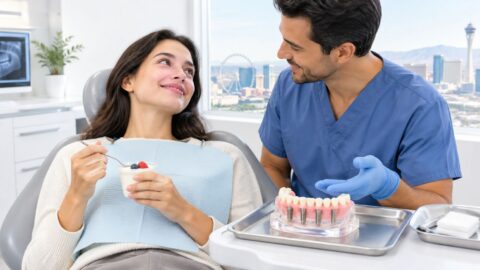
All on 4 Recovery in Las Vegas: What to Expect
You're smiling in the mirror, but chewing still feels uncertain. Maybe you've just received a fixed temporary bridge after All-on-4 surgery, or you're comparing treatment options after years of loose dentures, missing teeth, or uncomfortable chewing. For patients searching for All-on-4 recovery, dental implants near me, or a trusted dentist in Las Vegas, NV, the most important fact is simple: getting temporary teeth quickly doesn't mean the healing process is finished.
At Aspiring Smiles Dental and Braces, patients from Las Vegas neighborhoods including Desert Shores, Sunhampton, Sun City Summerlin, Monterrey, Lone Mountain, Mar-A-Lago, and Painted Desert Estates can discuss a recovery plan that accounts for their health, bone quality, bite, lifestyle, and long-term maintenance needs. The same practice also provides dental cleaning and exams, dental X-rays, tooth extraction, restorative dentistry, cosmetic dentistry, and emergency dental services when a broader treatment plan is needed.
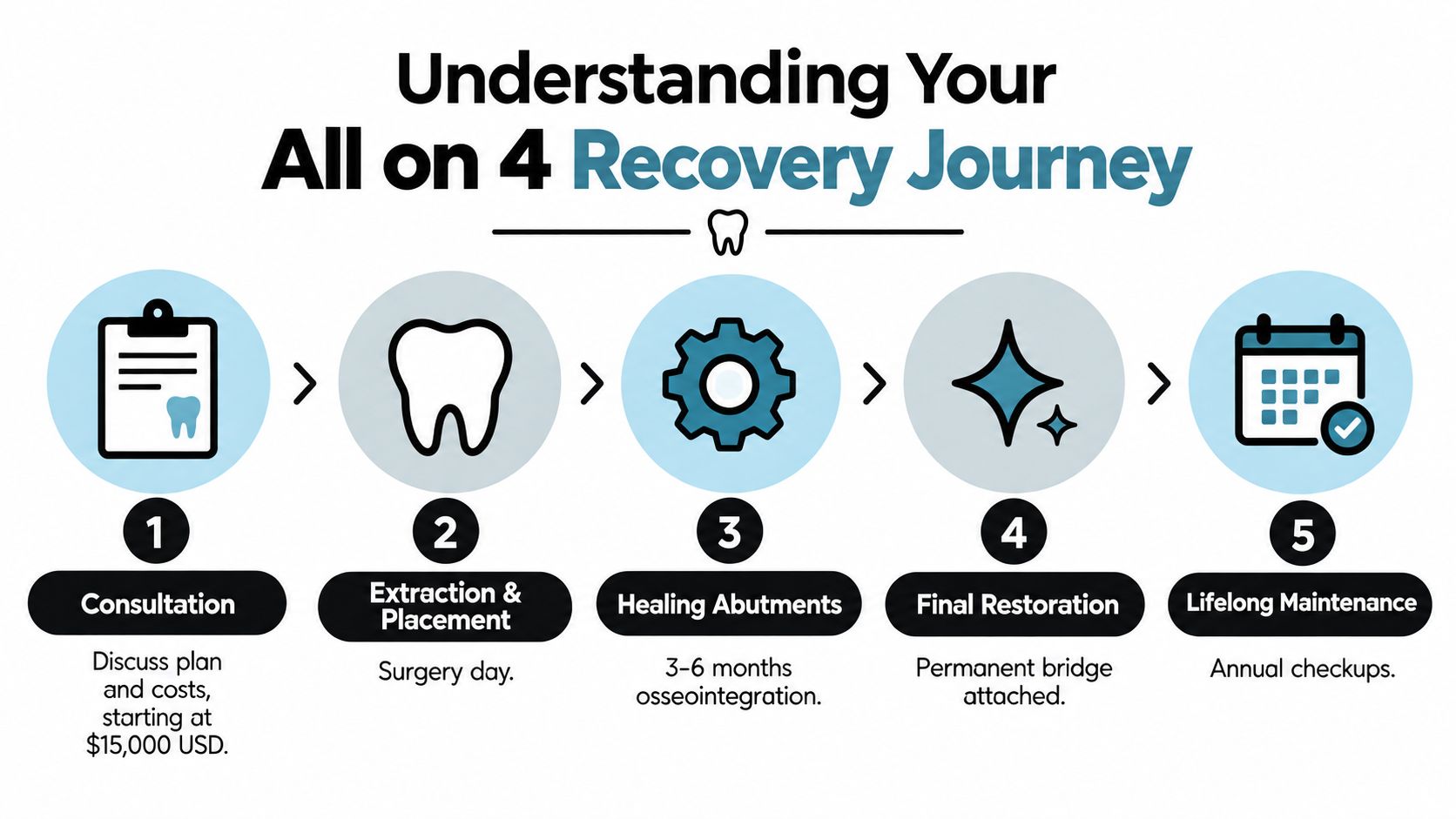
Understanding Your All on 4 Recovery Journey
A Las Vegas patient may leave surgery with a fixed temporary bridge attached soon after implant placement. That early change can feel dramatic. You can speak, smile, and begin using your new teeth carefully, but the implants beneath the bridge still need time to integrate with the jawbone.
All-on-4 is a full-arch implant concept introduced by Paulo Malo and colleagues in 2003. Four implants support a fixed prosthesis, with the posterior implants commonly angled to make better use of available bone and reduce the need for grafting. This approach was developed for people with severely reduced jawbone volume, including situations where the maxillary sinus or inferior alveolar nerve limits conventional implant placement. A systematic review reported implant or prosthesis survival above 24 months of approximately 99.8%, with minimum reported survival at 36 months of 97.6%, and 95.6% of patients rating satisfaction as excellent (systematic review of All-on-4 clinical outcomes).
Three different milestones
Your experience has three overlapping stages:
- Surgical recovery: Swelling, soreness, bruising, and changes in speech usually receive the most attention during the early days.
- Temporary-prosthesis protection: The bridge is functional, but excessive force, clenching, poor hygiene, or an uneven bite can create problems while the implants stabilize.
- Biological integration and final restoration: Bone integration continues beneath the surface before the definitive prosthesis is selected and fitted.
The temporary bridge isn't a shortcut around osseointegration. It allows early function when the implants have adequate stability, while careful chewing and follow-up protect the healing foundation. Recovery also depends on smoking, diabetes, oral hygiene, bone quality, implant stability, and compliance with postoperative instructions.
For general home preparation after a procedure, patients may also find this recovery guide for healing safely at home useful. It doesn't replace your surgeon's instructions, but it can help organize rest, support, and medication planning. You can also review the practice's All-on-4 dental procedure information before your consultation.
What to Expect During the First Week After Surgery
You get home, the numbness starts to fade, and the bridge is in place. This first week can feel confusing because two things are happening at once. Your mouth is recovering from surgery, and the temporary teeth also need protection while the implants begin to stabilize.
Mild bleeding, facial tightness, bruising, swelling, jaw stiffness, and temporary speech changes can all happen during these first days. The pattern matters more than the intensity. Day by day, symptoms should ease rather than build.
Your daily priorities
Start with rest and protection. Use ice exactly as directed during the early period, keep your head raised, take medications as prescribed, and avoid strenuous activity until your dental team says it is safe. Do not smoke or vape. Tobacco can interfere with blood flow, inflammation control, and osseointegration.
Food choices matter more than many patients expect. During this stage, the temporary bridge works like a cast on a healing bone. It lets you function, but it should not be stressed. The Foundation for Oral Rehabilitation recommends a soft diet for 30 days in one-stage or immediate-loading protocols (postoperative soft-tissue management guidance).
Choose foods that need little or no chewing:
- Smooth textures: Yogurt, blended soups, applesauce, and protein shakes.
- Soft meals: Mashed potatoes, scrambled eggs, cottage cheese, and well-cooked vegetables.
- Gentle carbohydrates: Soft pasta or other foods your dentist approves.
Stay away from hard, crunchy, sticky, or chewy foods. Do not test the bridge with chips, crusty bread, nuts, tough meat, or candy just because the mouth feels better. Less pain does not mean the implants have fully integrated.
Practical rule: Use the temporary bridge for gentle function. Let your surgeon decide when your diet can progress.
Cleaning also needs a light touch. Follow the surgeon-directed routine for brushing, rinsing, and cleaning under the prosthesis. A soft-bristle toothbrush may be appropriate, but do not scrub surgical sites or start using a water flosser, interdental brush, or mouthwash unless your provider has told you when and how to use each one.
Follow-up visits help your team catch problems early, often before pain is the main clue. Home recovery guides commonly emphasize close observation in the first several days, another check during the next week or two, and continued review as healing progresses, with suture removal often falling in that early follow-up window and soft tissue settling over the weeks that follow (recovering safely at home after surgery). Call your implant dentist in Las Vegas promptly for increasing swelling, fever, persistent discharge, uncontrolled bleeding, worsening pain, implant mobility, a changed bite, or a loose bridge.
Why Early Complications Matter More Than Pain Scores
A common recovery mistake happens when a patient says, “It barely hurts now, so I must be doing fine.” Comfort is reassuring, but it is not the same thing as stable healing. All-on-4 recovery works in phases. Early on, your body is healing around the implants while the temporary bridge is handling day-to-day function. Those are related jobs, but they are not the same job.
That difference explains why pain scores can miss problems that matter. A patient may have only mild soreness while the temporary prosthesis develops a crack, a screw loosens, or the bite shifts enough to overload healing implants. On the other hand, some discomfort can come from tissue irritation or a bite adjustment issue without meaning the implants are failing.
One clinical report on immediate loading found provisional-prosthesis fractures in 16.8% of patients within nine months, with greater risk in patients with bruxism and in those wearing maxillary prostheses (clinical report on provisional fractures). That helps explain why we watch function, fit, and stability so closely during the temporary phase. A fractured bridge is a mechanical complication. It needs prompt repair and evaluation so the implants underneath are protected while integration continues.
Biological and mechanical warning signs
Early complications usually fall into two buckets. Biological problems involve the tissues and implants themselves, such as inflamed tissue, mucositis, infection, or implant mobility. Mechanical problems involve the temporary restoration and how forces hit it, such as screw loosening, a changed bite, chipping, or fracture. A clinical study of early full-arch complications reported both biological and technical events during the first three months, which is a useful reminder that a restoration can need attention even when implants remain in place.
Call the office rather than waiting for a routine visit if you notice:
- Progressive swelling: swelling that increases instead of settling
- Systemic symptoms: fever, unusual discharge, or increasing warmth
- Uncontrolled bleeding: bleeding that does not respond to the instructions you were given
- Functional changes: a new altered bite, implant movement, or a loose prosthesis
- Worsening pain: pain that increases after it had started to improve
Aspiring Smiles Dental and Braces can evaluate urgent dental concerns alongside planned implant care. If you're searching for an emergency dentist in Las Vegas, say that you have a healing full-arch prosthesis when you call. That detail helps the team understand why a loose screw, sudden bite change, or fractured temporary bridge needs timely attention.
Immediate Versus Conventional Implant Loading Explained
You can leave surgery with fixed teeth and still be early in healing. That point causes a lot of confusion. In All-on-4 treatment, the visible bridge and the hidden bone healing do not run on the same clock.
Immediate loading means a fixed prosthesis is placed in occlusion with the opposing arch within one week of implant placement, when implant stability and patient factors support that choice (ITI consensus and loading evidence). For many Las Vegas patients, that means you may look functional quickly, but your implants are still in the integration phase.
Clinicians also look for enough primary stability before using the implants this early. One commonly cited guideline is a minimum insertion torque of 35 N·cm for immediate functional loading, although torque is only one part of the decision (systematic review of immediate and delayed loading). Bone quality, implant position, bite force, smoking, oral hygiene, general health, and the way the temporary bridge will be used all matter. A stable implant can still be placed at risk if the temporary teeth take too much force too soon.
Conventional loading follows a different path. The implants are allowed more time to integrate before they are put into function. Common protocols allow about 3–4 months for the mandible and 6–8 months for the maxilla before loading, depending on the clinical situation (A comparison chart outlining the differences in timeframe, cost, and ideal patient conditions for immediate versus conventional dental implants.).

How the options differ
| Consideration | Immediate loading | Conventional loading |
|---|---|---|
| Timing | Fixed temporary teeth may be placed within about one week when stability requirements are met | The implants heal before the final loading stage |
| Daily use | Early function with a soft, low-force diet | A longer period before prosthetic loading |
| Healing status | The bridge is usable, but osseointegration continues | Loading follows a period of biological integration |
| Candidacy | Requires favorable stability, health, bite, and bone conditions | May suit complex cases or situations needing staged treatment |
Neither path is automatically better for every patient. Immediate loading gives earlier fixed function, but it also asks more of the temporary prosthesis and of the patient's food choices, bite control, and follow-up care.
A dentist in Las Vegas, NV should review your imaging, medical history, smoking status, bone volume, and bite before recommending a loading protocol. The right choice is the one that matches your biology and protects both phases of recovery, early function now and long-term integration later.
Transitioning from Temporary to Final Restoration
The move from a temporary bridge to a definitive prosthesis is a clinical decision, not an automatic date on the calendar. Your dentist evaluates implant stability, tissue healing, hygiene access, speech, chewing comfort, bite forces, and the condition of the provisional restoration.
What the conversion process involves
After healing and functional evaluation, the dental team may remove the temporary bridge for inspection. The dentist can check the implants and surrounding tissues, assess how the provisional has worn, and identify pressure points or hygiene challenges.
Digital scanning or impressions capture the shape of the healed tissues and the relationship between the upper and lower arches. The final prosthesis is designed for your facial appearance, speech, chewing pattern, and available cleaning access. It may feel different from the temporary bridge because the contours, materials, strength, and fit are refined for longer-term use.
Chewing progression should remain guided by your provider. A patient who feels ready for steak or hard foods may still have healing implants that need protection. The same applies to clenching and grinding. Bruxism can place repeated stress on screws, bridge materials, and implant components, so ask whether a night guard or other protective strategy is appropriate.
Your temporary teeth are a healing tool, not a test of how much force your implants can tolerate.
Healing varies between patients and between arches. Smoking, diabetes, periodontal history, bone quality, oral hygiene, and implant stability can change the pace of care. Keep your follow-up appointments even when the bridge feels comfortable. For a plain-language comparison of the two prosthetic stages, review temporary versus permanent All-on-4 teeth.
Long-Term Success Requires Ongoing Maintenance
Long-term success with All-on-4 depends on what happens after surgery and after the final bridge is placed. Recovery does not end on the day your permanent teeth go in. It shifts into a maintenance phase, where the goal is to protect both the implants and the restoration that sits on them.
A longitudinal study followed 471 patients with 1,884 implants supporting 471 fixed mandibular full-arch prostheses for 10 to 18 years. At follow-up, cumulative prosthetic survival was 98.8%, implant cumulative survival was 93.0%, and implant success was 91.7%. Average marginal bone loss measured 1.72 millimeters at 10 years and 2.32 millimeters at 15 years (long-term mandibular All-on-4 study).
Those numbers are reassuring, but they can also mislead patients if they hear only the word "survival." A bridge can stay in place for years and still need adjustments, screw checks, bite refinements, or repairs. That matters because the All-on-4 journey has phases. First the implants heal. Then the prosthesis has to keep functioning under daily chewing forces, nighttime grinding, and normal wear.
The maintenance partnership
Your home care and your dental follow-up work together, much like brushing your natural teeth still mattered even when they felt fine. Daily cleaning under the prosthesis helps control plaque around the implants. Professional visits let your dentist check gum inflammation, bone levels, prosthetic wear, screw stability, bite balance, and whether the bridge still allows good cleaning access.
Mechanical risk deserves attention here because it is easy to overlook. Temporary bridges usually face more repair issues than definitive prostheses, but final restorations are not immune to wear, chipping, loosening, or overload. Smoking, diabetes control, periodontal history, bruxism, plaque control, prosthetic fit, and regular attendance at maintenance visits all influence how smoothly this phase goes.
The following video provides another visual explanation of implant-supported full-arch care. Use it as general education, not as a substitute for an examination or personalized instructions.
For patients seeking a cosmetic dentist near me, long-term planning should include appearance as well as function. A healthy implant-supported smile depends on cleanable contours, a stable bite, comfortable speech, and a restoration that fits your daily habits.
Schedule Your All on 4 Consultation in Las Vegas
A consultation gives you a clearer answer than a generic recovery calendar. Your provider can review dental X-rays and three-dimensional imaging, assess active infection and systemic risks, discuss tooth extraction if needed, and compare immediate-loading and staged options.
Patients considering dental implants near me should also ask how the temporary bridge will be protected, how often early reviews will occur, what symptoms require an emergency call, and how the final prosthesis will be maintained. Those questions help connect the surgical plan to work, caregiving, travel, meals, and daily life in Las Vegas.
Aspiring Smiles Dental and Braces welcomes new patients for general, restorative, cosmetic, implant, and emergency dental care. The team can discuss All-on-4 treatment alongside related needs such as cleaning and exams, crowns, implant-supported dentures, or tooth replacement planning.
Aspiring Smiles Dental and Braces offers personalized All-on-4 consultations, implant planning, restorative care, and follow-up support for patients in Las Vegas, NV. Visit Aspiring Smiles Dental and Braces to request an appointment and discuss a recovery plan suited to your health, schedule, and smile goals.