
Post Extraction Care in Las Vegas, NV: A Practical Guide
You're home after a tooth extraction, your mouth is still numb, and dinner suddenly feels complicated. Is the bleeding normal? Should you rinse before bed? And how much soreness is too much? Post extraction care starts with protecting the healing site, then watching how your symptoms change, not trying to make your mouth feel normal immediately.
For patients looking for a dentist in Las Vegas, NV, the Aspiring Smiles team offers personalized guidance and follow-up when recovery raises questions. Your discharge instructions should always take priority over general advice, especially after surgery, multiple extractions, or implant treatment.
What to Expect in the First 24 to 72 Hours
You arrive home with gauze in place and an unfamiliar gap where your tooth used to be. The most useful thing you can do now is settle somewhere comfortable, keep your instructions nearby, and resist checking the socket repeatedly.
A blood clot forms in the empty socket to protect the exposed bone and support healing. During the first 24 hours, avoid rinsing, spitting, sucking, and touching the socket with your tongue or fingers, because these actions can dislodge that clot; light oozing can be normal during this period, according to hospital instructions after tooth extraction.
Getting settled at home
Keep the gauze positioned as your dentist showed you, and replace it only as directed. Don't chew it, move it around the mouth, or repeatedly lift it to see whether the bleeding has stopped. If bleeding becomes active rather than light oozing, use the pressure approach described below.
While your mouth is numb, don't rush into dinner. Ask your dental team when it's safe to eat, and be particularly careful about biting your cheek or lip without realizing it.
The early recovery sequence is easier to follow when you think in stages.
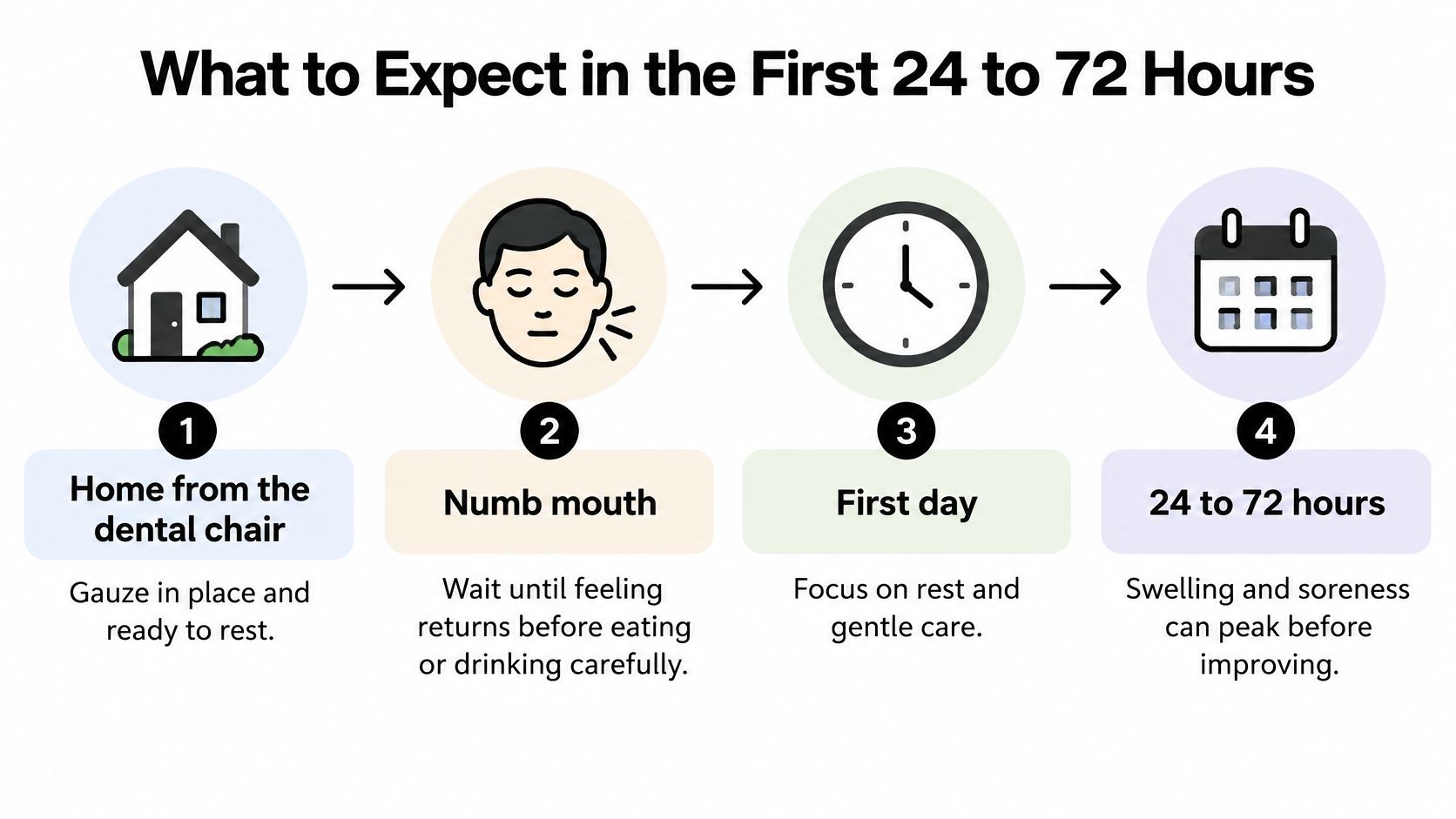
Make tonight about protection, not cleaning
Your job isn't to scrub the opening clean. It's to avoid disrupting something your body needs.
- Drink without suction. Use a cup rather than a straw, and skip sucking on candies.
- Leave the socket alone. Don't probe it with your tongue, fingers, or a household tool.
- Put smoking and vaping on hold. Follow your dentist's restrictions rather than assuming a gentle puff is harmless.
- Choose rest over exertion. Ask when you can return to your usual exercise, lifting, or physically demanding work.
Practical rule: A socket doesn't need to be repeatedly inspected to heal. Pay attention to symptoms rather than testing the wound.
During the following days, soreness and swelling need monitoring, but a rigid deadline for feeling comfortable isn't helpful. Your experience after a straightforward removal may differ from recovery after a difficult surgical extraction.
Before bed, make sure you understand your medication directions and how to contact the office. If sleeping on your usual side presses against a tender cheek, choose a more comfortable position and follow the team's advice about head elevation. Don't add extra medication because you're worried about waking up sore.
Managing Bleeding and Swelling at Home
Light oozing and ongoing active bleeding aren't the same problem. A little blood mixed with saliva can look alarming, but repeated saturation of gauze or brisk bleeding deserves a different response than occasional staining.
For cheek discomfort, use a cold pack only as your dental team directs. This is a comfort measure, not a substitute for checking symptoms that are getting worse.

Use steady pressure before changing anything else
Sit upright, place fresh folded gauze directly over the socket, and bite with firm, continuous pressure for at least 20 minutes; if bleeding persists, repeat once while keeping your head raised and contacting the office, following post-extraction bleeding guidance.
Pressure needs to reach the bleeding site. Gauze resting loosely between your teeth won't do the same job, and lifting it repeatedly interrupts the attempt to control bleeding.
The practical distinction is whether bleeding settles with the instructed measures. Don't continue replacing soaked gauze indefinitely without asking for help. For another explanation of when to seek assessment, this resource on help for bleeding after dental treatment provides additional context.
This video is an additional resource, but your own dentist's directions should guide your care.
Blood thinners need coordination, not guesswork
Don't stop prescribed blood thinners on your own. Tell the dental team about anticoagulants, antiplatelet medicines, bleeding disorders, liver disease, and supplements so the dentist and prescriber can coordinate an appropriate plan.
Whether medication needs adjustment depends on your health and the procedure. Neither taking a blood thinner nor noticing bleeding gives you enough information to safely change a dose yourself.
| What you notice | What to do |
|---|---|
| Light staining that settles | Continue the aftercare plan and monitor |
| Active bleeding that continues | Apply the instructed gauze pressure and contact the office |
| Repeatedly soaked gauze or dizziness | Seek urgent assessment |
| Swelling with trouble breathing or swallowing | Get emergency medical help immediately |
Swelling also needs context. A tender cheek early in recovery is different from swelling that keeps enlarging or comes with fever. Keep your head raised as advised, and tell the team whether the swelling is stable, easing, or spreading rather than saying your face feels puffy.
Healing Timeline from Day Three to Day Ten
A calendar helps you organize recovery, but the direction of your symptoms matters more than the date. Eating a soft dinner more comfortably than yesterday is useful information. Needing more pain medicine after you had started feeling better is also useful information, for a different reason.
New granulation tissue, the early repair tissue that develops in the socket, generally covers exposed bone in about 7 to 10 days. That's an average, not a guarantee, and surgical complexity, systemic disease, smoking, infection, and tooth location can lengthen recovery, as described in this review of extraction-socket healing.
Typical Healing Milestones After Tooth Extraction
The timeframes below are checkpoints rather than promises. The tissue milestone comes from the healing review above; symptoms that reverse course deserve attention regardless of the day.
| Timeframe | What Is Typically Happening | What to Watch For |
|---|---|---|
| Around day three | Early healing still needs protection, with soreness and swelling being monitored | Pain that intensifies instead of becoming more manageable |
| The following days | Care shifts toward gentle cleaning without direct trauma to the socket | A setback after initial improvement, an unpleasant taste, or persistent bleeding |
| Around days seven to ten | Early repair tissue generally covers exposed bone | Continuing or worsening symptoms rather than gradual progress |
| Beyond the early tissue milestone | Recovery still depends on the procedure and your health | Assuming the site is ready for unrestricted chewing without clearance |
Don't confuse tissue coverage with complete recovery
A socket that feels less tender isn't automatically ready for every food or activity. Follow procedure-specific restrictions, especially if stitches, grafting, implants, or multiple extraction sites are involved.
It's also unhelpful to compare your recovery with someone else's. A friend who ate normally soon after a simple extraction isn't a reliable guide to your surgical wisdom-tooth recovery.
A better question than “Should I be healed by now?” is “Am I becoming more comfortable, or am I getting worse?”
Consider keeping a short note on your phone about pain, eating, swelling, and medication use. You don't need to score every sensation. A plain description such as “Could eat breakfast comfortably, but pain became much stronger tonight” helps the dental team understand the change.
Avoid diagnosing the socket by its appearance alone. If you're worried, explain what you feel and how it has changed, rather than trying to clean away unfamiliar-looking material.
Dry socket belongs on the list of possible causes when recovery takes a painful turn, but it isn't something you should confirm with a mirror or home treatment. The warning signs below explain when to contact the office instead of waiting for the next calendar milestone.
Eating, Rinsing, and Brushing Without Disturbing the Clot
Dinner should be manageable, not a test of how much chewing you can tolerate. Soft foods are generally recommended for the first 24 to 48 hours, and very hot food or drink can burn tissues while local anesthetic still causes numbness, according to dental patient guidance on extraction recovery.
Think about texture as well as temperature. Smooth yogurt, scrambled eggs, mashed beans, and cooled blended soup are practical options; hard or crunchy foods can irritate the extraction site.
Build a meal you can actually eat
Choose foods that provide more than convenience. If you're living on applesauce because chewing feels awkward, consider adding a soft protein food that fits your usual diet and medical needs.
- For a quick breakfast, try yogurt or soft eggs rather than dry toast.
- For an easy dinner, consider mashed potatoes with soft fish or a smooth bean dish.
- For limited meal preparation, keep suitable ready-made soups or other soft meals available.
Return to firmer foods gradually, based on comfort and your dentist's clearance. If a food hurts the site, don't keep chewing it to see whether your mouth adjusts.
Clean gently after the initial protection period
After the initial no-rinsing period, gentle warm salt-water rinsing can help keep the area clean, while the other teeth still need brushing, as outlined in wisdom-tooth extraction aftercare guidance. Ask the team for its preferred salt-water mixture, frequency, and duration rather than combining several different online recipes.
For example, after a lunch of cooled soup, use your approved rinse gently instead of swishing forcefully to make the socket feel spotless. Keep toothbrush bristles away from the opening itself, and ask for a demonstration if stitches make the boundaries difficult to judge.
At the bathroom sink: Clean the teeth you can safely reach. Don't scrub the wound to prove that it's clean.
A prescribed antiseptic rinse is a separate decision. Evidence supports clinician-directed chlorhexidine for dry-socket prevention, but that doesn't mean every patient should buy and start it independently; follow the advice in the Cochrane review of dry-socket prevention and treatment through your treating dentist's instructions.
Skin wounds and oral wounds also require different care. If you're comparing your experience with outpatient wound care following cyst surgery, use that material only for its separate context, not as instructions for an extraction socket. Don't transfer skin-wound products or techniques into your mouth without dental advice.
Warning Signs That Mean Call Your Dentist Now
Worsening pain isn't something to dismiss because you recently had surgery. Recovery can feel uneven, but a clear increase in pain, particularly after improvement, deserves a call.
Dry socket, also called alveolar osteitis, usually develops three to five days after extraction when the protective clot is displaced or breaks down too early. It can cause severe, throbbing pain, sometimes with bad taste or bad breath, and needs prompt dental assessment, according to American Dental Association guidance on dry socket.
Match the symptom to the urgency
You don't have to identify the diagnosis before asking for help. Tell the office when the procedure happened, what changed, and whether the prescribed pain plan is helping.
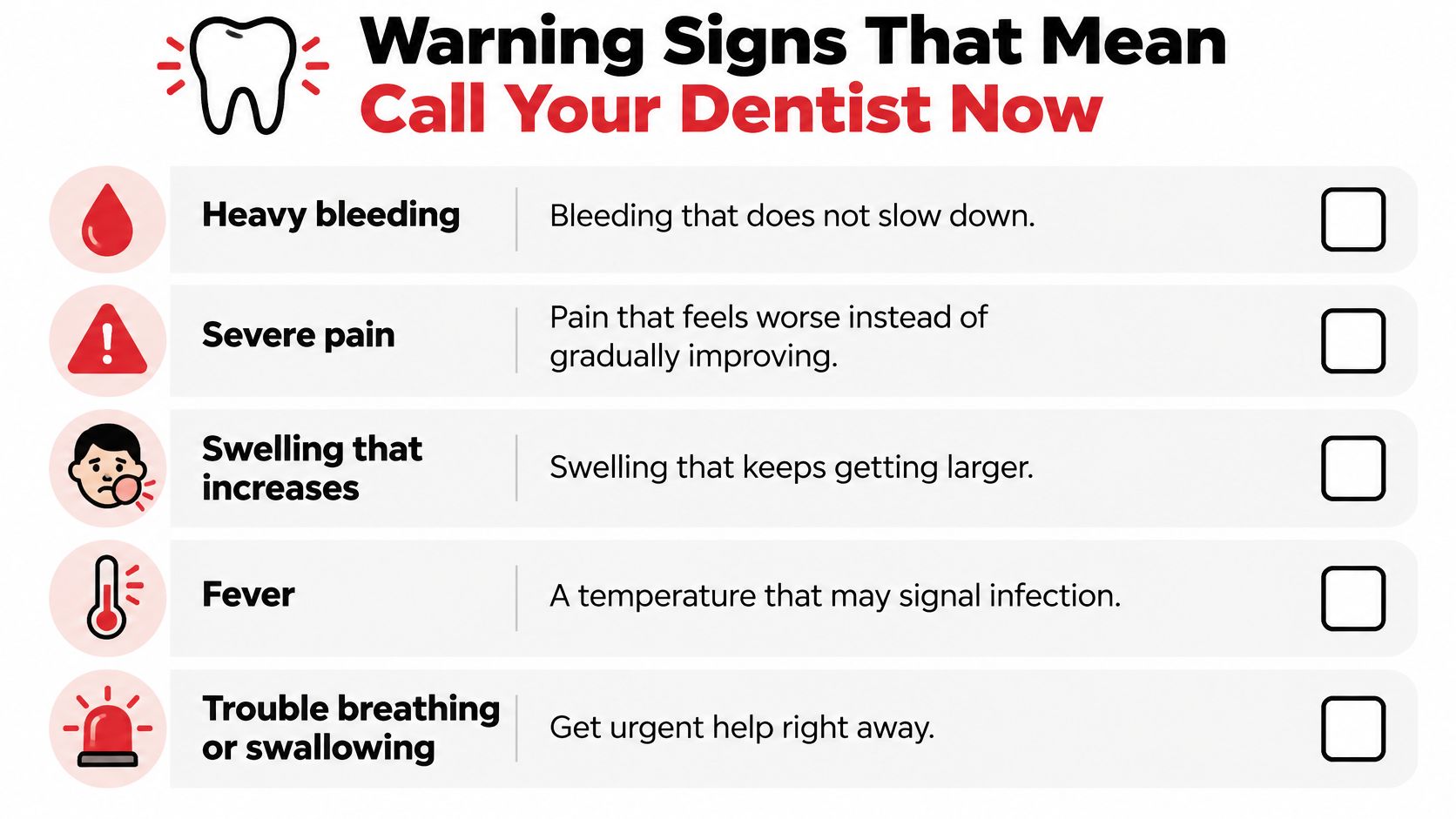
- Call promptly for worsening pain. Mention throbbing pain, pain spreading toward the ear or temple, or a new unpleasant taste or odor.
- Seek urgent assessment for uncontrolled bleeding. Don't wait for a routine appointment if the pressure measures haven't worked or you feel dizzy.
- Get urgent dental or medical advice for fever, pus, or increasing facial swelling. These aren't symptoms to manage by increasing pain medication.
- Get emergency medical help for breathing or swallowing difficulty. Don't wait for an online appointment request to be answered.
These escalation signs are consistent with public-health advice after dental extractions. The summary below is useful to save on your phone.
Professional treatment is different from home symptom control
A dentist may need to examine and clean the socket or place a medicated dressing. Rinsing harder, probing the opening, or taking leftover medication won't tell you what's causing the pain.
Don't place aspirin directly on the wound or assume antibiotics are the answer to every painful socket. A clinical review of dry-socket management identifies these as important treatment pitfalls; medication decisions should follow an examination.
For patients searching for an emergency dentist in Las Vegas, the practice's guide to getting emergency dental care explains how to take the next step. Call rather than relying on a routine booking form when symptoms need timely attention.
Save the office's contact information alongside the checklist. If pain wakes you late at night, having clear instructions available is more useful than starting a new search for “dentist near me” while you're uncomfortable and unsure what to do.
Special Cases and Booking Follow-Up in Las Vegas
A standard aftercare sheet is a starting point, not a substitute for an individual plan. Children, smokers, medically complex adults, and patients recovering from implant or extensive extraction treatment need instructions that fit their circumstances.
The Aspiring Smiles team, led by Dr. Patel, takes time to understand patients' health needs, goals, and lifestyles. That conversation should include what you can realistically eat, who can help at home, and which medicines you already take.
Adjust the plan to the patient
Families caring for children should ask for age-appropriate food choices, choking-safe textures, and guidance about whether supervised rinsing is appropriate. A child who can't reliably rinse and let liquid out needs a different explanation from an adult.
Smokers should discuss a practical plan for avoiding smoking and vaping during healing rather than waiting until cravings make the instructions difficult to follow. Patients who are pregnant, have diabetes, or take blood thinners should share their complete health history before treatment.
| Patient situation | What to clarify with the team |
|---|---|
| Diabetes or reduced food intake | How meals, glucose monitoring, and usual medicines should be coordinated |
| Multiple extractions | How to maintain nutrition and clean around several healing sites |
| Dental implants or All-on-4 treatment | Which chewing, appliance, and cleaning instructions apply |
| Complex wisdom-tooth surgery | What monitoring and follow-up the procedure requires |
Medication questions deserve direct answers. Ask about pain medicines, alcohol, sedatives, and other prescriptions before combining them; patient guidance on dental extraction aftercare supports an individualized approach rather than a universal checklist.
Plan the visit around your next decision
At a follow-up, explain your symptom history and bring your medication list. Ask whether you need an examination, dental X-rays, or changes to the home-care plan rather than assuming every visit requires the same steps.
If surgery is still ahead, review wisdom-tooth extraction signs and preparation. For longer-term care, searches such as “dental implants near me” or “cosmetic dentist near me” can start a conversation about replacement teeth, restorative dentistry, or cosmetic goals, but the immediate priority is safe healing.
Appointment reminders can help you keep planned reviews organized. TOOLii's explanation of how automated patient recalls support follow-up provides background on that process; a reminder should never replace calling about new symptoms.
The office is at 3211 N Tenaya Wy Suite 122, Las Vegas, NV 89129, serving Desert Shores, Sunhampton, Sun City Summerlin, Monterrey, Lone Mountain, Mar-A-Lago, and Painted Desert Estates. Extended weekday and Saturday hours, online appointment requests, flexible payment options, insurance acceptance, and a membership program help patients arrange ongoing care. Ask the team to confirm coverage and payment details for your treatment.
Aspiring Smiles Dental and Braces offers extraction follow-up, emergency dental care, and personalized guidance to help you understand your recovery. Request an appointment through Aspiring Smiles Dental and Braces or visit the Las Vegas office to discuss your next step, and call promptly if pain, bleeding, or swelling is getting worse.