
Heart Disease and Oral Health: A Vital Link
Cardiovascular disease causes about 31% of all deaths globally (PLOS One summary of burden data), and that number changes the way I talk with patients about their gums. If your mouth is inflamed, bleeding, or losing bone around the teeth, that's not just a dental problem. It can be part of a much larger health picture, which is why heart disease and oral health belong in the same conversation.
At Aspiring Smiles Dental and Braces in Las Vegas, NV, I look at oral health as part of whole-body care. Patients often come in searching for a dentist near me, an emergency dentist, or help with a painful tooth, but the visit can also reveal signs that deserve attention long before they become urgent. That's especially important for people in Desert Shores, Sunhampton, Sun City Summerlin, Monterrey, Lone Mountain, Mar-A-Lago, and Painted Desert Estates, where consistent cleanings, exams, and follow-up care can make a real difference.
Why Your Mouth Matters for Heart Health
Inflammation often shows up in the mouth first, and it is easy to overlook until it starts affecting daily comfort. Oral conditions affect about 3.5 billion people worldwide, and dental caries alone affects 2 billion of those cases. That burden is one reason I treat gum health as part of whole-body care, not just a cosmetic concern.
A local dentist should look beyond the smile
In the United States, roughly 42% of adults age 30+ have some form of periodontitis, with about 34% having mild or moderate disease and nearly 8% having severe disease. Many people feel fine while gum inflammation is already active. I see that during new patient exams and routine cleanings, when bleeding gums, recession, and buildup appear before pain does.
The practical takeaway is straightforward. Heart disease and oral health belong in the same conversation, because a dental exam can reveal problems that matter well beyond the teeth. For patients who already deal with blood pressure concerns, circulation issues, or family history, that conversation can change how we plan care.
Practical rule: if your gums bleed, swell, or stay tender, treat it as a health signal, not just a cleaning issue.
Cardiovascular disease still carries a major global burden. The World Health Organization has reported that it causes about 31% of all deaths globally (PLOS One summary of burden data), and a CareQuest summary notes that more than 900,000 U.S. deaths in 2020 were due to CVD, with someone dying from CVD every 33 seconds in the United States. Those numbers matter because they put oral inflammation in the same serious category as other chronic disease risks.
How Gum Disease Affects Your Heart
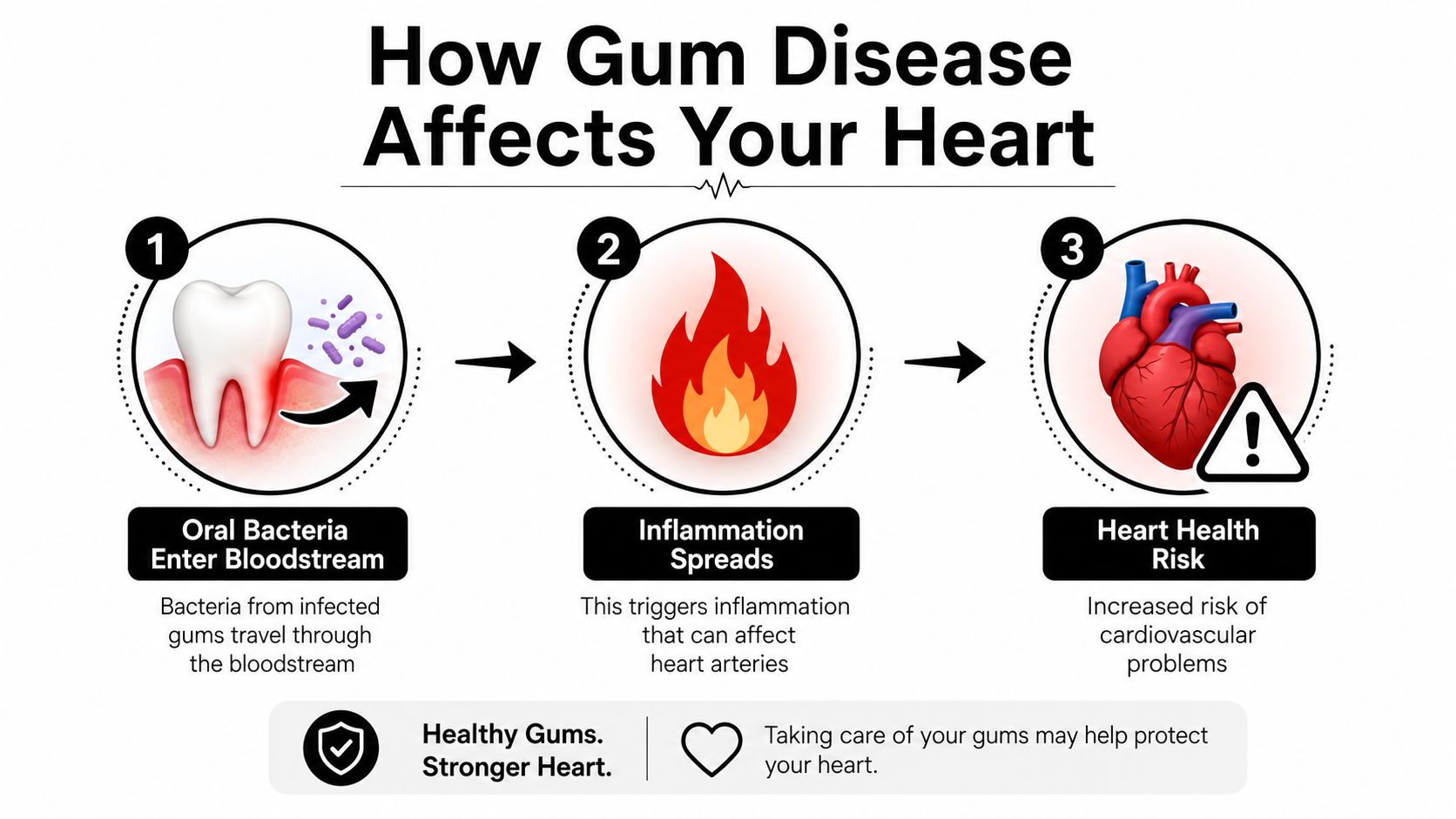
A mouth infection can affect more than the gums. Once periodontal tissues stay inflamed, bacteria and inflammatory signals can enter the bloodstream and reach other parts of the body. The American Heart Association says gum disease is linked with a higher risk of heart and blood vessel disease, while also making clear that the relationship is an association, not proof of direct cause (American Heart Association).
The inflammation pathway in plain language
Healthy gums should not keep sending warning signals through the body. With ongoing gum disease, disrupted oral biofilms and periodontal infection can trigger inflammatory mediators such as IL-6, TNF-α, and CRP, which are then associated with endothelial activation and atherogenesis (PubMed review). In practical terms, the body keeps responding to a persistent mouth infection, and that repeated response can affect the inner lining of blood vessels.
A major evidence summary says periodontitis is firmly associated with atherosclerotic cardiovascular disease, including coronary heart disease, stroke, and peripheral vascular disease, while causality is still not fully proven (PubMed review). That distinction matters in the chair and in the exam room. It keeps expectations realistic, and it keeps patients from assuming every gum problem means heart disease is inevitable.
Mouth germs and gum inflammation can enter the bloodstream, then add to inflammation elsewhere in the body.
The British Dental Journal concluded that there is high quality evidence supporting an association between oral health problems and atherosclerotic cardiovascular disease, especially chronic periodontitis, with strong links to coronary heart disease, stroke, and peripheral vascular disease, but weak or absent links for hypertension, arrhythmias, and heart failure (British Dental Journal review). In the clinic, that means periodontal bleeding deserves attention during cleaning and exams, especially for patients already managing cardiovascular concerns or taking heart medications. Dental care and cardiac care need to be coordinated, because what happens in the mouth can affect how safely we plan treatment.
Recognizing the Warning Signs of Gum Disease
Gum disease often shows up in routine moments, not in a sudden emergency. A patient may notice blood in the sink, a lingering bad taste, or gums that feel sore when brushing. The larger point is simple. Oral inflammation can be easy to miss until it starts interfering with daily comfort and dental treatment planning. PLOS One has summarized how common periodontitis is, which is why these warning signs deserve attention instead of dismissal.

The signs that deserve a dental visit
Bleeding during brushing or flossing is one of the clearest early clues. Swollen gums, ongoing bad breath, and gums that seem to recede away from the teeth are also common warning signs. Pain does not have to be present for gum disease to be active, which is why a routine dentist in Las Vegas, NV visit still matters when the mouth does not feel severely irritated.
If any of these sound familiar, a checkup is a smart next move:
- Bleeding gums: This usually points to inflamed tissue, even when the bleeding looks mild.
- Gum recession: Teeth can appear longer as the gumline pulls back.
- Persistent bad breath: Bacteria below the gumline can keep odor from clearing.
- Tenderness or swelling: These signs can suggest infection around the teeth.
- Pain with chewing: Pressure may be exposing deeper problems that need treatment.
A periodontal evaluation during a new patient exam or cleaning can catch disease before it advances. In practice, that means a general dental visit can do more than polish teeth, it can identify inflammation early and help keep treatment simpler. When patients wait until discomfort becomes severe, care often becomes more involved, and the oral inflammation has more time to continue.
For patients who want a practical explanation of what treatment can change, this overview of the benefits of gum disease treatment is a useful place to start.
Does Treating Gum Disease Prevent Heart Problems
This is the question patients ask me most often, and it is the right one to ask. People with gum disease have two to three times the risk of having a heart attack, stroke, or another serious cardiovascular event, according to Harvard Health. That sounds alarming, but it still does not mean treating gum disease has been proven to prevent cardiovascular disease or its complications.
What the evidence supports, and what it doesn't
The honest answer is that dental care looks like a modifiable risk factor, not a guaranteed heart-protection therapy. One large review notes that periodontal disease has been associated with an estimated 3.5-fold higher overall ASCVD risk and a 24% to 35% increased risk of acute CHD events, while a cohort study found that more dental caries, periodontitis, and tooth loss were associated with future major cardiovascular events (European Heart Journal summary in PMC). That is strong enough to take seriously, but not strong enough to promise prevention.
The same evidence base suggests that better oral hygiene goes in the right direction. Brushing one more time per day was linked to a 9% lower risk, regular professional cleaning to a 14% lower risk, and brushing three times daily or more to a 19% reduction compared with brushing once or less daily (BMJ Open study summary). I use those findings to motivate care, not to overpromise outcomes.
The goal is better oral health, lower inflammation, and smarter risk management. The heart benefits may follow, but they are not guaranteed.
This is also why I point patients to practical education like my own patient resource on the benefits of gum disease treatment from a dentist. Treating inflamed gums helps with pain, bleeding, and infection control right away. That alone is worth doing, even before you factor in the broader cardiovascular discussion.
Harvard Health also notes there is no proof yet that treating gum disease prevents cardiovascular disease or its complications (Harvard Health). That honesty matters. Patients deserve care that is evidence-based, not wishful thinking.
Daily Oral Care Steps That Support Heart Health
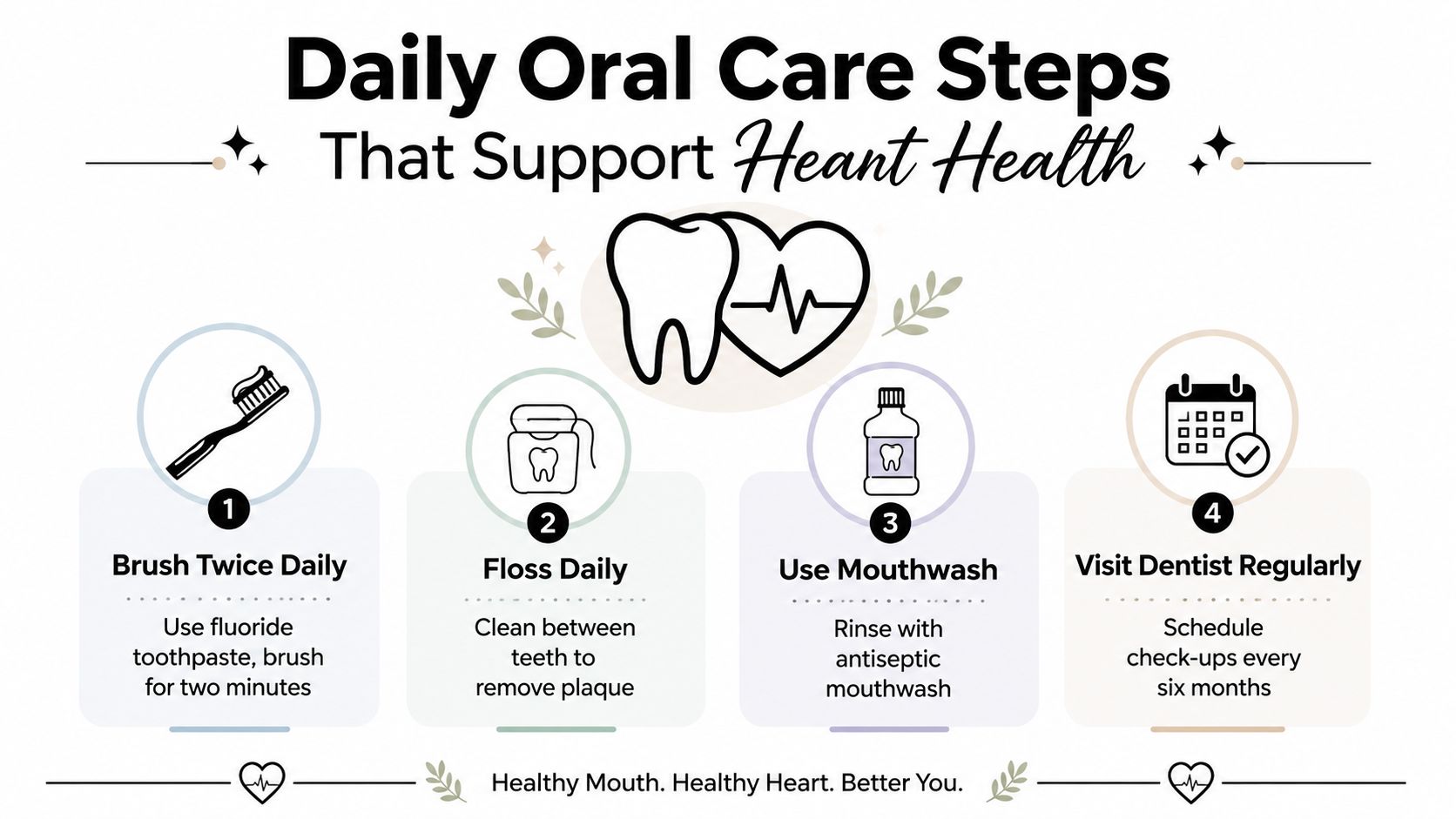
The daily routine matters because plaque and inflammation don't build up only between dental visits. Home care isn't a substitute for professional treatment, but it's the part patients control every day. If you're looking for a dentist near me in Las Vegas who'll talk plainly about prevention, the conversation usually starts here.
The habits that actually help
Brush carefully, not aggressively. A soft brush and fluoride toothpaste remove plaque without irritating the gums further. Flossing once daily reaches the tight spaces a brush misses, and antimicrobial mouthwash can help reduce the bacterial load when it's used as directed.
A balanced diet with less sugar also helps, because it limits the fuel that harmful bacteria use to keep gum inflammation active. For patients who want a broader lifestyle perspective, heart-healthy cardio ideas can be a useful companion resource, especially when someone is trying to support both circulation and daily habits.
Regular cleanings and exams matter just as much. Home care can't remove hardened tartar below the gumline, and that's one reason in-office preventive care remains essential for families across Desert Shores, Sun City Summerlin, and Lone Mountain. A dental team can clean areas you can't reach and watch for changes before they become painful.
What to keep consistent
- Brush twice daily: Use fluoride toothpaste and spend enough time along the gumline.
- Floss every day: Tight spaces collect bacteria fast.
- Use mouthwash wisely: Choose an antiseptic rinse when appropriate.
- Keep scheduled cleanings: Professional maintenance helps control buildup.
The point isn't perfection. The point is lowering the amount of inflammation your mouth carries into the rest of your body.
Coordinating Dental Care with Heart Medications
Patients with heart disease often have more complicated dental needs, especially before tooth extraction, dental implants near me searches turn into appointments, or gum procedures become necessary. Some cardiovascular medications can increase bleeding risk, and others affect how a dentist plans treatment or monitors healing. That's why I always want a complete medication list before we begin.
What to share before any procedure
Tell your dentist about blood thinners, blood pressure medicines, and any recent medication changes. If you're taking carvedilol, a patient guide like this carvedilol overview can help you understand the medicine itself, but your dental team still needs the full picture of what you take and why. If you're also reviewing oral-health medication interactions, this local resource on medications that affect oral health can help frame the conversation before treatment.
A safe plan usually depends on comparison, not guesswork. For example, a routine cleaning, an implant consultation, and a surgical extraction don't carry the same bleeding concerns, so they shouldn't be treated the same way. If your dentist and cardiologist need to coordinate, that's a good sign, not a delay.
Patients who keep their medical history updated get safer dental care.
Recent literature also notes that oral-health issues are rarely discussed in cardiac settings, even though cardiovascular patients often have oral-health awareness and access barriers (PMC review). That gap is exactly why clear communication matters. The safest visit starts with a plain conversation about your medications, your heart history, and what procedure you're planning.
What to Expect at Aspiring Smiles Dental and Braces
A good dental visit should feel calm, organized, and specific to your needs. At Aspiring Smiles Dental and Braces, patients are seen at 3211 N Tenaya Wy Suite 122, Las Vegas, NV 89129, in a setting built around clear communication and comfortable care. For people worried about heart disease and oral health, that matters because the visit needs to be thorough without feeling rushed.
Care that fits real life
Dr. Patel and the team provide preventive exams and cleanings, dental x-rays, Invisalign clear aligners, dental implants and All-on-4 solutions, crowns, veneers, Zoom teeth whitening, and family dentistry for all ages. That mix matters because many patients need more than one type of care over time, especially if gum disease, tooth loss, or restorative work is part of the picture. The office also offers extended weekday and Saturday hours, online appointment requests, flexible payment options, insurance acceptance, and a membership program for ongoing care.
The practical benefit is continuity. If you come in for an exam and the team finds inflamed gums, missing teeth, or a damaged tooth that needs a tooth extraction, the next step can be mapped out without bouncing between offices. That's especially helpful for patients who want a cosmetic dentist near me and a restorative plan under one roof.
The video and the exam together give patients a clearer picture of what treatment looks like. A thoughtful visit should answer what's happening now, what can wait, and what needs coordination with a physician if medications or medical history raise concerns. That's the kind of care families across Las Vegas look for when they want dentistry that feels both modern and personal.
Schedule Your Appointment Today
When gums are inflamed, bleeding, or painful, waiting usually makes the next step harder. A patient from Sunhampton might come in for a cleaning and learn they need deeper periodontal care. Another patient from Mar-A-Lago might need a restorative plan after tooth loss, while someone from Painted Desert Estates may want a full exam and reassurance that their oral health is on track.
Aspiring Smiles Dental and Braces welcomes new patients from Las Vegas, NV and nearby neighborhoods including Desert Shores, Sunhampton, Sun City Summerlin, Monterrey, Lone Mountain, Mar-A-Lago, and Painted Desert Estates. If you've been searching for a dentist near me, an emergency dentist, or help with preventive, cosmetic, or restorative care, the right time to act is now. The office combines advanced technology, compassionate communication, and practical treatment planning so you can protect your smile and keep your care coordinated.
If you're ready to take the next step, visit Aspiring Smiles Dental and Braces to request an appointment. You can also reach out for a consultation if you've noticed bleeding gums, tooth pain, or changes in your oral health and want a clear plan from a trusted Las Vegas dental team.