
Tooth Extraction Complications: Signs and Care in Las Vegas
You're three days past wisdom tooth removal, and the throbbing feels stronger instead of quieter. You're checking your cheek in the mirror and wondering whether to wait or find an emergency dentist in Las Vegas, NV. That uncertainty is understandable. Most routine extractions heal without dry socket, but knowing how symptoms change over time helps you recognize when you need care.
A recovery check should answer a practical question: Are you improving, or is something getting worse? The local dental team can help you sort expected soreness from tooth extraction complications without expecting you to diagnose the problem yourself.
Tooth Extraction Complications by Day and When to Call
Use the timing below as a starting point, not a deadline you must reach before asking for help. Symptoms can overlap, and your extraction type, medical history, and medications can change your recovery.
| Complication | Usual timing | Key signs | Call when | Typical dental response |
|---|---|---|---|---|
| Dry socket | Usually 3 to 5 days after extraction | Worsening throbbing pain, bad taste or breath, an empty-looking socket | Pain rises after the first few days or prescribed pain relief isn't helping | Examine and wash the socket, sometimes placing a medicated or antiseptic dressing |
| Infection | Often 4 to 6 days after surgery | Increasing pain and swelling, redness, discharge, fever, feeling unwell | Promptly, rather than waiting for symptoms to settle | Evaluate the site and prescribe antibiotics only when clinically needed |
| Prolonged bleeding | Usually an early concern, including the first day | Bleeding that continues despite uninterrupted pressure | Bleeding is heavy, continues after firm pressure, or persists for several hours | Check the wound and clot, then control the bleeding |
| Nerve injury | May become apparent after surgery as anesthesia wears off | Numbness, tingling, or altered taste involving the lip, chin, tongue, or gums | Report unexpected persistent numbness promptly; symptoms lasting months require structured follow-up | Document sensation, examine nerve function, and arrange specialist referral when needed |
| Sinus opening | May be noticed soon after extraction, mainly of upper back teeth | Air or fluid passing through the socket, nasal leakage when drinking | Promptly | Assess the opening and whether closure, sometimes with sutures, is needed |
| Jaw fracture | During or after a difficult removal | Sudden pain, changed bite, or altered jaw movement | Immediately | Urgent assessment, imaging, and specialist care |
| Swelling and limited mouth opening | Often most noticeable early in recovery | Swollen cheek and jaw stiffness | Swelling keeps increasing, worsens after initial improvement, or affects swallowing or breathing | Examine the swelling and review healing and medications |
The NHS guidance on wisdom tooth removal describes the dry-socket timing and symptoms above. Guidance on infection after tooth removal identifies increasing pain and swelling around 4 to 6 days after surgery as a reason to contact your dentist, particularly with fever, discharge, or feeling unwell.
Read the direction of symptoms
The most useful comparison is often with your own recovery yesterday. Tenderness that's gradually easing is different from pain that had improved and then becomes much stronger.
For example, a sore jaw while eating soft food doesn't tell the same story as new throbbing that keeps you awake and comes with a foul taste. Similarly, early swelling alone doesn't establish an infection. Increasing swelling plus fever or discharge deserves prompt assessment.
Don't probe the socket to decide whether it looks empty. Appearance alone can be misleading, and disturbing the area won't help your dentist diagnose it.
Practical rule: You don't need to know the name of the complication before calling. Describe what changed, when it changed, and whether you can eat, drink, swallow, and breathe normally.
Why a single complication rate can mislead
Different studies include different teeth, surgical difficulties, and patient groups. A National Library of Medicine review of alveolar osteitis reports published rates ranging from 0.5% to 68%, while larger studies commonly report rates below 5%. Those figures aren't interchangeable predictions for an individual patient.
The risk factors below offer more useful context. This chart is a guide rather than a diagnosis, and anything severe, sudden, or unexpected warrants a call to the Las Vegas dental team.
Dry Socket Risk Factors You Can and Cannot Change
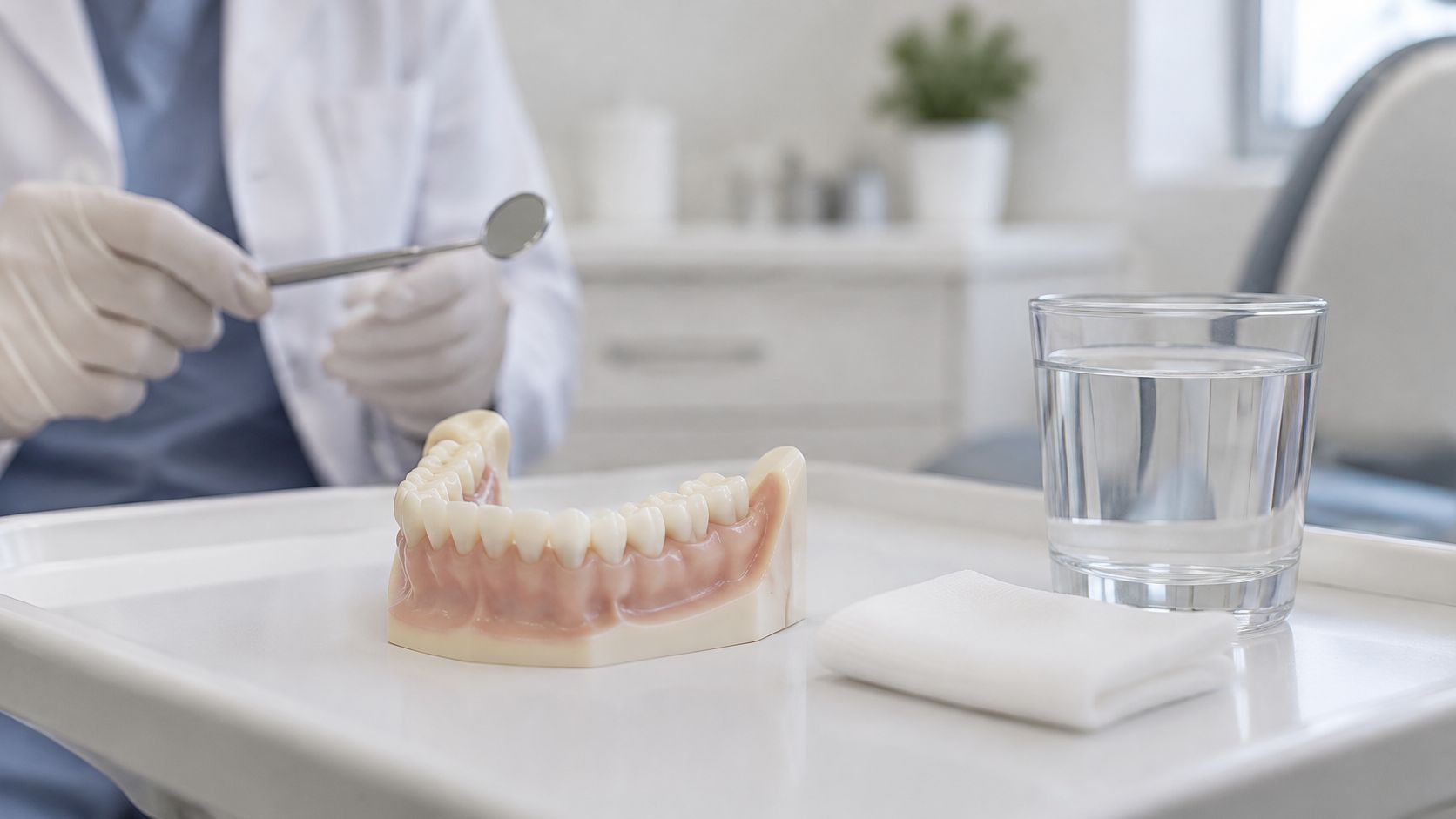
Dry socket, medically called alveolar osteitis, develops when the protective blood clot fails to remain in place before the socket heals. The underlying bone becomes exposed, causing pain and delaying normal healing.
A comprehensive review of dry socket reported rates of approximately 0.5% to 5% after routine extraction, compared with 1% to 37.5% after lower wisdom tooth removal, and noted roughly 10 times the incidence after surgical extraction. These ranges explain why a simple tooth removal and a difficult impacted wisdom tooth shouldn't receive identical risk counseling.
Your history matters alongside your habits
The comparison below separates factors you can influence from those your dentist needs to plan around. The review of dry-socket risk factors reports associations with smoking, oral hygiene, and surgical technique, including the odds ratios shown.
| Risk factor | Reported effect | Can the patient change it? |
|---|---|---|
| Smoking | Associated with substantially higher risk; reported odds ratio 6.41 | Yes, avoid smoking before surgery and during healing |
| Poor oral hygiene | Reported odds ratio 9.53 | Yes, through appropriate cleaning and gentle aftercare |
| Surgical technique or difficult extraction | Reported odds ratio 3.27 for surgical technique; complexity also matters | Partly, through clinical planning rather than patient action alone |
| Lower wisdom tooth removal | Higher reported risk than routine extraction | The location can't change, but planning and follow-up can |
| Previous dry socket | Sharply higher recurrence risk, with a very wide confidence interval | No, but tell your dentist |
| Oral contraceptive use | A factor to discuss during individual risk assessment | Don't change prescribed medication on your own |
| Younger age, prior implant placement, fewer teeth extracted, mental-health diagnosis | Reported associations in medically complex patients, not a personal prediction | Share the history so the dentist can individualize care |
An odds ratio isn't your percentage chance of developing dry socket. It describes an association within research, and the figures shouldn't be added together or used as a home risk calculator.
A previous episode is particularly important to mention, even if it happened years ago. Tell the dentist which tooth was removed, what symptoms occurred, and whether you needed additional treatment.
Smoking and oral hygiene are the clearest patient-controlled priorities. Ask for a realistic smoking-avoidance plan and cleaning instructions before surgery, rather than trying to work them out while you're uncomfortable afterward.
How to Care for Your Extraction Site at Home
Your dentist's written instructions should guide your first 72 hours, especially if you've had surgical removal or take medications that affect bleeding. Use this routine as a discussion aid, not a replacement for individualized advice.
The visual below summarizes the main home-care tasks.
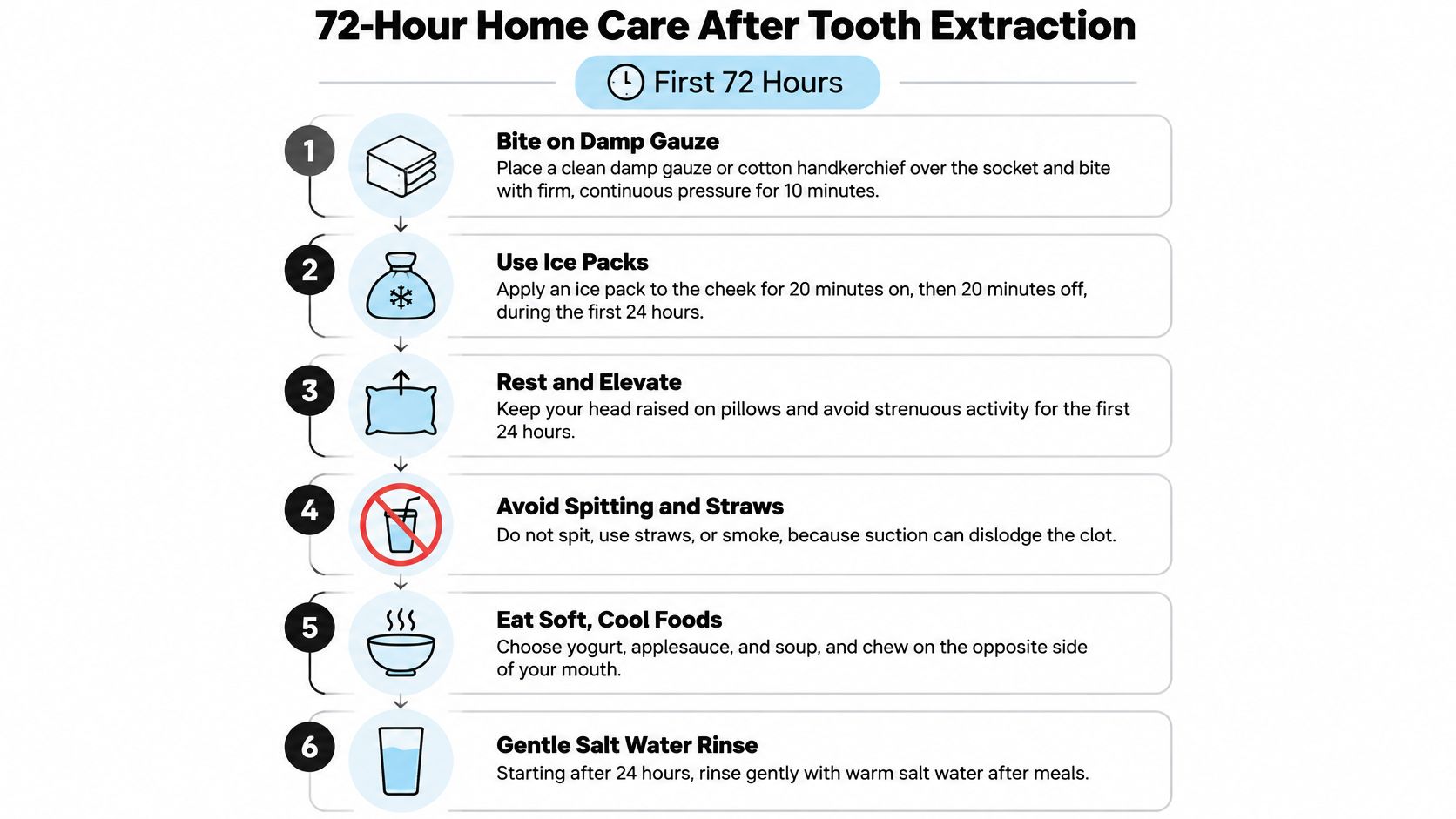
Apply uninterrupted pressure for bleeding. Place damp gauze or a clean cotton handkerchief directly over the socket and bite firmly for 10 to 15 minutes, following hospital post-extraction instructions. Repeatedly lifting it to check interrupts pressure; call if bleeding continues.
Use an ice pack as instructed. If your dentist recommends it, apply it to the cheek in intervals during the first day to help manage swelling. Don't leave ice against your skin continuously.
Rest with your head raised. Use pillows for support on the first night and follow your activity restrictions. A common mistake is returning to strenuous chores because the anesthetic initially makes the area feel comfortable.
Protect the clot. Avoid smoking, spitting, straws, hot drinks, and vigorous rinsing during early healing. Don't assume a forceful rinse will clean the wound better.
Wait for permission to rinse. Once your dentist says it's safe, use warm salt water gently. Swishing hard is different from allowing a gentle rinse around the mouth.
Choose soft foods. Chew on the opposite side and progress according to comfort and your dentist's advice. Avoid testing the socket with crunchy food before you've been cleared.
Follow your pain-relief directions. Take medication exactly as advised and check before adding aspirin for pain. Don't stop prescribed daily aspirin without medical guidance.
Clean without probing. Brush the other teeth gently and follow instructions for cleaning near the extraction. Keep fingers and your tongue out of the socket.
What improvement should look like
During the early recovery period, bleeding should settle rather than remain active, and discomfort should become manageable. Swelling and stiffness can make this stretch inconvenient, but the overall direction should eventually be toward improvement.
Later in the first week, ask when to resume brushing closer to the site and introduce firmer foods. Afterward, increase eating and activity gradually rather than treating a calendar date as proof that everything has healed.
The practice's post-extraction care guidance can help you review your instructions. Confirm your personal timeline with the dental team because procedure difficulty and health conditions affect recovery.
This video is another resource to review alongside your written instructions.
Rare Complications From Nerve Injury to Jaw Fracture
Nerve injury, sinus openings, and jaw fracture are uncommon but important complications to understand. They don't all have the same cause, and they need different examinations and treatment decisions.
Numbness and changes in sensation
Lower wisdom tooth roots may sit close to the inferior alveolar nerve and lingual nerve. Reported injury rates range from 0.4% to 5.5% for the inferior alveolar nerve and 0.06% to 10% for the lingual nerve, with substantial differences in anatomy, technique, case selection, and reporting, according to a review of nerve injury associated with third-molar surgery.
These ranges aren't a prediction for your tooth. Your dentist needs to assess its actual relationship to nearby structures.
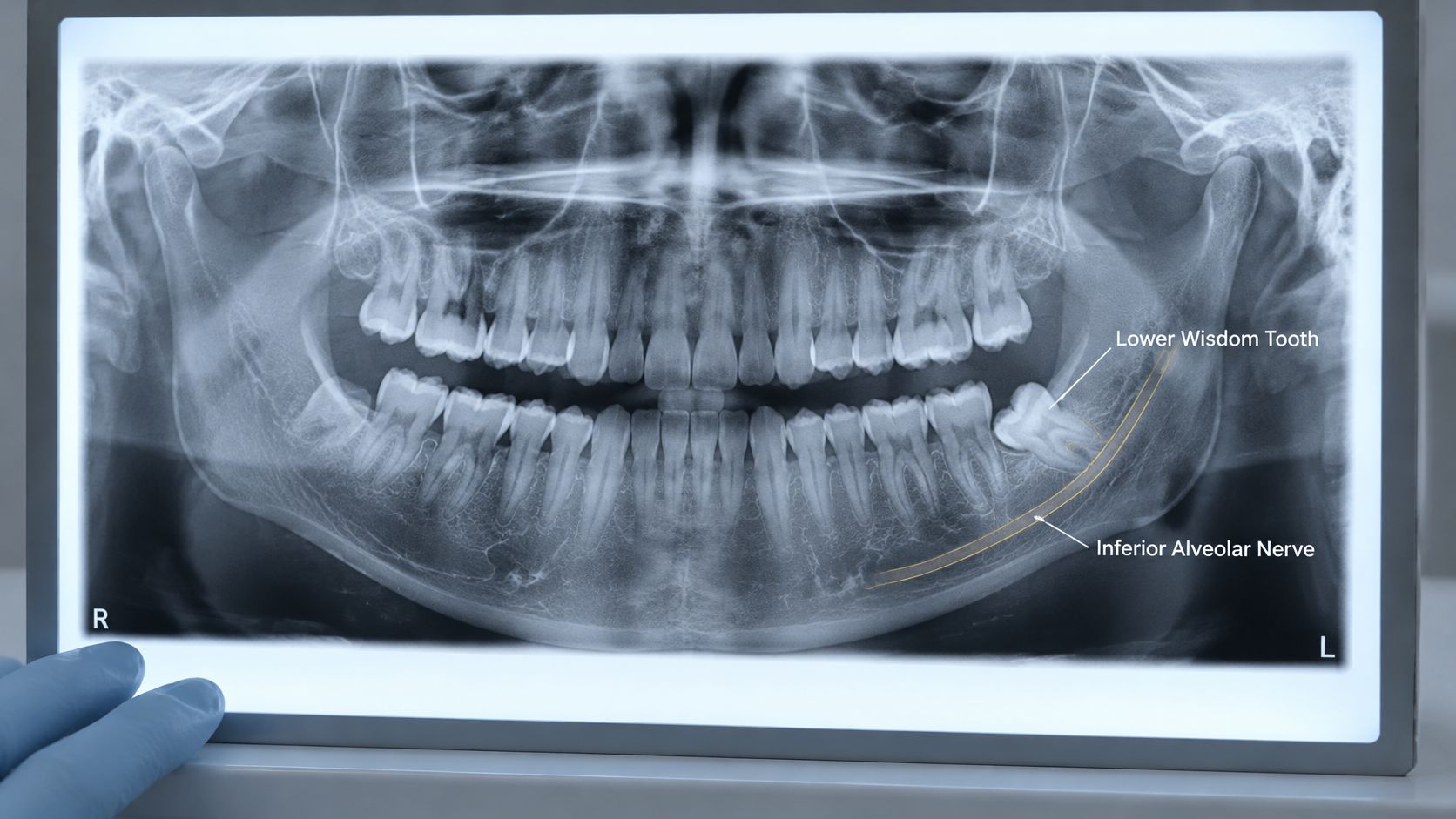
Symptoms can include altered touch or temperature, tingling, numbness, unpleasant sensitivity, or occasionally nerve pain. Taste may change when the tongue's nerve supply is affected.
Most postoperative sensory disturbances are temporary. The timeline and pattern of improvement matter, but persistent numbness should be reported rather than watched without follow-up.
Persistence beyond approximately three to six months is concerning for lasting impairment and warrants structured sensory examination and specialist assessment, as described in the nerve-injury review cited above. That isn't an instruction to wait months before contacting your dentist.
Sinus symptoms and sudden bite changes
Upper back teeth can lie close to the sinus floor. If an opening develops between the mouth and sinus, you may notice fluid passing toward the nose when drinking or air moving through the socket.
Don't repeatedly test the area by forcing air through it. Contact the dentist promptly so they can assess the opening and decide whether protective measures or closure are needed.
A sudden changed bite, significant new jaw pain, or abnormal jaw movement after a difficult extraction needs urgent assessment. Jaw fracture is rare, but those symptoms shouldn't be explained away as ordinary stiffness.
How imaging supports prevention
Before higher-risk surgery, the dentist may review panoramic dental X-rays or three-dimensional imaging. The purpose is to understand the tooth's anatomy and discuss options, not merely to collect another image.
For selected high-risk lower wisdom teeth, the consultation may include coronectomy, an alternative that leaves the roots in place while removing the crown. Ask why a particular approach is recommended and what follow-up it requires.
Extra Planning for Blood Thinners, Immune Conditions and Wisdom Teeth
Some patients need a more detailed plan before tooth extraction, not because complications are inevitable, but because the team needs to coordinate medication, surgical technique, and follow-up. Bring a complete medical history even if the tooth seems straightforward.
Blood thinners and immune-related concerns
Warfarin, newer oral anticoagulants, daily aspirin, and other antiplatelet medicines need to be included on your medication list. They can affect bleeding management, and your dentist may need information from the clinician who prescribes them.
Never stop a prescribed blood thinner on your own. Ask: Does my prescribing clinician need to help plan the extraction, and what should I do if bleeding restarts at home?
Immune-suppressing conditions and treatments also deserve discussion. Give the dentist medication names and explain any recent changes in your health, rather than just saying you have a weakened immune system.
Medication safety: A dental procedure isn't a reason to independently skip, stop, or double a prescribed medicine.
Antibiotics and add-on treatments
Dry socket isn't the same as a spreading bacterial infection, so antibiotics aren't an automatic solution for postoperative pain. A study of medically complex extraction patients without antibiotic prophylaxis found predictors broadly similar to those in previously studied cohorts receiving prophylaxis, supporting the need to address underlying risks rather than assume antibiotics remove them.
Ask whether your infection status, medical history, or procedure makes antibiotics appropriate. Also ask what symptoms would change that decision after you go home.
Platelet-rich fibrin, or PRF, may be discussed as an additional healing measure. It isn't something to assume you need, and you shouldn't interpret an offer of PRF as a guarantee of better bone healing.
Useful questions include:
- Expected benefit: Is the proposed benefit related to comfort, soft-tissue healing, or another specific goal?
- Limits: What remains uncertain, and what routine aftercare will I still need?
- Alternatives: Is standard care reasonable for my extraction and health history?
Impacted wisdom teeth and future treatment
Impacted lower wisdom teeth may require a more involved surgical approach, so discuss the procedure and follow-up before treatment. The practice's guide to wisdom tooth extraction and preparation can help you prepare questions.
If you've been searching for dental implants near me, discuss that goal during the extraction consultation so careful planning can protect later restorative options, including dental implants and All-on-4 solutions.
When and How to Contact Aspiring Smiles Dental and Braces
It's the day after your extraction, and the soreness is not following the pattern you expected. Use the recovery timeline above as a guide, then call the dental office if you're unsure. You do not need to wait until pain is unbearable or you know exactly what is wrong.
- Call the dental office promptly: Report bleeding that continues despite applying pressure, worsening pain, discharge, fever, a painful socket that looks empty, or numbness that persists unexpectedly.
- Describe sudden changes clearly: Tell the team if your bite has changed, your jaw moves unusually, or liquid passes between your mouth and nose.
- Get emergency medical help: Call 911 or go to the nearest emergency department if swelling affects breathing or swallowing, or spreads quickly into your face or neck.
Local care and what to expect
Aspiring Smiles Dental and Braces is located at 3211 N Tenaya Wy Suite 122, Las Vegas, NV 89129. Contact the office to ask about care and availability.
A visit for a possible complication begins with a review of your symptoms and a focused examination. Depending on what the team finds, dental X-rays may be appropriate. They can explain whether the problem calls for socket care, a medication review, monitoring, or referral to a specialist.
An examination helps match the next steps to the cause of your symptoms. You can also get instructions for pain management, cleaning, eating, and follow-up, instead of trying to judge every change on your own.
Make the call easier
Before calling, gather the extraction date, your medication list, and any written postoperative instructions. Explain whether symptoms are improving or getting worse, and mention what you have already tried. A clear timeline helps the team understand how your recovery is changing.
Ask the office about appointment availability and any coverage or payment questions that matter to you. Those details can vary, so confirm them directly rather than assuming a particular appointment time or benefit.
If you found the practice through a dentist near me or cosmetic dentist near me search, say that your immediate concern is recovery after an extraction. The team can help direct your concern to the appropriate care. Worsening postoperative symptoms should take priority over elective treatment, such as whitening.
Aspiring Smiles Dental and Braces offers extraction follow-up, emergency dental evaluation, and restorative consultations for patients in Las Vegas. Visit Aspiring Smiles Dental and Braces to request an appointment, or call the office now about worsening symptoms. If the extraction left a gap, ask about tooth replacement after the immediate healing concern has been addressed.