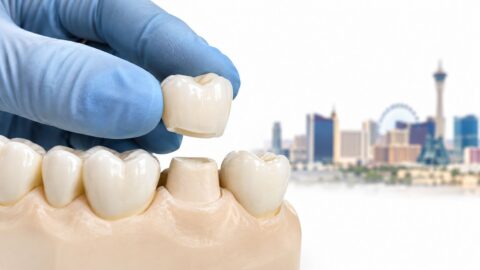
When Does a Tooth Need a Crown in Las Vegas, NV
You might be searching “when does a tooth need a crown” after biting into brunch and feeling a sharp catch in a back tooth, or because a filling keeps coming loose. Maybe cold sensitivity is lingering, or a tooth looks darker after root canal treatment. Those signs deserve an examination, but they don't automatically mean you need a crown.
At Aspiring Smiles Dental and Braces in Las Vegas, the decision starts with the tooth itself: how much healthy structure remains, where it sits, whether it's cracked, and how much force it takes when you chew. A front tooth and a back molar have different jobs, so they may need different solutions. The aim is to protect what can be saved while avoiding treatment your tooth doesn't need.
Signs Your Tooth May Be Asking for a Crown
A patient from Sun City Summerlin comes in after noticing a sharp twinge while chewing on a molar. A large filling has been in that tooth for years, and now one side feels tender when they bite. That combination can mean the remaining tooth walls are struggling to hold the filling and withstand chewing. It doesn't prove a crown is the answer, but it's a good reason to have the tooth checked.
Large decay or an old filling can leave too little solid tooth around the repaired area. A filling replaces missing material, but it may not brace weak walls. If a restoration repeatedly loosens or breaks, the dentist needs to find out whether the surrounding tooth can still support another filling.
A crack or fracture can cause pain when you bite or release your bite. Sometimes a crack is hard to see, and symptoms can come and go. A crown may help hold a restorable tooth together, but a crack that extends into the root can change the outlook and may require a different plan. The American Association of Endodontists explains that a crack can involve the pulp and that some cracked teeth need root canal treatment and protective restoration. Learn about cracked teeth and root canal warning signs.
After root canal treatment, a tooth may need a crown if substantial structure has been lost. The treatment itself doesn't make a crown automatic. What matters is whether the remaining tooth can handle everyday biting without splitting.
Severe wear from grinding or erosion can flatten a tooth and alter how it meets neighboring teeth. A crown may be considered when enough structure is gone to affect strength or function. For appearance, coverage may also be discussed for a severely discolored or misshapen tooth, though a cosmetic concern alone doesn't mean a crown is the only choice.
The Five Clinical Reasons Dentists Recommend a Crown
A crown covers the visible part of a tooth to rebuild its shape and protect weakened structure. Dentists consider one when a direct filling can't reliably support the forces the tooth faces. The recommendation should follow an exam, not a one-size-fits-all rule.
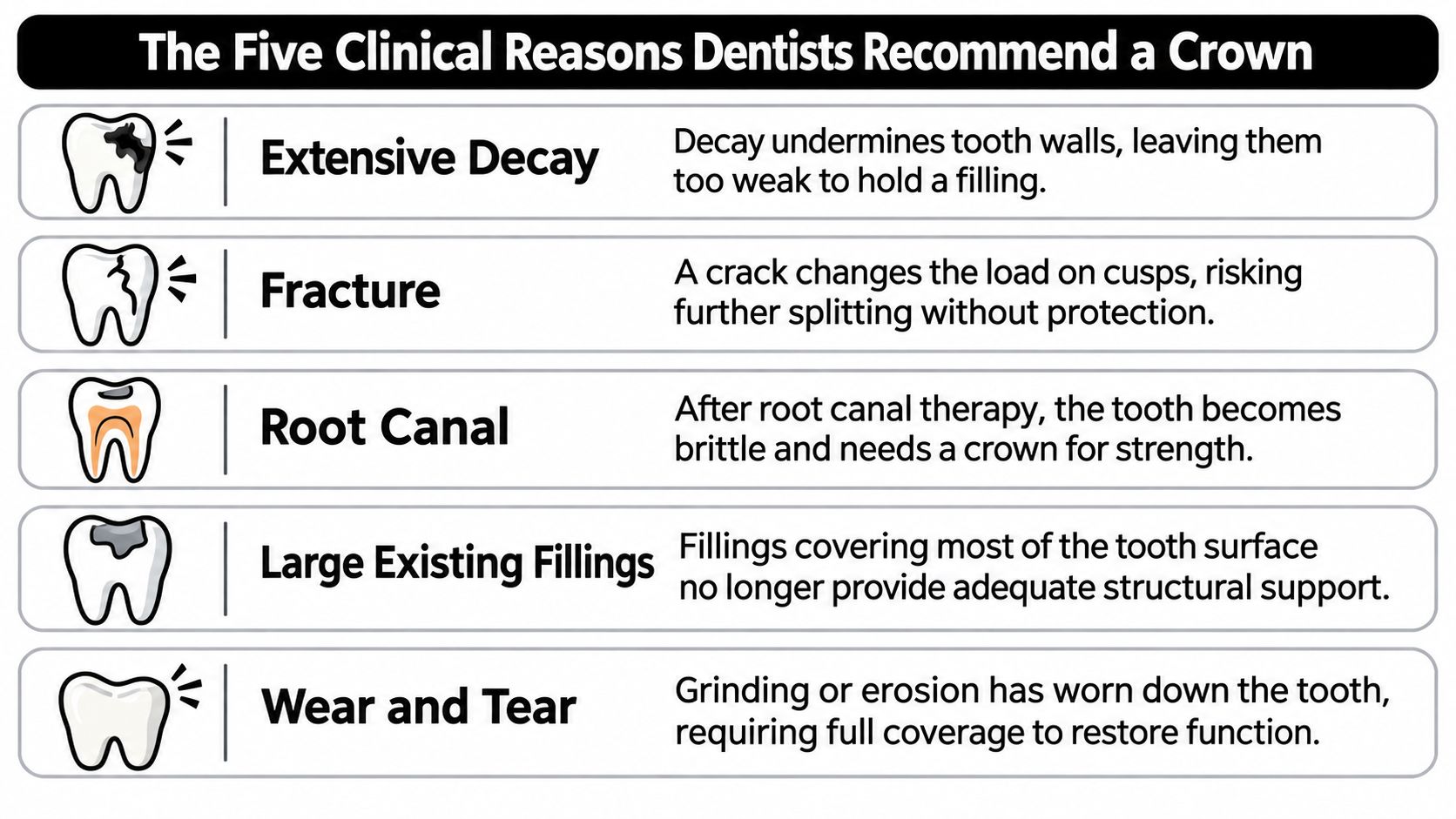
Extensive decay: A deep cavity can weaken the walls around it. The dentist checks how much sound tooth remains and may use an x-ray to assess decay that isn't visible at the surface.
Fracture: A crack can let a cusp flex when you bite. A dentist may use a bite stick to locate pain and light to look for a crack, then decide whether the tooth is restorable and whether coverage can protect it.
Root canal treatment: Removing infected pulp and cleaning the canals can leave a tooth with less internal structure. The final restoration may be a filling or a crown, depending on the remaining walls, tooth position, and bite forces. See restoration options after root canal treatment.
Large existing fillings: A filling that occupies much of the tooth may leave thin sections of natural tooth exposed to stress. The dentist examines those walls and checks whether they can support a new filling or need broader protection.
Wear and cosmetic concerns: Grinding and erosion can flatten or weaken teeth. A crown may restore shape when damage is extensive; for a misshapen or discolored tooth, the dentist also considers less extensive cosmetic options.
The practical rule: A crown is most compelling when the remaining walls or cusps are thin, cracked, undermined, or unable to hold a filling. It isn't prescribed just because a tooth has had a root canal.
What Your Las Vegas Dentist Looks at During the Exam
The exam is a fact-finding visit, not a commitment to have a crown. At Aspiring Smiles, the dentist can inspect the tooth, ask what triggers discomfort, and explain what each test is meant to clarify. You're welcome to ask questions as the findings are reviewed.
The dentist looks for visible cracks, worn biting surfaces, damaged fillings, and decay. A bite test can help locate a sore area by asking you to bite gently on a small testing tool. The dentist may also shine light through the tooth to make some cracks easier to see. Neither test answers every question on its own, so the results are considered together.
Dental x-rays can show decay beneath the surface and changes around a root that aren't visible during a visual exam. Periodontal probing measures the gum spaces around the tooth. Those findings help the dentist assess gum support and whether decay or a crack may extend below the gumline.
The team also evaluates the tooth's remaining healthy structure and whether enough sound tooth is present above the gum to support a durable restoration. For a heavily compromised tooth, a ferrule, the band of sound tooth encircled by the crown, matters. A technical review describes an ideal ferrule as approximately 1.5–2 millimeters of sound vertical tooth structure and reports better fracture resistance when adequate ferrule is present. Read about ferrule design and restoring compromised teeth.
A good exam leaves room for choices. The dentist can compare a crown with an onlay or another restoration and explain how each fits the tooth's condition, your bite, and your budget.
Types of Crowns and When Each One Fits
Crown material is chosen around the tooth's location, bite forces, appearance, and the treatment plan. A front tooth is visible when you smile, while a molar handles heavier chewing. Ask the dentist which options suit your tooth rather than choosing by name alone.
| Material | Best Tooth Location | Cosmetic Match | Durability | Best Fit For |
|---|---|---|---|---|
| All-ceramic or porcelain | Front teeth and visible areas | Can be selected to blend with nearby teeth | Depends on material, bite, and remaining tooth structure | Patients prioritizing a natural-looking result |
| Zirconia | Back teeth or areas under heavier chewing forces | Tooth-colored, though appearance depends on the specific design | Selected for strength; the dentist assesses the bite | Patients balancing appearance with chewing demands |
| Porcelain-fused-to-metal | Front or back teeth, depending on the case | Porcelain-colored surface with a metal base | Depends on the design and bite | Patients considering a balance of appearance and support |
| Full metal | Less visible back teeth | Metallic appearance | Selected where strength is a priority | Patients who don't need a tooth-colored surface |
Some offices use chairside milling to make a crown during the appointment. Whether that's available, and whether it's appropriate for your tooth, depends on the practice's equipment and clinical judgment. A traditional laboratory-made crown may involve a temporary crown while the permanent one is prepared.
Material choice isn't a shortcut around diagnosis. The dentist also considers how the crown will fit with your bite and whether the tooth has enough healthy structure to support it. A patient choosing a crown for a visible tooth may feel relief when the final shade and shape blend with the neighboring teeth, while someone restoring a molar may place greater weight on how it handles chewing.
What Happens Step by Step During Crown Treatment
Knowing what the appointments involve can make the process feel less uncertain. Your dentist will explain the plan first, including whether the tooth needs additional treatment before it can be restored.
At the preparation visit, the dentist numbs the tooth and nearby gum. They remove decay or damaged material and reshape the tooth so the crown can fit over it. A scan or impression records the prepared tooth, and you can discuss the material and shade if the restoration will show when you smile.
The dentist places a temporary crown to protect the prepared tooth while the permanent one is made. Until the final crown is ready, follow the care instructions you're given and avoid putting unnecessary stress on the temporary.
At the placement visit, the dentist removes the temporary crown and checks the permanent one's fit, contact with neighboring teeth, and bite. If it sits comfortably, the dentist cements it in place. If the bite feels high or uneven, say so; the dentist can check and adjust it.
Afterward, the tooth may feel mildly tender for a short time. Keep brushing and flossing around the gumline, and avoid chewing ice or using the crown to bite hard objects. If the bite remains uncomfortable or the crown feels loose, contact the office for advice rather than trying to adjust it yourself.
How Crowns Compare to Other Treatment Options
A crown isn't always the most conservative or appropriate restoration. A filling can work when enough healthy tooth remains to support it. For moderate damage, an inlay or onlay may restore the affected area while covering less of the tooth than a full crown. A molar with one weakened cusp and other sound walls might be a candidate for an onlay, depending on the exam.
For appearance concerns on a healthy front tooth, a veneer may be considered instead of covering the whole tooth. A small chip may need only smoothing or a filling. If you're unsure whether a tooth needs a filling or more coverage, learn how dentists assess the need for a dental filling.
A tooth with a crack extending into the root may not be predictable to restore with a crown. If the tooth can't be saved, the dentist may discuss extraction and replacement options such as a bridge or dental implant. Patients researching recovery approaches beyond routine restorative care can also explore stem cell dentistry for recovery, then discuss any questions with their dental provider.
Aspiring Smiles Dental and Braces offers restorative care, including crowns, as part of its services in Las Vegas. When you discuss a treatment plan, ask three straightforward questions: How much healthy tooth remains? What forces hit this tooth each day? What restoration best balances preserving tooth structure with protecting it over time? Those answers help keep the decision focused on your tooth, not a blanket rule.
Benefits of Choosing a Crown at Aspiring Smiles Dental and Braces
A crown can make everyday tasks more comfortable when a tooth is too weak or damaged to function well with a filling. It rebuilds the tooth's shape and covers vulnerable areas, helping you chew without relying on a section that may flex or break. If cold sensitivity comes from a damaged tooth, treating the underlying problem may also help, though the right treatment depends on its cause.
A crown's benefit is protection, not immunity from future dental problems. Decay can still develop at the crown's edge, and grinding can put stress on both the restoration and the tooth beneath it. Brushing, cleaning between teeth, regular dental exams, and addressing grinding when relevant all remain part of caring for a crowned tooth.
The choice can also support confidence when the restored tooth shows in your smile. If the concern is mainly cosmetic, the dentist can discuss whether a crown, veneer, or another option is a better fit. The practice offers restorative and cosmetic services, including crowns, veneers, and teeth whitening, with the recommendation suited to the condition of the tooth and your goals.
Families in Desert Shores, Sunhampton, Sun City Summerlin, Monterrey, Lone Mountain, Mar-A-Lago, and Painted Desert Estates can ask the office about extended weekday and Saturday hours, flexible payment options, insurance acceptance, and its membership program. Those practical details can help patients plan care alongside cleaning and exams, dental x-rays, or other treatment needs.
Common Questions Las Vegas Patients Ask About Crowns
How long does a crown last, and what can cause trouble sooner? There isn't one lifespan that applies to every crown. Its outlook depends on the tooth underneath, the quality of the fit, daily cleaning, and forces such as grinding. A crown doesn't prevent decay at its edge or remove the risk of fracture, so keep up with exams and ask whether a night guard makes sense if you clench or grind.
Does getting a crown hurt? The dentist numbs the area during preparation. It's normal to have some tenderness afterward, but contact the office if pain persists, your bite feels uneven, or the tooth becomes more uncomfortable.
Will insurance cover it, and what if it doesn't? Coverage varies by plan and by the reason for treatment. Ask the office to review your benefits and explain available payment options before proceeding. Don't assume a crown is covered or excluded without checking your specific plan.
What should I do if a crown chips, loosens, or falls out? Call the dental office promptly for guidance and an appointment. If you have significant pain, swelling, or a sudden injury, contact an emergency dentist for advice about timely care. Avoid chewing on that side, and don't try to cement the crown yourself.
For a personalized assessment, request an appointment online or call Aspiring Smiles Dental and Braces at the Tenaya Way office. The dentist can examine the tooth, explain whether a crown or another restoration fits, and discuss the next steps with you.
If a tooth is cracked, worn, sensitive, or repeatedly losing its filling, Aspiring Smiles Dental and Braces offers restorative and family dental care in Las Vegas, including exams to assess whether a crown is appropriate. Request an appointment to discuss your tooth, your options, and a treatment plan suited to your needs.