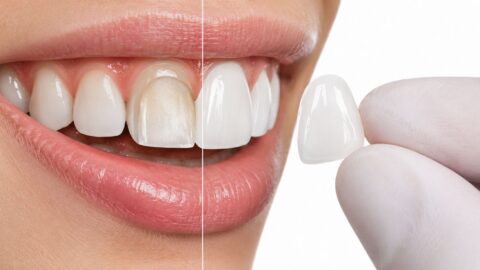
Do Veneers Damage Your Natural Teeth
Veneers don't actively destroy healthy teeth, but the treatment is irreversible because a thin layer of enamel must be permanently removed for a proper, lasting bond. In carefully selected cases, enamel-bonded ceramic veneers show strong survival, including a 98.4% survival rate in one clinical follow-up of 672 veneers, with 11 failures reported during the observation period (clinical study).
You may be asking this after seeing a dramatic smile makeover online, then wondering what happened to the teeth underneath. That concern is reasonable. Veneers are a cosmetic treatment, but they still involve your natural enamel, gums, bite, and long-term oral health.
The practical answer to “do veneers damage your natural teeth” depends less on the word veneers and more on how much tooth structure is removed, where the veneer is bonded, and whether the teeth are healthy before treatment. At Aspiring Smiles Dental and Braces in Las Vegas, NV, a cosmetic consultation should begin with those questions, not with a promise of a particular smile design.
Understanding Veneers and Your Natural Smile
A patient may arrive wanting to correct discoloration, small chips, uneven edges, or teeth that look slightly different in photographs. They may also say, “I want a better smile, but I don't want my dentist to ruin my natural teeth.” That hesitation often reflects a misunderstanding of what modern veneer treatment involves, not an unreasonable fear.
Porcelain veneers are thin, custom-made shells bonded to the visible front surfaces of teeth. They can improve appearance, but they aren't a substitute for treating active decay, infection, or unhealthy gums. A responsible cosmetic dentist first determines whether the tooth can support a veneer and whether a less invasive option would achieve the same result.
Traditional porcelain veneer treatment permanently changes the tooth because some natural enamel is removed. Cleveland Clinic explains that patients “will lose at least some of your natural enamel,” and enamel doesn't grow back once it's gone (Cleveland Clinic's veneer overview). That makes the procedure irreversible for many cases, even though the alteration is usually conservative.
The honest distinction: veneers don't automatically damage healthy teeth, but placing them is still a permanent dental decision.
The risk rises when a dentist removes more structure than necessary or places the restoration on exposed dentin instead of keeping the bond primarily within enamel. Patients in Las Vegas, including those from Desert Shores, Sunhampton, Sun City Summerlin, Monterrey, Lone Mountain, Mar-A-Lago, and Painted Desert Estates, deserve a treatment plan that protects future options as well as today's appearance.
That may mean veneers. It may mean professional teeth whitening, dental bonding, or Invisalign clear aligners instead. A patient-focused cosmetic dentist should be comfortable recommending no veneer treatment when another approach better preserves the natural smile.
The Veneer Preparation Process and Enamel Preservation
Modern veneer preparation isn't the aggressive grinding many patients imagine. The clinical objective is to create enough space for the ceramic to sit naturally while preserving as much healthy enamel as possible.
What preparation involves
A typical porcelain veneer preparation follows a controlled sequence:
- The dentist evaluates the tooth and bite. Existing decay, cracks, gum concerns, old restorations, and the way your teeth meet all influence whether veneers are appropriate.
- The front surface is carefully shaped. A controlled clinical study found ideal labial reduction targets of approximately 0.4 to 0.6 millimeters, with depth-guiding dimples helping clinicians achieve the intended 0.5 millimeter reduction more accurately than freehand or groove-based methods (clinical preparation study).
- A digital scan or impression records the prepared tooth. The laboratory or digital workflow uses this information to design a veneer that fits the tooth and surrounding smile.
- The veneer is bonded to the prepared surface. Adhesive dentistry works most predictably when the restoration remains bonded primarily to enamel.
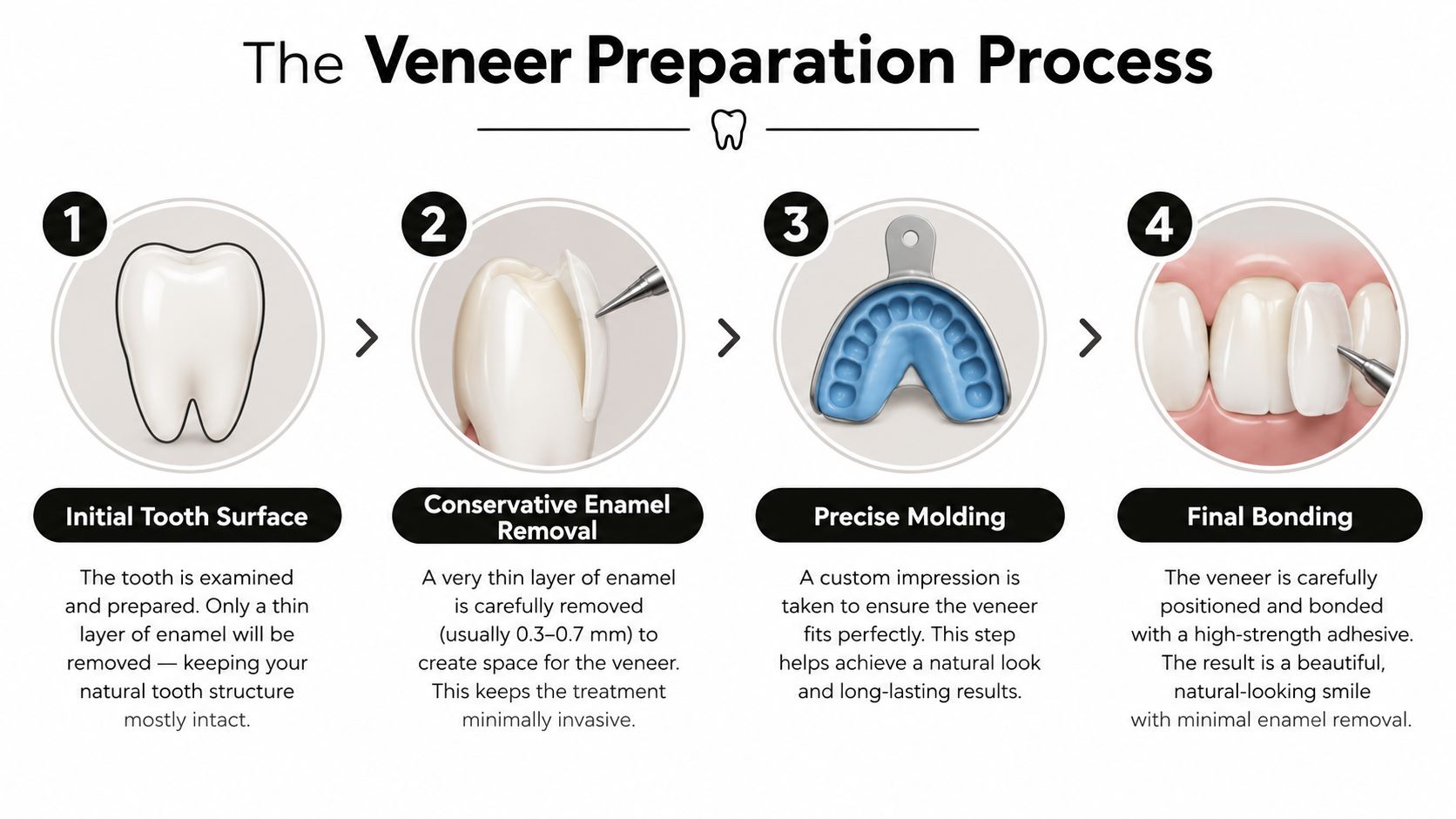
The preparation isn't done just to remove tooth material. It creates room for the veneer so the final result doesn't look bulky, feel raised, or interfere with your bite. Removing too little can create its own problems if the restoration must be over-contoured to achieve the planned shape.
Why enamel matters
Enamel provides the most favorable surface for adhesive bonding. A 2024 systematic review and meta-analysis found that ceramic veneers bonded to enamel had fewer clinical complications and lower failure rates than veneers bonded to exposed dentin, particularly when dentin exposure was minimal (systematic review and meta-analysis).
No-prep veneers may be suitable for selected patients, but they aren't appropriate for every smile. The existing tooth shape, position, color, and available space determine whether a no-preparation approach can produce a natural result. You can review the practice's no-prep veneers information before discussing whether that option fits your anatomy.
The preparation should feel like a measured modification, not a wholesale removal of the tooth. If a proposed plan would expose substantial dentin, ask why that depth is necessary and whether orthodontics, whitening, bonding, or a different restoration could preserve more enamel.
Here's a closer look at the bonding principles that support veneer treatment:
Evaluating the Risks to Your Teeth
A veneer can look intact while the tooth still develops sensitivity, decay, or gum changes. The key clinical question is whether treatment preserved enamel or exposed dentin, then whether the restoration and surrounding tissues are maintained properly.
Veneers may fracture or chip, lose their bond, discolor at the edge, or allow decay to develop around the margin. These complications do not mean the veneer has automatically damaged the tooth beneath it, but they can require repair, replacement, or additional treatment. Careful case selection and conservative preparation reduce these risks without removing the need for regular review.
Enamel versus dentin bonding
The bonding surface strongly influences the outlook. Adhesion to preserved enamel is generally more predictable than adhesion to dentin. Once preparation extends into dentin, sensitivity, debonding, repairs, and failure become more likely, so the treatment plan should explain why that depth is needed.
A clinical follow-up of 672 ceramic veneers reported a 98.4% survival rate, with 11 failures and a total complication rate of 1.65%. Reported failures included 0.75% fracture or chipping, 0.15% debonding, 0.15% tooth loss, and 0.15% postoperative sensitivity (reported veneer outcomes).
These findings support a measured conclusion. Veneers can remain functional for years, but survival does not mean that every restoration remains unchanged or requires no clinical attention. A veneer may still be present while needing monitoring, polishing, repair, or eventual replacement.
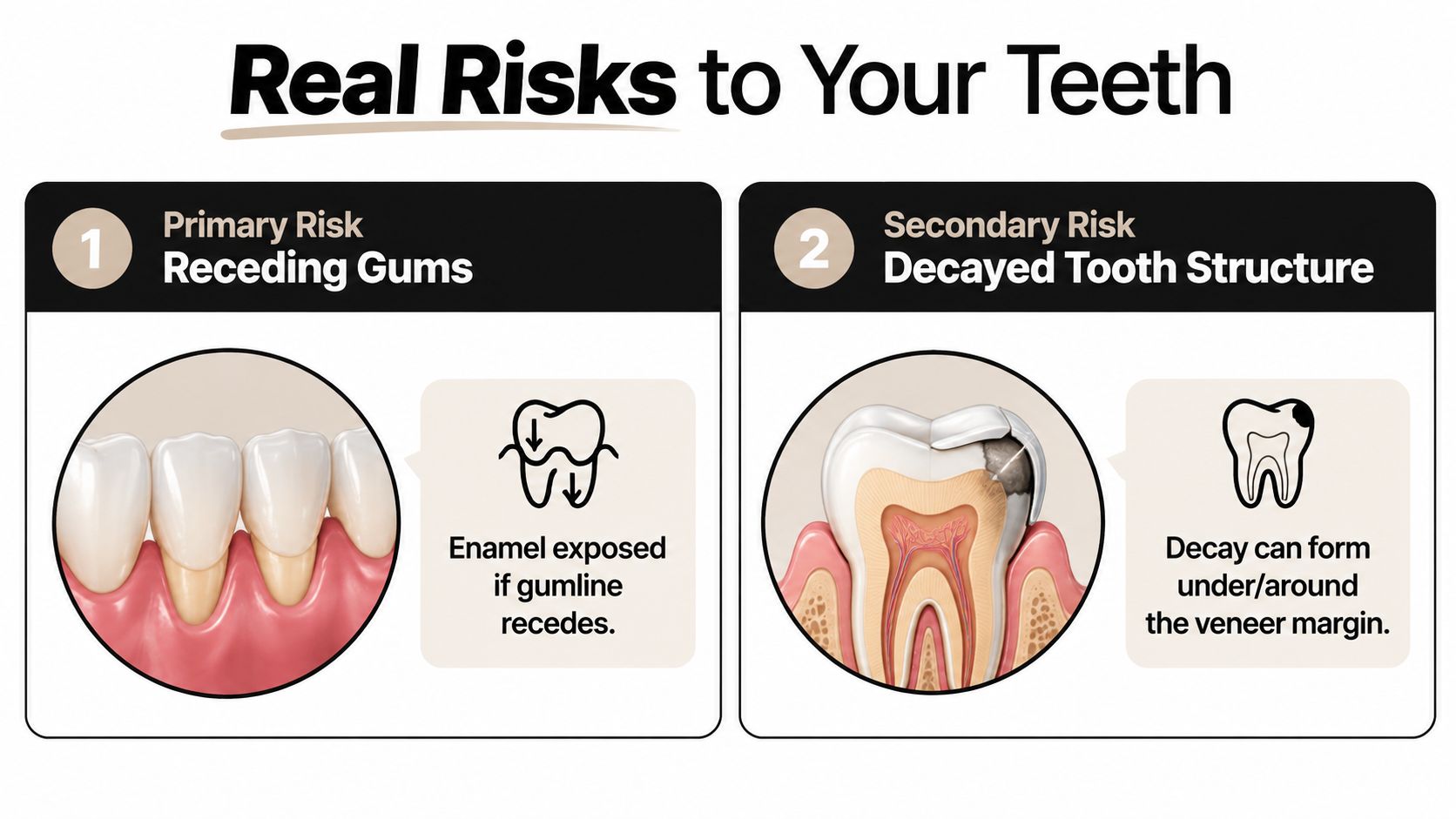
The natural tooth can still develop decay
A veneer covers the front surface, not the entire tooth. Cleveland Clinic explains that veneers do not actively damage teeth, although cavities can form under or around them when plaque remains along the margin (Cleveland Clinic guidance on veneer care).
Gum recession can expose a previously hidden margin, creating a cosmetic concern and making cleaning more demanding. Gum disease, untreated decay, significant wear, and an unstable bite should be addressed before cosmetic treatment.
A 2025 meta-analysis reported pooled ceramic veneer survival of 97.76% short-term, 97.12% at five years, and 96.05% at 10.4 years (2025 systematic evidence). Veneers often remain in service, but a surviving restoration may still need repairs or professional attention.
Longevity and Maintenance of Porcelain Veneers
A veneer can look unchanged for years, yet its long-term condition depends on the natural tooth, gums, bite, and daily habits around it. Porcelain resists many surface stains, but it does not prevent plaque-related problems, acid exposure, grinding, or excessive biting force.
Daily care protects the margin
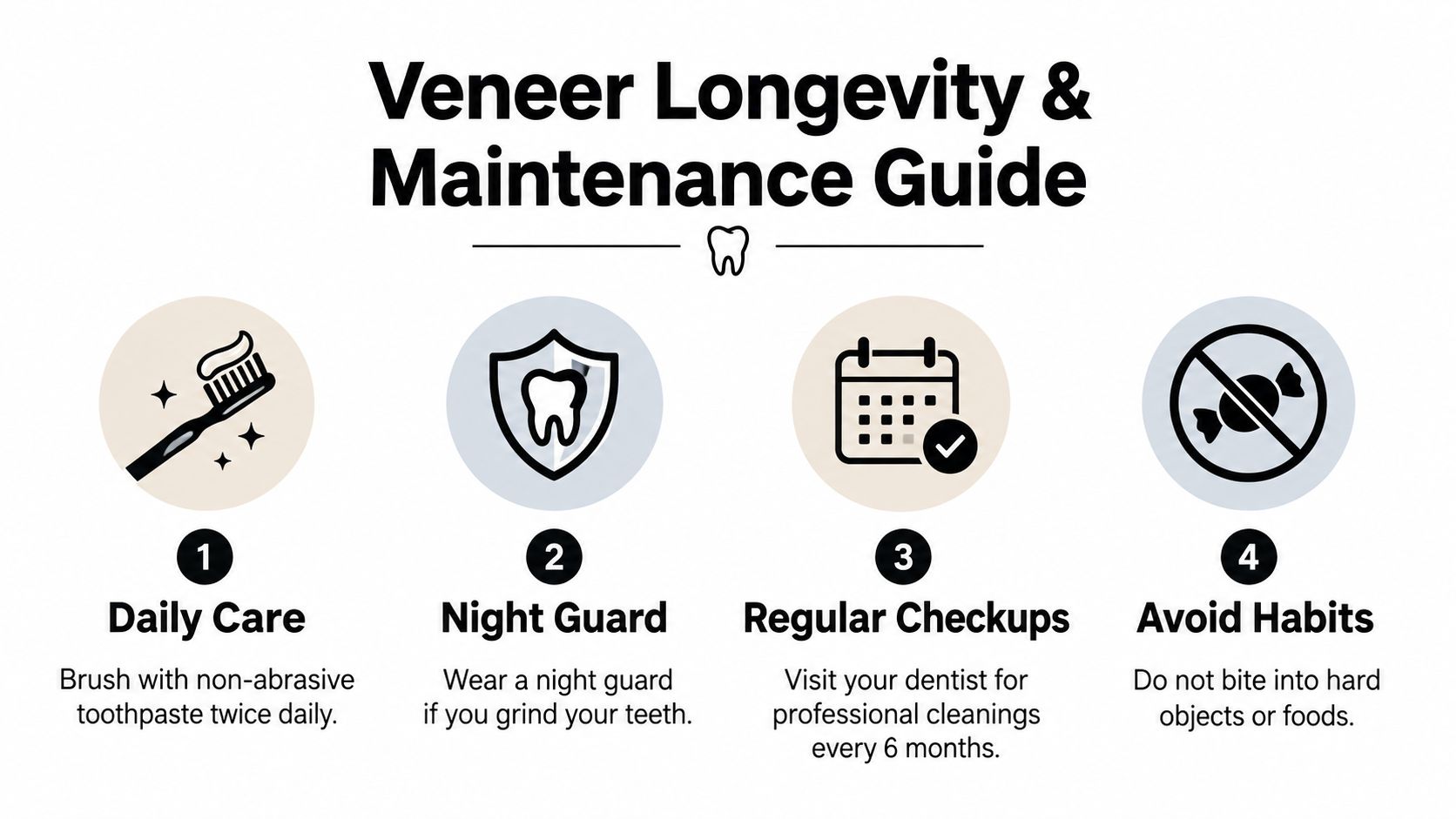
Brush twice daily with fluoride toothpaste that is not highly abrasive. A toothpaste with a low or moderate RDA, preferably below 100, is a sensible choice for bonded cosmetic work. Clean between veneered teeth each day with floss or an interdental cleaner, guiding it gently along the gumline rather than snapping it into place.
Routine professional cleanings also let the dental team polish deposits without scratching the ceramic. Schedule veneer checks with regular dental examinations, and arrange an earlier review if the gumline changes, sensitivity develops, or the bite feels different. Consistent care remains simple, but it must continue after placement.
Habits that shorten a veneer's service life
Do not use veneers to open packages, bite thread, or crack hard objects. A well-bonded ceramic restoration can still chip under an unsuitable load. Patients who clench or grind may need a professionally made night guard to reduce repeated stress.
Limit sudden temperature changes and very hard foods when possible, especially during the adjustment period. Review this practical guide to foods to avoid when you have veneers for specific dietary precautions.
Examinations allow the dentist to assess the veneer, gums, bite, and visible tooth surfaces. X-rays may be appropriate when an area cannot be evaluated by inspection alone.
Maintenance rule: A veneer does not replace preventive dental care. Keep cleaning, attending examinations, and reporting changes part of your routine.
Contact your dentist promptly if a veneer feels loose, your bite suddenly changes, or sensitivity persists.
Comparing Veneers to Alternative Cosmetic Treatments
Veneers aren't automatically the most conservative cosmetic solution. The right treatment depends on what you're trying to change and how much natural enamel is available.
A patient with surface staining may need only professional whitening. Someone with a small chip may benefit from dental bonding. Teeth that are healthy but crowded or rotated may look better after Invisalign clear aligner treatment, without reshaping enamel for cosmetic shells.
Cosmetic Dental Options Comparison
| Treatment | Enamel Removal | Best For | Longevity |
|---|---|---|---|
| Porcelain veneers | Usually requires conservative, irreversible enamel reduction | Persistent discoloration, chips, shape concerns, and selected cosmetic changes | Strong outcomes are reported, but fracture, debonding, discoloration, and decay remain possible over time |
| No-prep veneers | Designed for selected cases without planned enamel removal | Smiles with suitable shape, position, color, and available space | Depends on case selection, bonding, bite, and maintenance |
| Composite bonding | Often minimal preparation, depending on the tooth and design | Small chips, minor shape changes, and localized cosmetic improvements | Requires ongoing assessment and may need repair or replacement |
| Professional teeth whitening | No enamel removal | Surface staining or generalized discoloration | Depends on the cause of discoloration and ongoing habits |
| Invisalign clear aligners | No enamel removal for alignment itself | Mild to moderate alignment concerns in suitable patients | Alignment depends on retention and follow-up care |
The table gives a direction, not a diagnosis. Whitening won't correct an altered tooth shape, and aligners won't change intrinsic tooth color. Bonding may be a sensible way to test a shape change, but it can have different maintenance needs from ceramic.
When veneers may not be the first choice
Active decay or gum disease should be addressed before elective cosmetic work. A heavily damaged tooth may need restorative dentistry, such as a crown, rather than a veneer. If the main concern is missing teeth, a discussion about dental implants near me may be more appropriate than a veneer consultation.
The same principle applies to urgent symptoms. Severe tooth pain, swelling, trauma, or a broken restoration calls for an emergency dentist, not a cosmetic appointment. If a tooth can't be saved, tooth extraction and later dental implants may form part of a health-first plan.
Aspiring Smiles Dental and Braces offers cosmetic, restorative, preventive, and emergency services in Las Vegas, including veneers, Invisalign, Zoom teeth whitening, crowns, tooth extraction, and dental implants. The appropriate choice should follow an examination rather than a predetermined cosmetic package.
Your Veneer Consultation in Las Vegas
A veneer consultation should answer two questions before discussing final design: are your teeth and gums healthy enough for cosmetic treatment, and can the result be achieved while preserving enamel?
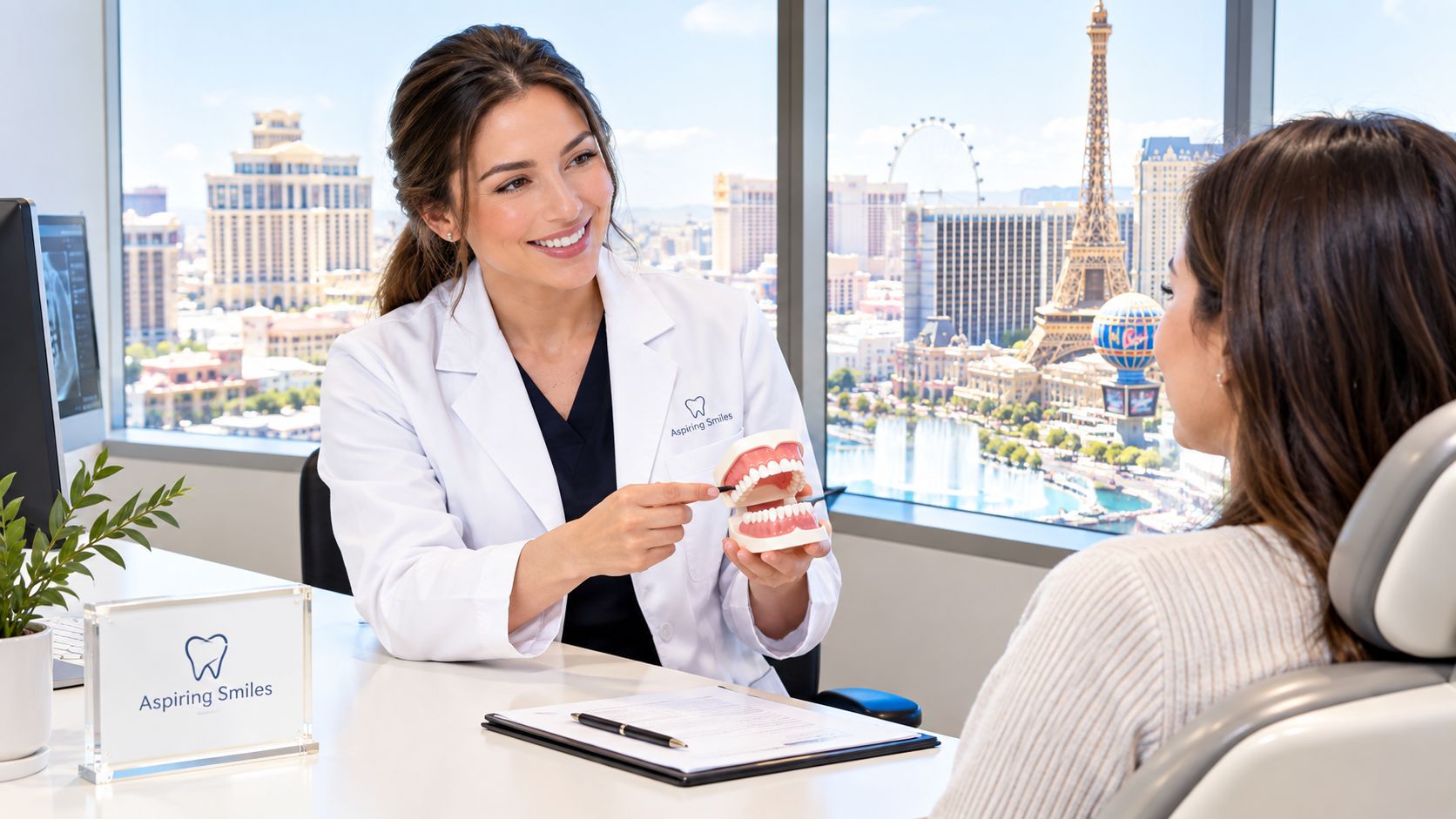
At Aspiring Smiles Dental and Braces, Dr. Patel can begin with a new patient exam that reviews your dental history, concerns, bite, gum health, and existing restorations. Digital dental x-rays and 3D imaging may help assess areas that aren't visible during a visual examination. Those findings matter if you're searching for a cosmetic dentist near me and want a plan based on your actual oral condition.
What to discuss during the visit
Bring up sensitivity, grinding, previous orthodontic treatment, old dental work, and what you dislike about your smile. Ask whether the proposed preparation will remain in enamel, whether no-prep veneers are realistic, and what alternatives could meet your goals with less alteration.
A careful plan may include a cleaning and exam before cosmetic treatment. If you're also looking for a dentist in Las Vegas, NV for your family, the same office can help coordinate preventive care, restorative dentistry, Invisalign, dental implants, or emergency dental services when needed.
The office at 3211 N Tenaya Wy Suite 122, Las Vegas, NV 89129 serves patients from Sun City Summerlin, Lone Mountain, Desert Shores, Sunhampton, Monterrey, Mar-A-Lago, and Painted Desert Estates. Flexible payment options, insurance acceptance, online appointment requests, extended weekday hours, and Saturday availability can make it easier to arrange care around work and family responsibilities.
A consultation doesn't obligate you to proceed. It gives you the information needed to decide whether veneers, whitening, bonding, aligners, or another treatment is the safest fit for your smile.
Common Questions About Veneer Safety
Can veneers cause sensitivity?
Sensitivity can occur when preparation exposes or approaches dentin, and postoperative sensitivity was among the complications reported in the large clinical follow-up cited above (clinical veneer follow-up). Persistent or worsening sensitivity deserves an examination rather than being ignored.
What happens if a veneer falls off?
Save the veneer, avoid biting with that tooth, and contact your dental office. Don't try to glue it back yourself. The dentist will check the veneer, the bonding surface, the tooth, and the bite before deciding whether rebonding or replacement is appropriate.
Can veneers be reversed?
Traditional veneers generally can't be reversed because enamel removal is permanent. They can be replaced later, but the prepared tooth may continue to require a restoration.
Do veneers protect teeth from cavities?
No. Veneers cover the front surface, but decay can still develop under or around the margin. Daily brushing, flossing, flossing between teeth, dental cleanings, and regular exams remain necessary.
Are veneers right for everyone?
No. A dentist should evaluate enamel thickness, gum health, decay, tooth condition, bite forces, and your cosmetic goals before recommending treatment.
If you're considering veneers or want to know whether whitening, bonding, Invisalign, restorative dentistry, or another option would better protect your natural teeth, schedule a consultation with Aspiring Smiles Dental and Braces in Las Vegas, NV. Dr. Patel and the team can assess your smile, explain the enamel-preserving options, and help you choose a treatment plan focused on long-term oral health.