Get Brighter with Laser Teeth Whitening in Las Vegas 2026
Your smile often shows up before your words do. If you've caught yourself covering your mouth in photos, choosing closed-lip smiles at work events, or wondering whether coffee and daily life have dulled your teeth more than you realized, you're not alone.
Many people searching for a dentist near me or a cosmetic dentist near me in Las Vegas, NV aren't only thinking about health. They're thinking about confidence. They want a smile that looks clean, bright, and natural without guessing their way through store-bought products that may leave patchy results or extra sensitivity.
For patients across Desert Shores, Sunhampton, Sun City Summerlin, Monterrey, Lone Mountain, Mar-A-Lago, and Painted Desert Estates, professional whitening can be a practical middle ground between doing nothing and committing to more involved cosmetic dentistry. It's fast, supervised, and designed around your teeth, not a one-size-fits-all box from a store shelf.
That matters because whitening isn't the right choice for every smile. Some people need cleaning and exams first. Others may need dental x-rays, new patient exams, restorative dentistry, or even treatment for gum irritation before cosmetic work makes sense. And if tooth pain is part of the picture, an emergency dentist visit or a problem-focused exam comes before anything elective.
Brighten Your Smile in Las Vegas with Laser Teeth Whitening
A lot of patients start in the same place. Their teeth aren't necessarily unhealthy, but the color no longer matches how well they take care of themselves. Stains from coffee, tea, red wine, tobacco, and simple aging can make teeth look older or less polished, even when brushing habits are solid.
Laser teeth whitening is one of the most appealing options for people who want a noticeable improvement without waiting weeks to see whether strips or generic trays will do enough. In a local practice setting, it also offers something many patients value just as much as the cosmetic result. It offers professional oversight from the first conversation to the final rinse.
Why Las Vegas patients ask about whitening
In a city where people balance work, social events, family life, and plenty of face-to-face interactions, smile confidence matters. Patients looking for a dentist in Las Vegas, NV often mention upcoming weddings, interviews, reunions, networking events, or wanting to feel better in everyday conversation.
Common reasons people seek whitening include:
- Surface discoloration: Dark drinks, richly colored foods, and smoking can leave visible staining on enamel.
- Aging changes: Teeth naturally tend to look less bright over time.
- Uneven tone: Some smiles look dull overall rather than sharply stained in one spot.
- A cosmetic refresh: Whitening is often a simpler first step before considering veneers or other cosmetic dentistry.
Practical rule: If your goal is a brighter smile and your teeth and gums are otherwise healthy, whitening is often the least invasive cosmetic starting point.
Why a professional approach works better than guessing
At-home products can help some people, but they also leave a lot of room for disappointment. Strips may miss edges. Generic trays may not fit well. Strong products used incorrectly can irritate the gums. Professional whitening changes the process because a dentist first checks whether whitening is even the right treatment.
That's especially important for patients who may also be exploring broader dental care, from routine exams to restorative options like dental implants near me, crowns, or replacement options after a tooth extraction. Whitening works best when it's part of a thoughtful plan, not a random add-on.
What Is Laser Teeth Whitening and How Does It Work
Laser teeth whitening combines a professional whitening gel with a focused dental light or laser that helps activate the gel more efficiently than it would work on its own.
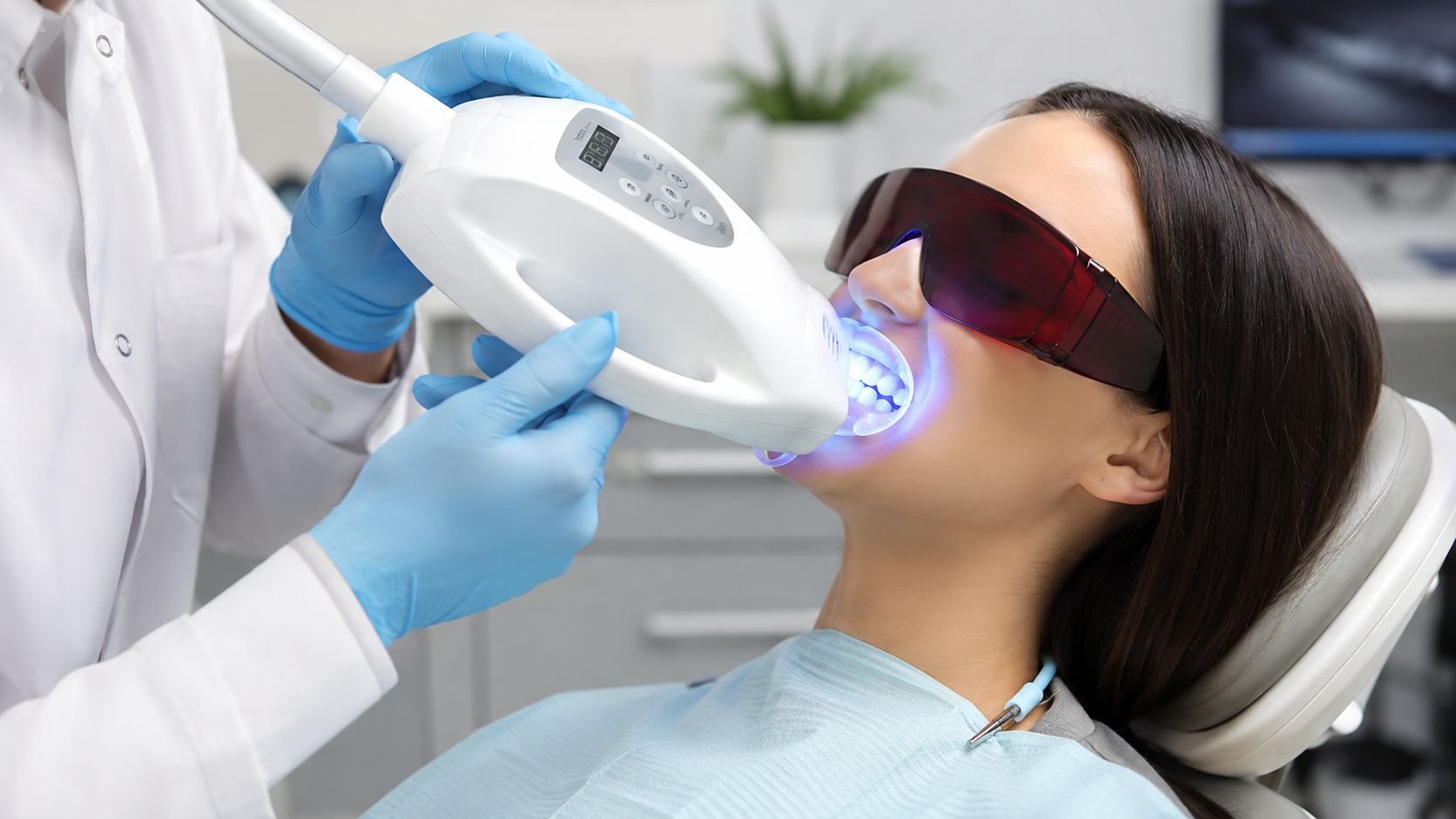
Think of the laser as a catalyst. The whitening gel does the stain-lifting work, and the laser helps speed that reaction up in a controlled setting. It's similar to how heat or sunlight can accelerate certain processes. The difference is that this happens with dental-grade materials, careful isolation of the soft tissues, and a team monitoring every step.
What the gel and laser each do
The gel is usually peroxide-based. Its job is to break apart stain compounds so teeth reflect light more cleanly and appear brighter. The laser doesn't “bleach” the tooth by itself. It energizes the gel so the whitening reaction moves faster and more evenly.
That distinction matters because many patients assume the light does all the work. It doesn't. The result comes from the combination of chemistry, timing, application technique, and professional control.
Laser whitening is usually best for natural teeth with external staining. It won't whiten crowns, veneers, or fillings. If you have visible dental work on front teeth, your dentist should discuss whether whitening will create a mismatch.
Why professional supervision matters
The safest whitening isn't the strongest one available online. It's the one matched to your actual teeth, gums, and dental history. Before whitening, a dentist checks for:
- Untreated cavities
- Gum inflammation
- Cracks or exposed root surfaces
- Existing restorations on visible teeth
- Sensitivity concerns
Some readers like seeing how light-based treatments are discussed in other aesthetic settings because the same general principle applies. You can Learn from Athena Plastic Surgery about how laser technology is used to support controlled treatment outcomes in skin care, even though dental whitening uses different tools and goals.
A short visual can also make the process feel less abstract:
Laser whitening should feel clinical, not gimmicky. If no one checks your gums, reviews existing dental work, or discusses sensitivity beforehand, that's a red flag.
What it doesn't do
Laser whitening doesn't fix decay, replace a cleaning, or solve internal discoloration caused by every underlying issue. Some deep stains respond only partially. Some smiles need bonding, veneers, or restorative care for a balanced look.
That's why whitening works best when patients see it as a targeted cosmetic treatment, not a cure-all.
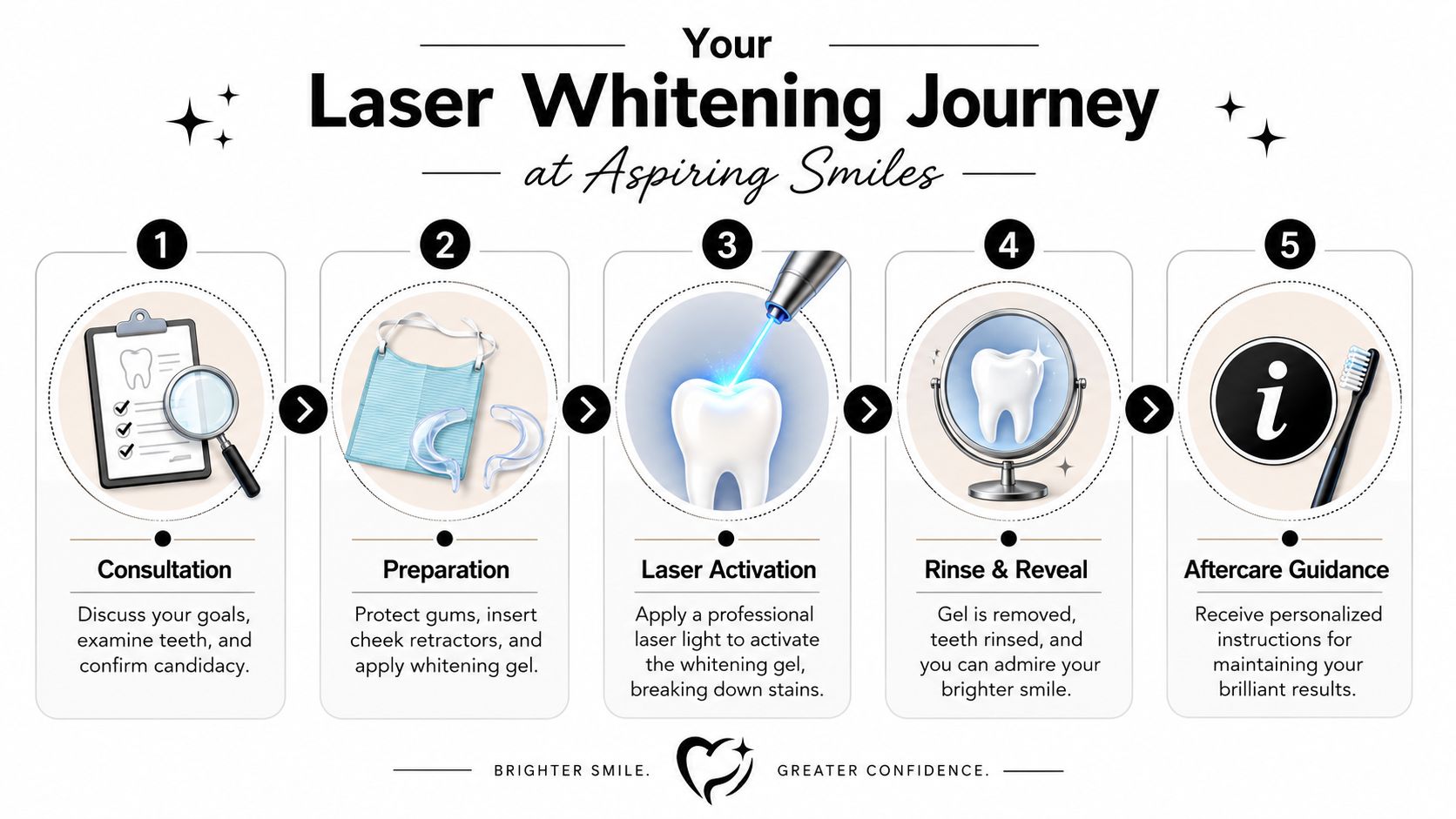
Your Laser Whitening Appointment at Aspiring Smiles
Individuals often feel better about whitening once they know exactly what the visit looks like. The appointment is straightforward, but each step matters because comfort and tissue protection are what separate a professional procedure from improvised whitening attempts at home.
The candidacy check comes first
When you come in for a whitening consultation, the first question isn't “How white do you want your teeth?” It's whether whitening is appropriate right now.
A dentist will look at the condition of your enamel and gums, ask about sensitivity, review any crowns, fillings, or veneers in the smile zone, and talk through your goals. If you're a new patient, that may happen alongside new patient exams, dental x-rays, or a broader discussion of your dental care needs. If there's active decay, gum disease, or a problem tooth, those issues should be handled first.
For patients in Sunhampton and Monterrey, this step is often the most reassuring one because it turns a cosmetic question into a personalized plan.
How the teeth and gums are prepared
Once you're cleared for treatment, the whitening visit moves into preparation, with professional care making a visible difference in both comfort and consistency.
Typical preparation includes:
- Cleaning the tooth surfaces so the gel can contact enamel more evenly.
- Placing cheek retractors to keep lips and cheeks away from the treatment area.
- Protecting the gums with a barrier material designed to shield soft tissue.
- Applying the whitening gel carefully across the visible teeth being treated.
- Providing protective eyewear before the light or laser is activated.
Patients usually don't find this part painful. It's more about setup and precision than sensation.
What the activation phase feels like
During the laser phase, the light is positioned over the teeth for controlled treatment cycles. Most patients describe the experience as uneventful. You're sitting still, mouth supported, while the team monitors the whitening process and checks on your comfort.
Some people notice a mild warming feeling. Others notice almost nothing until the end, when the gel is removed and the teeth are rinsed. If sensitivity starts during treatment, the dentist can adjust the approach rather than pushing through discomfort.
A good whitening appointment doesn't feel rushed. The team should be paying as much attention to gum protection and comfort as they are to the shade change.
The final reveal and aftercare review
After the last cycle, the gel and protective materials are removed. Your teeth are rinsed, and you get to see the result right away. That immediate reveal is one reason in-office whitening remains so popular. There's no waiting around for days to decide whether anything happened.
Before you leave, you should also get clear aftercare guidance. That includes what to avoid eating or drinking right away, how to manage short-term sensitivity if it shows up, and whether touch-up products make sense for your situation.
For some patients, whitening is the whole goal. For others, it becomes one piece of a larger cosmetic or restorative plan. If front teeth have worn fillings, if a missing tooth has changed the balance of the smile, or if you're also considering implants, aligners, or other cosmetic dentistry, the whitening visit can help clarify what should happen next and in what order.
Laser Whitening vs Other Options like Zoom Trays and Strips
Whitening isn't one treatment. It's a category with very different levels of speed, supervision, comfort, and predictability. Patients often compare laser whitening with Zoom, custom trays, and over-the-counter strips because all of them aim at the same goal but don't deliver the same experience.
Teeth Whitening Method Comparison
| Method | Treatment Time | Typical Results | Cost | Supervision |
|---|---|---|---|---|
| Laser whitening | Single in-office visit | Fast, visible brightening with professional control | Premium | Full in-office supervision |
| Zoom whitening | In-office visit or dentist-directed protocol | Strong cosmetic improvement for many patients | Moderate to premium | Professional supervision |
| Custom at-home trays | Gradual home use over time | More controlled than store-bought options, but slower | Moderate | Dentist-prescribed and monitored |
| OTC strips | Home use over multiple applications | Modest improvement, often less even | Lower upfront cost | Self-directed |
Where laser whitening stands out
The main advantage of laser whitening is speed with oversight. Patients who want one appointment, one team, and one controlled process usually prefer it. It's often the best fit for someone with an upcoming event or someone who doesn't want the trial-and-error period that comes with home systems.
Laser whitening also helps with uniformity. Because the gel is applied by a professional and the soft tissues are protected, it's easier to get a more even result across the visible teeth.
Where trays and strips still make sense
Custom trays have a place. They're useful for patients who prefer a slower pace, want a maintenance option after in-office whitening, or have a schedule that makes an in-office cosmetic visit harder to plan. They also allow more gradual brightening, which some patients prefer.
If you're specifically comparing in-office systems, it helps to review Zoom teeth whitening options in Las Vegas and see how that approach differs from laser activation in terms of workflow and candidacy.
OTC strips are the most accessible option, but they're also the least customized. They can work for mild surface staining, yet they often fall short when patients want a more polished result. Common frustrations include uneven coverage, missed contours near the gumline, and sensitivity when products are used too aggressively.
What usually doesn't work well
Patients tend to be disappointed when they expect store products to perform like in-office treatment. That's the mismatch. Strips and generic kits are designed for convenience. Professional whitening is designed for control.
A simple way to think about it:
- Choose laser whitening if you want efficiency, closer supervision, and a stronger cosmetic reset.
- Choose custom trays if you want flexibility and dentist-guided maintenance at home.
- Choose strips cautiously if your staining is mild and your expectations are modest.
For patients already coming in for cleaning and exams, cosmetic dentistry, or restorative work, the best whitening option often depends less on marketing and more on the condition of the teeth in front of you.
Benefits Risks and Who Is a Good Candidate
Laser whitening has real advantages, but it's not automatically the right choice for every smile. The best cosmetic outcomes happen when benefits and limits are discussed openly before treatment starts.
The main benefits
For the right patient, laser whitening offers three practical benefits. It's fast, it's supervised, and it can create a brighter, more uniform look without changing the shape of the teeth.
Patients often like that it fits into a single office visit and doesn't rely on them to perfectly place strips or remember nightly tray use. There's also value in having a dentist adjust the plan if a tooth looks more reactive or if sensitivity becomes a concern during treatment.
The real trade-offs
The most common downside is temporary sensitivity. That may feel like brief zingers to cold air, cool water, or pressure. It usually settles, but patients with a history of sensitivity should bring that up early so the team can plan around it.
Gum irritation can also happen if whitening material contacts soft tissue, which is why isolation matters so much. Professional whitening reduces that risk, but it doesn't erase the possibility entirely.
Whitening should improve your smile, not force it into a shade that looks artificial. The right result is brighter and cleaner looking, not flat white.
Who's usually a good candidate
Laser whitening generally works best for people who have:
- Healthy teeth and gums
- Natural teeth without untreated decay
- Staining from coffee, tea, wine, smoking, or age
- Realistic expectations about cosmetic improvement
- A desire for a noninvasive smile upgrade
Who may need a different plan
Some patients need a different path or at least a more careful conversation first. That includes people who are pregnant, patients with significant dental work on the front teeth, and those with deep internal discoloration that may not respond evenly.
Whitening also won't change the color of crowns, veneers, bonding, or fillings. If those restorations are visible when you smile, your dentist should explain how whitening may affect overall color harmony before you commit. In some cases, restorative dentistry or veneers produce a more consistent cosmetic result than bleaching alone.
Patients who arrive because they have pain, swelling, a cracked tooth, or signs of infection need treatment first. In that setting, the right search isn't teeth whitening. It's emergency dentist, evaluation, and relief.
Maintaining Your Bright Smile After Treatment
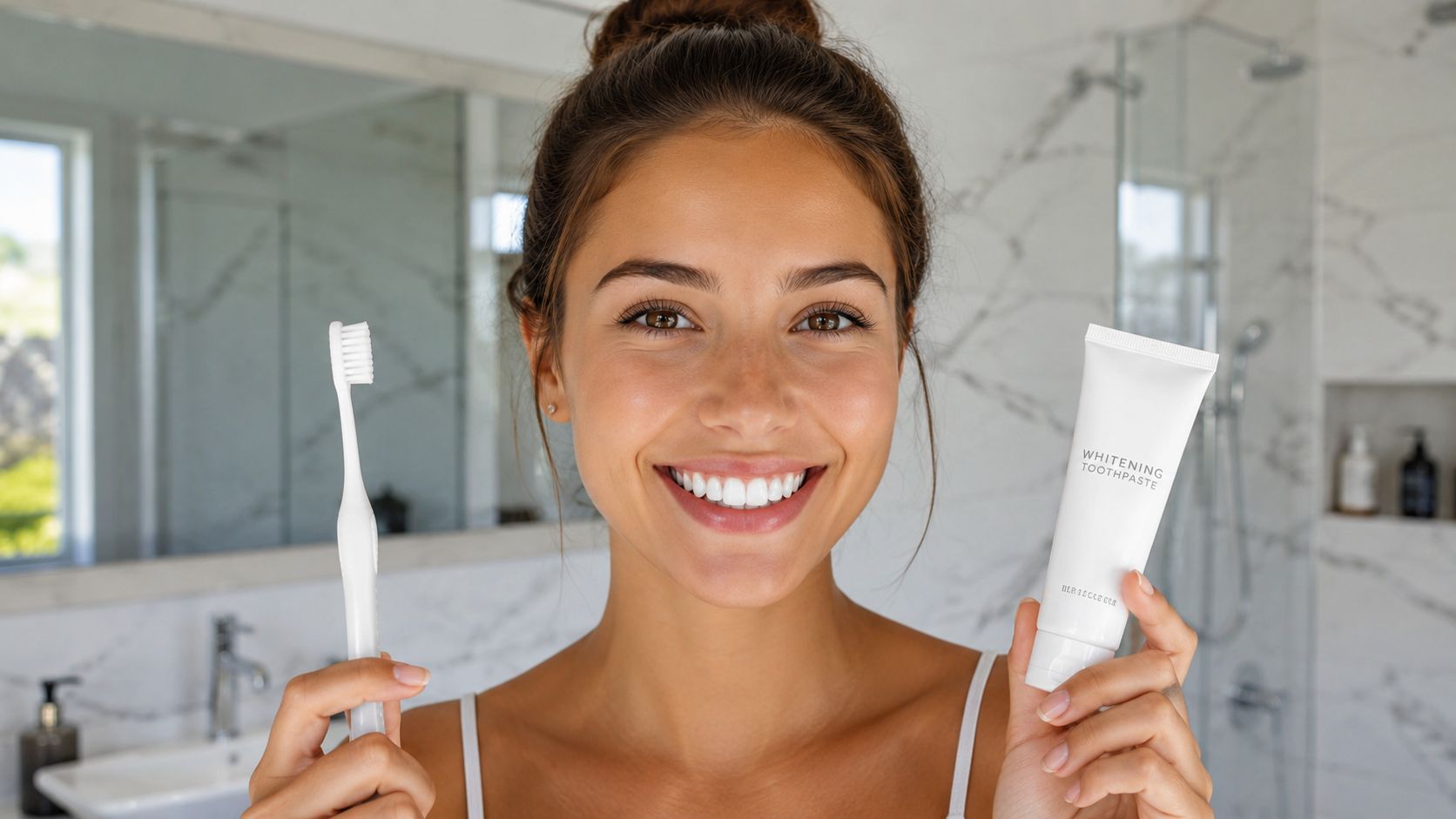
The treatment itself is only half the job. What you do next has a direct effect on how long your smile stays bright and how satisfied you feel with the investment.
The first days matter most
Right after whitening, teeth are more vulnerable to picking up fresh stain. That's why dentists usually recommend being careful with strongly colored foods and drinks for a short period after treatment.
Good choices during that period include lighter-colored foods and plenty of water. Dark coffee, tea, red wine, cola, berry-heavy foods, and tobacco are the common culprits to avoid at first.
Habits that protect the result
Long-term maintenance is less about one magic toothpaste and more about steady basics:
- Brush consistently: Use a soft-bristled brush and a non-abrasive toothpaste unless your dentist suggests something more specific.
- Floss daily: Plaque between teeth can make a smile look dull even when the front surfaces are bright.
- Rinse after staining drinks: Water helps reduce how long pigments sit on enamel.
- Keep up with cleanings: Professional dental care removes buildup that home brushing can miss.
- Ask about touch-ups: Some patients benefit from dentist-approved maintenance products.
If you want a more detailed home plan, review these teeth whitening aftercare tips to help protect the result.
Set realistic expectations
Whitening isn't permanent. Teeth are continuously exposed to daily influences, including coffee, meals, aging, and habits that slowly affect color again. That doesn't mean the treatment failed. It means maintenance matters.
Some patients keep their result looking good for a long time with routine oral hygiene and periodic cleanings. Others need touch-ups sooner because their diet, enamel characteristics, or habits make staining return faster.
The best maintenance plan is the one you'll actually follow. Daily brushing, flossing, and regular hygiene visits do more for whitening longevity than chasing trendy products.
This is also where thorough dental care supports cosmetic results. If you're already coming in for exams, restorative work, or follow-up after implants or other treatment, those visits create good checkpoints for evaluating whether your smile still looks the way you want.
Laser Teeth Whitening FAQs and Your Consultation
Patients usually narrow their decision to a few final questions.
Does laser teeth whitening hurt
The treatment is generally well tolerated. The most common issue isn't pain during the appointment. It's short-term sensitivity afterward or occasional sensitivity during the process that the dental team can respond to in real time.
How much does laser teeth whitening cost in Las Vegas
The price varies by office, the whitening system used, whether your visit includes an exam, and whether any prep treatment is needed first. If you're trying to understand the factors that shape pricing, this overview from Omega Lasers on teeth whitening costs gives a broad consumer explanation of what can affect fees. The most useful number for you, though, is the quote based on your own teeth and goals.
Is it safe for enamel
When it's performed under proper dental supervision, laser whitening is generally considered safe for appropriate candidates. Safety depends on case selection, gum protection, the materials used, and whether issues like decay or exposed roots are caught before treatment.
Will it work on crowns or fillings
No. Whitening changes natural tooth color, not the color of restorations. If you have visible dental work, your dentist should discuss whether the final shade will still look balanced.
When should you book a consultation
Book one when you want clarity instead of guesswork. That's especially true if you've been searching for a dentist near me, a cosmetic dentist near me, or a dentist in Las Vegas, NV and you want a real answer about whether whitening fits your smile. For patients in neighborhoods like Mar-A-Lago, Desert Shores, or Lone Mountain, a consultation is the quickest way to find out whether you're a strong candidate or whether another treatment would serve you better.
If you're ready to explore a brighter smile with guidance you can trust, schedule a consultation with Aspiring Smiles Dental and Braces. Dr. Patel and the team provide patient-centered cosmetic, preventive, restorative, and emergency dental care for Las Vegas families, with clear recommendations, comfortable treatment, and convenient access for patients across nearby neighborhoods.