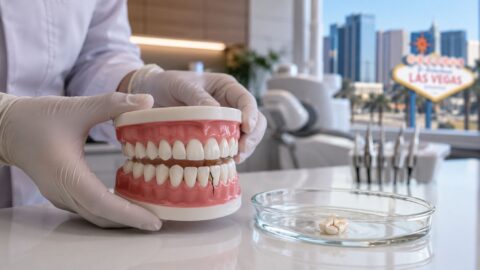
Broken Tooth Repair in Las Vegas: Your Complete Guide
You bite down on something ordinary at dinner, maybe a tortilla chip, a seed, or a piece of ice, and suddenly there's a sharp edge where your tooth used to feel smooth. That moment is stressful, but it doesn't automatically mean the tooth is lost. In Las Vegas, the right broken tooth repair plan often starts with calm first aid, then quick stabilization from a dentist near me who knows how to preserve the tooth instead of rushing to remove it.
At Aspiring Smiles Dental and Braces on Tenaya Way, patients from Desert Shores, Sunhampton, Sun City Summerlin, Monterrey, Lone Mountain, Mar-A-Lago, and Painted Desert Estates often come in worried that a crack means extraction. In a lot of cases, that's not what happens. A modern emergency dentist looks at the crack, checks whether the pulp is involved, and decides whether a crown, bonding, root canal therapy, or, in some cases, tooth extraction is the most realistic way to save comfort and function.
The key is to act before the fracture spreads. Cracked teeth are now recognized as common in adults, and posterior teeth take the brunt of biting force, with mandibular molars fracturing most often in the literature on tooth fractures cracked tooth symptoms. When you know what to do next, panic turns into a plan.
When a Tooth Breaks in Las Vegas
Broken tooth incidents often follow a similar pattern. A patient is eating dinner, feels a sudden sting, and then notices a rough edge with the tongue. Sometimes the tooth was already weakened by an old filling, and sometimes the crack only shows itself when food starts catching or a bite sends pain through the tooth.
What the break usually means
Broken tooth repair is less about how small the chip looks and more about how far the crack runs. A small chip on the edge of a tooth may be mostly cosmetic, while a deeper fracture can reach dentin or the pulp and start making the tooth sensitive, sore, or unstable. In the clinical literature, cracked teeth have been reported at prevalence rates of up to 70% depending on tooth type and location, and posterior teeth are affected most often, with mandibular molars fracturing more than maxillary molars PMC review.
That difference matters because broken teeth do not all behave the same way. Some cracks stay quiet for a long time. Others keep extending until chewing hurts, the tooth splits further, or the bite starts feeling off. The sooner the tooth is examined, the better the chance that a conservative restoration will hold it together instead of turning into a bigger repair.
If you're sitting in your car after dinner or standing in a hotel bathroom with a chipped tooth, the first move is to protect the tooth and call a practice that handles emergency dentistry, restorative dentistry, and follow-up care under one roof.
Practical rule: pain after a crack is a warning sign, but even a painless chip deserves a same-day look if the edge is sharp, the tooth feels loose, or food keeps getting stuck.
For a patient trying to decide whether it is a true emergency, a good starting point is to review symptoms against cracked tooth symptoms, then get the tooth seen in person. In Las Vegas, that is where a dentist in Las Vegas, NV can separate a minor chip from a fracture that needs urgent stabilization. If you need a short-term fix before your visit, this guide to temporary broken tooth repair explains what can safely hold things together for the moment.
What to Do in the First Hour After a Tooth Breaks
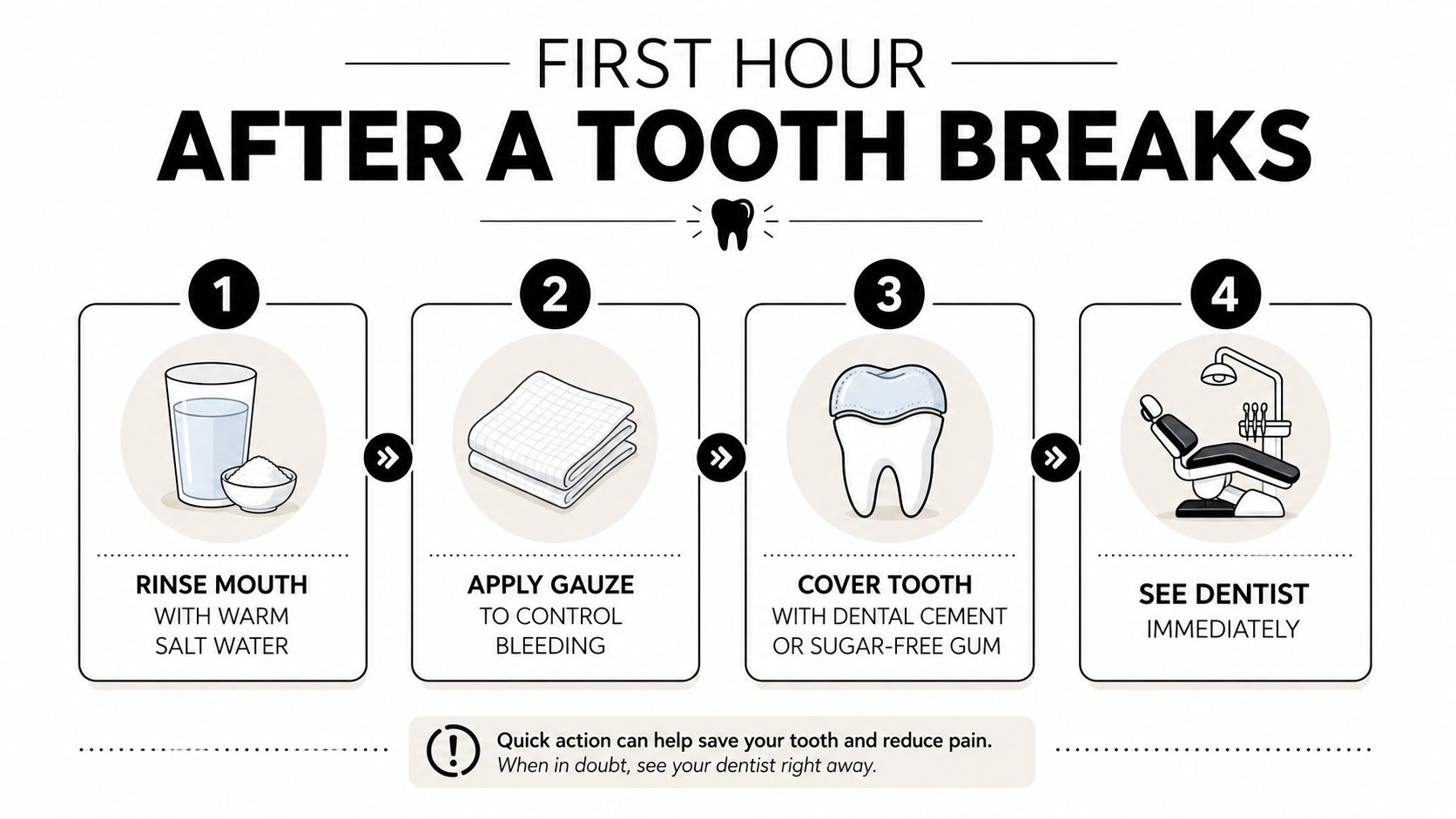
The first hour matters because it's the window where you can reduce bleeding, limit swelling, and keep the tooth from getting worse before you're in the chair. If you're in your home, office, or a Las Vegas hotel room, keep the steps simple and deliberate.
Start with basic protection
Rinse gently with warm salt water or warm water to clear debris without irritating the tissue. If there's bleeding, hold clean gauze against the area with firm pressure. For swelling, place a cold compress on the cheek in short intervals. Authoritative patient guidance also recommends avoiding chewing on the broken side and seeking urgent dental or emergency care right away when there's profuse bleeding, swelling, or severe pain WebMD.
If you can find the broken fragment, save it in milk or saline and bring it with you. That won't guarantee the piece can be reused, but it gives the dentist more to work with when the fracture is small enough for repair.
Know when to stop waiting
A tooth that feels loose, has a deep crack, or makes it painful to bite shouldn't sit untouched. Same-day evaluation is the safer move, even if the pain settles down for a while. Broken teeth can look stable on the surface and still split further later.
For a temporary stopgap while you're arranging care, this local guide on temporary broken tooth fixes can help you understand what's reasonable and what isn't. If you're trying to find coverage fast, a practical directory like find an emergency dentist can also remind you what to look for in urgent dental care, especially after hours.
Repair Options for a Broken Tooth Explained
A broken tooth does not have one standard fix. The right repair depends on how much healthy tooth is left, whether the nerve is involved, and whether the tooth can still take chewing pressure without splitting farther. A small chip and a deep crack need very different plans.
Matching the repair to the damage
Small chips and minor cosmetic flaws can often be handled with dental bonding. The material smooths the edge, restores the shape, and can get the tooth looking normal again without removing much enamel. For a closer look at that conservative option, see cosmetic dental bonding.
Moderate structural loss usually calls for an inlay or onlay. Those restorations rebuild the damaged portion while leaving more natural tooth in place than a full crown. If a cusp is at risk of splitting, a crown adds cuspal coverage, and that often decides whether the tooth stays stable or keeps reopening under bite pressure.
If the pulp is inflamed or exposed, root canal therapy comes before the tooth is covered. If the tooth cannot be saved predictably, extraction is the honest choice, not a failure. Replacement options such as dental implants, implant-supported dentures, or All-on-4 can then restore chewing and appearance. Aspiring Smiles Dental and Braces provides these restorative and cosmetic services in one practice, so patients do not have to bounce between offices when the plan changes.
The strongest evidence-supported pathway for a visible cracked tooth that is still restorable is diagnosis, stabilization, and then a coverage restoration, often after endodontic treatment if the pulp is involved PubMed review.
| Option | Best For | Number of Appointments | Expected Lifespan |
|---|---|---|---|
| Dental bonding | Small chips, edge defects, minor cosmetic wear | Usually 1 | Depends on bite forces and location |
| Inlay or onlay | Moderate loss of structure | Usually 1 to 2 | Depends on remaining tooth support |
| Full crown | Teeth that need cuspal coverage | Usually 2 | Often used to improve durability |
| Root canal therapy plus crown | Cracks involving the pulp | Several, depending on complexity | Supported by follow-up care |
| Extraction | Teeth that cannot be predictably saved | 1 or more, depending on replacement | Replaced by another option |
| Dental implant or All-on-4 | Teeth already lost, or when replacement is needed | Multiple visits | Long-term replacement solution |
A crown does more than replace a broken surface. It helps keep the crack from flexing every time you chew.
For patients who want to understand how a conservative repair is done, the practice's page on cosmetic dental bonding explains the basics well. Bonding can be the right answer for a chip, but it does not replace protection when the tooth is structurally compromised.
Why Acting Quickly Changes the Outcome
Timing changes the prognosis more than many realize. In the cracked tooth literature, success drops as the crack stage advances, with a proposed Iowa Staging Index showing 1-year success rates of 93%, 84%, 69%, and 41% for Stages I–IV IEJ study. That's the practical reason dentists push for fast evaluation. The earlier the tooth is stabilized, the better the odds that it stays functional.
Why the tooth gets worse when it's left alone
A crack doesn't sit still. Chewing flexes the tooth, the fracture line can deepen, bacteria can move toward the pulp, and the supporting tissues can start to struggle. Monitoring without restorative treatment has been associated with lower survival over time, and restorative coverage is consistently linked with better durability PubMed review.
A large registry study also found that only 3% of cracks progressed to fracture over three years, with overall survival at 98%, and among teeth treated restoratively, the failure rate was 14% PMC registry study. Those numbers support a conservative but active approach, not a wait-and-see approach that ignores the crack. When the tooth is protected, many cracked teeth can stay in service for years.
Bottom line: most broken teeth are saved by acting early, protecting the tooth, and covering it well enough that chewing doesn't keep reopening the crack.
That's why clinicians focus on stabilization, endodontic therapy when needed, and full-coverage crowns rather than hoping the crack behaves. The best outcome is usually the one that stops movement early and gives the tooth a durable shell.
What to Expect at Aspiring Smiles Dental and Braces
The visit starts with check-in, not a lecture. A broken tooth can be painful and embarrassing, so the front desk team's job is to get you seated quickly and keep the day calm. From there, the appointment moves into diagnosis and a real conversation about what can be saved.
A patient coming in from Lone Mountain, Monterrey, or Painted Desert Estates will usually get a thorough exam with digital x-rays and a close look at the fracture line. Dr. Patel then explains whether the tooth needs bonding, a crown, root canal therapy, extraction, or replacement planning. The point is to make the next step clear without pushing a one-size-fits-all fix.
The office also keeps scheduling practical. Extended weekday hours, Saturday availability, and flexible treatment planning help patients decide what can happen now and what can wait. For people who are nervous about cost or timing, that kind of structure matters more than polished promises.
Patients often ask whether a broken tooth can be fixed the same day. Sometimes yes, especially for smoothing, temporary protection, or straightforward restorative care. Sometimes the safer move is to stabilize first, then return for a crown or other final restoration after the tooth settles.
Cost of Broken Tooth Repair and Insurance Realities
Cost depends on what the tooth needs, not just on the fact that it broke. A small bond, a full crown, root canal therapy, and an implant are very different treatments, so the price changes with the amount of damage, the material chosen, and whether the tooth is salvageable. The honest comparison is less about one fixed fee and more about how far the crack has progressed.
What usually changes the bill
Restorative care is typically easier to plan when the fracture is shallow. Once the pulp is involved, treatment gets more complex because the tooth has to be disinfected and then protected. If the tooth can't be saved, the replacement pathway can also add visits and planning.
Insurance usually helps more with medically necessary restorative care than with purely cosmetic upgrades. That means a crown or root canal may be covered in part, while elective aesthetic changes may be out of pocket. Flexible payment options, insurance acceptance, and a membership program can help Las Vegas families handle that gap without delaying treatment until the tooth becomes an extraction case.
Delaying care often turns a straightforward repair into a more expensive replacement plan.
That's why a quick exam is usually the smartest financial move. It gives you a realistic treatment range before the crack worsens, and it can keep a repair from drifting into implant territory.
Aftercare, Prevention, and Scheduling Your Visit
After a repair, keep the tooth away from hard foods for a while and brush gently around the area. If you clench or grind, a night guard can protect the repair from repeated stress. Call the office if the bite feels high, the pain gets worse instead of settling down, or the tooth starts feeling loose again.
Prevention is usually easier than the original repair. Regular cleanings and exams help catch small chips before they turn into larger fractures, and a protective guard can reduce damage from grinding or clenching. Avoiding ice, hard candy, and using teeth as tools sounds basic, but it matters because cracks often start with repeated stress rather than one dramatic break.
Good scheduling also matters after a tooth breaks. If the front desk can get you in quickly, the tooth is more likely to be treated before the crack spreads, and that can change whether you need a simple repair, staged treatment, or a longer-term replacement plan. That kind of access depends on systems that keep calls moving and visits booked without delay, which is part of why practices pay attention to tools like how ai receptionists help UK dentists, even though the primary goal is the same anywhere, getting the patient seen sooner.
If you've broken a tooth in Las Vegas, don't wait for the crack to settle itself. Schedule with Aspiring Smiles Dental and Braces at the Tenaya Way office, and get a clear plan for repair, protection, or replacement before the damage grows.