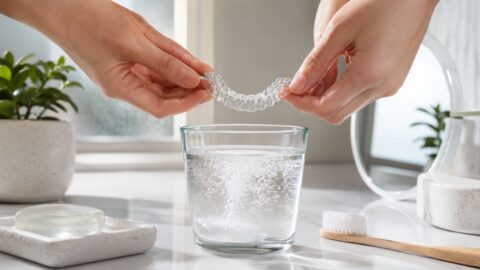
How to Clean Invisalign Aligners: Daily and Deep Care
You've got the trays in, the day got busy, and now they look a little cloudy. Maybe they smell off by the end of the week, or you're rinsing them and wondering why they still don't feel clean. That's usually the moment patients realize how to clean Invisalign aligners is not just a cosmetic question, it's part of keeping treatment comfortable, discreet, and on schedule in Las Vegas, NV.
At Aspiring Smiles Dental and Braces, we see this all the time with patients from Desert Shores, Sunhampton, Sun City Summerlin, Monterrey, Lone Mountain, Mar-A-Lago, and Painted Desert Estates. Clear aligners sit close to the teeth for most of the day, so they need a routine that removes debris and helps limit biofilm buildup, not just a quick splash of water. The good news is that the right routine is simple once it becomes habit.
Why Clean Aligners Matter for Your Smile and Health
A patient will often say the same thing. The trays look fine in the morning, then by dinner they've picked up a cloudy film or an unpleasant odor. That change matters because aligners are not just plastic shells, they sit against teeth and gums for long hours, so anything left on the surface can become a place where biofilm collects. A systematic review on clear-orthodontic appliance cleaning protocols found that different disinfection methods can control biofilm adhesion, and that brushing plus soaking is the most effective approach. Careful brushing is needed on every surface and edge, especially the posterior palatal region and incisal edge, where biofilm forms most readily.
What neglect usually turns into
If aligners are not cleaned consistently, the problem is usually more than appearance. Patients can notice bad breath, lingering tastes, visible discoloration, and more plaque on the trays themselves. Invisalign's own patient guide tells users to clean aligners before each insertion, brush with a soft-bristle toothbrush and a small amount of toothpaste, then rinse thoroughly afterward, and its cleaning-crystals protocol uses a measured soak rather than a casual rinse (Learn how Invisalign treatment works at Aspiring Smiles).
Practical rule: If the tray looks clean but still smells off, it usually needs a real clean, not just water.
For Las Vegas patients, that consistency matters even more because aligners are worn nearly all day and removed for meals, drinks, and brushing. A structured routine helps keep treatment predictable, comfortable, and easier to live with while you are balancing work, school, and family life around the valley. Hard water and travel can also leave trays feeling off faster, so rinsing alone usually is not enough for long.
Your Daily Invisalign Cleaning Routine
Start with the reset after every removal
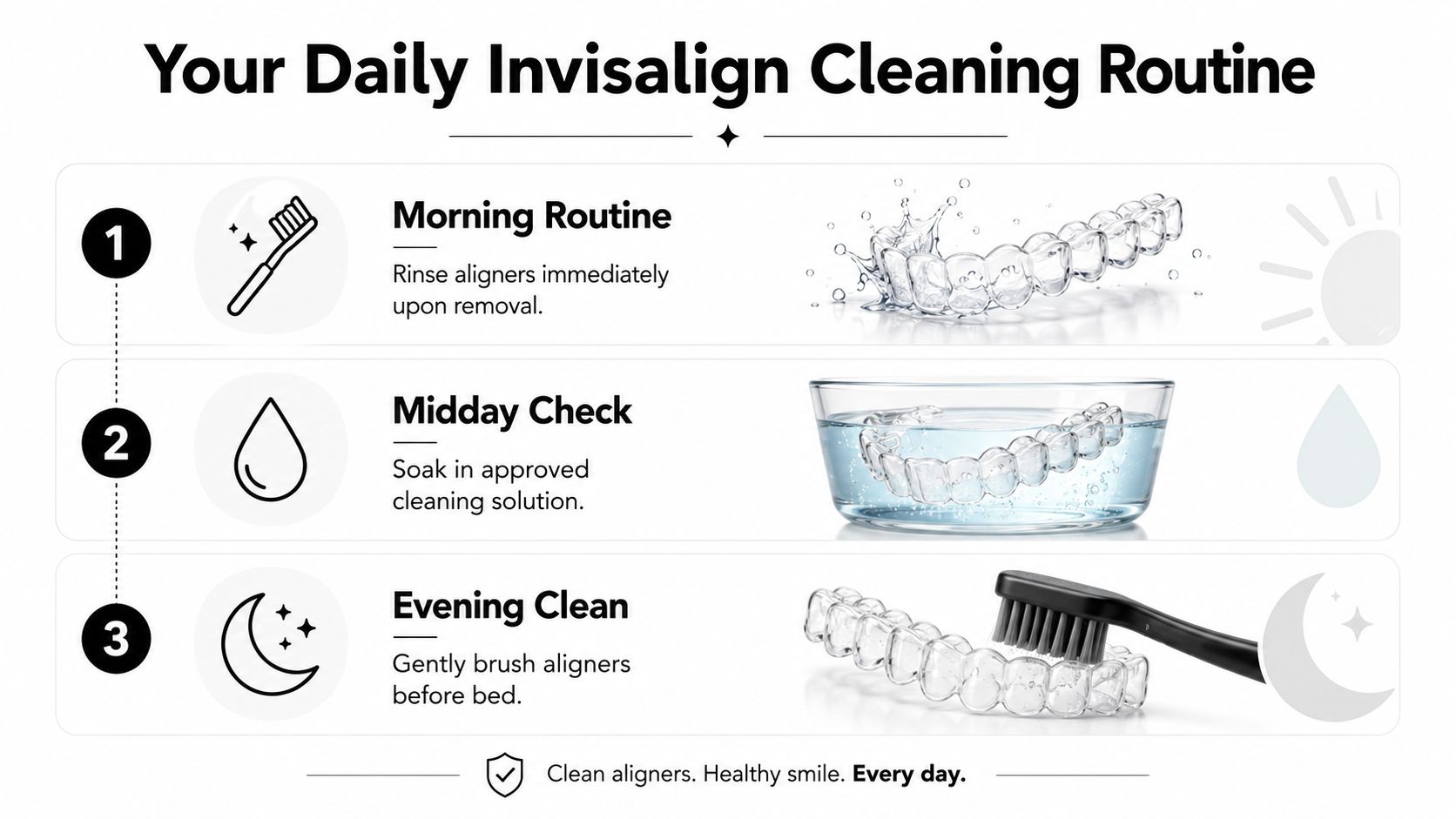
The best habit is simple. Rinse the aligners as soon as they come out, then clean your teeth before putting them back in. Invisalign's patient instructions say aligners should be removed for eating and drinking, and cleaned prior to each insertion, with brushing and flossing after each meal or snack before reinserting them (Invisalign patient instructions).
Use a separate soft-bristle toothbrush just for the trays. A small amount of clear, unscented antibacterial soap works well in orthodontic guidance, and a gentle brushing motion is better than scrubbing hard. The point is to lift off saliva film and food residue without scratching the plastic.
Make the routine workable on a real schedule
Most patients don't have a perfect bathroom routine every time they eat out, travel, or get stuck in traffic on the 95 or the 215. If you can't do a full clean right away, a quick rinse under cool, lukewarm, or room-temperature water is still better than putting dirty trays back in. Multiple sources warn against hot water because it can warp the plastic (temperature guidance for Invisalign cleaning).
Keep a small travel kit with the basics. I usually tell patients to pack:
- A separate aligner toothbrush, so the trays aren't cleaned with the same brush used on teeth.
- A case, because aligners wrapped in a napkin are easy to throw away by mistake.
- A travel-size soap or approved cleaner, so a quick clean is possible on the go.
- A spare water bottle, which helps when you're away from home and need a rinse.
Clean them before reinsertion, not just at bedtime. That's the difference between maintenance and catch-up.
A 2019 study cited in clinical summaries found twice-daily cleaning with soap and water was the most effective at removing plaque buildup, and other guidance says aligners should be cleaned at least once per day (Invisalign patient instructions). For many patients, morning and night are the easiest anchor points.
Deep Cleaning Methods for Stain and Odor Removal
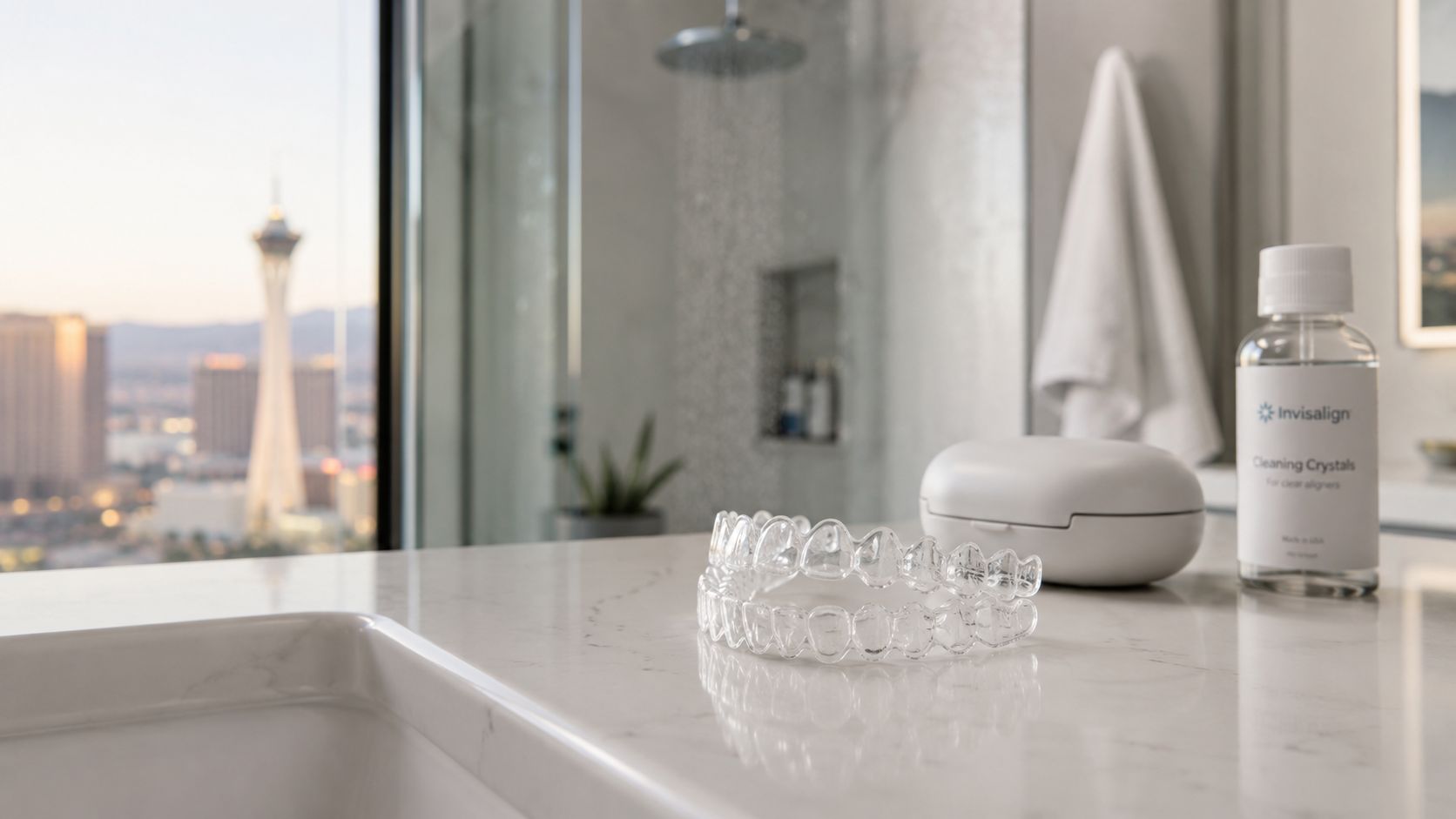
Daily brushing handles the regular buildup. Deep cleaning is for the times trays need a stronger reset, usually when there's odor, stubborn cloudiness, or visible film that doesn't come off with a quick brush. Orthodontic guidance converges on soaking aligners for roughly 15 to 30 minutes in a cleaning solution such as Invisalign Cleaning Crystals, a gentle denture cleaner, or a diluted vinegar or hydrogen peroxide mix, then rinsing thoroughly afterward (deep-cleaning guidance).
Invisalign Cleaning Crystals and other soak options
The manufacturer-style protocol is specific. Add one packet of Invisalign Cleaning Crystals to water, gently shake or agitate for 20 seconds to dissolve the crystals, then immerse the aligner for 20 minutes before a brief final agitation and rinse (Cleaning Crystals protocol). Another clinical source describes one packet in warm water, a 15-minute soak, and a thorough rinse as a standard cleaning pattern (Freeman Orthodontics protocol).
A practical comparison helps patients choose a method that fits their routine.
| Deep Cleaning Methods Compared | Soak Time | Best For | Considerations |
|---|---|---|---|
| Invisalign Cleaning Crystals | About 15 to 20 minutes | Regular deep cleaning and odor control | Follow the packet directions closely |
| Gentle denture cleaner | About 15 to 20 minutes | Occasional stain or odor buildup | Use a formula that is gentle on plastics |
| Diluted vinegar or hydrogen peroxide mix | Roughly 15 to 30 minutes | Light buildup when approved by your orthodontist | Rinse very well before reinserting |
| Ultrasonic appliance cleaning | Varies by device | Patients who want a hands-off cleaning aid | Read device guidance carefully, and use it as a supplement, not a replacement, for brushing and soaking. A useful overview is available in this guide to ultrasonic cleaning for dental appliances. |
Where some patients go wrong
Deep cleaning is a supplement, not a substitute for daily care. Soaking alone won't remove all plaque from the nooks and edges where biofilm starts. That's why the mechanical step still matters, and why patients who only soak often still notice odor or buildup later on.
One practical option some patients use is an approved aligner cleaner from their orthodontic team. Aspiring Smiles Dental and Braces can walk you through whether your current routine is enough, and which cleaner fits your treatment plan. Keep that guidance aligned with your own instructions, because the cleaner that works well for one patient isn't always the right fit for another.
Common Cleaning Mistakes That Damage Aligners
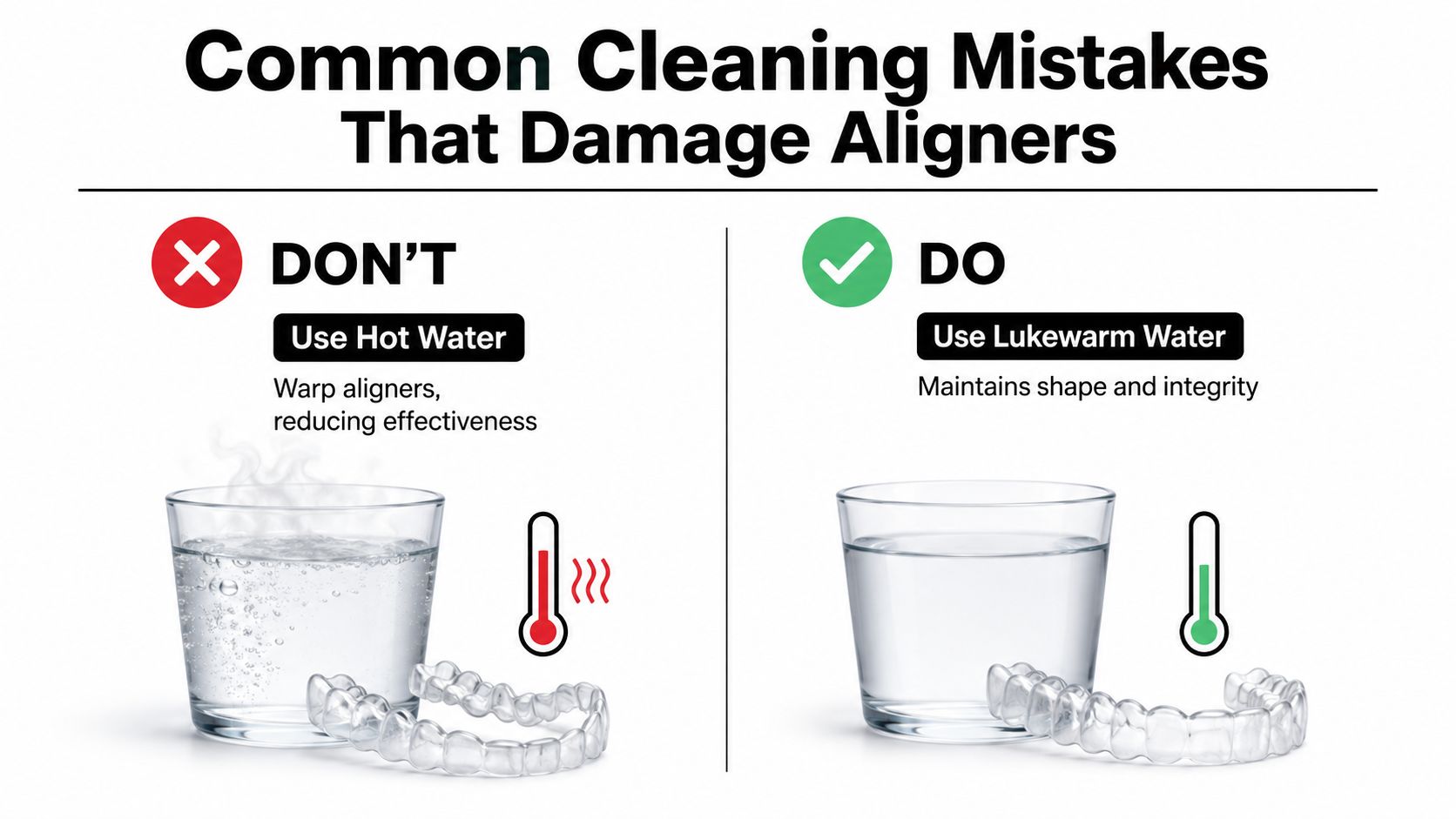
The biggest mistakes usually come from trying to clean aligners the same way people clean glasses, dishes, or dentures. That doesn't work well with medical-grade plastic. Invisalign and other orthodontic guidance specifically warn against hot water, because heat can warp the aligner and alter the fit, and they also warn against denture cleaners and mouthwash because those products can damage the aligner surface and make trays more visible (Invisalign cleaning guidance).
Why toothpaste is a problem
Toothpaste seems harmless because it's made for teeth, but trays are different. Many toothpastes contain abrasives that can scratch the plastic, and those tiny scratches create more places for biofilm to cling. Orthodontic sources also note that whitening formulas are especially risky because they're often more abrasive than plain soap-based cleansers (orthodontic cleaning guidance).
What to avoid every time
- Hot water: It can warp the tray and weaken the fit.
- Abrasive toothpaste: It can scratch the surface and make trays cloudier.
- Mouthwash: It may stain or degrade the aligner material.
- Denture cleaners not approved for aligners: They can leave the trays looking worse, not better.
The tray can look intact and still be subtly altered enough to feel wrong when you put it back in.
For patients who like to keep everything in one place, it helps to build a simple oral hygiene setup at home. A dedicated aligner brush, a case, and a mild cleaner are often enough. If you're building a full oral care shelf, an oral hygiene shop can be a practical place to compare basics, but the safest choice is always the product your orthodontic team has already cleared for your trays.
Aligner Care Tips for Las Vegas Lifestyles
Las Vegas adds a few real-world quirks to aligner care. The dry climate can make your mouth feel less hydrated, and that can leave trays feeling less fresh if you're not drinking enough water throughout the day. Hard water can also leave mineral residue on anything you soak or rinse, so many patients prefer distilled water for cleaning or soaking when they're away from home.
Travel, work, and daily habit changes
Travel is another common issue here. Whether you're heading across town from Sunhampton or Monterrey, or going out of state for a few days, pack your aligner case, brush, and cleaning supplies in your carry-on or daily bag. If you're stuck without a full cleaning setup, a quick rinse is still better than letting food particles dry onto the tray.
Regular dental cleanings and exams also matter during Invisalign treatment. Plaque and tartar on the teeth can interfere with oral health and make it harder to keep aligners fresh, so keeping up with preventive care supports the whole process. That's one reason patients in Lone Mountain or Painted Desert Estates often do better when their aligner care is paired with routine checkups, dental x-rays when needed, and ongoing hygiene support.
A few habits make life easier in this climate:
- Drink water regularly, because a dry mouth can make buildup more noticeable.
- Use a case every time, especially at restaurants or events.
- Rinse after meals when you can't brush right away, then clean fully later.
- Keep a second kit in the car or work bag, so you're not relying on memory alone.
The larger point is simple. Invisalign works best when your daily routine matches the wear schedule. Clean trays, healthy teeth, and regular exams all pull in the same direction.
Schedule Your Invisalign Consultation in Las Vegas
If your aligners still smell off, look cloudy, or don't feel quite right after cleaning, that's worth checking. Dr. Patel and the team at Aspiring Smiles Dental and Braces can review your routine, look at how your trays are fitting, and help you make the small adjustments that keep treatment on track. The practice offers Invisalign along with preventive, cosmetic, and restorative care, so you can get aligner support in the same office where your broader dental care is handled.
If you want a clearer plan, review Invisalign cost in Las Vegas and then reach out for a visit at 3211 N Tenaya Wy Suite 122, Las Vegas, NV 89129. Extended weekday and Saturday hours make it easier to fit care into a real schedule, and new patients are welcome.
If you're ready for straight answers about aligner care, Aspiring Smiles Dental and Braces can help you with Invisalign guidance, cleanings, exams, and practical support that fits life in Las Vegas. Visit Aspiring Smiles Dental and Braces to request a consultation and get a routine that keeps your trays clear and your smile moving forward.