How to Prevent Cavities Naturally: A 2026 Family Guide
You're probably noticing the same thing a lot of Las Vegas families notice, a little cold sensitivity here, a surprise filling there, and a nagging feeling that you should be doing more at home. If you've been searching for a dentist near me or a dentist in Las Vegas, NV because you want to keep decay from turning into bigger treatment, the good news is that prevention is usually simpler than people think. The answer isn't a pile of folk tricks, it's a steady routine built around frequency control, saliva-friendly habits, and the right dental support when home care needs backup.
For a practical starting point, it helps to separate what protects teeth from what just sounds natural. If you want a broader wellness-style read while you compare approaches, Browse learn blogs at VitzAi can be a useful place to explore related topics. The core idea here is straightforward, natural cavity prevention works best when it combines daily brushing, smart snack timing, xylitol used the right way, and professional fluoride or sealant care when appropriate.
What Natural Cavity Prevention Actually Means
A child who pulls away from cold water in Desert Shores, or an adult in Sun City Summerlin who keeps getting surprise fillings, is usually seeing the same problem from different angles. Natural cavity prevention is not a shortcut or a set of folk tricks. It means using habits that support the mouth's own defenses, especially saliva, steady brushing, and better timing around food and drinks.
Natural Means Working With the Mouth, Not Against It
The habits that matter most are the ones that lower acid exposure and give enamel time to recover. The CDC explains that fluoride varnish helps reduce cavities in primary teeth, fluoridated tap water is linked with fewer cavities, and sealants on back teeth can prevent decay on those surfaces (CDC cavity prevention guidance). That is not a rejection of natural care. It is a practical reminder that enamel often needs support, and mineral-based prevention fits that need well.
Natural prevention also means respecting the mouth's repair cycle. Repeated sugar exposure gives bacteria more chances to make acid, which is why limiting between-meal snacks and brushing with fluoride toothpaste twice daily matter so much, as described in the NIDCR's tooth decay process guidance (NIDCR tooth decay process). Xylitol belongs in that same conversation, but only as a regular habit, not as a one-time fix you try once and forget.
Practical rule: if a habit does not lower acid attacks or help enamel recover, it is probably taking up space without doing much.
A workable plan for someone in Monterrey, Lone Mountain, or Painted Desert Estates should feel usable the next morning, not theoretical. That means a daily routine you can keep, a structured xylitol habit, smarter snack timing, and a clear sense of when a Las Vegas dental visit is the better next move. If you want a broader wellness-style read while you compare approaches, Browse learn blogs at VitzAi can be a useful place to explore related topics.
How Cavities Actually Form on Your Teeth
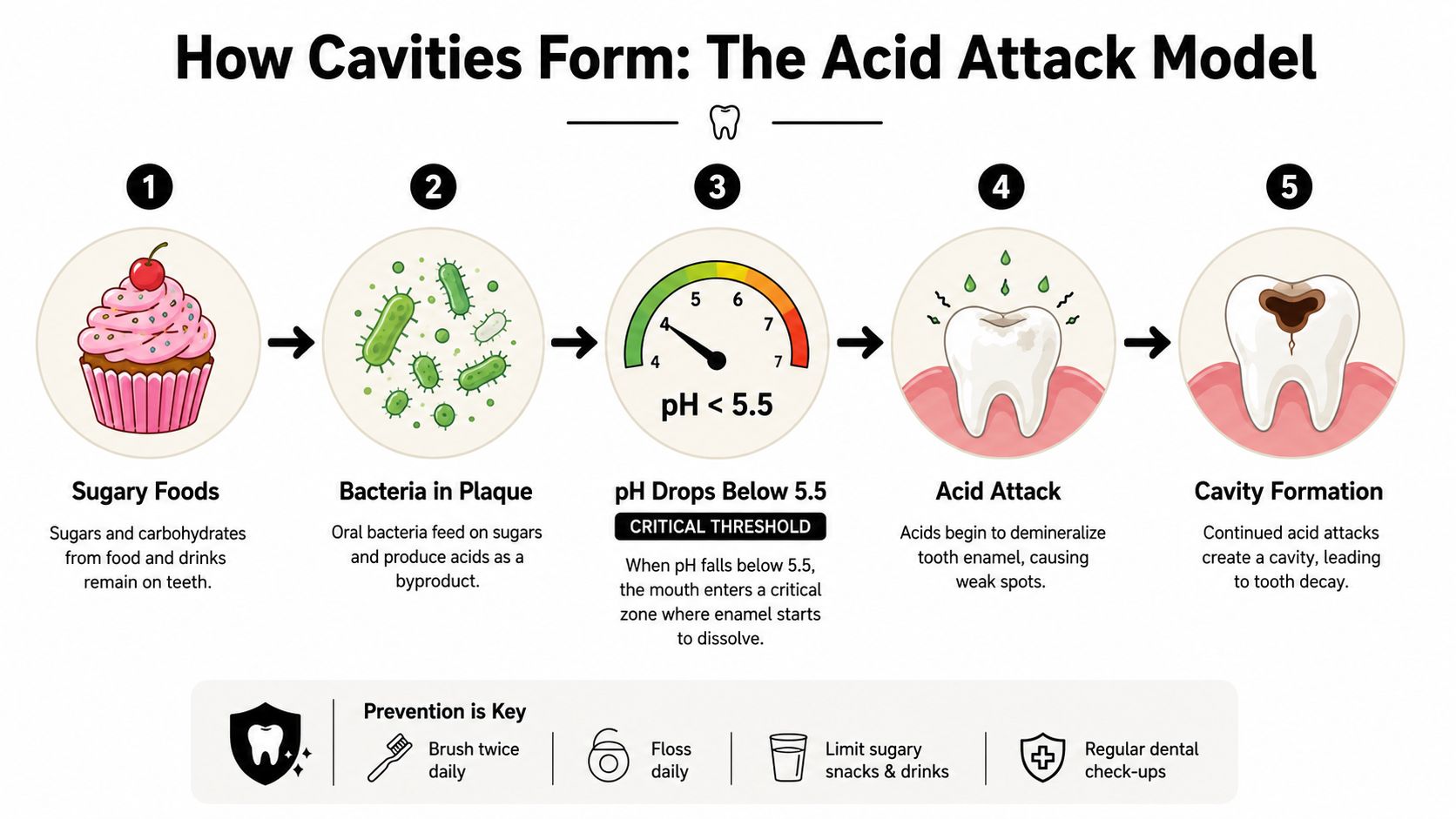
A cavity does not start as a hole. It starts as a pattern of repeated acid exposure that slowly weakens enamel until the surface can no longer keep up with repair. That matters because a lot of “healthy” habits fail when they do not lower how often the mouth gets hit with acid.
The process is straightforward. Bacteria in the mouth use fermentable carbohydrates, make acid, and pull minerals out of enamel. Enamel can recover between attacks, but only if those acid periods are spaced out enough for saliva and daily care to do their work. The NIDCR tooth decay process page gives a plain explanation of that cycle, and it is a useful reference point for how decay begins (NIDCR tooth decay process).
The Acid Attack Cycle
The main idea is the acid attack model. Sugar or starch reaches the teeth, oral bacteria break it down, and acid forms on the enamel surface. If that keeps happening throughout the day, the enamel gets fewer chances to recover.
Frequency matters more than the size of the treat. One soda with lunch is a single exposure, but sipping sweet drinks, grazing on snacks, and nibbling for hours keeps the mouth acidic for longer. Children can be affected more easily because they often snack more often, and their routines are still being shaped by adults. Juice boxes, sticky snacks, and bedtime treats can make that pattern worse quickly.
Saliva is the mouth's built-in recovery system, but it needs time between acid hits to do its work.
As noted earlier, repeated sugar exposure means repeated acid attacks, and saliva flow drops during sleep, so sugary food or drinks after bedtime brushing are especially risky. That is also why brushing harder does not solve the problem. If someone keeps grazing all day, brushing alone cannot fully offset the pattern.
A better mental model is simple, reduce the number of acid attacks, then support enamel while it recovers. Once that clicks, the rest of prevention starts to make practical sense.
If a tooth is already sensitive or showing early signs of decay, a regular dental exam can catch the problem before it spreads. In Las Vegas, that is often where home care and a professional cleaning work best together, especially if you want a clearer look at what is changing between visits. Professional teeth cleaning in Las Vegas can also give you a baseline for spotting early wear and buildup before it turns into something harder to manage.
Building a Daily Oral Hygiene Routine That Works
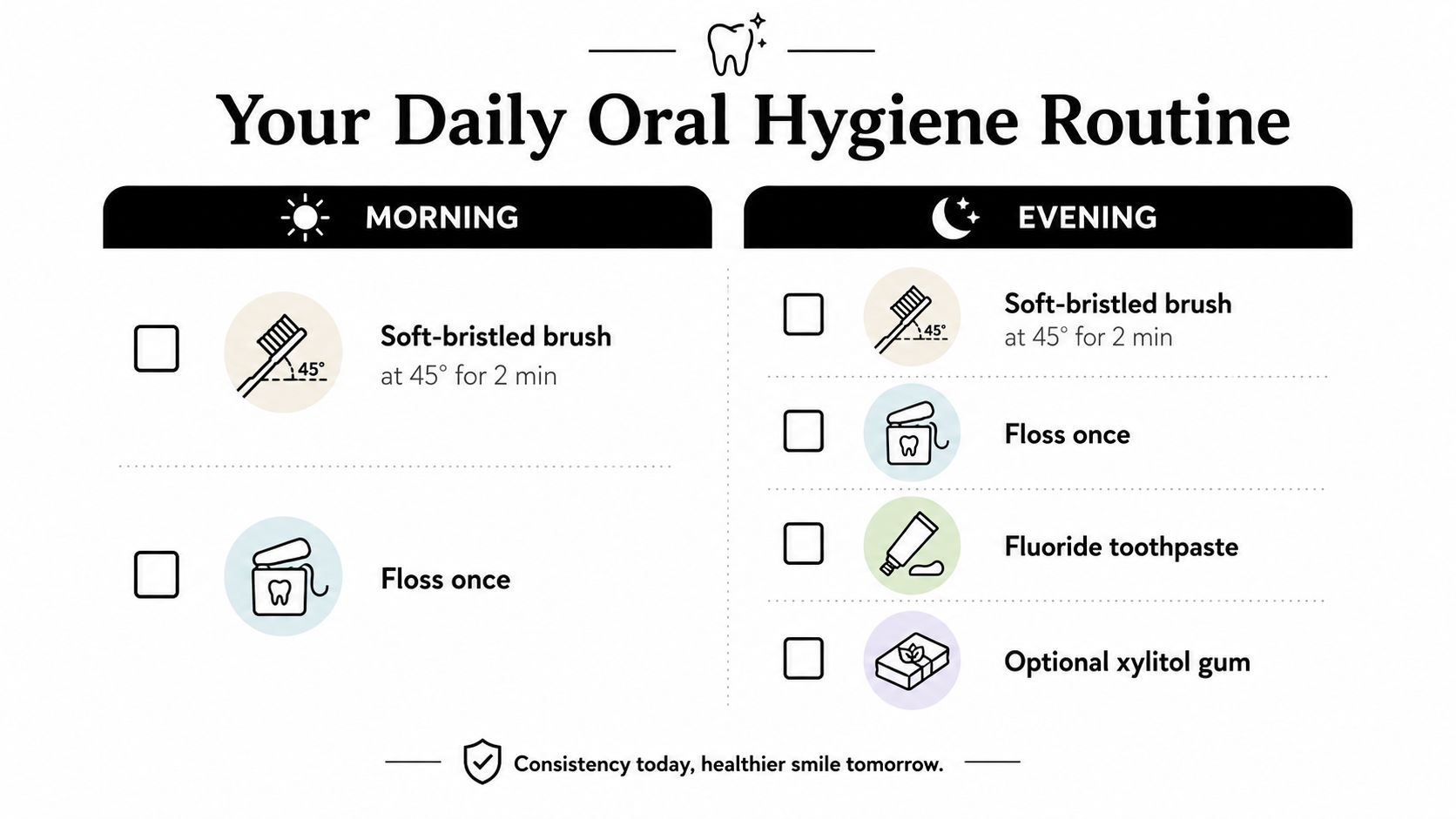
A routine that holds up in real life has to work on a sleepy Las Vegas morning and still be realistic on a rushed night. Cleveland Clinic recommends a soft-bristled brush with fluoride toothpaste at least twice a day, flossing daily, and dental checkups at least twice a year (Cleveland Clinic cavities guidance). Those are the anchors. Technique is what makes them pay off.
Morning and Evening Basics
Start with a soft brush at the gumline angle, not straight across the teeth. Use gentle pressure and spend about two minutes covering every surface, inside, outside, and chewing edges. If you're brushing after acidic coffee or an energy drink, rinse first and give your enamel a little time before brushing, since brushing immediately after acid exposure can be rough on softened enamel.
Floss once a day, even if your gums bleed a little at first. Bleeding usually means the spaces between teeth need more consistent cleaning, not less. If floss feels awkward, a water flosser can help some patients build the habit, but the basic job is still to clean between teeth where the brush can't reach.
Here's a family-friendly version for Lone Mountain and Painted Desert Estates households:
- For infants: wipe the gums twice a day.
- For children: start brushing when teeth appear, and supervise brushing with a pea-sized amount of toothpaste for ages 3 to 6 (CDC children's oral health tips).
- For adults: set a two-minute timer and keep the same rhythm morning and night.
The CDC also recommends a child's first dental visit by their first birthday, plus fluoride varnish as soon as the first tooth appears. That early timing gives families a chance to catch habits, not just cavities.
For patients who want extra guidance on keeping routine clean and consistent, a professional dental cleaning can reset the baseline and make home care easier. A good next step is a preventive visit, which you can read more about through professional teeth cleaning.
The routine only takes a few minutes, but it works best when it happens the same way every day.
Best habit: make the timer a fixed part of the routine. When the timer starts, the routine starts.
Adding Xylitol the Right Way for Lasting Results
Xylitol gets a lot of casual praise, but it's only useful when it's treated like a real habit. The point isn't to chew gum whenever you feel like it, it's to create a repeatable pattern that interrupts cavity-causing bacteria after meals and snacks. That's why the most practical use is structured, not random.
A Simple Xylitol Protocol
Choose products that explicitly list xylitol on the label. If xylitol is buried in a long ingredient list or paired with regular sugar, the product isn't doing you many favors. Gum or mints work best after meals, and a small extra dose after between-meal treats makes more sense than waiting until the end of the day.
The useful part is consistency. The guidance at Fl Special Care Dentistry's cavity prevention overview emphasizes choosing xylitol-labeled products, using them after meals, and maintaining regular intake as a package rather than an isolated habit. That's the right mindset. Xylitol helps when it replaces fermentable sugar exposure, not when it gets added on top of everything else.
Some products advertise “sugar-free” but use sweeteners that don't give you the same cavity-prevention advantage. That's why the label matters more than the marketing. Pure xylitol gum or mints are easier to trust than vague blends.
Families in Mar-A-Lago and Sunhampton should also keep one safety issue in mind, xylitol is highly toxic to dogs. If you have pets at home, store it securely and don't leave gum in purses, backpacks, or low drawers where a dog can get into it.
Use xylitol after the same meals every day. The routine matters more than the brand.
A practical rhythm is breakfast, lunch, dinner, plus a small dose after an occasional snack. That pattern fits busy schedules and keeps the habit tied to the moments when bacteria are most active. Used that way, xylitol becomes a smart support tool, not a replacement for brushing, flossing, or fluoride.
Smart Eating Habits That Protect Enamel
The biggest dietary mistake is not always sugar itself, it is how often sugar touches the teeth. A dessert after dinner is different from sipping something sweet all afternoon. Keeping sweet exposures tied to meals gives enamel more time to recover between acid attacks, as noted earlier.
Timing Beats Perfection
Las Vegas families can keep this practical. You do not need to pretend birthdays, holidays, or coffee runs do not exist. You do need to stop turning your mouth into a snack zone all day long.
The hardest habit to clean up is the bedtime one. Sugary drinks or milk after brushing at night are especially risky because saliva flow drops during sleep, leaving teeth with less natural help to repair acid exposure, as noted earlier. That is why “just rinse and go to bed” is a weak backup plan.
A few swaps usually make the day easier:
- Water first: make it the default between-meal drink.
- Cheese after dinner: a simple dessert swap that is gentler on enamel.
- Raw vegetables: good for crunch without feeding the acid cycle the way sticky snacks do.
- Sugar-free xylitol gum: helpful when cravings hit between meals.
Coffee habits matter too. Repeated sipping can stretch one exposure into many. Sports drinks after the gym and juice pouches in the car can do the same thing for kids, even when the labels look harmless.
The cleanest rule is this, keep sweet or acidic items inside meal windows whenever you can. That gives saliva time to catch up and keeps the mouth from staying acidic all day. In a dental visit, this is the kind of food pattern I look at first, because brushing can only do so much if the snacking rhythm keeps feeding decay risk.
Popular Natural Cavity Myths Worth Skipping
A lot of home remedies sound gentle, and some even feel productive. That does not mean they help prevent cavities. Oil pulling is one example. It may leave the mouth feeling cleaner, and some people like it as part of a routine, but it still does not replace fluoride, flossing, or the daily habits that lower decay risk.
What Helps, and What Doesn't
Lemon juice whitening is a poor trade. It can make teeth look brighter for a moment, but acid on enamel is still wear. Baking soda mixtures can cause a similar problem when they are used too often, because people may feel like they are scrubbing away buildup while putting the enamel under extra stress.
Charcoal toothpaste has the same drawback. Popular does not mean gentle, and abrasion is not the same thing as cleaning. If you are already considering cosmetic dentistry, veneers, or whitening, it makes little sense to wear down enamel with aggressive DIY methods first.
Fluoride deserves a straight answer too. It is a naturally occurring mineral, and CDC cavity prevention guidance ties fluoride varnish, fluoridated water, and sealants to lower cavity risk. Skipping fluoride means giving up one of the most studied tools in dentistry and hoping a weaker substitute can do the same job.
Natural works well when it means xylitol, water, and better timing. It does not work well when it means avoiding proven prevention.
The healthiest approach is practical. Use supportive habits if you like them, but keep them in the right place. If a remedy cannot slow acid attacks, support remineralization, or lower plaque in a meaningful way, it belongs in the maybe-helpful category, not the cavity-prevention plan.
A good dental visit in Las Vegas makes that distinction easier. At family dentistry, a dentist can tell you whether a home habit is harmless, useless, or actively working against your enamel. That kind of check keeps prevention grounded in what truly protects teeth, not in what only sounds natural.
When Home Care Is Not Enough and How Las Vegas Patients Can Get Help
A child who still hasn't seen a dentist by their first birthday, a teen with bleeding gums, or an adult who feels cold sensitivity every time they sip water all need more than guesswork. Home care matters, but it cannot diagnose a white spot lesion, seal an early groove, or tell you whether a sore tooth needs urgent attention. Professional care adds the missing piece.
Signs It's Time to Come In
Watch for cold or heat sensitivity, visible white spots, bleeding gums, or a toothache that keeps coming back. If a child is still early in the dental timeline, start with the basics: wipe gums in infancy, brush when teeth appear, bring the child in by their first birthday, and use fluoride varnish as soon as the first tooth erupts. That routine gives a dentist a chance to spot problems before they become harder to treat.
A local visit also connects prevention to the services that support it. At family dentistry, patients can get preventive exams, cleanings, fluoride treatments, sealants, and help for urgent problems before they become bigger ones. Depending on the situation, that may also mean discussing Invisalign, cosmetic dentistry, restorative dentistry, dental implants, or tooth extraction if a tooth cannot be saved.
Aspiring Smiles Dental and Braces serves families at 3211 N Tenaya Wy Suite 122, Las Vegas, NV 89129, with a patient-first approach from Dr. Patel and a setting built for real families, not just perfect mouths. The office also makes it easier to stay on track with new patient exams, emergency support, and a simple online appointment request.
If you're in Las Vegas, NV, or nearby neighborhoods like Desert Shores, Sunhampton, Sun City Summerlin, Monterrey, Lone Mountain, Mar-A-Lago, or Painted Desert Estates, and you want cavity prevention that fits daily life, schedule a visit before a small problem becomes a painful one.