Zoom Teeth Whitening Sensitivity: What to Expect
You're standing outside a cosmetic dental office in Las Vegas, phone in hand, searching “will Zoom whitening hurt?” before you decide whether to walk through the door. That hesitation is common, especially when you're planning whitening before a wedding, photoshoot, work trip, or important event.
Zoom teeth whitening sensitivity is usually temporary and manageable. Most patients who notice it describe brief cold zings or a dull response when they drink something chilled, not continuous or severe pain. This guide explains what you may feel during a Zoom session, how symptoms can change over the first week, who's more likely to experience discomfort, and when to contact a dentist in Las Vegas, NV.
Understanding Zoom Teeth Whitening Sensitivity in Las Vegas
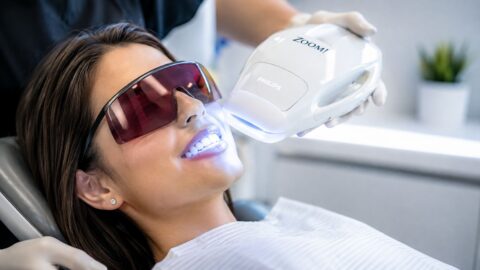
A patient from Desert Shores might arrive expecting a dramatic smile improvement but worrying about the moment the whitening gel touches the teeth. During an in-office appointment, the dental team protects the gums, applies the whitening material carefully, and monitors how you respond. You may feel nothing at first, followed by short flashes of sensitivity when the gel is active.
The most familiar sensation is cold sensitivity. Cold air, chilled water, or an iced drink may create a quick “zing” that fades when the trigger stops. That's different from sharp pain that continues without a trigger, pain concentrated in one tooth, or discomfort that grows stronger after the appointment.
Clinical evidence supports a reassuring but realistic view. In a randomized clinical trial of Philips Zoom WhiteSpeed, 98.5% of Zoom patients reported no sensitivity immediately after treatment, and 82.1% still reported no sensitivity on Day 7. Among the patients who did feel discomfort, nearly all cases were mild, and only one subject rated the discomfort as moderate. The trial also found no significant safety-profile difference between Zoom WhiteSpeed and the comparison chairside system. Read the clinical trial summary and study PDF.
Practical rule: Mild, brief sensitivity can be part of whitening. Persistent, severe, or one-tooth pain deserves an examination.
A new patient searching for a cosmetic dentist near me in Sun City Summerlin or Lone Mountain should also know that the label on the whitening system isn't the whole risk assessment. Gum recession, enamel wear, existing cavities, cracked teeth, and a personal history of dentin sensitivity can influence the experience. A careful consultation helps match the treatment plan to your mouth rather than to your event date alone.
Why Zoom Whitening Can Trigger Tooth Sensitivity
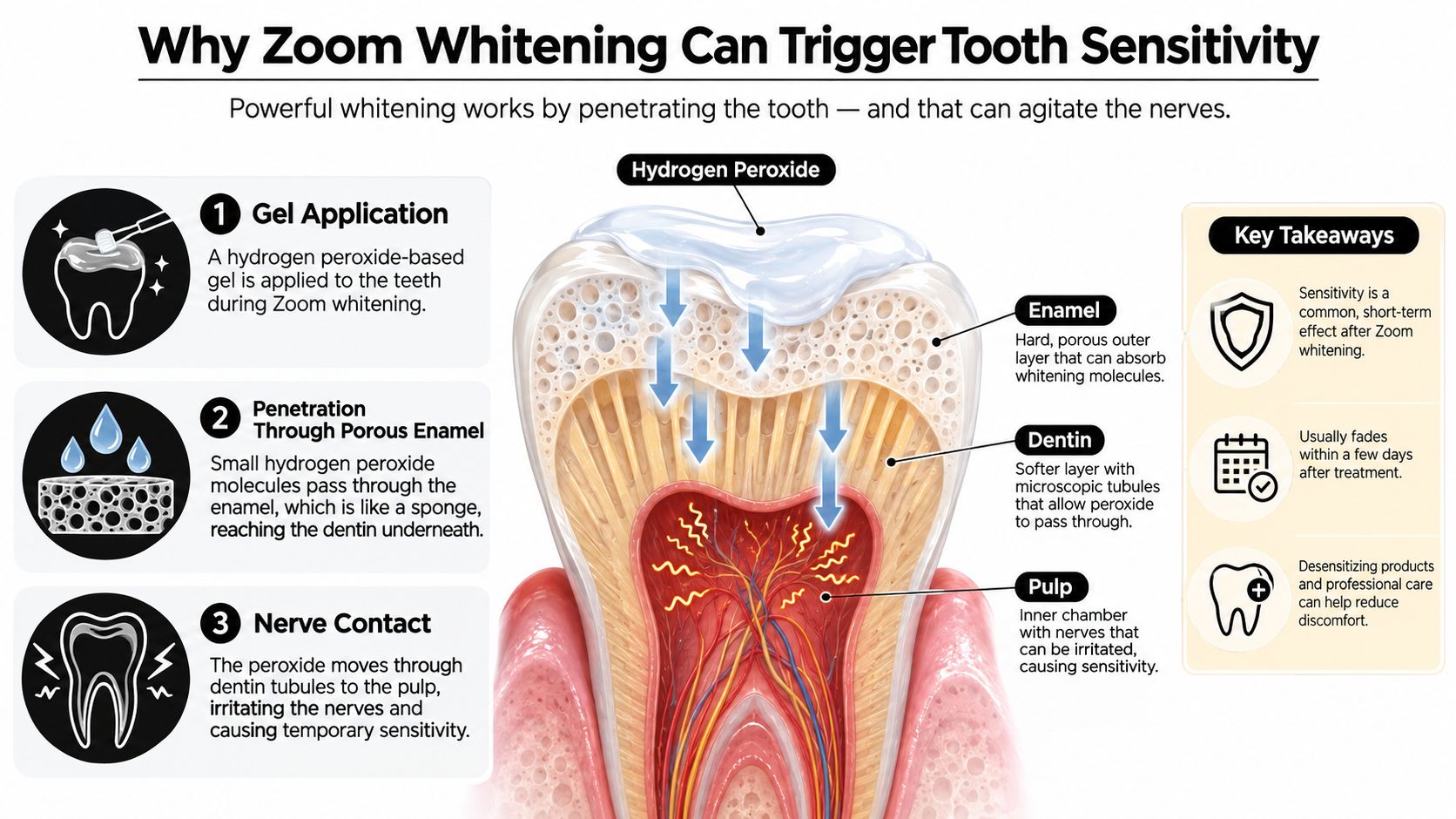
Zoom whitening uses a hydrogen peroxide gel. The gel begins on the tooth surface, then moves through microscopic spaces in enamel and reaches the dentin underneath. Dentin contains tiny tubules that communicate with the pulp, the living center of the tooth where nerves and blood vessels are located.
Think of enamel as a protective wall and dentin as a sponge beneath it. When cold water reaches that sponge, the fluid movement can send a signal toward the nerve. Whitening temporarily changes dentin permeability, which helps explain why temperature triggers can feel stronger after treatment. Learn more about the clinical mechanism of whitening-related sensitivity.
The Zoom light is used to activate the peroxide process during an in-office protocol. It can make the treatment more concentrated and efficient than wearing whitening material at home, but light activation doesn't automatically explain every uncomfortable sensation. The peroxide's movement through enamel and dentin, combined with your tooth anatomy and the exposure protocol, matters more than the lamp by itself.
What can amplify the signal
Receding gums expose root surfaces that don't have the same enamel protection as the crown of a tooth. Enamel wear can also make temperature changes more noticeable. A small cavity or a crack may create sensitivity that whitening brings to your attention.
Broader whitening evidence shows that sensitivity is common across peroxide treatments. A clinical review reported sensitivity in 15% to 65% of patients using 10% carbamide peroxide, while hydrogen peroxide combined with heat produced sensitivity in 67% to 78% of patients. The same evidence base reports that symptoms usually last up to four days, although some patients have reported symptoms lasting as long as 39 days. Review research on tooth-whitening sensitivity.
For a plain-language comparison of sensitivity considerations with whitening strips, see this resource on whitening strips and tooth sensitivity help. Patients considering treatment at a Las Vegas practice can also review Zoom whitening sensitivity guidance before scheduling.
Post-Zoom Sensitivity Timeline
Sensitivity does not follow one clock for every patient. A patient with healthy enamel and no history of sensitivity may notice only brief changes. Someone with gum recession, exposed root surfaces, or a pattern of cold-related “zingers” may feel sharper or more frequent sensations. Your starting point helps explain why two people can have different recoveries after the same Zoom session.
The first hours
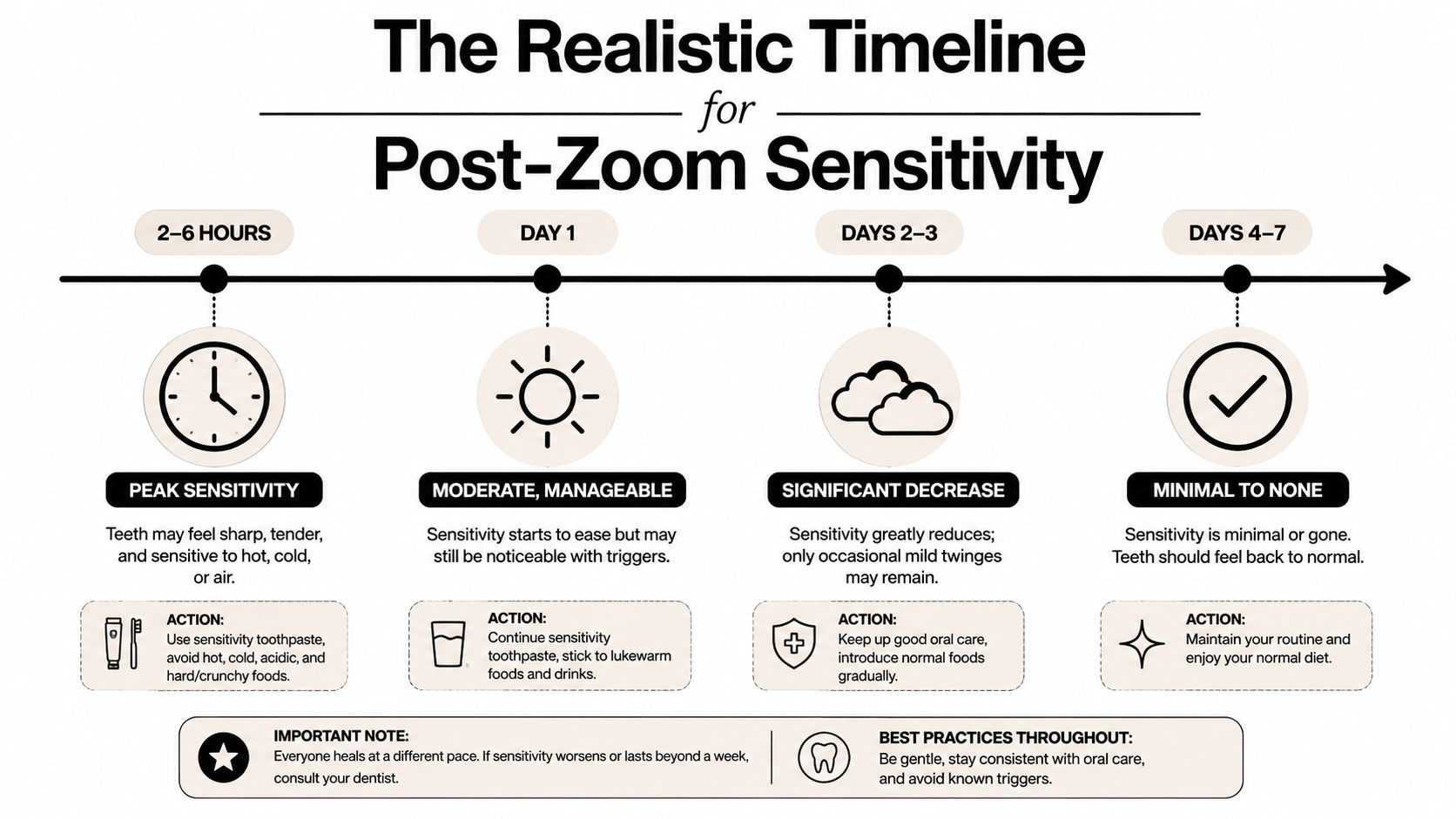
You may feel occasional zingers while the whitening gel cycles are active. After you leave the office, cold air, chilled drinks, or breathing through an open mouth can cause brief flashes of sensitivity. The first 2 to 6 hours are often the most noticeable period, as your teeth respond to ordinary temperature changes.
Day one is commonly the uncomfortable peak. The feeling may be sharp or dull, but it usually arrives in short bursts rather than remaining as a constant ache. Room-temperature foods and drinks can reduce those triggers while your teeth settle.
A patient with no previous sensitivity may move through this window with little disruption. A patient who already reacts to cold may need more time before normal sensations return.
Days two through seven
By day two, many patients find that triggers are less intense or less frequent. Days three through five often bring the teeth closer to their usual baseline. The American Dental Association describes whitening sensitivity as generally mild and temporary, and notes that it can occur with different bleaching methods. For trays or strips, symptoms may begin within 2 to 3 days of starting and usually resolve by the fourth day after treatment ends. See the ADA guidance on whitening.
The EU Scientific Committee on Consumer Safety also describes peroxide-related oral irritation and hypersensitivity as generally temporary. These reactions often begin early and improve after use stops. Review the EU lay summary on tooth-whitening products.
Some patients still notice occasional twinges during the first week. Gum recession, previous dentin hypersensitivity, or a longer or repeated application protocol can make the fading pattern less predictable. Contact your dentist if discomfort grows stronger, becomes constant, or fails to ease.
Prevention and Management Before, During, and After Zoom
Sensitivity control starts before you sit in the whitening chair. A short screening appointment can identify decay, cracks, gum recession, worn enamel, or another problem that should be treated first. A cleaning can remove surface buildup and give the dental team a clearer view of your natural tooth color.
Before your appointment
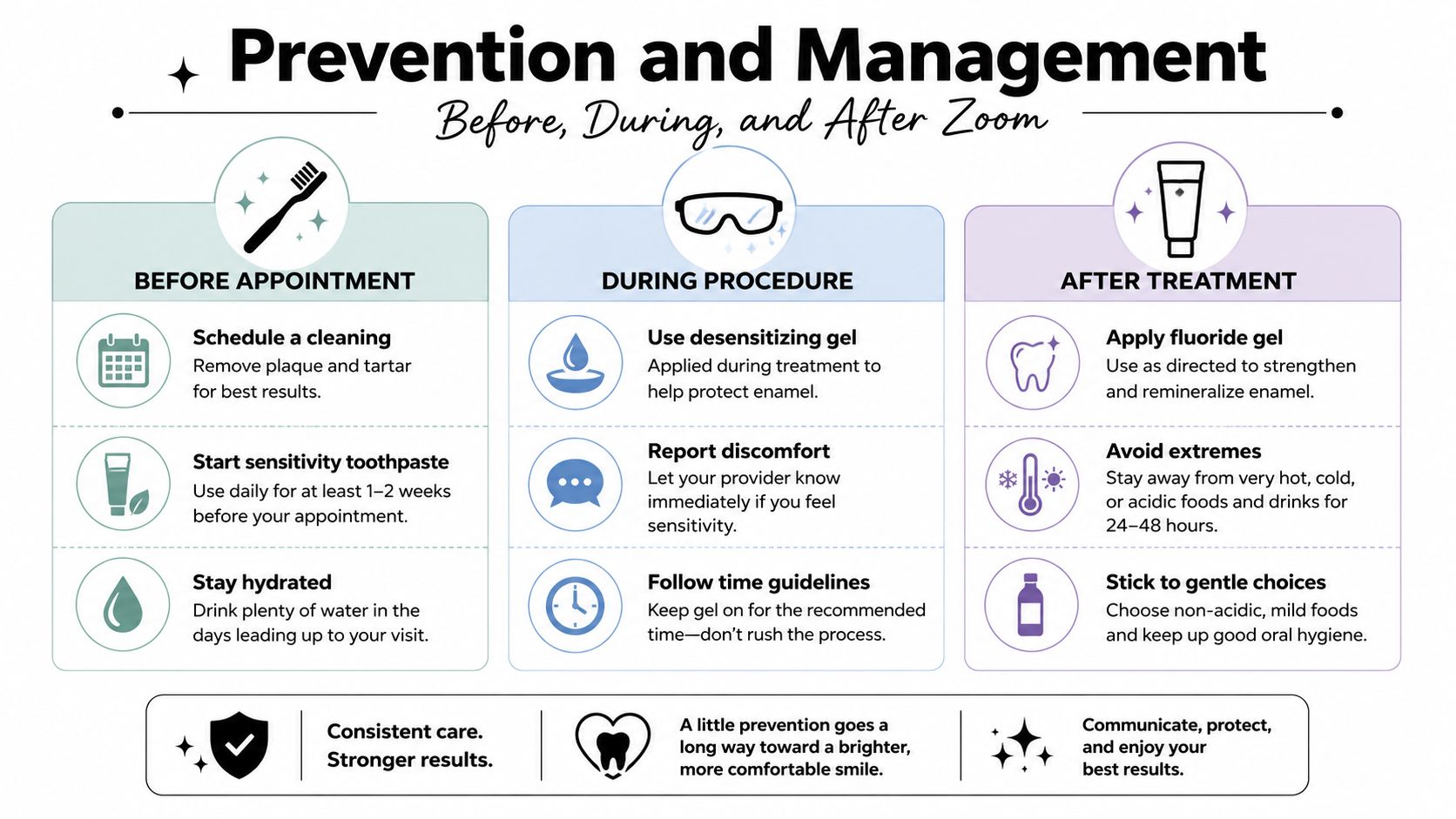
If your dentist agrees, use a sensitivity toothpaste containing potassium nitrate for 10 to 14 days before treatment. Arrange a cleaning roughly two weeks before whitening if you need one, and tell the practice about previous reactions to cold foods, whitening strips, or dental procedures.
Don't whiten over active disease. A cavity, cracked tooth, inflamed gum, or exposed root may respond differently to peroxide and should be evaluated before a cosmetic appointment.
During the session
The dental team can use a properly fitted cheek retractor and protect the gums from gel contact. Ask whether a desensitizing gel can be applied before treatment and between the 15-minute Zoom cycles. If you feel a sudden sharp zing, report it immediately. The operator may pause, shorten, or adjust a cycle rather than asking you to merely tolerate it.
After you leave
For the first 48 hours, choose lukewarm or room-temperature foods and avoid very hot, cold, acidic, or dark-staining items. Brush gently with fluoride toothpaste and lukewarm water. A remineralizing product such as GC MI Paste may be appropriate if your dentist recommends it. Avoid tobacco and red wine during the first week if you want to reduce new staining while your smile settles.
Screenshot checklist: Confirm your pre-treatment sensitivity plan, report zingers during the appointment, keep foods and drinks near room temperature afterward, and follow the products and timing recommended by your dentist.
For additional practical guidance, review this aftercare guide for teeth whitening.
A visual explanation can also help you remember the sequence:
Dentist-Provided Desensitizing Treatments for Zoom Patients
If a tooth feels sensitive during a Zoom appointment, your dentist can do more than suggest sensitivity toothpaste. The first step is finding the likely source, such as exposed root surfaces, enamel wear, decay, or an already sensitive tooth. Treatment then matches the problem rather than applying the same product to everyone.
These are professional options your dentist may recommend:
| Treatment | Active ingredient | How it works | Typical use |
|---|---|---|---|
| Fluoride varnish | Fluoride | Coats and strengthens enamel surfaces | Applied after whitening |
| Desensitizing gel | Potassium nitrate or fluoride | Helps calm the nerve response and reinforce tooth structure | Before, between, or after treatment cycles |
| MI Paste Plus | Calcium phosphate and fluoride | Supplies minerals that support enamel care | At bedtime or during recovery |
| Bonding agent | Resin-based material | Seals exposed areas when sensitivity is severe or localized | Selected teeth with persistent sensitivity |
A fluoride varnish may be painted over the enamel after whitening. Some practices use concentrated neutral fluoride, including 5% sodium fluoride, when a stronger in-office application is appropriate. Potassium nitrate or fluoride gel may be placed in custom trays for use between visits. Because the tray holds the material against the teeth, it can reduce unnecessary contact with the gums. Calcium phosphate pastes, such as MI Paste Plus, may support mineral recovery when your dentist considers them suitable.
For a tooth with persistent, localized sensitivity, a resin-based bonding agent can seal an exposed area. This approach is different from treating the whole mouth and may be considered when one tooth continues to react after the normal recovery period.
Your dentist may also adjust the whitening protocol. That can mean reducing light exposure, choosing a lower peroxide concentration, or dividing treatment into two shorter visits. A systematic review reported higher odds of sensitivity with light-activated in-office whitening than with non-light systems, with an odds ratio of 3.53 and a 95% confidence interval of 1.37 to 9.10. Review the evidence on activation methods and sensitivity.
Patients who want to review materials used in aesthetic settings can explore this overview of bleaching gel for aesthetic clinics. Clinical whitening materials should still be selected and applied by a dentist after examining your teeth and gums.
Common Misconceptions About Zoom Whitening Sensitivity
Myth one, the lamp itself causes the pain. The lamp activates the whitening process, but sensitivity involves peroxide moving through enamel and dentin and affecting fluid movement in dentin tubules. Independent research on Zoom2 found no additional whitening benefit from light activation and no meaningful sensitivity difference in that study, which supports a careful view of the lamp rather than treating it as the sole cause. Read the study discussion of light activation.
Myth two, stronger gel always means unbearable sensitivity. Concentration matters, but it isn't the only factor. Exposure time, repeated applications, gum recession, enamel wear, cavities, and your previous sensitivity history all influence the response. An umbrella review found that lower-to-medium hydrogen peroxide concentrations around 25% to 35% can produce whitening comparable to 35% to 40% formulations while reducing the incidence and intensity of sensitivity. Review current evidence on concentration and discomfort.
Myth three, sensitivity means the tooth is permanently damaged. Temporary irritation is the usual explanation for routine post-whitening zingers. That doesn't mean every painful tooth is harmless, though. Pain that lasts, worsens, or stays in one tooth may signal decay, a crack, or exposed root structure.
Myth four, strips are automatically gentler. An over-the-counter strip may seem less intense, but uneven contact and prolonged exposure can irritate gums or concentrate gel in certain areas. A dentist evaluates fit, tooth surfaces, and gum health before choosing between Zoom and a take-home approach.
When to Call Your Las Vegas Dentist About Whitening Sensitivity
Routine sensitivity usually has a clear trigger and fades when the cold air, drink, or food is gone. It should gradually become less noticeable, not turn into spontaneous pain that interrupts sleep or continues without stimulation.
Call your Las Vegas dentist if you notice any of the following:
- Persistent sharp pain: Discomfort continues beyond 72 hours or becomes stronger instead of weaker.
- One-tooth sensitivity: A single tooth reacts sharply, especially if it didn't bother you before whitening.
- Gum changes: Your gums are swollen, bleeding, or painful.
- Soft-tissue injury: You see white patches, peeling, or burning on the gums, lips, or cheek.
- Jaw symptoms: You develop significant jaw pain after clenching during the appointment.
- Infection warning signs: Swelling, fever, a bad taste, drainage, or signs of an abscess appear.
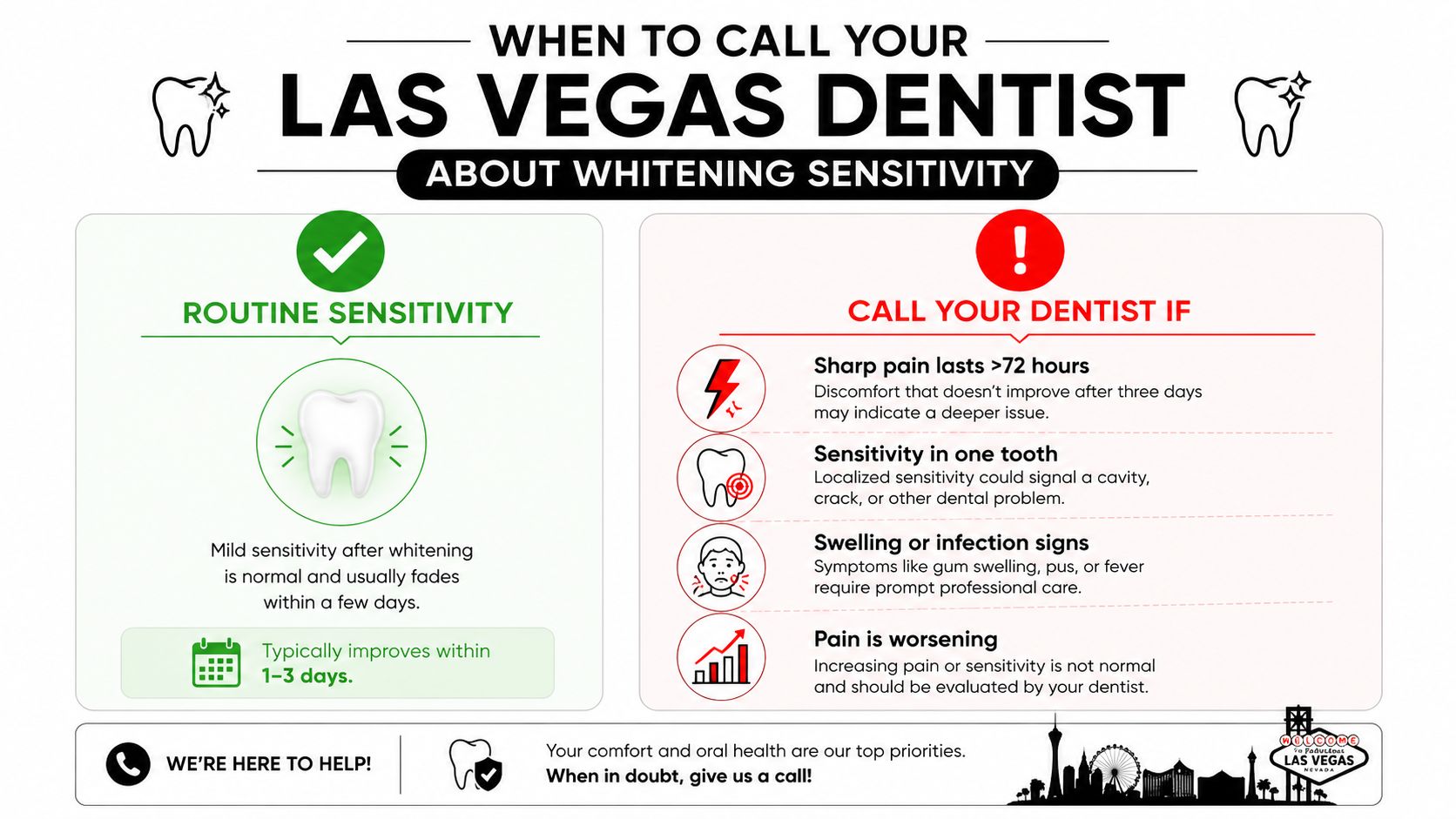
When you contact a practice, describe when the sensitivity started, what triggers it, whether it affects one tooth or several, and whether the symptoms are improving. A photo of irritated soft tissue can help the team triage the concern, although an examination may still be necessary.
A practice serving Las Vegas, NV, including patients near Sunhampton, Monterrey, Mar-A-Lago, Painted Desert Estates, and nearby communities, may be able to arrange a prompt evaluation when symptoms don't fit the usual pattern. Don't wait to book an appointment if you're worried. The same office that evaluates whitening sensitivity can also address cavities, gum concerns, restorative needs, or an urgent dental problem requiring an emergency dentist.
FAQs and Next Steps for Las Vegas Zoom Patients
Is Zoom whitening safe during pregnancy?
Elective whitening is usually postponed during pregnancy and nursing. Tell the dentist if you're pregnant, trying to become pregnant, or breastfeeding so the team can recommend the safest timing for cosmetic treatment.
Are take-home trays better for sensitive teeth?
Not automatically, but they give the dentist more control over pace and exposure. A lower-concentration or staged plan may suit someone with recession or a strong history of sensitivity. The right choice depends on your examination, desired result, schedule, and tolerance for temporary symptoms.
Will insurance or a membership plan pay for whitening?
Cosmetic whitening is commonly handled separately from medically necessary dental treatment, so ask the practice to explain its fees, insurance limitations, financing options, and membership benefits before you book. A clear estimate prevents surprises.
How early should I schedule whitening before an event?
Give yourself enough time for the sensitivity response to settle and for the dentist to address any cavities, gum irritation, or restorations that may affect the result. Scheduling a consultation first is safer than booking the whitening session immediately before a wedding or photoshoot.
A short planning conversation can identify risk factors and help you choose between Zoom, take-home trays, or a staged protocol. Patients searching for a dentist near me, a cosmetic dentist near me, dental implants near me, tooth extraction, or broader family dental care can ask the same Las Vegas team about cleaning and exams, dental X-rays, new patient exams, restorative dentistry, and emergency dental services.
Aspiring Smiles Dental and Braces offers Zoom teeth whitening alongside preventive, cosmetic, restorative, implant, and emergency dental care for patients in Las Vegas, NV. Visit Aspiring Smiles Dental and Braces to request a sensitivity consultation, discuss your whitening timeline, and plan a comfortable next step.